
Anxious People: A Novel
Paperback
• 352 Pages
• USD 19.99
• English
• 9781501160844
No ratings yet
| Publisher | Atria |
|---|---|
| ISBN13 | 9781501160844 |
| ASIN/SKU | 1501160842 |
| Book Format | Paperback |
| Language | English |
| Pages | 352 |
| List Price | USD 19.99 |
| Publishing Date | 06/07/2021 |
| Dimensions | 5.31 x 0.88 x 8.25 inches |
| Weight | 2.31 pounds |
| Book Code | BD00055916 |
Buy this Book
Amazon Stores
Ebook Stores
Other Stores
Discover Anxious People: A Novel by Fredrik Backman. This book is published by Atria in Paperback format, ISBN 9781501160844, ASIN 1501160842, under Literature and Fiction, British and Irish Humor and Satire, Sports Fiction.
Book Description
An instant #1 New York Times bestseller, the new novel from the author of A Man Called Ove is a “quirky, big-hearted novel….Wry, wise, and often laugh-out-loud funny, it’s a wholly original story that delivers pure pleasure” (People).
Looking at real estate isn’t usually a life-or-death situation, but an apartment open house becomes just that when a failed bank robber bursts in and takes a group of strangers hostage. The captives include a recently retired couple who relentlessly hunt down fixer-uppers to avoid the painful truth that they can’t fix their own marriage. There’s a wealthy bank director who has been too busy to care about anyone else and a young couple who are about to have their first child but can’t seem to agree on anything. Add to the mix an eighty-seven-year-old woman who has lived long enough not to be afraid of someone waving a gun in her face, a flustered but still-ready-to-make-a-deal real estate agent, and a mystery man who has locked himself in the apartment’s only bathroom, and you’ve got the worst group of hostages in the world.
Each of them carries a lifetime of grievances, hurts, secrets, and passions that are ready to boil over. None of them is entirely who they appear to be. And all of them—the bank robber included—desperately crave some sort of rescue. As the authorities and the media surround the premises, these reluctant allies will reveal surprising truths about themselves and set in motion a chain of events so unexpected that even they can hardly explain what happens next.
Proving once again that Backman is “a master of writing delightful, insightful, soulful, character-driven narratives” (USA TODAY), Anxious People “captures the messy essence of being human….It’s clever and affecting, as likely to make you laugh out loud as it is to make you cry” (The Washington Post). This “endlessly entertaining mood-booster” (Real Simple) is proof that the enduring power of friendship, forgiveness, and hope can save us—even in the most anxious of times.
Looking at real estate isn’t usually a life-or-death situation, but an apartment open house becomes just that when a failed bank robber bursts in and takes a group of strangers hostage. The captives include a recently retired couple who relentlessly hunt down fixer-uppers to avoid the painful truth that they can’t fix their own marriage. There’s a wealthy bank director who has been too busy to care about anyone else and a young couple who are about to have their first child but can’t seem to agree on anything. Add to the mix an eighty-seven-year-old woman who has lived long enough not to be afraid of someone waving a gun in her face, a flustered but still-ready-to-make-a-deal real estate agent, and a mystery man who has locked himself in the apartment’s only bathroom, and you’ve got the worst group of hostages in the world.
Each of them carries a lifetime of grievances, hurts, secrets, and passions that are ready to boil over. None of them is entirely who they appear to be. And all of them—the bank robber included—desperately crave some sort of rescue. As the authorities and the media surround the premises, these reluctant allies will reveal surprising truths about themselves and set in motion a chain of events so unexpected that even they can hardly explain what happens next.
Proving once again that Backman is “a master of writing delightful, insightful, soulful, character-driven narratives” (USA TODAY), Anxious People “captures the messy essence of being human….It’s clever and affecting, as likely to make you laugh out loud as it is to make you cry” (The Washington Post). This “endlessly entertaining mood-booster” (Real Simple) is proof that the enduring power of friendship, forgiveness, and hope can save us—even in the most anxious of times.
Author Biography
Fredrik Backman is the #1 New York Times bestselling author of A Man Called Ove, My Grandmother Asked Me to Tell You She’s Sorry, Britt-Marie Was Here, Beartown, Us Against You, Anxious People, The Winners, and My Friends, as well as two novellas and one work of nonfiction. His books are published in more than forty countries. He lives in Stockholm, Sweden, with his wife and two children. Connect with him on Facebook and X @BackmanLand and on Instagram @Backmansk.
Editorial Reviews
Amazon.com Review
An Amazon Best Book of September 2020: An everyday apartment open house becomes the stage for Backman’s latest novel, when a bank robber bursts in and takes a group of strangers hostage. As the title hints, each member of the group bares his or her own anxieties, not just about the hostage situation, but about their individual lives. Backman is a funny, charming story teller, and Anxious People is a fine showcase for his talents as a writer. There are twists and surprises. There are editorial asides. Beneath it all, there is a deep sense of warmth and empathy. Backman is particularly gifted at creating a community of memorable characters and opening up their mental states to readers. And many readers of Anxious People will in turn reflect on their own anxieties. Ultimately, Backman seems to be telling us that—though it be a messy, ambiguous world we inhabit—we can turn toward one another to find calm and assurance. This is a novel that can, and should, be embraced by anxious people everywhere. –Chris Schluep, Amazon Book Review
Review
“Backman again captures the messy essence of being human...It’s clever and affecting, as likely to make you laugh out loud as it is to make you cry.” —Washington Post
“Backman’s latest novel hits the sweet spot between profoundly insightful and preposterously funny….I hugged this book tightly with a smile on my face and tears in my eyes.” –USA Today
“The perfect balance of heartwarming and heart-wrenching, and Fredrik Backman has a way of simply yet elegantly describing relationships. We can all be idiots, but we’re still all human beings worthy of connection and love.” –NPR
“A brilliant and comforting read.” —Matt Haig, bestselling author of The Midnight Library
“An endlessly entertaining mood booster.” —Real Simple
"This book examines how a shared event can change the course of many lives at once. And if you like strongly drawn characters and a mix of humor and heartbreak, this one's for you.” –The Skimm
"[A] witty, lighthearted romp...Backman charms." —Publishers Weekly
"Wry, wise and often laugh-out-loud funny, it’s a wholly original story that delivers pure pleasure.” —People
“A deeply funny and warm examination of how individual experiences can bring a random group of people together. Backman reveals each character’s many imperfections with tremendous empathy, reminding us that people are always more than the sum of their flaws.” —BookPage
"[A] tight-knit, surprise-filled narrative... the brisk, absorbing action prompts meditation on marriage, parenting, responsibility, and global economic pressures. Comedy, drama, mystery, and social study, this novel is undefinable except for the sheer reading pleasure it delivers. Highly recommended."—Library Journal (starred review)
“Backman’s latest novel focuses on how a shared event can change the course of multiple people’s lives even in times of deep and ongoing anxiousness. A story with both comedy and heartbreak sure to please Backman fan
An Amazon Best Book of September 2020: An everyday apartment open house becomes the stage for Backman’s latest novel, when a bank robber bursts in and takes a group of strangers hostage. As the title hints, each member of the group bares his or her own anxieties, not just about the hostage situation, but about their individual lives. Backman is a funny, charming story teller, and Anxious People is a fine showcase for his talents as a writer. There are twists and surprises. There are editorial asides. Beneath it all, there is a deep sense of warmth and empathy. Backman is particularly gifted at creating a community of memorable characters and opening up their mental states to readers. And many readers of Anxious People will in turn reflect on their own anxieties. Ultimately, Backman seems to be telling us that—though it be a messy, ambiguous world we inhabit—we can turn toward one another to find calm and assurance. This is a novel that can, and should, be embraced by anxious people everywhere. –Chris Schluep, Amazon Book Review
Review
“Backman again captures the messy essence of being human...It’s clever and affecting, as likely to make you laugh out loud as it is to make you cry.” —Washington Post
“Backman’s latest novel hits the sweet spot between profoundly insightful and preposterously funny….I hugged this book tightly with a smile on my face and tears in my eyes.” –USA Today
“The perfect balance of heartwarming and heart-wrenching, and Fredrik Backman has a way of simply yet elegantly describing relationships. We can all be idiots, but we’re still all human beings worthy of connection and love.” –NPR
“A brilliant and comforting read.” —Matt Haig, bestselling author of The Midnight Library
“An endlessly entertaining mood booster.” —Real Simple
"This book examines how a shared event can change the course of many lives at once. And if you like strongly drawn characters and a mix of humor and heartbreak, this one's for you.” –The Skimm
"[A] witty, lighthearted romp...Backman charms." —Publishers Weekly
"Wry, wise and often laugh-out-loud funny, it’s a wholly original story that delivers pure pleasure.” —People
“A deeply funny and warm examination of how individual experiences can bring a random group of people together. Backman reveals each character’s many imperfections with tremendous empathy, reminding us that people are always more than the sum of their flaws.” —BookPage
"[A] tight-knit, surprise-filled narrative... the brisk, absorbing action prompts meditation on marriage, parenting, responsibility, and global economic pressures. Comedy, drama, mystery, and social study, this novel is undefinable except for the sheer reading pleasure it delivers. Highly recommended."—Library Journal (starred review)
“Backman’s latest novel focuses on how a shared event can change the course of multiple people’s lives even in times of deep and ongoing anxiousness. A story with both comedy and heartbreak sure to please Backman fan
Book Summary
Anxious People: A Novel by Fredrik Backman is a warm, funny, and deeply human story about a group of strangers whose lives collide in the most unexpected way. The book begins with what seems like a crime: a failed bank robbery. A desperate, inexperienced robber tries to hold up a cashless bank and, panicking when the plan instantly falls apart, runs away and ends up taking hostages at an apartment viewing. It sounds dramatic and dangerous, but Backman quickly reveals that this is not a typical thriller. Instead, it is a character-driven story about ordinary, anxious people, all carrying their own fears and regrets, forced into a small space together and made to face themselves and each other. The hostage situation becomes the frame for exploring how deeply people struggle with life, love, money, parenthood, and meaning, while still trying to appear “normal” on the outside.
The hostages are a mismatched group, each with their own private worries. There is a middle-aged couple obsessed with real estate and status, more focused on property value than emotional value. A young couple expecting their first child, terrified about the future and unsure they’ll be good parents. An elderly woman who seems sharp, sarcastic, and oddly calm, as if she’s seen it all before. A lonely man, a wealthy woman, and a real estate agent stuck in a job she doesn’t love round out the group. None of them are especially heroic; they are flawed, sometimes annoying, often funny, and very familiar. The robber, too, is not a hardened criminal but a frightened person pushed to the edge by financial and emotional hardship. As the police attempt to handle the situation, the narrative weaves back and forth between interrogation scenes, the events inside the apartment, and glimpses into each character’s past, slowly revealing that everyone there is more than they first appear.
The police side of the story is led by a father-and-son team: Jim, the older policeman nearing retirement, and his son Jack, the younger, more serious officer. They are tasked with solving the strange case of the disappeared robber—because by the time the hostage situation ends, the robber cannot be found. Jim and Jack interview each hostage, trying to piece together what happened, but the hostages’ accounts are inconsistent, confusing, and sometimes intentionally misleading. It is as if the entire group has conspired to protect someone. Through these interviews, we see each hostage’s personality and priorities, and the book lightly plays with the idea of mystery: who is telling the truth, and why would ordinary people lie to protect a failed robber? The father-son dynamic adds another emotional layer, as Jack is frustrated by his father’s laid-back, seemingly bumbling style, while Jim quietly carries his own sense of guilt and worry about whether he’s been a good parent.
Gradually, Backman peels back the layers of each character’s anxiety. The young expecting couple are terrified of the world their child will be born into, worried about money, careers, and whether they truly want the same things. The status-obsessed couple feel trapped in their own achievements and appearances, worried that without constant progress and upgrades, their life will lose meaning. The elderly woman has lived long enough to see many of her loved ones vanish and is fiercely independent, hiding pain behind cranky humor. The real estate agent fears failure and loneliness, stuck between pretending to be professional and yearning for genuine connection. Even the robber’s story is rooted in panic and love: this person is driven not by greed, but by a desperate attempt to fix a problem and protect family, after feeling abandoned and crushed by circumstances beyond their control.
Throughout the hostage ordeal, the strangers talk, argue, and accidentally open up. They share fragments of their lives, sometimes against their will, sometimes because the pressure and absurdity of the situation breaks down their defenses. They fight over trivial things, like snacks and property details, but then find themselves discussing big issues: suicide, marriage, broken dreams, and the fear of not being enough. Humor and sadness mingle constantly. Backman’s trademark style shows in the way he uses jokes and misunderstandings to ease the reader into confronting heavier subjects. For example, characters might say something ridiculous or selfish, then later reveal that it hides a deep wound. In this way, the book suggests that most people’s worst behavior is usually covering up their worst fears.
The theme of suicide and grief quietly runs through the story. Years earlier, a young man had jumped from a bridge, watched helplessly by another person who could not save him. That moment becomes a central emotional thread tying several characters together, including the robber. The bridge scene echoes through their lives, influencing their guilt, decisions, and anxiety. The book asks what happens to those left behind after such an event: how they live with the knowledge that they couldn’t rescue someone, and how they carry that pain into other relationships. This exploration is sensitive and compassionate, showing both the person who felt life was unbearable and the ones who survive with the aching question of whether they could have done more.
As the police dig deeper, they realize that the “crime” they’re investigating is really a group of anxious individuals who, for one strange afternoon, chose to help each other instead of turning on one another. The hostages, who begin by being terrified of the robber, eventually grow protective, seeing that this person is more victim than villain. They recognize themselves in the robber’s desperation, because each of them has, in their own way, been driven to the edge by life’s pressures. Their decision to shield the robber from the authorities isn’t about defying justice; it’s about offering compassion and a second chance. In protecting the robber, they symbolically protect their own fragile hope that people can be forgiven and helped, even when they make terrible mistakes.
Jim and Jack’s relationship, and their differing approaches to the case, mirror the book’s larger questions about understanding versus judgment. Jack wants clear answers, solid evidence, and proper procedure. Jim relies more on instinct, stories, and empathy, sensing that what really matters here isn’t just catching a criminal but understanding why a whole group of people would choose kindness over punishment. As they uncover the full truth, both men must confront their own anxieties about fatherhood, aging, and being “good enough” at their jobs and in their personal lives. The investigation becomes less about finding the missing robber and more about learning how to see people fully, beyond their most anxious, clumsy moments.
By the end of “Anxious People,” the hostage crisis has turned into a story of unlikely community. The strangers who entered that apartment viewing thinking only about themselves leave with a changed understanding of one another and of what it means to be human in a frightening, uncertain world. Some of them still have the same problems—money worries, relationship issues, grief—but they’ve seen that they are not alone in their confusion and fear. The robber’s fate, when finally explained, reflects the book’s belief in grace, second chances, and the idea that sometimes breaking the rules is the only way to protect what truly matters. The novel closes with a bittersweet but hopeful tone, reminding the reader that everyone is anxious, everyone is flawed, and everyone is capable of both harm and kindness. In bringing together a bunch of anxious people in one chaotic afternoon, Fredrik Backman shows that although life is messy and frightening, it can also be surprisingly beautiful when we dare to see and support one another.
The hostages are a mismatched group, each with their own private worries. There is a middle-aged couple obsessed with real estate and status, more focused on property value than emotional value. A young couple expecting their first child, terrified about the future and unsure they’ll be good parents. An elderly woman who seems sharp, sarcastic, and oddly calm, as if she’s seen it all before. A lonely man, a wealthy woman, and a real estate agent stuck in a job she doesn’t love round out the group. None of them are especially heroic; they are flawed, sometimes annoying, often funny, and very familiar. The robber, too, is not a hardened criminal but a frightened person pushed to the edge by financial and emotional hardship. As the police attempt to handle the situation, the narrative weaves back and forth between interrogation scenes, the events inside the apartment, and glimpses into each character’s past, slowly revealing that everyone there is more than they first appear.
The police side of the story is led by a father-and-son team: Jim, the older policeman nearing retirement, and his son Jack, the younger, more serious officer. They are tasked with solving the strange case of the disappeared robber—because by the time the hostage situation ends, the robber cannot be found. Jim and Jack interview each hostage, trying to piece together what happened, but the hostages’ accounts are inconsistent, confusing, and sometimes intentionally misleading. It is as if the entire group has conspired to protect someone. Through these interviews, we see each hostage’s personality and priorities, and the book lightly plays with the idea of mystery: who is telling the truth, and why would ordinary people lie to protect a failed robber? The father-son dynamic adds another emotional layer, as Jack is frustrated by his father’s laid-back, seemingly bumbling style, while Jim quietly carries his own sense of guilt and worry about whether he’s been a good parent.
Gradually, Backman peels back the layers of each character’s anxiety. The young expecting couple are terrified of the world their child will be born into, worried about money, careers, and whether they truly want the same things. The status-obsessed couple feel trapped in their own achievements and appearances, worried that without constant progress and upgrades, their life will lose meaning. The elderly woman has lived long enough to see many of her loved ones vanish and is fiercely independent, hiding pain behind cranky humor. The real estate agent fears failure and loneliness, stuck between pretending to be professional and yearning for genuine connection. Even the robber’s story is rooted in panic and love: this person is driven not by greed, but by a desperate attempt to fix a problem and protect family, after feeling abandoned and crushed by circumstances beyond their control.
Throughout the hostage ordeal, the strangers talk, argue, and accidentally open up. They share fragments of their lives, sometimes against their will, sometimes because the pressure and absurdity of the situation breaks down their defenses. They fight over trivial things, like snacks and property details, but then find themselves discussing big issues: suicide, marriage, broken dreams, and the fear of not being enough. Humor and sadness mingle constantly. Backman’s trademark style shows in the way he uses jokes and misunderstandings to ease the reader into confronting heavier subjects. For example, characters might say something ridiculous or selfish, then later reveal that it hides a deep wound. In this way, the book suggests that most people’s worst behavior is usually covering up their worst fears.
The theme of suicide and grief quietly runs through the story. Years earlier, a young man had jumped from a bridge, watched helplessly by another person who could not save him. That moment becomes a central emotional thread tying several characters together, including the robber. The bridge scene echoes through their lives, influencing their guilt, decisions, and anxiety. The book asks what happens to those left behind after such an event: how they live with the knowledge that they couldn’t rescue someone, and how they carry that pain into other relationships. This exploration is sensitive and compassionate, showing both the person who felt life was unbearable and the ones who survive with the aching question of whether they could have done more.
As the police dig deeper, they realize that the “crime” they’re investigating is really a group of anxious individuals who, for one strange afternoon, chose to help each other instead of turning on one another. The hostages, who begin by being terrified of the robber, eventually grow protective, seeing that this person is more victim than villain. They recognize themselves in the robber’s desperation, because each of them has, in their own way, been driven to the edge by life’s pressures. Their decision to shield the robber from the authorities isn’t about defying justice; it’s about offering compassion and a second chance. In protecting the robber, they symbolically protect their own fragile hope that people can be forgiven and helped, even when they make terrible mistakes.
Jim and Jack’s relationship, and their differing approaches to the case, mirror the book’s larger questions about understanding versus judgment. Jack wants clear answers, solid evidence, and proper procedure. Jim relies more on instinct, stories, and empathy, sensing that what really matters here isn’t just catching a criminal but understanding why a whole group of people would choose kindness over punishment. As they uncover the full truth, both men must confront their own anxieties about fatherhood, aging, and being “good enough” at their jobs and in their personal lives. The investigation becomes less about finding the missing robber and more about learning how to see people fully, beyond their most anxious, clumsy moments.
By the end of “Anxious People,” the hostage crisis has turned into a story of unlikely community. The strangers who entered that apartment viewing thinking only about themselves leave with a changed understanding of one another and of what it means to be human in a frightening, uncertain world. Some of them still have the same problems—money worries, relationship issues, grief—but they’ve seen that they are not alone in their confusion and fear. The robber’s fate, when finally explained, reflects the book’s belief in grace, second chances, and the idea that sometimes breaking the rules is the only way to protect what truly matters. The novel closes with a bittersweet but hopeful tone, reminding the reader that everyone is anxious, everyone is flawed, and everyone is capable of both harm and kindness. In bringing together a bunch of anxious people in one chaotic afternoon, Fredrik Backman shows that although life is messy and frightening, it can also be surprisingly beautiful when we dare to see and support one another.
Sample Chapters
Sample Chapters will be added soon…
Reader Reviews
No reviews yet.
Anxious People: A Novel
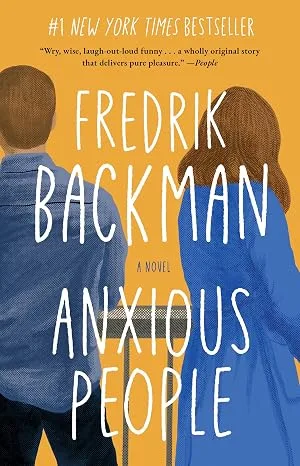
Download Cover Image
Do you want to download the full cover image for Anxious People: A Novel?