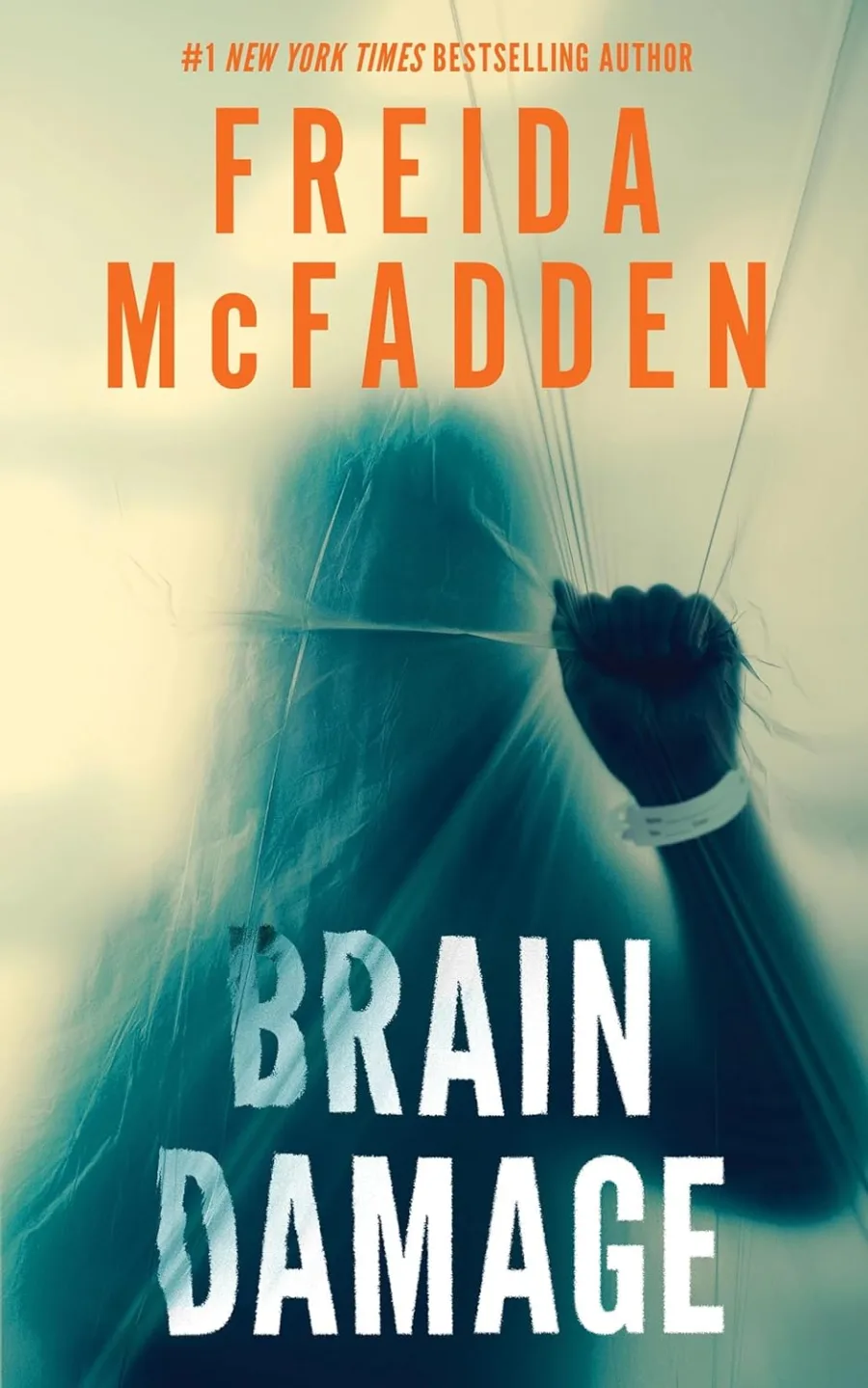
Brain Damage
Paperback
• 384 Pages
• USD 18.99
• English
• 9781464249617
No ratings yet
| Publisher | Poisoned Pen Press |
|---|---|
| ISBN13 | 9781464249617 |
| ASIN/SKU | 146424961X |
| Book Format | Paperback |
| Language | English |
| Pages | 384 |
| List Price | USD 18.99 |
| Publishing Date | 18/08/2026 |
| Dimensions | 5 x 0.96 x 8 inches |
| Weight | 1 pounds |
| Book Code | BD00055919 |
Buy this Book
Amazon Stores
Ebook Stores
Other Stores
Discover Brain Damage by Freida McFadden. This book is published by Poisoned Pen Press in Paperback format, ISBN 9781464249617, ASIN 146424961X, under Mystery, Thriller and Suspense, Murder Thrillers, Psychological Thrillers.
Book Description
From #1 New York Times bestselling author of The Intruder!
How can you survive when you can't remember who wants you dead?
Dr. Charly McKenna had the perfect life: a thriving dermatology practice, a luxury apartment overlooking Central Park, and a handsome husband who adored her.
Until the night a bullet tore through her skull… and stole everything.
Now Charly wakes in a rehabilitation hospital unable to walk, speak, or remember her own name. All she knows is that someone tried to kill her―and they may still be out there. As fragments of memory surface, so do unsettling questions about the people around her, including the attentive man who keeps appearing at her bedside.
The truth of what happened that night lives somewhere inside her brain. And as Charly pieces together the jagged edges of her past, she begins to realize the most terrifying possibility: the person who wants her dead might be the one she once trusted most.
From #1 New York Times bestselling author Freida McFadden comes a scalpel-sharp psychological thriller about fractured memory, buried secrets, and how far the mind will go to protect you from the truth.
How can you survive when you can't remember who wants you dead?
Dr. Charly McKenna had the perfect life: a thriving dermatology practice, a luxury apartment overlooking Central Park, and a handsome husband who adored her.
Until the night a bullet tore through her skull… and stole everything.
Now Charly wakes in a rehabilitation hospital unable to walk, speak, or remember her own name. All she knows is that someone tried to kill her―and they may still be out there. As fragments of memory surface, so do unsettling questions about the people around her, including the attentive man who keeps appearing at her bedside.
The truth of what happened that night lives somewhere inside her brain. And as Charly pieces together the jagged edges of her past, she begins to realize the most terrifying possibility: the person who wants her dead might be the one she once trusted most.
From #1 New York Times bestselling author Freida McFadden comes a scalpel-sharp psychological thriller about fractured memory, buried secrets, and how far the mind will go to protect you from the truth.
Author Biography
#1 New York Times, #1 Sunday Times, USA Today, Publishers Weekly, and internationally bestselling author Freida McFadden is a physician who lives in Boston with her family. Freida is the winner of the International Thriller Writer Award for Best Paperback Original, the Goodreads Choice Award for Best Thriller, and was honored as one of TIME 100’s most influential people in the world for 2026. Her novels have been translated into more than forty-five languages.
Editorial Reviews
"[This] tale of secrets and misdirection...starts with a bang and closes with a knockout punch of an ending." ― Kirkus Reviews
Book Summary
Brain Damage by Freida McFadden is a psychological thriller that plays with memory, guilt, and the terrifying question of what we are capable of when we don’t fully remember our past. The story centers on a woman named Annie who wakes up after a serious car accident with a brain injury that has damaged her memory. On the surface, she is a sympathetic figure: a wife and mother struggling to recover, desperate to piece her life back together and be “normal” again. But as she starts to remember fragments of her past, she begins to suspect that her life before the accident may not have been as simple or innocent as everyone around her makes it seem. The book works by trapping the reader inside Annie’s confused mind, letting us experience her uncertainty, her fear that she might have done something terrible, and her growing suspicion that the people she trusts may not be telling her the whole truth.
Annie’s brain damage has left her with gaps in her memory and difficulty in processing information. Everyday tasks are hard. Names, faces, and timelines slip through her mind. At first, she relies completely on her husband and the stories he tells her about who she was and what their life was like. He is kind and patient, encouraging her, reassuring her, explaining their history—how they met, their marriage, their child, their routines. But the more Annie tries to accept his version of events, the more small details begin to feel “off.” She notices inconsistencies in what he says, reactions that don’t match his words, and subtle tension when certain topics come up. Her damaged brain means she can’t trust her own perception, which makes every odd moment more frightening: is she misreading things because of her injury, or is her husband hiding something?
As Annie moves through her recovery, she is also haunted by flashes of memory—brief, sharp images, emotions, and impressions that don’t line up neatly with the loving, stable life she has been told she had. Some of these flashes are disturbing: raised voices, fear, maybe even violence. She sees hints of another side to herself, a version that might have been angry, unstable, or involved in something dark. The title “Brain Damage” is not just about her injury, but about the way her mind becomes a battleground between what she is told and what she half-remembers. Her biggest fear is chilling: what if she was a bad person, or even a dangerous one? What if the accident wasn’t just a tragic event, but the consequence of something she did?
Freida McFadden creates tension by keeping Annie—and the reader—in a constant state of doubt. Everyone around Annie treats her like a fragile person who should not be stressed, including her medical team and family. They encourage her to focus on getting better, not on the past. But Annie’s curiosity and anxiety won’t let her rest. She starts quietly investigating her own life: looking at old photos, digging through belongings, trying to read between the lines of what people say. She senses that certain subjects make her husband uncomfortable, and that some people seem almost afraid of her regaining her full memory. The more she learns, the more she starts to suspect that her accident might not have been purely accidental—and that some people might prefer that she stay confused.
Alongside the suspense, the book also shows the emotional toll of living with a brain injury. Annie’s frustration with herself is intense. She cannot manage simple things sometimes; she forgets, loses track, and feels like a burden. Her relationships, especially with her child, are painful because she wants to be the kind of mother she was—or thinks she was—but she is unsure how. She worries about the future, about whether she will ever be “herself” again, and even questions what “herself” means if she is missing huge parts of her biography. Her sense of identity is shattered, and that thin remaining layer of self is constantly threatened by new hints that she might not love what she finds if the memories come back.
The psychology of the story deepens as Annie’s fragmented memories start to fit into patterns. She discovers enough to suspect that her marriage was not as perfect as she has been told. There may have been secrets, betrayals, or conflicts that were intense enough to alter the course of her life. At the same time, she learns that other people—neighbors, colleagues, acquaintances—have their own opinions about who she used to be, and they don’t always match the gentle, helpless image she has now. Some remember her as difficult or emotionally unstable. Others hint at incidents that sound like serious mistakes or morally questionable decisions. Annie begins to question whether those people are unfairly judging her or hinting at something real and dangerous.
McFadden uses the classic unreliable narrator technique brilliantly through Annie. We experience events filtered through her damaged mind, so every clue is uncertain. When Annie thinks she remembers something, we don’t know if it is a true recollection or a distorted fantasy created by stress and suggestion. This makes the thriller aspect especially tense: we cannot be sure whether there really is a conspiracy, a cover-up, or a hidden crime, or whether Annie’s paranoia is a symptom of her brain damage. The author plays with that ambiguity, setting up moments where Annie seems on the edge of discovering something huge, only for it to slip away again or turn out to be something else.
As the plot accelerates, the stakes rise. Annie’s need to know the truth starts to conflict with her loved ones’ insistence that she rest and avoid stress. She becomes more secretive, more suspicious, and more determined. The fear that she might have hurt someone—possibly even someone she loved—becomes a driving force. She starts to consider the possibility that the people closest to her are not fully on her side. This leads to confrontations, both subtle and explosive, where long-suppressed emotions come out. She pushes at the limits of what her husband and others will tell her, and their reactions reveal cracks in their calm and caring demeanor.
Eventually, Annie uncovers key pieces of information that force the truth into the light. The story’s twists revolve around what really happened before the accident, what role she played, and why people are so invested in controlling the narrative of her past. The revelations are shocking but also emotionally grounded, showing how fear, love, and self-preservation can drive people to secrecy and lies. We learn whether Annie’s worst fears about herself are justified, and whether the accident was purely fate or connected to something much darker. McFadden delivers her trademark mix of sharp twists and character-driven tension, making the final answers satisfying but also unsettling.
By the end of Brain Damage, Annie is still a woman changed by her injury, but she has confronted the truth about her past and the people around her. The book doesn’t offer a neat, painless resolution—because real recovery, especially after trauma and brain injury, is complicated. Instead, it shows Annie beginning to rebuild a new sense of self, one that includes the hard truths as well as the possibility of growth and redemption. The novel leaves the reader thinking about how fragile identity really is, how much we rely on memory to tell us who we are, and how terrifying it would be to discover that the person you once were might be very different from the person you hope you are now. Freida McFadden wraps these themes inside a gripping, fast-paced story that keeps you questioning every character and every memory until the very last pages.
Annie’s brain damage has left her with gaps in her memory and difficulty in processing information. Everyday tasks are hard. Names, faces, and timelines slip through her mind. At first, she relies completely on her husband and the stories he tells her about who she was and what their life was like. He is kind and patient, encouraging her, reassuring her, explaining their history—how they met, their marriage, their child, their routines. But the more Annie tries to accept his version of events, the more small details begin to feel “off.” She notices inconsistencies in what he says, reactions that don’t match his words, and subtle tension when certain topics come up. Her damaged brain means she can’t trust her own perception, which makes every odd moment more frightening: is she misreading things because of her injury, or is her husband hiding something?
As Annie moves through her recovery, she is also haunted by flashes of memory—brief, sharp images, emotions, and impressions that don’t line up neatly with the loving, stable life she has been told she had. Some of these flashes are disturbing: raised voices, fear, maybe even violence. She sees hints of another side to herself, a version that might have been angry, unstable, or involved in something dark. The title “Brain Damage” is not just about her injury, but about the way her mind becomes a battleground between what she is told and what she half-remembers. Her biggest fear is chilling: what if she was a bad person, or even a dangerous one? What if the accident wasn’t just a tragic event, but the consequence of something she did?
Freida McFadden creates tension by keeping Annie—and the reader—in a constant state of doubt. Everyone around Annie treats her like a fragile person who should not be stressed, including her medical team and family. They encourage her to focus on getting better, not on the past. But Annie’s curiosity and anxiety won’t let her rest. She starts quietly investigating her own life: looking at old photos, digging through belongings, trying to read between the lines of what people say. She senses that certain subjects make her husband uncomfortable, and that some people seem almost afraid of her regaining her full memory. The more she learns, the more she starts to suspect that her accident might not have been purely accidental—and that some people might prefer that she stay confused.
Alongside the suspense, the book also shows the emotional toll of living with a brain injury. Annie’s frustration with herself is intense. She cannot manage simple things sometimes; she forgets, loses track, and feels like a burden. Her relationships, especially with her child, are painful because she wants to be the kind of mother she was—or thinks she was—but she is unsure how. She worries about the future, about whether she will ever be “herself” again, and even questions what “herself” means if she is missing huge parts of her biography. Her sense of identity is shattered, and that thin remaining layer of self is constantly threatened by new hints that she might not love what she finds if the memories come back.
The psychology of the story deepens as Annie’s fragmented memories start to fit into patterns. She discovers enough to suspect that her marriage was not as perfect as she has been told. There may have been secrets, betrayals, or conflicts that were intense enough to alter the course of her life. At the same time, she learns that other people—neighbors, colleagues, acquaintances—have their own opinions about who she used to be, and they don’t always match the gentle, helpless image she has now. Some remember her as difficult or emotionally unstable. Others hint at incidents that sound like serious mistakes or morally questionable decisions. Annie begins to question whether those people are unfairly judging her or hinting at something real and dangerous.
McFadden uses the classic unreliable narrator technique brilliantly through Annie. We experience events filtered through her damaged mind, so every clue is uncertain. When Annie thinks she remembers something, we don’t know if it is a true recollection or a distorted fantasy created by stress and suggestion. This makes the thriller aspect especially tense: we cannot be sure whether there really is a conspiracy, a cover-up, or a hidden crime, or whether Annie’s paranoia is a symptom of her brain damage. The author plays with that ambiguity, setting up moments where Annie seems on the edge of discovering something huge, only for it to slip away again or turn out to be something else.
As the plot accelerates, the stakes rise. Annie’s need to know the truth starts to conflict with her loved ones’ insistence that she rest and avoid stress. She becomes more secretive, more suspicious, and more determined. The fear that she might have hurt someone—possibly even someone she loved—becomes a driving force. She starts to consider the possibility that the people closest to her are not fully on her side. This leads to confrontations, both subtle and explosive, where long-suppressed emotions come out. She pushes at the limits of what her husband and others will tell her, and their reactions reveal cracks in their calm and caring demeanor.
Eventually, Annie uncovers key pieces of information that force the truth into the light. The story’s twists revolve around what really happened before the accident, what role she played, and why people are so invested in controlling the narrative of her past. The revelations are shocking but also emotionally grounded, showing how fear, love, and self-preservation can drive people to secrecy and lies. We learn whether Annie’s worst fears about herself are justified, and whether the accident was purely fate or connected to something much darker. McFadden delivers her trademark mix of sharp twists and character-driven tension, making the final answers satisfying but also unsettling.
By the end of Brain Damage, Annie is still a woman changed by her injury, but she has confronted the truth about her past and the people around her. The book doesn’t offer a neat, painless resolution—because real recovery, especially after trauma and brain injury, is complicated. Instead, it shows Annie beginning to rebuild a new sense of self, one that includes the hard truths as well as the possibility of growth and redemption. The novel leaves the reader thinking about how fragile identity really is, how much we rely on memory to tell us who we are, and how terrifying it would be to discover that the person you once were might be very different from the person you hope you are now. Freida McFadden wraps these themes inside a gripping, fast-paced story that keeps you questioning every character and every memory until the very last pages.
Sample Chapters
Sample Chapters will be added soon…
Reader Reviews
No reviews yet.
Brain Damage