
Gleam (The Plated Prisoner, 3)
Paperback
• 784 Pages
• USD 18.99
• English
• 9781464224430
No ratings yet
| Publisher | Bloom Books |
|---|---|
| ISBN13 | 9781464224430 |
| ASIN/SKU | 1464224439 |
| Book Format | Paperback |
| Language | English |
| Pages | 784 |
| List Price | USD 18.99 |
| Series Title | The Plated Prisoner Series |
| Publishing Date | 28/05/2024 |
| Dimensions | 5 x 1.96 x 8 inches |
| Weight | 1.5 pounds |
| Book Code | BD00055927 |
Buy this Book
Amazon Stores
Ebook Stores
Other Stores
Discover Gleam (The Plated Prisoner, 3) by Raven Kennedy. This book is published by Bloom Books in Paperback format, ISBN 9781464224430, ASIN 1464224439, under Romance, Folklore, Romantasy.
Book Description
From internationally bestselling author and TikTok phenom Raven Kennedy comes the third book in a stunning fantasy series inspired by the myth of King Midas, perfect for fans of Sarah J Maas and Jennifer L Armentrout.
King Midas made me the woman I am today. Notorious. Unattainable. His.
The thing about being confined is that you believe it's to keep the bad out... Until you realize it's about keeping you in.
I'm now in a strange kingdom surrounded by liars, with no allies of my own, but I won't sit idly by and let myself wither. No, there's something that's bloomed from the pit of my repression. Something dark. Something angry.
But the last thing I expected was for my anger to call out to him. King Ravinger.
He's sinister and powerful and entirely too seductive. I've learned my lesson with trusting manipulative kings, so why does my chest constrict every time he's near? I need to tread carefully, or I'm at risk of losing much more than just my freedom.
Regret and revenge war inside of me, and I need to figure out a plan fast before I get tangled up in the schemes of kings and queens.
Because I won't be caught in a cage again. No, this time, It'll be me setting the trap... I just hope my heart comes out of this unscathed.
King Midas made me the woman I am today. Notorious. Unattainable. His.
The thing about being confined is that you believe it's to keep the bad out... Until you realize it's about keeping you in.
I'm now in a strange kingdom surrounded by liars, with no allies of my own, but I won't sit idly by and let myself wither. No, there's something that's bloomed from the pit of my repression. Something dark. Something angry.
But the last thing I expected was for my anger to call out to him. King Ravinger.
He's sinister and powerful and entirely too seductive. I've learned my lesson with trusting manipulative kings, so why does my chest constrict every time he's near? I need to tread carefully, or I'm at risk of losing much more than just my freedom.
Regret and revenge war inside of me, and I need to figure out a plan fast before I get tangled up in the schemes of kings and queens.
Because I won't be caught in a cage again. No, this time, It'll be me setting the trap... I just hope my heart comes out of this unscathed.
Author Biography
Raven Kennedy is an international bestseller whose love for books pushed her into creating her own worlds. The Plated Prisoner series, a dark fantasy romance, has sold in over twenty countries. It became a New York Times, USA Today, Sunday Times, and Spiegel bestseller, hit #1 in the Amazon store, and has sold over six million copies worldwide.
Editorial Reviews
Editorial Reviews will be added soon…
Book Summary
Gleam the third book in Raven Kennedy’s Plated Prisoner series, continues Auren’s journey as she slowly breaks free from the psychological and literal cage she has lived in for years. At this point in the series, Auren is no longer simply King Midas’s pampered, gilded prize locked in his palace. The events of the previous book have torn apart the illusions she clung to, and in “Gleam” she is forced to confront the harsh truth about Midas, her own power, and the world beyond the kingdom of Orea. The story picks up with Auren in the hands of Slade, the feared and mysterious king of Fourth Kingdom, and the Brass Legion. On the surface, she is a political hostage, a golden pawn traded between powerful men. Underneath, she is a woman beginning to question everything—who she is, who she belongs to, and whether she deserves more than obedience and gilded chains.
Living among Slade and his soldiers exposes Auren to a life utterly different from Midas’s court. In Orea, she was treasured but controlled, shut away from danger and truth, always told that the outside world would devour her if she ever left. Slade’s camp is rough, brutally honest, and unsentimental. People speak freely, fight openly, and do not treat Auren like a delicate collectible. This shocks her but also wakes something inside her. Slowly, she starts to see that Midas’s “protection” may have been just another kind of prison, and that his love was tangled up with possession and manipulation. At the same time, Slade is not a simple savior. He is intimidating, sometimes cruel, and carries his own secrets. Their relationship is tense, edged with danger and attraction, full of sharp words and simmering chemistry. Auren’s confusion about him mirrors her confusion about herself: she no longer knows what she should feel, only that the feelings are powerful and new.
A key part of Gleam is Auren’s growing awareness of her own magic. Her gold has always defined her—her gilded skin, the golden ribbons she can create and control—but she never fully understood the depth of that power. Midas made her believe she was special because of him: his touch turned things to gold, and she was his masterpiece. In this book, Auren begins to learn that her magic is not just an extension of Midas’s gift but something unique, something that belongs to her alone. Her golden ribbons, once used mostly for defense or kept hidden, become more active, more responsive to her emotions and her choices. The more she experiences real danger, fear, anger, and desire, the more her power reacts, stretching beyond what she thought possible. This discovery is thrilling and frightening. Auren has to decide whether she will hide her strength to stay safe—or embrace it and accept that she is far more than the passive ornament everyone has told her she is.
While Auren’s inner growth anchors the story, the wider world of the Plated Prisoner series opens up around her. Gleam spends more time in Fourth Kingdom, showing its culture, politics, and the uneasy alliances that hold the realm together. War and conflict loom in the background: kingdoms maneuver for power, rulers want control over magic and territory, and rumors about Midas and his golden girl spread. Auren’s presence in Fourth Kingdom carries heavy consequences. To some, she is a bargaining chip; to others, a threat; to a few, a symbol that challenges old loyalties. We see more of Slade’s past and his concerns as a king, which complicates him beyond the image of a savage warrior. He is calculating, willing to make hard choices for his people, and deeply wary of Midas’s growing ambition. This political tension gives the romance and personal drama a sharper edge: choices about love, trust, and loyalty are never separate from questions of war and survival.
The emotional heart of the book lies in Auren’s gradual, painful rethinking of her bond with Midas. For most of her life, she believed he saved her, protected her, and loved her beyond all things. Even after his betrayals, part of her still clings to that old story because it feels safer than admitting she has been used. In “Gleam,” distance gives her clarity. Hearing how others talk about Midas, seeing the consequences of his decisions in other kingdoms, and remembering moments when he ignored or minimized her pain—all of this slowly cracks the golden fantasy she built around him. It is not a clean break; Auren cycles through guilt, longing, anger, and denial. She wonders if she is ungrateful, if she is imagining the worst, if she owes him loyalty no matter what. But with each new truth she uncovers, it becomes harder to pretend that the man she worshipped is anything other than selfish and dangerous. Letting go of him is like scraping away layers of gold she wrapped around her own heart.
At the same time, her connection with Slade grows more complex. Their early interactions are full of antagonism: she sees him as a captor, he sees her as a volatile complication. Yet Slade refuses to treat her as something fragile or empty-headed. He challenges her, calls out her blind spots, and forces her to look at things she would rather ignore. As they move through battles, negotiations, and quiet moments in camp, a new kind of trust begins to form—not instant, not unbroken, but real enough that Auren starts to feel safer around him than she ever did in her locked-up chambers in Orea. The romance in “Gleam” is slow-burn and emotionally tangled. Auren is still grieving the love she thought she had with Midas, still unsure about her own worth, while Slade is burdened by his role as king and by secrets that make closeness dangerous. When they draw nearer to each other, it feels like a risk for both of them, not a simple escape into happiness.
The pacing of Gleam reflects Auren’s transformation: there are stretches of travel, training, and quiet reflection alongside bursts of action, confrontation, and revelation. In the quieter moments, Auren learns more about the people around her—the Brass Legion soldiers, the lives they’ve led, the scars they carry. These glimpses help her realize that suffering and resilience are not unique to her; everyone has been broken and remade by the world in some way. Instead of seeing herself purely as a victim or a special object, she begins to understand that she is one person among many trying to survive, and that she can choose to stand with them rather than above or outside them. Friendships and alliances formed in Fourth Kingdom contrast sharply with the isolated, ornamental existence she had in Midas’s palace, widening her sense of what a “life” can be.
Another thread running through Gleam is the idea of self-image versus reality. Auren has spent years shaping her identity around Midas’s stories: she is his gold-touched girl, his treasure, his proof of greatness. In Fourth Kingdom, she is forced to build a new image of herself from the ground up. She has to decide what kind of person she wants to be when she is not defined by someone else’s power. Through small choices—learning to fight, speaking up, allowing herself anger instead of swallowing it, protecting others even when it scares her—she gradually draws a new outline of herself. It isn’t perfect, and she makes mistakes, but each step moves her away from being a quiet ornament and toward being a person with agency.
By the end of Gleam Auren is no longer the girl who believed that her gilding was a blessing bestowed by a loving king. She has seen too much, felt too much, and discovered power and feelings that she can’t force back into their old cage. The book closes on a note of rising tension and possibility: war and confrontation are inevitable, Midas’s shadow looms, and Auren’s choices will matter not just for her own heart but for entire kingdoms. Yet there is also a sense of hard-won hope. She has begun to scrape away the lies layered over her life, to trust her own instincts, and to lean into the golden magic that belongs to her alone. “Gleam” is, at its core, the turning point in her story—a book about taking the first real steps out of the plated prison, even when the world outside is dangerous, messy, and full of gleaming, unpredictable light.
Living among Slade and his soldiers exposes Auren to a life utterly different from Midas’s court. In Orea, she was treasured but controlled, shut away from danger and truth, always told that the outside world would devour her if she ever left. Slade’s camp is rough, brutally honest, and unsentimental. People speak freely, fight openly, and do not treat Auren like a delicate collectible. This shocks her but also wakes something inside her. Slowly, she starts to see that Midas’s “protection” may have been just another kind of prison, and that his love was tangled up with possession and manipulation. At the same time, Slade is not a simple savior. He is intimidating, sometimes cruel, and carries his own secrets. Their relationship is tense, edged with danger and attraction, full of sharp words and simmering chemistry. Auren’s confusion about him mirrors her confusion about herself: she no longer knows what she should feel, only that the feelings are powerful and new.
A key part of Gleam is Auren’s growing awareness of her own magic. Her gold has always defined her—her gilded skin, the golden ribbons she can create and control—but she never fully understood the depth of that power. Midas made her believe she was special because of him: his touch turned things to gold, and she was his masterpiece. In this book, Auren begins to learn that her magic is not just an extension of Midas’s gift but something unique, something that belongs to her alone. Her golden ribbons, once used mostly for defense or kept hidden, become more active, more responsive to her emotions and her choices. The more she experiences real danger, fear, anger, and desire, the more her power reacts, stretching beyond what she thought possible. This discovery is thrilling and frightening. Auren has to decide whether she will hide her strength to stay safe—or embrace it and accept that she is far more than the passive ornament everyone has told her she is.
While Auren’s inner growth anchors the story, the wider world of the Plated Prisoner series opens up around her. Gleam spends more time in Fourth Kingdom, showing its culture, politics, and the uneasy alliances that hold the realm together. War and conflict loom in the background: kingdoms maneuver for power, rulers want control over magic and territory, and rumors about Midas and his golden girl spread. Auren’s presence in Fourth Kingdom carries heavy consequences. To some, she is a bargaining chip; to others, a threat; to a few, a symbol that challenges old loyalties. We see more of Slade’s past and his concerns as a king, which complicates him beyond the image of a savage warrior. He is calculating, willing to make hard choices for his people, and deeply wary of Midas’s growing ambition. This political tension gives the romance and personal drama a sharper edge: choices about love, trust, and loyalty are never separate from questions of war and survival.
The emotional heart of the book lies in Auren’s gradual, painful rethinking of her bond with Midas. For most of her life, she believed he saved her, protected her, and loved her beyond all things. Even after his betrayals, part of her still clings to that old story because it feels safer than admitting she has been used. In “Gleam,” distance gives her clarity. Hearing how others talk about Midas, seeing the consequences of his decisions in other kingdoms, and remembering moments when he ignored or minimized her pain—all of this slowly cracks the golden fantasy she built around him. It is not a clean break; Auren cycles through guilt, longing, anger, and denial. She wonders if she is ungrateful, if she is imagining the worst, if she owes him loyalty no matter what. But with each new truth she uncovers, it becomes harder to pretend that the man she worshipped is anything other than selfish and dangerous. Letting go of him is like scraping away layers of gold she wrapped around her own heart.
At the same time, her connection with Slade grows more complex. Their early interactions are full of antagonism: she sees him as a captor, he sees her as a volatile complication. Yet Slade refuses to treat her as something fragile or empty-headed. He challenges her, calls out her blind spots, and forces her to look at things she would rather ignore. As they move through battles, negotiations, and quiet moments in camp, a new kind of trust begins to form—not instant, not unbroken, but real enough that Auren starts to feel safer around him than she ever did in her locked-up chambers in Orea. The romance in “Gleam” is slow-burn and emotionally tangled. Auren is still grieving the love she thought she had with Midas, still unsure about her own worth, while Slade is burdened by his role as king and by secrets that make closeness dangerous. When they draw nearer to each other, it feels like a risk for both of them, not a simple escape into happiness.
The pacing of Gleam reflects Auren’s transformation: there are stretches of travel, training, and quiet reflection alongside bursts of action, confrontation, and revelation. In the quieter moments, Auren learns more about the people around her—the Brass Legion soldiers, the lives they’ve led, the scars they carry. These glimpses help her realize that suffering and resilience are not unique to her; everyone has been broken and remade by the world in some way. Instead of seeing herself purely as a victim or a special object, she begins to understand that she is one person among many trying to survive, and that she can choose to stand with them rather than above or outside them. Friendships and alliances formed in Fourth Kingdom contrast sharply with the isolated, ornamental existence she had in Midas’s palace, widening her sense of what a “life” can be.
Another thread running through Gleam is the idea of self-image versus reality. Auren has spent years shaping her identity around Midas’s stories: she is his gold-touched girl, his treasure, his proof of greatness. In Fourth Kingdom, she is forced to build a new image of herself from the ground up. She has to decide what kind of person she wants to be when she is not defined by someone else’s power. Through small choices—learning to fight, speaking up, allowing herself anger instead of swallowing it, protecting others even when it scares her—she gradually draws a new outline of herself. It isn’t perfect, and she makes mistakes, but each step moves her away from being a quiet ornament and toward being a person with agency.
By the end of Gleam Auren is no longer the girl who believed that her gilding was a blessing bestowed by a loving king. She has seen too much, felt too much, and discovered power and feelings that she can’t force back into their old cage. The book closes on a note of rising tension and possibility: war and confrontation are inevitable, Midas’s shadow looms, and Auren’s choices will matter not just for her own heart but for entire kingdoms. Yet there is also a sense of hard-won hope. She has begun to scrape away the lies layered over her life, to trust her own instincts, and to lean into the golden magic that belongs to her alone. “Gleam” is, at its core, the turning point in her story—a book about taking the first real steps out of the plated prison, even when the world outside is dangerous, messy, and full of gleaming, unpredictable light.
Sample Chapters
Sample Chapters will be added soon…
Reader Reviews
No reviews yet.
Gleam (The Plated Prisoner, 3)
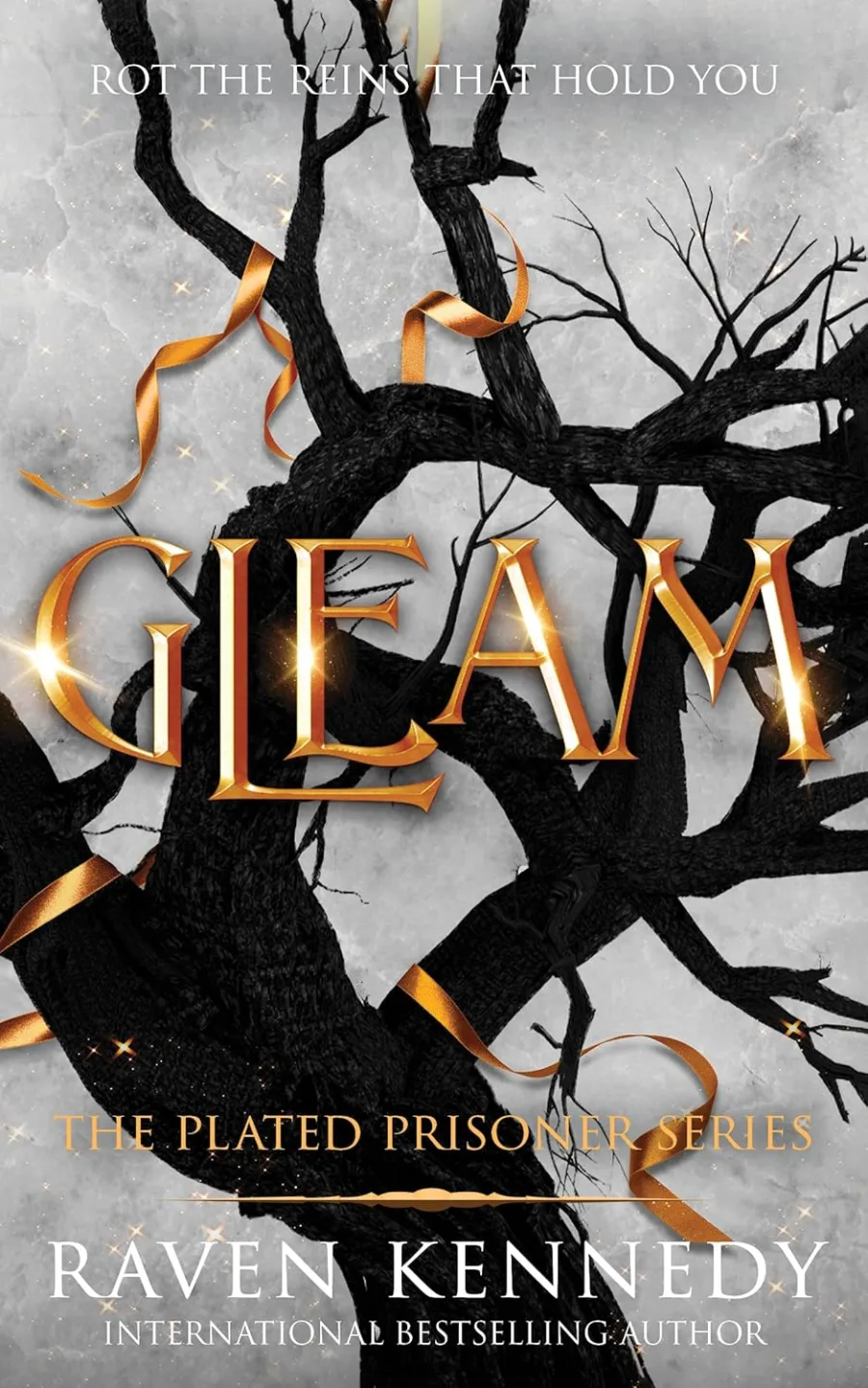
Download Cover Image
Do you want to download the full cover image for Gleam (The Plated Prisoner, 3)?