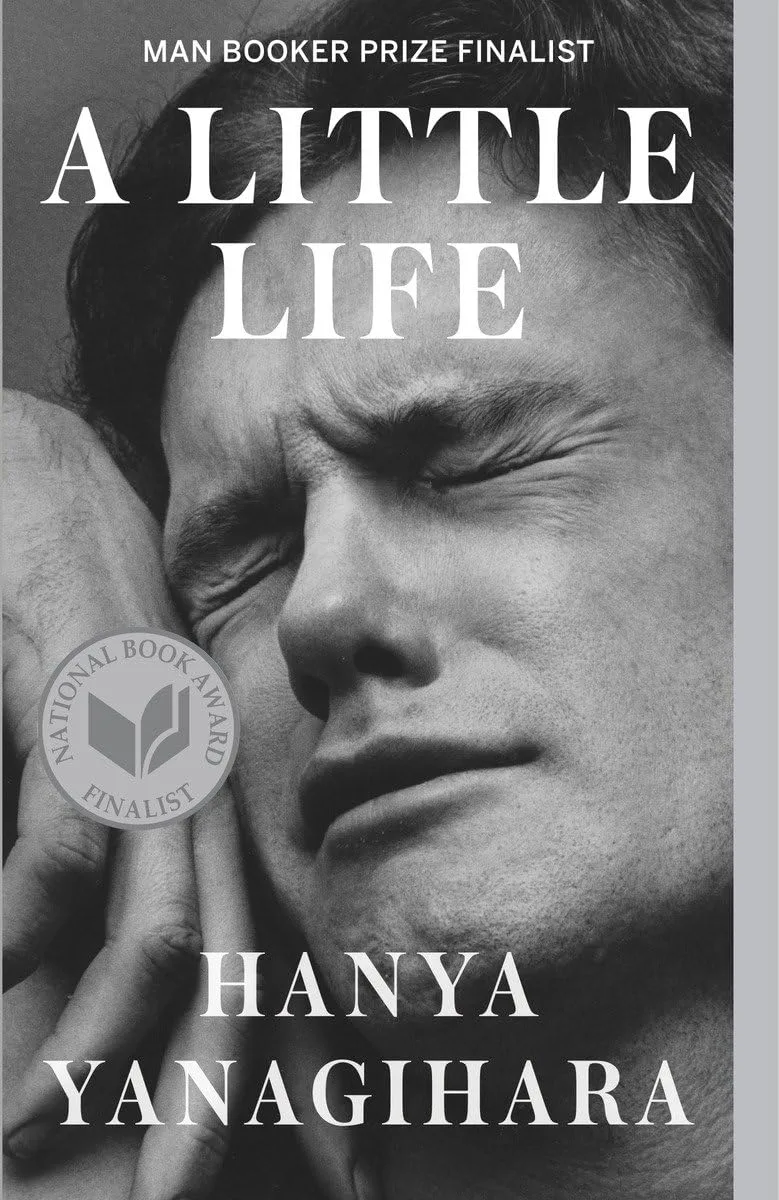
A Little Life
Paperback
• 832 Pages
• USD 18.00
• English
• 9780804172707
No ratings yet
| Publisher | Vintage |
|---|---|
| ISBN13 | 9780804172707 |
| ASIN/SKU | 0804172706 |
| Book Format | Paperback |
| Language | English |
| Pages | 832 |
| List Price | USD 18.00 |
| Publishing Date | 26/01/2016 |
| Dimensions | 5.25 x 1.45 x 8 inches |
| Weight | 1.32 pounds |
| Book Code | BD00055933 |
Buy this Book
Amazon Stores
Ebook Stores
Other Stores
Discover A Little Life by Hanya Yanagihara. This book is published by Vintage in Paperback format, ISBN 9780804172707, ASIN 0804172706, under Literature and Fiction, Family Saga Fiction, Coming of Age Fiction.
Book Description
NEW YORK TIMES BESTSELLER • A stunning “portrait of the enduring grace of friendship” (NPR) about the families we are born into, and those that we make for ourselves. A masterful depiction of love in the twenty-first century.
NATIONAL BOOK AWARD FINALIST • MAN BOOKER PRIZE FINALIST • WINNER OF THE KIRKUS PRIZE
A Little Life follows four college classmates—broke, adrift, and buoyed only by their friendship and ambition—as they move to New York in search of fame and fortune. While their relationships, which are tinged by addiction, success, and pride, deepen over the decades, the men are held together by their devotion to the brilliant, enigmatic Jude, a man scarred by an unspeakable childhood trauma. A hymn to brotherly bonds and a masterful depiction of love in the twenty-first century, Hanya Yanagihara’s stunning novel is about the families we are born into, and those that we make for ourselves.
NATIONAL BOOK AWARD FINALIST • MAN BOOKER PRIZE FINALIST • WINNER OF THE KIRKUS PRIZE
A Little Life follows four college classmates—broke, adrift, and buoyed only by their friendship and ambition—as they move to New York in search of fame and fortune. While their relationships, which are tinged by addiction, success, and pride, deepen over the decades, the men are held together by their devotion to the brilliant, enigmatic Jude, a man scarred by an unspeakable childhood trauma. A hymn to brotherly bonds and a masterful depiction of love in the twenty-first century, Hanya Yanagihara’s stunning novel is about the families we are born into, and those that we make for ourselves.
Author Biography
HANYA YANAGIHARA lives in New York City.
Editorial Reviews
NATIONAL BOOK AWARD FINALIST • MAN BOOKER PRIZE FINALIST • WINNER OF THE KIRKUS PRIZE • ONE OF THE BEST BOOKS OF THE YEAR: The New York Times • The Washington Post • The Wall Street Journal • NPR • Vanity Fair • Vogue • Minneapolis Star Tribune • St. Louis Post-Dispatch • The Guardian • O, The Oprah Magazine • Slate • Newsday • Buzzfeed • The Economist • Newsweek • People • Kansas City Star • Shelf Awareness • Time Out New York • Huffington Post • Book Riot • Refinery29 • Bookpage • Publishers Weekly • Kirkus
“Astonishing.” —The Atlantic
“Deeply moving. . . . A wrenching portrait of the enduring grace of friendship.” —NPR
“Elemental, irreducible.” —The New Yorker
“Hypnotic. . . . An intimate, operatic friendship between four men.” —The Economist
“Capacious and consuming. . . . Immersive.” —The Boston Globe
“Beautiful.” —Los Angeles Times
“Exquisite. . . . It’s not hyperbole to call this novel a masterwork—if anything that word is simply just too little for it.” —San Francisco Chronicle
“Remarkable. . . . An epic study of trauma and friendship written with such intelligence and depth of perception that it will be one of the benchmarks against which all other novels that broach those subjects (and they are legion) will be measured. . . . A Little Life announces [Yanagihara] as a major American novelist.” —The Wall Street Journal
“Utterly gripping. Wonderfully romantic and sometimes harrowing, A Little Life kept me reading late into the night, night after night.” —Edmund White
“Spellbinding . . . . An exquisitely written, complex triumph.” —O, The Oprah Magazine
“Drawn in extraordinary detail by incantatory prose. . . . Affecting and transcendent.” —The Washington Post
“[A Little Life] lands with a real sense of occasion: the arrival of a major new voice in fiction. . . . Yanagihara’s achievement has less to do with size . . . than with the breadth and depth of its considerable power, which speaks not to the indomitability of the spirit, but to the fragility of the self.” —Vogue
“Exquisite. . . . The book shifts from a generational portrait to something darker and more tender: an examination of the depths of human cruelty, counterbalanced by the restorative powers of friendship.” —The New Yorker
“A book unlike any other. . . . A Little Life asks serious questions about humanism and euthanasia and psychiatry and any number of the partis pris of modern western life. . . . A devastating read that will leave your heart, like the Grinch’s, a few sizes larger.” —The Guardian
“Exceedingly good.” —Newsweek
“A Little Life is unlike anything else out there. Over the top, beyond the pale and quite simply unforgettable.” —The Independent
“Piercing. . . . [Yanagihara is] an author with the talent to interrogate the basest and most beautiful extremes of human behaviour with sustained, bruising intensity.” —The Times Literary Supplement
“A brave novel. . . . Impressive and moving.” —Literary Review
“Enthralling and completely immersive. . .
“Astonishing.” —The Atlantic
“Deeply moving. . . . A wrenching portrait of the enduring grace of friendship.” —NPR
“Elemental, irreducible.” —The New Yorker
“Hypnotic. . . . An intimate, operatic friendship between four men.” —The Economist
“Capacious and consuming. . . . Immersive.” —The Boston Globe
“Beautiful.” —Los Angeles Times
“Exquisite. . . . It’s not hyperbole to call this novel a masterwork—if anything that word is simply just too little for it.” —San Francisco Chronicle
“Remarkable. . . . An epic study of trauma and friendship written with such intelligence and depth of perception that it will be one of the benchmarks against which all other novels that broach those subjects (and they are legion) will be measured. . . . A Little Life announces [Yanagihara] as a major American novelist.” —The Wall Street Journal
“Utterly gripping. Wonderfully romantic and sometimes harrowing, A Little Life kept me reading late into the night, night after night.” —Edmund White
“Spellbinding . . . . An exquisitely written, complex triumph.” —O, The Oprah Magazine
“Drawn in extraordinary detail by incantatory prose. . . . Affecting and transcendent.” —The Washington Post
“[A Little Life] lands with a real sense of occasion: the arrival of a major new voice in fiction. . . . Yanagihara’s achievement has less to do with size . . . than with the breadth and depth of its considerable power, which speaks not to the indomitability of the spirit, but to the fragility of the self.” —Vogue
“Exquisite. . . . The book shifts from a generational portrait to something darker and more tender: an examination of the depths of human cruelty, counterbalanced by the restorative powers of friendship.” —The New Yorker
“A book unlike any other. . . . A Little Life asks serious questions about humanism and euthanasia and psychiatry and any number of the partis pris of modern western life. . . . A devastating read that will leave your heart, like the Grinch’s, a few sizes larger.” —The Guardian
“Exceedingly good.” —Newsweek
“A Little Life is unlike anything else out there. Over the top, beyond the pale and quite simply unforgettable.” —The Independent
“Piercing. . . . [Yanagihara is] an author with the talent to interrogate the basest and most beautiful extremes of human behaviour with sustained, bruising intensity.” —The Times Literary Supplement
“A brave novel. . . . Impressive and moving.” —Literary Review
“Enthralling and completely immersive. . .
Book Summary
A Little Life by Hanya Yanagihara is a deeply emotional, often devastating novel that follows the lives of four friends over several decades, showing how love, success, trauma, and memory shape them in ways that are both beautiful and unbearably painful. The story begins with four young men—Jude St. Francis, Willem Ragnarsson, Malcolm Irvine, and JB Marion—who meet in college and move to New York City afterward, trying to build their adult lives. At first, the book feels like a classic story of friendship and ambition: Malcolm is an architect from a privileged background, JB is a bold, talented artist, Willem is a gentle aspiring actor from a working-class family, and Jude is a brilliant, mysterious lawyer. They are poor, hopeful, and tightly bonded, sharing tiny apartments, long conversations, and the dream that their talents will eventually be recognized. New York is both harsh and full of possibility, and their friendship becomes the emotional center that makes the struggle bearable.
As the years pass, all four begin to find success in their fields. Malcolm works at a prestigious firm and later designs important buildings. JB’s art gains attention, and he becomes known for vibrant, striking paintings that often depict his friends. Willem slowly moves from small roles to becoming a celebrated actor. Jude becomes an exceptional litigator at a top law firm, widely admired for his intelligence and calm control. On the surface, their adult lives start to look like triumph: money, recognition, invitations, beautiful homes. Yet, underneath this success, the novel steadily shifts its focus toward Jude, revealing that his inner world does not match his outer achievements. The story that initially feels like an ensemble narrative gradually narrows into an intense character study of Jude and the effect his severe childhood trauma has on him and on those who love him.
Jude is the emotional core of A Little Life and much of the book’s power comes from the slow, painful uncovering of his past. From the beginning, Jude is secretive about his childhood. He limps, has unexplained injuries, and refuses to talk about his family or where he came from. His friends know that something terrible happened, but they respect his silence, hoping that their care is enough. Over time, the narrative reveals that Jude’s history is filled with extreme abuse: he grew up without any real protection, was exploited by adults who should have cared for him, and was taught to believe he was worthless. The details, when they appear, are graphic and upsetting, and the book does not soften them. Jude carries this past in his body—chronic pain, scars, self-harm—and in his mind, through deep shame, self-hatred, and an inability to fully trust that he deserves happiness.
Despite everything he has endured, Jude is brilliant, kind, and hardworking. His friends and later colleagues admire him for his discipline, his loyalty, and his quiet, thoughtful presence. He becomes extremely successful as a lawyer and financially secure, but success does not erase his trauma. Instead, it exists alongside it, creating a sharp contrast that the novel constantly explores: how someone can look “perfect” from the outside and still be silently breaking inside. Jude struggles with intimacy, both physical and emotional. He cannot easily accept affection without feeling like he is deceiving the person who cares for him. He believes that if anyone knew the full truth about his past and his scars, they would leave him. This fear leads him to push people away and to hurt himself.
The friendship among the four men changes as their lives evolve. JB’s arrogance and growing ego lead him to make cruel, thoughtless choices, especially toward Jude, and this strains their bond. Malcolm, though caring, sometimes drifts into his own world, pulled by career and family. Willem, however, stays the closest to Jude. The relationship between Jude and Willem deepens over the years, moving beyond simple friendship into something more intimate and tender. Willem is one of the few people who consistently tries to reach Jude’s inner self, offering patience, loyalty, and love without demanding explanations. Their relationship becomes one of the central emotional anchors of the book, showing how a person can try to hold another through pain that never fully heals. Yet even this love story is not simple; Jude’s belief that he is damaged and unworthy makes it hard for him to accept Willem’s love without fear.
Alongside Willem, other people step into Jude’s life and try to give him a sense of family. One of the most important is Harold, a kind, intellectual professor who, together with his wife Julia, eventually adopts Jude as an adult. Harold offers Jude a father’s love—stable, patient, and unconditional—something Jude has never known. Through Harold’s perspective, the reader sees Jude not only as a victim of terrible abuse, but also as a deeply loved son, a person whose presence brings joy and meaning. Still, even with Harold’s love and the support of his friends, Jude remains haunted. He continues to harm himself, the trauma manifesting in rituals of punishment that he feels he deserves. The novel repeatedly shows the limits of love against certain wounds: love helps, love comforts, but it cannot entirely erase the belief Jude has internalized—that he is beyond saving.
A Little Life spends a lot of time in the quiet, everyday details of the characters’ lives: dinners, holidays, apartments, work projects, aging bodies, the slow accumulation of shared memories. These ordinary moments build a strong sense of realism and intimacy, making the reader feel like part of the group. As the characters grow older, their responsibilities and losses grow too. Careers peak, relationships change, health issues appear, and the city around them shifts. The book’s length and detail allow the reader to see how time both deepens bonds and complicates them. Pain does not stay the same; it transforms as people change. Happiness is not a permanent state but something that flickers in and out of view.
The emotional intensity of the novel comes from the constant balance between horror and love. Jude’s past is almost unbearable to read about, and the scenes describing his self-harm and inner torment are heavy and unflinching. Yet the book also offers moments of immense tenderness: friends cooking for each other after long days, Harold’s quiet pride in Jude’s achievements, Willem’s gentle care, small acts of protection, jokes and shared memories that ease the darkness for a while. Yanagihara seems to be asking whether love, in all its forms, can stand against extreme suffering—and what happens to the people who try to love someone whose pain is larger than their life together. The answer the book gives is complicated. It suggests that love matters deeply, that it can create a kind of grace and meaning, but it does not guarantee safety, rescue, or healing.
As the years pass and the characters move into middle age, the story grows heavier, and the consequences of Jude’s trauma become harder to manage. The novel does not offer a traditional, comforting resolution. Instead, it shows how some wounds are chronic, how some minds never fully escape the stories they were taught about themselves. The people around Jude are left to grapple with grief, guilt, and questions about whether they could have done more. At the same time, the narrative honors the ways Jude has shaped their lives: inspiring them, making them kinder, giving them reason to care more deeply.
By the end of A Little Life the reader has witnessed a long, intricate tapestry of friendship, love, art, work, and suffering. The title itself is bittersweet; the lives portrayed seem large and full of emotion, yet the book reminds us how fragile, brief, and vulnerable any life is. Yanagihara’s novel leaves a lingering impression of both heartbreak and respect: heartbreak for the pain Jude endures, and respect for the way the characters love him—even when loving him means facing parts of life that are almost too painful to bear.
As the years pass, all four begin to find success in their fields. Malcolm works at a prestigious firm and later designs important buildings. JB’s art gains attention, and he becomes known for vibrant, striking paintings that often depict his friends. Willem slowly moves from small roles to becoming a celebrated actor. Jude becomes an exceptional litigator at a top law firm, widely admired for his intelligence and calm control. On the surface, their adult lives start to look like triumph: money, recognition, invitations, beautiful homes. Yet, underneath this success, the novel steadily shifts its focus toward Jude, revealing that his inner world does not match his outer achievements. The story that initially feels like an ensemble narrative gradually narrows into an intense character study of Jude and the effect his severe childhood trauma has on him and on those who love him.
Jude is the emotional core of A Little Life and much of the book’s power comes from the slow, painful uncovering of his past. From the beginning, Jude is secretive about his childhood. He limps, has unexplained injuries, and refuses to talk about his family or where he came from. His friends know that something terrible happened, but they respect his silence, hoping that their care is enough. Over time, the narrative reveals that Jude’s history is filled with extreme abuse: he grew up without any real protection, was exploited by adults who should have cared for him, and was taught to believe he was worthless. The details, when they appear, are graphic and upsetting, and the book does not soften them. Jude carries this past in his body—chronic pain, scars, self-harm—and in his mind, through deep shame, self-hatred, and an inability to fully trust that he deserves happiness.
Despite everything he has endured, Jude is brilliant, kind, and hardworking. His friends and later colleagues admire him for his discipline, his loyalty, and his quiet, thoughtful presence. He becomes extremely successful as a lawyer and financially secure, but success does not erase his trauma. Instead, it exists alongside it, creating a sharp contrast that the novel constantly explores: how someone can look “perfect” from the outside and still be silently breaking inside. Jude struggles with intimacy, both physical and emotional. He cannot easily accept affection without feeling like he is deceiving the person who cares for him. He believes that if anyone knew the full truth about his past and his scars, they would leave him. This fear leads him to push people away and to hurt himself.
The friendship among the four men changes as their lives evolve. JB’s arrogance and growing ego lead him to make cruel, thoughtless choices, especially toward Jude, and this strains their bond. Malcolm, though caring, sometimes drifts into his own world, pulled by career and family. Willem, however, stays the closest to Jude. The relationship between Jude and Willem deepens over the years, moving beyond simple friendship into something more intimate and tender. Willem is one of the few people who consistently tries to reach Jude’s inner self, offering patience, loyalty, and love without demanding explanations. Their relationship becomes one of the central emotional anchors of the book, showing how a person can try to hold another through pain that never fully heals. Yet even this love story is not simple; Jude’s belief that he is damaged and unworthy makes it hard for him to accept Willem’s love without fear.
Alongside Willem, other people step into Jude’s life and try to give him a sense of family. One of the most important is Harold, a kind, intellectual professor who, together with his wife Julia, eventually adopts Jude as an adult. Harold offers Jude a father’s love—stable, patient, and unconditional—something Jude has never known. Through Harold’s perspective, the reader sees Jude not only as a victim of terrible abuse, but also as a deeply loved son, a person whose presence brings joy and meaning. Still, even with Harold’s love and the support of his friends, Jude remains haunted. He continues to harm himself, the trauma manifesting in rituals of punishment that he feels he deserves. The novel repeatedly shows the limits of love against certain wounds: love helps, love comforts, but it cannot entirely erase the belief Jude has internalized—that he is beyond saving.
A Little Life spends a lot of time in the quiet, everyday details of the characters’ lives: dinners, holidays, apartments, work projects, aging bodies, the slow accumulation of shared memories. These ordinary moments build a strong sense of realism and intimacy, making the reader feel like part of the group. As the characters grow older, their responsibilities and losses grow too. Careers peak, relationships change, health issues appear, and the city around them shifts. The book’s length and detail allow the reader to see how time both deepens bonds and complicates them. Pain does not stay the same; it transforms as people change. Happiness is not a permanent state but something that flickers in and out of view.
The emotional intensity of the novel comes from the constant balance between horror and love. Jude’s past is almost unbearable to read about, and the scenes describing his self-harm and inner torment are heavy and unflinching. Yet the book also offers moments of immense tenderness: friends cooking for each other after long days, Harold’s quiet pride in Jude’s achievements, Willem’s gentle care, small acts of protection, jokes and shared memories that ease the darkness for a while. Yanagihara seems to be asking whether love, in all its forms, can stand against extreme suffering—and what happens to the people who try to love someone whose pain is larger than their life together. The answer the book gives is complicated. It suggests that love matters deeply, that it can create a kind of grace and meaning, but it does not guarantee safety, rescue, or healing.
As the years pass and the characters move into middle age, the story grows heavier, and the consequences of Jude’s trauma become harder to manage. The novel does not offer a traditional, comforting resolution. Instead, it shows how some wounds are chronic, how some minds never fully escape the stories they were taught about themselves. The people around Jude are left to grapple with grief, guilt, and questions about whether they could have done more. At the same time, the narrative honors the ways Jude has shaped their lives: inspiring them, making them kinder, giving them reason to care more deeply.
By the end of A Little Life the reader has witnessed a long, intricate tapestry of friendship, love, art, work, and suffering. The title itself is bittersweet; the lives portrayed seem large and full of emotion, yet the book reminds us how fragile, brief, and vulnerable any life is. Yanagihara’s novel leaves a lingering impression of both heartbreak and respect: heartbreak for the pain Jude endures, and respect for the way the characters love him—even when loving him means facing parts of life that are almost too painful to bear.
Sample Chapters
Sample Chapters will be added soon…
Reader Reviews
No reviews yet.
A Little Life