
The 48 Laws of Power
Paperback
• 452 Pages
• USD 26.00
• English
• 9780140280197
No ratings yet
| Publisher | Penguin Books |
|---|---|
| ISBN13 | 9780140280197 |
| ASIN/SKU | 0140280197 |
| Book Format | Paperback |
| Language | English |
| Pages | 452 |
| List Price | USD 26.00 |
| Publishing Date | 01/09/2000 |
| Dimensions | 9.1 x 6.4 x 1.3 inches |
| Weight | 1.6 pounds |
| Book Code | BD00055940 |
Buy this Book
Amazon Stores
Ebook Stores
Other Stores
Discover The 48 Laws of Power by Robert Greene. This book is published by Penguin Books in Paperback format, ISBN 9780140280197, ASIN 0140280197, under Politics and Social Sciences, Social Philosophy, History and Theory of Politics.
Book Description
Amoral, cunning, ruthless, and instructive, this multi-million-copy New York Times bestseller is the definitive manual for anyone interested in gaining, observing, or defending against ultimate control – from the author of The Laws of Human Nature. This is the only authorized paperback edition in the US.
In the book that People magazine proclaimed “beguiling” and “fascinating,” Robert Greene and Joost Elffers have distilled three thousand years of the history of power into 48 essential laws by drawing from the philosophies of Machiavelli, Sun Tzu, and Carl Von Clausewitz and also from the lives of figures ranging from Henry Kissinger to P.T. Barnum.
Some laws teach the need for prudence (“Law 1: Never Outshine the Master”), others teach the value of confidence (“Law 28: Enter Action with Boldness”), and many recommend absolute self-preservation (“Law 15: Crush Your Enemy Totally”). Every law, though, has one thing in common: an interest in total domination. In a bold and arresting two-color package, The 48 Laws of Power is ideal whether your aim is conquest, self-defense, or simply to understand the rules of the game.
In the book that People magazine proclaimed “beguiling” and “fascinating,” Robert Greene and Joost Elffers have distilled three thousand years of the history of power into 48 essential laws by drawing from the philosophies of Machiavelli, Sun Tzu, and Carl Von Clausewitz and also from the lives of figures ranging from Henry Kissinger to P.T. Barnum.
Some laws teach the need for prudence (“Law 1: Never Outshine the Master”), others teach the value of confidence (“Law 28: Enter Action with Boldness”), and many recommend absolute self-preservation (“Law 15: Crush Your Enemy Totally”). Every law, though, has one thing in common: an interest in total domination. In a bold and arresting two-color package, The 48 Laws of Power is ideal whether your aim is conquest, self-defense, or simply to understand the rules of the game.
Author Biography
Robert Greene, the #1 New York Times bestselling author of The 48 Laws of Power, The 33 Strategies of War, The Art of Seduction, Mastery, The Laws of Human Nature, and The Daily Laws, is an internationally renowned expert on power strategies. He lives in Los Angeles.
Editorial Reviews
“Machiavelli has a new rival. And Sun Tzu had better watch his back. Greene . . . has put together a checklist of ambitious behavior. Just reading the table of contents is enough to stir a little corner-office lust.”—New York magazine
“Beguiling . . . literate . . . fascinating. A wry primer for people who desperately want to be on top.”—People magazine
“An heir to Machiavelli’s Prince . . . gentler souls will find this book frightening, those whose moral compass is oriented solely to power will have a perfect vade mecum.” —Publishers Weekly
“Satisfyingly dense and . . . literary, with fantastic examples of genius power-game players. It’s The Rules meets In Pursuit of Wow! with a degree in comparative literature.”—Allure
“Beguiling . . . literate . . . fascinating. A wry primer for people who desperately want to be on top.”—People magazine
“An heir to Machiavelli’s Prince . . . gentler souls will find this book frightening, those whose moral compass is oriented solely to power will have a perfect vade mecum.” —Publishers Weekly
“Satisfyingly dense and . . . literary, with fantastic examples of genius power-game players. It’s The Rules meets In Pursuit of Wow! with a degree in comparative literature.”—Allure
Book Summary
The 48 Laws of Power by Robert Greene is a sharp, provocative exploration of how power works in human relationships, institutions, and history. Instead of telling a single story, the book lays out forty-eight “laws” or principles that, according to Greene, people use to gain, protect, and expand power. Each law is explained through short commentary and vivid historical anecdotes—from kings and courtiers to generals, artists, and con men. Greene’s basic claim is that power is always present beneath the surface of social life, whether we acknowledge it or not, and that being naïve about power can make you vulnerable. He writes in a cold, strategic tone, inviting readers to look at human behavior without sentimentality, focusing on strategy, manipulation, and self-preservation rather than morality.
Early in the book, Greene emphasizes appearance, reputation, and emotional control as foundations of power. One famous law—“Never outshine the master”—warns that making a superior feel overshadowed, even unintentionally, can be dangerous, because people in power often react with insecurity and retaliation. So, Greene advises, you should let those above you feel comfortable and superior, even if you are more talented. Another law, “Court attention at all costs,” argues that being visible and memorable is crucial: in a crowded world, fading into the background is a kind of death, and those who stand out gain influence. At the same time, he insists that powerful people must control their emotions and never act out of simple anger or impulse. Instead, they should stay calm and calculate, turning conflicts into opportunities. These early ideas establish a worldview where image, timing, and restraint matter more than honesty or idealism.
A central thread throughout the book is the idea that much of life is a kind of game, and that people often hide their true motives. Greene repeatedly urges readers to conceal their intentions, saying that directness can be used against you. According to him, showing all your cards makes it easy for others to predict and block you, whereas mystery and unpredictability keep others off balance. A related law, “Always say less than necessary,” suggests that speaking too much can reveal weakness, insecurity, or plans that others might exploit. By staying quiet and letting others talk, you gather information while remaining harder to read. Greene also emphasizes the power of absence and distance: withdrawing at the right moment can increase your value and make others more eager to win your attention, in the same way that scarcity makes something more desirable.
The book spends a lot of time on manipulation and strategy in relationships. Greene describes how powerful people lure others in with charm, generosity, and flattery, only to later use them as pawns. He recommends learning to read people’s desires and fears, then using that understanding to influence them. For instance, he points out that many people look for leaders or rescuers, and that offering them what they crave—security, admiration, or hope—can make them loyal to you. At the same time, he warns against relying too much on anyone else. Several laws focus on independence: “Do not put too much trust in friends” suggests that friends may be more emotional, jealous, or unpredictable than carefully chosen allies, while “Use absence to increase respect and honor” shows how stepping back can keep others from taking you for granted. Overall, Greene treats relationships as shifting alliances rather than stable bonds built purely on trust.
Historically, Greene supports his laws with examples of figures like Machiavelli, Napoleon, Henry Kissinger, and various princes, courtiers, and tricksters. These stories show people rising and falling based on how well they understood power. Those who were too blunt, too trusting, or too kind often ended up betrayed or defeated, while those who were patient, deceptive, and strategic tended to survive longer. For example, Greene frequently returns to the idea that timing is everything: acting too early or too late can destroy a plan, while waiting for the exact right moment can make a bold move seem almost effortless. He advises readers to observe patterns, trends, and moods, and to move only when conditions are favorable. In his view, successful people do not simply push; they watch, adapt, and strike when others are least prepared.
Another major theme is the use of conflict and opposition. Greene doesn’t suggest avoiding conflict; he often recommends shaping it. Some laws explain how to turn enemies into tools, using their resistance to sharpen your skills or unify your supporters. Others show how a well-chosen enemy can give you identity and purpose, making you appear stronger by contrast. He also discusses how powerful leaders sometimes deliberately create chaos or uncertainty so that people cling more tightly to them, grateful for any sense of direction. In negotiations or contests, Greene advises controlling the frame—setting the terms in a way that benefits you so that others find themselves reacting within your chosen boundaries. This mindset treats battles, arguments, and rivalries as strategic fields where emotion must be suppressed and long-term advantage prioritized.
Greene pays close attention to reputation as a kind of currency. He insists that reputation is one of the most valuable assets a person can have and must be protected carefully. A strong reputation can make people fear or admire you before you even act, smoothing your path and discouraging attacks. When necessary, he suggests attacking an opponent’s reputation subtly, undermining their perceived reliability or competence so that others doubt them. At the same time, he encourages building an image that fits your aims—whether that is ruthless, generous, mysterious, or visionary—and consistently reinforcing it through behavior and stories. In his view, who people think you are often matters more than who you really are.
Later laws turn toward more internal forms of power, focusing on self-mastery. Greene warns that being ruled by your own emotions, habits, or insecurities makes you easy to manipulate. He argues that truly powerful people are able to step back, see themselves clearly, and adjust their behavior. They learn from past mistakes, anticipate future traps, and avoid repeating patterns that lead to weakness. One law suggests that you should “assume formlessness,” meaning you should avoid becoming too rigid in your identity or methods. If you can change shape—altering your style, strategy, or persona to fit the moment—you are harder to pin down and defeat. This flexibility, paired with discipline, becomes a kind of inner armor against the unpredictability of other people and events.
Morally, the book is controversial. Greene writes as if morality is secondary to effectiveness, and he often describes manipulation, deception, and cold calculation without condemning them. For some readers, this feels brutal or cynical; for others, it feels like an honest look at how the world often works beneath polite surfaces. At the same time, many people read “The 48 Laws of Power” not to become ruthless manipulators, but to defend themselves against those who already use such tactics. Understanding the laws can make you more alert to flattery, mind games, and subtle pressure, helping you stay grounded and less easily controlled. The book, therefore, can be seen both as a manual for gaining power and as a guide for recognizing it in others.
In the end, The 48 Laws of Power paints a picture of human life as an ongoing struggle for advantage, recognition, and control. It suggests that power is neither inherently good nor evil, but simply a force people wield, often carelessly, sometimes skillfully. Greene’s laws ask readers to look at their own behavior and that of others with clear eyes, recognizing the strategies at play in workplaces, politics, families, and friendships. Whether one agrees with all of his conclusions or not, the book leaves a lasting impression: it makes you more aware of the subtle movements of influence around you, and of the choices you face between playing the game, resisting it, or pretending it doesn’t exist.
Early in the book, Greene emphasizes appearance, reputation, and emotional control as foundations of power. One famous law—“Never outshine the master”—warns that making a superior feel overshadowed, even unintentionally, can be dangerous, because people in power often react with insecurity and retaliation. So, Greene advises, you should let those above you feel comfortable and superior, even if you are more talented. Another law, “Court attention at all costs,” argues that being visible and memorable is crucial: in a crowded world, fading into the background is a kind of death, and those who stand out gain influence. At the same time, he insists that powerful people must control their emotions and never act out of simple anger or impulse. Instead, they should stay calm and calculate, turning conflicts into opportunities. These early ideas establish a worldview where image, timing, and restraint matter more than honesty or idealism.
A central thread throughout the book is the idea that much of life is a kind of game, and that people often hide their true motives. Greene repeatedly urges readers to conceal their intentions, saying that directness can be used against you. According to him, showing all your cards makes it easy for others to predict and block you, whereas mystery and unpredictability keep others off balance. A related law, “Always say less than necessary,” suggests that speaking too much can reveal weakness, insecurity, or plans that others might exploit. By staying quiet and letting others talk, you gather information while remaining harder to read. Greene also emphasizes the power of absence and distance: withdrawing at the right moment can increase your value and make others more eager to win your attention, in the same way that scarcity makes something more desirable.
The book spends a lot of time on manipulation and strategy in relationships. Greene describes how powerful people lure others in with charm, generosity, and flattery, only to later use them as pawns. He recommends learning to read people’s desires and fears, then using that understanding to influence them. For instance, he points out that many people look for leaders or rescuers, and that offering them what they crave—security, admiration, or hope—can make them loyal to you. At the same time, he warns against relying too much on anyone else. Several laws focus on independence: “Do not put too much trust in friends” suggests that friends may be more emotional, jealous, or unpredictable than carefully chosen allies, while “Use absence to increase respect and honor” shows how stepping back can keep others from taking you for granted. Overall, Greene treats relationships as shifting alliances rather than stable bonds built purely on trust.
Historically, Greene supports his laws with examples of figures like Machiavelli, Napoleon, Henry Kissinger, and various princes, courtiers, and tricksters. These stories show people rising and falling based on how well they understood power. Those who were too blunt, too trusting, or too kind often ended up betrayed or defeated, while those who were patient, deceptive, and strategic tended to survive longer. For example, Greene frequently returns to the idea that timing is everything: acting too early or too late can destroy a plan, while waiting for the exact right moment can make a bold move seem almost effortless. He advises readers to observe patterns, trends, and moods, and to move only when conditions are favorable. In his view, successful people do not simply push; they watch, adapt, and strike when others are least prepared.
Another major theme is the use of conflict and opposition. Greene doesn’t suggest avoiding conflict; he often recommends shaping it. Some laws explain how to turn enemies into tools, using their resistance to sharpen your skills or unify your supporters. Others show how a well-chosen enemy can give you identity and purpose, making you appear stronger by contrast. He also discusses how powerful leaders sometimes deliberately create chaos or uncertainty so that people cling more tightly to them, grateful for any sense of direction. In negotiations or contests, Greene advises controlling the frame—setting the terms in a way that benefits you so that others find themselves reacting within your chosen boundaries. This mindset treats battles, arguments, and rivalries as strategic fields where emotion must be suppressed and long-term advantage prioritized.
Greene pays close attention to reputation as a kind of currency. He insists that reputation is one of the most valuable assets a person can have and must be protected carefully. A strong reputation can make people fear or admire you before you even act, smoothing your path and discouraging attacks. When necessary, he suggests attacking an opponent’s reputation subtly, undermining their perceived reliability or competence so that others doubt them. At the same time, he encourages building an image that fits your aims—whether that is ruthless, generous, mysterious, or visionary—and consistently reinforcing it through behavior and stories. In his view, who people think you are often matters more than who you really are.
Later laws turn toward more internal forms of power, focusing on self-mastery. Greene warns that being ruled by your own emotions, habits, or insecurities makes you easy to manipulate. He argues that truly powerful people are able to step back, see themselves clearly, and adjust their behavior. They learn from past mistakes, anticipate future traps, and avoid repeating patterns that lead to weakness. One law suggests that you should “assume formlessness,” meaning you should avoid becoming too rigid in your identity or methods. If you can change shape—altering your style, strategy, or persona to fit the moment—you are harder to pin down and defeat. This flexibility, paired with discipline, becomes a kind of inner armor against the unpredictability of other people and events.
Morally, the book is controversial. Greene writes as if morality is secondary to effectiveness, and he often describes manipulation, deception, and cold calculation without condemning them. For some readers, this feels brutal or cynical; for others, it feels like an honest look at how the world often works beneath polite surfaces. At the same time, many people read “The 48 Laws of Power” not to become ruthless manipulators, but to defend themselves against those who already use such tactics. Understanding the laws can make you more alert to flattery, mind games, and subtle pressure, helping you stay grounded and less easily controlled. The book, therefore, can be seen both as a manual for gaining power and as a guide for recognizing it in others.
In the end, The 48 Laws of Power paints a picture of human life as an ongoing struggle for advantage, recognition, and control. It suggests that power is neither inherently good nor evil, but simply a force people wield, often carelessly, sometimes skillfully. Greene’s laws ask readers to look at their own behavior and that of others with clear eyes, recognizing the strategies at play in workplaces, politics, families, and friendships. Whether one agrees with all of his conclusions or not, the book leaves a lasting impression: it makes you more aware of the subtle movements of influence around you, and of the choices you face between playing the game, resisting it, or pretending it doesn’t exist.
Sample Chapters
Sample Chapters will be added soon…
Reader Reviews
No reviews yet.
The 48 Laws of Power
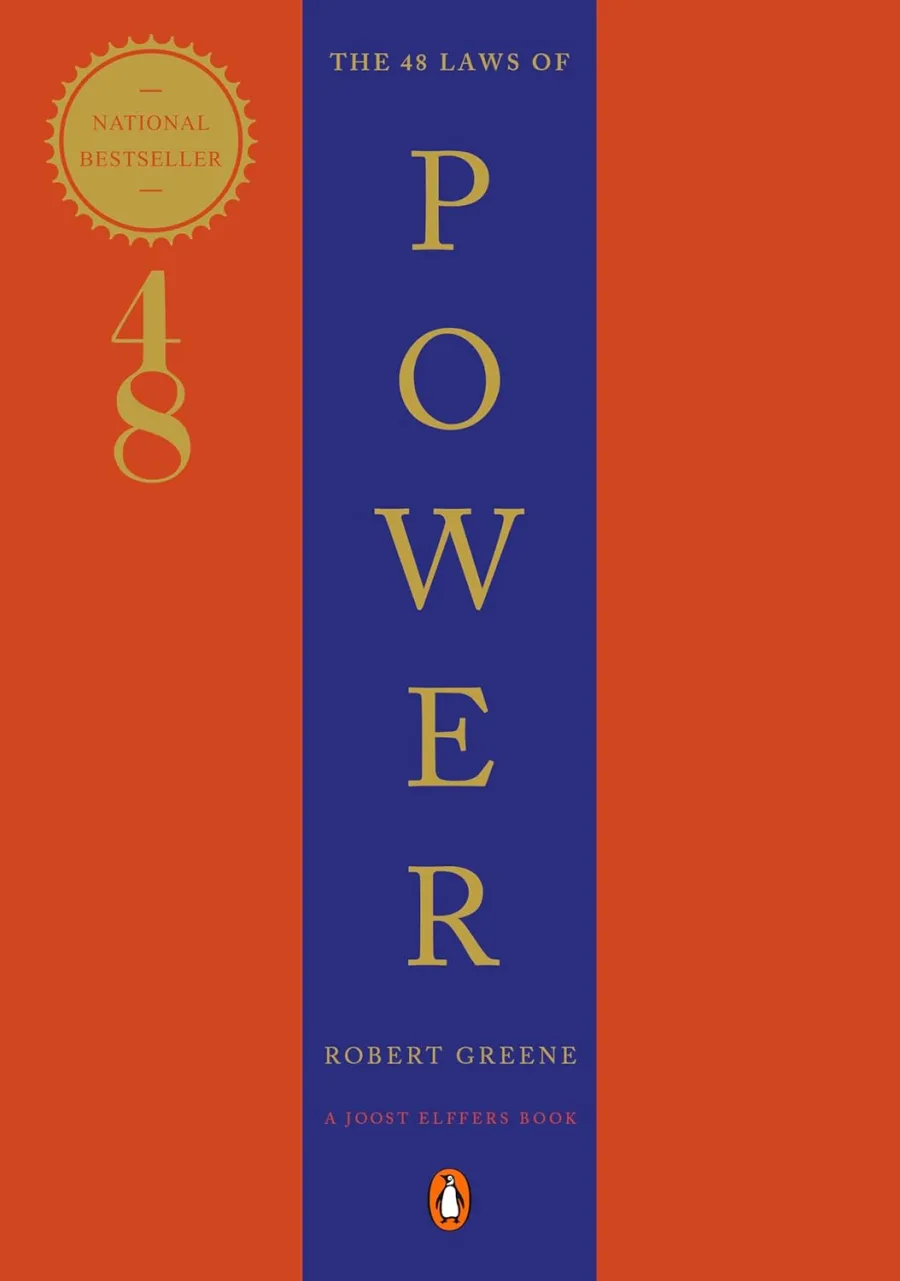
Download Cover Image
Do you want to download the full cover image for The 48 Laws of Power?