
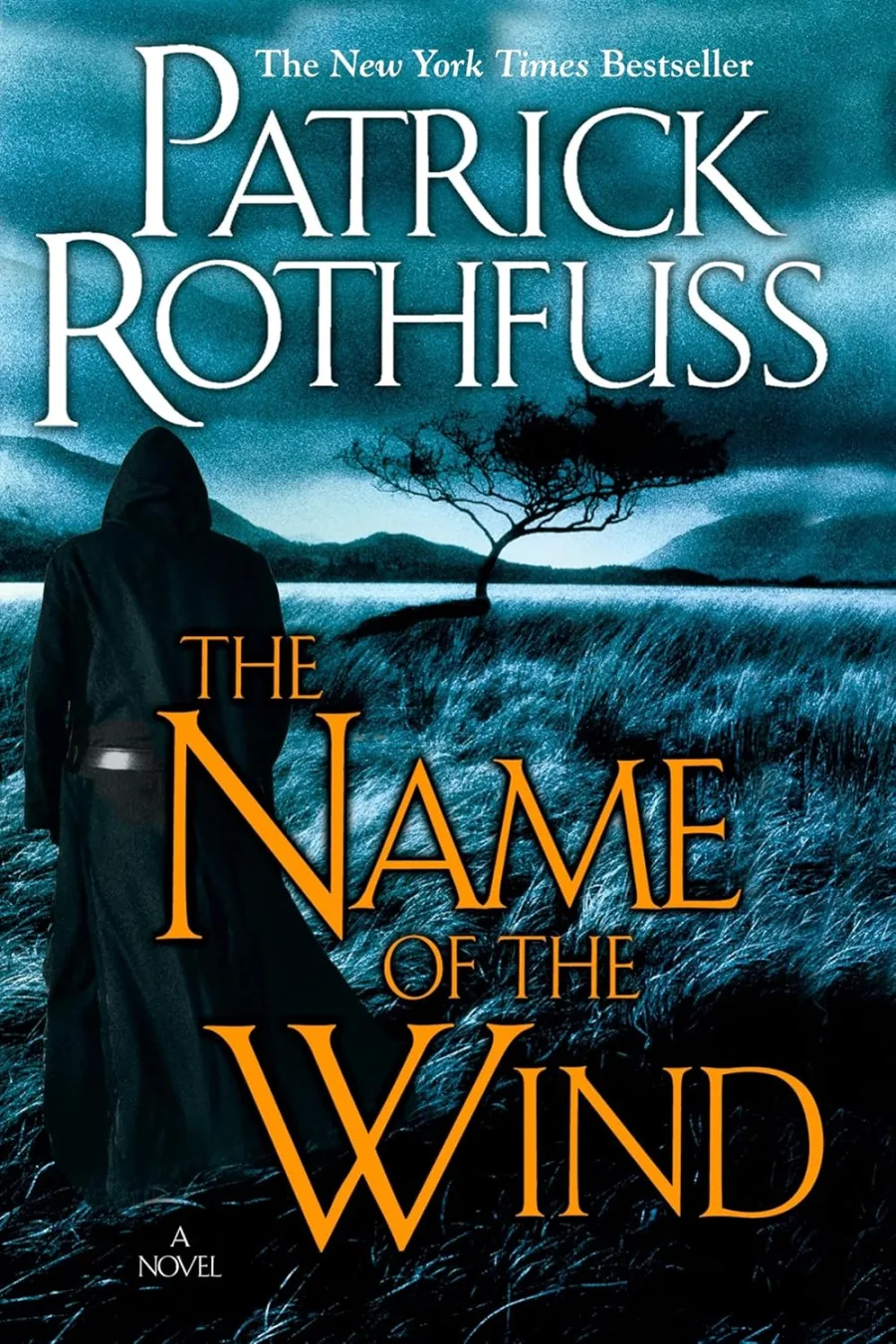
The Name of the Wind (Kingkiller Chronicles, Day 1)
Paperback
• 672 Pages
• USD 24.00
• English
• 9780756405892
No ratings yet
| Publisher | DAW |
|---|---|
| ISBN13 | 9780756405892 |
| ASIN/SKU | 0756405890 |
| Book Format | Paperback |
| Language | English |
| Pages | 672 |
| List Price | USD 24.00 |
| Publishing Date | 07/04/2009 |
| Dimensions | .97 x 1.49 x 9.04 inches |
| Weight | 1.55 pounds |
| Book Code | BD00055952 |
Buy this Book
Amazon Stores
Ebook Stores
Other Stores
Discover The Name of the Wind (Kingkiller Chronicles, Day 1) by Patrick Rothfuss. This book is published by DAW in Paperback format, ISBN 9780756405892, ASIN 0756405890, under Science Fiction and Fantasy, Coming of Age Fantasy, Paranormal Fantasy.
Book Description
This is the riveting first-person narrative of Kvothe, a young man who grows to be one of the most notorious magicians his world has ever seen. From his childhood in a troupe of traveling players, to years spent as a near-feral orphan in a crime-riddled city, to his daringly brazen yet successful bid to enter a legendary school of magic, The Name of the Wind is a masterpiece that transports readers into the body and mind of a wizard.
Author Biography
Patrick Rothfuss is the bestselling author of The Kingkiller Chronicle. His first novel, The Name of the Wind, won the Quill Award and was a Publishers Weekly Best Book of the Year. Its sequel, The Wise Man’s Fear, debuted at #1 on The New York Times bestseller chart and won the David Gemmell Legend Award. His novels have appeared on NPR’s Top 100 Science Fiction/Fantasy Books list and Locus’ Best 21st Century Fantasy Novels list. Pat lives in Wisconsin, where he brews mead, builds box forts with his children, and runs Worldbuilders, a book-centered charity that has raised more than six million dollars for Heifer International. He can be found at patrickrothfuss.com and on Twitter at @patrickrothfuss.
Editorial Reviews
Praise for The Kingkiller Chronicle
“The best epic fantasy I read last year.... He’s bloody good, this Rothfuss guy.” —George R. R. Martin, New York Times-bestselling author of A Song of Ice and Fire
“Rothfuss’Kingkiller books are among the most read and re-read in our home. It’s a world you want to spend lifetimes in, as his many fans will attest.” —Lin-Manuel Miranda, Pulitzer Prize-winning creator of Hamilton
“Rothfuss has real talent, and his tale of Kvothe is deep and intricate and wondrous.” —Terry Brooks, New York Times-bestselling author of Shannara
"It is a rare and great pleasure to find a fantasist writing...with true music in the words." —Ursula K. LeGuin, award-winning author of Earthsea
"The characters are real and the magic is true.” —Robin Hobb, New York Times-bestselling author of Assassin’s Apprentice
"Masterful.... There is a beauty to Pat's writing that defies description." —Brandon Sanderson, New York Times-bestselling author of Mistborn
“[Makes] you think he's inventing the genre, instead of reinventing it.” —Lev Grossman, New York Times-bestselling author of The Magicians
“This is a magnificent book.” —Anne McCaffrey, award-winning author of the Dragonriders of Pern
“The great new fantasy writer we've been waiting for, and this is an astonishing book." —Orson Scott Card, New York Times-bestselling author of Ender’s Game
“It's not the fantasy trappings (as wonderful as they are) that make this novel so good, but what the author has to say about true, common things, about ambition and failure, art, love, and loss.” —Tad Williams, New York Times-bestselling author of Memory, Sorrow, and Thorn
“An extremely immersive story set in a flawlessly constructed world and told extremely well.” —Jo Walton, award-winning author of Among Others
“Hail Patrick Rothfuss! A new giant is striding the land.” —Robert J. Sawyer, award-winning author of Wake
“Fans of the epic high fantasies of George R.R. Martin or J.R.R. Tolkien will definitely want to check out Patrick Rothfuss' The Name of the Wind.” —NPR
“Shelve The Name of the Wind beside The Lord of the Rings...and look forward to the day when it's mentioned in the same breath, perhaps as first among equals.” —The A.V. Club
“Rothfuss (who has already been compared to the likes of Terry Goodkind, Robert Jordan, and George R. R. Martin) is poised to be crowned the new king of epic fantasy.” —Barnes & Noble
“I was reminded of Ursula K. Le Guin, George R. R. Martin, and J. R. R. Tolkien, but never felt that Rothfuss was imitating anyone.” —The London Times
“This fast-moving, vivid, and unpretentious debut roots its coming-of-age fantasy in convincing mythology.” —Entertainment Weekly
“This breathtakingly epic story is heartrending in its intimacy and masterful in its narrative essence.” —Publishers Weekly (starred)
“Reminiscent in scope of Robert Jordan's Wheel of Time series...this masterpiece of storytelling will appeal to lovers of fantasy on a grand scale.”
“The best epic fantasy I read last year.... He’s bloody good, this Rothfuss guy.” —George R. R. Martin, New York Times-bestselling author of A Song of Ice and Fire
“Rothfuss’Kingkiller books are among the most read and re-read in our home. It’s a world you want to spend lifetimes in, as his many fans will attest.” —Lin-Manuel Miranda, Pulitzer Prize-winning creator of Hamilton
“Rothfuss has real talent, and his tale of Kvothe is deep and intricate and wondrous.” —Terry Brooks, New York Times-bestselling author of Shannara
"It is a rare and great pleasure to find a fantasist writing...with true music in the words." —Ursula K. LeGuin, award-winning author of Earthsea
"The characters are real and the magic is true.” —Robin Hobb, New York Times-bestselling author of Assassin’s Apprentice
"Masterful.... There is a beauty to Pat's writing that defies description." —Brandon Sanderson, New York Times-bestselling author of Mistborn
“[Makes] you think he's inventing the genre, instead of reinventing it.” —Lev Grossman, New York Times-bestselling author of The Magicians
“This is a magnificent book.” —Anne McCaffrey, award-winning author of the Dragonriders of Pern
“The great new fantasy writer we've been waiting for, and this is an astonishing book." —Orson Scott Card, New York Times-bestselling author of Ender’s Game
“It's not the fantasy trappings (as wonderful as they are) that make this novel so good, but what the author has to say about true, common things, about ambition and failure, art, love, and loss.” —Tad Williams, New York Times-bestselling author of Memory, Sorrow, and Thorn
“An extremely immersive story set in a flawlessly constructed world and told extremely well.” —Jo Walton, award-winning author of Among Others
“Hail Patrick Rothfuss! A new giant is striding the land.” —Robert J. Sawyer, award-winning author of Wake
“Fans of the epic high fantasies of George R.R. Martin or J.R.R. Tolkien will definitely want to check out Patrick Rothfuss' The Name of the Wind.” —NPR
“Shelve The Name of the Wind beside The Lord of the Rings...and look forward to the day when it's mentioned in the same breath, perhaps as first among equals.” —The A.V. Club
“Rothfuss (who has already been compared to the likes of Terry Goodkind, Robert Jordan, and George R. R. Martin) is poised to be crowned the new king of epic fantasy.” —Barnes & Noble
“I was reminded of Ursula K. Le Guin, George R. R. Martin, and J. R. R. Tolkien, but never felt that Rothfuss was imitating anyone.” —The London Times
“This fast-moving, vivid, and unpretentious debut roots its coming-of-age fantasy in convincing mythology.” —Entertainment Weekly
“This breathtakingly epic story is heartrending in its intimacy and masterful in its narrative essence.” —Publishers Weekly (starred)
“Reminiscent in scope of Robert Jordan's Wheel of Time series...this masterpiece of storytelling will appeal to lovers of fantasy on a grand scale.”
Book Summary
The Name of the Wind by Patrick Rothfuss is a beautifully written fantasy novel that tells the life story of Kvothe, a legendary figure whose real truth is very different from the exaggerated tales people whisper about him. The book is framed as a story within a story: in the present, Kvothe is living in hiding as a humble innkeeper named Kote in a quiet village, trying to disappear from the world. He is careful, quiet, and seems like just another tired man running a small inn. But when a traveling scribe known as Chronicler recognizes him and begs him to tell his true story, Kvothe agrees on one condition: it will take three days to tell it properly. The Name of the Wind is Day One of that story. As Kvothe begins speaking, the narrative shifts into the past, and we see him not as an innkeeper, but as a gifted, curious boy who will grow into the man behind the myth.
Kvothe’s story starts with his childhood in a traveling troupe of performers called the Edema Ruh. His parents are loving, talented people—his father a musician and storyteller, his mother a graceful presence—and the troupe is full of musicians, actors, and wanderers. This world is warm and lively, filled with music, laughter, and the comfort of family. Kvothe grows up surrounded by stories and songs, learning to perform and to think quickly. He is clearly exceptional from a young age: clever, hungry for knowledge, and fascinated by how the world works. When the troupe meets an arcanist (a kind of wizard or scholar) named Abenthy, Kvothe’s life changes. Abenthy recognizes Kvothe’s sharp mind and begins to teach him the basics of “sympathy,” the book’s form of magic, which is more like applied physics: using the connections between objects, willpower, and energy to make things happen. Kvothe is thrilled, absorbing everything he can. He dreams of someday going to the University, the legendary place where the greatest minds study magic and science.
Alongside sympathy, Kvothe becomes obsessed with stories of the Chandrian, mysterious, almost mythical beings said to bring death and ruin wherever they appear. Most people treat the Chandrian as superstition or old tales told to frighten children, but Kvothe’s father begins writing a song about them, gathering fragments of lore from different sources. This curiosity turns out to be dangerous. One day, when Kvothe is still a boy, his world is shattered: he returns to camp to find his entire troupe slaughtered, their wagons burned, their bodies broken and lifeless. The killers are not bandits or ordinary men. They are the Chandrian—pale, terrifying figures with strange symbols and a chilling presence—and they speak briefly to Kvothe before leaving, allowing him to survive. That moment brands itself into Kvothe’s mind. In a single day, he loses his family, his home, and his innocence, and gains a lifelong enemy.
After this massacre, Kvothe spends years as a homeless street child in the harsh city of Tarbean. These chapters are bleak and slow, showing him at his lowest. He steals to survive, sleeps in ruined churches and alleyways, and learns how cruel and indifferent the world can be. This period hardens him and also isolates him. But even in this misery, he clings to two things: his memory of his parents and his burning desire to someday reach the University and learn enough to understand—and possibly destroy—the Chandrian. A turning point comes when he hears a storyteller named Skarpi in a tavern, telling a detailed, ancient tale about the Chandrian and their history. It confirms for Kvothe that they are real, not just superstition, and that their story stretches back into deep history connected with figures like Lanre and Selitos. This fires up his determination. He decides he must leave Tarbean and make his way to the University, no matter how impossible that seems for a poor, ragged orphan.
Reaching the University is itself a challenge. Kvothe has no money, no formal training, and no references. But his intelligence and musical talent help him. He manages to talk his way through the entrance interview, impressing the Masters with his knowledge of sympathy and his sharp thinking. He does not get everything he wants—he struggles with tuition and status—but he does get in, becoming one of the youngest students ever admitted. At the University, Kvothe finally enters the world he has dreamed of for years: a place of libraries, arcane study, and classrooms where the hidden rules of the world are discussed openly. Yet it is not a perfect dream. He faces problems from the very beginning. He immediately clashes with an arrogant, wealthy student named Ambrose Jakis, whose spite and power make him a dangerous enemy. Kvothe’s pride, sharp tongue, and tendency to show off make their rivalry worse, setting the stage for a series of troubles that will dog him throughout his time there.
While at the University, Kvothe studies sympathy under demanding teachers like Master Hemme and the colder, more controlled Master Kilvin. He throws himself into his work, often at a personal cost. He struggles with money and social standing, frequently going hungry and living in poor conditions. To earn money, he relies on his skills as a musician. In the nearby town, he performs at an inn called the Eolian, a famous place where only the best musicians are allowed to play. There, he meets Denna, a mysterious young woman who becomes one of the central figures in his life. Denna is elusive, fiercely independent, and never stays in one place for long. She does not belong to anyone, and Kvothe is both drawn to and confused by her. Their relationship is tender and full of missed chances—he loves her, but struggles to understand her choices, and she teases him with closeness while keeping secrets of her own.
Kvothe’s talent earns him a silver talent pipe at the Eolian, a symbol that he is a master musician, and this gives him pride and some income. But trouble at the University grows. His feud with Ambrose escalates when Ambrose sabotages Kvothe’s lute, causing it to break during a performance, and later interferes with his reputation and finances. Kvothe reacts impulsively, often making risky decisions that get him punished by the Masters. At one point, he performs a daring piece of sympathetic magic that impresses some and scares others, leading to both praise and strict discipline. He earns a place in the Arcanum—the inner circle of more advanced students—alarmingly young, but he also earns a suspension and enemies who would be happy to see him expelled or worse.
Amid these academic and social struggles, Kvothe never loses sight of the Chandrian. He hunts for clues in old books, underground stories, and scattered references. When a nearby town is struck by a strange, deadly incident that bears the marks of the Chandrian, Kvothe travels there and learns about blue fire, broken circles, and symbols that match what he saw the night his parents died. These pieces of knowledge are small, but they feed his obsession and confirm that the Chandrian are still active in the world. He begins trying to connect them to deeper forces and ancient names, like the mysterious Amyr and long-lost cities, planting seeds of a much larger story that the book only hints at.
Throughout The Name of the Wind, Kvothe as narrator shifts between humility and showmanship. He is aware of how legends distort the truth. The villagers today repeat wild stories of his heroics—some true, many exaggerated—and every now and then, the present-day frame breaks in to remind us that the innkeeper telling this story is not the confident boy we see in the past. He is older, tired, and clearly carrying regrets and burdens that the reader does not fully understand yet. This contrast gives the book a quiet sadness: we see how bright and ambitious he once was, knowing that somewhere down the line, something went very wrong.
By the end of this first book, Kvothe has carved out his fragile place at the University, earned recognition as a musician, made a powerful enemy, deepened his attachment to Denna, and taken his first serious steps on the path toward the Chandrian. Yet his quest is still just beginning. The Name of the Wind is less about big battles and more about building a life, layer by layer—learning, suffering, loving, failing, and standing up again. It shows how a legend is born not from a single moment, but from years of small decisions, mistakes, and stubborn determination. Kvothe’s voice, full of humor, pain, pride, and vulnerability, turns what could be a standard fantasy tale into something intimate and human, leaving the reader with the sense that they have not only watched a great story unfold, but listened to someone confess the truth behind his own myth.
Kvothe’s story starts with his childhood in a traveling troupe of performers called the Edema Ruh. His parents are loving, talented people—his father a musician and storyteller, his mother a graceful presence—and the troupe is full of musicians, actors, and wanderers. This world is warm and lively, filled with music, laughter, and the comfort of family. Kvothe grows up surrounded by stories and songs, learning to perform and to think quickly. He is clearly exceptional from a young age: clever, hungry for knowledge, and fascinated by how the world works. When the troupe meets an arcanist (a kind of wizard or scholar) named Abenthy, Kvothe’s life changes. Abenthy recognizes Kvothe’s sharp mind and begins to teach him the basics of “sympathy,” the book’s form of magic, which is more like applied physics: using the connections between objects, willpower, and energy to make things happen. Kvothe is thrilled, absorbing everything he can. He dreams of someday going to the University, the legendary place where the greatest minds study magic and science.
Alongside sympathy, Kvothe becomes obsessed with stories of the Chandrian, mysterious, almost mythical beings said to bring death and ruin wherever they appear. Most people treat the Chandrian as superstition or old tales told to frighten children, but Kvothe’s father begins writing a song about them, gathering fragments of lore from different sources. This curiosity turns out to be dangerous. One day, when Kvothe is still a boy, his world is shattered: he returns to camp to find his entire troupe slaughtered, their wagons burned, their bodies broken and lifeless. The killers are not bandits or ordinary men. They are the Chandrian—pale, terrifying figures with strange symbols and a chilling presence—and they speak briefly to Kvothe before leaving, allowing him to survive. That moment brands itself into Kvothe’s mind. In a single day, he loses his family, his home, and his innocence, and gains a lifelong enemy.
After this massacre, Kvothe spends years as a homeless street child in the harsh city of Tarbean. These chapters are bleak and slow, showing him at his lowest. He steals to survive, sleeps in ruined churches and alleyways, and learns how cruel and indifferent the world can be. This period hardens him and also isolates him. But even in this misery, he clings to two things: his memory of his parents and his burning desire to someday reach the University and learn enough to understand—and possibly destroy—the Chandrian. A turning point comes when he hears a storyteller named Skarpi in a tavern, telling a detailed, ancient tale about the Chandrian and their history. It confirms for Kvothe that they are real, not just superstition, and that their story stretches back into deep history connected with figures like Lanre and Selitos. This fires up his determination. He decides he must leave Tarbean and make his way to the University, no matter how impossible that seems for a poor, ragged orphan.
Reaching the University is itself a challenge. Kvothe has no money, no formal training, and no references. But his intelligence and musical talent help him. He manages to talk his way through the entrance interview, impressing the Masters with his knowledge of sympathy and his sharp thinking. He does not get everything he wants—he struggles with tuition and status—but he does get in, becoming one of the youngest students ever admitted. At the University, Kvothe finally enters the world he has dreamed of for years: a place of libraries, arcane study, and classrooms where the hidden rules of the world are discussed openly. Yet it is not a perfect dream. He faces problems from the very beginning. He immediately clashes with an arrogant, wealthy student named Ambrose Jakis, whose spite and power make him a dangerous enemy. Kvothe’s pride, sharp tongue, and tendency to show off make their rivalry worse, setting the stage for a series of troubles that will dog him throughout his time there.
While at the University, Kvothe studies sympathy under demanding teachers like Master Hemme and the colder, more controlled Master Kilvin. He throws himself into his work, often at a personal cost. He struggles with money and social standing, frequently going hungry and living in poor conditions. To earn money, he relies on his skills as a musician. In the nearby town, he performs at an inn called the Eolian, a famous place where only the best musicians are allowed to play. There, he meets Denna, a mysterious young woman who becomes one of the central figures in his life. Denna is elusive, fiercely independent, and never stays in one place for long. She does not belong to anyone, and Kvothe is both drawn to and confused by her. Their relationship is tender and full of missed chances—he loves her, but struggles to understand her choices, and she teases him with closeness while keeping secrets of her own.
Kvothe’s talent earns him a silver talent pipe at the Eolian, a symbol that he is a master musician, and this gives him pride and some income. But trouble at the University grows. His feud with Ambrose escalates when Ambrose sabotages Kvothe’s lute, causing it to break during a performance, and later interferes with his reputation and finances. Kvothe reacts impulsively, often making risky decisions that get him punished by the Masters. At one point, he performs a daring piece of sympathetic magic that impresses some and scares others, leading to both praise and strict discipline. He earns a place in the Arcanum—the inner circle of more advanced students—alarmingly young, but he also earns a suspension and enemies who would be happy to see him expelled or worse.
Amid these academic and social struggles, Kvothe never loses sight of the Chandrian. He hunts for clues in old books, underground stories, and scattered references. When a nearby town is struck by a strange, deadly incident that bears the marks of the Chandrian, Kvothe travels there and learns about blue fire, broken circles, and symbols that match what he saw the night his parents died. These pieces of knowledge are small, but they feed his obsession and confirm that the Chandrian are still active in the world. He begins trying to connect them to deeper forces and ancient names, like the mysterious Amyr and long-lost cities, planting seeds of a much larger story that the book only hints at.
Throughout The Name of the Wind, Kvothe as narrator shifts between humility and showmanship. He is aware of how legends distort the truth. The villagers today repeat wild stories of his heroics—some true, many exaggerated—and every now and then, the present-day frame breaks in to remind us that the innkeeper telling this story is not the confident boy we see in the past. He is older, tired, and clearly carrying regrets and burdens that the reader does not fully understand yet. This contrast gives the book a quiet sadness: we see how bright and ambitious he once was, knowing that somewhere down the line, something went very wrong.
By the end of this first book, Kvothe has carved out his fragile place at the University, earned recognition as a musician, made a powerful enemy, deepened his attachment to Denna, and taken his first serious steps on the path toward the Chandrian. Yet his quest is still just beginning. The Name of the Wind is less about big battles and more about building a life, layer by layer—learning, suffering, loving, failing, and standing up again. It shows how a legend is born not from a single moment, but from years of small decisions, mistakes, and stubborn determination. Kvothe’s voice, full of humor, pain, pride, and vulnerability, turns what could be a standard fantasy tale into something intimate and human, leaving the reader with the sense that they have not only watched a great story unfold, but listened to someone confess the truth behind his own myth.
Sample Chapters
Sample Chapters will be added soon…
Reader Reviews
No reviews yet.
The Name of the Wind (Kingkiller Chronicles, Day 1)
Download Cover Image
Do you want to download the full cover image for The Name of the Wind (Kingkiller Chronicles, Day 1)?