
Do You Remember?
Paperback
• 334 Pages
• USD 10.67
• English
• 9798799032494
No ratings yet
| Publisher | Independently Published |
|---|---|
| ISBN13 | 9798799032494 |
| ASIN/SKU | B09Q681Y13 |
| Book Format | Paperback |
| Language | English |
| Pages | 334 |
| List Price | USD 10.67 |
| Publishing Date | 10/01/2022 |
| Dimensions | 5 x 0.76 x 8 inches |
| Weight | 12.6 ounces |
| Book Code | BD00055954 |
Buy this Book
Amazon Stores
Ebook Stores
Other Stores
Discover Do You Remember? by Freida McFadden. This book is published by Independently Published in Paperback format, ISBN 9798799032494, ASIN B09Q681Y13, under Mystery, Thriller and Suspense, Psychological Fiction, Psychological Thrillers.
Book Description
Tess Strebel can’t recognize her own face.
She can’t recognize her home. Her bedroom is unfamiliar. And she can’t remember the handsome stranger lying next to her in bed. A stranger who claims he’s her husband.
Tess reads a letter in her own handwriting, composed during a rare lucid day, explaining her life as it now exists: She was in a terrible car accident one year ago. Every morning, she wakes up unable to remember most of the last decade. Including her own wedding.
Tess has no choice but to accept her new life and hope her memory will return. After all, why should she doubt the letter she wrote to herself? Or the kind man from the wedding photos on her dresser who seems to genuinely care about her well-being?
And then Tess receives a text message on her phone. One that changes everything:
"Don’t trust the man who calls himself your husband."
She can’t recognize her home. Her bedroom is unfamiliar. And she can’t remember the handsome stranger lying next to her in bed. A stranger who claims he’s her husband.
Tess reads a letter in her own handwriting, composed during a rare lucid day, explaining her life as it now exists: She was in a terrible car accident one year ago. Every morning, she wakes up unable to remember most of the last decade. Including her own wedding.
Tess has no choice but to accept her new life and hope her memory will return. After all, why should she doubt the letter she wrote to herself? Or the kind man from the wedding photos on her dresser who seems to genuinely care about her well-being?
And then Tess receives a text message on her phone. One that changes everything:
"Don’t trust the man who calls himself your husband."
Author Biography
#1 New York Times, Amazon Charts, USA Today, Washington Post, Wall Street Journal, Sunday Times, and Publisher's Weekly bestselling author Freida McFadden is a physician who has penned multiple bestselling psychological thrillers and medical humor novels. Freida is the winner of the International Thriller Writer Award for Best Paperback Original, the Goodreads Choice Award for Best Thriller, and was honored as one of TIME 100’s most influential people in the world for 2026. Her novels have been translated into more than 45 languages.
Freida lives with her family and cat in a centuries-old three-story home overlooking the ocean, with staircases that creak and moan with each step, and nobody could hear you if you scream. Unless you scream really loudly, maybe.
To hear Freida talk about herself more in the third person, check out her website freidamcfadden dot com.
Freida lives with her family and cat in a centuries-old three-story home overlooking the ocean, with staircases that creak and moan with each step, and nobody could hear you if you scream. Unless you scream really loudly, maybe.
To hear Freida talk about herself more in the third person, check out her website freidamcfadden dot com.
Editorial Reviews
Editorial Reviews will be added soon…
Book Summary
Do You Remember? by Freida McFadden is a tense, disorienting psychological thriller that drops you straight into the mind of a woman who can’t quite trust what she’s seeing, feeling, or remembering. The story follows Tess, who wakes up at the start of the book in a hospital, badly injured and confused. She’s told she was in a terrible car accident. Her husband is at her bedside. The doctors explain that she has memory issues, that things may feel fragmented, and that she should rest and focus on healing. On the surface, it sounds straightforward: a tragic accident, a loving husband, a long recovery. But almost immediately, the way Tess experiences reality feels off. Little details don’t line up. Her sense of time is fuzzy. People tell her things that she’s supposed to accept as true, yet in the back of her mind, something protests. The question that hangs over every scene is the title of the book itself: do you remember?
As Tess leaves the hospital and returns home, her life seems both familiar and strangely foreign. The house looks like hers, but some rooms feel wrong. Her husband acts caring and attentive, yet there are moments when his patience seems forced, his smiles a bit too polished. She’s told that certain people are her friends, that certain routines used to be part of her daily life, but she doesn’t have the emotional connection to match those facts. Her memory loss is presented to her as the simple result of trauma. However, McFadden leans into Tess’s internal unease: she senses that the gaps in her mind are not just unfortunate blanks, but carefully arranged holes. That feels terrifying, because if you can’t trust your own memory, you have to rely on what other people tell you—and those people may have their own reasons to distort the truth.
One of the most unsettling parts of Tess’s recovery is the way everyone around her keeps insisting on a specific version of the past. They speak in gentle, almost rehearsed tones: this is what happened, this is who you are, this is what your life was like before the accident. Tess wants to believe them. She wants to rely on her husband, who appears devoted and keeps telling her how worried he’s been, how grateful he is that she survived. But every now and then, some detail slips. A photograph that doesn’t match the story. A room that looks like it was recently rearranged instead of lived in. A comment that suggests there were conflicts or secrets that no one is mentioning now. Tess starts to pick up on these inconsistencies, and once she does, she can’t let them go.
The narrative stays close to Tess’s perspective, which means the reader experiences the same confusion she does. Her thoughts are scattered, she loops back to questions, and she struggles to decide whether she’s overreacting or noticing something truly sinister. That unreliable viewpoint is central to the book’s tension: you don’t know if Tess is right to be suspicious, or if her brain injury is causing her to misinterpret harmless actions. McFadden is good at using that uncertainty to build suspense. Tess hears whispers, catches partial conversations, and feels watched. Each small incident might be coincidental, but together they suggest that someone is managing her environment very carefully—perhaps too carefully for a woman supposedly just recovering at home.
As Tess tries to piece together her past, she begins to fixate on things she’s not supposed to think about. A vague sense that her marriage was not as perfect as everyone insists. A feeling that she had plans or relationships that don’t show up in the neat version of her life being presented. The more she follows these threads, the more tension builds between her and her husband. He urges her to focus on “moving forward” instead of digging into what happened before the accident. He reminds her that her memory is unreliable, that recalling painful things might harm her recovery. On one level, this sounds reasonable. On another, it sounds like a warning to stop asking questions. Tess’s fear and frustration grow in tandem: fear that she might truly be broken and mistaken about everything, and frustration that she is being treated like a fragile child instead of a capable adult whose instincts are screaming that something is wrong.
Strange events start happening in the house. Tess finds items where they shouldn’t be, or notices that certain objects have disappeared. She has flashes—brief, vivid impressions—that don’t fit the story she’s been given. Some involve arguments, some involve a different emotional tone in her marriage, some involve people she doesn’t see now but feels she should know. Each flash is like a puzzle piece without the surrounding frame. She can’t tell if these are true memories returning or hallucinations triggered by stress. McFadden keeps the reader guessing, layering in just enough detail to make each fragment feel plausible while withholding the full picture. Tess, caught in the middle, swings between trying to trust her husband and wondering whether he’s the one lying to her face.
Her isolation intensifies. Because her memory is compromised, she struggles to build alliances. When she tries to express her worries, she’s met with concern that she’s confused, or needs medication, or is letting trauma get the better of her. This gaslighting—intentional or not—deepens her sense of entrapment. She is physically in a home that should be her safe place, yet mentally she feels like she’s in a maze built by someone else. The title “Do You Remember?” takes on a darker meaning here, hinting at people repeatedly asking her to recall things that they may have rewritten, or daring her to challenge a version of reality that benefits them. The more Tess is dismissed, the more the reader suspects that her paranoia might be justified.
As the plot moves forward, Tess discovers more concrete clues that suggest the official story of the accident and her life is not entirely true. She uncovers signs of secrets in her marriage, finds traces of communication or plans she wasn’t told about, and begins to suspect that her injury and memory loss might not have been a simple, tragic accident. Freida McFadden is known for her sharp twists, and in this novel she gradually steers Tess toward a realization that someone has a strong motive for keeping her in the dark. Money, betrayal, infidelity, and control all hover in the background as possible reasons for such manipulation. The book invites the reader to ask: who benefits most from Tess not remembering?
The climax brings the scattered fragments of Tess’s perception into a sharper, devastating focus. As more memories return and hidden truths are exposed, the real nature of her accident and the people closest to her is revealed. The twist forces a re-evaluation of earlier scenes, showing how actions that seemed caring or neutral were in fact strategic and dangerous. Tess has to confront not only what was done to her, but also the fact that her trust—once freely given—was used against her. The emotional impact is heavy: the person she leaned on while recovering may be the one who most needed her to stay confused. In true psychological thriller fashion, the final revelations are both shocking and disturbingly logical once a reader looks back at all the subtle signs.
By the end of Do You Remember? Tess is no longer just a passive victim of memory loss. She has pieced together enough of her past to understand how she ended up in this position, and she must decide what to do with that knowledge. The story doesn’t just answer the question of what really happened; it explores how terrifying it is to have your reality controlled by others, and how crucial it is to reclaim your own narrative. McFadden leaves the reader with a lingering unease about the fragility of memory and the ease with which someone close to you can turn your confusion into an advantage. The book turns a simple question—do you remember?—into a haunting warning: sometimes forgetting is dangerous, but remembering can be even more so.
As Tess leaves the hospital and returns home, her life seems both familiar and strangely foreign. The house looks like hers, but some rooms feel wrong. Her husband acts caring and attentive, yet there are moments when his patience seems forced, his smiles a bit too polished. She’s told that certain people are her friends, that certain routines used to be part of her daily life, but she doesn’t have the emotional connection to match those facts. Her memory loss is presented to her as the simple result of trauma. However, McFadden leans into Tess’s internal unease: she senses that the gaps in her mind are not just unfortunate blanks, but carefully arranged holes. That feels terrifying, because if you can’t trust your own memory, you have to rely on what other people tell you—and those people may have their own reasons to distort the truth.
One of the most unsettling parts of Tess’s recovery is the way everyone around her keeps insisting on a specific version of the past. They speak in gentle, almost rehearsed tones: this is what happened, this is who you are, this is what your life was like before the accident. Tess wants to believe them. She wants to rely on her husband, who appears devoted and keeps telling her how worried he’s been, how grateful he is that she survived. But every now and then, some detail slips. A photograph that doesn’t match the story. A room that looks like it was recently rearranged instead of lived in. A comment that suggests there were conflicts or secrets that no one is mentioning now. Tess starts to pick up on these inconsistencies, and once she does, she can’t let them go.
The narrative stays close to Tess’s perspective, which means the reader experiences the same confusion she does. Her thoughts are scattered, she loops back to questions, and she struggles to decide whether she’s overreacting or noticing something truly sinister. That unreliable viewpoint is central to the book’s tension: you don’t know if Tess is right to be suspicious, or if her brain injury is causing her to misinterpret harmless actions. McFadden is good at using that uncertainty to build suspense. Tess hears whispers, catches partial conversations, and feels watched. Each small incident might be coincidental, but together they suggest that someone is managing her environment very carefully—perhaps too carefully for a woman supposedly just recovering at home.
As Tess tries to piece together her past, she begins to fixate on things she’s not supposed to think about. A vague sense that her marriage was not as perfect as everyone insists. A feeling that she had plans or relationships that don’t show up in the neat version of her life being presented. The more she follows these threads, the more tension builds between her and her husband. He urges her to focus on “moving forward” instead of digging into what happened before the accident. He reminds her that her memory is unreliable, that recalling painful things might harm her recovery. On one level, this sounds reasonable. On another, it sounds like a warning to stop asking questions. Tess’s fear and frustration grow in tandem: fear that she might truly be broken and mistaken about everything, and frustration that she is being treated like a fragile child instead of a capable adult whose instincts are screaming that something is wrong.
Strange events start happening in the house. Tess finds items where they shouldn’t be, or notices that certain objects have disappeared. She has flashes—brief, vivid impressions—that don’t fit the story she’s been given. Some involve arguments, some involve a different emotional tone in her marriage, some involve people she doesn’t see now but feels she should know. Each flash is like a puzzle piece without the surrounding frame. She can’t tell if these are true memories returning or hallucinations triggered by stress. McFadden keeps the reader guessing, layering in just enough detail to make each fragment feel plausible while withholding the full picture. Tess, caught in the middle, swings between trying to trust her husband and wondering whether he’s the one lying to her face.
Her isolation intensifies. Because her memory is compromised, she struggles to build alliances. When she tries to express her worries, she’s met with concern that she’s confused, or needs medication, or is letting trauma get the better of her. This gaslighting—intentional or not—deepens her sense of entrapment. She is physically in a home that should be her safe place, yet mentally she feels like she’s in a maze built by someone else. The title “Do You Remember?” takes on a darker meaning here, hinting at people repeatedly asking her to recall things that they may have rewritten, or daring her to challenge a version of reality that benefits them. The more Tess is dismissed, the more the reader suspects that her paranoia might be justified.
As the plot moves forward, Tess discovers more concrete clues that suggest the official story of the accident and her life is not entirely true. She uncovers signs of secrets in her marriage, finds traces of communication or plans she wasn’t told about, and begins to suspect that her injury and memory loss might not have been a simple, tragic accident. Freida McFadden is known for her sharp twists, and in this novel she gradually steers Tess toward a realization that someone has a strong motive for keeping her in the dark. Money, betrayal, infidelity, and control all hover in the background as possible reasons for such manipulation. The book invites the reader to ask: who benefits most from Tess not remembering?
The climax brings the scattered fragments of Tess’s perception into a sharper, devastating focus. As more memories return and hidden truths are exposed, the real nature of her accident and the people closest to her is revealed. The twist forces a re-evaluation of earlier scenes, showing how actions that seemed caring or neutral were in fact strategic and dangerous. Tess has to confront not only what was done to her, but also the fact that her trust—once freely given—was used against her. The emotional impact is heavy: the person she leaned on while recovering may be the one who most needed her to stay confused. In true psychological thriller fashion, the final revelations are both shocking and disturbingly logical once a reader looks back at all the subtle signs.
By the end of Do You Remember? Tess is no longer just a passive victim of memory loss. She has pieced together enough of her past to understand how she ended up in this position, and she must decide what to do with that knowledge. The story doesn’t just answer the question of what really happened; it explores how terrifying it is to have your reality controlled by others, and how crucial it is to reclaim your own narrative. McFadden leaves the reader with a lingering unease about the fragility of memory and the ease with which someone close to you can turn your confusion into an advantage. The book turns a simple question—do you remember?—into a haunting warning: sometimes forgetting is dangerous, but remembering can be even more so.
Sample Chapters
Sample Chapters will be added soon…
Reader Reviews
No reviews yet.
Do You Remember?
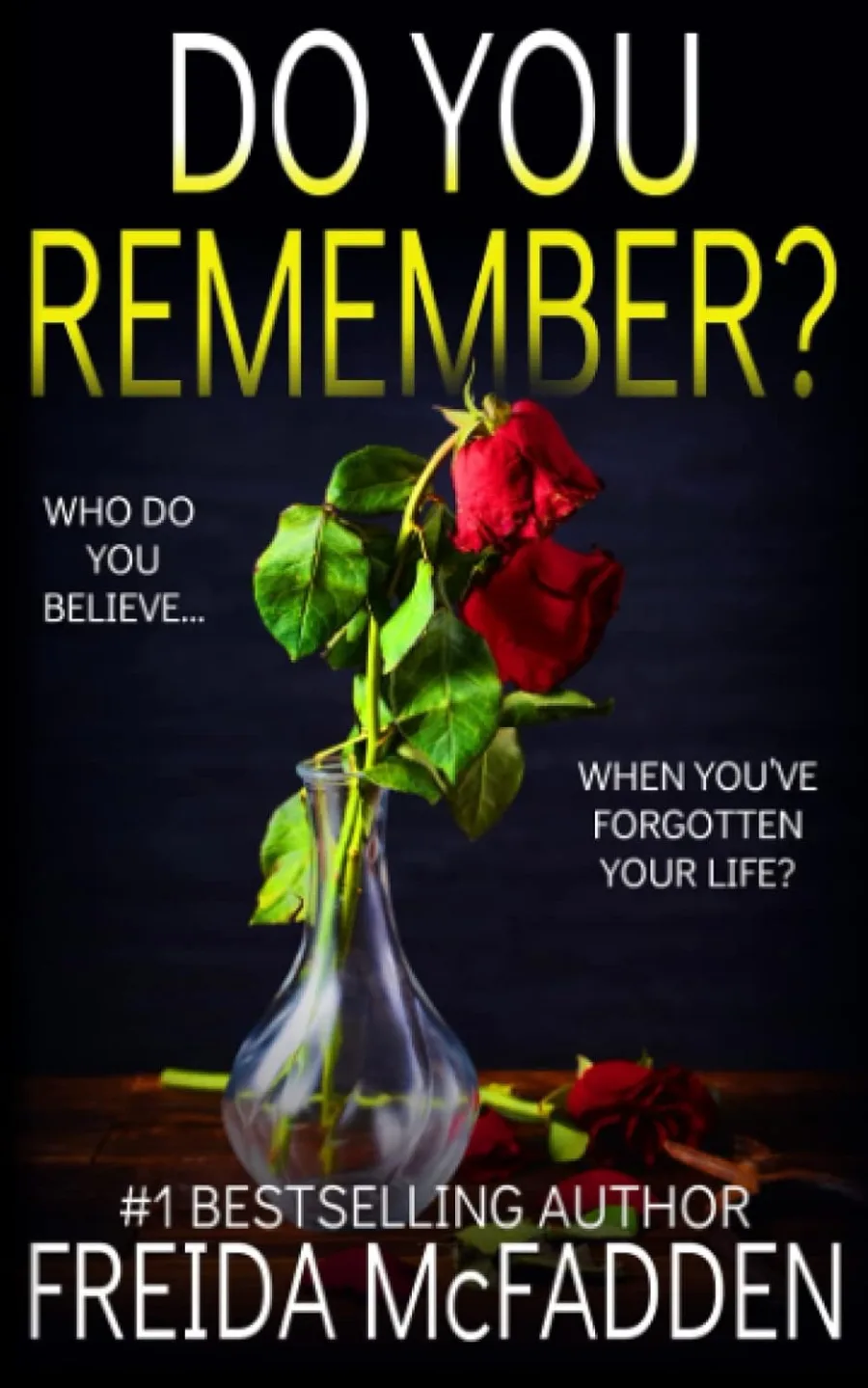
Download Cover Image
Do you want to download the full cover image for Do You Remember??