
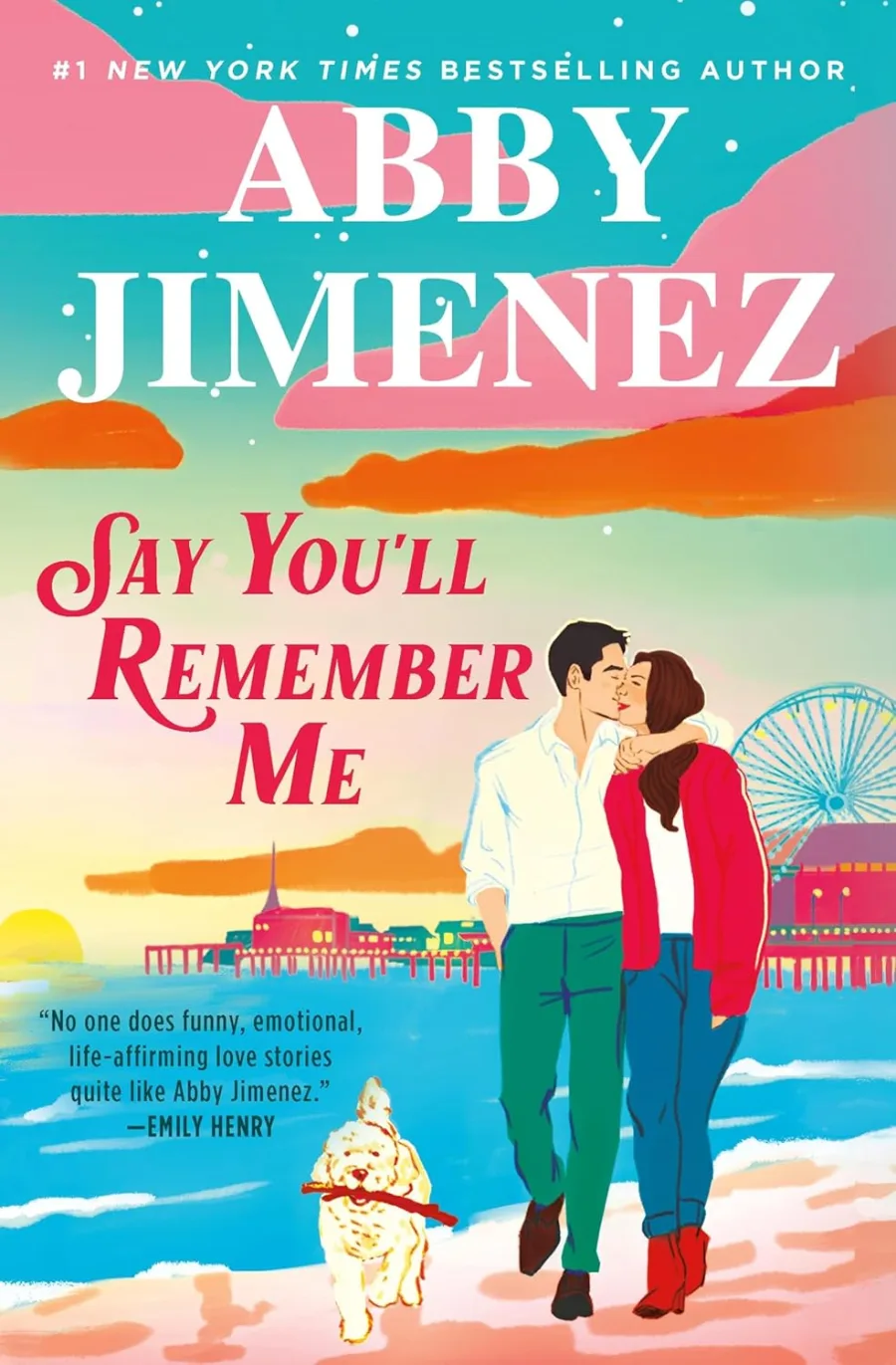
Say You'll Remember Me
Paperback
• 384 Pages
• USD 18.99
• English
• 9781538759189
No ratings yet
| Publisher | Forever |
|---|---|
| ISBN13 | 9781538759189 |
| ASIN/SKU | 1538759187 |
| Book Format | Paperback |
| Language | English |
| Pages | 384 |
| List Price | USD 18.99 |
| Publishing Date | 03/02/2026 |
| Dimensions | 5.5 x 0.97 x 8.25 inches |
| Weight | 11.9 ounces |
| Book Code | BD00055958 |
Buy this Book
Amazon Stores
Ebook Stores
Other Stores
Discover Say You'll Remember Me by Abby Jimenez. This book is published by Forever in Paperback format, ISBN 9781538759189, ASIN 1538759187, under Romance, Romantic Comedy, Humorous Fiction.
Book Description
This instant #1 New York Times bestseller now features gorgeous step-back art and a preview of Abby's highly anticipated The Night We Met.
“No one does funny, emotional, life-affirming love stories quite like Abby Jimenez. She just keeps outdoing herself." ―Emily Henry
There's no such thing as a perfect guy, but Xavier Rush comes disastrously close. A gorgeous veterinarian giving Greek god vibes—all while cuddling a tiny kitten? Immediate yes. That is until Xavier opens his mouth and proves that even sculpted gods can say the absolute wrong thing. Like, really wrong. Of course, there’s nothing Samantha loves more than proving an asshole wrong ... unless, of course, he can admit he made a mistake.
But after one incredible and seemingly endless date, Samantha is forced to admit the truth, that her family is in crisis and any kind of relationship would be impossible. Samantha begs Xavier to forget her. To remember their night together as a perfect moment, as crushing as that may be. Only no amount of distance or time is enough to forget what's between them. And the only thing better than one single perfect memory is to make a life—and even a love—worth remembering.
“No one does funny, emotional, life-affirming love stories quite like Abby Jimenez. She just keeps outdoing herself." ―Emily Henry
There's no such thing as a perfect guy, but Xavier Rush comes disastrously close. A gorgeous veterinarian giving Greek god vibes—all while cuddling a tiny kitten? Immediate yes. That is until Xavier opens his mouth and proves that even sculpted gods can say the absolute wrong thing. Like, really wrong. Of course, there’s nothing Samantha loves more than proving an asshole wrong ... unless, of course, he can admit he made a mistake.
But after one incredible and seemingly endless date, Samantha is forced to admit the truth, that her family is in crisis and any kind of relationship would be impossible. Samantha begs Xavier to forget her. To remember their night together as a perfect moment, as crushing as that may be. Only no amount of distance or time is enough to forget what's between them. And the only thing better than one single perfect memory is to make a life—and even a love—worth remembering.
Author Biography
Abby Jimenez is a #1 New York Times bestselling author of laugh-out-loud, pull-at-your-heartstrings romantic fiction. Her novels have sold over 6 million copies and been translated into 28 languages. Some of her favorite highlights include a Good Morning America Book Club pick, a BOTM’s Book of the Year Award, and the Minnesota Book Award. Before her writing career, Abby was in the national spotlight as a Cupcake Wars champion and founder of Nadia Cakes bakery, which has since gone on to win numerous Food Network competitions and amass an international following. She lives near Minneapolis with her husband, three daughters, and dogs―all TikTok famous in their own right. Abby loves romance novels, coffee, doglets, and not leaving the house.
Editorial Reviews
“No one does funny, emotional, life-affirming love stories quite like Abby Jimenez. She just keeps outdoing herself."―Emily Henry, #1 New York Times bestselling author of Funny Story
“Abby Jimenez has proven time and time again to be one of our must-read writers.”―Cosmopolitan
“Abby Jimenez writes vibrant characters who face who real-life hardships with grit and grace. Say You'll Remember Me is a book you won't soon forget.”―Steven Rowley, New York Times bestselling author of The Guncle
“Somehow, Jimenez manages to keep getting better, and with her latest, she is at the top of her game. Say You'll Remember Me is funny and poignant, relatable and aspirational, heart-tugging and satisfying. It is, in a word, perfect."―Christina Lauren, New York Times bestselling authors of The Unhoneymooners
“Completely captivating and instantly addictive, if you want to remember the sheer, giddy fun of falling in love, this is the one to read.”―The Guardian
“A fun story of two people trying to give their love a (second) chance despite some huge barriers.”―Shondaland
“Abby Jimenez has proven time and time again to be one of our must-read writers.”―Cosmopolitan
“Abby Jimenez writes vibrant characters who face who real-life hardships with grit and grace. Say You'll Remember Me is a book you won't soon forget.”―Steven Rowley, New York Times bestselling author of The Guncle
“Somehow, Jimenez manages to keep getting better, and with her latest, she is at the top of her game. Say You'll Remember Me is funny and poignant, relatable and aspirational, heart-tugging and satisfying. It is, in a word, perfect."―Christina Lauren, New York Times bestselling authors of The Unhoneymooners
“Completely captivating and instantly addictive, if you want to remember the sheer, giddy fun of falling in love, this is the one to read.”―The Guardian
“A fun story of two people trying to give their love a (second) chance despite some huge barriers.”―Shondaland
Book Summary
Say You’ll Remember Me by Abby Jimenez is a contemporary romance about second chances, memory, and the question of whether love is defined by shared history or by who we are in the present. The story centers on two people whose lives are torn apart and rewoven by a single, life changing accident, forcing them to confront how fragile memory is and how powerful emotional connection can be. The book blends heartbreak and humor, offering moments of lightness amid very real pain, and asks readers to consider what they would do if the person they loved no longer remembered the life they built together.
At the heart of the story is a couple who once had a deep, committed relationship, built over years of shared experiences, inside jokes, and quiet everyday moments. They weren’t perfect, but they were truly in love and believed they would spend their lives together. Then, an accident shatters that future. One of them suffers significant memory loss—enough that the history of their relationship is partly or completely erased. For the partner left remembering everything, it feels like losing the same person twice: first to the physical trauma, and then to the emotional reality that the other no longer recognizes the bond between them. The book puts us inside that emotional storm, showing how confusing it is to love someone who looks familiar, speaks like the person you knew, but no longer carries the memories or feelings that once tied you together.
In the aftermath, both characters struggle to figure out what “moving on” even means. The one who remembers is caught between wanting to fight for the relationship and recognizing that clinging too hard might be unfair. There is an aching sense of being invisible—of holding years of shared history that now exist only in one person’s mind. At the same time, the partner who lost their memories is trying to rebuild a life from fragments and stories others tell them. They live with this strange pressure to feel something they can’t recall, to react with love to a person they’ve technically just met, even though everyone insists that this person is their great love. Jimenez explores that tension with compassion, showing how both sides are hurting and both deserve empathy.
As time passes, they begin to interact more, and new memories start to form. The remembering partner initially walks on emotional eggshells, trying not to overwhelm or manipulate their counterpart, fearing that every mention of “before” might push them away. Yet it is impossible to fully separate who they were from who they are now. Small things—a favorite food, a song, a habit—trigger flashes of familiarity and create a sense of déjà vu. Slowly, the person with memory loss begins to feel drawn to the one they are told they once loved, but this attraction now rises from present experiences, not old recollections. That raises a painful and beautiful question: if they fall in love again, is it the same love, or an entirely new one? The book leans into this ambiguity, allowing their growing connection to feel both like a rediscovery and a fresh start.
Around this central romance, Jimenez layers family relationships, friendships, and personal growth. Loved ones are deeply involved, sometimes supportive, sometimes accidentally making things harder. Family members carry their own grief and expectations—some push for the couple to reconnect, others argue that forcing the past onto someone without memories is cruel. Friends act as mediators, comic relief, and sounding boards, helping the characters process complicated emotions. These secondary relationships give the story warmth and realism; no one is going through this in isolation, and their choices ripple through a wider circle of people. The novel also touches on how trauma affects more than just the person who was injured—everyone around them has to adjust, mourn, and redefine what “normal” looks like.
One of the strengths of the book is how honestly it portrays grief that doesn’t fit neat categories. The remembering partner is grieving a living person, which creates guilt and confusion. They feel selfish for wanting their old version back, yet they cannot help compare the past and present. They wonder whether it is fair to hope for the relationship to return when the other person’s brain has changed. The partner with memory loss, meanwhile, deals with a different kind of grief: the loss of their own past, the discomfort of knowing that entire seasons of their life are now just stories others tell. They must decide how much they want to chase those missing pieces versus simply accept the present and build forward. Jimenez doesn’t offer easy answers; instead, she lets both characters make mistakes, withdraw, lash out, and stumble toward understanding.
Despite its heavy themes, “Say You’ll Remember Me” includes plenty of humor, light moments, and tenderness. As the two spend more time together, their natural banter emerges. Even without their shared history, certain personality traits and chemistry remain. They tease each other, share inside jokes they create anew, and experience normal moments that feel wonderfully ordinary—coffee runs, quiet conversations, small acts of care. These scenes show that love is more than just memory; it is also about how two people interact, bring out each other’s best (and worst) sides, and choose one another even when life is complicated. The book balances emotional depth with wit, making their journey feel both poignant and genuinely enjoyable to read.
As they inch closer, the couple faces pivotal choices. Should they focus on rebuilding the old relationship, or accept that what they had is gone and respect this as a new connection? Should the remembering partner be completely honest about everything that happened before the accident, including past conflicts and secrets, or protect the other from pain they don’t recall? The partner with memory loss must decide whether to trust feelings that don’t have a clear origin and whether to allow themselves to be defined by a past they can’t see. These dilemmas push both characters to grow, to communicate more honestly, and to let go of some of their illusions. Jimenez highlights that genuine love involves telling the truth, even when it risks the fragile harmony they’ve built.
By the end of the book, the couple’s relationship has been transformed. They cannot simply return to what they were before, because the accident changed them both. Instead, they create something new that honors the past without being bound by it. The remembering partner learns to love who the other is now, rather than trying to recreate their old self. The partner with memory loss embraces the possibility of love without feeling pressured to “perform” the feelings others expect. Together, they choose each other consciously, not just because of history, but because of who they are in the present. “Say You’ll Remember Me” ultimately becomes a story about resilience, the complexity of identity, and the idea that while memories can vanish, the capacity to love—and to be loved—can survive, adapt, and flourish in unexpected ways.
At the heart of the story is a couple who once had a deep, committed relationship, built over years of shared experiences, inside jokes, and quiet everyday moments. They weren’t perfect, but they were truly in love and believed they would spend their lives together. Then, an accident shatters that future. One of them suffers significant memory loss—enough that the history of their relationship is partly or completely erased. For the partner left remembering everything, it feels like losing the same person twice: first to the physical trauma, and then to the emotional reality that the other no longer recognizes the bond between them. The book puts us inside that emotional storm, showing how confusing it is to love someone who looks familiar, speaks like the person you knew, but no longer carries the memories or feelings that once tied you together.
In the aftermath, both characters struggle to figure out what “moving on” even means. The one who remembers is caught between wanting to fight for the relationship and recognizing that clinging too hard might be unfair. There is an aching sense of being invisible—of holding years of shared history that now exist only in one person’s mind. At the same time, the partner who lost their memories is trying to rebuild a life from fragments and stories others tell them. They live with this strange pressure to feel something they can’t recall, to react with love to a person they’ve technically just met, even though everyone insists that this person is their great love. Jimenez explores that tension with compassion, showing how both sides are hurting and both deserve empathy.
As time passes, they begin to interact more, and new memories start to form. The remembering partner initially walks on emotional eggshells, trying not to overwhelm or manipulate their counterpart, fearing that every mention of “before” might push them away. Yet it is impossible to fully separate who they were from who they are now. Small things—a favorite food, a song, a habit—trigger flashes of familiarity and create a sense of déjà vu. Slowly, the person with memory loss begins to feel drawn to the one they are told they once loved, but this attraction now rises from present experiences, not old recollections. That raises a painful and beautiful question: if they fall in love again, is it the same love, or an entirely new one? The book leans into this ambiguity, allowing their growing connection to feel both like a rediscovery and a fresh start.
Around this central romance, Jimenez layers family relationships, friendships, and personal growth. Loved ones are deeply involved, sometimes supportive, sometimes accidentally making things harder. Family members carry their own grief and expectations—some push for the couple to reconnect, others argue that forcing the past onto someone without memories is cruel. Friends act as mediators, comic relief, and sounding boards, helping the characters process complicated emotions. These secondary relationships give the story warmth and realism; no one is going through this in isolation, and their choices ripple through a wider circle of people. The novel also touches on how trauma affects more than just the person who was injured—everyone around them has to adjust, mourn, and redefine what “normal” looks like.
One of the strengths of the book is how honestly it portrays grief that doesn’t fit neat categories. The remembering partner is grieving a living person, which creates guilt and confusion. They feel selfish for wanting their old version back, yet they cannot help compare the past and present. They wonder whether it is fair to hope for the relationship to return when the other person’s brain has changed. The partner with memory loss, meanwhile, deals with a different kind of grief: the loss of their own past, the discomfort of knowing that entire seasons of their life are now just stories others tell. They must decide how much they want to chase those missing pieces versus simply accept the present and build forward. Jimenez doesn’t offer easy answers; instead, she lets both characters make mistakes, withdraw, lash out, and stumble toward understanding.
Despite its heavy themes, “Say You’ll Remember Me” includes plenty of humor, light moments, and tenderness. As the two spend more time together, their natural banter emerges. Even without their shared history, certain personality traits and chemistry remain. They tease each other, share inside jokes they create anew, and experience normal moments that feel wonderfully ordinary—coffee runs, quiet conversations, small acts of care. These scenes show that love is more than just memory; it is also about how two people interact, bring out each other’s best (and worst) sides, and choose one another even when life is complicated. The book balances emotional depth with wit, making their journey feel both poignant and genuinely enjoyable to read.
As they inch closer, the couple faces pivotal choices. Should they focus on rebuilding the old relationship, or accept that what they had is gone and respect this as a new connection? Should the remembering partner be completely honest about everything that happened before the accident, including past conflicts and secrets, or protect the other from pain they don’t recall? The partner with memory loss must decide whether to trust feelings that don’t have a clear origin and whether to allow themselves to be defined by a past they can’t see. These dilemmas push both characters to grow, to communicate more honestly, and to let go of some of their illusions. Jimenez highlights that genuine love involves telling the truth, even when it risks the fragile harmony they’ve built.
By the end of the book, the couple’s relationship has been transformed. They cannot simply return to what they were before, because the accident changed them both. Instead, they create something new that honors the past without being bound by it. The remembering partner learns to love who the other is now, rather than trying to recreate their old self. The partner with memory loss embraces the possibility of love without feeling pressured to “perform” the feelings others expect. Together, they choose each other consciously, not just because of history, but because of who they are in the present. “Say You’ll Remember Me” ultimately becomes a story about resilience, the complexity of identity, and the idea that while memories can vanish, the capacity to love—and to be loved—can survive, adapt, and flourish in unexpected ways.
Sample Chapters
Sample Chapters will be added soon…
Reader Reviews
No reviews yet.
Say You'll Remember Me
Download Cover Image
Do you want to download the full cover image for Say You'll Remember Me?