
Inferno (Robert Langdon)
Paperback
• 576 Pages
• USD 19.00
• English
• 9780804172264
No ratings yet
| Publisher | Vintage |
|---|---|
| ISBN13 | 9780804172264 |
| ASIN/SKU | 0804172269 |
| Book Format | Paperback |
| Language | English |
| Pages | 576 |
| List Price | USD 19.00 |
| Publishing Date | 06/05/2014 |
| Dimensions | 5.11 x 0.92 x 7.91 inches |
| Weight | 14.4 ounces |
| Book Code | BD00055961 |
Buy this Book
Amazon Stores
Ebook Stores
Other Stores
Discover Inferno (Robert Langdon) by Dan Brown. This book is published by Vintage in Paperback format, ISBN 9780804172264, ASIN 0804172269, under Mystery, Thriller and Suspense, Mystery Action and Adventure, Thriller and Suspense Action Fiction.
Book Description
THE #1 WORLDWIDE BESTSELLER FROM THE ICONIC AUTHOR OF THE DA VINCI CODE AND THE NEW ROBERT LANGDON THRILLER, THE SECRET OF SECRETS
“A book-length scavenger hunt . . . jam-packed with tricks.” —The New York Times
“[A] cinematic blockbuster.” —USA Today
Harvard professor of symbology Robert Langdon awakens in an Italian hospital, disoriented and with no recollection of the past thirty-six hours, including the origin of the macabre object hidden in his belongings. With a relentless female assassin trailing them through Florence, he and his resourceful doctor, Sienna Brooks, are forced to flee.
Embarking on a harrowing journey, they must unravel a series of codes, which are the work of a brilliant scientist whose obsession with the end of the world is matched only by his passion for one of the most influential masterpieces ever written: Dante Alighieri’s The Inferno.
Look for more Robert Langdon novels:
The Da Vinci Code
The Lost Symbol
Origin
The Secret of Secrets
“A book-length scavenger hunt . . . jam-packed with tricks.” —The New York Times
“[A] cinematic blockbuster.” —USA Today
Harvard professor of symbology Robert Langdon awakens in an Italian hospital, disoriented and with no recollection of the past thirty-six hours, including the origin of the macabre object hidden in his belongings. With a relentless female assassin trailing them through Florence, he and his resourceful doctor, Sienna Brooks, are forced to flee.
Embarking on a harrowing journey, they must unravel a series of codes, which are the work of a brilliant scientist whose obsession with the end of the world is matched only by his passion for one of the most influential masterpieces ever written: Dante Alighieri’s The Inferno.
Look for more Robert Langdon novels:
The Da Vinci Code
The Lost Symbol
Origin
The Secret of Secrets
Author Biography
Dan Brown is the author of eight #1 bestselling novels, including The Da Vinci Code, which has become one of the bestselling novels of all time as well as the subject of intellectual debate among readers and scholars. Brown’s novels are published in 56 languages around the world with over 250 million copies in print.
Brown was named one of the 100 Most Influential People in the World by TIME Magazine, whose editors credited him with “keeping the publishing industry afloat; renewed interest in Leonardo da Vinci and early Christian history; spiking tourism to Paris and Rome; a growing membership in secret societies; the ire of Cardinals in Rome; eight books denying the claims of the novel and seven guides to read along with it; a flood of historical thrillers; and a major motion picture franchise.”
The son of a mathematics teacher and a church organist, Brown was raised on a prep school campus where he developed a fascination with the paradoxical interplay between science and religion. These themes eventually formed the backdrop for his books. He is a graduate of Amherst College and Phillips Exeter Academy, where he later returned to teach English before focusing his attention full time to writing. He lives in New England.
Brown was named one of the 100 Most Influential People in the World by TIME Magazine, whose editors credited him with “keeping the publishing industry afloat; renewed interest in Leonardo da Vinci and early Christian history; spiking tourism to Paris and Rome; a growing membership in secret societies; the ire of Cardinals in Rome; eight books denying the claims of the novel and seven guides to read along with it; a flood of historical thrillers; and a major motion picture franchise.”
The son of a mathematics teacher and a church organist, Brown was raised on a prep school campus where he developed a fascination with the paradoxical interplay between science and religion. These themes eventually formed the backdrop for his books. He is a graduate of Amherst College and Phillips Exeter Academy, where he later returned to teach English before focusing his attention full time to writing. He lives in New England.
Editorial Reviews
“A book-length scavenger hunt.... Jam-packed with tricks.” —The New York Times
“Fast, clever, well-informed.... Dan Brown is the master of the intellectual cliffhanger.” —The Wall Street Journal
“One hell of a good read.... As close as a book can come to a summertime cinematic blockbuster.” —USA Today
“A diverting thriller.” —Entertainment Weekly
“Brown isn’t just a novelist; he’s a crossover pop culture sensation.... Inferno is the kind of satisfying escapist read that summers were made for.” —The Boston Globe
“Harrowing fun threaded with coded messages, art history, science, and imminent doom.” —Daily News (New York)
“[Brown is] the planet’s most dastardly thriller writer.... Inferno moves with...velocity, excitement, and fun.” —The Independent (UK)
“An adventure ride through a literary text.... [A] sweeping spectacle.” —Pittsburgh Post-Gazette
“A fast and furious race.” —The Plain Dealer
"A master of the breathless, puzzle-driven thriller.” —Richmond Times-Dispatch
“What Brown does in a way that appeals to millions of people around the world is tell stories that remind us there’s more to the world than meets the eye.” —The Huffington Post
“Fast, clever, well-informed.... Dan Brown is the master of the intellectual cliffhanger.” —The Wall Street Journal
“One hell of a good read.... As close as a book can come to a summertime cinematic blockbuster.” —USA Today
“A diverting thriller.” —Entertainment Weekly
“Brown isn’t just a novelist; he’s a crossover pop culture sensation.... Inferno is the kind of satisfying escapist read that summers were made for.” —The Boston Globe
“Harrowing fun threaded with coded messages, art history, science, and imminent doom.” —Daily News (New York)
“[Brown is] the planet’s most dastardly thriller writer.... Inferno moves with...velocity, excitement, and fun.” —The Independent (UK)
“An adventure ride through a literary text.... [A] sweeping spectacle.” —Pittsburgh Post-Gazette
“A fast and furious race.” —The Plain Dealer
"A master of the breathless, puzzle-driven thriller.” —Richmond Times-Dispatch
“What Brown does in a way that appeals to millions of people around the world is tell stories that remind us there’s more to the world than meets the eye.” —The Huffington Post
Book Summary
Inferno by Dan Brown is a fast-paced thriller that blends art, history, science, and modern-day fears about overpopulation into a single, high-stakes mystery. The story once again follows Harvard symbologist Robert Langdon, who wakes up in a hospital in Florence, Italy, with a head injury and no memory of the last few days. He quickly learns that he is at the center of a deadly hunt: someone is trying to kill him, and he has no idea why. From this disorienting beginning, the novel launches into a tense chase across famous European cities and cultural landmarks, rooted in the imagery and themes of Dante Alighieri’s “Divine Comedy,” especially the first part, “Inferno,” which describes a journey through Hell. As Langdon struggles to recover his memory, he also must solve a puzzle that could decide the fate of billions of people.
Right from the hospital scene, nothing feels safe or clear. Doctors explain that Langdon was brought in after being found unconscious, and he experiences vivid hallucinations of a mysterious silver-haired woman urging him to “seek and find” and warning of impending doom. Almost immediately, the hospital is attacked by a woman with spiky hair who tries to shoot him. A young doctor, Sienna Brooks, helps him escape. Sienna is brilliant, highly capable, and becomes Langdon’s main ally. Together, they flee through Florence, hiding from armed pursuers and trying to understand why Langdon is being hunted. Because his memory is damaged, he must rely on clues he apparently left for himself before the injury, which adds another layer of mystery: he’s trying to decode his own past actions while running for his life in the present.
In his belongings, Langdon discovers a strange object—a high-tech projector disguised as a biohazard cylinder—that displays a modified image of Botticelli’s famous illustration of Dante’s Inferno. The image has been altered with additional symbols and references, hinting at something very important connected to Dante’s vision of Hell. Langdon realizes that this is the kind of puzzle only a symbologist could create and solve, meaning he must have been involved before losing his memory. Slowly, he and Sienna piece together that this image and its clues are linked to a brilliant but dangerous bioengineer named Bertrand Zobrist. Zobrist is a radical transhumanist obsessed with the problem of overpopulation. He believes that humanity is on the brink of self-destruction because there are simply too many people for the planet to support. Since he sees governments and institutions as too slow and compromised to act, he decides to take matters into his own hands.
Zobrist’s solution is terrifying: he has created a new contagion, a virus that he claims will “save” humanity from collapse. Before his death—he commits suicide to avoid capture—Zobrist hides this virus somewhere in the world and leaves a trail of artistic and literary clues based on Dante, Florence, and other historical references. Langdon and Sienna realize that the altered Inferno image is the first step in that trail. They must follow it quickly, because it seems that Zobrist’s virus is close to being released, if it hasn’t been already. The mystery becomes part treasure hunt, part race against time. Along the way, they cross iconic sites in Florence, such as the Palazzo Vecchio, the Boboli Gardens, and the Duomo, and then later travel to Venice and Istanbul, moving through grand churches, museums, and historic landmarks. Each location holds another piece of the puzzle, often tied to Dante’s text or Renaissance art.
While Langdon and Sienna are trying to decode the clues, they are being tracked by various organizations. A powerful private group known as the Consortium is involved; it helped Zobrist hide his work and now has its own reasons for controlling the outcome. The World Health Organization (WHO), led in the field by Dr. Elizabeth Sinskey, is also trying to find the virus and limit the damage. However, because information is fragmented and motives are not fully revealed, Langdon and Sienna are never sure whom they can trust. They are misled, manipulated, and sometimes used as tools by people with their own agendas. Brown builds tension through constant movement and shifting alliances: what seems like a clear enemy or ally in one chapter may turn out to be something very different later on.
One of the novel’s central themes is the ethical question surrounding Zobrist’s plan. He is portrayed as a visionary fanatic: horrifying in his methods, but not entirely wrong in his diagnosis of overpopulation as a serious global problem. He believes that if humanity doesn’t reduce its numbers, the result will be famine, war, disease, and ecological collapse on a massive scale. Rather than waiting for that slow disaster, he chooses a dramatic intervention. As the truth about his virus slowly emerges, it becomes clear that Zobrist did not design a classic plague that kills quickly; instead, he engineered something far more subtle and morally challenging. The virus is meant to change human reproduction itself, causing a portion of the population to become infertile, thereby gradually lowering global population over time without mass death.
This revelation reframes the entire crisis. The danger is not a conventional outbreak that kills millions overnight, but a fundamental alteration of humanity’s future. Langdon and the people he’s working with have to confront an impossible question: is it more ethical to reverse or stop a virus that might actually prevent long-term catastrophe at the cost of individual freedom and choice? Or is it absolutely wrong to tamper with something so intimate, no matter the claimed benefits? Brown doesn’t offer easy answers. Instead, he lets his characters wrestle with the dilemma and allows readers to feel the discomfort of a situation where there is no clear “good” outcome. As they race from Florence to Venice and finally to Istanbul, the tension is as much intellectual and moral as it is physical.
The climax of the novel takes place in Istanbul, particularly in the ancient underground cistern known as the Basilica Cistern, a haunting, water-filled space supported by forest-like columns. There, the final clue points to the location of Zobrist’s creation. By the time Langdon and the WHO team arrive, they discover that the virus has already been released into the world’s water supply days earlier. The race to “stop” it is effectively over. Instead, they must now decide what to do about a reality that has already changed. Some argue for attempting to create a countermeasure, others warn that reversing it could bring back the very overpopulation crisis Zobrist predicted. This ending is deliberately unsettling: the disaster has happened, but its effects are slow, invisible, and deeply personal, echoing the quiet inevitability of Dante’s circles of Hell.
Throughout Inferno Brown uses art and literature not just as decoration, but as tools for the plot. Dante’s “Divine Comedy,” with its vivid images of sin and punishment, becomes a lens through which modern anxieties are viewed. Hell in the novel is not just a medieval concept; it is also the potential future of a planet overwhelmed by human demands. The constant references to paintings, architecture, and historic cities give the story a rich backdrop, while the scientific and philosophical discussions about population and ethics keep it anchored in contemporary concerns. Robert Langdon himself serves as a bridge between the old and the new: a scholar of symbolic history dragged into a modern bioethical crisis.
By the end, Inferno leaves readers with a sense of unease and reflection rather than simple relief. The immediate chase and danger are over, but the consequences of Zobrist’s actions will play out for generations. Langdon returns to his academic life, still troubled by what has happened. The world has been changed by a single, secret act, and the balance between personal rights and collective survival has been shaken. In its mix of suspense, travel, art, and moral questioning, “Inferno” becomes more than just a puzzle-driven thriller. It is also a story about how humanity confronts its own possible self-destruction, and what we are willing—or unwilling—to do to avoid stepping into our own version of Dante’s Hell.
Right from the hospital scene, nothing feels safe or clear. Doctors explain that Langdon was brought in after being found unconscious, and he experiences vivid hallucinations of a mysterious silver-haired woman urging him to “seek and find” and warning of impending doom. Almost immediately, the hospital is attacked by a woman with spiky hair who tries to shoot him. A young doctor, Sienna Brooks, helps him escape. Sienna is brilliant, highly capable, and becomes Langdon’s main ally. Together, they flee through Florence, hiding from armed pursuers and trying to understand why Langdon is being hunted. Because his memory is damaged, he must rely on clues he apparently left for himself before the injury, which adds another layer of mystery: he’s trying to decode his own past actions while running for his life in the present.
In his belongings, Langdon discovers a strange object—a high-tech projector disguised as a biohazard cylinder—that displays a modified image of Botticelli’s famous illustration of Dante’s Inferno. The image has been altered with additional symbols and references, hinting at something very important connected to Dante’s vision of Hell. Langdon realizes that this is the kind of puzzle only a symbologist could create and solve, meaning he must have been involved before losing his memory. Slowly, he and Sienna piece together that this image and its clues are linked to a brilliant but dangerous bioengineer named Bertrand Zobrist. Zobrist is a radical transhumanist obsessed with the problem of overpopulation. He believes that humanity is on the brink of self-destruction because there are simply too many people for the planet to support. Since he sees governments and institutions as too slow and compromised to act, he decides to take matters into his own hands.
Zobrist’s solution is terrifying: he has created a new contagion, a virus that he claims will “save” humanity from collapse. Before his death—he commits suicide to avoid capture—Zobrist hides this virus somewhere in the world and leaves a trail of artistic and literary clues based on Dante, Florence, and other historical references. Langdon and Sienna realize that the altered Inferno image is the first step in that trail. They must follow it quickly, because it seems that Zobrist’s virus is close to being released, if it hasn’t been already. The mystery becomes part treasure hunt, part race against time. Along the way, they cross iconic sites in Florence, such as the Palazzo Vecchio, the Boboli Gardens, and the Duomo, and then later travel to Venice and Istanbul, moving through grand churches, museums, and historic landmarks. Each location holds another piece of the puzzle, often tied to Dante’s text or Renaissance art.
While Langdon and Sienna are trying to decode the clues, they are being tracked by various organizations. A powerful private group known as the Consortium is involved; it helped Zobrist hide his work and now has its own reasons for controlling the outcome. The World Health Organization (WHO), led in the field by Dr. Elizabeth Sinskey, is also trying to find the virus and limit the damage. However, because information is fragmented and motives are not fully revealed, Langdon and Sienna are never sure whom they can trust. They are misled, manipulated, and sometimes used as tools by people with their own agendas. Brown builds tension through constant movement and shifting alliances: what seems like a clear enemy or ally in one chapter may turn out to be something very different later on.
One of the novel’s central themes is the ethical question surrounding Zobrist’s plan. He is portrayed as a visionary fanatic: horrifying in his methods, but not entirely wrong in his diagnosis of overpopulation as a serious global problem. He believes that if humanity doesn’t reduce its numbers, the result will be famine, war, disease, and ecological collapse on a massive scale. Rather than waiting for that slow disaster, he chooses a dramatic intervention. As the truth about his virus slowly emerges, it becomes clear that Zobrist did not design a classic plague that kills quickly; instead, he engineered something far more subtle and morally challenging. The virus is meant to change human reproduction itself, causing a portion of the population to become infertile, thereby gradually lowering global population over time without mass death.
This revelation reframes the entire crisis. The danger is not a conventional outbreak that kills millions overnight, but a fundamental alteration of humanity’s future. Langdon and the people he’s working with have to confront an impossible question: is it more ethical to reverse or stop a virus that might actually prevent long-term catastrophe at the cost of individual freedom and choice? Or is it absolutely wrong to tamper with something so intimate, no matter the claimed benefits? Brown doesn’t offer easy answers. Instead, he lets his characters wrestle with the dilemma and allows readers to feel the discomfort of a situation where there is no clear “good” outcome. As they race from Florence to Venice and finally to Istanbul, the tension is as much intellectual and moral as it is physical.
The climax of the novel takes place in Istanbul, particularly in the ancient underground cistern known as the Basilica Cistern, a haunting, water-filled space supported by forest-like columns. There, the final clue points to the location of Zobrist’s creation. By the time Langdon and the WHO team arrive, they discover that the virus has already been released into the world’s water supply days earlier. The race to “stop” it is effectively over. Instead, they must now decide what to do about a reality that has already changed. Some argue for attempting to create a countermeasure, others warn that reversing it could bring back the very overpopulation crisis Zobrist predicted. This ending is deliberately unsettling: the disaster has happened, but its effects are slow, invisible, and deeply personal, echoing the quiet inevitability of Dante’s circles of Hell.
Throughout Inferno Brown uses art and literature not just as decoration, but as tools for the plot. Dante’s “Divine Comedy,” with its vivid images of sin and punishment, becomes a lens through which modern anxieties are viewed. Hell in the novel is not just a medieval concept; it is also the potential future of a planet overwhelmed by human demands. The constant references to paintings, architecture, and historic cities give the story a rich backdrop, while the scientific and philosophical discussions about population and ethics keep it anchored in contemporary concerns. Robert Langdon himself serves as a bridge between the old and the new: a scholar of symbolic history dragged into a modern bioethical crisis.
By the end, Inferno leaves readers with a sense of unease and reflection rather than simple relief. The immediate chase and danger are over, but the consequences of Zobrist’s actions will play out for generations. Langdon returns to his academic life, still troubled by what has happened. The world has been changed by a single, secret act, and the balance between personal rights and collective survival has been shaken. In its mix of suspense, travel, art, and moral questioning, “Inferno” becomes more than just a puzzle-driven thriller. It is also a story about how humanity confronts its own possible self-destruction, and what we are willing—or unwilling—to do to avoid stepping into our own version of Dante’s Hell.
Sample Chapters
Sample Chapters will be added soon…
Reader Reviews
No reviews yet.
Inferno (Robert Langdon)
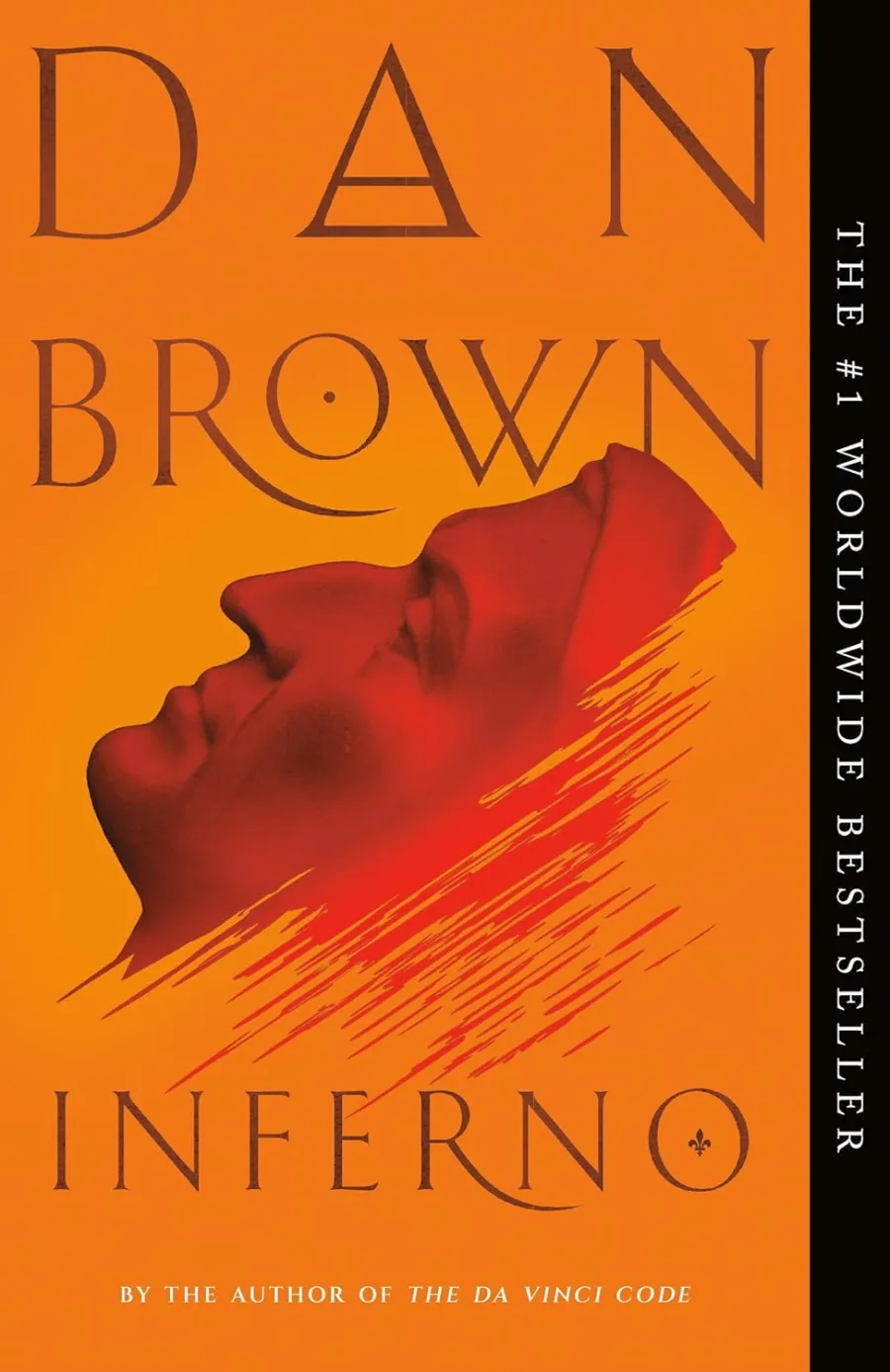
Download Cover Image
Do you want to download the full cover image for Inferno (Robert Langdon)?