
The Wonky Donkey
Paperback
• 24 Pages
• USD 7.99
• English
• 9780545261241
No ratings yet
| Publisher | Scholastic Inc. |
|---|---|
| ISBN13 | 9780545261241 |
| ASIN/SKU | 0545261244 |
| Book Format | Paperback |
| Language | English |
| Pages | 24 |
| List Price | USD 7.99 |
| Publishing Date | 01/05/2010 |
| Dimensions | 8.8 x 0.2 x 8.6 inches |
| Weight | 2.31 pounds |
| Book Code | BD00055965 |
Buy this Book
Amazon Stores
Ebook Stores
Other Stores
Discover The Wonky Donkey by Craig Smith. This book is published by Scholastic Inc. in Paperback format, ISBN 9780545261241, ASIN 0545261244, under Children's Farm Animal Books, Children's Humor.
Book Description
Kids will love this cumulative and hysterical read-aloud! The original viral sensation!
"I was walking down the road and I saw...
a donkey,
Hee Haw!
And he only had three legs!
He was a wonky donkey."
Children will be in fits of laughter with this perfect read-aloud tale of an endearing donkey. By the book's final page, readers end up with a spunky hanky-panky cranky stinky-dinky lanky honky-tonky winky wonky donkey!
"I was walking down the road and I saw...
a donkey,
Hee Haw!
And he only had three legs!
He was a wonky donkey."
Children will be in fits of laughter with this perfect read-aloud tale of an endearing donkey. By the book's final page, readers end up with a spunky hanky-panky cranky stinky-dinky lanky honky-tonky winky wonky donkey!
Author Biography
Craig Smith is the recipient of the 2008 APRA Children's Song of the Year for The Wonky Donkey. When not writing, Craig works as a musician and entertainer. Visit him at craigsmith.co.nz.
Editorial Reviews
Praise for The Dinky Donkey:
"Should be packaged with an oxygen supply, as it will incontestably elicit uncontrollable gales of giggles." -- Kirkus Reviews, starred review
"Should be packaged with an oxygen supply, as it will incontestably elicit uncontrollable gales of giggles." -- Kirkus Reviews, starred review
Book Summary
The Wonky Donkey by Craig Smith is a playful, humorous children’s book built around a simple idea that becomes more and more ridiculous with every page. The story follows a donkey that the narrator meets and describes in a chain of funny rhyming lines. What begins as a straightforward introduction quickly turns into a comic performance, because each new detail about the donkey adds another layer of silliness. The donkey is not just a donkey; he is a wonky one, and from there the descriptions grow increasingly absurd, making the book especially fun to read aloud. Its appeal comes less from a complicated plot and more from rhythm, repetition, and the joyful energy of the language.
The narrator first notices the donkey and starts describing him in a way that sounds almost normal at the beginning. But soon the donkey is revealed to be unusual in many ways. He has a wonky appearance, and the words used to describe him are chosen to create a silly, exaggerated image. Each line builds on the one before it, so the reader keeps expecting a fresh joke or twist. The humor comes from the piling on of adjectives and traits, each more outrageous than the last. This repetitive structure gives children a chance to anticipate what will come next, which is part of what makes the book so entertaining. Young readers often enjoy being able to guess the rhyme or join in with the repeated pattern, and this book encourages that kind of active participation.
As the story goes on, the donkey is described in increasingly specific and comedic ways. He is not only wonky but also has other funny qualities that make him unforgettable. The narrator keeps adding details that transform the donkey from an ordinary animal into a wildly memorable character. The exaggeration is the heart of the book. Instead of developing a deep emotional plot or a complex message, the story leans into comic buildup. Children enjoy the surprise of seeing how far the descriptions can stretch, and adults reading aloud often find themselves having fun with the rhythm and pacing too. The book works because it turns a very small idea into a big performance.
One of the strengths of “The Wonky Donkey” is its sound. Craig Smith uses rhyme, repetition, and a strong sense of timing to make the book easy to read aloud and easy to remember. The language has a musical quality that gives the story momentum. Each line leads naturally to the next, and the repeated structure makes the whole book feel like a long joke with a punchline that keeps evolving. Because of that, the story is less about what happens in a traditional sense and more about how the narration unfolds. The narrator’s voice is part of the comedy. The tone is cheerful, amused, and slightly breathless, as though the storyteller is getting more and more entertained by the donkey’s many strange qualities.
The donkey himself becomes a kind of comic character through accumulation. The more the narrator says, the funnier he becomes. This is a familiar technique in children’s literature, where repetition creates comfort while exaggeration creates laughter. The donkey is memorable not because he changes or learns something, but because he is described in such a delightfully over-the-top way. The book invites children to enjoy language itself. They can hear how words sound, how rhymes work, and how meaning can be stretched for comic effect. In that sense, the story is also a small celebration of storytelling. It shows that a clever voice and a playful structure can be enough to hold a child’s attention from beginning to end.
Another reason the book is so beloved is that it works on multiple levels. Young children enjoy the silly sounds and the repetition. Older children may enjoy predicting the next rhyme or laughing at how long the list of donkey traits becomes. Adults often appreciate the performance aspect, especially when reading it aloud dramatically. The book is the kind of story that gets funnier the more expressive the reader becomes. It almost demands rhythm, pauses, and a bit of theatrical delivery. That makes it a popular choice for bedtime reading, classroom read-alouds, and shared family moments. The humor is light and inclusive, easy for different ages to enjoy together.
Though the book does not have a deep moral or a serious lesson, it still has value beyond simple amusement. It helps children build vocabulary, notice patterns in language, and develop a love of reading through sound and repetition. It also shows that books can be playful and silly without needing a complicated plot. The joy comes from the experience of the words themselves. In a world where many stories aim to teach direct lessons, “The Wonky Donkey” reminds readers that delight and laughter are also important parts of reading. A child does not need a grand message to enjoy a book; sometimes a funny donkey and a clever rhyme are enough.
The ending continues the same comic energy that carries the rest of the book. There is no dramatic twist or deep resolution, because the real pleasure is in the buildup and the performance. By the time the reader reaches the end, the donkey has become a fully exaggerated figure, impossible to forget. The final effect is one of cheerful absurdity. The book ends having done exactly what it set out to do: make readers laugh, keep them engaged, and leave them smiling at the ridiculousness of it all.
The Wonky Donkey is, at its heart, a simple and joyful picture book that turns a basic animal description into a hilarious experience. Its charm lies in its rhythm, repetition, and the growing absurdity of the donkey’s traits. Craig Smith creates a story that is easy to follow, fun to read aloud, and memorable because of its playful use of language. It is the kind of book that children often ask to hear again and again, not because of a complicated plot, but because it is so much fun to say and hear.
The narrator first notices the donkey and starts describing him in a way that sounds almost normal at the beginning. But soon the donkey is revealed to be unusual in many ways. He has a wonky appearance, and the words used to describe him are chosen to create a silly, exaggerated image. Each line builds on the one before it, so the reader keeps expecting a fresh joke or twist. The humor comes from the piling on of adjectives and traits, each more outrageous than the last. This repetitive structure gives children a chance to anticipate what will come next, which is part of what makes the book so entertaining. Young readers often enjoy being able to guess the rhyme or join in with the repeated pattern, and this book encourages that kind of active participation.
As the story goes on, the donkey is described in increasingly specific and comedic ways. He is not only wonky but also has other funny qualities that make him unforgettable. The narrator keeps adding details that transform the donkey from an ordinary animal into a wildly memorable character. The exaggeration is the heart of the book. Instead of developing a deep emotional plot or a complex message, the story leans into comic buildup. Children enjoy the surprise of seeing how far the descriptions can stretch, and adults reading aloud often find themselves having fun with the rhythm and pacing too. The book works because it turns a very small idea into a big performance.
One of the strengths of “The Wonky Donkey” is its sound. Craig Smith uses rhyme, repetition, and a strong sense of timing to make the book easy to read aloud and easy to remember. The language has a musical quality that gives the story momentum. Each line leads naturally to the next, and the repeated structure makes the whole book feel like a long joke with a punchline that keeps evolving. Because of that, the story is less about what happens in a traditional sense and more about how the narration unfolds. The narrator’s voice is part of the comedy. The tone is cheerful, amused, and slightly breathless, as though the storyteller is getting more and more entertained by the donkey’s many strange qualities.
The donkey himself becomes a kind of comic character through accumulation. The more the narrator says, the funnier he becomes. This is a familiar technique in children’s literature, where repetition creates comfort while exaggeration creates laughter. The donkey is memorable not because he changes or learns something, but because he is described in such a delightfully over-the-top way. The book invites children to enjoy language itself. They can hear how words sound, how rhymes work, and how meaning can be stretched for comic effect. In that sense, the story is also a small celebration of storytelling. It shows that a clever voice and a playful structure can be enough to hold a child’s attention from beginning to end.
Another reason the book is so beloved is that it works on multiple levels. Young children enjoy the silly sounds and the repetition. Older children may enjoy predicting the next rhyme or laughing at how long the list of donkey traits becomes. Adults often appreciate the performance aspect, especially when reading it aloud dramatically. The book is the kind of story that gets funnier the more expressive the reader becomes. It almost demands rhythm, pauses, and a bit of theatrical delivery. That makes it a popular choice for bedtime reading, classroom read-alouds, and shared family moments. The humor is light and inclusive, easy for different ages to enjoy together.
Though the book does not have a deep moral or a serious lesson, it still has value beyond simple amusement. It helps children build vocabulary, notice patterns in language, and develop a love of reading through sound and repetition. It also shows that books can be playful and silly without needing a complicated plot. The joy comes from the experience of the words themselves. In a world where many stories aim to teach direct lessons, “The Wonky Donkey” reminds readers that delight and laughter are also important parts of reading. A child does not need a grand message to enjoy a book; sometimes a funny donkey and a clever rhyme are enough.
The ending continues the same comic energy that carries the rest of the book. There is no dramatic twist or deep resolution, because the real pleasure is in the buildup and the performance. By the time the reader reaches the end, the donkey has become a fully exaggerated figure, impossible to forget. The final effect is one of cheerful absurdity. The book ends having done exactly what it set out to do: make readers laugh, keep them engaged, and leave them smiling at the ridiculousness of it all.
The Wonky Donkey is, at its heart, a simple and joyful picture book that turns a basic animal description into a hilarious experience. Its charm lies in its rhythm, repetition, and the growing absurdity of the donkey’s traits. Craig Smith creates a story that is easy to follow, fun to read aloud, and memorable because of its playful use of language. It is the kind of book that children often ask to hear again and again, not because of a complicated plot, but because it is so much fun to say and hear.
Sample Chapters
Sample Chapters will be added soon…
Reader Reviews
No reviews yet.
The Wonky Donkey
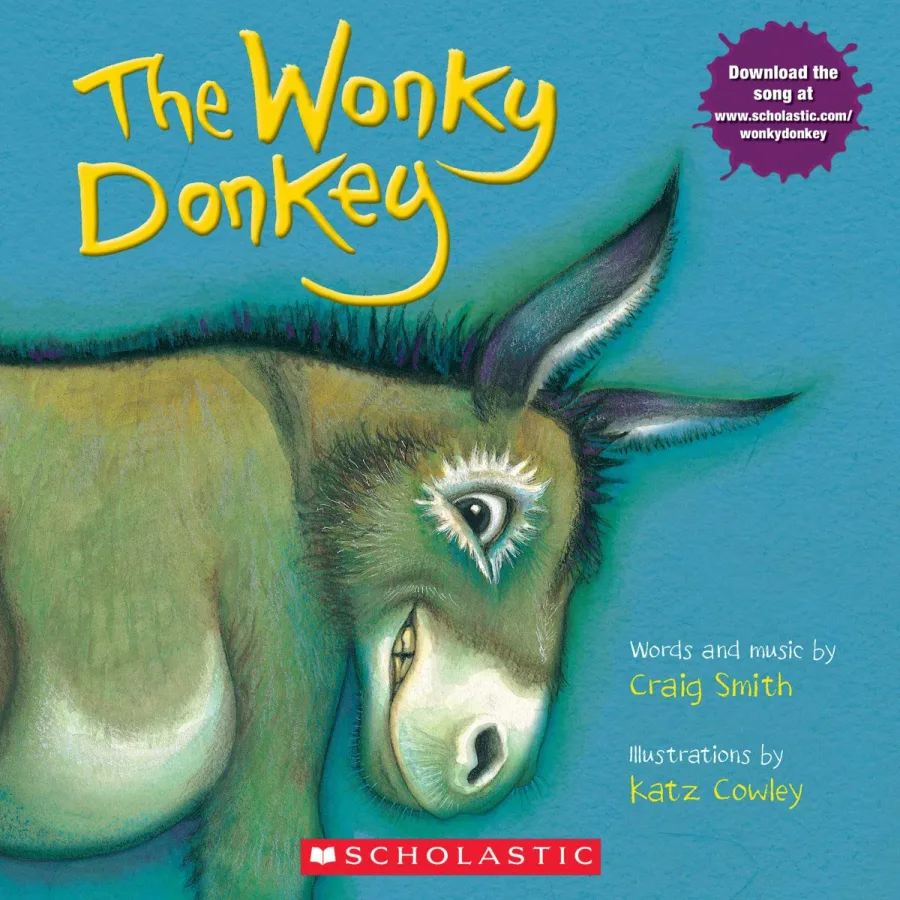
Download Cover Image
Do you want to download the full cover image for The Wonky Donkey?