
God of Malice : (Legacy of Gods, 1)
Paperback
• 576 Pages
• USD 18.99
• English
• 9781464238864
No ratings yet
| Publisher | Bloom Books |
|---|---|
| ISBN13 | 9781464238864 |
| ASIN/SKU | 1464238863 |
| Book Format | Paperback |
| Language | English |
| Pages | 576 |
| List Price | USD 18.99 |
| Series Title | Legacy of Gods |
| Publishing Date | 29/09/2024 |
| Dimensions | 5 x 1.44 x 8 inches |
| Weight | 1.25 pounds |
| Book Code | BD00055983 |
Buy this Book
Amazon Stores
Ebook Stores
Other Stores
Discover God of Malice : (Legacy of Gods, 1) by Rina Kent. This book is published by Bloom Books in Paperback format, ISBN 9781464238864, ASIN 1464238863, under Romance, New Adult and College Romance, Romantic Suspense.
Book Description
From USA Today bestselling author Rina Kent comes the first in a dark and steamy college romance series featuring elite criminal families and morally gray heroes. Killian Carson is unfeeling, cold-blooded, monstrous…and has developed an obsession with Glyndon that just might be both of their undoing.
Killian Carson is a predator wrapped in sophisticated charm. He's cold-blooded, manipulative, and vicious. Though his charisma and intelligence fool everyone, Glyndon sees right through him. She sees the psychopath within, and though her brain tells her to run, there's a secret part of her that knows the monster will only chase her…and she may want to get caught.
Glyndon King has never felt like anyone's favorite. Her mother and brothers are the artistic talents in the family, and she knows she will never live up to anyone's expectations. But Killian? He has no expectations except that she is now his. It doesn't matter that their schools are rivals―their possessive, all-consuming desire may be able to drown out everything else.
But can two people with broken souls truly repair the broken parts of each other's psyche? Can their dark and sinful desire overcome their history? When it turns out those pasts are more disturbingly entwined than they thought, they may come out stronger, or it may be their unraveling.
Killian Carson is a predator wrapped in sophisticated charm. He's cold-blooded, manipulative, and vicious. Though his charisma and intelligence fool everyone, Glyndon sees right through him. She sees the psychopath within, and though her brain tells her to run, there's a secret part of her that knows the monster will only chase her…and she may want to get caught.
Glyndon King has never felt like anyone's favorite. Her mother and brothers are the artistic talents in the family, and she knows she will never live up to anyone's expectations. But Killian? He has no expectations except that she is now his. It doesn't matter that their schools are rivals―their possessive, all-consuming desire may be able to drown out everything else.
But can two people with broken souls truly repair the broken parts of each other's psyche? Can their dark and sinful desire overcome their history? When it turns out those pasts are more disturbingly entwined than they thought, they may come out stronger, or it may be their unraveling.
Author Biography
Rina Kent is a New York Times, USA Today, and #1 bestselling author of all things dark romance.
Better known for writing unapologetic anti-heroes and villains, Rina weaves tales of characters you shouldn't fall for but inevitably do. Her stories are laced with a touch of darkness, a splash of angst, and just the right amount of unhealthy intensity.
When she's not busy plotting mayhem for her ever-expanding Rina verse, she leads a private life in London, travels, and pampers her cats in true Cat Lady fashion.
Better known for writing unapologetic anti-heroes and villains, Rina weaves tales of characters you shouldn't fall for but inevitably do. Her stories are laced with a touch of darkness, a splash of angst, and just the right amount of unhealthy intensity.
When she's not busy plotting mayhem for her ever-expanding Rina verse, she leads a private life in London, travels, and pampers her cats in true Cat Lady fashion.
Editorial Reviews
Editorial Reviews will be added soon…
Book Summary
God of Malice by Rina Kent is a dark, twisted, and emotionally intense new-adult romance set in her familiar world of elite privilege, deep trauma, and ruthless power games. The story centers on Killian Carson, one of the infamous Wild Boys, and Glyndon King, a girl whose life has always existed in the shadow of family expectations and silent fears. On the surface, they come from the same world of money and status, but inside they couldn’t be more different. Killian moves through life like a living weapon—cold, detached, and disturbingly fascinated by other people’s fear. Glyndon, meanwhile, is anxious, haunted, and trying desperately to hold herself together while feeling like she’s slowly unraveling. Their relationship begins not as a love story, but as a collision: one person who sees fear as a game, and another who has spent her life trying to escape it.
Glyndon is the daughter of a powerful couple from Rina Kent’s earlier books, and she grows up in an environment where strength, control, and success are the norm. Yet, unlike the confident people around her, she struggles deeply with her mental health. She experiences panic attacks, intrusive thoughts, and a constant sense of dread that make her feel weak and broken. She loves art and photography, trying to capture the world through a lens in a way that makes sense to her, but even her passion becomes tangled with dark images and half-remembered horrors. She feels misunderstood, even by those who care about her. The pressure to appear “fine” in a world that doesn’t tolerate weakness makes her hide the worst of what she feels. This isolation makes her vulnerable—emotionally and psychologically—and it is in this fragile state that she crosses paths with Killian in a way that will change both their lives.
Killian, on the other hand, is not your typical romantic hero. He is strange, unemotional, and fascinated by the darker side of human nature. Fear, to him, is not something to avoid; it’s something to study, provoke, and control. He watches people the way a scientist might watch an experiment. He likes seeing what happens when they are pushed to their limits. Unlike other characters who might hide behind charm or fake warmth, Killian is blunt in his coldness. He does not pretend to be kind, and he doesn’t see the point of comforting lies. To many, he appears heartless, maybe even a bit monstrous. Yet, beneath that is a man who has never really understood normal emotional connection, and who has built his identity on being untouchable and feared rather than loved.
The turning point comes when Killian witnesses one of Glyndon’s most vulnerable moments—an encounter with fear that nearly destroys her. Instead of helping her in the gentle, reassuring way a traditional hero might, he is fascinated. Her terror speaks to a part of him he can’t ignore. Glyndon becomes his “subject,” the person whose fear he wants to provoke, watch, and own. He begins inserting himself into her life, not as a protector but as a predator circling his prey. For Glyndon, this is both terrifying and compelling. Killian is the one person who doesn’t treat her like she’s fragile glass that might shatter, but he also doesn’t treat her gently at all. He pokes at her fears, tests her reactions, and seems to see straight through her masks to the trembling core she tries to hide.
What complicates everything is that Glyndon is not just a victim. She is drawn to Killian in ways that frighten her as much as he does. His honesty about his darkness, his refusal to sugarcoat anything, and the intense attention he gives her all pull her in. With him, she does not have to pretend to be okay; he already knows she isn’t. At the same time, he is also the person who pushes her closest to the edge. Their connection becomes a constant push-and-pull between fear and obsession, cruelty and strange comfort. Glyndon’s attraction to Killian feels like a betrayal of herself, yet she can’t walk away. The book leans heavily into this morally gray, psychologically heavy dynamic, showing how trauma and desire can become tightly knotted.
The title, God of Malice captures how Killian sees himself—and how Glyndon begins to see him too. To her, he feels almost inhuman at times: all sharp angles, cold eyes, and an aura of control that makes everyone else seem smaller. But as the story goes on, cracks begin to appear in his calm, cruel image. Glyndon, in all her vulnerable messiness, triggers emotions he doesn’t fully understand. He feels possessive, not only of her fear but of her as a person. What starts as a twisted interest in her terror slowly becomes something more complex and dangerous: attachment. He still plays with her boundaries, still frightens and manipulates her, but he also starts to take her pain personally, reacting with violence when others hurt or threaten her. His malice turns outward in protection as much as it turns inward in games.
Glyndon’s journey is just as important as Killian’s. At the start, she sees herself as weak, broken, and somehow “less” than the people around her. Through her experiences with Killian—and the chaos that their connection brings—she is forced to confront her own mind, her fears, and the way she lets those fears define her. Their relationship is not a healthy, gentle path to healing; instead, it throws her deepest wounds into the open. She must decide what she will tolerate, what she truly wants, and where the line is between being understood and being controlled. The story does not shy away from depicting her panic, confusion, and emotional conflict. At times, she hates Killian for what he does to her, and at other times, she clings to him as the only one who sees all of her and stays anyway.
Around their intense central relationship, Rina Kent builds a familiar world of wealth, violence, and complicated family ties. The presence of Glyndon’s powerful parents and extended family adds pressure and threat. Rules, legacies, and reputations matter in their world, and what happens between Glyndon and Killian doesn’t stay private. There are dangerous secrets, confrontations, and moments where the violence that has always existed in the background of their privileged lives comes crashing forward. The Wild Boys, with their own reputations and bond, form part of the atmosphere: a group that doesn’t play by ordinary rules, and for whom darkness is not an exception but a norm. All of this heightens the sense that Glyndon is entangled in something far bigger, and far more dangerous, than a simple wrong-man romance.
As the story reaches its later stages, both Killian and Glyndon are transformed by what they’ve put each other through. Killian is forced to admit that he does feel—that Glyndon is not just a subject of his fascination, but someone he cannot bear to lose. This realization does not turn him into a gentle man, but it shifts his priorities. Glyndon, in turn, learns that she can survive more than she thought, and that her fear does not make her worthless. She begins to stand up for herself, to set limits even with someone as overpowering as Killian, and to claim her right to exist as she is, not as others demand she be. Their connection remains dark and morally complicated, but it also becomes a space where both of them are fully, brutally honest.
By the end of God of Malice their relationship is not “fixed” in a traditional sense; it remains rooted in obsession, possession, and deep emotional scars. Yet it is also undeniably real—a bond formed in shadows, fear, and a strange, fierce kind of love that makes sense only to them. The book delivers a story about two damaged people who find something like home in each other’s darkest places, showing that, in Rina Kent’s world, love is often born not from light and safety, but from the willingness to face the monsters inside and still choose to stay.
Glyndon is the daughter of a powerful couple from Rina Kent’s earlier books, and she grows up in an environment where strength, control, and success are the norm. Yet, unlike the confident people around her, she struggles deeply with her mental health. She experiences panic attacks, intrusive thoughts, and a constant sense of dread that make her feel weak and broken. She loves art and photography, trying to capture the world through a lens in a way that makes sense to her, but even her passion becomes tangled with dark images and half-remembered horrors. She feels misunderstood, even by those who care about her. The pressure to appear “fine” in a world that doesn’t tolerate weakness makes her hide the worst of what she feels. This isolation makes her vulnerable—emotionally and psychologically—and it is in this fragile state that she crosses paths with Killian in a way that will change both their lives.
Killian, on the other hand, is not your typical romantic hero. He is strange, unemotional, and fascinated by the darker side of human nature. Fear, to him, is not something to avoid; it’s something to study, provoke, and control. He watches people the way a scientist might watch an experiment. He likes seeing what happens when they are pushed to their limits. Unlike other characters who might hide behind charm or fake warmth, Killian is blunt in his coldness. He does not pretend to be kind, and he doesn’t see the point of comforting lies. To many, he appears heartless, maybe even a bit monstrous. Yet, beneath that is a man who has never really understood normal emotional connection, and who has built his identity on being untouchable and feared rather than loved.
The turning point comes when Killian witnesses one of Glyndon’s most vulnerable moments—an encounter with fear that nearly destroys her. Instead of helping her in the gentle, reassuring way a traditional hero might, he is fascinated. Her terror speaks to a part of him he can’t ignore. Glyndon becomes his “subject,” the person whose fear he wants to provoke, watch, and own. He begins inserting himself into her life, not as a protector but as a predator circling his prey. For Glyndon, this is both terrifying and compelling. Killian is the one person who doesn’t treat her like she’s fragile glass that might shatter, but he also doesn’t treat her gently at all. He pokes at her fears, tests her reactions, and seems to see straight through her masks to the trembling core she tries to hide.
What complicates everything is that Glyndon is not just a victim. She is drawn to Killian in ways that frighten her as much as he does. His honesty about his darkness, his refusal to sugarcoat anything, and the intense attention he gives her all pull her in. With him, she does not have to pretend to be okay; he already knows she isn’t. At the same time, he is also the person who pushes her closest to the edge. Their connection becomes a constant push-and-pull between fear and obsession, cruelty and strange comfort. Glyndon’s attraction to Killian feels like a betrayal of herself, yet she can’t walk away. The book leans heavily into this morally gray, psychologically heavy dynamic, showing how trauma and desire can become tightly knotted.
The title, God of Malice captures how Killian sees himself—and how Glyndon begins to see him too. To her, he feels almost inhuman at times: all sharp angles, cold eyes, and an aura of control that makes everyone else seem smaller. But as the story goes on, cracks begin to appear in his calm, cruel image. Glyndon, in all her vulnerable messiness, triggers emotions he doesn’t fully understand. He feels possessive, not only of her fear but of her as a person. What starts as a twisted interest in her terror slowly becomes something more complex and dangerous: attachment. He still plays with her boundaries, still frightens and manipulates her, but he also starts to take her pain personally, reacting with violence when others hurt or threaten her. His malice turns outward in protection as much as it turns inward in games.
Glyndon’s journey is just as important as Killian’s. At the start, she sees herself as weak, broken, and somehow “less” than the people around her. Through her experiences with Killian—and the chaos that their connection brings—she is forced to confront her own mind, her fears, and the way she lets those fears define her. Their relationship is not a healthy, gentle path to healing; instead, it throws her deepest wounds into the open. She must decide what she will tolerate, what she truly wants, and where the line is between being understood and being controlled. The story does not shy away from depicting her panic, confusion, and emotional conflict. At times, she hates Killian for what he does to her, and at other times, she clings to him as the only one who sees all of her and stays anyway.
Around their intense central relationship, Rina Kent builds a familiar world of wealth, violence, and complicated family ties. The presence of Glyndon’s powerful parents and extended family adds pressure and threat. Rules, legacies, and reputations matter in their world, and what happens between Glyndon and Killian doesn’t stay private. There are dangerous secrets, confrontations, and moments where the violence that has always existed in the background of their privileged lives comes crashing forward. The Wild Boys, with their own reputations and bond, form part of the atmosphere: a group that doesn’t play by ordinary rules, and for whom darkness is not an exception but a norm. All of this heightens the sense that Glyndon is entangled in something far bigger, and far more dangerous, than a simple wrong-man romance.
As the story reaches its later stages, both Killian and Glyndon are transformed by what they’ve put each other through. Killian is forced to admit that he does feel—that Glyndon is not just a subject of his fascination, but someone he cannot bear to lose. This realization does not turn him into a gentle man, but it shifts his priorities. Glyndon, in turn, learns that she can survive more than she thought, and that her fear does not make her worthless. She begins to stand up for herself, to set limits even with someone as overpowering as Killian, and to claim her right to exist as she is, not as others demand she be. Their connection remains dark and morally complicated, but it also becomes a space where both of them are fully, brutally honest.
By the end of God of Malice their relationship is not “fixed” in a traditional sense; it remains rooted in obsession, possession, and deep emotional scars. Yet it is also undeniably real—a bond formed in shadows, fear, and a strange, fierce kind of love that makes sense only to them. The book delivers a story about two damaged people who find something like home in each other’s darkest places, showing that, in Rina Kent’s world, love is often born not from light and safety, but from the willingness to face the monsters inside and still choose to stay.
Sample Chapters
Sample Chapters will be added soon…
Reader Reviews
No reviews yet.
God of Malice : (Legacy of Gods, 1)
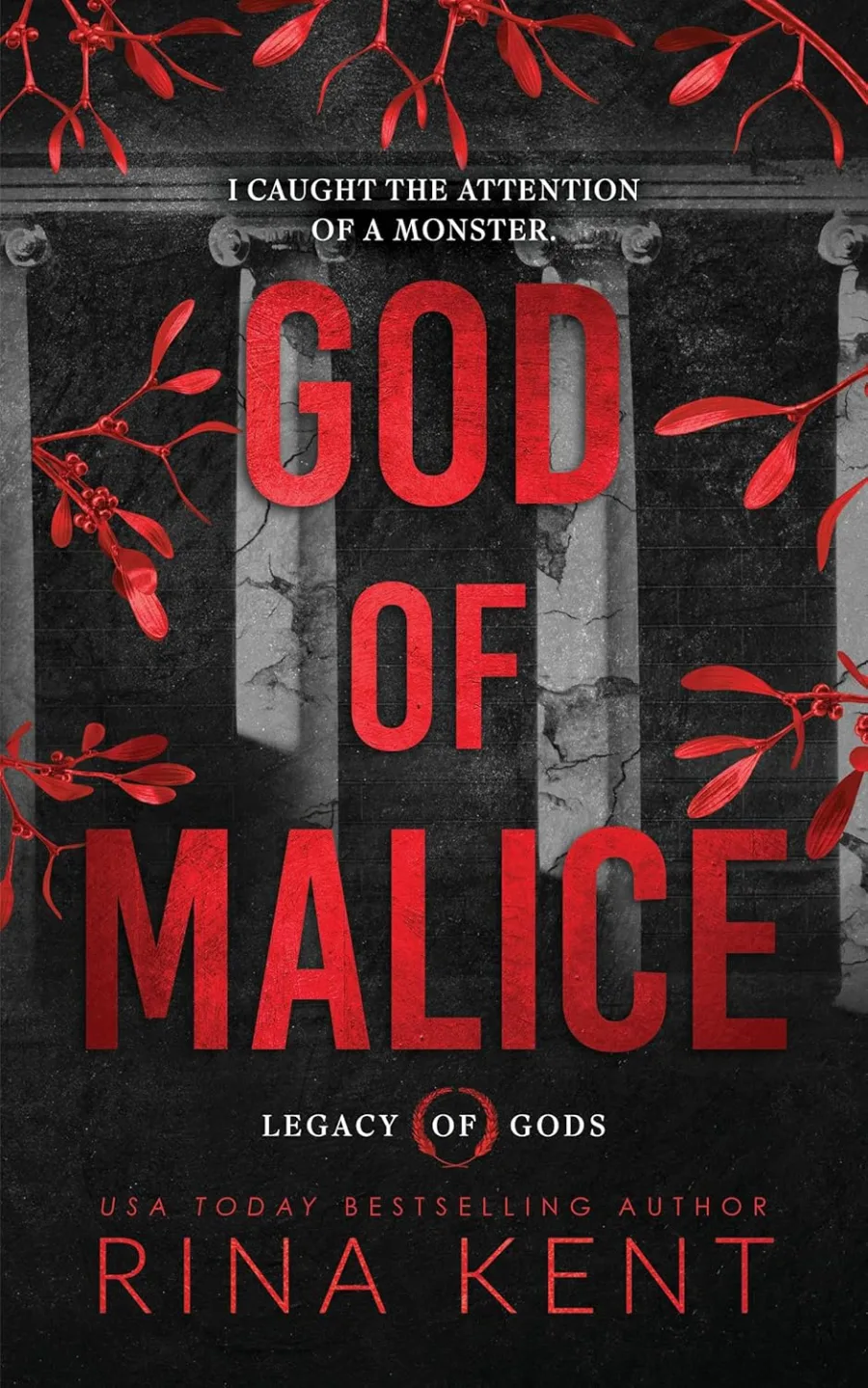
Download Cover Image
Do you want to download the full cover image for God of Malice : (Legacy of Gods, 1)?