
Killers of the Flower Moon: The Osage Murders and the Birth of the FBI
Paperback
• 416 Pages
• USD 19.00
• English
• 9780307742483
No ratings yet
| Publisher | Vintage |
|---|---|
| ISBN13 | 9780307742483 |
| ASIN/SKU | 0307742482 |
| Book Format | Paperback |
| Language | English |
| Pages | 416 |
| List Price | USD 19.00 |
| Publishing Date | 03/04/2018 |
| Dimensions | 5.15 x 0.87 x 7.95 inches |
| Weight | 12.8 ounces |
| Book Code | BD00055989 |
Buy this Book
Amazon Stores
Ebook Stores
Other Stores
Discover Killers of the Flower Moon: The Osage Murders and the Birth of the FBI by David Grann. This book is published by Vintage in Paperback format, ISBN 9780307742483, ASIN 0307742482, under History, Indigenous History, Native American History.
Book Description
#1 NEW YORK TIMES BESTSELLER • A twisting, haunting true-life murder mystery about one of the most monstrous crimes in American history, from the author of The Wager and The Lost City of Z, “one of the preeminent adventure and true-crime writers working today."—New York Magazine • NATIONAL BOOK AWARD FINALIST • NOW A MARTIN SCORSESE PICTURE
“A shocking whodunit…What more could fans of true-crime thrillers ask?”—USA Today
“A masterful work of literary journalism crafted with the urgency of a mystery.” —The Boston Globe
A Kirkus Reviews Best Nonfiction Book of the Century
In the 1920s, the richest people per capita in the world were members of the Osage Nation in Oklahoma. After oil was discovered beneath their land, the Osage rode in chauffeured automobiles, built mansions, and sent their children to study in Europe.
Then, one by one, the Osage began to be killed off. The family of an Osage woman, Mollie Burkhart, became a prime target. One of her relatives was shot. Another was poisoned. And it was just the beginning, as more and more Osage were dying under mysterious circumstances, and many of those who dared to investigate the killings were themselves murdered.
As the death toll rose, the newly created FBI took up the case, and the young director, J. Edgar Hoover, turned to a former Texas Ranger named Tom White to try to unravel the mystery. White put together an undercover team, including a Native American agent who infiltrated the region, and together with the Osage began to expose one of the most chilling conspiracies in American history.
Look for David Grann’s latest bestselling book, The Wager!
“A shocking whodunit…What more could fans of true-crime thrillers ask?”—USA Today
“A masterful work of literary journalism crafted with the urgency of a mystery.” —The Boston Globe
A Kirkus Reviews Best Nonfiction Book of the Century
In the 1920s, the richest people per capita in the world were members of the Osage Nation in Oklahoma. After oil was discovered beneath their land, the Osage rode in chauffeured automobiles, built mansions, and sent their children to study in Europe.
Then, one by one, the Osage began to be killed off. The family of an Osage woman, Mollie Burkhart, became a prime target. One of her relatives was shot. Another was poisoned. And it was just the beginning, as more and more Osage were dying under mysterious circumstances, and many of those who dared to investigate the killings were themselves murdered.
As the death toll rose, the newly created FBI took up the case, and the young director, J. Edgar Hoover, turned to a former Texas Ranger named Tom White to try to unravel the mystery. White put together an undercover team, including a Native American agent who infiltrated the region, and together with the Osage began to expose one of the most chilling conspiracies in American history.
Look for David Grann’s latest bestselling book, The Wager!
Author Biography
DAVID GRANN is the author of the #1 New York Times bestsellers KILLERS OF THE FLOWER MOON and THE LOST CITY OF Z. KILLERS OF THE FLOWER MOON was a finalist for The National Book Award and won an Edgar Allan Poe Award. He is also the author of THE WHITE DARKNESS and the collection THE DEVIL AND SHERLOCK HOLMES. Grann’s storytelling has garnered several honors, including a George Polk Award. He lives with his wife and children in New York.
Editorial Reviews
NEW YORK TIMES BEST SELLER • A NEW YORK TIMES NOTABLE BOOK
A BEST BOOK OF THE YEAR: Wall Street Journal, The Boston Globe, San Francisco Chronicle, GQ, Time, Newsday, Entertainment Weekly, Time Magazine,NPR, Vogue, Smithsonian, Cosmopolitan, Seattle Times, Bloomberg, Lit Hub, and Slate
“Disturbing and riveting. . . . Grann has proved himself a master of spinning delicious, many-layered mysteries that also happen to be true. . . . It will sear your soul.”
—Dave Eggers, New York Times BookReview
“A marvel of detective-like research and narrative verve.”
—Financial Times
“A shocking whodunit. . . . What more could fans of true-crime thrillers ask?”
—USA Today
“A master of the detective form. . . . Killers is something rather deep and not easily forgotten.”
—Wall St. Journal
“The best book of the year so far.”
—Entertainment Weekly
“David Grann's Killers of the Flower Moon is unsurprisingly extraordinary."
—Time
“A masterful work of literary journalism crafted with the urgency of a mystery. . . . Contained within Grann's mesmerizing storytelling lies something more than a brisk, satisfying read. Killers of the Flower Moon offers up the Osage killings as emblematic of America's relationship with its indigenous peoples and the 'culture of killing' that has forever marred that tie.”
—The Boston Globe
“[C]lose to impeccable. It's confident, fluid in its dynamics, light on its feet. . . . The crime story it tells is appalling, and stocked with authentic heroes and villains. It will make you cringe at man's inhumanity to man.”
—The New York Times
A BEST BOOK OF THE YEAR: Wall Street Journal, The Boston Globe, San Francisco Chronicle, GQ, Time, Newsday, Entertainment Weekly, Time Magazine,NPR, Vogue, Smithsonian, Cosmopolitan, Seattle Times, Bloomberg, Lit Hub, and Slate
“Disturbing and riveting. . . . Grann has proved himself a master of spinning delicious, many-layered mysteries that also happen to be true. . . . It will sear your soul.”
—Dave Eggers, New York Times BookReview
“A marvel of detective-like research and narrative verve.”
—Financial Times
“A shocking whodunit. . . . What more could fans of true-crime thrillers ask?”
—USA Today
“A master of the detective form. . . . Killers is something rather deep and not easily forgotten.”
—Wall St. Journal
“The best book of the year so far.”
—Entertainment Weekly
“David Grann's Killers of the Flower Moon is unsurprisingly extraordinary."
—Time
“A masterful work of literary journalism crafted with the urgency of a mystery. . . . Contained within Grann's mesmerizing storytelling lies something more than a brisk, satisfying read. Killers of the Flower Moon offers up the Osage killings as emblematic of America's relationship with its indigenous peoples and the 'culture of killing' that has forever marred that tie.”
—The Boston Globe
“[C]lose to impeccable. It's confident, fluid in its dynamics, light on its feet. . . . The crime story it tells is appalling, and stocked with authentic heroes and villains. It will make you cringe at man's inhumanity to man.”
—The New York Times
Book Summary
Killers of the Flower Moon: The Osage Murders and the Birth of the FBI by David Grann tells the haunting true story of a series of brutal killings in 1920s Oklahoma, and how those crimes exposed both the depths of American racism and the early, uncertain steps of what would become the modern FBI. The book focuses on the Osage Nation, a Native American tribe that was forced onto seemingly worthless rocky land in Oklahoma in the late 19th century. That land turned out to sit on one of the richest oil deposits in the United States. By the 1910s and 1920s, the Osage were among the wealthiest people per capita in the country. They owned valuable “headrights” to the oil money, which meant companies had to pay them large sums in royalties. This sudden wealth brought cars, grand houses, and luxury—but it also brought resentment, greed, and danger. Many white Americans were outraged or jealous that Native people had so much money, and local systems were put in place to control and siphon off their wealth.
The U.S. government and local authorities used paternalistic laws to assign white “guardians” to many Osage, especially those deemed “incompetent,” which usually just meant full-blooded Native people. Guardians had the legal power to control how Osage people spent their own money, signing off on basic purchases while quietly enriching themselves. At the same time, there was a darker and more direct way to access Osage wealth: if an Osage with a headright died, that headright could be inherited. Soon, in a pattern that was initially brushed aside as coincidence, Osage men and women began to die at an alarming rate—shot, poisoned, blown up, or found dead in circumstances that were quickly dismissed as accidents or suicides. The book calls this period the “Reign of Terror,” because dozens of Osage were killed or died mysteriously over a span of years, while local law enforcement did little or nothing to stop it.
Grann tells much of the story through specific Osage families, which makes the horror personal and immediate. One of the central figures is Mollie Burkhart, an Osage woman whose relatives began dying one by one. Her sister Anna Brown is found shot in the head and dumped in a ravine. Another sister, Rita, is later killed when her house is blown up with dynamite in the middle of the night, killing her, her husband, and their servant. Their mother dies under suspicious circumstances, likely from poisoning. Mollie herself, already suffering from illness, realizes that death is stalking her entire family. She lives with her white husband, Ernest Burkhart, who seems caring and loyal at first glance, and she is surrounded by a network of white neighbors and in-laws. But someone close to her is orchestrating the destruction of her family, systematically removing heirs to valuable oil headrights. The slow horror of realizing that you may be sharing your life with people who are killing you and your loved ones gives the narrative a chilling emotional weight.
Locally, almost nobody seems willing to truly investigate these crimes. Many of the doctors, lawmen, and officials are either incompetent, intimidated, or complicit. Corruption is widespread; reports are ignored, evidence disappears, and juries are easily influenced. The Osage hire private detectives, but some of them wind up dead as well. It becomes clear that the killing is not the work of one madman but part of a broader conspiracy involving respected white citizens who see the Osage as obstacles to be removed. The terror is not just in the violence but in the sense of being completely unprotected by the law, surrounded by people who smile politely by day and plot murder by night.
Desperate, the Osage take their plea for justice to the federal government, which leads the newly formed Bureau of Investigation—soon to become the FBI—to take an interest in the case. The bureau is still young and trying to prove its value. J. Edgar Hoover, ambitious and eager to show that his agency can bring order and professionalism to federal law enforcement, assigns a former Texas Ranger named Tom White to lead the investigation. White is a quiet, methodical investigator who recruits a small team of undercover agents. They pose as cattlemen, salesmen, and oil workers, quietly gathering information and trying to piece together what is really happening in Osage County. Unlike many local authorities, White and his team are not beholden to the powerful men who control the region, which gives them a better chance of getting close to the truth—though it also puts them in grave danger.
As the investigation progresses, a central villain emerges: William Hale, a seemingly benevolent white cattleman who presents himself as a friend to the Osage. He is known in town as “King of the Osage Hills,” a man who donates to churches, helps people in need, and speaks kindly about the tribe. Behind this friendly mask, however, he is orchestrating a secret campaign of murder. Through insurance schemes, manipulated marriages, and calculated killings, Hale arranges to funnel Osage headrights and wealth into his own hands and into the hands of his relatives. Ernest Burkhart, Mollie’s husband, becomes one of his tools, participating in or enabling the very crimes that destroy Mollie’s family. The revelation that trusted husbands and neighbors were part of the conspiracy makes the story not only a crime narrative but a tragedy of betrayal.
The case against Hale and his accomplices eventually leads to trials that are noisy, tense, and fraught with attempts to influence witnesses and jurors. There are bribes, threats, and multiple attempts to derail justice. But thanks to the persistence of Tom White and his team—and the courage of some witnesses, including those who turn against their former allies—the government finally succeeds in convicting Hale and several others. These convictions are presented as an early triumph for the FBI, a sign that the bureau could function as a force against corruption that local law enforcement refused or failed to confront. It marks a turning point in American law enforcement, showing how federal investigators could take on cases that crossed local power structures and entrenched racism.
However, David Grann does not allow the story to end with a comforting sense that justice fully prevailed. In the final part of the book, he steps in as a modern-day journalist, revisiting the Osage and examining old records to show that the official case solved only part of the problem. Many Osage deaths from that era were never seriously investigated at all. Grann finds evidence that the conspiracy to murder Osage people for their wealth was even wider and more deeply embedded in the community than the FBI’s case revealed. Some murders were quietly covered up, some never connected to larger patterns, and many killers were never charged. This broader picture emphasizes that the “Reign of Terror” was not an isolated fluke but a symptom of a deeply racist system in which Native lives were considered expendable and their wealth was seen as something white people were entitled to take.
By combining gripping storytelling with careful research, Killers of the Flower Moon becomes more than just a crime narrative. It is a history of how greed, racism, and corruption combined to destroy lives, and how early federal agents tried—imperfectly—to confront that violence. It also gives voice to the Osage victims and survivors, showing that behind every headright and every crime report was a real person with family, hopes, and a future that was violently cut short. Grann’s book invites readers not only to be shocked by the murders but to reflect on how easily whole communities can become complicit in injustice when a group of people is dehumanized. In telling the story of these murders and the birth of the FBI, it reminds us that justice, when it comes, is often incomplete—and that the past still lives in the memory and pain of those whose families were targeted simply for being who they were and for owning what others wanted.
The U.S. government and local authorities used paternalistic laws to assign white “guardians” to many Osage, especially those deemed “incompetent,” which usually just meant full-blooded Native people. Guardians had the legal power to control how Osage people spent their own money, signing off on basic purchases while quietly enriching themselves. At the same time, there was a darker and more direct way to access Osage wealth: if an Osage with a headright died, that headright could be inherited. Soon, in a pattern that was initially brushed aside as coincidence, Osage men and women began to die at an alarming rate—shot, poisoned, blown up, or found dead in circumstances that were quickly dismissed as accidents or suicides. The book calls this period the “Reign of Terror,” because dozens of Osage were killed or died mysteriously over a span of years, while local law enforcement did little or nothing to stop it.
Grann tells much of the story through specific Osage families, which makes the horror personal and immediate. One of the central figures is Mollie Burkhart, an Osage woman whose relatives began dying one by one. Her sister Anna Brown is found shot in the head and dumped in a ravine. Another sister, Rita, is later killed when her house is blown up with dynamite in the middle of the night, killing her, her husband, and their servant. Their mother dies under suspicious circumstances, likely from poisoning. Mollie herself, already suffering from illness, realizes that death is stalking her entire family. She lives with her white husband, Ernest Burkhart, who seems caring and loyal at first glance, and she is surrounded by a network of white neighbors and in-laws. But someone close to her is orchestrating the destruction of her family, systematically removing heirs to valuable oil headrights. The slow horror of realizing that you may be sharing your life with people who are killing you and your loved ones gives the narrative a chilling emotional weight.
Locally, almost nobody seems willing to truly investigate these crimes. Many of the doctors, lawmen, and officials are either incompetent, intimidated, or complicit. Corruption is widespread; reports are ignored, evidence disappears, and juries are easily influenced. The Osage hire private detectives, but some of them wind up dead as well. It becomes clear that the killing is not the work of one madman but part of a broader conspiracy involving respected white citizens who see the Osage as obstacles to be removed. The terror is not just in the violence but in the sense of being completely unprotected by the law, surrounded by people who smile politely by day and plot murder by night.
Desperate, the Osage take their plea for justice to the federal government, which leads the newly formed Bureau of Investigation—soon to become the FBI—to take an interest in the case. The bureau is still young and trying to prove its value. J. Edgar Hoover, ambitious and eager to show that his agency can bring order and professionalism to federal law enforcement, assigns a former Texas Ranger named Tom White to lead the investigation. White is a quiet, methodical investigator who recruits a small team of undercover agents. They pose as cattlemen, salesmen, and oil workers, quietly gathering information and trying to piece together what is really happening in Osage County. Unlike many local authorities, White and his team are not beholden to the powerful men who control the region, which gives them a better chance of getting close to the truth—though it also puts them in grave danger.
As the investigation progresses, a central villain emerges: William Hale, a seemingly benevolent white cattleman who presents himself as a friend to the Osage. He is known in town as “King of the Osage Hills,” a man who donates to churches, helps people in need, and speaks kindly about the tribe. Behind this friendly mask, however, he is orchestrating a secret campaign of murder. Through insurance schemes, manipulated marriages, and calculated killings, Hale arranges to funnel Osage headrights and wealth into his own hands and into the hands of his relatives. Ernest Burkhart, Mollie’s husband, becomes one of his tools, participating in or enabling the very crimes that destroy Mollie’s family. The revelation that trusted husbands and neighbors were part of the conspiracy makes the story not only a crime narrative but a tragedy of betrayal.
The case against Hale and his accomplices eventually leads to trials that are noisy, tense, and fraught with attempts to influence witnesses and jurors. There are bribes, threats, and multiple attempts to derail justice. But thanks to the persistence of Tom White and his team—and the courage of some witnesses, including those who turn against their former allies—the government finally succeeds in convicting Hale and several others. These convictions are presented as an early triumph for the FBI, a sign that the bureau could function as a force against corruption that local law enforcement refused or failed to confront. It marks a turning point in American law enforcement, showing how federal investigators could take on cases that crossed local power structures and entrenched racism.
However, David Grann does not allow the story to end with a comforting sense that justice fully prevailed. In the final part of the book, he steps in as a modern-day journalist, revisiting the Osage and examining old records to show that the official case solved only part of the problem. Many Osage deaths from that era were never seriously investigated at all. Grann finds evidence that the conspiracy to murder Osage people for their wealth was even wider and more deeply embedded in the community than the FBI’s case revealed. Some murders were quietly covered up, some never connected to larger patterns, and many killers were never charged. This broader picture emphasizes that the “Reign of Terror” was not an isolated fluke but a symptom of a deeply racist system in which Native lives were considered expendable and their wealth was seen as something white people were entitled to take.
By combining gripping storytelling with careful research, Killers of the Flower Moon becomes more than just a crime narrative. It is a history of how greed, racism, and corruption combined to destroy lives, and how early federal agents tried—imperfectly—to confront that violence. It also gives voice to the Osage victims and survivors, showing that behind every headright and every crime report was a real person with family, hopes, and a future that was violently cut short. Grann’s book invites readers not only to be shocked by the murders but to reflect on how easily whole communities can become complicit in injustice when a group of people is dehumanized. In telling the story of these murders and the birth of the FBI, it reminds us that justice, when it comes, is often incomplete—and that the past still lives in the memory and pain of those whose families were targeted simply for being who they were and for owning what others wanted.
Sample Chapters
Sample Chapters will be added soon…
Reader Reviews
No reviews yet.
Killers of the Flower Moon: The Osage Murders and the Birth of the FBI
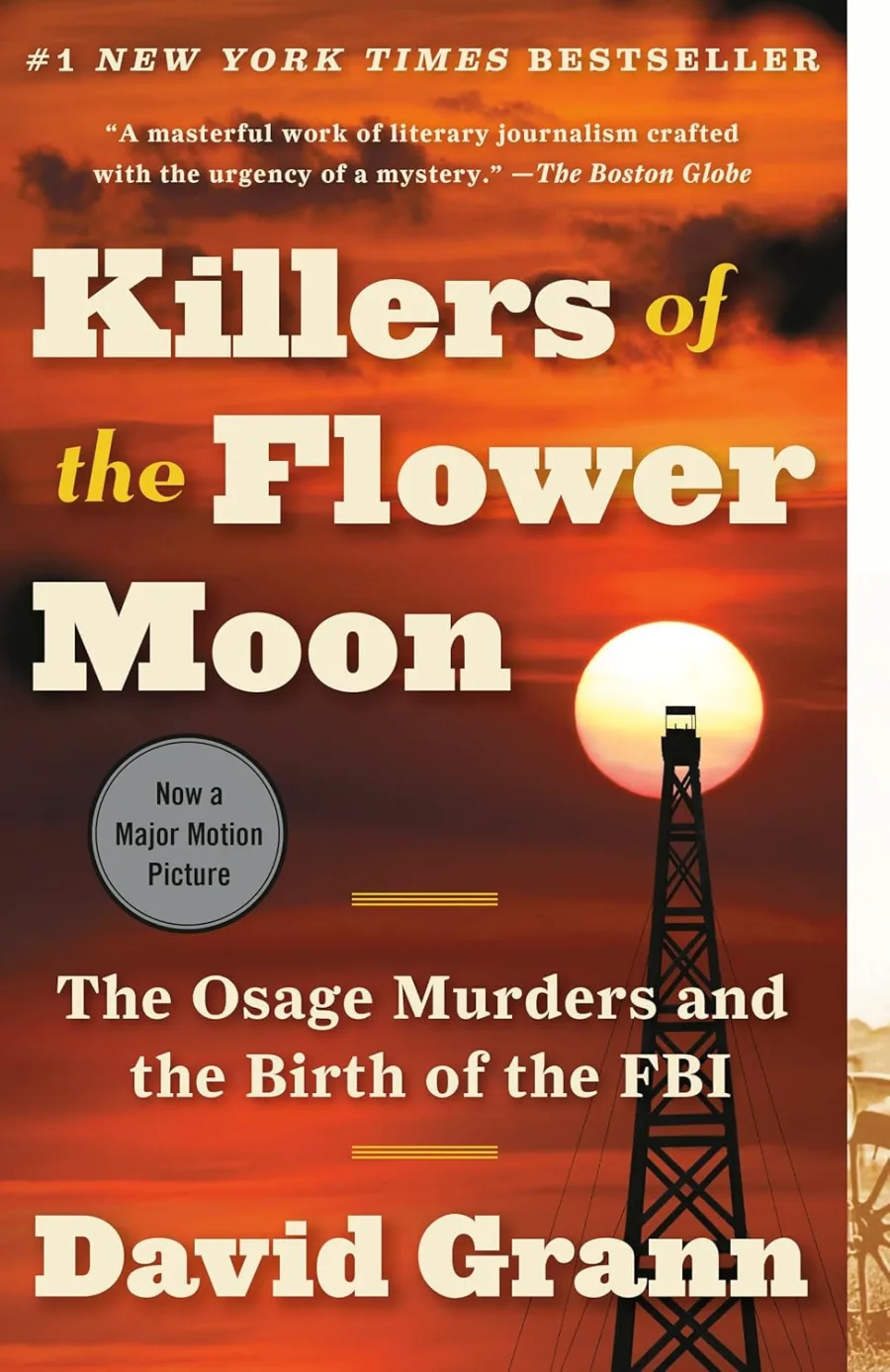
Download Cover Image
Do you want to download the full cover image for Killers of the Flower Moon: The Osage Murders and the Birth of the FBI?