
Orphan Train: A Novel
Paperback
• 320 Pages
• USD 18.99
• English
• 9780061950728
No ratings yet
| Publisher | Mariner Books |
|---|---|
| ISBN13 | 9780061950728 |
| ASIN/SKU | 0061950726 |
| Book Format | Paperback |
| Language | English |
| Pages | 320 |
| List Price | USD 18.99 |
| Publishing Date | 20/03/2013 |
| Dimensions | 5.31 x 0.8 x 8 inches |
| Weight | 10.4 ounces |
| Book Code | BD00055992 |
Buy this Book
Amazon Stores
Ebook Stores
Other Stores
Discover Orphan Train: A Novel by Christina Baker Kline. This book is published by Mariner Books in Paperback format, ISBN 9780061950728, ASIN 0061950726, under Literature and Fiction, Feel-Good Fiction, 20th Century Historical Romance.
Book Description
The #1 New York Times Bestseller
“A lovely novel about the search for family that also happens to illuminate a fascinating and forgotten chapter of America’s history. Beautiful.”—Ann Packer
Moving between contemporary Maine and Depression-era Minnesota, Orphan Train is a powerful novel of upheaval and resilience, of second chances, and unexpected friendship.
Between 1854 and 1929, so-called orphan trains ran regularly from the cities of the East Coast to the farmlands of the Midwest, carrying thousands of abandoned children whose fates would be determined by pure luck. Would they be adopted by a kind and loving family, or would they face a childhood and adolescence of hard labor and servitude?
As a young Irish immigrant, Vivian Daly was one such child, sent by rail from New York City to an uncertain future a world away. Returning east later in life, Vivian leads a quiet, peaceful existence on the coast of Maine, the memories of her upbringing rendered a hazy blur. But in her attic, hidden in trunks, are vestiges of a turbulent past.
Seventeen-year-old Molly Ayer knows that a community service position helping an elderly woman clean out her home is the only thing keeping her out of juvenile hall. But as Molly helps Vivian sort through her keepsakes and possessions, she discovers that she and Vivian aren't as different as they appear. A Penobscot Indian who has spent her youth in and out of foster homes, Molly is also an outsider being raised by strangers, and she, too, has unanswered questions about the past.
“A lovely novel about the search for family that also happens to illuminate a fascinating and forgotten chapter of America’s history. Beautiful.”—Ann Packer
Moving between contemporary Maine and Depression-era Minnesota, Orphan Train is a powerful novel of upheaval and resilience, of second chances, and unexpected friendship.
Between 1854 and 1929, so-called orphan trains ran regularly from the cities of the East Coast to the farmlands of the Midwest, carrying thousands of abandoned children whose fates would be determined by pure luck. Would they be adopted by a kind and loving family, or would they face a childhood and adolescence of hard labor and servitude?
As a young Irish immigrant, Vivian Daly was one such child, sent by rail from New York City to an uncertain future a world away. Returning east later in life, Vivian leads a quiet, peaceful existence on the coast of Maine, the memories of her upbringing rendered a hazy blur. But in her attic, hidden in trunks, are vestiges of a turbulent past.
Seventeen-year-old Molly Ayer knows that a community service position helping an elderly woman clean out her home is the only thing keeping her out of juvenile hall. But as Molly helps Vivian sort through her keepsakes and possessions, she discovers that she and Vivian aren't as different as they appear. A Penobscot Indian who has spent her youth in and out of foster homes, Molly is also an outsider being raised by strangers, and she, too, has unanswered questions about the past.
Author Biography
Christina Baker Kline is the author of ten novels, including the New York Times bestsellers Orphan Train, The Exiles, and A Piece of the World. Her novels have received the New England Society Book Award for Fiction, the Maine Literary Award, and several bookseller awards, among other prizes. Born in England, she was raised in the American South and Maine. She lives in New York City and in Southwest Harbor, Maine.
Editorial Reviews
“Kline draws a dramatic, emotional story from a neglected corner of American history.” - Kirkus Reviews
“A lovely novel about the search for family that also happens to illuminate a fascinating and forgotten chapter of American history. Beautiful.” - Ann Packer, New York Times-bestselling author of The Dive from Clausen's Pier and Swim Back to Me
“A compelling story about loss, adaptability, and courage . . . With compassion and delicacy Kline presents a little-known chapter of American history and draws comparisons with the modern-day foster care system.” - Library Journal
“One of the most powerful novels I’ve ever read...I am compelling all of you, even begging you, to make this novel your next read. You’ll be talking about it for years to come!” - Naples Daily News (FL)
“One of the most intriguing, tender novels of 2013...This is a warm, satisfying, and inspirational story.” - The New Maine Times Book Review
“This superbly composed novel tells two parallel stories of suffering and perseverance, capturing the heart and mind equally and remaining mesmerizing through the intensely heart-wrenching conclusion.” - Romantic Times, Top Pick
“Absorbing...a heartfelt page-turner about two women finding a sense of home...Kline lets us live the characters’ experiences vividly through their skin...The growth from instinct to conscious understanding to partnership between the two is the foundation for a moving tale.” - Publishers Weekly
“The intertwined stories in this novel will surely please those looking for a compelling new read.” - Cleveland Plain Dealer
“A gem.” - Huffington Post
“A poignant and memorable story of two steadfast, courageous women...A revelation of the universal yearing for belonging, for family, for acceptance and, ultimately, the journeys we must all make to find them.” - Kathleen Kent, New York Times-bestselling author of The Heretic's Daughter and The Traitor's Wife
“In this poignant novel Christina Baker Kline weaves a tapestry of the intertwining lives of two women and affirms our hope that the present can redeem the past and that love has a genuine power to heal. Reminiscent of Elizabeth Strout’s Amy and Isabel, this Orphan Train carries us along until the stories of these two women become one.” - Mary Morris author of Revenge
“Reminiscent of Elizabeth Strout’s Amy and Isabel, this Orphan Train carries us along until the stories of these two women become one.” - Mary Morris, author of, most recently, Revenge
“I was so moved by this book. I loved Molly and Vivian, two brave, difficult, true-hearted women who disrupt one another’s lives in beautiful ways, and loved journeying with them, through heartbreak and stretches of history I’d never known existed, out of loneliness toward family and home.” - Marisa de los Santos New York Times-bestselling author of Belong to Me and Falling Together
“I loved this book: its absorbing back-and-forth story, its vivid history, its eminently loveable characters. ORPHAN TRAIN wrecked m
“A lovely novel about the search for family that also happens to illuminate a fascinating and forgotten chapter of American history. Beautiful.” - Ann Packer, New York Times-bestselling author of The Dive from Clausen's Pier and Swim Back to Me
“A compelling story about loss, adaptability, and courage . . . With compassion and delicacy Kline presents a little-known chapter of American history and draws comparisons with the modern-day foster care system.” - Library Journal
“One of the most powerful novels I’ve ever read...I am compelling all of you, even begging you, to make this novel your next read. You’ll be talking about it for years to come!” - Naples Daily News (FL)
“One of the most intriguing, tender novels of 2013...This is a warm, satisfying, and inspirational story.” - The New Maine Times Book Review
“This superbly composed novel tells two parallel stories of suffering and perseverance, capturing the heart and mind equally and remaining mesmerizing through the intensely heart-wrenching conclusion.” - Romantic Times, Top Pick
“Absorbing...a heartfelt page-turner about two women finding a sense of home...Kline lets us live the characters’ experiences vividly through their skin...The growth from instinct to conscious understanding to partnership between the two is the foundation for a moving tale.” - Publishers Weekly
“The intertwined stories in this novel will surely please those looking for a compelling new read.” - Cleveland Plain Dealer
“A gem.” - Huffington Post
“A poignant and memorable story of two steadfast, courageous women...A revelation of the universal yearing for belonging, for family, for acceptance and, ultimately, the journeys we must all make to find them.” - Kathleen Kent, New York Times-bestselling author of The Heretic's Daughter and The Traitor's Wife
“In this poignant novel Christina Baker Kline weaves a tapestry of the intertwining lives of two women and affirms our hope that the present can redeem the past and that love has a genuine power to heal. Reminiscent of Elizabeth Strout’s Amy and Isabel, this Orphan Train carries us along until the stories of these two women become one.” - Mary Morris author of Revenge
“Reminiscent of Elizabeth Strout’s Amy and Isabel, this Orphan Train carries us along until the stories of these two women become one.” - Mary Morris, author of, most recently, Revenge
“I was so moved by this book. I loved Molly and Vivian, two brave, difficult, true-hearted women who disrupt one another’s lives in beautiful ways, and loved journeying with them, through heartbreak and stretches of history I’d never known existed, out of loneliness toward family and home.” - Marisa de los Santos New York Times-bestselling author of Belong to Me and Falling Together
“I loved this book: its absorbing back-and-forth story, its vivid history, its eminently loveable characters. ORPHAN TRAIN wrecked m
Book Summary
Orphan Train by Christina Baker Kline is a moving, dual timeline novel that connects the lives of two very different girls—one in the early 20th century and one in modern times—through shared experiences of loss, displacement, and the search for a true home. In the present day storyline, we meet Molly Ayer, a 17 year old girl in foster care in Maine. Molly is tough on the outside, with dark clothes, a sharp tongue, and a habit of pushing people away before they can hurt her. She has bounced through the system and never really felt wanted or secure. After getting in trouble for trying to steal a book from the library, she faces the possibility of juvenile detention. To avoid that, she agrees to do community service hours helping an elderly woman, Vivian Daly, clean out her attic. Molly expects it to be boring, just another adult judging her. Instead, in that attic full of boxes and memories, she discovers a story that mirrors her own in unexpected ways.
Vivian, now in her 90s, seems quiet and reserved, living in a large, orderly house with an attic packed full of trunks, clothes, and old photographs. As Molly begins to help her sort through the items, Vivian starts talking about where they came from. Slowly, the narrative slips back into the 1920s and 1930s, revealing Vivian’s childhood, when she was not called Vivian at all, but Niamh (pronounced “Neev”), a young Irish immigrant girl in New York City. Niamh’s family came to America poor and hopeful, crammed into a tenement. Tragedy strikes when a fire kills her family, leaving Niamh alone and with no one to care for her. With no safety net for orphaned children at that time, she is placed on one of the “orphan trains,” a social experiment that sent thousands of children from crowded Eastern cities to the Midwest, where they were displayed for adoption at train stops along the way.
On the train, Niamh and other children are dressed up and lined up like goods for sale, waiting to see if anyone will choose them. Some children are taken by loving families; others are chosen mainly for their labor. Niamh is chosen by a couple in Minnesota, but instead of being treated as a daughter, she is used as free help. They rename her “Dorothy” and she is expected to work hard in a harsh, poor household. She sleeps in rough conditions, often hungry and cold, and quickly learns that being “adopted” does not guarantee kindness. Her new “mother” is cruel and resentful, and Niamh/Dorothy survives by staying quiet, doing what she’s told, and trying not to draw attention. When circumstances become unbearable, she is moved again, this time to a different home where she is used as a servant for a storeowner and his wife. In each place, she loses her name and identity a little more, reshaped by the needs and whims of adults who see her primarily as a tool.
The past and present threads of the book echo and reflect each other. As Vivian tells her story, Molly starts to recognize the loneliness and instability that have shaped both of their lives. Molly has her own painful history: her father died and her mother fell into addiction and instability, leaving Molly to be placed in foster care. Her current foster mother, Dina, is strict and often disapproving, frustrated by Molly’s behavior and style, seeing her as trouble rather than as a wounded teen trying to protect herself. Molly doesn’t feel secure in this house either. She is constantly aware that she could be sent away at any time, and she responds by keeping emotional distance. The only person she trusts is her boyfriend, Jack, whose family is warmer and more stable than any Molly has known. But even there, Molly feels like an outsider, worried that nothing good can last.
As Vivian continues, we see Niamh/Dorothy’s life shifting once more when she is placed with the Nielsen family, a kind couple who run a general store. They rename her “Vivian,” the name she carries into old age. The Nielsens are simple and decent people who treat her with genuine care. For the first time, Vivian experiences a home where she is not just a worker but someone loved and taught. She helps in the store, goes to school, and begins to feel rooted in the town. Yet even this stability is fragile. The Great Depression looms, economic hardship grows, and a heartbreaking event shakes Vivian’s fragile happiness and sense of safety. The book explores how those early losses shape her choices for decades, including the decisions she makes later around marriage, motherhood, and what she chooses to keep or let go.
Back in the modern timeline, Molly and Vivian’s relationship deepens as they sort through each box. Each dress, letter, or photograph opens a door into Vivian’s past, and Molly becomes less of a worker and more of a listener, a witness. Molly realizes Vivian has kept many secrets buried, even from the people in her current life. As the two talk, Molly sees how history repeats itself in different forms: institutions change, laws change, but vulnerable children can still fall through the cracks. Vivian’s orphan train experience and Molly’s foster care journey share the same ache of being moved around, of never fully belonging, of having your future decided by others.
The attic project becomes a kind of emotional excavation. Vivian acknowledges regrets, old loves, and the long lasting impact of choices made under pressure decades ago. Molly, hearing all this, begins to think about her own future differently. She has always seen herself as someone who doesn’t get picked, who doesn’t get kept. But Vivian’s story suggests that hurt is not the end of the road. There can be survival, and even tenderness, after pain. Molly starts opening up more, sharing pieces of her own story, and their conversations give her a sense of being understood in a way she has never felt before. The generational gap between them fades as shared experience bridges the distance.
Through this connection, Molly also finds the courage to confront her current situation. She decides that she might have more control over her life than she believed. With Jack’s help and Vivian’s support, she starts exploring practical options that could give her more stability, like staying with Vivian longer or finding a path that isn’t dictated only by the foster care system. Vivian, who once felt herself to be just an old woman waiting out her days, discovers that it is not too late to make meaningful choices either. With Molly’s involvement, she revisits parts of her past she had locked away, including people she left behind and questions that went unanswered. Together they face those ghosts, which brings both pain and closure.
By the end of Orphan Train the two stories are tightly woven. Vivian’s journey from Niamh to Dorothy to Vivian shows a child repeatedly uprooted, renamed, and used, yet ultimately finding a measure of love and safety and building a life of her own. Molly’s journey shows a modern teen who, despite the system’s flaws, finds someone who truly sees her—and learns that family can be chosen as much as it is given. The novel leaves you with the sense that history’s shadows stretch into the present, but also that empathy across generations can heal some of those wounds. Molly and Vivian, starting as strangers bound only by court ordered community service, end as something much closer to family: two survivors whose lives, at different points in time, prove that being an orphan—literal or emotional—does not mean you are destined to be alone forever.
Vivian, now in her 90s, seems quiet and reserved, living in a large, orderly house with an attic packed full of trunks, clothes, and old photographs. As Molly begins to help her sort through the items, Vivian starts talking about where they came from. Slowly, the narrative slips back into the 1920s and 1930s, revealing Vivian’s childhood, when she was not called Vivian at all, but Niamh (pronounced “Neev”), a young Irish immigrant girl in New York City. Niamh’s family came to America poor and hopeful, crammed into a tenement. Tragedy strikes when a fire kills her family, leaving Niamh alone and with no one to care for her. With no safety net for orphaned children at that time, she is placed on one of the “orphan trains,” a social experiment that sent thousands of children from crowded Eastern cities to the Midwest, where they were displayed for adoption at train stops along the way.
On the train, Niamh and other children are dressed up and lined up like goods for sale, waiting to see if anyone will choose them. Some children are taken by loving families; others are chosen mainly for their labor. Niamh is chosen by a couple in Minnesota, but instead of being treated as a daughter, she is used as free help. They rename her “Dorothy” and she is expected to work hard in a harsh, poor household. She sleeps in rough conditions, often hungry and cold, and quickly learns that being “adopted” does not guarantee kindness. Her new “mother” is cruel and resentful, and Niamh/Dorothy survives by staying quiet, doing what she’s told, and trying not to draw attention. When circumstances become unbearable, she is moved again, this time to a different home where she is used as a servant for a storeowner and his wife. In each place, she loses her name and identity a little more, reshaped by the needs and whims of adults who see her primarily as a tool.
The past and present threads of the book echo and reflect each other. As Vivian tells her story, Molly starts to recognize the loneliness and instability that have shaped both of their lives. Molly has her own painful history: her father died and her mother fell into addiction and instability, leaving Molly to be placed in foster care. Her current foster mother, Dina, is strict and often disapproving, frustrated by Molly’s behavior and style, seeing her as trouble rather than as a wounded teen trying to protect herself. Molly doesn’t feel secure in this house either. She is constantly aware that she could be sent away at any time, and she responds by keeping emotional distance. The only person she trusts is her boyfriend, Jack, whose family is warmer and more stable than any Molly has known. But even there, Molly feels like an outsider, worried that nothing good can last.
As Vivian continues, we see Niamh/Dorothy’s life shifting once more when she is placed with the Nielsen family, a kind couple who run a general store. They rename her “Vivian,” the name she carries into old age. The Nielsens are simple and decent people who treat her with genuine care. For the first time, Vivian experiences a home where she is not just a worker but someone loved and taught. She helps in the store, goes to school, and begins to feel rooted in the town. Yet even this stability is fragile. The Great Depression looms, economic hardship grows, and a heartbreaking event shakes Vivian’s fragile happiness and sense of safety. The book explores how those early losses shape her choices for decades, including the decisions she makes later around marriage, motherhood, and what she chooses to keep or let go.
Back in the modern timeline, Molly and Vivian’s relationship deepens as they sort through each box. Each dress, letter, or photograph opens a door into Vivian’s past, and Molly becomes less of a worker and more of a listener, a witness. Molly realizes Vivian has kept many secrets buried, even from the people in her current life. As the two talk, Molly sees how history repeats itself in different forms: institutions change, laws change, but vulnerable children can still fall through the cracks. Vivian’s orphan train experience and Molly’s foster care journey share the same ache of being moved around, of never fully belonging, of having your future decided by others.
The attic project becomes a kind of emotional excavation. Vivian acknowledges regrets, old loves, and the long lasting impact of choices made under pressure decades ago. Molly, hearing all this, begins to think about her own future differently. She has always seen herself as someone who doesn’t get picked, who doesn’t get kept. But Vivian’s story suggests that hurt is not the end of the road. There can be survival, and even tenderness, after pain. Molly starts opening up more, sharing pieces of her own story, and their conversations give her a sense of being understood in a way she has never felt before. The generational gap between them fades as shared experience bridges the distance.
Through this connection, Molly also finds the courage to confront her current situation. She decides that she might have more control over her life than she believed. With Jack’s help and Vivian’s support, she starts exploring practical options that could give her more stability, like staying with Vivian longer or finding a path that isn’t dictated only by the foster care system. Vivian, who once felt herself to be just an old woman waiting out her days, discovers that it is not too late to make meaningful choices either. With Molly’s involvement, she revisits parts of her past she had locked away, including people she left behind and questions that went unanswered. Together they face those ghosts, which brings both pain and closure.
By the end of Orphan Train the two stories are tightly woven. Vivian’s journey from Niamh to Dorothy to Vivian shows a child repeatedly uprooted, renamed, and used, yet ultimately finding a measure of love and safety and building a life of her own. Molly’s journey shows a modern teen who, despite the system’s flaws, finds someone who truly sees her—and learns that family can be chosen as much as it is given. The novel leaves you with the sense that history’s shadows stretch into the present, but also that empathy across generations can heal some of those wounds. Molly and Vivian, starting as strangers bound only by court ordered community service, end as something much closer to family: two survivors whose lives, at different points in time, prove that being an orphan—literal or emotional—does not mean you are destined to be alone forever.
Sample Chapters
Sample Chapters will be added soon…
Reader Reviews
No reviews yet.
Orphan Train: A Novel
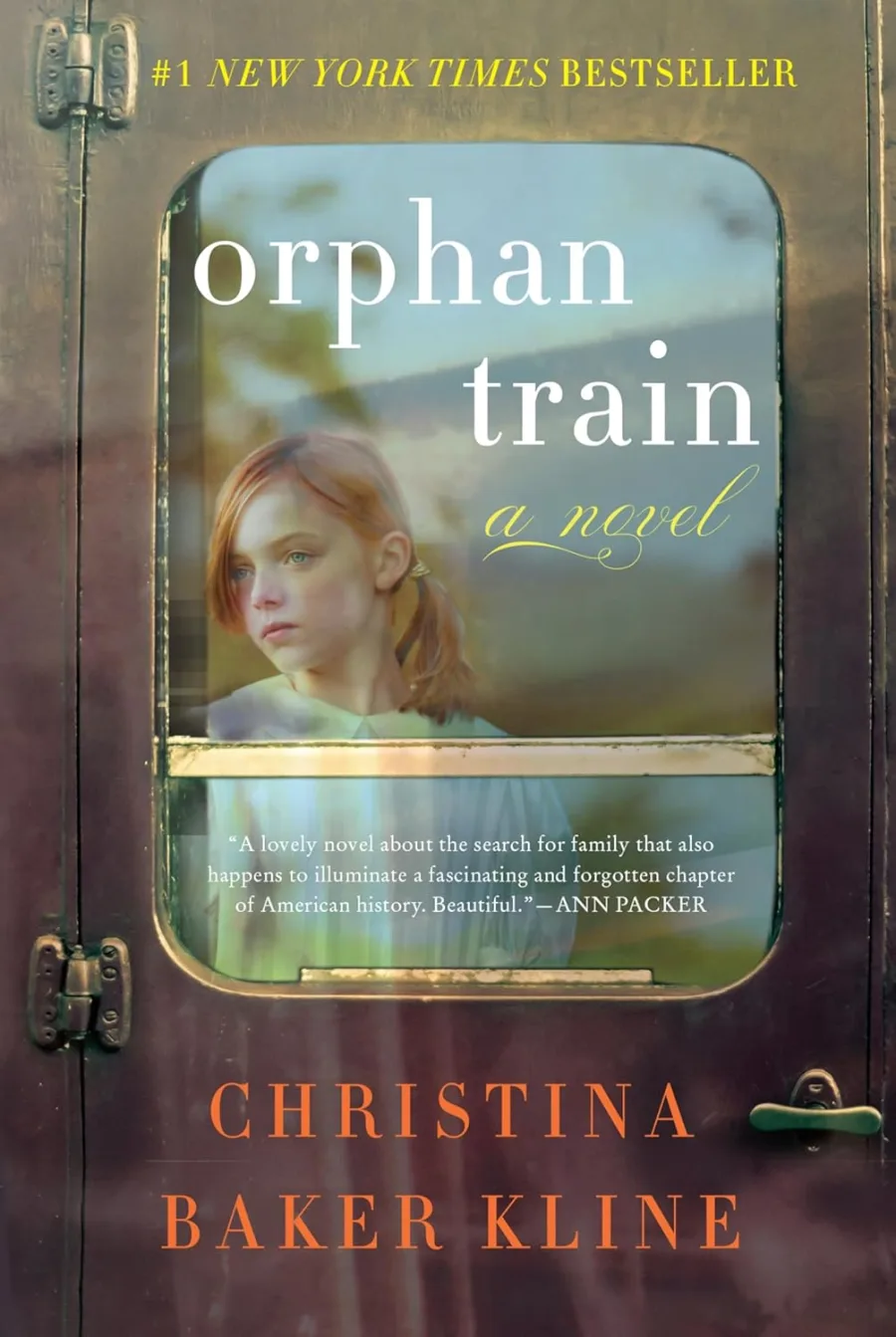
Download Cover Image
Do you want to download the full cover image for Orphan Train: A Novel?