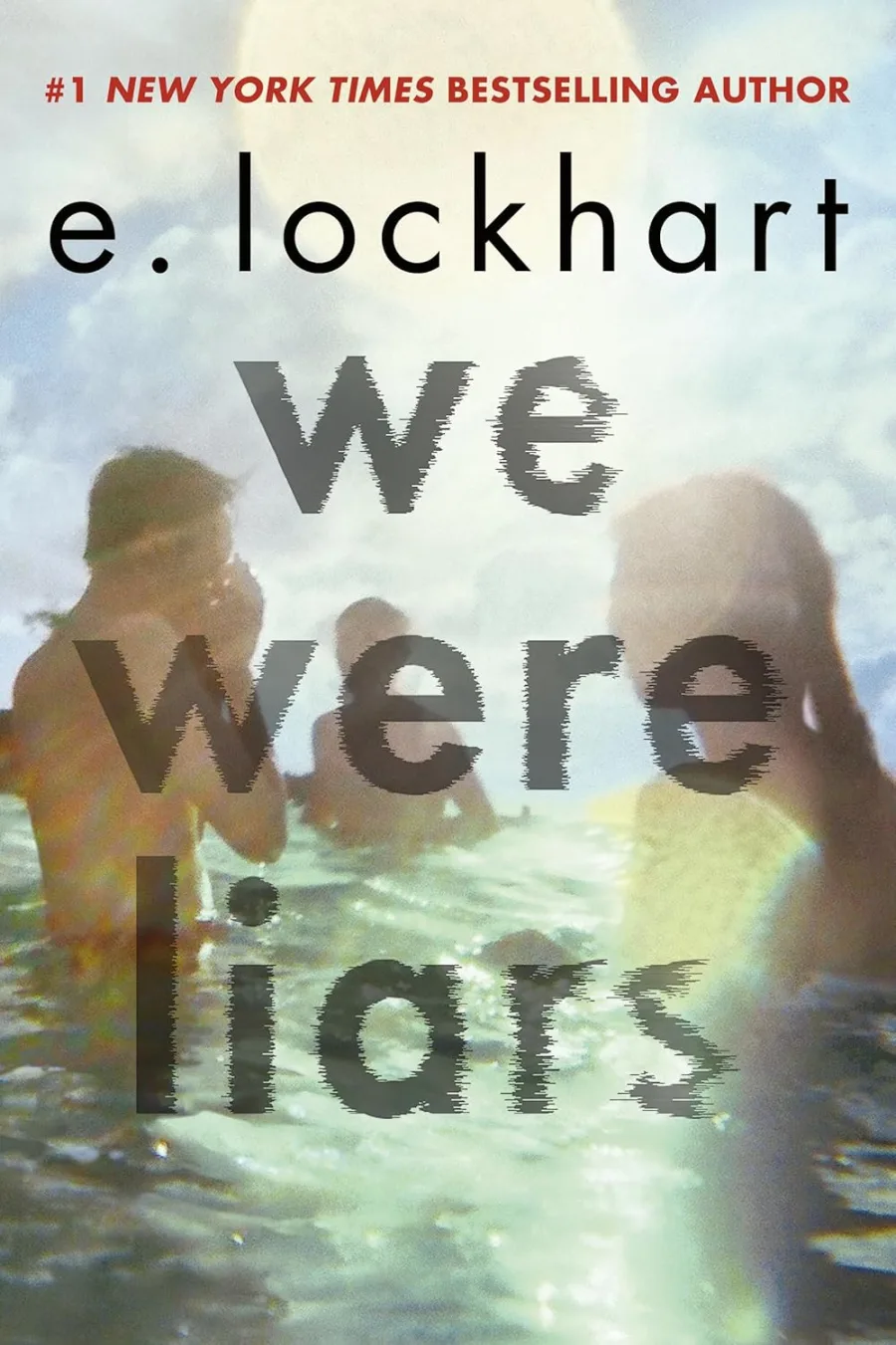
We Were Liars
Paperback
• 320 Pages
• USD 14.99
• English
• 9780385741279
No ratings yet
Teen & Young Adult
Teen & Young Adult Fiction about Death & Dying
Teen & Young Adult Fiction about Emotions & Feelings
| Publisher | Ember |
|---|---|
| ISBN13 | 9780385741279 |
| ASIN/SKU | 0385741278 |
| Book Format | Paperback |
| Language | English |
| Pages | 320 |
| List Price | USD 14.99 |
| Publishing Date | 29/05/2018 |
| Dimensions | 5.44 x 0.85 x 8.25 inches |
| Weight | 2.31 pounds |
| Book Code | BD00055994 |
Buy this Book
Amazon Stores
Ebook Stores
Other Stores
Discover We Were Liars by E. Lockhart. This book is published by Ember in Paperback format, ISBN 9780385741279, ASIN 0385741278, under Teen and Young Adult, Teen and Young Adult Fiction about Death and Dying, Teen and Young Adult Fiction about Emotions and Feelings.
Book Description
#1 NEW YORK TIMES BESTSELLER • NOW STREAMING ON PRIME VIDEO • LOOK FOR THE LATEST NOVEL IN THE WE WERE LIARS UNIVERSE, WE FELL APART!
The modern, sophisticated suspense novel that became a runaway smash hit on TikTok and introduced the world to a family hiding a jaw-dropping secret.
"Thrilling, beautiful, and blisteringly smart, We Were Liars is utterly unforgettable." —John Green, #1 New York Times bestselling author of The Fault in Our Stars
A beautiful and distinguished family.
A private island.
A brilliant, damaged girl; a passionate, political boy.
A group of four friends—the Liars—whose friendship turns destructive.
A revolution. An accident. A secret.
Lies upon lies.
True love.
The truth.
Read it.
And if anyone asks you how it ends, just LIE.
Don’t miss any of the We Were Liars novels
WE WERE LIARS • FAMILY OF LIARS • WE FELL APART
The modern, sophisticated suspense novel that became a runaway smash hit on TikTok and introduced the world to a family hiding a jaw-dropping secret.
"Thrilling, beautiful, and blisteringly smart, We Were Liars is utterly unforgettable." —John Green, #1 New York Times bestselling author of The Fault in Our Stars
A beautiful and distinguished family.
A private island.
A brilliant, damaged girl; a passionate, political boy.
A group of four friends—the Liars—whose friendship turns destructive.
A revolution. An accident. A secret.
Lies upon lies.
True love.
The truth.
Read it.
And if anyone asks you how it ends, just LIE.
Don’t miss any of the We Were Liars novels
WE WERE LIARS • FAMILY OF LIARS • WE FELL APART
Author Biography
E. Lockhart is the #1 New York Times bestselling author of the LIARS novels: We Were Liars, Family of Liars, and We Fell Apart. We Were Liars is also an original series on Prime Video. Her other books include Again Again, Genuine Fraud, and The Disreputable History of Frankie Landau-Banks. She has been a finalist for the Los Angeles Times Book Prize and the National Book Award and an honoree for the Printz Award. She lives in Brooklyn, New York.
Editorial Reviews
“Sometimes a book is a book and sometimes a book is a phenomenon. E. Lockhart’s 2014 Y.A. psychological thriller We Were Liars is, without a doubt, a phenomenon. . . . The prequel aims to stand on its own, and technically it does; you don’t need to have read the earlier book to understand this new one. But for the greatest enjoyment of Family of Liars, read We Were Liars first.” —The New York Times, on Family of Liars
"You’re going to want to remember the title. Liars details the summers of a girl who harbors a dark secret, and delivers a satisfying, but shocking twist ending." —Breia Brissey, Entertainment Weekly
"This mindblowing YA thriller from E. Lockhart will make you glad you're the 99 percent...And that's about all we can tell you when it comes to the story of 'We Were Liars,' the book by E. Lockhart that everyone will be reading, and re-reading, this summer. It's twisty, it's mysterious, and it's got a surprise ending that'll knock your socks off."
—Kat Rosenfield, MTV News
"Surprising, thrilling, and beautifully executed in spare, precise, and lyrical prose, Lockhart spins a tragic family drama, the roots of which go back generations. And the ending? Shhhh. Not telling. (But it’s a doozy)...This is poised to be big." —Booklist, starred review
"Lockhart has created a mystery with an ending most readers won’t see coming, one so horrific it will prompt some to return immediately to page one to figure out how they missed it. At the center of it is a girl who learns the hardest way of all what family means, and what it means to lose the one that really mattered to you." —Publishers Weekly, starred review
"Riveting, brutal and beautifully told." —Kirkus, starred review
"The ending is a stunner that will haunt readers for a long time to come." —School Library Journal, starred review
"A taut psychological mystery marked by an air of uneasy disorientation...The ultimate reveal is shocking both for its tragedy and for the how-could-I-have-not-suspected-that? feeling it leaves us with. But we didn’t, which is Lockhart’s commendable triumph." —The Horn Book, starred review
“This is a love story as much as it is a psychological mystery…Astonishing." —Shelf Awareness, starred review
“[a] haunting, sophisticated mystery...a novel so twisty and well-told that it will appeal to older readers as well as to adolescents.” —The Wall Street Journal
“Irresistible premise for this ticking time bomb of a novel.” —The New York Times Book Review
"A Lockhart YA is always a treat and this is no exception...The glimpse we get into a life of privilege, a lifestyle most of us can only imagine, is insightful and thrilling. The ending will shock the mose jaded of readers, we promise!" —RT Book Reviews
"There's trouble in paradise at the opening of National Book Award finalist and Printz honoree E. Lockhart's shattering yet ultimately hopeful YA novel . . . and neither family nor reader will ever be the same." —Library Journal
"You’re going to want to remember the title. Liars details the summers of a girl who harbors a dark secret, and delivers a satisfying, but shocking twist ending." —Breia Brissey, Entertainment Weekly
"This mindblowing YA thriller from E. Lockhart will make you glad you're the 99 percent...And that's about all we can tell you when it comes to the story of 'We Were Liars,' the book by E. Lockhart that everyone will be reading, and re-reading, this summer. It's twisty, it's mysterious, and it's got a surprise ending that'll knock your socks off."
—Kat Rosenfield, MTV News
"Surprising, thrilling, and beautifully executed in spare, precise, and lyrical prose, Lockhart spins a tragic family drama, the roots of which go back generations. And the ending? Shhhh. Not telling. (But it’s a doozy)...This is poised to be big." —Booklist, starred review
"Lockhart has created a mystery with an ending most readers won’t see coming, one so horrific it will prompt some to return immediately to page one to figure out how they missed it. At the center of it is a girl who learns the hardest way of all what family means, and what it means to lose the one that really mattered to you." —Publishers Weekly, starred review
"Riveting, brutal and beautifully told." —Kirkus, starred review
"The ending is a stunner that will haunt readers for a long time to come." —School Library Journal, starred review
"A taut psychological mystery marked by an air of uneasy disorientation...The ultimate reveal is shocking both for its tragedy and for the how-could-I-have-not-suspected-that? feeling it leaves us with. But we didn’t, which is Lockhart’s commendable triumph." —The Horn Book, starred review
“This is a love story as much as it is a psychological mystery…Astonishing." —Shelf Awareness, starred review
“[a] haunting, sophisticated mystery...a novel so twisty and well-told that it will appeal to older readers as well as to adolescents.” —The Wall Street Journal
“Irresistible premise for this ticking time bomb of a novel.” —The New York Times Book Review
"A Lockhart YA is always a treat and this is no exception...The glimpse we get into a life of privilege, a lifestyle most of us can only imagine, is insightful and thrilling. The ending will shock the mose jaded of readers, we promise!" —RT Book Reviews
"There's trouble in paradise at the opening of National Book Award finalist and Printz honoree E. Lockhart's shattering yet ultimately hopeful YA novel . . . and neither family nor reader will ever be the same." —Library Journal
Book Summary
We Were Liars by E. Lockhart is a haunting, lyrical novel about privilege, guilt, and the way one terrible summer can fracture a life. It centers on Cadence Sinclair Eastman, a girl from the wealthy Sinclair family, who spend their summers on a private island off the coast of Massachusetts. The Sinclairs are rich, beautiful, and proud; they present a polished surface to the world, insisting that they are always fine, always composed, never messy. Beneath this glossy exterior, however, lie tensions about inheritance, control, and identity. Each summer, Cadence returns to the island to be with her cousins Johnny and Mirren, and Gat, the nephew of one aunt’s longtime partner. The four of them form an intense, close-knit group they call “the Liars.” Together they explore the island, share secrets, and grow up, finding in each other a refuge from the stiff expectations of their family.
Cadence’s narrative moves back and forth in time, anchored around “Summer Fifteen,” the year when everything goes wrong. In the earlier summers, the Liars are full of playful recklessness and deep loyalty. Gat, who is Indian American and not a blood Sinclair, is acutely aware of the family’s privilege and the racial and class lines that run through the island. He and Cadence develop a powerful, complicated attraction. He challenges her to see beyond the Sinclair bubble, to notice injustice and greed. Johnny is wild and funny, while Mirren is romantic and dreamy; together they all dream of a future where they are free from the manipulations of the Sinclair adults, especially the three sisters—Cadence’s mother and her two aunts—who constantly maneuver for their father’s favor and for bigger shares of the inheritance. The island becomes both playground and battlefield, with the children caught between love for their family and discomfort at how their elders behave.
During Summer Fifteen, the underlying tensions erupt. The sisters, desperate for their father’s approval and money, bicker over houses, possessions, and legacies. This fighting poisons the atmosphere, and the Liars begin to feel that everything they value about the island is being swallowed by greed. Gat, as an outsider, sees it most clearly and pushes the others to imagine a radical change. Cadence, deeply in love with him and increasingly disturbed by her family’s entitlement, wants to do something to break the cycle. The four Liars start to talk about dramatic acts—symbolic rebellion against their families and against the idea that wealth and status matter more than love or fairness. These conversations, fueled by youth, emotion, and a sense of righteousness, slowly move toward a reckless plan.
Then comes the event Cadence calls “the accident.” All the reader initially knows is that something catastrophic happens at the end of Summer Fifteen, and afterward, Cadence is no longer the same. She suffers severe migraines, memory loss, and physical weakness. She collapses unexpectedly and spends much of the following year in bed, medicated and confused. Her mother refuses to tell her much about what happened, insisting that doctors say she must remember on her own. The Sinclairs, who hate unpleasantness, avoid talking about the accident, wrapping it in their usual silence and denial. Cadence becomes isolated, angry, and depressed, feeling abandoned by the Liars, who do not respond to her emails or messages in the way she expects. The island, once her paradise, is off-limits to her for a time, and she is left with fragments of memory and the sense that something truly awful is lurking just beyond her reach.
When Cadence finally returns to the island for another summer, she is determined to piece together the truth. She reunites with Johnny, Mirren, and Gat, who seem at first to be much the same as before—teasing her, loving her, trying to keep things light. As they wander the island, memories begin to surface in bits and pieces: the smell of gasoline, the outline of a burning building, the sound of shouting. Cadence also notices that the island itself has changed. One of the houses, once central to her grandfather’s pride and the sisters’ competition, has been rebuilt in a different, simpler style. Her grandfather, Harris Sinclair, is more frail, and the family feels even more fragmented. As Cadence asks questions, people deflect her, insisting she should focus on getting well rather than digging up the past.
Through her conversations with the Liars and the slow return of her memories, the truth of the accident comes into focus. In Summer Fifteen, consumed by anger at the adults’ endless fighting and their obsession with property, the Liars had decided to take a dramatic stand. They chose to burn down Clairmont, the main house, as a way of forcing the family to reconsider everything—of wiping the slate clean, so to speak. They believed that by destroying the symbol of their grandfather’s control and the adults’ greed, they could make the Sinclairs start over with less focus on material things. The plan was impulsive, driven by emotion, and disastrously naive. On the night they carried it out, Cadence was involved in setting the fires, but something went terribly wrong. The flames spread faster than expected. In the chaos, Cadence was injured, and more importantly, Johnny, Mirren, and Gat never made it out. They died in the fire that the four of them had started together.
The novel reveals that since the accident, Cadence has been living with survivor’s guilt so intense that her mind blocked out the memory of what actually happened. Her migraines and confusion are tied not just to physical trauma but to the unbearable psychological weight of realizing she was part of a chain of decisions that killed the people she loved most. The “Liars” she has been spending time with since returning to the island are, in fact, her own mind’s creations—ghosts or hallucinations born from grief, love, and denial. They have helped her remember, but they also underline how alone she truly is now. When Cadence finally confronts this truth, the emotional impact is devastating. She must accept that her attempt to break her family’s destructive patterns ended in tragedy far greater than the original problem.
As the memories settle, Cadence begins to understand the complexity of what they did. Their rebellion was not purely noble: it grew from anger, hurt, romantic ideals, and youthful recklessness. The fire destroyed the house and forced the family to change outwardly, but it also left scars—literal and emotional—that can never fully heal. Her grandfather, who once took pride in his empire of island houses, is now a man living with the knowledge that his grandchildren died in a fire that never needed to happen. Her mother and aunts, who fought so viciously over rooms and possessions, are left with grief and the ruins of their old lives. Cadence, recognizing all this, must wrestle with how to move forward. She cannot bring the Liars back, and she cannot undo the fire. What she can do is finally tell the truth—at least to herself, and perhaps to others—about that summer and its consequences.
By the end of We Were Liars Cadence’s story feels like both a confession and a cautionary tale. The dreamy, poetic style of the narration, with its fairy-tale comparisons and fragmented memories, mirrors the way trauma distorts reality. The island, once a symbol of perfection and privilege, becomes a haunted place where love, loyalty, and pain all coexist. The novel suggests that wealth and image can hide deep wounds, but they cannot erase them. Cadence’s journey from confusion to understanding is brutal, yet it offers a quiet, bittersweet form of resolution: she remembers, she grieves, and she learns that living with the truth, however terrible, is the only way to honor the people she lost and to step out of the illusions that once defined her family.
Cadence’s narrative moves back and forth in time, anchored around “Summer Fifteen,” the year when everything goes wrong. In the earlier summers, the Liars are full of playful recklessness and deep loyalty. Gat, who is Indian American and not a blood Sinclair, is acutely aware of the family’s privilege and the racial and class lines that run through the island. He and Cadence develop a powerful, complicated attraction. He challenges her to see beyond the Sinclair bubble, to notice injustice and greed. Johnny is wild and funny, while Mirren is romantic and dreamy; together they all dream of a future where they are free from the manipulations of the Sinclair adults, especially the three sisters—Cadence’s mother and her two aunts—who constantly maneuver for their father’s favor and for bigger shares of the inheritance. The island becomes both playground and battlefield, with the children caught between love for their family and discomfort at how their elders behave.
During Summer Fifteen, the underlying tensions erupt. The sisters, desperate for their father’s approval and money, bicker over houses, possessions, and legacies. This fighting poisons the atmosphere, and the Liars begin to feel that everything they value about the island is being swallowed by greed. Gat, as an outsider, sees it most clearly and pushes the others to imagine a radical change. Cadence, deeply in love with him and increasingly disturbed by her family’s entitlement, wants to do something to break the cycle. The four Liars start to talk about dramatic acts—symbolic rebellion against their families and against the idea that wealth and status matter more than love or fairness. These conversations, fueled by youth, emotion, and a sense of righteousness, slowly move toward a reckless plan.
Then comes the event Cadence calls “the accident.” All the reader initially knows is that something catastrophic happens at the end of Summer Fifteen, and afterward, Cadence is no longer the same. She suffers severe migraines, memory loss, and physical weakness. She collapses unexpectedly and spends much of the following year in bed, medicated and confused. Her mother refuses to tell her much about what happened, insisting that doctors say she must remember on her own. The Sinclairs, who hate unpleasantness, avoid talking about the accident, wrapping it in their usual silence and denial. Cadence becomes isolated, angry, and depressed, feeling abandoned by the Liars, who do not respond to her emails or messages in the way she expects. The island, once her paradise, is off-limits to her for a time, and she is left with fragments of memory and the sense that something truly awful is lurking just beyond her reach.
When Cadence finally returns to the island for another summer, she is determined to piece together the truth. She reunites with Johnny, Mirren, and Gat, who seem at first to be much the same as before—teasing her, loving her, trying to keep things light. As they wander the island, memories begin to surface in bits and pieces: the smell of gasoline, the outline of a burning building, the sound of shouting. Cadence also notices that the island itself has changed. One of the houses, once central to her grandfather’s pride and the sisters’ competition, has been rebuilt in a different, simpler style. Her grandfather, Harris Sinclair, is more frail, and the family feels even more fragmented. As Cadence asks questions, people deflect her, insisting she should focus on getting well rather than digging up the past.
Through her conversations with the Liars and the slow return of her memories, the truth of the accident comes into focus. In Summer Fifteen, consumed by anger at the adults’ endless fighting and their obsession with property, the Liars had decided to take a dramatic stand. They chose to burn down Clairmont, the main house, as a way of forcing the family to reconsider everything—of wiping the slate clean, so to speak. They believed that by destroying the symbol of their grandfather’s control and the adults’ greed, they could make the Sinclairs start over with less focus on material things. The plan was impulsive, driven by emotion, and disastrously naive. On the night they carried it out, Cadence was involved in setting the fires, but something went terribly wrong. The flames spread faster than expected. In the chaos, Cadence was injured, and more importantly, Johnny, Mirren, and Gat never made it out. They died in the fire that the four of them had started together.
The novel reveals that since the accident, Cadence has been living with survivor’s guilt so intense that her mind blocked out the memory of what actually happened. Her migraines and confusion are tied not just to physical trauma but to the unbearable psychological weight of realizing she was part of a chain of decisions that killed the people she loved most. The “Liars” she has been spending time with since returning to the island are, in fact, her own mind’s creations—ghosts or hallucinations born from grief, love, and denial. They have helped her remember, but they also underline how alone she truly is now. When Cadence finally confronts this truth, the emotional impact is devastating. She must accept that her attempt to break her family’s destructive patterns ended in tragedy far greater than the original problem.
As the memories settle, Cadence begins to understand the complexity of what they did. Their rebellion was not purely noble: it grew from anger, hurt, romantic ideals, and youthful recklessness. The fire destroyed the house and forced the family to change outwardly, but it also left scars—literal and emotional—that can never fully heal. Her grandfather, who once took pride in his empire of island houses, is now a man living with the knowledge that his grandchildren died in a fire that never needed to happen. Her mother and aunts, who fought so viciously over rooms and possessions, are left with grief and the ruins of their old lives. Cadence, recognizing all this, must wrestle with how to move forward. She cannot bring the Liars back, and she cannot undo the fire. What she can do is finally tell the truth—at least to herself, and perhaps to others—about that summer and its consequences.
By the end of We Were Liars Cadence’s story feels like both a confession and a cautionary tale. The dreamy, poetic style of the narration, with its fairy-tale comparisons and fragmented memories, mirrors the way trauma distorts reality. The island, once a symbol of perfection and privilege, becomes a haunted place where love, loyalty, and pain all coexist. The novel suggests that wealth and image can hide deep wounds, but they cannot erase them. Cadence’s journey from confusion to understanding is brutal, yet it offers a quiet, bittersweet form of resolution: she remembers, she grieves, and she learns that living with the truth, however terrible, is the only way to honor the people she lost and to step out of the illusions that once defined her family.
Sample Chapters
Sample Chapters will be added soon…
Reader Reviews
No reviews yet.
We Were Liars