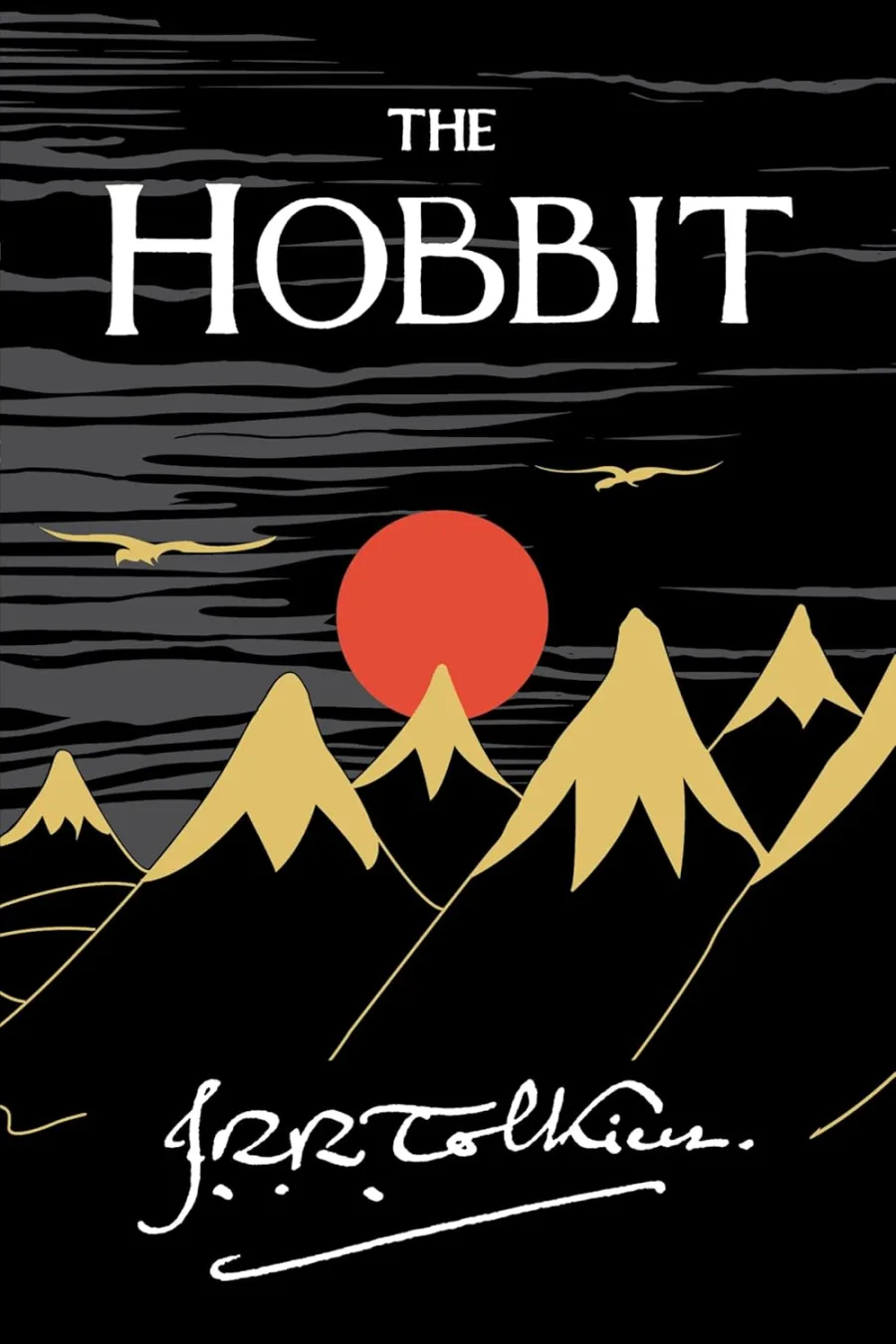
The Hobbit
Paperback
• 320 Pages
• USD 18.99
• English
• 9780547928227
No ratings yet
| Publisher | William Morrow Paperbacks |
|---|---|
| ISBN13 | 9780547928227 |
| ASIN/SKU | 054792822X |
| Book Format | Paperback |
| Language | English |
| Pages | 320 |
| List Price | USD 18.99 |
| Publishing Date | 18/09/2012 |
| Dimensions | 5.5 x 0.85 x 8.25 inches |
| Weight | 2.31 pounds |
| Book Code | BD00055996 |
Buy this Book
Amazon Stores
Ebook Stores
Other Stores
Discover The Hobbit by J.R.R. Tolkien. This book is published by William Morrow Paperbacks in Paperback format, ISBN 9780547928227, ASIN 054792822X, under Teen and Young Adult, Teen and Young Adult Classic Literature, Teen and Young Adult Coming of Age Fantasy.
Book Description
The journey through Middle-earth begins here with J.R.R. Tolkien's classic prelude to his epic fantasy Lord of the Rings trilogy.
“A glorious account of a magnificent adventure, filled with suspense and seasoned with a quiet humor that is irresistible... All those, young or old, who love a fine adventurous tale, beautifully told, will take The Hobbit to their hearts.”—The New York Times Book Review
"In a hole in the ground there lived a hobbit." So begins one of the most beloved and delightful tales in the English language—Tolkien's prelude to The Lord of the Rings. Set in the imaginary world of Middle-earth, at once a classic myth and a modern fairy tale, The Hobbit is one of literature's most enduring and well-loved high fantasy novels.
Bilbo Baggins is a hobbit who enjoys a comfortable, unambitious life, rarely traveling any farther than his pantry or cellar. But his contentment is disturbed when the wizard Gandalf and a company of dwarves arrive on his doorstep one day to whisk him away on an adventure. They have launched a plot to raid the treasure hoard guarded by Smaug the Magnificent, a large and very dangerous dragon. Bilbo reluctantly joins their epic quest, unaware that on his journey to the Lonely Mountain he will encounter both a magic ring and a frightening creature known as Gollum.
“A glorious account of a magnificent adventure, filled with suspense and seasoned with a quiet humor that is irresistible... All those, young or old, who love a fine adventurous tale, beautifully told, will take The Hobbit to their hearts.”—The New York Times Book Review
"In a hole in the ground there lived a hobbit." So begins one of the most beloved and delightful tales in the English language—Tolkien's prelude to The Lord of the Rings. Set in the imaginary world of Middle-earth, at once a classic myth and a modern fairy tale, The Hobbit is one of literature's most enduring and well-loved high fantasy novels.
Bilbo Baggins is a hobbit who enjoys a comfortable, unambitious life, rarely traveling any farther than his pantry or cellar. But his contentment is disturbed when the wizard Gandalf and a company of dwarves arrive on his doorstep one day to whisk him away on an adventure. They have launched a plot to raid the treasure hoard guarded by Smaug the Magnificent, a large and very dangerous dragon. Bilbo reluctantly joins their epic quest, unaware that on his journey to the Lonely Mountain he will encounter both a magic ring and a frightening creature known as Gollum.
Author Biography
J.R.R. Tolkien was born on 3rd January 1892. After serving in the First World War, he became best known for The Hobbit and The Lord of the Rings, selling 150 million copies in more than 40 languages worldwide. Awarded the CBE and an honorary Doctorate of Letters from Oxford University, he died in 1973 at the age of 81.
Editorial Reviews
"All those, young or old, who love a finely imagined story, beautifully told, will take The Hobbit to their hearts." Horn Book Guide
"A flawless masterpiece." The Times of London
"A flawless masterpiece." The Times of London
Book Summary
The Hobbit by J.R.R. Tolkien is a charming adventure story about an ordinary person pushed into an extraordinary journey, and how courage, friendship, and luck can change someone far more than they expect. It begins with Bilbo Baggins, a hobbit who lives a peaceful, comfortable life in his cozy home in the Shire. Hobbits love food, gardening, and routine, and Bilbo is no different—he wants nothing more than quiet days and full cupboards. One day, his calm life is interrupted when the wizard Gandalf appears at his door, followed by thirteen dwarves led by Thorin Oakenshield. They arrive with maps, songs, and a dangerous plan: they want to reclaim their homeland and treasure inside the Lonely Mountain from the fearsome dragon Smaug. Gandalf has decided that Bilbo will be their “burglar,” the one to sneak into the dragon’s lair. Bilbo at first is horrified and insists he is not the adventurous type, but the dwarves’ tales and Gandalf’s quiet confidence spark something inside him. Despite his fears, he agrees to join the company, leaving his beloved home behind.
The journey across Middle-earth is long and full of dangers Bilbo never imagined. Early on, the group runs into trouble with three brutish trolls who capture them and plan to eat them. Bilbo tries clumsily to pick a troll’s pocket and gets caught, but his effort delays the trolls long enough for Gandalf to trick them into arguing until sunrise, when they turn to stone. This episode is the first sign that Bilbo can act bravely, even if he’s scared. The company then travels to Rivendell, the beautiful home of the elves, where Elrond reads hidden runes on their map and reveals a secret moon-letter that shows how to find the hidden door into the mountain. Armed with that knowledge, they press on. In the Misty Mountains, they are caught in a terrible storm and seek shelter in a cave, only to be ambushed by goblins. Gandalf’s power saves most of them, but in the chaos Bilbo is separated and lost in the darkness.
Alone in the goblins’ tunnels, Bilbo stumbles upon a plain gold ring and pockets it without knowing its importance. Soon he meets Gollum, a strange, slippery creature who lives in the dark and loves riddles. They engage in a tense riddle game, with Bilbo’s life on the line: if he wins, Gollum must show him the way out; if he loses, Gollum will eat him. Bilbo manages to outwit Gollum with a final “riddle” that is really a question—“What have I got in my pocket?”—and discovers, by accident, that the ring he found can make him invisible. Using the ring, he escapes Gollum and the goblins and eventually reunites with the dwarves. This episode marks a turning point: Bilbo, previously timid and unsure, has survived a terrifying situation on his own. He begins to believe that he can be more than the useless tagalong some of the dwarves think he is.
As they continue east, the party faces more trials. They are attacked by giant spiders in Mirkwood, drugged by enchantments in the forest, and imprisoned by the suspicious wood-elves. In Mirkwood, Bilbo truly comes into his own. When the dwarves are captured by spiders and hung up in webs, Bilbo uses the ring and his cleverness to kill the spiders and rescue his companions. He even gives the spiders insulting names to distract them while he fights, showing a bravery and wit that surprises everyone, including himself. Later, when the Elvenking locks up the dwarves, Bilbo remains free thanks to the invisibility ring and comes up with a clever plan to smuggle the dwarves out in empty barrels floated down the river. These acts of courage and intelligence earn him the dwarves’ respect. Thorin and the others, who once saw him as a burden, now call him their “burglar” with genuine appreciation.
Eventually, the company reaches the town of Lake-town (Esgaroth), built on the water near the Lonely Mountain. The people there are excited to hear that Thorin, heir to the old dwarven kingdom, has returned and may bring prosperity if the dragon is defeated. Buoyed by this welcome, Thorin and his company head to the mountain. Using the secret moon-letters on the map and the timing of the setting sun, they find the hidden door in the rock. It is Bilbo, as the burglar, who goes alone inside. Sneaking through tunnels into Smaug’s lair, Bilbo sees the dragon resting on a vast hoard of gold and gems. He steals a single cup at first, but then returns and talks with Smaug, trying to learn more while staying alive. In their tense conversation, Bilbo learns that Smaug’s armor has one weak spot on his chest. Smaug, enraged by the theft, flies out to attack Lake-town, and Bilbo’s hint about the weak spot eventually reaches Bard, a skilled archer there. Bard shoots an arrow into the exposed area, killing Smaug and ending the dragon’s reign of terror.
With Smaug dead, the treasure inside the mountain becomes a new source of conflict. Thorin, who has long dreamed of reclaiming his inheritance, is overwhelmed by greed and a kind of madness known as “dragon-sickness.” He refuses to share the treasure, even with those who helped defeat Smaug or with the people of Lake-town, who suffered the dragon’s attack. Bard and the Elvenking come to claim a fair portion for their people, especially since they helped and since Lake-town was destroyed. Thorin, in his stubbornness, fortifies the mountain and calls upon other dwarves for help, preparing for war. Bilbo is troubled by this change in Thorin. He sees the suffering of others and believes the treasure should be shared. In a quiet act of bravery and wisdom, he secretly takes the Arkenstone, a prized jewel Thorin values above all else, and gives it to Bard to use as a bargaining chip. Bilbo risks Thorin’s anger and his own safety to try to prevent bloodshed.
Thorin feels deeply betrayed when he discovers what Bilbo has done, and their friendship cracks. Before a full human–elf–dwarf war can erupt, however, a greater threat appears: a massive army of goblins and wolves (wargs) arrives, drawn by the disturbance and the hope of treasure. The different groups must quickly decide whether to fight each other or stand together. They choose to unite, and the Battle of Five Armies begins: dwarves, elves, men, goblins, and wargs clash in a fierce fight around the mountain. Bilbo, though not a warrior, takes part as best he can, using his ring and trying to stay alive and help where possible. In the chaos, Thorin fights bravely but is mortally wounded. On his deathbed, he and Bilbo reconcile. Thorin admits that Bilbo’s values—comfort, kindness, and peace—may be more important than hoarded gold, and he regrets letting greed rule him.
In the aftermath, much of the treasure is fairly divided. Bard takes a portion to rebuild Lake-town and help his people. Dwarves under Dáin arrive to take up Thorin’s place and restore the kingdom under the mountain. The Elvenking returns with his share, and the immediate conflicts calm. Bilbo, however, chooses not to stay and enjoy the riches. He takes only a small amount of treasure and returns home with Gandalf, traveling back through places they passed earlier, now changed by what has happened. When Bilbo finally reaches the Shire, he finds that his long absence has led his relatives to assume he is dead, and they are in the middle of auctioning off his belongings. He has to fight to reclaim his house, and even after that, many hobbits view him as odd and un-hobbit-like because of his adventures. Yet Bilbo is content. He now carries memories of dragons, elves, dwarves, and battles; he has seen courage and greed, beauty and danger. He is still Bilbo, but deeper, wiser, and more generous.
The Hobbit ends with Bilbo living quietly again, but no longer just a simple, timid hobbit. He has grown into someone who can face fear, think beyond his own comfort, and act for the good of others. His adventure with Gandalf and the dwarves has reshaped not only his life but the wider world, setting the stage for greater events to come. The story, though full of fantasy creatures and epic moments, is at heart about an ordinary person discovering that even the smallest among us can be braver and more important than they ever suspected.
The journey across Middle-earth is long and full of dangers Bilbo never imagined. Early on, the group runs into trouble with three brutish trolls who capture them and plan to eat them. Bilbo tries clumsily to pick a troll’s pocket and gets caught, but his effort delays the trolls long enough for Gandalf to trick them into arguing until sunrise, when they turn to stone. This episode is the first sign that Bilbo can act bravely, even if he’s scared. The company then travels to Rivendell, the beautiful home of the elves, where Elrond reads hidden runes on their map and reveals a secret moon-letter that shows how to find the hidden door into the mountain. Armed with that knowledge, they press on. In the Misty Mountains, they are caught in a terrible storm and seek shelter in a cave, only to be ambushed by goblins. Gandalf’s power saves most of them, but in the chaos Bilbo is separated and lost in the darkness.
Alone in the goblins’ tunnels, Bilbo stumbles upon a plain gold ring and pockets it without knowing its importance. Soon he meets Gollum, a strange, slippery creature who lives in the dark and loves riddles. They engage in a tense riddle game, with Bilbo’s life on the line: if he wins, Gollum must show him the way out; if he loses, Gollum will eat him. Bilbo manages to outwit Gollum with a final “riddle” that is really a question—“What have I got in my pocket?”—and discovers, by accident, that the ring he found can make him invisible. Using the ring, he escapes Gollum and the goblins and eventually reunites with the dwarves. This episode marks a turning point: Bilbo, previously timid and unsure, has survived a terrifying situation on his own. He begins to believe that he can be more than the useless tagalong some of the dwarves think he is.
As they continue east, the party faces more trials. They are attacked by giant spiders in Mirkwood, drugged by enchantments in the forest, and imprisoned by the suspicious wood-elves. In Mirkwood, Bilbo truly comes into his own. When the dwarves are captured by spiders and hung up in webs, Bilbo uses the ring and his cleverness to kill the spiders and rescue his companions. He even gives the spiders insulting names to distract them while he fights, showing a bravery and wit that surprises everyone, including himself. Later, when the Elvenking locks up the dwarves, Bilbo remains free thanks to the invisibility ring and comes up with a clever plan to smuggle the dwarves out in empty barrels floated down the river. These acts of courage and intelligence earn him the dwarves’ respect. Thorin and the others, who once saw him as a burden, now call him their “burglar” with genuine appreciation.
Eventually, the company reaches the town of Lake-town (Esgaroth), built on the water near the Lonely Mountain. The people there are excited to hear that Thorin, heir to the old dwarven kingdom, has returned and may bring prosperity if the dragon is defeated. Buoyed by this welcome, Thorin and his company head to the mountain. Using the secret moon-letters on the map and the timing of the setting sun, they find the hidden door in the rock. It is Bilbo, as the burglar, who goes alone inside. Sneaking through tunnels into Smaug’s lair, Bilbo sees the dragon resting on a vast hoard of gold and gems. He steals a single cup at first, but then returns and talks with Smaug, trying to learn more while staying alive. In their tense conversation, Bilbo learns that Smaug’s armor has one weak spot on his chest. Smaug, enraged by the theft, flies out to attack Lake-town, and Bilbo’s hint about the weak spot eventually reaches Bard, a skilled archer there. Bard shoots an arrow into the exposed area, killing Smaug and ending the dragon’s reign of terror.
With Smaug dead, the treasure inside the mountain becomes a new source of conflict. Thorin, who has long dreamed of reclaiming his inheritance, is overwhelmed by greed and a kind of madness known as “dragon-sickness.” He refuses to share the treasure, even with those who helped defeat Smaug or with the people of Lake-town, who suffered the dragon’s attack. Bard and the Elvenking come to claim a fair portion for their people, especially since they helped and since Lake-town was destroyed. Thorin, in his stubbornness, fortifies the mountain and calls upon other dwarves for help, preparing for war. Bilbo is troubled by this change in Thorin. He sees the suffering of others and believes the treasure should be shared. In a quiet act of bravery and wisdom, he secretly takes the Arkenstone, a prized jewel Thorin values above all else, and gives it to Bard to use as a bargaining chip. Bilbo risks Thorin’s anger and his own safety to try to prevent bloodshed.
Thorin feels deeply betrayed when he discovers what Bilbo has done, and their friendship cracks. Before a full human–elf–dwarf war can erupt, however, a greater threat appears: a massive army of goblins and wolves (wargs) arrives, drawn by the disturbance and the hope of treasure. The different groups must quickly decide whether to fight each other or stand together. They choose to unite, and the Battle of Five Armies begins: dwarves, elves, men, goblins, and wargs clash in a fierce fight around the mountain. Bilbo, though not a warrior, takes part as best he can, using his ring and trying to stay alive and help where possible. In the chaos, Thorin fights bravely but is mortally wounded. On his deathbed, he and Bilbo reconcile. Thorin admits that Bilbo’s values—comfort, kindness, and peace—may be more important than hoarded gold, and he regrets letting greed rule him.
In the aftermath, much of the treasure is fairly divided. Bard takes a portion to rebuild Lake-town and help his people. Dwarves under Dáin arrive to take up Thorin’s place and restore the kingdom under the mountain. The Elvenking returns with his share, and the immediate conflicts calm. Bilbo, however, chooses not to stay and enjoy the riches. He takes only a small amount of treasure and returns home with Gandalf, traveling back through places they passed earlier, now changed by what has happened. When Bilbo finally reaches the Shire, he finds that his long absence has led his relatives to assume he is dead, and they are in the middle of auctioning off his belongings. He has to fight to reclaim his house, and even after that, many hobbits view him as odd and un-hobbit-like because of his adventures. Yet Bilbo is content. He now carries memories of dragons, elves, dwarves, and battles; he has seen courage and greed, beauty and danger. He is still Bilbo, but deeper, wiser, and more generous.
The Hobbit ends with Bilbo living quietly again, but no longer just a simple, timid hobbit. He has grown into someone who can face fear, think beyond his own comfort, and act for the good of others. His adventure with Gandalf and the dwarves has reshaped not only his life but the wider world, setting the stage for greater events to come. The story, though full of fantasy creatures and epic moments, is at heart about an ordinary person discovering that even the smallest among us can be braver and more important than they ever suspected.
Sample Chapters
Sample Chapters will be added soon…
Reader Reviews
No reviews yet.
The Hobbit