
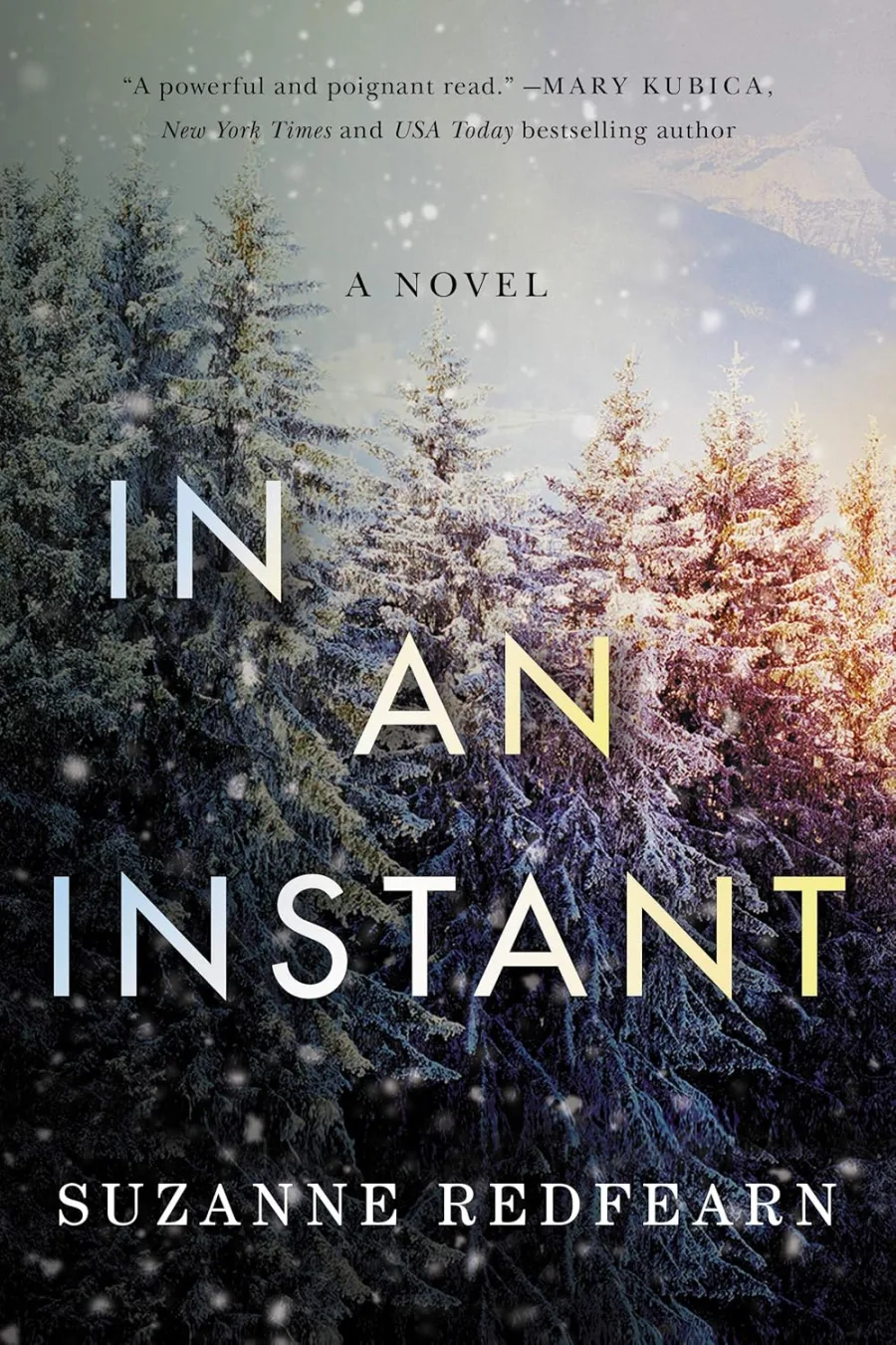
In an Instant : A Novel
Paperback
• 331 Pages
• USD 14.95
• English
• 9781542006583
No ratings yet
| Publisher | Lake Union Publishing |
|---|---|
| ISBN13 | 9781542006583 |
| ASIN/SKU | 1542006589 |
| Book Format | Paperback |
| Language | English |
| Pages | 331 |
| List Price | USD 14.95 |
| Publishing Date | 01/03/2020 |
| Dimensions | 5.5 x 1 x 8.25 inches |
| Weight | 11.2 ounces |
| Book Code | BD00055998 |
Buy this Book
Amazon Stores
Ebook Stores
Other Stores
Discover In an Instant : A Novel by Suzanne Redfearn. This book is published by Lake Union Publishing in Paperback format, ISBN 9781542006583, ASIN 1542006589, under Literature and Fiction, Coming of Age Fiction, Women's Friendship Fiction.
Book Description
An Amazon Charts bestseller.
A deeply moving story of carrying on even when it seems impossible.
Life is over in an instant for sixteen-year-old Finn Miller when a devastating car accident tumbles her and ten others over the side of a mountain. Suspended between worlds, she watches helplessly as those she loves struggle to survive.
Impossible choices are made, decisions that leave the survivors tormented with grief and regret. Unable to let go, Finn keeps vigil as they struggle to reclaim their shattered lives. Jack, her father, who seeks vengeance against the one person he can blame other than himself; her best friend, Mo, who bravely searches for the truth as the story of their survival is rewritten; her sister Chloe, who knows Finn lingers and yearns to join her; and her mother, Ann, who saved them all but is haunted by her decisions. Finn needs to move on, but how can she with her family still in pieces?
Heartrending yet ultimately redemptive, In an Instant is a story about the power of love, the meaning of family, and carrying on…even when it seems impossible.
A deeply moving story of carrying on even when it seems impossible.
Life is over in an instant for sixteen-year-old Finn Miller when a devastating car accident tumbles her and ten others over the side of a mountain. Suspended between worlds, she watches helplessly as those she loves struggle to survive.
Impossible choices are made, decisions that leave the survivors tormented with grief and regret. Unable to let go, Finn keeps vigil as they struggle to reclaim their shattered lives. Jack, her father, who seeks vengeance against the one person he can blame other than himself; her best friend, Mo, who bravely searches for the truth as the story of their survival is rewritten; her sister Chloe, who knows Finn lingers and yearns to join her; and her mother, Ann, who saved them all but is haunted by her decisions. Finn needs to move on, but how can she with her family still in pieces?
Heartrending yet ultimately redemptive, In an Instant is a story about the power of love, the meaning of family, and carrying on…even when it seems impossible.
Author Biography
Suzanne Redfearn is the award-winning author of three novels: Hush Little Baby, No Ordinary Life, and In an Instant. In addition to being an author, she’s also an architect specializing in residential and commercial design. She lives in Laguna Beach, California, where she and her husband own two restaurants: Lumberyard and Slice Pizza and Beer. You can find her at her website, www.SuzanneRedfearn.com, on Facebook at SuzanneRedfearnAuthor, or on Twitter @SuzanneRedfearn.
Editorial Reviews
A 2020 Goodreads Choice Awards Semifinalist: Best Fiction
“The characters are sensitively portrayed, as is their recovery, and the hopeful ending is realistic. Readers of domestic dramas will be enthralled.” —Booklist
“Suzanne Redfearn’s In an Instant (2019) is a remarkable book, which manages to be fast-paced and easily accessible to the casual reader, yet deeply satisfying and perceptive, providing insight into the nature of grief and loss…” —The Albuquerque Journal
“Suzanne Redfearn’s latest is a wonder. A thoughtful exploration of life, death, and the world in between, In an Instant is a powerful and poignant read.” —Mary Kubica, New York Times and USA Today bestselling author
“In an Instant begins as an action-packed tale of survival that is positively addictive; then it digs deep into an emotional and thought-provoking exploration of our humanity and what it means to make difficult moral choices in the most harrowing of circumstances. Redfearn tackles it all brilliantly and compassionately in this mesmerizing and wondrous novel. It’s a triumph on every level, and I absolutely loved it.” —USA Today bestselling author Julianne MacLean
“When a sudden car accident shatters a family, they’re left to pick up the pieces while trying to solve the mystery of just what happened that night. Redfearn deftly pivots from character to character in this multiple-points-of-view narrative, unraveling the past and weaving together a new future for the family. In an Instant is sure to please fans of The Lovely Bones and Big Little Lies.” —Catherine McKenzie, bestselling author of The Good Liar and Hidden
“Suzanne Redfearn’s In an Instant is part ghost story, part love letter to a family in crisis after a devastating accident in the midst of a brutal snowstorm. This cleverly crafted novel chronicles a heartbreaking journey from grief and despair to one of acceptance, forgiveness, and ultimately hope. Through Redfearn’s luminous prose, In an Instant succeeds in building an unforgettable portrait of human frailty and strength in the face of unfathomable loss.” —Heather Gudenkauf, New York Times bestselling author of The Weight of Silence and Before She Was Found
“In an Instant is a triumph! When tragedy strikes, two families are thrown into chaos as the lines of morality are blurred. Redfearn handles a family’s shock and grief with the perfect balance of empathy and hope and will have you contemplating what really lies underneath the shiny veneer of those closest to you. Make In an Instant your first read of 2020.” —Liz Fenton and Lisa Steinke, bestselling authors of Girls’ Night Out
“Breathtaking, compelling, heart stopping, and original. An utter page turner—I couldn’t put the book down. I highly recommend this unforgettable story. Kudos to Suzanne Redfearn.” —Jane Porter, New York Times and USA Today bestselling author
“The characters are sensitively portrayed, as is their recovery, and the hopeful ending is realistic. Readers of domestic dramas will be enthralled.” —Booklist
“Suzanne Redfearn’s In an Instant (2019) is a remarkable book, which manages to be fast-paced and easily accessible to the casual reader, yet deeply satisfying and perceptive, providing insight into the nature of grief and loss…” —The Albuquerque Journal
“Suzanne Redfearn’s latest is a wonder. A thoughtful exploration of life, death, and the world in between, In an Instant is a powerful and poignant read.” —Mary Kubica, New York Times and USA Today bestselling author
“In an Instant begins as an action-packed tale of survival that is positively addictive; then it digs deep into an emotional and thought-provoking exploration of our humanity and what it means to make difficult moral choices in the most harrowing of circumstances. Redfearn tackles it all brilliantly and compassionately in this mesmerizing and wondrous novel. It’s a triumph on every level, and I absolutely loved it.” —USA Today bestselling author Julianne MacLean
“When a sudden car accident shatters a family, they’re left to pick up the pieces while trying to solve the mystery of just what happened that night. Redfearn deftly pivots from character to character in this multiple-points-of-view narrative, unraveling the past and weaving together a new future for the family. In an Instant is sure to please fans of The Lovely Bones and Big Little Lies.” —Catherine McKenzie, bestselling author of The Good Liar and Hidden
“Suzanne Redfearn’s In an Instant is part ghost story, part love letter to a family in crisis after a devastating accident in the midst of a brutal snowstorm. This cleverly crafted novel chronicles a heartbreaking journey from grief and despair to one of acceptance, forgiveness, and ultimately hope. Through Redfearn’s luminous prose, In an Instant succeeds in building an unforgettable portrait of human frailty and strength in the face of unfathomable loss.” —Heather Gudenkauf, New York Times bestselling author of The Weight of Silence and Before She Was Found
“In an Instant is a triumph! When tragedy strikes, two families are thrown into chaos as the lines of morality are blurred. Redfearn handles a family’s shock and grief with the perfect balance of empathy and hope and will have you contemplating what really lies underneath the shiny veneer of those closest to you. Make In an Instant your first read of 2020.” —Liz Fenton and Lisa Steinke, bestselling authors of Girls’ Night Out
“Breathtaking, compelling, heart stopping, and original. An utter page turner—I couldn’t put the book down. I highly recommend this unforgettable story. Kudos to Suzanne Redfearn.” —Jane Porter, New York Times and USA Today bestselling author
Book Summary
In an Instant by Suzanne Redfearn is an emotional, morally complicated story about how one tragic moment can expose the best and worst in people, and how the choices made under extreme pressure can haunt everyone afterward. The novel centers on sixteen-year-old Finn Miller, who is traveling with her family and a few close friends to a mountain cabin for a winter getaway. On the surface, they are a fairly typical blended group: Finn; her younger sister Chloe; their parents Jack and Ann; their uncle and aunt; a family friend named Bob; his wife, Bridget; and their daughter. Also along is Mo, Finn’s best friend, and a stray dog Finn has recently adopted, named Mo’s dog (often called Jop). There are tensions quietly simmering under the surface—money problems, marital strain, resentment, and unspoken hurts—but everyone is trying to enjoy the trip. The sense of normality makes what happens next feel even more devastating.
On a snowy mountain road, their old RV hits a patch of ice, slides, and goes over a cliff. The crash is catastrophic. In that instant, Finn is thrown from the vehicle and dies. This is the book’s central shock: the narrator whose eyes we expect to experience the story through is suddenly killed. But Finn doesn’t disappear. The novel is told partly from her perspective in a kind of liminal, after-death state. She can’t interact with the living, but she can observe them, and she brings both a teenager’s raw emotions and a strangely detached clarity to what unfolds. Her death becomes the dividing line: everything that follows happens in the shadow of that moment. Some of the survivors are injured; all are disoriented, freezing, and terrified. Their situation in the snowy wilderness is dire: no easy way to call for help, limited supplies, and harsh conditions that threaten to kill them if they don’t act quickly.
From her ghostly vantage point, Finn watches as the group tries to survive and the moral line between self-preservation and cruelty starts to blur. One of the most disturbing events is a decision made by Bob, who is physically capable and relatively uninjured. During the chaos, he chooses to save himself rather than help others who are trapped and weaker. He abandons a badly injured man in the crashed RV, leaving him to die rather than risk his own safety. Finn, seeing this, is horrified. She loved and trusted Bob as part of their extended “family,” and his choice feels like a betrayal of everything she believed about him. This moment becomes a key moral wound in the story, one that no one talks about at first but that continues to hang over the characters as the truth edges closer to the surface.
Survival in the aftermath is harsh and relentless. The group fractures into smaller units as they try to find shelter, warmth, and help. Finn’s parents are torn between protecting Chloe, coping with the realization that Finn is gone, and making practical decisions they aren’t prepared for. The weather grows worse, and the physical pain—broken bones, hypothermia, exhaustion—presses on everyone. The dog, loyal and determined, becomes symbolic of both hope and innocence, sticking by the survivors even as some humans fail one another. Finn, unable to intervene, becomes a witness to what people do when no one is watching—or when they think no one will ever know.
Redfearn uses this crisis to explore how different personalities respond under extreme pressure. Some characters discover inner reserves of courage, kindness, and sacrifice. Others reveal selfishness, fear, or a desperate instinct to look out only for themselves and their own immediate family. Finn’s mother, Ann, is complicated: she is loving but flawed, shaped by past trauma and current stress. Her father, Jack, struggles with guilt and a sense of failure, feeling that he should have protected his family better. Mo, Finn’s best friend, is grieving while still fighting to stay alive, which intensifies her emotional turmoil. Chloe, the younger sister, faces not only the physical danger but the psychological shock of losing Finn, her closest person, in such a sudden and violent way.
Eventually, some of the group is rescued, and the story shifts from pure survival to the long, messy aftermath. Returning home does not mean the trauma is over. Instead, the characters find themselves battling guilt, grief, and secrets. Finn’s death hangs over everything; her absence is felt in conversations, in the house, in the smallest daily routines. The survivors struggle with post-traumatic stress, nightmares, and the fractured relationships left behind. Finn, still narrating from beyond, watches their attempts to move on and to make sense of what happened. She is deeply invested in Chloe’s emotional state, worried about how her sister will cope and whether she will be able to heal.
The moral questions introduced on the mountain grow sharper as time passes. Some people want to forget, to bury their mistakes along with the dead. Others feel compelled to tell the truth, even if it means destroying relationships or reputations. Bob’s decision becomes a central point of contention as more details emerge. Was his choice a panicked mistake or a deliberate act of selfishness? Does self-preservation excuse leaving someone to die? Finn’s perspective makes it clear that such actions cannot simply be shrugged off. She sees the shame and denial that follow Bob, the cracks in his family, and the way his false narrative tries to replace the reality of what he did.
In an Instant also delves into how the community around the survivors responds. Media attention, police investigations, and public judgment all play a role. People outside the experience can quickly label someone a hero or a villain based on limited information. The survivors must navigate not only their private guilt and grief but also external expectations about how they should feel and behave. Some are praised as brave for acts that Finn knows were not truly selfless; others are quietly suffering, overlooked by a world eager to move onto the next story. The novel shows how trauma can be invisible, especially when the person appears “fine” on the surface.
Finn’s after-death presence serves as both narrative device and emotional anchor. She is unable to change events, but she can understand them and, in a way, judge them. Her love for her family is undiminished, but she is also unflinching in recognizing their flaws. She sees how her parents carry guilt that isn’t entirely fair but feels inevitable. She watches Chloe’s struggles with anger, sadness, and fear, including survivor’s guilt and questions like why she lived when Finn didn’t. Finn also sees moments of unexpected grace, like when characters choose honesty over comfort or when they offer genuine support despite their own pain.
Over time, some healing begins, though it’s never complete or easy. People apologize, confess, or confront each other. Truths are spoken that had been locked beneath fear. In facing what happened—on the mountain and afterward—the survivors slowly find ways to carry their grief without being crushed by it. Finn’s journey becomes one of acceptance as well: she gradually understands that she cannot return, that her role is no longer to live alongside her family but to witness, to remember, and to let go. The love she feels doesn’t disappear; it transforms into a quiet, bittersweet acknowledgement that life will go on without her, shaped by her absence but not defined only by it.
By the end of In an Instant the story has painted a complex picture of humanity under stress. No one emerges entirely pure or irredeemably monstrous. Instead, Redfearn shows a spectrum of behavior: brave acts that sit beside selfish ones, moments of tenderness that follow cruel decisions, and a deep, lingering sense that one “instant” can reveal who we are, but it doesn’t have to dictate who we remain forever. Finn’s voice, hovering between worlds, reminds the reader that love and truth matter, even when they hurt, and that living with what we’ve done—good or bad—is the real challenge after survival.
On a snowy mountain road, their old RV hits a patch of ice, slides, and goes over a cliff. The crash is catastrophic. In that instant, Finn is thrown from the vehicle and dies. This is the book’s central shock: the narrator whose eyes we expect to experience the story through is suddenly killed. But Finn doesn’t disappear. The novel is told partly from her perspective in a kind of liminal, after-death state. She can’t interact with the living, but she can observe them, and she brings both a teenager’s raw emotions and a strangely detached clarity to what unfolds. Her death becomes the dividing line: everything that follows happens in the shadow of that moment. Some of the survivors are injured; all are disoriented, freezing, and terrified. Their situation in the snowy wilderness is dire: no easy way to call for help, limited supplies, and harsh conditions that threaten to kill them if they don’t act quickly.
From her ghostly vantage point, Finn watches as the group tries to survive and the moral line between self-preservation and cruelty starts to blur. One of the most disturbing events is a decision made by Bob, who is physically capable and relatively uninjured. During the chaos, he chooses to save himself rather than help others who are trapped and weaker. He abandons a badly injured man in the crashed RV, leaving him to die rather than risk his own safety. Finn, seeing this, is horrified. She loved and trusted Bob as part of their extended “family,” and his choice feels like a betrayal of everything she believed about him. This moment becomes a key moral wound in the story, one that no one talks about at first but that continues to hang over the characters as the truth edges closer to the surface.
Survival in the aftermath is harsh and relentless. The group fractures into smaller units as they try to find shelter, warmth, and help. Finn’s parents are torn between protecting Chloe, coping with the realization that Finn is gone, and making practical decisions they aren’t prepared for. The weather grows worse, and the physical pain—broken bones, hypothermia, exhaustion—presses on everyone. The dog, loyal and determined, becomes symbolic of both hope and innocence, sticking by the survivors even as some humans fail one another. Finn, unable to intervene, becomes a witness to what people do when no one is watching—or when they think no one will ever know.
Redfearn uses this crisis to explore how different personalities respond under extreme pressure. Some characters discover inner reserves of courage, kindness, and sacrifice. Others reveal selfishness, fear, or a desperate instinct to look out only for themselves and their own immediate family. Finn’s mother, Ann, is complicated: she is loving but flawed, shaped by past trauma and current stress. Her father, Jack, struggles with guilt and a sense of failure, feeling that he should have protected his family better. Mo, Finn’s best friend, is grieving while still fighting to stay alive, which intensifies her emotional turmoil. Chloe, the younger sister, faces not only the physical danger but the psychological shock of losing Finn, her closest person, in such a sudden and violent way.
Eventually, some of the group is rescued, and the story shifts from pure survival to the long, messy aftermath. Returning home does not mean the trauma is over. Instead, the characters find themselves battling guilt, grief, and secrets. Finn’s death hangs over everything; her absence is felt in conversations, in the house, in the smallest daily routines. The survivors struggle with post-traumatic stress, nightmares, and the fractured relationships left behind. Finn, still narrating from beyond, watches their attempts to move on and to make sense of what happened. She is deeply invested in Chloe’s emotional state, worried about how her sister will cope and whether she will be able to heal.
The moral questions introduced on the mountain grow sharper as time passes. Some people want to forget, to bury their mistakes along with the dead. Others feel compelled to tell the truth, even if it means destroying relationships or reputations. Bob’s decision becomes a central point of contention as more details emerge. Was his choice a panicked mistake or a deliberate act of selfishness? Does self-preservation excuse leaving someone to die? Finn’s perspective makes it clear that such actions cannot simply be shrugged off. She sees the shame and denial that follow Bob, the cracks in his family, and the way his false narrative tries to replace the reality of what he did.
In an Instant also delves into how the community around the survivors responds. Media attention, police investigations, and public judgment all play a role. People outside the experience can quickly label someone a hero or a villain based on limited information. The survivors must navigate not only their private guilt and grief but also external expectations about how they should feel and behave. Some are praised as brave for acts that Finn knows were not truly selfless; others are quietly suffering, overlooked by a world eager to move onto the next story. The novel shows how trauma can be invisible, especially when the person appears “fine” on the surface.
Finn’s after-death presence serves as both narrative device and emotional anchor. She is unable to change events, but she can understand them and, in a way, judge them. Her love for her family is undiminished, but she is also unflinching in recognizing their flaws. She sees how her parents carry guilt that isn’t entirely fair but feels inevitable. She watches Chloe’s struggles with anger, sadness, and fear, including survivor’s guilt and questions like why she lived when Finn didn’t. Finn also sees moments of unexpected grace, like when characters choose honesty over comfort or when they offer genuine support despite their own pain.
Over time, some healing begins, though it’s never complete or easy. People apologize, confess, or confront each other. Truths are spoken that had been locked beneath fear. In facing what happened—on the mountain and afterward—the survivors slowly find ways to carry their grief without being crushed by it. Finn’s journey becomes one of acceptance as well: she gradually understands that she cannot return, that her role is no longer to live alongside her family but to witness, to remember, and to let go. The love she feels doesn’t disappear; it transforms into a quiet, bittersweet acknowledgement that life will go on without her, shaped by her absence but not defined only by it.
By the end of In an Instant the story has painted a complex picture of humanity under stress. No one emerges entirely pure or irredeemably monstrous. Instead, Redfearn shows a spectrum of behavior: brave acts that sit beside selfish ones, moments of tenderness that follow cruel decisions, and a deep, lingering sense that one “instant” can reveal who we are, but it doesn’t have to dictate who we remain forever. Finn’s voice, hovering between worlds, reminds the reader that love and truth matter, even when they hurt, and that living with what we’ve done—good or bad—is the real challenge after survival.
Sample Chapters
Sample Chapters will be added soon…
Reader Reviews
No reviews yet.
In an Instant : A Novel
Download Cover Image
Do you want to download the full cover image for In an Instant : A Novel?