
Start With Yourself: A New Vision for Work & Life
Hardcover
• 320 Pages
• USD 30.00
• English
• 9781668085486
No ratings yet
| Publisher | Avid Reader Press / Simon & Schuster |
|---|---|
| ISBN13 | 9781668085486 |
| ASIN/SKU | 1668085488 |
| Book Format | Hardcover |
| Language | English |
| Pages | 320 |
| List Price | USD 30.00 |
| Publishing Date | 14/04/2026 |
| Dimensions | 6 x 1.1 x 9 inches |
| Weight | 1.06 pounds |
| Book Code | BD00056060 |
Buy this Book
Amazon Stores
Ebook Stores
Other Stores
Discover Start With Yourself: A New Vision for Work and Life by Emma Grede. This book is published by Avid Reader Press / Simon and Schuster in Hardcover format, ISBN 9781668085486, ASIN 1668085488, under Self-Help, Success Self-Help, Women and Business.
Book Description
NEW YORK TIMES BESTSELLER • “Emma is an inspiring force, a modern day business mogul and visionary…[This book] should be your guide if you are starting a business, thinking about starting a business, already in a business, want to make a better business for yourself and want to be a better person in that business, I highly recommend Start With Yourself…It’s a good reminder that a well-lived life starts with you.” —Oprah Winfrey, The Oprah Podcast
“Emma Grede is a modern executive for the influencer age…Start With Yourself makes the case for putting yourself first in work, life, and child-rearing. It’s Lean In for the post-girlboss era.” —The Wall Street Journal
As seen on Good Morning America, TODAY, Morning Joe, ABC News Live, and Meet the Press.
Start With Yourself is a game-changing, no-BS guide for anyone seeking meaningful success on their own terms. It’s an essential framework that will give you the tools and mindset to unlock your full potential in life and business—straight from a woman who defied all the odds to become a serial entrepreneur, a cofounder of culture-defining global businesses, a nonprofit champion, and the host of the Aspire with Emma Grede podcast. All while raising a family of four children.
Based on the factors of her early life—she’s the child of a working-class single mother and grew up in a rough neighborhood in East London and dropped out of high school—you’d never guess that Emma Grede would go on to become one of America’s richest self-made women.
This makes Grede unique, but she’s convinced you can do it, too: Start With Yourself is a blueprint to her mindset and how she thinks about business and life, structured in easy takeaways, so you can immediately apply her philosophy to what you’re trying to build and create.
Among her most blazing insights, Grede identifies what she calls “Old Thoughts”: stale thinking, outdated ideas; set-in-stone rules ingrained into the culture about work-life balance, the crassness of money, and the unseemliness of ambition—that aren’t actually rules at all. They’re biases, Grede insists, system errors, and we must strike them from our minds so that we can gain a greater sense of control, even mastery, over our day-to-day and long-range goals.
Ultimately, this is a book for everyone tired of feeling like a bystander or passenger in their own life. Grede offers tangible and applicable-right-now solutions to create a mindset, an overall system of thought to manage emotions, clarify ideas, and illuminate the right next step—while always staying positive.
It’s about gathering yourself after failure. It’s about being accountable but also forgiving yourself. It’s about not expecting shortcuts while never being bashful about grabbing them when they appear. It’s about pushing hard for wins and never apologizing for your dreams.
“Emma Grede is a modern executive for the influencer age…Start With Yourself makes the case for putting yourself first in work, life, and child-rearing. It’s Lean In for the post-girlboss era.” —The Wall Street Journal
As seen on Good Morning America, TODAY, Morning Joe, ABC News Live, and Meet the Press.
Start With Yourself is a game-changing, no-BS guide for anyone seeking meaningful success on their own terms. It’s an essential framework that will give you the tools and mindset to unlock your full potential in life and business—straight from a woman who defied all the odds to become a serial entrepreneur, a cofounder of culture-defining global businesses, a nonprofit champion, and the host of the Aspire with Emma Grede podcast. All while raising a family of four children.
Based on the factors of her early life—she’s the child of a working-class single mother and grew up in a rough neighborhood in East London and dropped out of high school—you’d never guess that Emma Grede would go on to become one of America’s richest self-made women.
This makes Grede unique, but she’s convinced you can do it, too: Start With Yourself is a blueprint to her mindset and how she thinks about business and life, structured in easy takeaways, so you can immediately apply her philosophy to what you’re trying to build and create.
Among her most blazing insights, Grede identifies what she calls “Old Thoughts”: stale thinking, outdated ideas; set-in-stone rules ingrained into the culture about work-life balance, the crassness of money, and the unseemliness of ambition—that aren’t actually rules at all. They’re biases, Grede insists, system errors, and we must strike them from our minds so that we can gain a greater sense of control, even mastery, over our day-to-day and long-range goals.
Ultimately, this is a book for everyone tired of feeling like a bystander or passenger in their own life. Grede offers tangible and applicable-right-now solutions to create a mindset, an overall system of thought to manage emotions, clarify ideas, and illuminate the right next step—while always staying positive.
It’s about gathering yourself after failure. It’s about being accountable but also forgiving yourself. It’s about not expecting shortcuts while never being bashful about grabbing them when they appear. It’s about pushing hard for wins and never apologizing for your dreams.
Author Biography
Emma Grede is a British-born entrepreneur, businesswoman, and one of the most influential brand builders of her generation. She is the author of the New York Times and Sunday Times bestseller Start With Yourself, a candid and practical guide to building success, confidence, and self-worth on your own terms. As the cofounder and CEO of Good American, a founding partner of SKIMS, and the cofounder of Safely and Off Season, she has built a portfolio of category-defining brands. She also hosts Aspire with Emma Grede, the weekly podcast where she sits down with the founders, executives, and cultural figures shaping how we live and work. Beyond business, Grede is deeply committed to philanthropy and social impact. She serves on the boards of the Obama Foundation and Baby2Baby and is a King's Trust Ambassador. Grede lives in Los Angeles with her husband, Jens, and their four children.
Editorial Reviews
“So helpful…and vulnerable and real.” —Jenna Bush Hager
“The book is part memoir, shot through with personal stories featuring a cast of characters, as Grede puts it, “straight out of a Guy Ritchie movie.” And it’s part self-help book offering a new mindset for success, one that encourages managing our emotions, clarifying what we want for ourselves and changing the way we think about what’s possible.” —Los Angeles Times
Emma Grede has a MUST READ if you’ve ever felt guilty for being ambitious. —The Breakfast Club
“The book is part memoir, shot through with personal stories featuring a cast of characters, as Grede puts it, “straight out of a Guy Ritchie movie.” And it’s part self-help book offering a new mindset for success, one that encourages managing our emotions, clarifying what we want for ourselves and changing the way we think about what’s possible.” —Los Angeles Times
Emma Grede has a MUST READ if you’ve ever felt guilty for being ambitious. —The Breakfast Club
Book Summary
Start With Yourself: A New Vision for Work & Life by Emma Grede is a candid, motivational book that blends memoir, business insight, and practical life advice, all anchored in one core idea: real success starts with taking radical responsibility for yourself. Grede, known for co‑founding brands like Good American and partnering with the Kardashian/Jenner family, uses her own journey—from a working‑class girl in East London to a globally recognized entrepreneur—to show how mindset, self‑awareness, and courage matter just as much as strategy or talent. Rather than presenting a glossy highlight reel, she focuses on the gritty parts: the doubts, the failures, the compromises and the tough choices that shaped her career and her personal life. The title captures her main message: if you want to change your work, your relationships, or your future, you cannot wait for circumstances or other people to change first; you have to start with your own habits, beliefs, and actions.
Grede begins by talking honestly about her upbringing and early ambitions. She didn’t grow up surrounded by wealth, connections, or traditional privilege. What she did have was ambition, curiosity, and a willingness to put herself out there. As she recounts her path into fashion, entertainment, and brand building, she makes it clear that her progress was not smooth or guaranteed. She took jobs that weren’t glamorous, learned from people around her, and stayed alert to what she calls “moments of possibility”—the chances that appear when you show up prepared and brave. Instead of framing her success as luck or genius, she emphasizes the accumulation of small, intentional decisions: saying yes to opportunities that scared her, asking for more responsibility, and refusing to shrink herself to make other people comfortable. These stories give the book a grounded feel; Grede writes like someone who remembers exactly what it felt like to be overlooked and underestimated.
A major theme throughout the book is ownership: of your time, your choices, your mistakes, and your potential. Grede pushes the reader to stop blaming bosses, colleagues, systems, or even family alone for everything that feels wrong in life. She doesn’t deny that structural issues and unfairness exist, especially for women and people of color, but she argues that waiting for the world to become perfectly fair is a losing strategy. Instead, she encourages you to ask tough questions about how you spend your energy: Are you clear about what you want? Do you follow through on the commitments you make to yourself? Are you actively building the skills and relationships you need, or drifting and hoping something will happen? In her view, “starting with yourself” means being brutally honest about the gap between what you say you want and what you consistently do.
Another key strand in the book is the idea of designing your life and career around your *values*, not just your goals. Grede talks about how easy it is to chase job titles, money, or prestige without pausing to ask whether they truly fit the kind of life you want. She shares moments where she had to examine her own priorities, especially once she became a mother and a leader responsible for large teams. Instead of promoting a simplistic “have it all” fantasy, she acknowledges the reality of trade‑offs: you cannot maximize everything at once, so you have to decide what matters most and protect that. For her, this includes carving out real time for family, learning to delegate at work, and understanding that saying yes to one thing almost always means saying no to something else. The “new vision” she offers is less about perfect balance and more about conscious, honest choice.
Grede also spends time unpacking confidence and self‑doubt. She dismantles the idea that successful people are naturally fearless or always sure of themselves. She writes about imposter syndrome, about walking into rooms where she was the only Black woman or the only person from her background, and about the pressure to prove she deserved to be there. Instead of pretending she simply “powered through,” she explains how she built a kind of practical confidence: preparing obsessively, doing the research, understanding numbers, and learning the language of business so that when she spoke, she knew what she was talking about. She urges readers to build their own confidence through competence and preparation, not just positive affirmations. For her, self‑belief is earned through action—taking small risks, collecting evidence that you can handle more than you thought, and then using that evidence to push yourself further.
Relationships—both personal and professional—form another important part of the book. Grede talks about partnership in business, particularly how she learns to collaborate with strong personalities, and about partnership in her marriage and parenting. A recurring point is that starting with yourself does *not* mean doing everything alone; it means showing up as a responsible, self‑aware partner. She discusses how to choose collaborators, how to accept feedback, and how to admit when you are wrong. At the same time, she stresses the importance of boundaries: not every opinion deserves weight, not every relationship is healthy, and not everyone should have access to your time or emotional energy. Learning when to walk away—from a toxic boss, a draining situation, or a stagnant role—is, in her view, just as important as learning when to persevere.
The book also addresses money, opportunity, and privilege in a frank way. Grede acknowledges that her work intersects with celebrity culture and big business, but she insists that wealth and visibility did not erase the fundamental challenges of leadership, risk, and responsibility. She connects her business choices to a broader vision of representation—why it matters to build brands that reflect diverse bodies and stories, why it matters to create seats at the table for people who were historically excluded. Yet, even here, she circles back to her central idea: you cannot change an industry without first changing how you act within it. Whether it’s advocating for fair pay, speaking up for yourself in negotiations, or refusing to accept low expectations, Grede sees individual courage as the starting point for larger shifts.
Practical advice is woven throughout the narrative rather than listed as bullet points. She writes about how to pitch ideas, how to handle being told “no,” how to recover from failures, and how to stay focused when life becomes chaotic. One of her recurring messages is about resilience: success almost never comes without rejection, criticism, and periods of exhaustion. Instead of romanticizing hustle culture, she encourages being intentional—working hard, yes, but not aimlessly. She stresses rest, reflection, and recalibration as part of progress, not as signs of weakness. If something isn’t working, starting with yourself means examining your approach and being willing to change it rather than insisting that effort alone will fix everything.
By the end of Start With Yourself, Grede has drawn a clear, human‑scale picture of what a “new vision for work and life” looks like. It’s not a grand, abstract philosophy, but a set of lived principles: take ownership, know what you value, prepare relentlessly, choose relationships carefully, and be honest about the trade‑offs you’re making. She doesn’t claim to have all the answers, but she does offer a model of how someone can move from limited circumstances to a larger life without losing a sense of who they are. The book leaves readers with a challenge as well as encouragement: if there’s something you want to change—in your job, your relationships, or your daily reality—the first move is not waiting for better luck or better people. It’s turning inward, telling yourself the truth, and then taking one concrete step that aligns your actions with the life you say you want.
Grede begins by talking honestly about her upbringing and early ambitions. She didn’t grow up surrounded by wealth, connections, or traditional privilege. What she did have was ambition, curiosity, and a willingness to put herself out there. As she recounts her path into fashion, entertainment, and brand building, she makes it clear that her progress was not smooth or guaranteed. She took jobs that weren’t glamorous, learned from people around her, and stayed alert to what she calls “moments of possibility”—the chances that appear when you show up prepared and brave. Instead of framing her success as luck or genius, she emphasizes the accumulation of small, intentional decisions: saying yes to opportunities that scared her, asking for more responsibility, and refusing to shrink herself to make other people comfortable. These stories give the book a grounded feel; Grede writes like someone who remembers exactly what it felt like to be overlooked and underestimated.
A major theme throughout the book is ownership: of your time, your choices, your mistakes, and your potential. Grede pushes the reader to stop blaming bosses, colleagues, systems, or even family alone for everything that feels wrong in life. She doesn’t deny that structural issues and unfairness exist, especially for women and people of color, but she argues that waiting for the world to become perfectly fair is a losing strategy. Instead, she encourages you to ask tough questions about how you spend your energy: Are you clear about what you want? Do you follow through on the commitments you make to yourself? Are you actively building the skills and relationships you need, or drifting and hoping something will happen? In her view, “starting with yourself” means being brutally honest about the gap between what you say you want and what you consistently do.
Another key strand in the book is the idea of designing your life and career around your *values*, not just your goals. Grede talks about how easy it is to chase job titles, money, or prestige without pausing to ask whether they truly fit the kind of life you want. She shares moments where she had to examine her own priorities, especially once she became a mother and a leader responsible for large teams. Instead of promoting a simplistic “have it all” fantasy, she acknowledges the reality of trade‑offs: you cannot maximize everything at once, so you have to decide what matters most and protect that. For her, this includes carving out real time for family, learning to delegate at work, and understanding that saying yes to one thing almost always means saying no to something else. The “new vision” she offers is less about perfect balance and more about conscious, honest choice.
Grede also spends time unpacking confidence and self‑doubt. She dismantles the idea that successful people are naturally fearless or always sure of themselves. She writes about imposter syndrome, about walking into rooms where she was the only Black woman or the only person from her background, and about the pressure to prove she deserved to be there. Instead of pretending she simply “powered through,” she explains how she built a kind of practical confidence: preparing obsessively, doing the research, understanding numbers, and learning the language of business so that when she spoke, she knew what she was talking about. She urges readers to build their own confidence through competence and preparation, not just positive affirmations. For her, self‑belief is earned through action—taking small risks, collecting evidence that you can handle more than you thought, and then using that evidence to push yourself further.
Relationships—both personal and professional—form another important part of the book. Grede talks about partnership in business, particularly how she learns to collaborate with strong personalities, and about partnership in her marriage and parenting. A recurring point is that starting with yourself does *not* mean doing everything alone; it means showing up as a responsible, self‑aware partner. She discusses how to choose collaborators, how to accept feedback, and how to admit when you are wrong. At the same time, she stresses the importance of boundaries: not every opinion deserves weight, not every relationship is healthy, and not everyone should have access to your time or emotional energy. Learning when to walk away—from a toxic boss, a draining situation, or a stagnant role—is, in her view, just as important as learning when to persevere.
The book also addresses money, opportunity, and privilege in a frank way. Grede acknowledges that her work intersects with celebrity culture and big business, but she insists that wealth and visibility did not erase the fundamental challenges of leadership, risk, and responsibility. She connects her business choices to a broader vision of representation—why it matters to build brands that reflect diverse bodies and stories, why it matters to create seats at the table for people who were historically excluded. Yet, even here, she circles back to her central idea: you cannot change an industry without first changing how you act within it. Whether it’s advocating for fair pay, speaking up for yourself in negotiations, or refusing to accept low expectations, Grede sees individual courage as the starting point for larger shifts.
Practical advice is woven throughout the narrative rather than listed as bullet points. She writes about how to pitch ideas, how to handle being told “no,” how to recover from failures, and how to stay focused when life becomes chaotic. One of her recurring messages is about resilience: success almost never comes without rejection, criticism, and periods of exhaustion. Instead of romanticizing hustle culture, she encourages being intentional—working hard, yes, but not aimlessly. She stresses rest, reflection, and recalibration as part of progress, not as signs of weakness. If something isn’t working, starting with yourself means examining your approach and being willing to change it rather than insisting that effort alone will fix everything.
By the end of Start With Yourself, Grede has drawn a clear, human‑scale picture of what a “new vision for work and life” looks like. It’s not a grand, abstract philosophy, but a set of lived principles: take ownership, know what you value, prepare relentlessly, choose relationships carefully, and be honest about the trade‑offs you’re making. She doesn’t claim to have all the answers, but she does offer a model of how someone can move from limited circumstances to a larger life without losing a sense of who they are. The book leaves readers with a challenge as well as encouragement: if there’s something you want to change—in your job, your relationships, or your daily reality—the first move is not waiting for better luck or better people. It’s turning inward, telling yourself the truth, and then taking one concrete step that aligns your actions with the life you say you want.
Sample Chapters
Sample Chapters will be added soon…
Reader Reviews
No reviews yet.
Start With Yourself: A New Vision for Work & Life
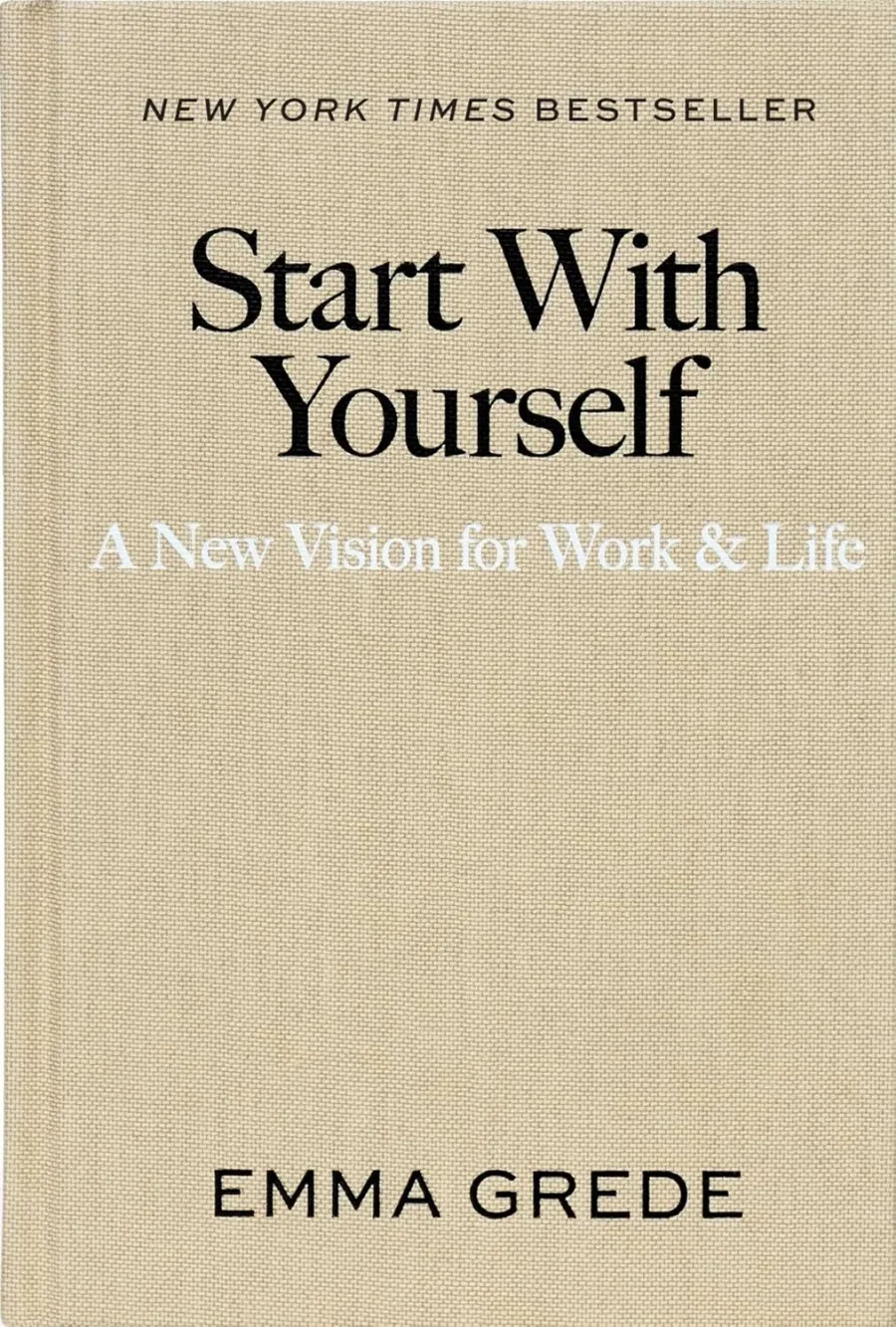
Download Cover Image
Do you want to download the full cover image for Start With Yourself: A New Vision for Work & Life?