
Meet Me in Paris: A Novel
Hardcover
• 368 Pages
• USD 29.00
• English
• 9781668092538
No ratings yet
| Publisher | Gallery Books |
|---|---|
| ISBN13 | 9781668092538 |
| ASIN/SKU | 1668092530 |
| Book Format | Hardcover |
| Language | English |
| Pages | 368 |
| List Price | USD 29.00 |
| Publishing Date | 28/07/2026 |
| Dimensions | 6 x 1.2 x 9 inches |
| Weight | 1.16 pounds |
| Book Code | BD00056067 |
Buy this Book
Amazon Stores
Ebook Stores
Other Stores
Discover Meet Me in Paris: A Novel by Kristin Harmel. This book is published by Gallery Books in Hardcover format, ISBN 9781668092538, ASIN 1668092530, under Literature and Fiction, Travel and Vacation Fiction, Mothers and Children Fiction.
Book Description
Kristin Harmel, the New York Times bestselling author of The Book of Lost Names and The Winemaker's Wife, returns with a captivating new novel about several intertwined stories of love, loss, courage, and redemption set over the course of one magical week in Paris.
Nine Americans in Paris. Seven intertwined love stories. One City of Light.
Love Actually meets The Notebook in a tale of love, loss, and finding your way home, all set over the course of one life-changing week in Paris.
Julia Glover has brought her twenty-three-year-old daughter, Piper, to Paris for the first time—but they know it will also be their last trip here together. Julia is dying, and as the mother and daughter desperately try to make memories together as the clock ticks down, the world opens up around them. Piper meets a cute French waiter, who might just understand her better than anyone she’s ever met, and Julia meets a man at a dive bar and struggles with how to tell him the truth about her future.
Rock star Jackson Quick’s glory days are behind him. He had a handful of hit songs thirty years ago, but he hasn’t toured in a decade. This week, he’ll launch his reunion tour in Paris, the city where it all began. But he wants more out of life than being defined by fame. When he meets a woman who finally sees him for who he is at his core, the ground shifts beneath his feet.
Henry McGee has been writing hit songs for decades—including Jackson Quick’s biggest hit, City of Light. But his secret is that every love song he’s ever written is for a woman named Celeste, whom he loved a lifetime ago, when they were both teenagers in Paris during World War II. He has spent eighty years believing she died—but when a letter arrives telling him the opposite, he’s on the first flight to France. Can he break through the haze of her dementia, using the songs he’s written all these years, to remind her of who they once were to each other—and to tell her he came back for her?
Henry’s granddaughter, Melody, has just discovered that her husband of twenty years, Gilles, a French cosmetics executive, is having an affair. When she confronts him, he tearfully apologizes and begs her to forgive him. But can she? And, perhaps even more importantly, does she want to? Or is there a different kind of life out there for her if she chooses to be alone?
These intertwining stories—plus several others—unfold over a few breathtaking spring days, as an unforgettable group of Americans in Paris must find their way to their own versions of happily ever after in the City of Light.
Nine Americans in Paris. Seven intertwined love stories. One City of Light.
Love Actually meets The Notebook in a tale of love, loss, and finding your way home, all set over the course of one life-changing week in Paris.
Julia Glover has brought her twenty-three-year-old daughter, Piper, to Paris for the first time—but they know it will also be their last trip here together. Julia is dying, and as the mother and daughter desperately try to make memories together as the clock ticks down, the world opens up around them. Piper meets a cute French waiter, who might just understand her better than anyone she’s ever met, and Julia meets a man at a dive bar and struggles with how to tell him the truth about her future.
Rock star Jackson Quick’s glory days are behind him. He had a handful of hit songs thirty years ago, but he hasn’t toured in a decade. This week, he’ll launch his reunion tour in Paris, the city where it all began. But he wants more out of life than being defined by fame. When he meets a woman who finally sees him for who he is at his core, the ground shifts beneath his feet.
Henry McGee has been writing hit songs for decades—including Jackson Quick’s biggest hit, City of Light. But his secret is that every love song he’s ever written is for a woman named Celeste, whom he loved a lifetime ago, when they were both teenagers in Paris during World War II. He has spent eighty years believing she died—but when a letter arrives telling him the opposite, he’s on the first flight to France. Can he break through the haze of her dementia, using the songs he’s written all these years, to remind her of who they once were to each other—and to tell her he came back for her?
Henry’s granddaughter, Melody, has just discovered that her husband of twenty years, Gilles, a French cosmetics executive, is having an affair. When she confronts him, he tearfully apologizes and begs her to forgive him. But can she? And, perhaps even more importantly, does she want to? Or is there a different kind of life out there for her if she chooses to be alone?
These intertwining stories—plus several others—unfold over a few breathtaking spring days, as an unforgettable group of Americans in Paris must find their way to their own versions of happily ever after in the City of Light.
Author Biography
Kristin Harmel is the New York Times bestselling, USA Today bestselling, and #1 international bestselling author of The Stolen Life of Colette Marceau, The Paris Daughter, The Book of Lost Names, The Winemaker’s Wife, and a dozen other novels that have been translated into more than 35 languages and are sold all over the world.
Kristin has been writing professionally since the age of 16, when she began her career as a sportswriter, covering Major League Baseball and NHL hockey for a local magazine in Tampa Bay, Florida in the late 1990s. In addition to a long magazine writing career, primarily writing and reporting for PEOPLE magazine (as well as articles published in numerous other magazines, including American Baby, Men’s Health, Woman’s Day, and more), Kristin was also a frequent contributor to the national television morning show The Daily Buzz. She sold her first novel in 2004, and it debuted in February 2006.
Kristin was born just outside Boston, Massachusetts and spent her childhood there, as well as in Worthington, Ohio, and St. Petersburg, Florida. After graduating with a degree in journalism (with a minor in Spanish) from the University of Florida, she spent time living in Paris and Los Angeles and now lives in Orlando, with her husband and young son. She is also the co-founder and co-host of the popular weekly web show and podcast Friends & Fiction.
Kristin has been writing professionally since the age of 16, when she began her career as a sportswriter, covering Major League Baseball and NHL hockey for a local magazine in Tampa Bay, Florida in the late 1990s. In addition to a long magazine writing career, primarily writing and reporting for PEOPLE magazine (as well as articles published in numerous other magazines, including American Baby, Men’s Health, Woman’s Day, and more), Kristin was also a frequent contributor to the national television morning show The Daily Buzz. She sold her first novel in 2004, and it debuted in February 2006.
Kristin was born just outside Boston, Massachusetts and spent her childhood there, as well as in Worthington, Ohio, and St. Petersburg, Florida. After graduating with a degree in journalism (with a minor in Spanish) from the University of Florida, she spent time living in Paris and Los Angeles and now lives in Orlando, with her husband and young son. She is also the co-founder and co-host of the popular weekly web show and podcast Friends & Fiction.
Editorial Reviews
“The emotional core of the story is strong: pursue love, be honest with yourself, and find the confidence to follow your heart . . . Fans will enjoy this love letter to Paris that is filled with Harmel’s signature emotional arcs.” --Library Journal
“A luminous, heart-tugging ode to love in all its forms—timeless, tender, and utterly unforgettable.” --Christina Lauren, New York Times bestselling authors of The Unhoneymooners
"An absolutely delicious delight! This book delivers a transportive and much-needed trip to Paris that will soothe every reader’s soul. I stayed up all night finishing this one. Meet Me in Paris is an exquisitely woven narrative about the enduring power of love in all of its forms. Each of the stories in this book could be its own novel or movie, but they’re even more powerful when read together. Readers will turn the last page and want to start all over again. You'll feel comforted, inspired, and completely enchanted as you head to your computer and immediately book a trip to the City of Light." --Jo Piazza, bestselling author of The Sicilian Inheritance
"A gorgeous, ensemble novel that will have you packing your bags for France! Set in the most romantic city in the world, it weaves a melody of chance encounters and golden memories so beautifully told that it will capture your heart." --International bestselling author Evie Woods
"MEET ME IN PARIS might just be Kristin Harmel’s magnum opus. This book is every kind of love story wrapped in the most perfect Parisian package. There’s first love and long-lost love, mother-daughter love and the fierce, protective love of best friends. There’s once-forbidden love and lost-and-found love and almost-too-late love. There’s love that breaks your heart and love that puts it back together again—plus the bravest love of all, the love you give yourself. Only a master storyteller like Harmel could weave all of these threads together into one heartbreakingly beautiful novel. The way the characters’ lives intersect feels like Love Actually—only better. I devoured this book in a single sitting; it made me laugh and cry and seriously consider booking a flight to France. Paris may be called the City of Light, but in Kristin Harmel’s hands, it should be the City of Love. This is one book you don’t want to miss." --Ali Brady, USA Today bestselling author of Battle of the Bookstores
"The City of Light becomes the City of Love in Kristin Harmel’s breathtaking new escape celebrating life’s most complicated emotion in all its glory. Nine Americans descend on Parisian soil, their paths intertwining in a swoon-worthy and poignant tale of fresh starts and self-discovery that will make even the most cynical reader believe in the transformational power of true love. Kristin Harmel has long been one of my favorite authors, and with MEET ME IN PARIS, she has taken her ever-masterful storytelling to even greater heights. Harmel’s prose shines as brightly as her beloved Paris in what is sure to be the mus
“A luminous, heart-tugging ode to love in all its forms—timeless, tender, and utterly unforgettable.” --Christina Lauren, New York Times bestselling authors of The Unhoneymooners
"An absolutely delicious delight! This book delivers a transportive and much-needed trip to Paris that will soothe every reader’s soul. I stayed up all night finishing this one. Meet Me in Paris is an exquisitely woven narrative about the enduring power of love in all of its forms. Each of the stories in this book could be its own novel or movie, but they’re even more powerful when read together. Readers will turn the last page and want to start all over again. You'll feel comforted, inspired, and completely enchanted as you head to your computer and immediately book a trip to the City of Light." --Jo Piazza, bestselling author of The Sicilian Inheritance
"A gorgeous, ensemble novel that will have you packing your bags for France! Set in the most romantic city in the world, it weaves a melody of chance encounters and golden memories so beautifully told that it will capture your heart." --International bestselling author Evie Woods
"MEET ME IN PARIS might just be Kristin Harmel’s magnum opus. This book is every kind of love story wrapped in the most perfect Parisian package. There’s first love and long-lost love, mother-daughter love and the fierce, protective love of best friends. There’s once-forbidden love and lost-and-found love and almost-too-late love. There’s love that breaks your heart and love that puts it back together again—plus the bravest love of all, the love you give yourself. Only a master storyteller like Harmel could weave all of these threads together into one heartbreakingly beautiful novel. The way the characters’ lives intersect feels like Love Actually—only better. I devoured this book in a single sitting; it made me laugh and cry and seriously consider booking a flight to France. Paris may be called the City of Light, but in Kristin Harmel’s hands, it should be the City of Love. This is one book you don’t want to miss." --Ali Brady, USA Today bestselling author of Battle of the Bookstores
"The City of Light becomes the City of Love in Kristin Harmel’s breathtaking new escape celebrating life’s most complicated emotion in all its glory. Nine Americans descend on Parisian soil, their paths intertwining in a swoon-worthy and poignant tale of fresh starts and self-discovery that will make even the most cynical reader believe in the transformational power of true love. Kristin Harmel has long been one of my favorite authors, and with MEET ME IN PARIS, she has taken her ever-masterful storytelling to even greater heights. Harmel’s prose shines as brightly as her beloved Paris in what is sure to be the mus
Book Summary
Kristin Harmel’s Meet Me in Paris is a sweeping contemporary novel about love, loss, memory, second chances, family, forgiveness, and the courage to begin again. Set almost entirely over one transformative week in Paris, the novel brings together nine Americans whose lives intersect in ways that gradually reveal a larger portrait of human connection. Harmel describes the book as a story of “love in all its forms,” and that description captures its central idea: love is not limited to romantic relationships, nor does it always lead to a conventional happily-ever-after ending. Sometimes love means staying. Sometimes it means leaving. Sometimes it means remembering someone who can no longer remember you. And sometimes it means finding the courage to live fully when time is running out.
Unlike Harmel’s better-known historical novels such as The Book of Lost Names and The Winemaker’s Wife, Meet Me in Paris is primarily a contemporary story, although one of its most important emotional threads reaches back to World War II. Harmel has explained that she wanted to return to contemporary fiction after more than a decade and explore what she calls the “battlefield of our own hearts.” That shift allows her to focus less on the external forces of war and more on the private battles people face when confronting grief, betrayal, aging, loneliness, regret, and the possibility of starting over.
At the heart of the novel is Julia Glover, a forty-nine-year-old woman who knows that she is dying. She travels to Paris with her twenty-three-year-old daughter, Piper, because she wants them to have one final experience together in a city that holds special meaning for her. The trip is therefore both a vacation and a farewell. Julia understands that she is giving Piper memories that will eventually have to sustain her after her mother is gone. That knowledge creates a bittersweet tension throughout the story: every café visit, walk through the streets, conversation, photograph, and spontaneous adventure becomes more meaningful because mother and daughter know they cannot take the future for granted.
Julia’s story is ultimately about the difficulty of telling the truth when the truth may cause unbearable pain. She wants to protect Piper from the full weight of what is coming, yet she also understands that honesty is one of the greatest gifts she can give her daughter. Paris becomes the place where Julia tries to balance those competing instincts. She wants to be a mother for as long as possible, but she also wants to allow Piper to become an independent adult capable of continuing her life after the loss. Their relationship gives the novel much of its emotional foundation because their trip is not simply about saying goodbye; it is about learning how to live meaningfully during the time they still have together.
Piper, meanwhile, is caught between grief and the possibility of a future she does not yet know how to imagine. Meeting a French waiter introduces an unexpected romantic element into her story. What makes this relationship important is not simply the attraction between two young people in Paris. Piper finds someone outside her existing world with whom she can speak honestly about the confusion and fear surrounding her mother’s illness. The relationship becomes part of her larger journey toward adulthood, identity, and emotional independence. Paris gives Piper something she desperately needs: the opportunity to experience life even while she is preparing to lose someone she loves.
Running alongside Julia and Piper’s story is that of Jackson Quick, a once-famous rock star whose greatest years are behind him. Jackson had several major hits decades earlier but has not toured in ten years. Now he is returning to Paris to begin a reunion tour. On the surface, his storyline appears to be about music and celebrity, but underneath it is about identity. Jackson has spent years being defined by an image created by his younger self, his fans, and the entertainment industry. He must ask whether the person he is today deserves a life that is independent of the person he once was.
Jackson’s return to Paris consequently becomes a kind of personal reckoning. The city where his career began becomes the place where he considers what he wants next. His growing connection with a woman who sees him as a person rather than a celebrity gives him the possibility of a different kind of relationship—one based on being understood rather than admired. The novel uses Jackson to explore a question that applies far beyond the world of music: What happens when the identity everyone else recognizes is no longer the identity you want to live with? His story suggests that reinvention is possible at almost any age, provided a person is willing to admit what he truly wants.
The novel’s most poignant storyline belongs to Henry McGee, an elderly songwriter whose life has been shaped by a love he has carried for approximately eighty years. As a teenager in Paris during World War II, Henry fell in love with a young French woman named Celeste. He was eventually led to believe that Celeste had died during the war, and the loss remained with him throughout his entire life. Rather than allowing that love to disappear, Henry transformed it into music. He wrote love songs inspired by Celeste, including “City of Light,” the song that eventually became Jackson Quick’s biggest hit.
Henry’s story takes an extraordinary turn when he discovers that Celeste did not die. After spending eighty years believing that he had lost the love of his life forever, he learns that she is still alive. The revelation sends him back to France. Yet reunion is not as simple as finding someone after a long separation. Celeste is now suffering from advanced dementia, and the woman Henry remembers is no longer fully accessible to him in the way he once imagined. The central emotional question becomes whether love can survive when memory disappears.
Music provides the answer the novel repeatedly returns to. Henry cannot necessarily reach Celeste through ordinary conversation, because dementia has altered her relationship with the past. But music can sometimes reach places that words cannot. The songs Henry wrote for her become vessels of memory. His attempt to reconnect with Celeste demonstrates one of the book’s most moving ideas: even when details disappear, emotional associations may remain. Love can leave traces that survive long after names, dates, and circumstances become difficult to remember.
The “City of Light” song becomes one of the novel’s most important connecting devices. It links Henry’s wartime love story to Jackson’s music career and, indirectly, to the other characters. Music becomes more than entertainment; it becomes a language shared across generations. A song written by a young man in wartime Paris eventually reaches people decades later, demonstrating how personal experiences can travel far beyond the lives of the people who originally experienced them. This gives the novel a strong theme of emotional inheritance: we leave pieces of ourselves behind, sometimes without realizing how long they may survive.
Henry’s granddaughter Melody provides another perspective on love and commitment. Melody is married to Gilles, a French cosmetics executive, and has spent twenty years building a life with him. Her world changes when she discovers that Gilles is having an affair. His reaction is familiar—he apologizes, asks for forgiveness, and wants their marriage to survive—but Melody faces a much more difficult question than whether he is sorry. She must decide whether she actually wants to return to the life they had before the betrayal.
Melody’s storyline is important because it challenges the assumption that forgiveness automatically means reconciliation. Harmel allows her to consider whether staying with someone is always the most loving or courageous choice. Forgiveness can be meaningful, but it does not necessarily erase consequences. Melody must confront the difference between forgiving another person and choosing what is healthiest for herself. Her journey becomes a story of self-respect and rediscovering personal agency after years of defining herself through marriage.
The novel also introduces other characters and love stories, expanding the central theme beyond Julia, Piper, Henry, Jackson, and Melody. Some of the characters arrive in Paris carrying grief, disappointment, secrets, loneliness, or uncertainty about their futures. Their individual stories gradually intersect, creating the ensemble structure that has led many readers to compare the book to Love Actually. The comparison is useful because the novel similarly presents multiple relationships unfolding simultaneously, with seemingly separate lives gradually revealing unexpected connections.
Paris itself is arguably the novel’s most important “character.” Harmel does not use the city merely as decorative scenery. The streets, cafés, bookstores, bridges, music venues, and neighborhoods become spaces where people confront parts of themselves they have avoided elsewhere. Reviewers have noted that Harmel draws on her own experience of living in Paris, and that familiarity contributes to the sense that the city is emotionally lived-in rather than simply picturesque.
This makes Meet Me in Paris particularly appealing to readers searching for a Paris romance novel, contemporary women's fiction set in Paris, emotional love stories, books about second chances, or novels about interconnected characters. It is also a strong choice for readers who enjoy stories where travel becomes a catalyst for personal transformation. The characters do not simply visit Paris; they arrive carrying versions of themselves that no longer work and discover that the City of Light gives them permission to reconsider who they are.
One of the book’s strongest themes is the relationship between love and time. Julia has very little time left, while Henry has already lived through nearly a century of it. Piper is just beginning adulthood, while Jackson is confronting the later stages of his career. Melody has spent two decades in a marriage that suddenly looks different. By placing characters at radically different stages of life beside one another, Harmel suggests that there is no single correct moment for love, change, regret, or reinvention.
The novel also asks whether a life can be meaningful even when it does not end according to plan. Julia cannot change her diagnosis. Henry cannot recover the decades he lost with Celeste. Melody cannot undo her husband's betrayal. Jackson cannot return to the musical world of his youth. Yet none of these limitations prevents the characters from making meaningful choices in the present. That is where the book's optimism comes from. It does not suggest that love eliminates suffering. Instead, it suggests that love can give suffering meaning and can make even limited time precious.
Ultimately, Meet Me in Paris is a novel about choosing to live honestly before it is too late. Its interconnected love stories show that romance is only one expression of love. There is the enduring love between a mother and daughter, the memory of a wartime romance, the possibility of love after betrayal, the desire to be recognized beyond fame, and the fragile connections formed between strangers who happen to meet at exactly the right moment. The book repeatedly returns to the idea that people may not control how much time they are given, but they can influence how they use it.
For readers looking for an emotional contemporary romance, a heartfelt Paris novel, a multigenerational story about love and loss, or a character-driven book about second chances, Meet Me in Paris offers all of these elements in one sweeping narrative. Its greatest strength is its insistence that love does not have to be permanent to be transformative. Some relationships last decades; others last a season, a week, or even a single unforgettable encounter. What matters is what those connections awaken in us.
By bringing nine Americans together over seven extraordinary days, Kristin Harmel creates a story that is romantic without being only about romance, heartbreaking without being hopeless, and sentimental without losing sight of life's complications. Paris becomes the place where old wounds are reopened, hidden truths emerge, relationships are tested, and new possibilities appear. In the end, Meet Me in Paris is best understood as a love letter not only to Paris but to human resilience—the courage to say what matters, the courage to let go when necessary, and above all, the courage to embrace the life that is still waiting.
Unlike Harmel’s better-known historical novels such as The Book of Lost Names and The Winemaker’s Wife, Meet Me in Paris is primarily a contemporary story, although one of its most important emotional threads reaches back to World War II. Harmel has explained that she wanted to return to contemporary fiction after more than a decade and explore what she calls the “battlefield of our own hearts.” That shift allows her to focus less on the external forces of war and more on the private battles people face when confronting grief, betrayal, aging, loneliness, regret, and the possibility of starting over.
At the heart of the novel is Julia Glover, a forty-nine-year-old woman who knows that she is dying. She travels to Paris with her twenty-three-year-old daughter, Piper, because she wants them to have one final experience together in a city that holds special meaning for her. The trip is therefore both a vacation and a farewell. Julia understands that she is giving Piper memories that will eventually have to sustain her after her mother is gone. That knowledge creates a bittersweet tension throughout the story: every café visit, walk through the streets, conversation, photograph, and spontaneous adventure becomes more meaningful because mother and daughter know they cannot take the future for granted.
Julia’s story is ultimately about the difficulty of telling the truth when the truth may cause unbearable pain. She wants to protect Piper from the full weight of what is coming, yet she also understands that honesty is one of the greatest gifts she can give her daughter. Paris becomes the place where Julia tries to balance those competing instincts. She wants to be a mother for as long as possible, but she also wants to allow Piper to become an independent adult capable of continuing her life after the loss. Their relationship gives the novel much of its emotional foundation because their trip is not simply about saying goodbye; it is about learning how to live meaningfully during the time they still have together.
Piper, meanwhile, is caught between grief and the possibility of a future she does not yet know how to imagine. Meeting a French waiter introduces an unexpected romantic element into her story. What makes this relationship important is not simply the attraction between two young people in Paris. Piper finds someone outside her existing world with whom she can speak honestly about the confusion and fear surrounding her mother’s illness. The relationship becomes part of her larger journey toward adulthood, identity, and emotional independence. Paris gives Piper something she desperately needs: the opportunity to experience life even while she is preparing to lose someone she loves.
Running alongside Julia and Piper’s story is that of Jackson Quick, a once-famous rock star whose greatest years are behind him. Jackson had several major hits decades earlier but has not toured in ten years. Now he is returning to Paris to begin a reunion tour. On the surface, his storyline appears to be about music and celebrity, but underneath it is about identity. Jackson has spent years being defined by an image created by his younger self, his fans, and the entertainment industry. He must ask whether the person he is today deserves a life that is independent of the person he once was.
Jackson’s return to Paris consequently becomes a kind of personal reckoning. The city where his career began becomes the place where he considers what he wants next. His growing connection with a woman who sees him as a person rather than a celebrity gives him the possibility of a different kind of relationship—one based on being understood rather than admired. The novel uses Jackson to explore a question that applies far beyond the world of music: What happens when the identity everyone else recognizes is no longer the identity you want to live with? His story suggests that reinvention is possible at almost any age, provided a person is willing to admit what he truly wants.
The novel’s most poignant storyline belongs to Henry McGee, an elderly songwriter whose life has been shaped by a love he has carried for approximately eighty years. As a teenager in Paris during World War II, Henry fell in love with a young French woman named Celeste. He was eventually led to believe that Celeste had died during the war, and the loss remained with him throughout his entire life. Rather than allowing that love to disappear, Henry transformed it into music. He wrote love songs inspired by Celeste, including “City of Light,” the song that eventually became Jackson Quick’s biggest hit.
Henry’s story takes an extraordinary turn when he discovers that Celeste did not die. After spending eighty years believing that he had lost the love of his life forever, he learns that she is still alive. The revelation sends him back to France. Yet reunion is not as simple as finding someone after a long separation. Celeste is now suffering from advanced dementia, and the woman Henry remembers is no longer fully accessible to him in the way he once imagined. The central emotional question becomes whether love can survive when memory disappears.
Music provides the answer the novel repeatedly returns to. Henry cannot necessarily reach Celeste through ordinary conversation, because dementia has altered her relationship with the past. But music can sometimes reach places that words cannot. The songs Henry wrote for her become vessels of memory. His attempt to reconnect with Celeste demonstrates one of the book’s most moving ideas: even when details disappear, emotional associations may remain. Love can leave traces that survive long after names, dates, and circumstances become difficult to remember.
The “City of Light” song becomes one of the novel’s most important connecting devices. It links Henry’s wartime love story to Jackson’s music career and, indirectly, to the other characters. Music becomes more than entertainment; it becomes a language shared across generations. A song written by a young man in wartime Paris eventually reaches people decades later, demonstrating how personal experiences can travel far beyond the lives of the people who originally experienced them. This gives the novel a strong theme of emotional inheritance: we leave pieces of ourselves behind, sometimes without realizing how long they may survive.
Henry’s granddaughter Melody provides another perspective on love and commitment. Melody is married to Gilles, a French cosmetics executive, and has spent twenty years building a life with him. Her world changes when she discovers that Gilles is having an affair. His reaction is familiar—he apologizes, asks for forgiveness, and wants their marriage to survive—but Melody faces a much more difficult question than whether he is sorry. She must decide whether she actually wants to return to the life they had before the betrayal.
Melody’s storyline is important because it challenges the assumption that forgiveness automatically means reconciliation. Harmel allows her to consider whether staying with someone is always the most loving or courageous choice. Forgiveness can be meaningful, but it does not necessarily erase consequences. Melody must confront the difference between forgiving another person and choosing what is healthiest for herself. Her journey becomes a story of self-respect and rediscovering personal agency after years of defining herself through marriage.
The novel also introduces other characters and love stories, expanding the central theme beyond Julia, Piper, Henry, Jackson, and Melody. Some of the characters arrive in Paris carrying grief, disappointment, secrets, loneliness, or uncertainty about their futures. Their individual stories gradually intersect, creating the ensemble structure that has led many readers to compare the book to Love Actually. The comparison is useful because the novel similarly presents multiple relationships unfolding simultaneously, with seemingly separate lives gradually revealing unexpected connections.
Paris itself is arguably the novel’s most important “character.” Harmel does not use the city merely as decorative scenery. The streets, cafés, bookstores, bridges, music venues, and neighborhoods become spaces where people confront parts of themselves they have avoided elsewhere. Reviewers have noted that Harmel draws on her own experience of living in Paris, and that familiarity contributes to the sense that the city is emotionally lived-in rather than simply picturesque.
This makes Meet Me in Paris particularly appealing to readers searching for a Paris romance novel, contemporary women's fiction set in Paris, emotional love stories, books about second chances, or novels about interconnected characters. It is also a strong choice for readers who enjoy stories where travel becomes a catalyst for personal transformation. The characters do not simply visit Paris; they arrive carrying versions of themselves that no longer work and discover that the City of Light gives them permission to reconsider who they are.
One of the book’s strongest themes is the relationship between love and time. Julia has very little time left, while Henry has already lived through nearly a century of it. Piper is just beginning adulthood, while Jackson is confronting the later stages of his career. Melody has spent two decades in a marriage that suddenly looks different. By placing characters at radically different stages of life beside one another, Harmel suggests that there is no single correct moment for love, change, regret, or reinvention.
The novel also asks whether a life can be meaningful even when it does not end according to plan. Julia cannot change her diagnosis. Henry cannot recover the decades he lost with Celeste. Melody cannot undo her husband's betrayal. Jackson cannot return to the musical world of his youth. Yet none of these limitations prevents the characters from making meaningful choices in the present. That is where the book's optimism comes from. It does not suggest that love eliminates suffering. Instead, it suggests that love can give suffering meaning and can make even limited time precious.
Ultimately, Meet Me in Paris is a novel about choosing to live honestly before it is too late. Its interconnected love stories show that romance is only one expression of love. There is the enduring love between a mother and daughter, the memory of a wartime romance, the possibility of love after betrayal, the desire to be recognized beyond fame, and the fragile connections formed between strangers who happen to meet at exactly the right moment. The book repeatedly returns to the idea that people may not control how much time they are given, but they can influence how they use it.
For readers looking for an emotional contemporary romance, a heartfelt Paris novel, a multigenerational story about love and loss, or a character-driven book about second chances, Meet Me in Paris offers all of these elements in one sweeping narrative. Its greatest strength is its insistence that love does not have to be permanent to be transformative. Some relationships last decades; others last a season, a week, or even a single unforgettable encounter. What matters is what those connections awaken in us.
By bringing nine Americans together over seven extraordinary days, Kristin Harmel creates a story that is romantic without being only about romance, heartbreaking without being hopeless, and sentimental without losing sight of life's complications. Paris becomes the place where old wounds are reopened, hidden truths emerge, relationships are tested, and new possibilities appear. In the end, Meet Me in Paris is best understood as a love letter not only to Paris but to human resilience—the courage to say what matters, the courage to let go when necessary, and above all, the courage to embrace the life that is still waiting.
Sample Chapters
Sample Chapters will be added soon…
Reader Reviews
No reviews yet.
Meet Me in Paris: A Novel
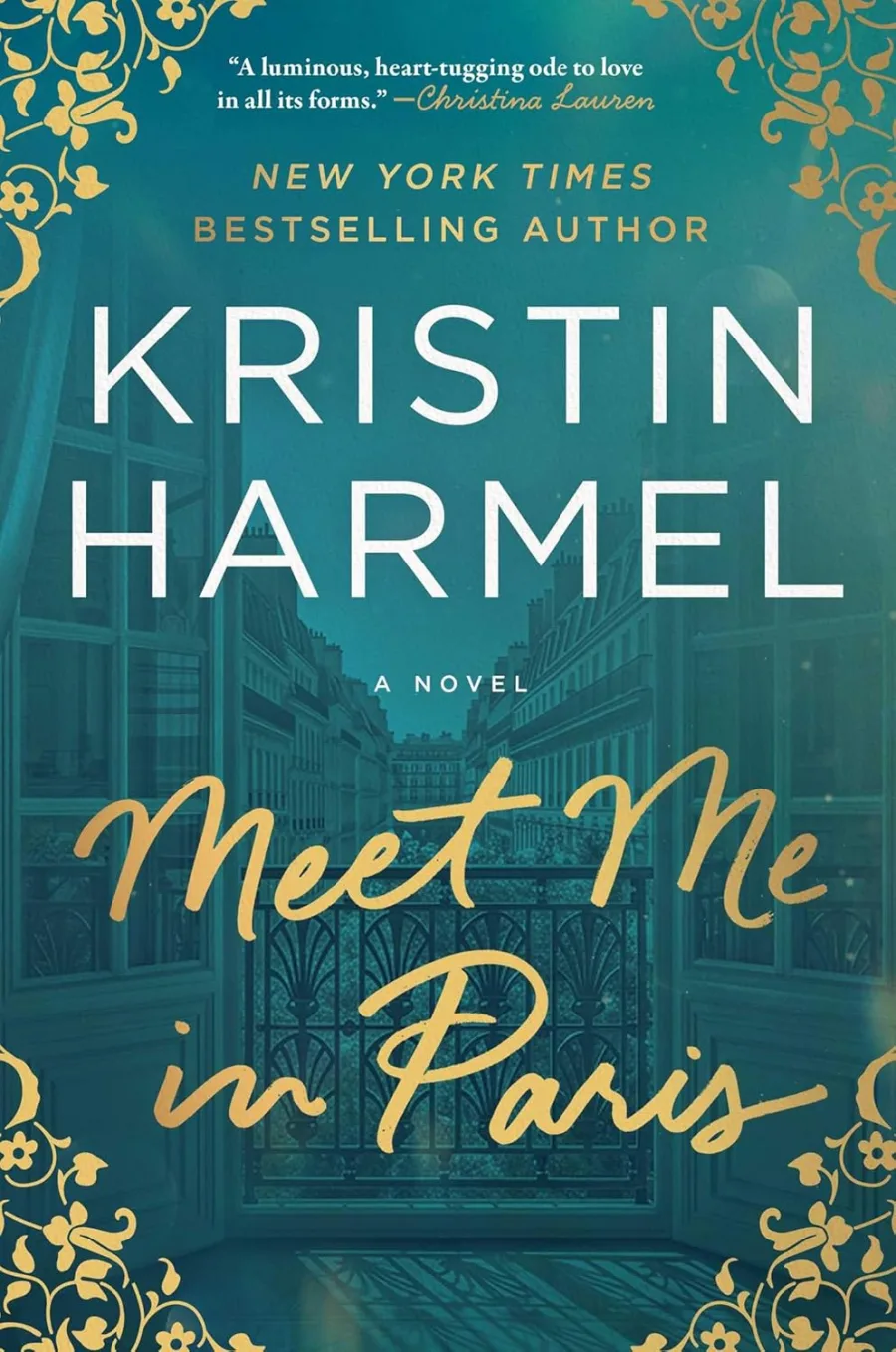
Download Cover Image
Do you want to download the full cover image for Meet Me in Paris: A Novel?