
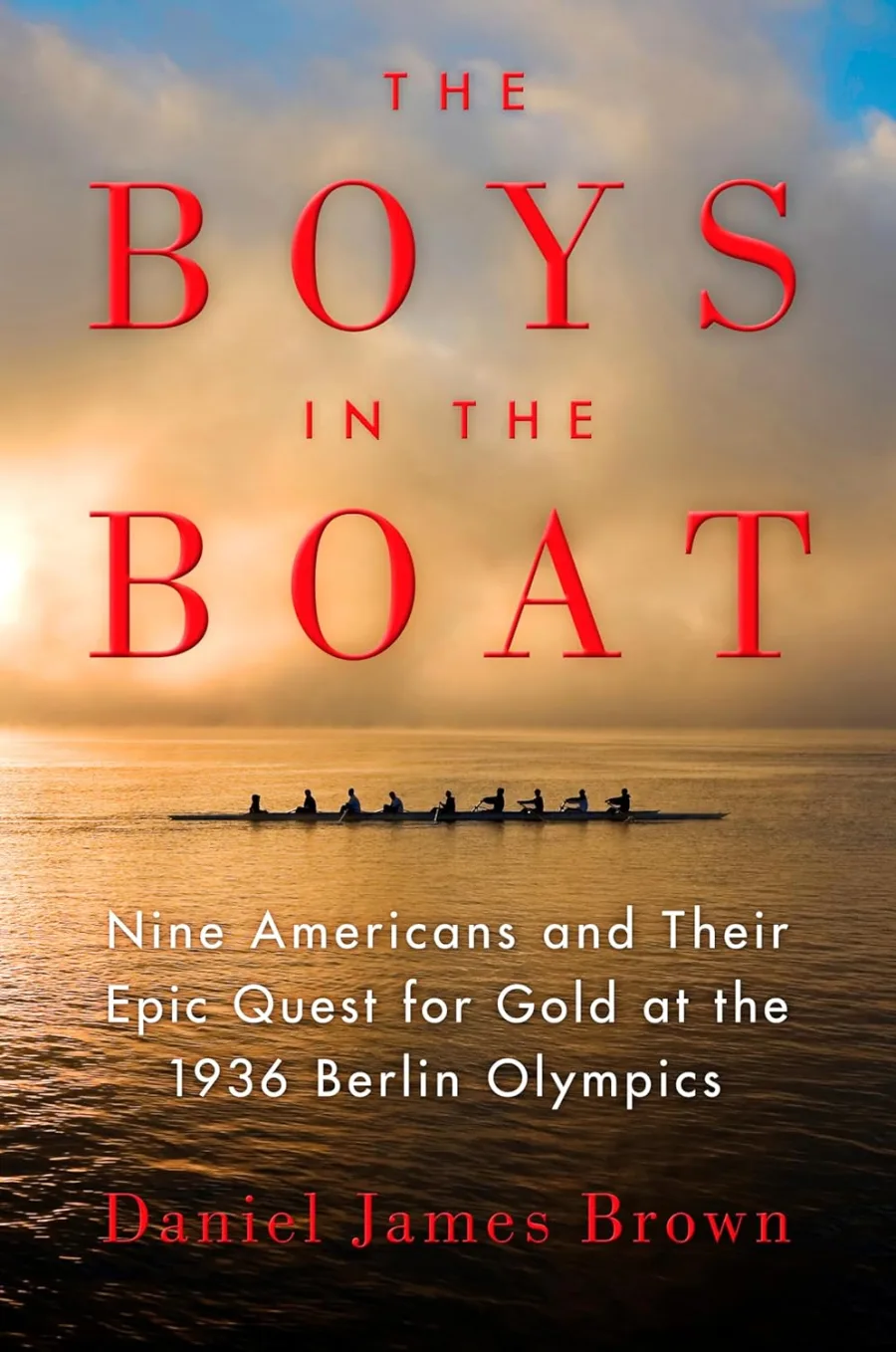
The Boys in the Boat
Paperback
• 741 Pages
• USD 22.99
• English
• 9781594137792
No ratings yet
| Publisher | Large Print Pr |
|---|---|
| ISBN13 | 9781594137792 |
| ASIN/SKU | 159413779X |
| Book Format | Paperback |
| Language | English |
| Pages | 741 |
| List Price | USD 22.99 |
| Publishing Date | 03/06/2014 |
| Dimensions | 5.5 x 1.5 x 8.5 inches |
| Weight | 1.54 pounds |
| Book Code | BD00056104 |
Buy this Book
Amazon Stores
Ebook Stores
Other Stores
Discover The Boys in the Boat by Daniel James Brown. This book is published by Large Print Pr in Paperback format, ISBN 9781594137792, ASIN 159413779X, under Sports and Outdoors, Boating, Olympic Games.
Book Description
Traces the story of an American rowing team from the University of Washington that defeated elite rivals at Hitler's 1936 Berlin Olympics, sharing the experiences of such contributors as their enigmatic coach, a visionary boat builder and a homeless teen rower. By the author of Under a Flaming Sky. (sports & recreation). Simultaneous.
Author Biography
Daniel James Brown grew up in the San Francisco Bay Area and attended Diablo Valley College, the University of California at Berkeley, and UCLA. He taught writing at San Jose State University and Stanford before becoming a technical writer and editor. He now writes narrative nonfiction books full time. His primary interest as a writer is in bringing compelling historical events to life vividly and accurately.
He and his wife live in the country outside of Seattle, Washington, with an assortment of cats, dogs, chickens, and honeybees. When he isn't writing, he is likely to be birding, gardening, fly fishing, reading American history, or chasing bears away from the beehives.
He and his wife live in the country outside of Seattle, Washington, with an assortment of cats, dogs, chickens, and honeybees. When he isn't writing, he is likely to be birding, gardening, fly fishing, reading American history, or chasing bears away from the beehives.
Editorial Reviews
Editorial Reviews will be added soon…
Book Summary
The Boys in the Boat by Daniel James Brown is a nonfiction book that reads like an intimate novel, following a group of working class American college boys who come together to form a world class rowing team during the Great Depression. At its heart, the book focuses on Joe Rantz, a quiet, stubborn, and deeply resilient young man who grows up facing poverty, abandonment, and emotional hardship. Brown uses Joe’s life as a lens through which we see the larger story of the University of Washington’s eight oared crew that ultimately competes in the 1936 Berlin Olympics. The story begins with Joe’s difficult childhood in Washington state, where his family’s instability forces him to fend for himself from a young age. He is left behind when his stepmother and father drive away, and he survives by working odd jobs, living in half finished houses, and relying on his own determination. This early struggle shapes Joe’s character and becomes a central thread in the book: he is not simply racing against other teams, but against the forces of insecurity and doubt within himself.
When Joe enters the University of Washington, he sees the rowing program as a chance to earn a small income and a place in the world. College rowing, at that time, is highly competitive and prestigious, especially on the West Coast and among elite Eastern schools like Harvard and Yale. Joe, like many of his teammates, is not from a privileged background; he is a product of logging towns, farms, and hard labor. The Washington crew is made up mostly of boys like him—sons of farmers, lumbermen, and laborers, who are used to physical hardship and who carry with them a quiet, gritty determination. Brown carefully describes the culture of rowing: the exhausting training, the intense mental focus, and the strange beauty of eight men moving in perfect rhythm over cold, choppy water. Rowing becomes more than a sport; it is a demanding art that requires trust, unity, and an almost selfless surrender of the individual to the crew.
Central to their journey is Al Ulbrickson, the stern, reserved head coach of the Washington crew. He is under constant pressure to choose the right combination of rowers who can defeat powerful rivals and bring glory to the university. Ulbrickson is not warm or openly encouraging; he often appears distant and harsh, but Brown shows that he is deeply invested in molding these boys into something extraordinary. Another key figure is George Pocock, a master boatbuilder whose cedar racing shells are both beautiful and finely tuned instruments of speed. Pocock is more philosophical than Ulbrickson; he becomes a kind of quiet mentor, talking to Joe and others about the deeper meaning of rowing—placing the boat, the crew, and the water above personal ego. He teaches that true speed and grace come when each rower forgets himself and becomes part of a collective effort that is almost spiritual in its harmony.
The book moves through several racing seasons, chronicling how the Washington crew gradually rises from underdogs to champions. The boys must first prove themselves against other local and regional crews, then against powerful Eastern teams who have long dominated American rowing. Along the way, Brown paints vivid pictures of Depression era America: long lines for work, families scraping by, and universities struggling for funding. The rowing victories are not just athletic achievements; they become sources of pride and hope for people who have very little else. For Joe, the progress of the team is intertwined with his own fight to hold onto his place at the university, keep his grades acceptable, and maintain enough money to stay enrolled. His romantic relationship with Joyce, the girl he has loved since high school, adds another emotional layer. Joyce believes in him, and her steady presence becomes a quiet anchor in his otherwise uncertain life.
As the Washington crew earns major victories, including triumphs over more favored teams, they eventually win the right to represent the United States in the 1936 Olympic Games in Berlin. The narrative then shifts to an international stage. Brown contrasts the humble, hard working American boys with the grand spectacle and sinister backdrop of Nazi Germany. Adolf Hitler and his regime use the Olympics as a propaganda tool, carefully crafting an image of strength, unity, and superiority, even as they are already persecuting Jews and suppressing dissent within their own country. The boys from Washington, many of whom have barely left the Pacific Northwest before, are suddenly surrounded by grand stadiums, banners, and the unnerving presence of Nazi power. The rowing event itself is held on a specially designed course at Grünau, and the Americans must compete not only against powerful German and Italian crews, but also against unfair lane assignments and tricky conditions that seem to favor other teams.
The centerpiece of the book is the Olympic race for the men’s eight. Brown builds suspense by describing the meticulous preparation, the physical toll of training, and the tension within the crew. Joe’s internal battle reaches a peak here: he must finally overcome his tendency to withdraw when things get emotionally or physically difficult. The boat chosen for the race, built by Pocock, is a symbol of all their combined efforts—careful craftsmanship, trust, and countless hours of practice. On race day, the American crew is placed in an outside lane and faced with rougher water and wind, a disadvantage that could easily cost them the gold. Yet, as the starting signal is given and the boats surge forward, the Washington boys draw on everything they have learned. Brown describes the race in vivid, sensory detail: the sharp catches of the oars, the burn in their muscles, the coxswain’s shouted commands, and the way the crew must resist the urge to panic or surge too early.
In that crucial race, Joe finally experiences what Pocock had tried to explain: the feeling of complete surrender to the boat and the crew, where personal fear and ego disappear and only the rhythm and shared purpose remain. Despite the poor lane and the early lead taken by other teams, the Americans steadily build their speed, barely winning the gold medal by a narrow margin. Their victory is not just a sports triumph; it is a moment of powerful symbolism—a group of ordinary, struggling young men defeating teams supported by authoritarian regimes on their own carefully staged stage. Back home, their win brings hope and pride to people who hear about it on the radio, reinforcing the idea that character, unity, and perseverance can overcome daunting obstacles.
The Boys in the Boat closes with reflections on what happened to the crew members after the Olympics, and on the meaning of their story. Most of them return to ordinary lives, working, raising families, and carrying the memory of that golden summer with them. Joe and Joyce build a life together, and Joe’s journey from an abandoned boy to an Olympic champion stands as a testament to resilience and the power of finding belonging in a team. Brown emphasizes that the beauty of their achievement lies not in a single dramatic moment, but in countless small acts of endurance, mutual trust, and quiet courage. The book, through rich historical detail and deeply human storytelling, celebrates not only athletic excellence, but also the way people can rise above hardship when they row, metaphorically and literally, together in the same boat.
When Joe enters the University of Washington, he sees the rowing program as a chance to earn a small income and a place in the world. College rowing, at that time, is highly competitive and prestigious, especially on the West Coast and among elite Eastern schools like Harvard and Yale. Joe, like many of his teammates, is not from a privileged background; he is a product of logging towns, farms, and hard labor. The Washington crew is made up mostly of boys like him—sons of farmers, lumbermen, and laborers, who are used to physical hardship and who carry with them a quiet, gritty determination. Brown carefully describes the culture of rowing: the exhausting training, the intense mental focus, and the strange beauty of eight men moving in perfect rhythm over cold, choppy water. Rowing becomes more than a sport; it is a demanding art that requires trust, unity, and an almost selfless surrender of the individual to the crew.
Central to their journey is Al Ulbrickson, the stern, reserved head coach of the Washington crew. He is under constant pressure to choose the right combination of rowers who can defeat powerful rivals and bring glory to the university. Ulbrickson is not warm or openly encouraging; he often appears distant and harsh, but Brown shows that he is deeply invested in molding these boys into something extraordinary. Another key figure is George Pocock, a master boatbuilder whose cedar racing shells are both beautiful and finely tuned instruments of speed. Pocock is more philosophical than Ulbrickson; he becomes a kind of quiet mentor, talking to Joe and others about the deeper meaning of rowing—placing the boat, the crew, and the water above personal ego. He teaches that true speed and grace come when each rower forgets himself and becomes part of a collective effort that is almost spiritual in its harmony.
The book moves through several racing seasons, chronicling how the Washington crew gradually rises from underdogs to champions. The boys must first prove themselves against other local and regional crews, then against powerful Eastern teams who have long dominated American rowing. Along the way, Brown paints vivid pictures of Depression era America: long lines for work, families scraping by, and universities struggling for funding. The rowing victories are not just athletic achievements; they become sources of pride and hope for people who have very little else. For Joe, the progress of the team is intertwined with his own fight to hold onto his place at the university, keep his grades acceptable, and maintain enough money to stay enrolled. His romantic relationship with Joyce, the girl he has loved since high school, adds another emotional layer. Joyce believes in him, and her steady presence becomes a quiet anchor in his otherwise uncertain life.
As the Washington crew earns major victories, including triumphs over more favored teams, they eventually win the right to represent the United States in the 1936 Olympic Games in Berlin. The narrative then shifts to an international stage. Brown contrasts the humble, hard working American boys with the grand spectacle and sinister backdrop of Nazi Germany. Adolf Hitler and his regime use the Olympics as a propaganda tool, carefully crafting an image of strength, unity, and superiority, even as they are already persecuting Jews and suppressing dissent within their own country. The boys from Washington, many of whom have barely left the Pacific Northwest before, are suddenly surrounded by grand stadiums, banners, and the unnerving presence of Nazi power. The rowing event itself is held on a specially designed course at Grünau, and the Americans must compete not only against powerful German and Italian crews, but also against unfair lane assignments and tricky conditions that seem to favor other teams.
The centerpiece of the book is the Olympic race for the men’s eight. Brown builds suspense by describing the meticulous preparation, the physical toll of training, and the tension within the crew. Joe’s internal battle reaches a peak here: he must finally overcome his tendency to withdraw when things get emotionally or physically difficult. The boat chosen for the race, built by Pocock, is a symbol of all their combined efforts—careful craftsmanship, trust, and countless hours of practice. On race day, the American crew is placed in an outside lane and faced with rougher water and wind, a disadvantage that could easily cost them the gold. Yet, as the starting signal is given and the boats surge forward, the Washington boys draw on everything they have learned. Brown describes the race in vivid, sensory detail: the sharp catches of the oars, the burn in their muscles, the coxswain’s shouted commands, and the way the crew must resist the urge to panic or surge too early.
In that crucial race, Joe finally experiences what Pocock had tried to explain: the feeling of complete surrender to the boat and the crew, where personal fear and ego disappear and only the rhythm and shared purpose remain. Despite the poor lane and the early lead taken by other teams, the Americans steadily build their speed, barely winning the gold medal by a narrow margin. Their victory is not just a sports triumph; it is a moment of powerful symbolism—a group of ordinary, struggling young men defeating teams supported by authoritarian regimes on their own carefully staged stage. Back home, their win brings hope and pride to people who hear about it on the radio, reinforcing the idea that character, unity, and perseverance can overcome daunting obstacles.
The Boys in the Boat closes with reflections on what happened to the crew members after the Olympics, and on the meaning of their story. Most of them return to ordinary lives, working, raising families, and carrying the memory of that golden summer with them. Joe and Joyce build a life together, and Joe’s journey from an abandoned boy to an Olympic champion stands as a testament to resilience and the power of finding belonging in a team. Brown emphasizes that the beauty of their achievement lies not in a single dramatic moment, but in countless small acts of endurance, mutual trust, and quiet courage. The book, through rich historical detail and deeply human storytelling, celebrates not only athletic excellence, but also the way people can rise above hardship when they row, metaphorically and literally, together in the same boat.
Sample Chapters
Sample Chapters will be added soon…
Reader Reviews
No reviews yet.
The Boys in the Boat
Download Cover Image
Do you want to download the full cover image for The Boys in the Boat?