
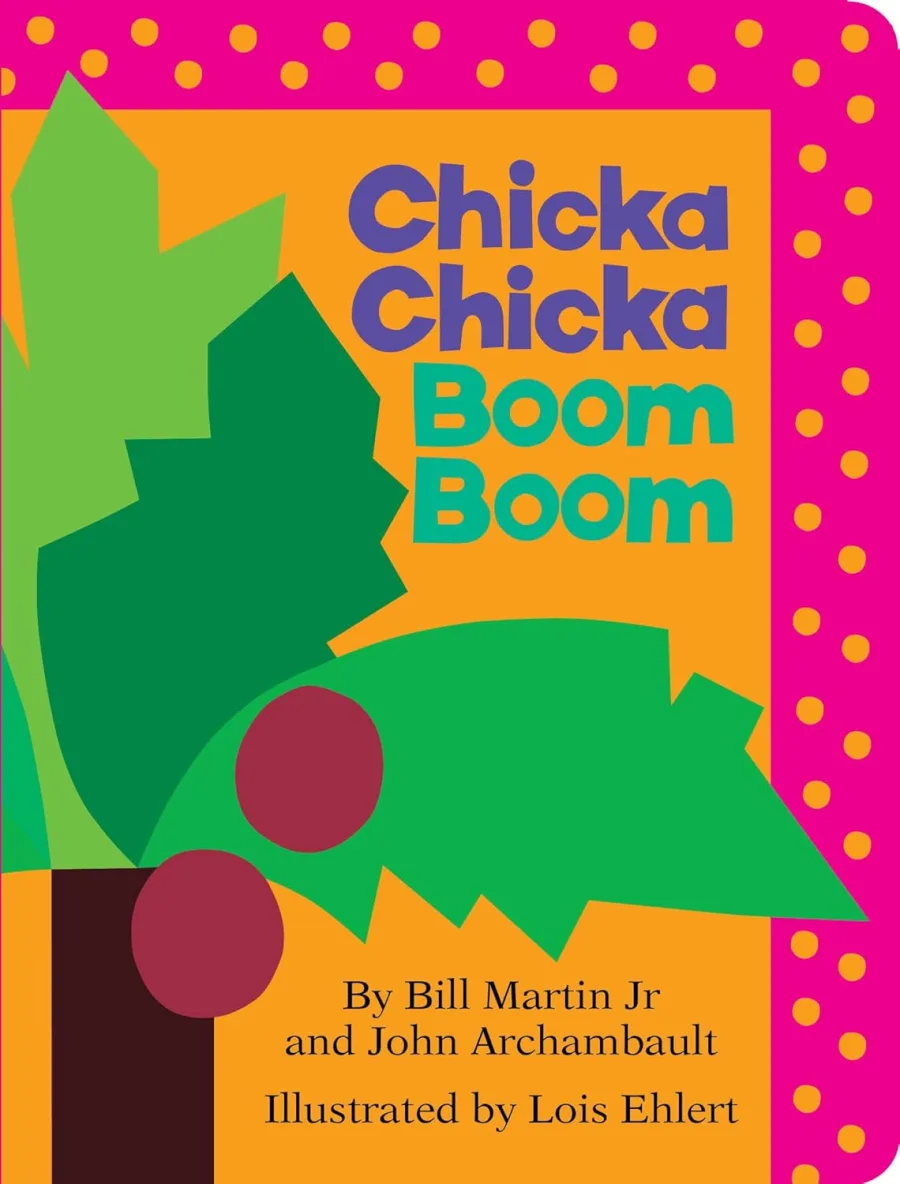
Chicka Chicka Boom Boom
Bill Martin Jr., John Archambault
Board Book
• 36 Pages
• USD 1.36
• English
• 9781442450707
No ratings yet
| Publisher | Little Simon |
|---|---|
| ISBN13 | 9781442450707 |
| ASIN/SKU | 1442450703 |
| Book Format | Board Book |
| Language | English |
| Pages | 36 |
| List Price | USD 1.36 |
| Series Title | Chicka Chicka Book, A |
| Publishing Date | 28/08/2012 |
| Dimensions | 5.5 x 0.9 x 7.25 inches |
| Weight | 13.4 ounces |
| Book Code | BD00066316 |
Buy this Book
Amazon Stores
Ebook Stores
Other Stores
Discover Chicka Chicka Boom Boom by Bill Martin Jr.. This book is published by Little Simon in Board Book format, ISBN 9781442450707, ASIN 1442450703, under Children's Books, Children's Alphabet Books, Children's Books on Sounds.
Book Description
This rollicking alphabet adventure has been a favorite read-aloud for thirty years—now it’s perfectly sized for little hands in this sturdy board book edition!
A told B,
and B told C,
“I’ll meet you at the
top of the coconut tree.”
In this cheerful ABC board book for toddlers, the letters of the alphabet race up the coconut tree in a bright, bouncy chant—until the tree can’t hold them all and they come tumbling down in a chicka chicka BOOM! BOOM! What happens next? Little readers will love finding out!
With bold, high-contrast art from Caldecott Honor–winning illustrator Lois Ehlert and joyful rhyming text by Bill Martin Jr. and John Archambault, Chicka Chicka Boom Boom is a read-aloud classic that introduces letter recognition and phonics in a fun, memorable way.
Perfect for story time, preschool classrooms, baby gifts, and more, this classic children’s alphabet book is a must-have for every nursery bookshelf.
Also available as board books:
Chicka Chicka 1, 2, 3—a counting book for babies and toddlers
Chicka Chicka ABC—an introduction to the alphabet for the youngest readers
A told B,
and B told C,
“I’ll meet you at the
top of the coconut tree.”
In this cheerful ABC board book for toddlers, the letters of the alphabet race up the coconut tree in a bright, bouncy chant—until the tree can’t hold them all and they come tumbling down in a chicka chicka BOOM! BOOM! What happens next? Little readers will love finding out!
With bold, high-contrast art from Caldecott Honor–winning illustrator Lois Ehlert and joyful rhyming text by Bill Martin Jr. and John Archambault, Chicka Chicka Boom Boom is a read-aloud classic that introduces letter recognition and phonics in a fun, memorable way.
Perfect for story time, preschool classrooms, baby gifts, and more, this classic children’s alphabet book is a must-have for every nursery bookshelf.
Also available as board books:
Chicka Chicka 1, 2, 3—a counting book for babies and toddlers
Chicka Chicka ABC—an introduction to the alphabet for the youngest readers
Author Biography
Bill Martin Jr, an elementary-school principal, teacher, writer, and poet, held a doctoral degree in early childhood education. His many books, among them the bestselling classics Brown Bear, Brown Bear, What Do You See?; Polar Bear, Polar Bear, What Do You Hear?; Panda Bear, Panda Bear, What Do You See?; and Chicka Chicka Boom Boom, are a testament to his ability to speak directly to children.
Editorial Reviews
Editorial Reviews will be added soon…
Book Summary
Chicka Chicka Boom Boom by Bill Martin Jr. and John Archambault, with vibrant illustrations by Lois Ehlert, is a beloved children's picture book that turns the letters of the alphabet into lively characters on a playful adventure. Written in rhythmic, musical language, the story introduces young readers to the alphabet through a fun and imaginative tale filled with energy, repetition, and colorful illustrations. While the book is designed to help children recognize letters and sounds, it also celebrates curiosity, friendship, confidence, and the joy of learning.
The story begins with the lowercase letters of the alphabet preparing for an exciting challenge. The letter A boldly tells the letter B that they should meet at the top of a tall coconut tree. B eagerly agrees, and together they invite C, D, and the rest of the alphabet to join them. Soon, every lowercase letter is filled with excitement and rushes toward the tree, determined to climb as high as possible. Their enthusiasm creates a sense of anticipation, encouraging readers to wonder what will happen when all the letters reach the top.
One by one, the letters climb up the trunk of the coconut tree. The cheerful rhythm of the text follows their journey, making it feel almost like a song. As more letters join the climb, the tree becomes increasingly crowded. Every new arrival adds to the excitement, and the repeated phrase "Chicka Chicka Boom Boom" gives the story its memorable musical quality. Young readers quickly become involved, enjoying both the playful sounds and the predictable pattern of the storytelling.
As the alphabet continues climbing, the coconut tree begins to bend under the growing weight. The letters are so eager to reach the top that they fail to notice the tree becoming less stable. Their excitement and determination are contagious, but they also create suspense as the tree struggles to support them all. Children can sense that something surprising is about to happen, making the story even more engaging.
Eventually, the coconut tree can no longer hold all the letters at once. With a loud and dramatic "Boom Boom," the tree bends and the entire alphabet tumbles to the ground. Lowercase letters scatter in every direction, landing in funny positions with bumps, bruises, and bent shapes. The illustrations humorously show the letters recovering from the fall, with some wearing bandages, others crying, and a few looking surprised by what has happened. Although the accident seems dramatic, it is presented in a lighthearted and playful way that keeps the story cheerful rather than frightening.
Soon after the fall, the uppercase letters arrive. These capital letters are portrayed as the parents of the lowercase alphabet, rushing in to help their children after the accident. Each uppercase letter comes to comfort, rescue, or carry its matching lowercase letter. This clever idea introduces children to the relationship between uppercase and lowercase letters while also highlighting themes of care, protection, and family support. The comforting presence of the uppercase letters reassures readers that even after mistakes or accidents, there are always people who are ready to help.
Once everyone has recovered, the lowercase letters regain their confidence. Rather than allowing the fall to discourage them, they begin thinking about climbing the coconut tree again. Their willingness to try once more reflects a spirit of resilience and curiosity. The story ends on a playful note, suggesting that adventure and learning often involve taking chances, making mistakes, and trying again. Instead of focusing on failure, the book celebrates enthusiasm and persistence.
One of the most remarkable aspects of Chicka Chicka Boom Boom is its use of rhythm and rhyme. The lively language makes the story enjoyable to read aloud, with its repeating phrases creating a musical experience that captures children's attention. Many young readers quickly memorize portions of the book because the words flow naturally and are fun to repeat. This rhythmic quality not only entertains but also supports early language development, helping children recognize patterns in speech and build phonemic awareness.
Lois Ehlert's bright, bold illustrations contribute greatly to the book's lasting popularity. The colorful letters are full of personality, each appearing lively and expressive despite being simple alphabet characters. The tropical setting, vibrant coconut tree, and energetic page layouts create a visual experience that perfectly matches the playful rhythm of the text. The illustrations encourage children to identify individual letters while enjoying the excitement of the unfolding adventure.
Beyond teaching the alphabet, the book introduces several valuable ideas in a subtle and enjoyable way. It encourages curiosity, confidence, and the willingness to participate in new experiences. The letters' climb up the coconut tree reflects children's natural excitement about learning and exploring. Although the letters experience a setback, the story emphasizes that mistakes are a normal part of growing and that support from others can help people recover and move forward.
The book is especially effective as an educational tool because learning happens naturally through storytelling. Children become familiar with both lowercase and uppercase letters without feeling as though they are completing a lesson. The playful narrative transforms alphabet recognition into an exciting adventure, making it easier for young readers to remember the letters and their sequence.
Overall, Chicka Chicka Boom Boom is much more than a simple alphabet book. It is a joyful celebration of language, imagination, and early learning that has delighted generations of children. Through its unforgettable rhythm, playful story, colorful illustrations, and lovable alphabet characters, the book creates an engaging reading experience that encourages curiosity and confidence. Bill Martin Jr. and John Archambault, together with Lois Ehlert's vibrant artwork, have created a timeless classic that continues to make learning the alphabet fun, memorable, and full of excitement for young readers around the world.
The story begins with the lowercase letters of the alphabet preparing for an exciting challenge. The letter A boldly tells the letter B that they should meet at the top of a tall coconut tree. B eagerly agrees, and together they invite C, D, and the rest of the alphabet to join them. Soon, every lowercase letter is filled with excitement and rushes toward the tree, determined to climb as high as possible. Their enthusiasm creates a sense of anticipation, encouraging readers to wonder what will happen when all the letters reach the top.
One by one, the letters climb up the trunk of the coconut tree. The cheerful rhythm of the text follows their journey, making it feel almost like a song. As more letters join the climb, the tree becomes increasingly crowded. Every new arrival adds to the excitement, and the repeated phrase "Chicka Chicka Boom Boom" gives the story its memorable musical quality. Young readers quickly become involved, enjoying both the playful sounds and the predictable pattern of the storytelling.
As the alphabet continues climbing, the coconut tree begins to bend under the growing weight. The letters are so eager to reach the top that they fail to notice the tree becoming less stable. Their excitement and determination are contagious, but they also create suspense as the tree struggles to support them all. Children can sense that something surprising is about to happen, making the story even more engaging.
Eventually, the coconut tree can no longer hold all the letters at once. With a loud and dramatic "Boom Boom," the tree bends and the entire alphabet tumbles to the ground. Lowercase letters scatter in every direction, landing in funny positions with bumps, bruises, and bent shapes. The illustrations humorously show the letters recovering from the fall, with some wearing bandages, others crying, and a few looking surprised by what has happened. Although the accident seems dramatic, it is presented in a lighthearted and playful way that keeps the story cheerful rather than frightening.
Soon after the fall, the uppercase letters arrive. These capital letters are portrayed as the parents of the lowercase alphabet, rushing in to help their children after the accident. Each uppercase letter comes to comfort, rescue, or carry its matching lowercase letter. This clever idea introduces children to the relationship between uppercase and lowercase letters while also highlighting themes of care, protection, and family support. The comforting presence of the uppercase letters reassures readers that even after mistakes or accidents, there are always people who are ready to help.
Once everyone has recovered, the lowercase letters regain their confidence. Rather than allowing the fall to discourage them, they begin thinking about climbing the coconut tree again. Their willingness to try once more reflects a spirit of resilience and curiosity. The story ends on a playful note, suggesting that adventure and learning often involve taking chances, making mistakes, and trying again. Instead of focusing on failure, the book celebrates enthusiasm and persistence.
One of the most remarkable aspects of Chicka Chicka Boom Boom is its use of rhythm and rhyme. The lively language makes the story enjoyable to read aloud, with its repeating phrases creating a musical experience that captures children's attention. Many young readers quickly memorize portions of the book because the words flow naturally and are fun to repeat. This rhythmic quality not only entertains but also supports early language development, helping children recognize patterns in speech and build phonemic awareness.
Lois Ehlert's bright, bold illustrations contribute greatly to the book's lasting popularity. The colorful letters are full of personality, each appearing lively and expressive despite being simple alphabet characters. The tropical setting, vibrant coconut tree, and energetic page layouts create a visual experience that perfectly matches the playful rhythm of the text. The illustrations encourage children to identify individual letters while enjoying the excitement of the unfolding adventure.
Beyond teaching the alphabet, the book introduces several valuable ideas in a subtle and enjoyable way. It encourages curiosity, confidence, and the willingness to participate in new experiences. The letters' climb up the coconut tree reflects children's natural excitement about learning and exploring. Although the letters experience a setback, the story emphasizes that mistakes are a normal part of growing and that support from others can help people recover and move forward.
The book is especially effective as an educational tool because learning happens naturally through storytelling. Children become familiar with both lowercase and uppercase letters without feeling as though they are completing a lesson. The playful narrative transforms alphabet recognition into an exciting adventure, making it easier for young readers to remember the letters and their sequence.
Overall, Chicka Chicka Boom Boom is much more than a simple alphabet book. It is a joyful celebration of language, imagination, and early learning that has delighted generations of children. Through its unforgettable rhythm, playful story, colorful illustrations, and lovable alphabet characters, the book creates an engaging reading experience that encourages curiosity and confidence. Bill Martin Jr. and John Archambault, together with Lois Ehlert's vibrant artwork, have created a timeless classic that continues to make learning the alphabet fun, memorable, and full of excitement for young readers around the world.
Sample Chapters
Sample Chapters will be added soon…
Reader Reviews
No reviews yet.
Chicka Chicka Boom Boom
Download Cover Image
Do you want to download the full cover image for Chicka Chicka Boom Boom?