
The Butcher's Masquerade (Dungeon Crawler Carl)
Paperback
• 1088 Pages
• USD 37.00
• English
• 9798217509751
No ratings yet
| Publisher | Random House Large Print |
|---|---|
| ISBN13 | 9798217509751 |
| ASIN/SKU | B0GWSSWDDP |
| Book Format | Paperback |
| Language | English |
| Pages | 1088 |
| List Price | USD 37.00 |
| Series Title | Dungeon Crawler Carl |
| Publishing Date | 30/06/2026 |
| Dimensions | 6.12 x 1.9 x 9.17 inches |
| Weight | 2.32 pounds |
| Book Code | BD00066481 |
Buy this Book
Amazon Stores
Ebook Stores
Other Stores
Discover The Butcher's Masquerade (Dungeon Crawler Carl) by Matt Dinniman. This book is published by Random House Large Print in Paperback format, ISBN 9798217509751, ASIN B0GWSSWDDP, under Science Fiction and Fantasy, Science Fiction Adventures, Action and Adventure Fantasy.
Book Description
NEW YORK TIMES BESTSELLER • Carl and Princess Donut refuse to be prey in the fifth book in the Dungeon Crawler Carl series—now with bonus material exclusive to this print edition!
Attention. Attention. The gates are down. The hunters are loose.
Run, Run, Run.
A lush jungle teeming with danger. Savage dinosaurs seeking blood. A fallen princess intent on vengeance. A mysterious, end-of-floor celebration for the top crawlers, dubbed “The Butcher’s Masquerade.” But that’s not all.
Just when Coast Guard vet Carl and his ex-girlfriend’s cat, Princess Donut, think they’ve seen it all as they compete to survive in the galaxy’s most popular game show, the latest dungeon level introduces a terrible new threat.
The sixth floor. The Hunting Grounds.
As the remaining crawlers battle for their lives, outside tourists are finally allowed to enter the game, and they are ready to hunt. Among them is Vrah, a famed and veteran hunter, intent on collecting the biggest trophy of her career.
But her prey is far from harmless, and this season they are fighting back.
Welcome, crawlers. Welcome to the sixth floor of the dungeon.
Attention. Attention. The gates are down. The hunters are loose.
Run, Run, Run.
A lush jungle teeming with danger. Savage dinosaurs seeking blood. A fallen princess intent on vengeance. A mysterious, end-of-floor celebration for the top crawlers, dubbed “The Butcher’s Masquerade.” But that’s not all.
Just when Coast Guard vet Carl and his ex-girlfriend’s cat, Princess Donut, think they’ve seen it all as they compete to survive in the galaxy’s most popular game show, the latest dungeon level introduces a terrible new threat.
The sixth floor. The Hunting Grounds.
As the remaining crawlers battle for their lives, outside tourists are finally allowed to enter the game, and they are ready to hunt. Among them is Vrah, a famed and veteran hunter, intent on collecting the biggest trophy of her career.
But her prey is far from harmless, and this season they are fighting back.
Welcome, crawlers. Welcome to the sixth floor of the dungeon.
Author Biography
Matt Dinniman is a writer and artist from Gig Harbor, Washington. He is the author of the NYTs best-selling Dungeon Crawler Carl series along with several other books about the end of the world. He doesn't really hate Cocker Spaniels, and he plays bass in a metal band.
Editorial Reviews
Editorial Reviews will be added soon…
Book Summary
The Butcher’s Masquerade by Matt Dinniman is the fourth book in the Dungeon Crawler Carl series, and it continues the wild, violent, and darkly funny descent of Carl and Princess Donut through a grotesque alien game show that is equal parts survival challenge, satire, and apocalypse. The series is set after Earth’s collapse into an intergalactic dungeon crawl broadcast for entertainment, where remaining humans are forced to fight, loot, level up, and survive while being watched by a universe that treats their suffering like reality television. In this installment, Carl and Donut are pushed deeper into the madness of the dungeon, where the dangers become more elaborate, the enemies more deadly, and the rules even more twisted than before. The story keeps the series’ signature mix of brutal action, absurd humor, and emotional loyalty, while raising the stakes for both the characters and the wider struggle against the forces controlling the game.
At the center of the book are Carl, a reluctant but increasingly capable survivor, and Donut, the glamorous, outspoken cat who has become one of the most unforgettable companions in modern fantasy. Their partnership remains the emotional core of the series. Carl is still trying to adapt to a world that constantly demands violence, strategy, and sacrifice, while Donut continues to bring attitude, confidence, and surprising intelligence to every challenge. Together, they are not just fighting for their own lives; they are also trying to protect the people and creatures they care about, build alliances where they can, and keep some shred of humanity in a world designed to strip it away.
The title *The Butcher’s Masquerade* reflects the book’s atmosphere well. On one level, the dungeon’s events feel like a performance, a deadly spectacle wrapped in showmanship and deception. On another level, the “masquerade” suggests that appearances cannot be trusted, and that behind the masks of allies, enemies, sponsors, and dungeon creators lies something much more sinister. Carl and Donut must navigate not only direct threats, but also manipulation, propaganda, and hidden agendas. The book continues to expand the larger mystery behind the dungeon itself, hinting at the immense powers controlling the system and the many layers of exploitation built into it. The protagonists are no longer just trying to survive random traps and monsters; they are beginning to understand that the entire structure is rigged, cruel, and far bigger than they first imagined.
As in the earlier books, the world-building is one of the strongest parts of the story. Dinniman keeps inventing bizarre creatures, inventive combat scenarios, strange loot, and cruelly funny dungeon mechanics that make each new stage feel unpredictable. The dungeon remains a place where violence and comedy coexist in a way that somehow works perfectly. One moment the characters are facing a horrifying life-or-death confrontation, and the next they are dealing with something ridiculous, irritating, or strangely bureaucratic. That contrast keeps the story energetic and memorable. It also reinforces the larger satire of the series, which mocks everything from corporate greed and media spectacle to the dehumanizing logic of entertainment built on suffering.
The action in the book is constant and intense. Carl is forced to think quickly, improvise, and use every advantage he can find, while Donut contributes her own growing power and force of personality. The pair encounter new allies, dangerous enemies, and situations that test their trust in each other and in the fragile social structures developing around them. The story does not simply rely on combat, though. It also spends time on planning, alliances, emotional pressure, and the question of who can be trusted when survival incentives are designed to make everyone selfish. This gives the book a sharper edge, because danger does not only come from monsters or traps; it also comes from people making ruthless choices under impossible conditions.
One of the deepest themes in The Butcher’s Masquerade is the transformation of identity under pressure. Carl is no longer the same person he was at the start of the series, and the book continues to explore how much a person can change before they no longer recognize themselves. He is becoming more effective, more dangerous, and more willing to do terrible things when necessary, but the story keeps asking what that costs him. The same is true for Donut, whose comedic personality and confidence mask real intelligence and adaptation. Their growth is not simple power fantasy; it is tied to loss, grief, and the constant need to make moral decisions in a world that rewards cruelty. The book is funny, but it is not shallow. Beneath the jokes is a persistent awareness that every victory has a price.
The supporting cast and dungeon inhabitants also give the book much of its texture. Some characters are useful allies, some are unstable or manipulative, and some exist mainly to make the dungeon feel even more chaotic and dangerous. The social dynamic of the series remains one of its best features: people are constantly bargaining, bluffing, forming temporary bonds, and trying to outthink both the system and each other. That creates a strong sense of movement and tension, because no alliance feels permanent and no solution feels completely safe. The world is always shifting, and Carl and Donut have to shift with it if they want any chance of making it through.
Despite the violence and absurdity, the book remains emotionally grounded by the bond between Carl and Donut. Their relationship provides stability in a world of chaos. They argue, they tease, they protect each other, and they keep going when almost everything around them becomes unbearable. That companionship is one of the reasons the series resonates so strongly. The story may be filled with monsters, bloodshed, and cosmic exploitation, but at its center is a simple and powerful truth: survival means nothing without someone to survive for.
By the end of The Butcher’s Masquerade, the series has moved further into larger conflict, broader revelations, and even more dangerous territory. The book leaves the sense that the true battle is becoming clearer, even if victory is still far away. Carl and Donut are stronger, more entangled in the dungeon’s politics, and more aware of the scale of the forces against them. At the same time, they remain stubbornly themselves, which is part of what makes the story so engaging. The novel delivers the kind of escalating, high-stakes adventure that series fans expect, while also deepening the emotional and thematic threads that keep the story from being just a string of battles.
Overall, The Butcher’s Masquerade is a fast, savage, darkly funny, and surprisingly heartfelt continuation of *Dungeon Crawler Carl*. It combines inventive fantasy, sharp satire, and a memorable partnership at its core, creating a story that is as entertaining as it is brutal. It is a book about masks, manipulation, survival, and the strange ways people stay human when the world around them is determined to turn them into spectacle.
At the center of the book are Carl, a reluctant but increasingly capable survivor, and Donut, the glamorous, outspoken cat who has become one of the most unforgettable companions in modern fantasy. Their partnership remains the emotional core of the series. Carl is still trying to adapt to a world that constantly demands violence, strategy, and sacrifice, while Donut continues to bring attitude, confidence, and surprising intelligence to every challenge. Together, they are not just fighting for their own lives; they are also trying to protect the people and creatures they care about, build alliances where they can, and keep some shred of humanity in a world designed to strip it away.
The title *The Butcher’s Masquerade* reflects the book’s atmosphere well. On one level, the dungeon’s events feel like a performance, a deadly spectacle wrapped in showmanship and deception. On another level, the “masquerade” suggests that appearances cannot be trusted, and that behind the masks of allies, enemies, sponsors, and dungeon creators lies something much more sinister. Carl and Donut must navigate not only direct threats, but also manipulation, propaganda, and hidden agendas. The book continues to expand the larger mystery behind the dungeon itself, hinting at the immense powers controlling the system and the many layers of exploitation built into it. The protagonists are no longer just trying to survive random traps and monsters; they are beginning to understand that the entire structure is rigged, cruel, and far bigger than they first imagined.
As in the earlier books, the world-building is one of the strongest parts of the story. Dinniman keeps inventing bizarre creatures, inventive combat scenarios, strange loot, and cruelly funny dungeon mechanics that make each new stage feel unpredictable. The dungeon remains a place where violence and comedy coexist in a way that somehow works perfectly. One moment the characters are facing a horrifying life-or-death confrontation, and the next they are dealing with something ridiculous, irritating, or strangely bureaucratic. That contrast keeps the story energetic and memorable. It also reinforces the larger satire of the series, which mocks everything from corporate greed and media spectacle to the dehumanizing logic of entertainment built on suffering.
The action in the book is constant and intense. Carl is forced to think quickly, improvise, and use every advantage he can find, while Donut contributes her own growing power and force of personality. The pair encounter new allies, dangerous enemies, and situations that test their trust in each other and in the fragile social structures developing around them. The story does not simply rely on combat, though. It also spends time on planning, alliances, emotional pressure, and the question of who can be trusted when survival incentives are designed to make everyone selfish. This gives the book a sharper edge, because danger does not only come from monsters or traps; it also comes from people making ruthless choices under impossible conditions.
One of the deepest themes in The Butcher’s Masquerade is the transformation of identity under pressure. Carl is no longer the same person he was at the start of the series, and the book continues to explore how much a person can change before they no longer recognize themselves. He is becoming more effective, more dangerous, and more willing to do terrible things when necessary, but the story keeps asking what that costs him. The same is true for Donut, whose comedic personality and confidence mask real intelligence and adaptation. Their growth is not simple power fantasy; it is tied to loss, grief, and the constant need to make moral decisions in a world that rewards cruelty. The book is funny, but it is not shallow. Beneath the jokes is a persistent awareness that every victory has a price.
The supporting cast and dungeon inhabitants also give the book much of its texture. Some characters are useful allies, some are unstable or manipulative, and some exist mainly to make the dungeon feel even more chaotic and dangerous. The social dynamic of the series remains one of its best features: people are constantly bargaining, bluffing, forming temporary bonds, and trying to outthink both the system and each other. That creates a strong sense of movement and tension, because no alliance feels permanent and no solution feels completely safe. The world is always shifting, and Carl and Donut have to shift with it if they want any chance of making it through.
Despite the violence and absurdity, the book remains emotionally grounded by the bond between Carl and Donut. Their relationship provides stability in a world of chaos. They argue, they tease, they protect each other, and they keep going when almost everything around them becomes unbearable. That companionship is one of the reasons the series resonates so strongly. The story may be filled with monsters, bloodshed, and cosmic exploitation, but at its center is a simple and powerful truth: survival means nothing without someone to survive for.
By the end of The Butcher’s Masquerade, the series has moved further into larger conflict, broader revelations, and even more dangerous territory. The book leaves the sense that the true battle is becoming clearer, even if victory is still far away. Carl and Donut are stronger, more entangled in the dungeon’s politics, and more aware of the scale of the forces against them. At the same time, they remain stubbornly themselves, which is part of what makes the story so engaging. The novel delivers the kind of escalating, high-stakes adventure that series fans expect, while also deepening the emotional and thematic threads that keep the story from being just a string of battles.
Overall, The Butcher’s Masquerade is a fast, savage, darkly funny, and surprisingly heartfelt continuation of *Dungeon Crawler Carl*. It combines inventive fantasy, sharp satire, and a memorable partnership at its core, creating a story that is as entertaining as it is brutal. It is a book about masks, manipulation, survival, and the strange ways people stay human when the world around them is determined to turn them into spectacle.
Sample Chapters
Sample Chapters will be added soon…
Reader Reviews
No reviews yet.
The Butcher's Masquerade (Dungeon Crawler Carl)
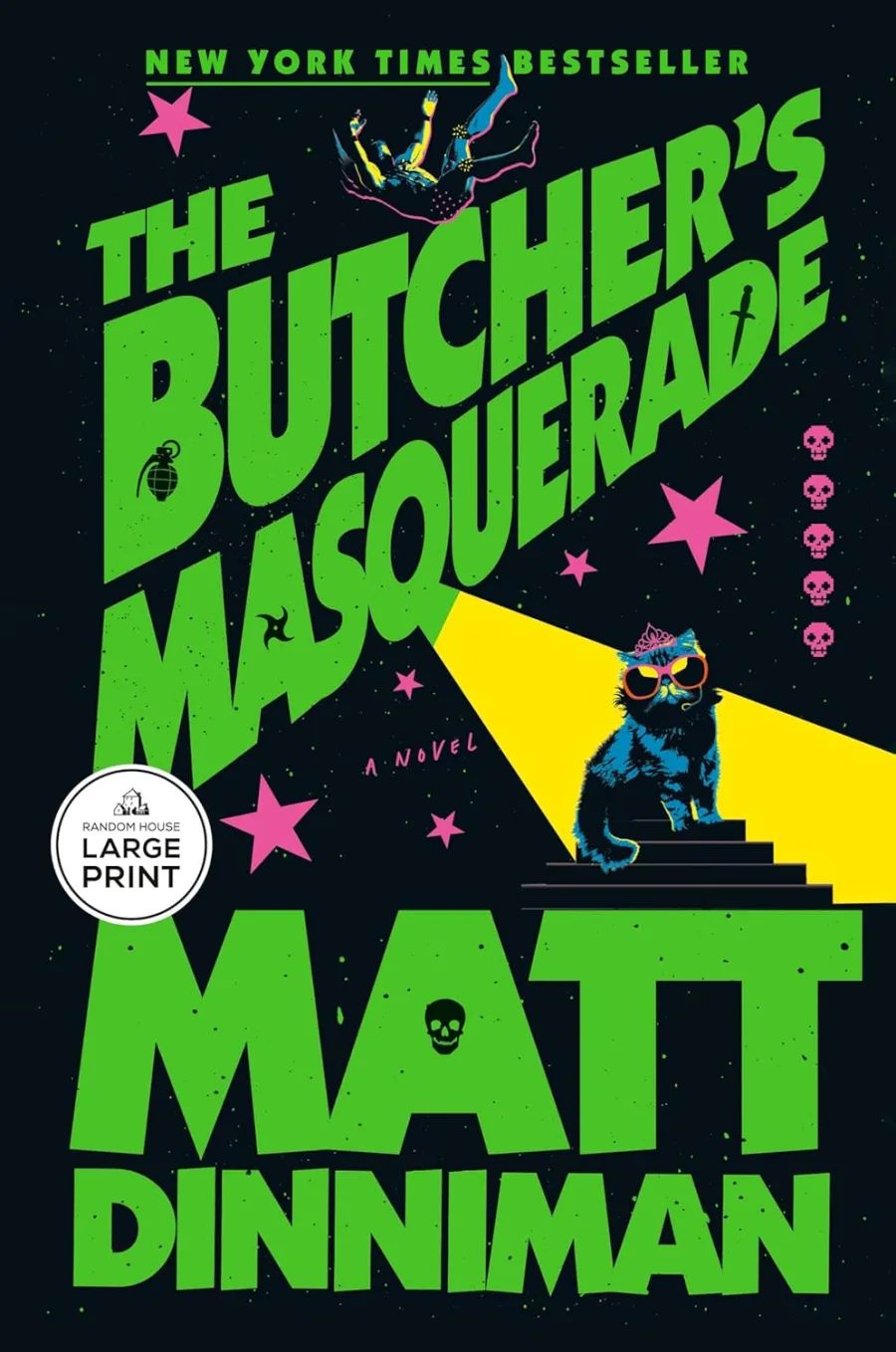
Download Cover Image
Do you want to download the full cover image for The Butcher's Masquerade (Dungeon Crawler Carl)?