
The Things We Never Say: A Novel
eBook
• 207 Pages
• USD 29.00
• English
• 9798217154760
No ratings yet
| Publisher | Random House |
|---|---|
| ISBN13 | 9798217154760 |
| ASIN/SKU | B0FSQ3W7BC |
| Book Format | eBook |
| Language | English |
| Pages | 207 |
| List Price | USD 29.00 |
| Publishing Date | 05/05/2026 |
| Book Code | BD00066526 |
Buy this Book
Amazon Stores
Ebook Stores
Other Stores
Discover The Things We Never Say: A Novel by Elizabeth Strout. This book is published by Random House in eBook format, ISBN 9798217154760, ASIN B0FSQ3W7BC, under Literature and Fiction, Contemporary Literary Fiction, Friendship Fiction.
Book Description
NEW YORK TIMES BESTSELLER • In this “profound, resplendent novel”* from Pulitzer Prize–winning, #1 New York Times bestselling author Elizabeth Strout, a chance incident sparks a powerful realization in a beloved teacher’s life
“Strout’s capacious empathy and rigorous attention to the nuances of human behavior and psychology are as evident as ever.”—The Boston Globe
“Artie Dam is someone you may never be able to forget.”—Financial Times*
Artie Dam is living a double life. He spends his days teaching history to eleventh graders, expanding their young minds, correcting their casual cruelties, and lending a kind word to those who need it most. He goes to holiday parties with his wife of three decades, makes small talk with neighbors, and, on weekends, takes his sailboat out on the beautiful Massachusetts Bay. He is, by all appearances, present and alive. But inside, Artie is plagued by feelings of isolation. He looks out at a world gone mad—at himself and the people around him—and turns a question over and over in his mind: How is it that we know so little about one another, even those closest to us?
And then, one day, Artie learns that life has been keeping a secret from him, one that threatens to upend his entire world. Once he learns it, he is forced to chart a new course, to reconsider the relationships he holds most dear—and to make peace with the mysteries at the heart of our existence.
Elizabeth Strout, as we have come to expect, delivers a moving exploration of the human condition—one that brims with compassion for each and every one of her indelible characters. With exquisite prose and profound insight, The Things We Never Say takes one man’s fears and loneliness and makes them universal. And in the same breath, captures the abiding love that sustains and holds us all.
“Strout’s capacious empathy and rigorous attention to the nuances of human behavior and psychology are as evident as ever.”—The Boston Globe
“Artie Dam is someone you may never be able to forget.”—Financial Times*
Artie Dam is living a double life. He spends his days teaching history to eleventh graders, expanding their young minds, correcting their casual cruelties, and lending a kind word to those who need it most. He goes to holiday parties with his wife of three decades, makes small talk with neighbors, and, on weekends, takes his sailboat out on the beautiful Massachusetts Bay. He is, by all appearances, present and alive. But inside, Artie is plagued by feelings of isolation. He looks out at a world gone mad—at himself and the people around him—and turns a question over and over in his mind: How is it that we know so little about one another, even those closest to us?
And then, one day, Artie learns that life has been keeping a secret from him, one that threatens to upend his entire world. Once he learns it, he is forced to chart a new course, to reconsider the relationships he holds most dear—and to make peace with the mysteries at the heart of our existence.
Elizabeth Strout, as we have come to expect, delivers a moving exploration of the human condition—one that brims with compassion for each and every one of her indelible characters. With exquisite prose and profound insight, The Things We Never Say takes one man’s fears and loneliness and makes them universal. And in the same breath, captures the abiding love that sustains and holds us all.
Author Biography
Elizabeth Strout is the author of the New York Times bestseller Olive Kitteridge, for which she was awarded the Pulitzer Prize; the national bestseller Abide with Me; and Amy and Isabelle, winner of the Los Angeles Times Art Seidenbaum Award and the Chicago Tribune Heartland Prize. She has also been a finalist for the PEN/Faulkner Award and the Orange Prize in London. She lives in Maine and New York City.
Editorial Reviews
“Let’s hope that this fine author continues steadily along her path, delivering unto her loyal readers story upon story, gift upon gift.”—The Guardian
“Strout’s capacious empathy and rigorous attention to the nuances of human behavior and psychology are as evident as ever in The Things We Never Say. She has always been unafraid to go to the darkest places in human experience, confronting hideous abuse, unfathomable suffering, and profound despair with unflinching honesty.”—The Boston Globe
“Strout has a signature ability to make me feel for her characters . . . in her careful, close observations, his depths become increasingly legible. You wish he were not experiencing this pain, but you understand where it is coming from . . . The result is a reading experience of both great warmth and great worry. I don’t know anyone else doing it quite like this today.”—Chicago Tribune
“This is a profound, resplendent novel that stares our present moment in the face while throwing a lifeboat to cling to in the storm.”—Financial Times
“Strout develops a rich story around the distance between people who think they’ve fostered a certain intimacy.”—Cultured
“The Pulitzer Prize–winning novelist unveils a fresh setting and troupe of characters that lifts her literary game with energized prose and gimlet-eyed insights.”—Time
“Strout’s masterful novel poses searching questions, yet ultimately gives readers hope.”—Shelf Awareness
“Strout masterfully explores her central themes (after a ‘lunatic’ former president is reelected, a clear reference to Trump, Artie feels like the ‘country was committing suicide’) and offers timeless observations, suggesting, for example, that her characters feel distant from those they love most because ‘to say anything real was to say things that nobody wanted to know.’”—Publishers Weekly
“Tantalizingly perceptive and compassionate . . . Strout fans will flock to her latest, thrilled to meet new characters in her always compelling fictional universe.”—Booklist, starred review
“‘Mostly we travel through life unsighted,’ he notes in this beautiful tale from Strout (Olive Kitteridge), my all-time favorite author, whose books are often at least partly about how authentic human connections are made by sharing our stories.”—AARP
“We’re all familiar with the concept of being alone in a crowd. But leave it to Pulitzer Prize winner Elizabeth Strout to find new dimensions to the feeling in this powerful new novel.”—Town & Country
“I always know I’m in steady hands when reading Elizabeth Strout, whether it’s a Lucy Barton book, or one from another of her multiverse. . . . Strout is consistent and satisfying: her writing is . . . always delightful, and illuminates the world in new, brighter colors with every book she writes.”—Literary Hub
“Strout’s capacious empathy and rigorous attention to the nuances of human behavior and psychology are as evident as ever in The Things We Never Say. She has always been unafraid to go to the darkest places in human experience, confronting hideous abuse, unfathomable suffering, and profound despair with unflinching honesty.”—The Boston Globe
“Strout has a signature ability to make me feel for her characters . . . in her careful, close observations, his depths become increasingly legible. You wish he were not experiencing this pain, but you understand where it is coming from . . . The result is a reading experience of both great warmth and great worry. I don’t know anyone else doing it quite like this today.”—Chicago Tribune
“This is a profound, resplendent novel that stares our present moment in the face while throwing a lifeboat to cling to in the storm.”—Financial Times
“Strout develops a rich story around the distance between people who think they’ve fostered a certain intimacy.”—Cultured
“The Pulitzer Prize–winning novelist unveils a fresh setting and troupe of characters that lifts her literary game with energized prose and gimlet-eyed insights.”—Time
“Strout’s masterful novel poses searching questions, yet ultimately gives readers hope.”—Shelf Awareness
“Strout masterfully explores her central themes (after a ‘lunatic’ former president is reelected, a clear reference to Trump, Artie feels like the ‘country was committing suicide’) and offers timeless observations, suggesting, for example, that her characters feel distant from those they love most because ‘to say anything real was to say things that nobody wanted to know.’”—Publishers Weekly
“Tantalizingly perceptive and compassionate . . . Strout fans will flock to her latest, thrilled to meet new characters in her always compelling fictional universe.”—Booklist, starred review
“‘Mostly we travel through life unsighted,’ he notes in this beautiful tale from Strout (Olive Kitteridge), my all-time favorite author, whose books are often at least partly about how authentic human connections are made by sharing our stories.”—AARP
“We’re all familiar with the concept of being alone in a crowd. But leave it to Pulitzer Prize winner Elizabeth Strout to find new dimensions to the feeling in this powerful new novel.”—Town & Country
“I always know I’m in steady hands when reading Elizabeth Strout, whether it’s a Lucy Barton book, or one from another of her multiverse. . . . Strout is consistent and satisfying: her writing is . . . always delightful, and illuminates the world in new, brighter colors with every book she writes.”—Literary Hub
Book Summary
Elizabeth Strout’s The Things We Never Say is a quiet, deeply emotional novel about loneliness, marriage, parenthood, friendship, secrecy, grief, and the strange distance that can exist between people who believe they know one another well. Published in 2026, the novel follows Artie Dam, a fifty-seven-year-old high-school history teacher living with his wife, Evie, in a coastal Massachusetts community. On the surface, Artie has the kind of life many people would consider successful and secure. He has a profession he loves, a comfortable home, a long marriage, a grown son, good friends, and a beautiful sailboat that allows him to escape onto Massachusetts Bay. Yet beneath this apparently ordinary life is an increasingly painful sense of isolation. Strout uses Artie's inner world to ask one of the novel's most important questions: how well can we ever really know another person, even someone we have loved for decades?
Artie is a particularly Strout-like protagonist because he is neither a conventional hero nor a tragic figure in the obvious sense. He is an ordinary man carrying extraordinary emotional weight. His students see him as a caring and dependable teacher. He notices their insecurities, tries to correct their casual cruelties, and believes in the value of history and education. His colleagues and friends also regard him warmly. At home, however, Artie increasingly feels separated from the people around him. His marriage to Evie has lasted for three decades, but emotional familiarity has not necessarily produced complete understanding. This distinction between being close to someone and truly knowing them becomes central to the novel. Artie senses that much of what matters most inside human beings remains hidden, often not because people deliberately want to deceive others, but because shame, fear, habit, and uncertainty make honesty difficult.
The title, The Things We Never Say, captures the emotional structure of the entire novel. Strout is interested in the truths that remain unspoken inside families and friendships. People often conceal the parts of themselves that they fear will change how others see them. Artie himself is full of thoughts and feelings that he cannot comfortably share. His loneliness becomes so severe that he begins contemplating suicide. His despair is especially painful because it exists alongside a life that looks perfectly normal from the outside. Strout therefore explores a form of loneliness that is not simply about being physically alone. A person can be surrounded by family, students, neighbors, and friends and still feel profoundly unseen.
Artie's emotional crisis is complicated by his fascination with the possibility of death. He remembers suicide and the way people sometimes reach a point where loneliness seems impossible to bear. His own thoughts become increasingly dark. Yet Strout does not turn his despair into melodrama. Instead, she examines it through small observations, memories, awkward conversations, and ordinary moments. This understated approach is one of the novel's greatest strengths. Artie's suffering is not presented as something spectacular. It grows quietly, almost invisibly, which makes it feel frighteningly recognizable. A person can continue going to work, attending parties, talking to neighbors, and performing all the routines of everyday life while privately struggling with thoughts that nobody else knows about.
A significant turning point comes when Artie experiences a dangerous incident involving his sailboat. His brush with death changes his relationship with life. The experience does not magically solve his problems, but it makes him reconsider what he has been taking for granted. Survival creates a new awareness of the fragile boundary between ordinary existence and disappearance. In this sense, the sea becomes more than a setting. It reflects Artie's emotional condition: beautiful, open, unpredictable, and capable of both freedom and danger. His time on the water gives him solitude, but solitude can either restore a person or deepen their sense of isolation.
The novel then introduces an even more destabilizing revelation through Artie's son, Rob. Rob, who is twenty-seven, tells Artie that a DNA test has revealed that Artie is not his biological father. This discovery dramatically changes the meaning of Artie's family history. For years, Artie has understood his relationship with Rob as that of father and son. Suddenly, biology introduces a question into a relationship that seemed settled. The revelation forces both men to confront the difference between biological connection and lived love. The novel does not reduce fatherhood to genetics. Instead, it asks what actually makes someone a parent: blood, memory, responsibility, affection, sacrifice, or the years two people have spent believing themselves to be family.
Rob's revelation also brings the novel's central concern with secrets into sharper focus. Artie must now reconsider what he knows about his own marriage and the past shared with Evie. The discovery raises questions that cannot easily be answered without causing pain. Artie must decide what to do with information that has the power to destroy the emotional structure of his family. Telling the truth may be morally necessary, but truth can also wound. Remaining silent may protect the people he loves in the short term, but it can also perpetuate a deception. Strout refuses to provide an easy moral formula. Instead, she examines the uncomfortable territory between honesty and compassion.
This conflict makes Evie an important presence even when the novel is primarily concerned with Artie's internal journey. Their marriage represents the complicated reality of long-term love. Thirty years together can create profound intimacy, but it can also create routines that allow difficult subjects to remain untouched. Couples can become experts at living beside each other without necessarily sharing every important truth. Artie begins to understand that marriage is not simply about what two people know; it is also about what they choose not to ask, what they are afraid to say, and what they imagine they understand.
Strout's treatment of family is therefore neither sentimental nor cynical. She recognizes that people can hurt one another while still loving one another deeply. They can lie for selfish reasons, but they can also remain silent because they are frightened of destroying something precious. They can misunderstand one another for years without being cruel people. This is where the novel's humanity becomes especially powerful. Strout does not divide her characters into innocent people and villains. Instead, she presents them as complicated human beings who make mistakes while trying to survive emotionally.
Friendship provides another important counterweight to Artie's loneliness. His relationships outside his immediate family show that intimacy can sometimes arrive from unexpected places. The novel suggests that people need witnesses to their lives—people who can hear the things that cannot easily be said elsewhere. Yet even friendship has boundaries. Every person carries an interior world that remains partly inaccessible to everyone else. The novel's emotional force comes from recognizing this limitation without concluding that human connection is therefore pointless.
The broader American political climate also enters Artie's private crisis. The novel is set against the upheaval surrounding the 2024 presidential election, and Artie's reactions to the political world become part of his growing sense that his country and society are coming apart. Strout uses this contemporary setting not merely to make the novel topical but to connect private loneliness with public anxiety. Artie looks at the divisions around him and sees another version of the same problem he experiences personally: people increasingly seem unable or unwilling to understand one another. The political world becomes an extension of the novel's larger concern with failed communication and emotional estrangement.
One of the most compelling aspects of The Things We Never Say is the way Strout connects individual suffering with universal human experience. Artie's problems are specific to him, but his questions are much larger. Why do people hide important truths? Why can someone feel lonely while being loved? Why do family relationships sometimes contain enormous gaps in understanding? Can we ever fully know another person? And when the truth finally emerges, does knowing it bring freedom or create another kind of pain?
The novel also examines grief as something that does not necessarily disappear with time. Instead, grief can move quietly through decades, attaching itself to memories, relationships, regrets, and choices. Strout is especially interested in the way the past remains active inside the present. Characters may believe they have moved beyond an old wound, only to discover that it has been shaping their behavior all along. This gives the book a strong sense of emotional continuity: the present is never entirely separate from what happened years earlier.
Stylistically, Strout remains remarkably restrained. Her prose is lucid and apparently simple, but the simplicity is deceptive. She pays close attention to small gestures, half-finished conversations, private thoughts, memories, and moments when a character suddenly sees something differently. Rather than relying on dramatic speeches or elaborate descriptions, she lets emotional meaning accumulate gradually. This understated style is one reason the novel can feel so intimate. The reader is not constantly told what to feel. Instead, Strout allows ordinary details to reveal the emotional truth underneath them.
Ultimately, The Things We Never Say is a novel about the distance between appearance and reality. Artie appears to have a good life, but privately he is struggling. A marriage can appear stable while containing secrets. A father and son can be deeply connected without sharing biological ancestry. Friends can care for one another while remaining partly mysterious. A country can appear ordinary on the surface while people underneath are frightened, divided, and grieving. Strout's great achievement is to show that none of these contradictions necessarily cancel out the others.
The novel's deepest message is not that secrets are always destructive or that complete honesty can solve every problem. Instead, Strout suggests that human beings live with an unavoidable tension between what we know, what we imagine, and what we never say. Real intimacy requires some willingness to cross that distance, even though doing so can be frightening. Artie's journey becomes, therefore, not simply a story about discovering a family secret but about learning how fragile and precious human connection really is.
By the conclusion, the novel offers something more hopeful than its premise might suggest. Artie's confrontation with loneliness, mortality, family uncertainty, and hidden truths does not produce a perfect resolution. Life remains mysterious, relationships remain complicated, and people remain capable of misunderstanding one another. Yet there is also the possibility of renewal. Love can survive revelations. Relationships can be reimagined. A person who has felt invisible can begin to recognize the connections that have been present all along.
For readers searching for an Elizabeth Strout novel about loneliness, family secrets, marriage, grief, and the complexities of ordinary American life, The Things We Never Say is a deeply reflective choice. It continues Strout's long-standing interest in the emotional lives of seemingly ordinary people while moving into a new Massachusetts coastal setting and introducing a fresh cast of characters. The book is ultimately less interested in providing easy answers than in encouraging readers to look more carefully at the people around them. Its most enduring insight is simple but profound: everyone carries a private story, and sometimes the greatest distance between two people is created not by hatred or indifference, but by the things neither person has found the courage—or the opportunity—to say.
Artie is a particularly Strout-like protagonist because he is neither a conventional hero nor a tragic figure in the obvious sense. He is an ordinary man carrying extraordinary emotional weight. His students see him as a caring and dependable teacher. He notices their insecurities, tries to correct their casual cruelties, and believes in the value of history and education. His colleagues and friends also regard him warmly. At home, however, Artie increasingly feels separated from the people around him. His marriage to Evie has lasted for three decades, but emotional familiarity has not necessarily produced complete understanding. This distinction between being close to someone and truly knowing them becomes central to the novel. Artie senses that much of what matters most inside human beings remains hidden, often not because people deliberately want to deceive others, but because shame, fear, habit, and uncertainty make honesty difficult.
The title, The Things We Never Say, captures the emotional structure of the entire novel. Strout is interested in the truths that remain unspoken inside families and friendships. People often conceal the parts of themselves that they fear will change how others see them. Artie himself is full of thoughts and feelings that he cannot comfortably share. His loneliness becomes so severe that he begins contemplating suicide. His despair is especially painful because it exists alongside a life that looks perfectly normal from the outside. Strout therefore explores a form of loneliness that is not simply about being physically alone. A person can be surrounded by family, students, neighbors, and friends and still feel profoundly unseen.
Artie's emotional crisis is complicated by his fascination with the possibility of death. He remembers suicide and the way people sometimes reach a point where loneliness seems impossible to bear. His own thoughts become increasingly dark. Yet Strout does not turn his despair into melodrama. Instead, she examines it through small observations, memories, awkward conversations, and ordinary moments. This understated approach is one of the novel's greatest strengths. Artie's suffering is not presented as something spectacular. It grows quietly, almost invisibly, which makes it feel frighteningly recognizable. A person can continue going to work, attending parties, talking to neighbors, and performing all the routines of everyday life while privately struggling with thoughts that nobody else knows about.
A significant turning point comes when Artie experiences a dangerous incident involving his sailboat. His brush with death changes his relationship with life. The experience does not magically solve his problems, but it makes him reconsider what he has been taking for granted. Survival creates a new awareness of the fragile boundary between ordinary existence and disappearance. In this sense, the sea becomes more than a setting. It reflects Artie's emotional condition: beautiful, open, unpredictable, and capable of both freedom and danger. His time on the water gives him solitude, but solitude can either restore a person or deepen their sense of isolation.
The novel then introduces an even more destabilizing revelation through Artie's son, Rob. Rob, who is twenty-seven, tells Artie that a DNA test has revealed that Artie is not his biological father. This discovery dramatically changes the meaning of Artie's family history. For years, Artie has understood his relationship with Rob as that of father and son. Suddenly, biology introduces a question into a relationship that seemed settled. The revelation forces both men to confront the difference between biological connection and lived love. The novel does not reduce fatherhood to genetics. Instead, it asks what actually makes someone a parent: blood, memory, responsibility, affection, sacrifice, or the years two people have spent believing themselves to be family.
Rob's revelation also brings the novel's central concern with secrets into sharper focus. Artie must now reconsider what he knows about his own marriage and the past shared with Evie. The discovery raises questions that cannot easily be answered without causing pain. Artie must decide what to do with information that has the power to destroy the emotional structure of his family. Telling the truth may be morally necessary, but truth can also wound. Remaining silent may protect the people he loves in the short term, but it can also perpetuate a deception. Strout refuses to provide an easy moral formula. Instead, she examines the uncomfortable territory between honesty and compassion.
This conflict makes Evie an important presence even when the novel is primarily concerned with Artie's internal journey. Their marriage represents the complicated reality of long-term love. Thirty years together can create profound intimacy, but it can also create routines that allow difficult subjects to remain untouched. Couples can become experts at living beside each other without necessarily sharing every important truth. Artie begins to understand that marriage is not simply about what two people know; it is also about what they choose not to ask, what they are afraid to say, and what they imagine they understand.
Strout's treatment of family is therefore neither sentimental nor cynical. She recognizes that people can hurt one another while still loving one another deeply. They can lie for selfish reasons, but they can also remain silent because they are frightened of destroying something precious. They can misunderstand one another for years without being cruel people. This is where the novel's humanity becomes especially powerful. Strout does not divide her characters into innocent people and villains. Instead, she presents them as complicated human beings who make mistakes while trying to survive emotionally.
Friendship provides another important counterweight to Artie's loneliness. His relationships outside his immediate family show that intimacy can sometimes arrive from unexpected places. The novel suggests that people need witnesses to their lives—people who can hear the things that cannot easily be said elsewhere. Yet even friendship has boundaries. Every person carries an interior world that remains partly inaccessible to everyone else. The novel's emotional force comes from recognizing this limitation without concluding that human connection is therefore pointless.
The broader American political climate also enters Artie's private crisis. The novel is set against the upheaval surrounding the 2024 presidential election, and Artie's reactions to the political world become part of his growing sense that his country and society are coming apart. Strout uses this contemporary setting not merely to make the novel topical but to connect private loneliness with public anxiety. Artie looks at the divisions around him and sees another version of the same problem he experiences personally: people increasingly seem unable or unwilling to understand one another. The political world becomes an extension of the novel's larger concern with failed communication and emotional estrangement.
One of the most compelling aspects of The Things We Never Say is the way Strout connects individual suffering with universal human experience. Artie's problems are specific to him, but his questions are much larger. Why do people hide important truths? Why can someone feel lonely while being loved? Why do family relationships sometimes contain enormous gaps in understanding? Can we ever fully know another person? And when the truth finally emerges, does knowing it bring freedom or create another kind of pain?
The novel also examines grief as something that does not necessarily disappear with time. Instead, grief can move quietly through decades, attaching itself to memories, relationships, regrets, and choices. Strout is especially interested in the way the past remains active inside the present. Characters may believe they have moved beyond an old wound, only to discover that it has been shaping their behavior all along. This gives the book a strong sense of emotional continuity: the present is never entirely separate from what happened years earlier.
Stylistically, Strout remains remarkably restrained. Her prose is lucid and apparently simple, but the simplicity is deceptive. She pays close attention to small gestures, half-finished conversations, private thoughts, memories, and moments when a character suddenly sees something differently. Rather than relying on dramatic speeches or elaborate descriptions, she lets emotional meaning accumulate gradually. This understated style is one reason the novel can feel so intimate. The reader is not constantly told what to feel. Instead, Strout allows ordinary details to reveal the emotional truth underneath them.
Ultimately, The Things We Never Say is a novel about the distance between appearance and reality. Artie appears to have a good life, but privately he is struggling. A marriage can appear stable while containing secrets. A father and son can be deeply connected without sharing biological ancestry. Friends can care for one another while remaining partly mysterious. A country can appear ordinary on the surface while people underneath are frightened, divided, and grieving. Strout's great achievement is to show that none of these contradictions necessarily cancel out the others.
The novel's deepest message is not that secrets are always destructive or that complete honesty can solve every problem. Instead, Strout suggests that human beings live with an unavoidable tension between what we know, what we imagine, and what we never say. Real intimacy requires some willingness to cross that distance, even though doing so can be frightening. Artie's journey becomes, therefore, not simply a story about discovering a family secret but about learning how fragile and precious human connection really is.
By the conclusion, the novel offers something more hopeful than its premise might suggest. Artie's confrontation with loneliness, mortality, family uncertainty, and hidden truths does not produce a perfect resolution. Life remains mysterious, relationships remain complicated, and people remain capable of misunderstanding one another. Yet there is also the possibility of renewal. Love can survive revelations. Relationships can be reimagined. A person who has felt invisible can begin to recognize the connections that have been present all along.
For readers searching for an Elizabeth Strout novel about loneliness, family secrets, marriage, grief, and the complexities of ordinary American life, The Things We Never Say is a deeply reflective choice. It continues Strout's long-standing interest in the emotional lives of seemingly ordinary people while moving into a new Massachusetts coastal setting and introducing a fresh cast of characters. The book is ultimately less interested in providing easy answers than in encouraging readers to look more carefully at the people around them. Its most enduring insight is simple but profound: everyone carries a private story, and sometimes the greatest distance between two people is created not by hatred or indifference, but by the things neither person has found the courage—or the opportunity—to say.
Sample Chapters
Sample Chapters will be added soon…
Reader Reviews
No reviews yet.
The Things We Never Say: A Novel
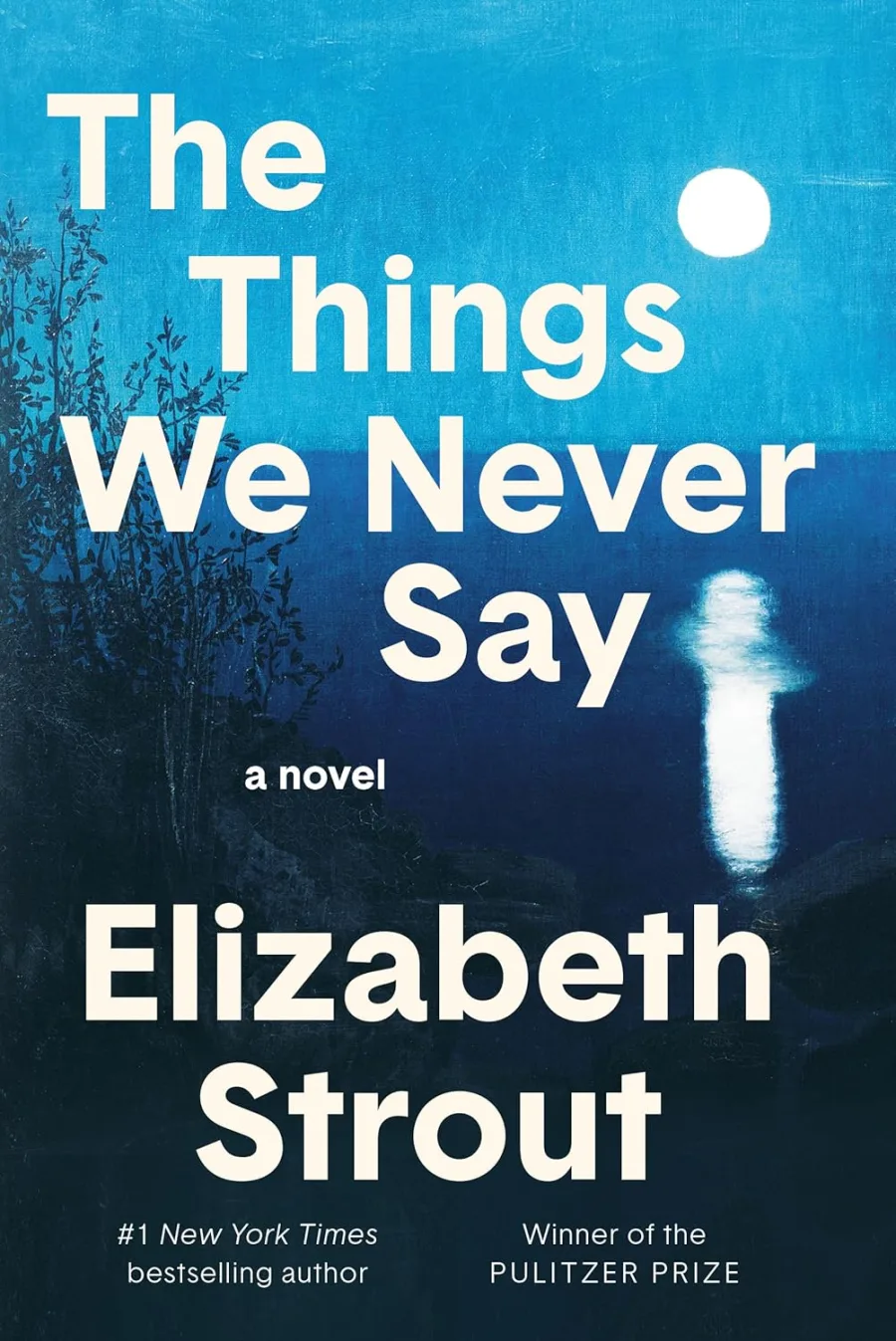
Download Cover Image
Do you want to download the full cover image for The Things We Never Say: A Novel?