
A World Appears: A Journey into Consciousness
Hardcover
• 320 Pages
• USD 31.99
• English
• 9781984881991
No ratings yet
| Publisher | Penguin Press |
|---|---|
| ISBN13 | 9781984881991 |
| ASIN/SKU | 198488199X |
| Book Format | Hardcover |
| Language | English |
| Pages | 320 |
| List Price | USD 31.99 |
| Publishing Date | 24/02/2026 |
| Dimensions | 6.46 x 1.12 x 9.49 inches |
| Weight | 1.25 pounds |
| Book Code | BD00066580 |
Buy this Book
Amazon Stores
Ebook Stores
Other Stores
Discover A World Appears: A Journey into Consciousness by Michael Pollan. This book is published by Penguin Press in Hardcover format, ISBN 9781984881991, ASIN 198488199X, under Politics and Social Sciences, Consciousness and Thought Philosophy, Scientist Biographies.
Book Description
The Instant New York Times Bestseller
"Pollan’s real genius—the word is not too strong—remains intact. That is his uncanny ability to scent the direction in which the culture is headed. He did it with food and psychedelics, and now, though A World Appears focuses on AI only intermittently, he has done it again." —Charles Finch, The Atlantic
From the #1 New York Times bestselling author of How to Change Your Mind, a panoptic exploration of consciousness—what it is, who has it, and why—and a meditation on the essence of our humanity
When it comes to the phenomenon that is consciousness, there is one point on which scientists, philosophers, and artists all agree: it feels like something to be us. Yet the fact that we have subjective experience of the world remains one of nature’s greatest mysteries. How is it that our mental operations are accompanied by feelings, thoughts, and a sense of self? What would a scientific investigation of our inner life look like, when we have as little distance and perspective on it as fish do of the sea? In A World Appears, Michael Pollan traces the unmapped continent that is consciousness, bringing radically different perspectives—scientific, philosophical, literary, spiritual and psychedelic—to see what each can teach us about this central fact of life.
When neuroscientists began studying consciousness in the early 1990s, they sought to explain how and why three pounds of spongy gray matter could generate a subjective point of view—assuming that the brain is the source of our perceived reality. Pollan takes us to the cutting edge of the field, where scientists are entertaining more radical (and less materialist) theories of consciousness. He introduces us to “plant neurobiologists” searching for the first flicker of consciousness in plants, scientists striving to engineer feelings into AI, and psychologists and novelists seeking to capture the felt experience of our slippery stream of consciousness.
In Pollan’s dazzling exploration of consciousness, he discovers a world far deeper and stranger than our everyday reality. Eye-opening and mind-expanding, A World Appears takes us into the laboratories of our own minds, ultimately showing us how we might make better use of the gift of awareness to more meaningfully connect with the world and our deepest selves.
"Pollan’s real genius—the word is not too strong—remains intact. That is his uncanny ability to scent the direction in which the culture is headed. He did it with food and psychedelics, and now, though A World Appears focuses on AI only intermittently, he has done it again." —Charles Finch, The Atlantic
From the #1 New York Times bestselling author of How to Change Your Mind, a panoptic exploration of consciousness—what it is, who has it, and why—and a meditation on the essence of our humanity
When it comes to the phenomenon that is consciousness, there is one point on which scientists, philosophers, and artists all agree: it feels like something to be us. Yet the fact that we have subjective experience of the world remains one of nature’s greatest mysteries. How is it that our mental operations are accompanied by feelings, thoughts, and a sense of self? What would a scientific investigation of our inner life look like, when we have as little distance and perspective on it as fish do of the sea? In A World Appears, Michael Pollan traces the unmapped continent that is consciousness, bringing radically different perspectives—scientific, philosophical, literary, spiritual and psychedelic—to see what each can teach us about this central fact of life.
When neuroscientists began studying consciousness in the early 1990s, they sought to explain how and why three pounds of spongy gray matter could generate a subjective point of view—assuming that the brain is the source of our perceived reality. Pollan takes us to the cutting edge of the field, where scientists are entertaining more radical (and less materialist) theories of consciousness. He introduces us to “plant neurobiologists” searching for the first flicker of consciousness in plants, scientists striving to engineer feelings into AI, and psychologists and novelists seeking to capture the felt experience of our slippery stream of consciousness.
In Pollan’s dazzling exploration of consciousness, he discovers a world far deeper and stranger than our everyday reality. Eye-opening and mind-expanding, A World Appears takes us into the laboratories of our own minds, ultimately showing us how we might make better use of the gift of awareness to more meaningfully connect with the world and our deepest selves.
Author Biography
Michael Pollan is the author of ten books, including This Is Your Mind on Plants, How to Change Your Mind, Cooked, Food Rules, In Defense of Food, The Omnivore’s Dilemma, and The Botany of Desire, all of which were New York Times bestsellers. He is also the author of the audiobook Caffeine. A Guggenheim and Radcliffe Fellow, Pollan has taught writing at the University of California, Berkeley, and at Harvard University. In 2010, Time named him one of the one hundred most influential people in the world.
Editorial Reviews
“A coherent explanation of consciousness eludes modern science. In A World Appears, Michael Pollan dives headfirst into the mystery . . . He presents a captivating exploration, one that is highly personal and sensitive. Unlike with a book that simply reports the state of the consciousness field, we receive the story through the sharp mind of a writer and the questioning heart of a seeker . . . He confronts questions about the mind not as a neuroscience expert, but as an explorer, interviewing dozens of leading voices in science and proffering a rich survey of thinking in the field . . . There are, by some counts, 22 theories of consciousness, and Pollan examines many of them, always with a winning combination of awe and skepticism . . . A World Appears is highly pleasurable to read.” —David Eagleman, The New York Times Book Review
“Pollan’s real genius—the word is not too strong—remains intact. That is his uncanny ability to scent the direction in which the culture is headed. He did it with food and psychedelics, and now, though A World Appears focuses on AI only intermittently, he has done it again. By patiently mapping the problem that many of the creators of large language models claim, either cynically or foolishly, to be on the verge of solving, he brings this technology—which has come to dominate recent headlines, financial markets, and political debates—into a far more realistic light . . . A World Appears, with its admirable syncretic blend of empiricism and wonder before the limits of empiricism, steals back for humanity some of the sensation of miraculousness that this era has largely outsourced to technology.” —Charles Finch, The Atlantic
“Like all of Pollan’s books, in his latest work, the reader goes on a voyage of discovery with him as he interviews leading scientists and looks to literature, Indigenous epistemologies, psychology and even plants themselves for answers to questions that may not have answers. Along the way, he realizes that the ethical significance of his investigation is much greater than he first imagined. What consciousness is (and who has it), he writes, should at least give us pause as we consider how governments and corporations extract resources from arguably sentient ecosystems. He examines how careful we need to be as we develop AIs that may hold the capacity for their own suffering, whether we should be selling our own awareness to social media platforms in exchange for entertainment, how we treat animals and much more.” —The Los Angeles Times
"Mr. Pollan has a journalist’s eye for the surprising and intriguing . . . Well-written, richly researched and a pleasure to read . . . A World Appears leaves you with a universe of questions and theories. Consciousness is about information processing, says one researcher. Or perhaps it is a way for organisms to choose between competing priorities, others assert. All of this is, by any standard, quite heavy stuff. It is a mark of Mr. Pollan’s skill as a writer that
“Pollan’s real genius—the word is not too strong—remains intact. That is his uncanny ability to scent the direction in which the culture is headed. He did it with food and psychedelics, and now, though A World Appears focuses on AI only intermittently, he has done it again. By patiently mapping the problem that many of the creators of large language models claim, either cynically or foolishly, to be on the verge of solving, he brings this technology—which has come to dominate recent headlines, financial markets, and political debates—into a far more realistic light . . . A World Appears, with its admirable syncretic blend of empiricism and wonder before the limits of empiricism, steals back for humanity some of the sensation of miraculousness that this era has largely outsourced to technology.” —Charles Finch, The Atlantic
“Like all of Pollan’s books, in his latest work, the reader goes on a voyage of discovery with him as he interviews leading scientists and looks to literature, Indigenous epistemologies, psychology and even plants themselves for answers to questions that may not have answers. Along the way, he realizes that the ethical significance of his investigation is much greater than he first imagined. What consciousness is (and who has it), he writes, should at least give us pause as we consider how governments and corporations extract resources from arguably sentient ecosystems. He examines how careful we need to be as we develop AIs that may hold the capacity for their own suffering, whether we should be selling our own awareness to social media platforms in exchange for entertainment, how we treat animals and much more.” —The Los Angeles Times
"Mr. Pollan has a journalist’s eye for the surprising and intriguing . . . Well-written, richly researched and a pleasure to read . . . A World Appears leaves you with a universe of questions and theories. Consciousness is about information processing, says one researcher. Or perhaps it is a way for organisms to choose between competing priorities, others assert. All of this is, by any standard, quite heavy stuff. It is a mark of Mr. Pollan’s skill as a writer that
Book Summary
Book Summary will be added soon…
Sample Chapters
Sample Chapters will be added soon…
Reader Reviews
No reviews yet.
A World Appears: A Journey into Consciousness
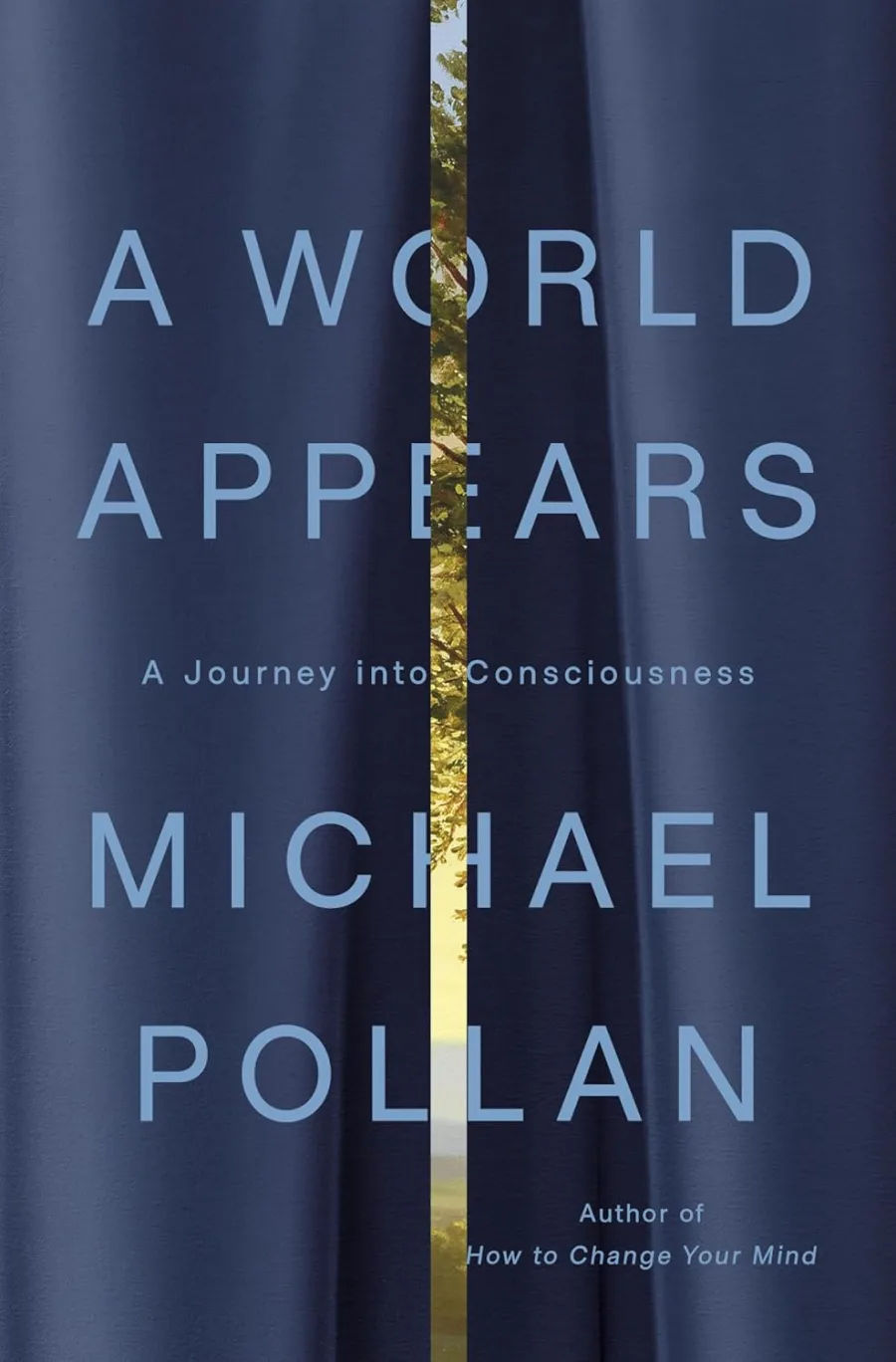
Download Cover Image
Do you want to download the full cover image for A World Appears: A Journey into Consciousness?