
The Art of Intentional Living: 101 Lessons from History’s Greatest Minds
Paperback
• 229 Pages
• USD 14.99
• English
• 9798198664234
No ratings yet
| Publisher | Independently Published |
|---|---|
| ISBN13 | 9798198664234 |
| ASIN/SKU | B0H32QRKLZ |
| Book Format | Paperback |
| Language | English |
| Pages | 229 |
| List Price | USD 14.99 |
| Publishing Date | 26/05/2026 |
| Dimensions | 6 x 0.52 x 9 inches |
| Weight | 13.1 ounces |
| Book Code | BD00066759 |
Buy this Book
Amazon Stores
Ebook Stores
Other Stores
Discover The Art of Intentional Living: 101 Lessons from History’s Greatest Minds by Connect With GROWTH. This book is published by Independently Published in Paperback format, ISBN 9798198664234, ASIN B0H32QRKLZ, under Self-Help, Happiness Self-Help, Motivational Self-Help.
Book Description
Most people exist. Very few actually live.
Marcus Aurelius knew it. Buddha knew it. So did Nietzsche, Rumi, and Einstein.
They lived thousands of years apart, on different continents, speaking different languages. And yet they kept arriving at the same conclusions. Again and again. When the greatest minds in history independently reach the same truths, you're not looking at opinion. You're looking at wisdom that has survived the test of time.
The Art of Intentional Living distills that wisdom into 101 lessons across eight chapters: waking up, knowing yourself, being present, accepting reality, choosing your values, acting with purpose, building deep relationships, and facing death without regret. Each lesson short enough to read in minutes. The right ones will stay with you forever.
This is not a self-help book. It is a direct conversation with the wisest humans who ever lived, and an honest reckoning with the only question that will matter at the end of your life:
Did I spend my time the way I actually wanted to, or the way everyone else expected me to?
This book helps you answer it.
Marcus Aurelius knew it. Buddha knew it. So did Nietzsche, Rumi, and Einstein.
They lived thousands of years apart, on different continents, speaking different languages. And yet they kept arriving at the same conclusions. Again and again. When the greatest minds in history independently reach the same truths, you're not looking at opinion. You're looking at wisdom that has survived the test of time.
The Art of Intentional Living distills that wisdom into 101 lessons across eight chapters: waking up, knowing yourself, being present, accepting reality, choosing your values, acting with purpose, building deep relationships, and facing death without regret. Each lesson short enough to read in minutes. The right ones will stay with you forever.
This is not a self-help book. It is a direct conversation with the wisest humans who ever lived, and an honest reckoning with the only question that will matter at the end of your life:
Did I spend my time the way I actually wanted to, or the way everyone else expected me to?
This book helps you answer it.
Author Biography
GROWTH™ (@connectwithgrowth) is one of the world's most-followed personal development platforms, with millions of followers and consistently reaching 100+ million views per month on YouTube alone.
The mission has always been simple: study what the greatest minds actually said about how to live. From ancient philosophers to the most successful people alive today. Find the patterns. Extract the wisdom. And bring it to the world.
Whether in video or in book form, that is what GROWTH™ does.
The mission has always been simple: study what the greatest minds actually said about how to live. From ancient philosophers to the most successful people alive today. Find the patterns. Extract the wisdom. And bring it to the world.
Whether in video or in book form, that is what GROWTH™ does.
Editorial Reviews
Editorial Reviews will be added soon…
Book Summary
The Art of Intentional Living is not a conventional self-help book that promises overnight success or quick fixes. Instead, it is a thoughtful collection of 101 concise lessons inspired by some of history's greatest philosophers, scientists, spiritual teachers, writers, and leaders. Drawing wisdom from figures such as Marcus Aurelius, Buddha, Socrates, Seneca, Rumi, Nietzsche, Einstein, Viktor Frankl, and many others, the book encourages readers to stop living on autopilot and begin making conscious, meaningful choices every day. The lessons are organized into eight broad themes that take readers on a journey from self-awareness to purposeful action and ultimately to living a life without regret.
The central message of the book is simple yet profound: most people spend their lives reacting to circumstances rather than intentionally creating the life they truly desire. Society constantly pulls us toward external expectations—career success, wealth, social approval, and endless busyness. In chasing these goals, many people forget to ask an essential question: Am I living according to my own values, or according to someone else's expectations? The authors argue that a meaningful life begins when we become conscious of this question and allow it to guide our decisions.
The opening section focuses on waking up. Here, waking up does not refer merely to becoming physically awake but to becoming mentally and emotionally aware. Many people move through life without questioning their routines, habits, or beliefs. The book urges readers to pause and examine whether the lives they are living truly reflect what they value. Through ideas inspired by ancient Stoicism and Eastern philosophy, it explains that awareness is the first step toward freedom. Once we notice how our minds operate, we gain the ability to choose our responses rather than simply reacting automatically.
The next group of lessons explores knowing yourself, a principle that has echoed through philosophy for thousands of years. Self-knowledge is presented as the foundation of every meaningful decision. Readers are encouraged to honestly examine their strengths, weaknesses, fears, desires, and motivations. The book reminds us that personal growth is impossible without self-awareness. Instead of pretending to be perfect, we must become willing to confront our flaws with humility and compassion. Accepting ourselves honestly allows us to continue improving without being controlled by shame or insecurity.
Another major theme is living in the present moment. Modern life constantly distracts us through technology, endless information, and worries about the future. Borrowing insights from Buddhism, mindfulness, and Stoic philosophy, the book teaches that peace is found not by escaping reality but by giving full attention to the present. Everyday experiences—sharing a meal, having a conversation, completing ordinary work, or simply observing nature—become more meaningful when we engage with them completely. Happiness is shown to arise less from extraordinary achievements than from learning to appreciate ordinary moments.
The book also devotes considerable attention to accepting reality. Many forms of suffering, it argues, come not from events themselves but from resisting what cannot be changed. Stoic thinkers like Marcus Aurelius and Epictetus remind readers that while external circumstances are often beyond our control, our attitudes and actions remain our own. By accepting uncertainty, setbacks, aging, and even failure as natural parts of life, we conserve emotional energy for the things we can actually influence. Acceptance is not portrayed as surrender but as the beginning of wise action.
One of the strongest sections focuses on values and purpose. Rather than encouraging readers to chase success as defined by society, the book asks them to identify what truly matters to them personally. Purpose is presented not as a single grand mission but as a series of daily choices that align with deeply held values. Integrity means behaving consistently with those values even when doing so is inconvenient or unpopular. Whether in work, family, or community, a meaningful life is built through countless small decisions rather than one dramatic moment.
Closely connected to purpose is the importance of habit and discipline. The book explains that lasting change rarely comes from sudden bursts of motivation. Instead, it emerges from small actions repeated consistently over time. Great achievements are simply the visible results of invisible routines practiced every day. Readers are encouraged to build habits that support their long-term goals while eliminating behaviors that quietly consume time and attention. Discipline is described not as punishment but as a form of self-respect that allows people to become the individuals they aspire to be.
Relationships form another essential pillar of intentional living. The authors argue that no amount of personal success can replace genuine human connection. Drawing upon ideas from philosophers, psychologists, and spiritual teachers, the book emphasizes empathy, kindness, forgiveness, and vulnerability. True friendships require honesty and mutual care rather than convenience. Likewise, healthy communities are built when individuals recognize that their well-being is connected to the well-being of others. Instead of viewing independence as complete self-sufficiency, the book celebrates interdependence and meaningful relationships as sources of strength.
The book also examines suffering, resilience, and courage. Every life contains disappointment, grief, uncertainty, and failure. Rather than avoiding pain, readers are encouraged to learn from it. Viktor Frankl's philosophy of finding meaning even in hardship appears alongside Stoic teachings about endurance and modern ideas about growth through adversity. Difficult experiences often become the moments that reveal our deepest strengths and reshape our priorities. Courage is portrayed not as the absence of fear but as choosing to move forward despite it.
A recurring message throughout the 101 lessons is the importance of simplicity. Modern culture often equates success with accumulation—more possessions, more achievements, more recognition. This book proposes the opposite. Freedom frequently comes from needing less rather than acquiring more. By simplifying our lives, reducing unnecessary distractions, and focusing on what truly matters, we create space for creativity, relationships, reflection, and joy. The richest life is not necessarily the busiest one.
Perhaps the most powerful section is devoted to mortality. Rather than treating death as a frightening subject to avoid, the authors present it as life's greatest teacher. Remembering that our time is limited encourages us to stop postponing meaningful conversations, neglected dreams, and acts of kindness. Awareness of mortality sharpens our appreciation of the present and helps us distinguish between what is truly important and what merely feels urgent. A meaningful life is measured less by its length than by the intention with which it is lived.
Throughout the book, the lessons remain practical and accessible. Each chapter is brief enough to read in a few minutes, making it easy for readers to reflect on one idea at a time. Although the wisdom comes from thinkers separated by centuries, cultures, and philosophies, the authors demonstrate remarkable similarities among their teachings. Whether discussing Stoicism, Buddhism, existentialism, psychology, or literature, the same enduring principles repeatedly emerge: know yourself, focus on what you can control, live according to your values, cultivate meaningful relationships, embrace continuous learning, and make peace with life's impermanence.
Ultimately, The Art of Intentional Living serves as both a philosophical guide and a practical companion for everyday life. It reminds readers that fulfillment is not found by chasing endless external achievements but by making deliberate choices that reflect who they truly are. The book invites us to become active authors of our own lives instead of passive participants, showing that a life of purpose is created one intentional decision at a time. Its greatest lesson is that while we cannot control every circumstance, we always have the freedom to choose how we think, how we act, and what kind of person we become.
The central message of the book is simple yet profound: most people spend their lives reacting to circumstances rather than intentionally creating the life they truly desire. Society constantly pulls us toward external expectations—career success, wealth, social approval, and endless busyness. In chasing these goals, many people forget to ask an essential question: Am I living according to my own values, or according to someone else's expectations? The authors argue that a meaningful life begins when we become conscious of this question and allow it to guide our decisions.
The opening section focuses on waking up. Here, waking up does not refer merely to becoming physically awake but to becoming mentally and emotionally aware. Many people move through life without questioning their routines, habits, or beliefs. The book urges readers to pause and examine whether the lives they are living truly reflect what they value. Through ideas inspired by ancient Stoicism and Eastern philosophy, it explains that awareness is the first step toward freedom. Once we notice how our minds operate, we gain the ability to choose our responses rather than simply reacting automatically.
The next group of lessons explores knowing yourself, a principle that has echoed through philosophy for thousands of years. Self-knowledge is presented as the foundation of every meaningful decision. Readers are encouraged to honestly examine their strengths, weaknesses, fears, desires, and motivations. The book reminds us that personal growth is impossible without self-awareness. Instead of pretending to be perfect, we must become willing to confront our flaws with humility and compassion. Accepting ourselves honestly allows us to continue improving without being controlled by shame or insecurity.
Another major theme is living in the present moment. Modern life constantly distracts us through technology, endless information, and worries about the future. Borrowing insights from Buddhism, mindfulness, and Stoic philosophy, the book teaches that peace is found not by escaping reality but by giving full attention to the present. Everyday experiences—sharing a meal, having a conversation, completing ordinary work, or simply observing nature—become more meaningful when we engage with them completely. Happiness is shown to arise less from extraordinary achievements than from learning to appreciate ordinary moments.
The book also devotes considerable attention to accepting reality. Many forms of suffering, it argues, come not from events themselves but from resisting what cannot be changed. Stoic thinkers like Marcus Aurelius and Epictetus remind readers that while external circumstances are often beyond our control, our attitudes and actions remain our own. By accepting uncertainty, setbacks, aging, and even failure as natural parts of life, we conserve emotional energy for the things we can actually influence. Acceptance is not portrayed as surrender but as the beginning of wise action.
One of the strongest sections focuses on values and purpose. Rather than encouraging readers to chase success as defined by society, the book asks them to identify what truly matters to them personally. Purpose is presented not as a single grand mission but as a series of daily choices that align with deeply held values. Integrity means behaving consistently with those values even when doing so is inconvenient or unpopular. Whether in work, family, or community, a meaningful life is built through countless small decisions rather than one dramatic moment.
Closely connected to purpose is the importance of habit and discipline. The book explains that lasting change rarely comes from sudden bursts of motivation. Instead, it emerges from small actions repeated consistently over time. Great achievements are simply the visible results of invisible routines practiced every day. Readers are encouraged to build habits that support their long-term goals while eliminating behaviors that quietly consume time and attention. Discipline is described not as punishment but as a form of self-respect that allows people to become the individuals they aspire to be.
Relationships form another essential pillar of intentional living. The authors argue that no amount of personal success can replace genuine human connection. Drawing upon ideas from philosophers, psychologists, and spiritual teachers, the book emphasizes empathy, kindness, forgiveness, and vulnerability. True friendships require honesty and mutual care rather than convenience. Likewise, healthy communities are built when individuals recognize that their well-being is connected to the well-being of others. Instead of viewing independence as complete self-sufficiency, the book celebrates interdependence and meaningful relationships as sources of strength.
The book also examines suffering, resilience, and courage. Every life contains disappointment, grief, uncertainty, and failure. Rather than avoiding pain, readers are encouraged to learn from it. Viktor Frankl's philosophy of finding meaning even in hardship appears alongside Stoic teachings about endurance and modern ideas about growth through adversity. Difficult experiences often become the moments that reveal our deepest strengths and reshape our priorities. Courage is portrayed not as the absence of fear but as choosing to move forward despite it.
A recurring message throughout the 101 lessons is the importance of simplicity. Modern culture often equates success with accumulation—more possessions, more achievements, more recognition. This book proposes the opposite. Freedom frequently comes from needing less rather than acquiring more. By simplifying our lives, reducing unnecessary distractions, and focusing on what truly matters, we create space for creativity, relationships, reflection, and joy. The richest life is not necessarily the busiest one.
Perhaps the most powerful section is devoted to mortality. Rather than treating death as a frightening subject to avoid, the authors present it as life's greatest teacher. Remembering that our time is limited encourages us to stop postponing meaningful conversations, neglected dreams, and acts of kindness. Awareness of mortality sharpens our appreciation of the present and helps us distinguish between what is truly important and what merely feels urgent. A meaningful life is measured less by its length than by the intention with which it is lived.
Throughout the book, the lessons remain practical and accessible. Each chapter is brief enough to read in a few minutes, making it easy for readers to reflect on one idea at a time. Although the wisdom comes from thinkers separated by centuries, cultures, and philosophies, the authors demonstrate remarkable similarities among their teachings. Whether discussing Stoicism, Buddhism, existentialism, psychology, or literature, the same enduring principles repeatedly emerge: know yourself, focus on what you can control, live according to your values, cultivate meaningful relationships, embrace continuous learning, and make peace with life's impermanence.
Ultimately, The Art of Intentional Living serves as both a philosophical guide and a practical companion for everyday life. It reminds readers that fulfillment is not found by chasing endless external achievements but by making deliberate choices that reflect who they truly are. The book invites us to become active authors of our own lives instead of passive participants, showing that a life of purpose is created one intentional decision at a time. Its greatest lesson is that while we cannot control every circumstance, we always have the freedom to choose how we think, how we act, and what kind of person we become.
Sample Chapters
Sample Chapters will be added soon…
Reader Reviews
No reviews yet.
The Art of Intentional Living: 101 Lessons from History’s Greatest Minds
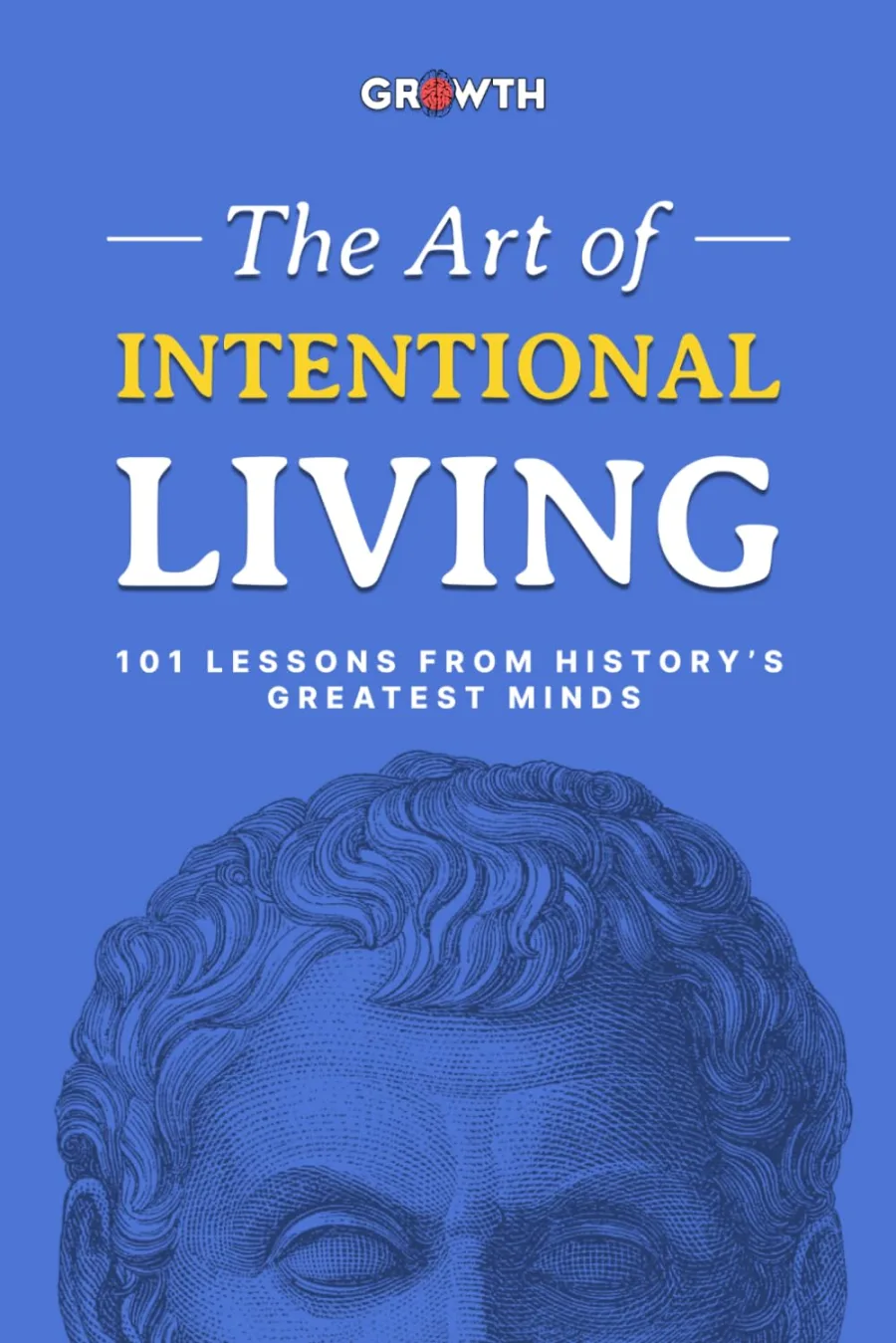
Download Cover Image
Do you want to download the full cover image for The Art of Intentional Living: 101 Lessons from History’s Greatest Minds?