
Daughters of the Sun and Moon: A Novel
eBook
• 384 Pages
• USD 29.00
• English
• 9781982117078
No ratings yet
| Publisher | Scribner |
|---|---|
| ISBN13 | 9781982117078 |
| ASIN/SKU | B0FX5S5W3H |
| Book Format | eBook |
| Language | English |
| Pages | 384 |
| List Price | USD 29.00 |
| Publishing Date | 09/06/2026 |
| Book Code | BD00066813 |
Buy this Book
Amazon Stores
Ebook Stores
Other Stores
Discover Daughters of the Sun and Moon: A Novel by Lisa See. This book is published by Scribner in eBook format, ISBN 9781982117078, ASIN B0FX5S5W3H, under Literature and Fiction, Historical Asian Fiction, Historical Chinese Fiction.
Book Description
An instant New York Times bestseller!
From belovedbestselling author Lisa See, the story of three Chinese women whose unexpected friendship helps them survive and, despite the odds, thrive, in the turmoil of post–Civil War Los Angeles.
In 1870, three Chinese women arrive in the small, dusty, and violent pueblo of Los Angeles. Dove, the bound-footed daughter of an imperial scholar, is entrancing and innocent. These characteristics should bring her great rewards, beginning with her arranged marriage to a much older merchant. Petal, the big-footed daughter of peasants, has grown up hungry and with dirt between her toes. In a moment of desperation, Petal’s father sells her to buy money for rice seed, and she is loaded onto a ship to the Gold Mountain—America—where she is once again sold. Moon is married to a doctor of traditional Chinese medicine. She is educated, speaks fluent English, and has been endowed with a face of great beauty, yet her failed footbinding as a child has left her with a limp that lessens her value in the eyes of many.
Each woman has her own desires. Dove wants to love and be loved, Petal desires freedom, and Moon seeks justice. Together they face a larger society that wishes them not one ounce of good will. Anti-Chinese sentiment is strong in Los Angeles, and this eventually leads to the Night of Horrors during which all three women are challenged in ways they could not have imagined. Brought together by hardship and heartbreak, they must use their bravery, endurance, and ability to “eat bitterness” to discover their voices, find freedom, and connect through solace and friendship. Together they are daughters of the sun and moon.
From belovedbestselling author Lisa See, the story of three Chinese women whose unexpected friendship helps them survive and, despite the odds, thrive, in the turmoil of post–Civil War Los Angeles.
In 1870, three Chinese women arrive in the small, dusty, and violent pueblo of Los Angeles. Dove, the bound-footed daughter of an imperial scholar, is entrancing and innocent. These characteristics should bring her great rewards, beginning with her arranged marriage to a much older merchant. Petal, the big-footed daughter of peasants, has grown up hungry and with dirt between her toes. In a moment of desperation, Petal’s father sells her to buy money for rice seed, and she is loaded onto a ship to the Gold Mountain—America—where she is once again sold. Moon is married to a doctor of traditional Chinese medicine. She is educated, speaks fluent English, and has been endowed with a face of great beauty, yet her failed footbinding as a child has left her with a limp that lessens her value in the eyes of many.
Each woman has her own desires. Dove wants to love and be loved, Petal desires freedom, and Moon seeks justice. Together they face a larger society that wishes them not one ounce of good will. Anti-Chinese sentiment is strong in Los Angeles, and this eventually leads to the Night of Horrors during which all three women are challenged in ways they could not have imagined. Brought together by hardship and heartbreak, they must use their bravery, endurance, and ability to “eat bitterness” to discover their voices, find freedom, and connect through solace and friendship. Together they are daughters of the sun and moon.
Author Biography
In her beloved New York Times bestsellers Daughters of the Sun and Moon, Snow Flower and the Secret Fan, The Tea Girl of Hummingbird Lane, Island of Sea Women, Peony in Love, Shanghai Girls, and China Dolls, Lisa See has brilliantly illuminated the strong bonds between women. These books have been celebrated for their authentic, deeply researched, lyrical stories about Chinese characters and cultures. Ms. See’s new novel, Daughters of the Sun and Moon, which was an Instant New York Times Bestseller, is inspired by the three real Chinese women who arrived in Los Angeles in 1870. Each woman has her own desires. Dove wants to love and be loved, Petal desires freedom, and Moon seeks justice. Together they face a larger society that wishes them not one ounce of goodwill. Brought together by hardship and heartbreak, they must use their bravery, endurance, and ability to “eat bitterness” to discover their voices, find freedom, and connect through solace and friendship. Booklist said of the book “See excels at the ‘wordless communion of women,’ portraying three disparate personalities drawing strength from and helping each other survive,” while Shelf Awareness wrote “Poignant and fascinating, Daughters of the Sun and Moon is a heart-pounding frontier narrative and a tender tribute to female friendship.”
Ms. See has led an active and varied career. She wrote the libretto for Los Angeles Opera based on On Gold Mountain. She has served as guest curator for exhibits on the Chinese-American experience at the Autry Museum of Western Heritage and curated the inaugural exhibition at the Chinese American Museum in Los Angeles.
Ms. See was honored as National Woman of the Year by the Organization of Chinese American Women in 2001, was the recipient of the Chinese American Museum’s History Makers Award in 2003, and received the Golden Spike Award from the Chinese Historical Society of Southern California in 2017. She sits on the boards of Los Angeles Opera, the 1871 Chinese Massacre Foundation, and the Trusteeship—an organization comprised of preeminent women of achievement and influence in diverse fields.
Ms. See has led an active and varied career. She wrote the libretto for Los Angeles Opera based on On Gold Mountain. She has served as guest curator for exhibits on the Chinese-American experience at the Autry Museum of Western Heritage and curated the inaugural exhibition at the Chinese American Museum in Los Angeles.
Ms. See was honored as National Woman of the Year by the Organization of Chinese American Women in 2001, was the recipient of the Chinese American Museum’s History Makers Award in 2003, and received the Golden Spike Award from the Chinese Historical Society of Southern California in 2017. She sits on the boards of Los Angeles Opera, the 1871 Chinese Massacre Foundation, and the Trusteeship—an organization comprised of preeminent women of achievement and influence in diverse fields.
Editorial Reviews
"See offers a stunning piece of historical fiction based in truth. It will touch readers with the characters’ resilience, heroism, and devoted friendship."
—Library Journal, *STARRED REVIEW*
"See excels at the ‘wordless communion of women,’ portraying three disparate personalities drawing strength from and helping each other survive. Moments of beautifully rendered heartbreak will have tremendous appeal."
—Booklist
"See’s narrative brims with historical detail…Poignant and fascinating, Daughters of the Sun and Moon is a heart-pounding frontier narrative and a tender tribute to female friendship."
—Shelf-Awareness
"[See] brilliantly mashes up history and fiction into character-driven page turners that bring to life ordinary women doing extraordinary things to survive a harsh and oppressive world that underestimates them."
—Publishers Weekly, Summer 2026 Staff Pick
Named a Most Anticipated Book of the Year by Today.com
—Library Journal, *STARRED REVIEW*
"See excels at the ‘wordless communion of women,’ portraying three disparate personalities drawing strength from and helping each other survive. Moments of beautifully rendered heartbreak will have tremendous appeal."
—Booklist
"See’s narrative brims with historical detail…Poignant and fascinating, Daughters of the Sun and Moon is a heart-pounding frontier narrative and a tender tribute to female friendship."
—Shelf-Awareness
"[See] brilliantly mashes up history and fiction into character-driven page turners that bring to life ordinary women doing extraordinary things to survive a harsh and oppressive world that underestimates them."
—Publishers Weekly, Summer 2026 Staff Pick
Named a Most Anticipated Book of the Year by Today.com
Book Summary
Lisa See’s sweeping historical fiction novel, Daughters of the Sun and Moon, transports readers to the dusty, violent, and highly volatile frontier of post-Civil War Los Angeles. Published in June 2026, the book meticulously weaves a character-driven narrative around a dark and often forgotten chapter of American history: the brutal treatment of Chinese immigrants in the nineteenth century and the terrifying realities of the 1871 Chinese Massacre. The story centers on three very different Chinese women who arrive in the small pueblo of Los Angeles, known to its Chinese residents as Lo Sang, in 1870. Each of them steps off the ship with distinct backgrounds, differing social statuses, and unique personal burdens, yet they are all hoping to forge a new future in a land that promised opportunity but instead delivered a brutal fight for survival. Surrounded by rampant anti-Chinese sentiment and the treacherous control of rival tongs, these women find their lives unexpectedly intertwined, demonstrating the incredible power of female friendship in the face of unimaginable adversity.
The first of these women is Dove, a sheltered and innocent seventeen-year-old girl who arrives in America as the bound-footed daughter of an imperial scholar who has fallen on hard times. Dove represents the traditional, restrictive expectations placed upon high-class Chinese women of her era. She is brought across the ocean to serve as the new second wife to a much older merchant named Old Man Sing, who resides in the tiny, secluded Chinese community on Calle de los Negros. Despite the constraints of her arranged marriage and the physical limitations imposed by her bound feet, Dove possesses a quiet, entrancing innocence and a deep-seated desire to simply love and be loved in return. Her narrative, uniquely recounted in a distant third-person voice, illustrates the isolating experience of being a wealthy but entirely controlled woman in a completely foreign and hostile environment.
In stark contrast to Dove’s sheltered existence is the harrowing journey of Petal. As a barefoot, dark-skinned daughter of impoverished peasants, Petal has known nothing but hunger, hardship, and the dirt beneath her toes for her entire life. Her story represents the tragic reality of human trafficking during this era. In a moment of absolute desperation, her father sells her into servitude just to acquire enough money to buy rice seed for his failing crops. Petal is loaded onto a ship bound for Gold Mountain—the name Chinese immigrants used for America—where she is promptly sold a second time to a tong. Destined to work in a bawdy house known as the Midnight Garden under the control of Headman Sam, Petal’s life is defined by exploitation and abuse. Yet, despite her horrific circumstances, Petal refuses to be completely broken. Telling her story in the present tense as she lives it, she is fiercely determined, feisty, and driven by a burning desire for ultimate freedom.
The third protagonist, Moon, bridges the gap between the traditional Chinese community and the encroaching Western world. Educated, fluent in English, and strikingly beautiful, Moon assists her husband, a successful doctor of traditional Chinese medicine, in his clinic. However, Moon carries her own physical and emotional scars; an infection from a failed foot-binding attempt during her childhood left her with a deformed foot and a noticeable limp, a flaw that severely lessens her societal value in the eyes of many. Moon’s narrative unfolds from the perspective of an elderly woman in 1926, looking back on the traumatic events of her youth. With her unique vantage point and her ability to navigate both Chinese and American spaces, Moon is driven by a profound pursuit of justice.
The separate trajectories of Dove, Petal, and Moon inevitably collide within the suffocating, male-dominated confines of their immigrant community. As they navigate their respective hardships, a secret, wordless communion forms among them. They learn to support one another, drawing strength from their shared resilience and their cultural necessity to “eat bitterness”—to endure profound suffering without complaint. This growing sisterhood becomes their only lifeline when the simmering racial tensions in Los Angeles finally boil over. The novel reaches its terrifying climax during the real-life historical event known as the Night of Horrors. On October 24, 1871, following a shootout between rival tongs, a violent mob of approximately five hundred white and Latine residents descends upon the Chinese community, resulting in a horrifying night of torture and lynching.
During this massacre, the societal structures that kept the women separated collapse entirely. Dove, Petal, and Moon are thrust into a chaotic fight for their lives, challenged in ways that test the very limits of their endurance and bravery. In the aftermath of the tragedy, the women must rely entirely on their bond to rebuild their fractured existence. They transition from victims of their circumstances to women who actively claim their own voices, defying a larger society that offers them not a single ounce of goodwill. Ultimately, Daughters of the Sun and Moon is a poignant, heart-pounding tribute to female solidarity. Lisa See brilliantly illuminates how these three disparate women manage to transcend their oppressive world, finding solace, freedom, and an unbreakable connection that allows them to endure the darkest of times.
The first of these women is Dove, a sheltered and innocent seventeen-year-old girl who arrives in America as the bound-footed daughter of an imperial scholar who has fallen on hard times. Dove represents the traditional, restrictive expectations placed upon high-class Chinese women of her era. She is brought across the ocean to serve as the new second wife to a much older merchant named Old Man Sing, who resides in the tiny, secluded Chinese community on Calle de los Negros. Despite the constraints of her arranged marriage and the physical limitations imposed by her bound feet, Dove possesses a quiet, entrancing innocence and a deep-seated desire to simply love and be loved in return. Her narrative, uniquely recounted in a distant third-person voice, illustrates the isolating experience of being a wealthy but entirely controlled woman in a completely foreign and hostile environment.
In stark contrast to Dove’s sheltered existence is the harrowing journey of Petal. As a barefoot, dark-skinned daughter of impoverished peasants, Petal has known nothing but hunger, hardship, and the dirt beneath her toes for her entire life. Her story represents the tragic reality of human trafficking during this era. In a moment of absolute desperation, her father sells her into servitude just to acquire enough money to buy rice seed for his failing crops. Petal is loaded onto a ship bound for Gold Mountain—the name Chinese immigrants used for America—where she is promptly sold a second time to a tong. Destined to work in a bawdy house known as the Midnight Garden under the control of Headman Sam, Petal’s life is defined by exploitation and abuse. Yet, despite her horrific circumstances, Petal refuses to be completely broken. Telling her story in the present tense as she lives it, she is fiercely determined, feisty, and driven by a burning desire for ultimate freedom.
The third protagonist, Moon, bridges the gap between the traditional Chinese community and the encroaching Western world. Educated, fluent in English, and strikingly beautiful, Moon assists her husband, a successful doctor of traditional Chinese medicine, in his clinic. However, Moon carries her own physical and emotional scars; an infection from a failed foot-binding attempt during her childhood left her with a deformed foot and a noticeable limp, a flaw that severely lessens her societal value in the eyes of many. Moon’s narrative unfolds from the perspective of an elderly woman in 1926, looking back on the traumatic events of her youth. With her unique vantage point and her ability to navigate both Chinese and American spaces, Moon is driven by a profound pursuit of justice.
The separate trajectories of Dove, Petal, and Moon inevitably collide within the suffocating, male-dominated confines of their immigrant community. As they navigate their respective hardships, a secret, wordless communion forms among them. They learn to support one another, drawing strength from their shared resilience and their cultural necessity to “eat bitterness”—to endure profound suffering without complaint. This growing sisterhood becomes their only lifeline when the simmering racial tensions in Los Angeles finally boil over. The novel reaches its terrifying climax during the real-life historical event known as the Night of Horrors. On October 24, 1871, following a shootout between rival tongs, a violent mob of approximately five hundred white and Latine residents descends upon the Chinese community, resulting in a horrifying night of torture and lynching.
During this massacre, the societal structures that kept the women separated collapse entirely. Dove, Petal, and Moon are thrust into a chaotic fight for their lives, challenged in ways that test the very limits of their endurance and bravery. In the aftermath of the tragedy, the women must rely entirely on their bond to rebuild their fractured existence. They transition from victims of their circumstances to women who actively claim their own voices, defying a larger society that offers them not a single ounce of goodwill. Ultimately, Daughters of the Sun and Moon is a poignant, heart-pounding tribute to female solidarity. Lisa See brilliantly illuminates how these three disparate women manage to transcend their oppressive world, finding solace, freedom, and an unbreakable connection that allows them to endure the darkest of times.
Sample Chapters
Sample Chapters will be added soon…
Reader Reviews
No reviews yet.
Daughters of the Sun and Moon: A Novel
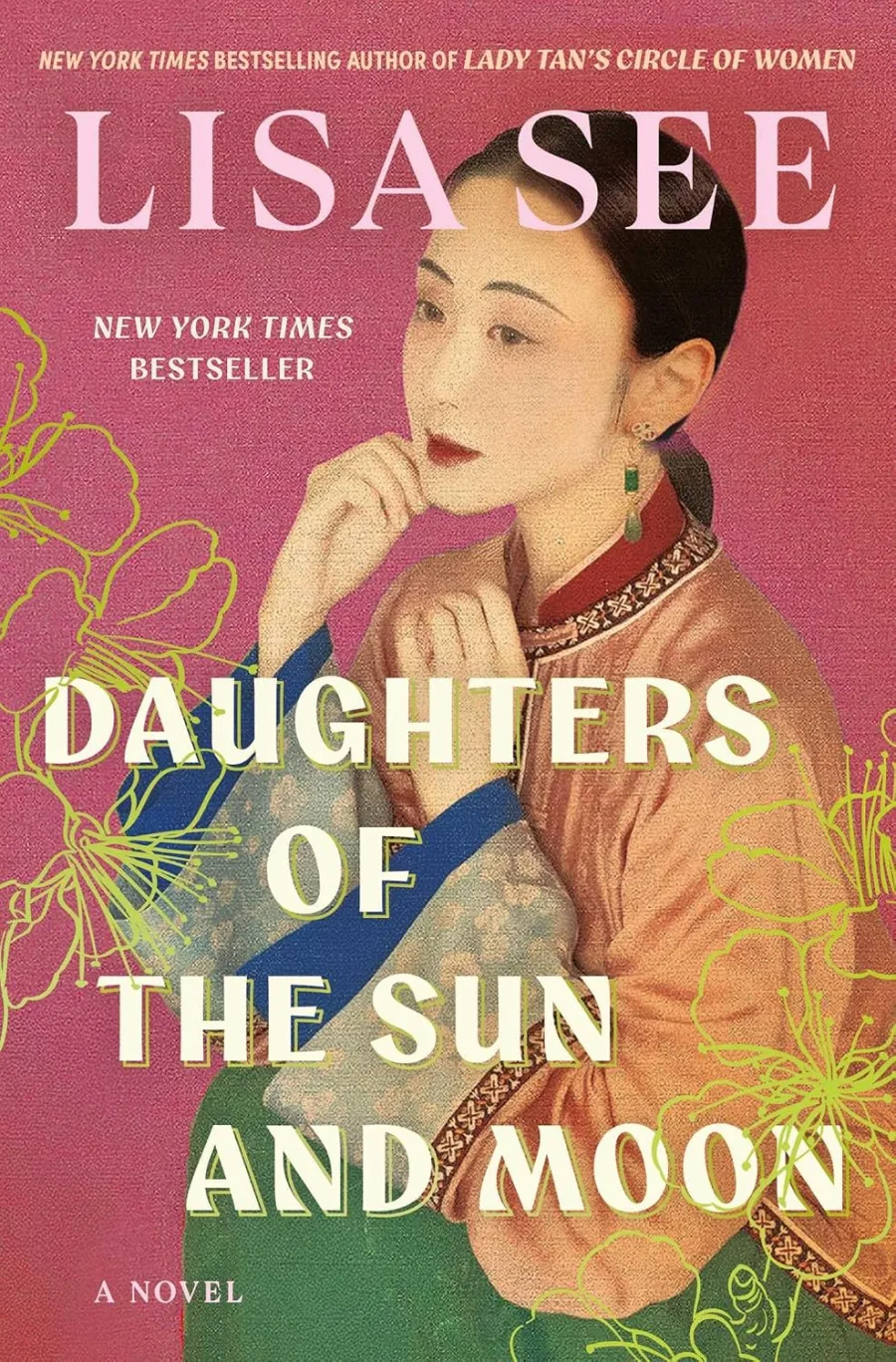
Download Cover Image
Do you want to download the full cover image for Daughters of the Sun and Moon: A Novel?