
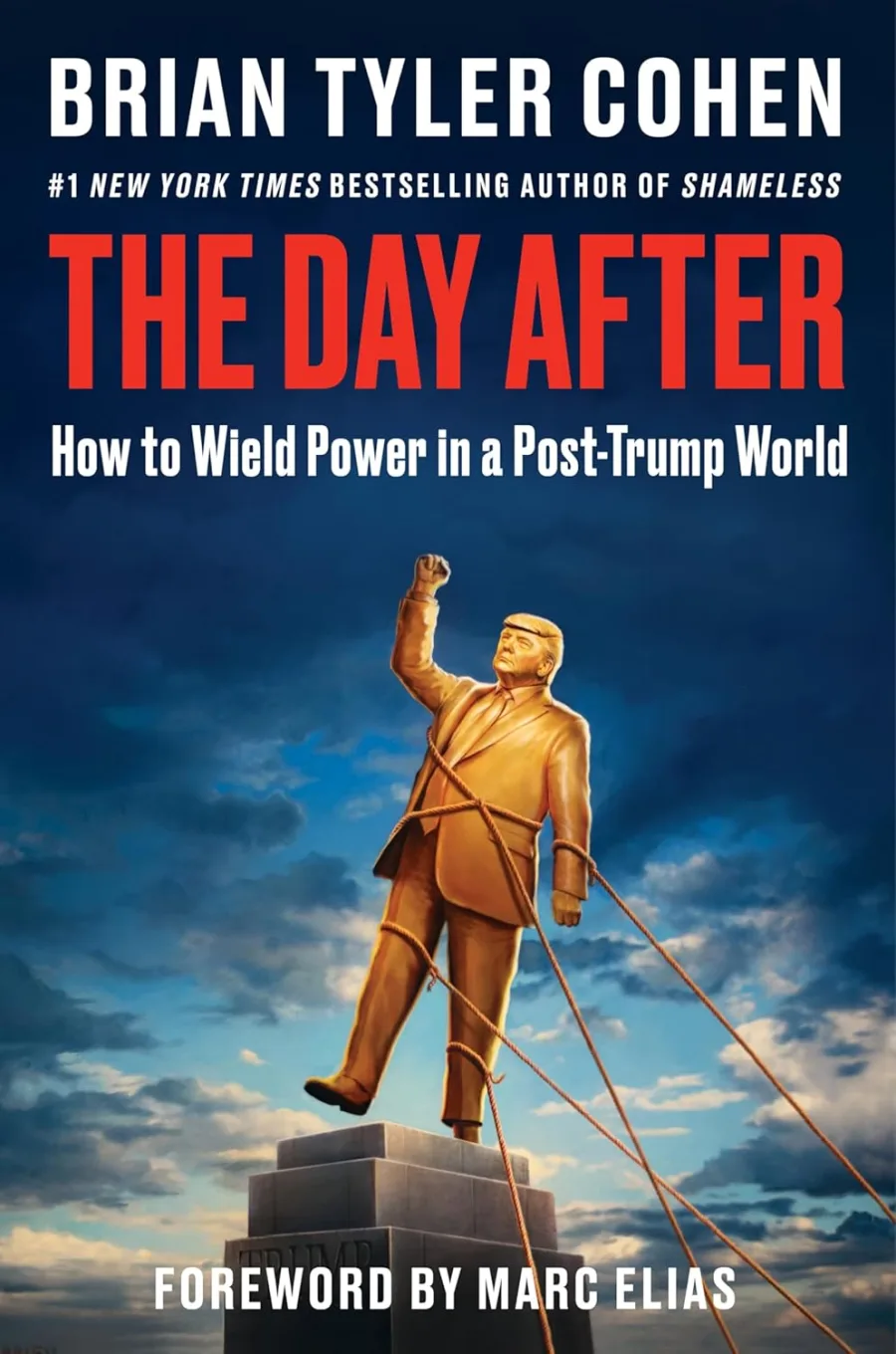
The Day After: How to Wield Power in a Post-Trump World
eBook
• 208 Pages
• USD 28.99
• English
• 9780063495128
No ratings yet
| Publisher | Harper |
|---|---|
| ISBN13 | 9780063495128 |
| ASIN/SKU | B0FV37VTJG |
| Book Format | eBook |
| Language | English |
| Pages | 208 |
| List Price | USD 28.99 |
| Publishing Date | 14/07/2026 |
| Book Code | BD00066837 |
Buy this Book
Amazon Stores
Ebook Stores
Other Stores
Discover The Day After: How to Wield Power in a Post-Trump World by Brian Tyler Cohen. This book is published by Harper in eBook format, ISBN 9780063495128, ASIN B0FV37VTJG, under Politics and Social Sciences, Political Philosophy, Democracy.
Book Description
From the #1 New York Times bestselling author of Shameless, Brian Tyler Cohen explores how Republicans have abused power, how Democrats have refused to exercise power when they held it, and how progressives should wield power if they are fortunate enough to win a free and fair election in a post-Trump world.
This book is a wake-up call about the decades-long project that led to Trump’s America.
It’s the playbook for progressives who want to do far more than restore the status quo.
This is how we build a stronger country, with hope and opportunity for all — before our democracy slides into a distant memory.
This book is a wake-up call about the decades-long project that led to Trump’s America.
It’s the playbook for progressives who want to do far more than restore the status quo.
This is how we build a stronger country, with hope and opportunity for all — before our democracy slides into a distant memory.
Author Biography
Brian Tyler Cohen is a progressive independent media creator. He has over 13 million subscribers across all social media platforms, including a YouTube channel with five billion views and counting. His show, No Lie with Brian Tyler Cohen, is a destination for the top names in politics. His first book, Shameless, was a #1 New York Times bestseller.
Editorial Reviews
"A battle cry for 'complacent friends of democracy' to bestir themselves to meaningful action." — Kirkus Reviews
"We like to believe that democracy is something permanent. Something fixed. Something that cannot be taken from us. History says otherwise. So does the present moment we are living in. What Brian understands, and what this book makes impossible to ignore, is that power does not disappear when it is defeated. It adapts. It waits. It returns in forms we think we recognize, until we realize we don’t. This is not a warning about the future. It is a confrontation with the present. And if you read it honestly, it will leave you with a question you cannot escape: when the moment comes again, and it will, what will you do?" — Don Lemon
"Brian Tyler Cohen is one of the most astute observers of American politics. In The Day After, he confronts the question that will define the next Democratic era: will the party finally wield power like it means it — reforming the courts, killing the filibuster, going on offense — or will it retreat into the same good-governance timidity that's handed Republicans victory after victory?" — Dan Pfeiffer, co-host of Pod Save America
“The time for moving past the Trump era is fast approaching and Democrats need a plan to remake how we exercise power, reform, and restore the rule of law. That’s where Brian Tyler Cohen comes in. His urgent plea for a Democratic party that’s going to fight back to meet this moment complete with a game plan of how we can use history as our guide to do just that couldn’t be timelier and more necessary. We can’t just talk about our problems anymore—we must solve them with the ruthlessness and precision that Republicans have wielded for decades.” — Jessica Tarlov
"We like to believe that democracy is something permanent. Something fixed. Something that cannot be taken from us. History says otherwise. So does the present moment we are living in. What Brian understands, and what this book makes impossible to ignore, is that power does not disappear when it is defeated. It adapts. It waits. It returns in forms we think we recognize, until we realize we don’t. This is not a warning about the future. It is a confrontation with the present. And if you read it honestly, it will leave you with a question you cannot escape: when the moment comes again, and it will, what will you do?" — Don Lemon
"Brian Tyler Cohen is one of the most astute observers of American politics. In The Day After, he confronts the question that will define the next Democratic era: will the party finally wield power like it means it — reforming the courts, killing the filibuster, going on offense — or will it retreat into the same good-governance timidity that's handed Republicans victory after victory?" — Dan Pfeiffer, co-host of Pod Save America
“The time for moving past the Trump era is fast approaching and Democrats need a plan to remake how we exercise power, reform, and restore the rule of law. That’s where Brian Tyler Cohen comes in. His urgent plea for a Democratic party that’s going to fight back to meet this moment complete with a game plan of how we can use history as our guide to do just that couldn’t be timelier and more necessary. We can’t just talk about our problems anymore—we must solve them with the ruthlessness and precision that Republicans have wielded for decades.” — Jessica Tarlov
Book Summary
The Day After: How to Wield Power in a Post-Trump World, progressive political commentator and bestselling author Brian Tyler Cohen delivers an urgent, pragmatic blueprint for the future of American democracy. Following the massive success of his previous work, Cohen pivots from analyzing the immediate crises of the present to addressing the critical question of what comes next. The book operates on the fundamental premise that simply defeating Donald Trump and the MAGA movement at the ballot box is not the finish line, but rather the very beginning of a much larger and more difficult struggle. Cohen argues that the progressive movement must move far beyond the comfort of mere resistance or a nostalgic desire to restore a romanticized pre-Trump status quo. Instead, he frames the post-Trump era as a narrow window of opportunity to build a fundamentally stronger and more equitable nation before the current democratic backsliding becomes permanent and irreversible.
At the core of Cohen’s thesis is a sharp, unflinching critique of how the Democratic Party has historically handled political power. He contends that while Democrats are often successful at winning popular majorities, they have repeatedly paralyzed themselves with a timid, "good-governance" mindset when it actually comes time to govern. This paralyzing reverence for political norms, institutional decorum, and bipartisan compromise has frequently led Democrats to pull their punches. Cohen argues that the party has fundamentally failed to wield power aggressively, often retreating into an institutional timidity that ultimately frustrates voters and leaves campaign promises unfulfilled. By clinging to an idealized version of politics that no longer exists, the left has inadvertently allowed its opposition to continually dictate the terms of engagement and secure long-term victories.
In stark contrast to Democratic hesitation, Cohen meticulously outlines the Republican Party’s decades-long project to reshape American institutions. The book serves as a wake-up call, detailing how conservative forces have systematically abused power to rewrite the rules of the game. Cohen reminds his readers that the conditions which gave rise to Trump were not an overnight accident, but the result of a precise, ruthless, and long-term strategy executed by the right. He emphasizes a sobering reality: conservative power does not simply evaporate when it loses an election; it adapts, regroups, and waits for its next opportunity. By focusing relentlessly on structural advantages—such as aggressively packing the courts, gerrymandering legislative maps, and exploiting procedural loopholes—Republicans have learned to exercise power with a precision that progressives must now study and adopt.
To combat this entrenched conservative infrastructure, The Day After provides a comprehensive progressive playbook for a post-Trump world. Cohen insists that if progressives are fortunate enough to secure a governing majority in a free and fair election, they must be willing to blow up the systemic obstacles that stand in the way of true progress. He outlines specific, aggressive strategies that the Democratic Party must embrace, primarily focusing on structural reforms that are often deemed too controversial by party moderates. Chief among these recommendations is the absolute necessity of abolishing the Senate filibuster, which Cohen views as an archaic tool used to enforce minority rule. Furthermore, he advocates for bold, offensive actions such as reforming and rebalancing the judiciary to reflect the will of the majority, rather than allowing courts to act as a permanent conservative veto over progressive legislation.
The book ultimately serves as a fierce battle cry designed to shake complacent friends of democracy out of their stupor. Cohen attempts to cut through the gaslighting, empty political slogans, and dangerous rhetoric that have characterized the last decade of American politics. He challenges the reader to understand that democracy is not a fixed, permanent fixture of American life, but a fragile system that requires active, muscular defense. By using history as a guide, Cohen argues that progressives can no longer afford to simply talk about the nation's problems; they must solve them with the exact same ruthlessness that their political opponents have wielded for years.
In conclusion, The Day After is both a confrontation with the present and a roadmap for the future. Cohen leaves his audience with a lingering, inescapable challenge regarding their role in the ongoing fight for the country. The book asserts that holding power is meaningless if a party lacks the courage to actually use it. For America to truly be free and fair once the dust settles, Cohen argues that the progressive movement must finally stop apologizing for its values and start wielding power like it actually means it.
At the core of Cohen’s thesis is a sharp, unflinching critique of how the Democratic Party has historically handled political power. He contends that while Democrats are often successful at winning popular majorities, they have repeatedly paralyzed themselves with a timid, "good-governance" mindset when it actually comes time to govern. This paralyzing reverence for political norms, institutional decorum, and bipartisan compromise has frequently led Democrats to pull their punches. Cohen argues that the party has fundamentally failed to wield power aggressively, often retreating into an institutional timidity that ultimately frustrates voters and leaves campaign promises unfulfilled. By clinging to an idealized version of politics that no longer exists, the left has inadvertently allowed its opposition to continually dictate the terms of engagement and secure long-term victories.
In stark contrast to Democratic hesitation, Cohen meticulously outlines the Republican Party’s decades-long project to reshape American institutions. The book serves as a wake-up call, detailing how conservative forces have systematically abused power to rewrite the rules of the game. Cohen reminds his readers that the conditions which gave rise to Trump were not an overnight accident, but the result of a precise, ruthless, and long-term strategy executed by the right. He emphasizes a sobering reality: conservative power does not simply evaporate when it loses an election; it adapts, regroups, and waits for its next opportunity. By focusing relentlessly on structural advantages—such as aggressively packing the courts, gerrymandering legislative maps, and exploiting procedural loopholes—Republicans have learned to exercise power with a precision that progressives must now study and adopt.
To combat this entrenched conservative infrastructure, The Day After provides a comprehensive progressive playbook for a post-Trump world. Cohen insists that if progressives are fortunate enough to secure a governing majority in a free and fair election, they must be willing to blow up the systemic obstacles that stand in the way of true progress. He outlines specific, aggressive strategies that the Democratic Party must embrace, primarily focusing on structural reforms that are often deemed too controversial by party moderates. Chief among these recommendations is the absolute necessity of abolishing the Senate filibuster, which Cohen views as an archaic tool used to enforce minority rule. Furthermore, he advocates for bold, offensive actions such as reforming and rebalancing the judiciary to reflect the will of the majority, rather than allowing courts to act as a permanent conservative veto over progressive legislation.
The book ultimately serves as a fierce battle cry designed to shake complacent friends of democracy out of their stupor. Cohen attempts to cut through the gaslighting, empty political slogans, and dangerous rhetoric that have characterized the last decade of American politics. He challenges the reader to understand that democracy is not a fixed, permanent fixture of American life, but a fragile system that requires active, muscular defense. By using history as a guide, Cohen argues that progressives can no longer afford to simply talk about the nation's problems; they must solve them with the exact same ruthlessness that their political opponents have wielded for years.
In conclusion, The Day After is both a confrontation with the present and a roadmap for the future. Cohen leaves his audience with a lingering, inescapable challenge regarding their role in the ongoing fight for the country. The book asserts that holding power is meaningless if a party lacks the courage to actually use it. For America to truly be free and fair once the dust settles, Cohen argues that the progressive movement must finally stop apologizing for its values and start wielding power like it actually means it.
Sample Chapters
Sample Chapters will be added soon…
Reader Reviews
No reviews yet.
The Day After: How to Wield Power in a Post-Trump World
Download Cover Image
Do you want to download the full cover image for The Day After: How to Wield Power in a Post-Trump World?