
The Alchemy of Souls (The Secret World of Maggie Grey Book Series)
Paperback
• 564 Pages
• USD 35.00
• English
• 9798183745993
No ratings yet
| Publisher | Independently Published |
|---|---|
| ISBN13 | 9798183745993 |
| ASIN/SKU | B0H96CMS7T |
| Book Format | Paperback |
| Language | English |
| Pages | 564 |
| List Price | USD 35.00 |
| Series Title | The Secret World of Maggie Grey Book Series |
| Publishing Date | 16/07/2026 |
| Dimensions | 6 x 1.41 x 9 inches |
| Weight | 2.06 pounds |
| Book Code | BD00066919 |
Buy this Book
Amazon Stores
Ebook Stores
Other Stores
Discover The Alchemy of Souls (The Secret World of Maggie Grey Book Series) by Granger. This book is published by Independently Published in Paperback format, ISBN 9798183745993, ASIN B0H96CMS7T, under Literature and Fiction, Black and African American Fantasy Fiction.
Book Description
Identical twin sisters separated at birth, Ayira, born a Sun princess in a distant desert kingdom, and Danielle, raised in modern day Atlanta, were never meant to meet.
When an accident forces them to switch places, Ayira wakes up on a train bound for Drew Collins University, a hidden magical HBCU beneath the city where she meets Maggie Grey, a vampire who is said to be as powerful as the Moon.
When the two suddenly vanish without a trace. Tension begins to rise, suspicion is misplaced, and family secrets are revealed. The disappearance of the Sun and Moon sets off a chain of events that may lead to the fall of power and rise of chaos.
When an accident forces them to switch places, Ayira wakes up on a train bound for Drew Collins University, a hidden magical HBCU beneath the city where she meets Maggie Grey, a vampire who is said to be as powerful as the Moon.
When the two suddenly vanish without a trace. Tension begins to rise, suspicion is misplaced, and family secrets are revealed. The disappearance of the Sun and Moon sets off a chain of events that may lead to the fall of power and rise of chaos.
Author Biography
Granger is a fantasy author based in Atlanta who has been writing indie stories for over a decade. Known for her unorthodox, out-of-the-box approach, she blends culture, myth, and imagination through bold, memorable characters. Rooted in ATL, her stories often draw from the city’s energy while pushing the boundaries of fantasy. With her upcoming bookstore debut for the Secret World of Maggie Grey series, Granger marks a new chapter in her journey as an indie author, bringing her unique worlds to an even wider audience
Editorial Reviews
Editorial Reviews will be added soon…
Book Summary
The Alchemy of Souls is a sweeping continuation of Granger's ambitious urban fantasy saga, expanding the mysterious world hidden beneath modern Atlanta. Blending dark academia, African diasporic mythology, supernatural politics, family legacies, and emotional character journeys, the novel deepens nearly every storyline established in the earlier books while raising the stakes for the future of the Underground. Rather than focusing on a single mystery, the story explores how power changes people, how history shapes the present, and how identity is forged through difficult choices.
The story once again centers on Maggie Grey, whose ordinary life was forever transformed after discovering that she belongs to the legendary First Family—a powerful vampire bloodline feared throughout the Underground. Earlier revelations about her ancestry forced her to question everything she believed about herself. In The Alchemy of Souls, Maggie is no longer merely reacting to shocking discoveries; she must actively decide what kind of leader, friend, and woman she wants to become. Her greatest challenge is no longer accepting that she is extraordinary but learning to carry the immense responsibility that comes with her heritage.
As Maggie continues her education within the hidden magical university and the wider Underground society, she realizes that every answer uncovers even more dangerous questions. Ancient rivalries remain unresolved, forgotten histories begin resurfacing, and old enemies prove far more patient and calculating than anyone imagined. The balance between the supernatural factions grows increasingly fragile, and whispers of long-buried secrets threaten to ignite conflicts that could reshape the entire magical world.
The novel also broadens its attention beyond Maggie alone. Her closest companions—Souxie, Asha, Isis, and the unforgettable talking cat Quan—continue to evolve into fully realized individuals with their own ambitions, fears, and burdens. Each character carries emotional wounds that influence their decisions, and the friendships among the group are tested repeatedly. Loyalty becomes more complicated than simple affection, as every member of the circle must decide how much they are willing to sacrifice for one another.
One of the novel's strengths is its exploration of friendship as something that requires honesty, forgiveness, and growth. The characters frequently disagree, make painful mistakes, and struggle with conflicting priorities. Yet these conflicts do not diminish their bond; instead, they reveal how genuine relationships are strengthened by surviving hardship together. Every member of the group contributes unique talents, making cooperation essential as dangers continue to multiply.
The supernatural world itself becomes far richer in this installment. Granger expands the mythology surrounding vampires, werewolves, sirens, witches, nymphs, priests, and other magical beings, presenting them not simply as fantasy creatures but as societies with distinct histories, traditions, and political interests. Ancient bloodlines carry privileges as well as burdens, while centuries-old feuds continue influencing modern decisions. The result is a magical civilization that feels layered and lived-in rather than existing merely as a backdrop for adventure.
A major theme running throughout the novel is legacy. Many characters struggle under expectations created long before they were born. Family names open doors but also create enemies. Children inherit conflicts they never started, while history repeatedly threatens to determine their futures. Maggie, in particular, must confront whether destiny truly controls her life or whether she possesses the freedom to redefine what her family name represents.
Romantic tension also continues to develop, especially in Maggie's complicated relationship with Namir. Their connection is burdened by centuries of distrust between their families, forcing both characters to question inherited prejudice. Their relationship grows gradually through shared danger, reluctant trust, and increasing emotional vulnerability. Rather than overshadowing the main narrative, the romance serves as another reflection of the novel's larger message—that individuals are capable of breaking cycles of hatred if they are willing to challenge the beliefs they inherited.
The title, The Alchemy of Souls, reflects one of the novel's deepest ideas. Alchemy is presented not merely as magical transformation but as an emotional and spiritual process. Nearly every major character experiences some form of internal transmutation. Fear becomes courage. Anger evolves into compassion. Grief gives birth to determination. Even painful memories become sources of wisdom rather than chains that hold people back. The novel repeatedly suggests that true magic lies not only in supernatural abilities but also in the human capacity for change.
As mysteries unfold, readers encounter surprising revelations about hidden alliances, forgotten histories, and powerful individuals whose motivations remain difficult to predict. Characters once viewed as allies reveal unexpected complexities, while apparent enemies occasionally display surprising humanity. Moral boundaries remain intentionally blurred, reminding readers that few people are entirely good or entirely evil. Instead, individuals are shaped by trauma, loyalty, love, fear, and the difficult choices they make under extraordinary circumstances.
Granger's storytelling also celebrates Black culture and folklore by weaving them naturally into the fantasy setting. Rather than borrowing familiar European fantasy conventions alone, the series builds a magical universe rooted in diverse traditions, creating a distinctive atmosphere rarely seen within contemporary fantasy. Hidden Atlanta becomes a place where history, mythology, and modern life exist side by side, giving the world both cultural richness and originality.
Emotionally, the novel balances moments of humor, friendship, heartbreak, suspense, and wonder. Even during its darkest scenes, characters find opportunities to laugh, support one another, or rediscover hope. These quieter moments make the larger conflicts feel more meaningful because readers become invested not only in the fate of the magical world but also in the personal happiness of the characters themselves.
By its conclusion, The Alchemy of Souls resolves some immediate conflicts while deliberately opening the door to even greater challenges ahead. New questions emerge about the true nature of power, hidden enemies, ancient prophecies, and the future of the Underground itself. Rather than serving as a simple ending, the novel acts as a turning point that transforms the series from a story about discovering a hidden world into one about determining its future.
Ultimately, The Alchemy of Souls is a story about transformation in every sense of the word. Beneath its magical battles, supernatural politics, and richly imagined mythology lies a deeply human narrative about identity, family, friendship, forgiveness, and the courage to choose one's own path despite the weight of history. It reminds readers that while we cannot escape our past, we always possess the power to decide what kind of future we will create.
The story once again centers on Maggie Grey, whose ordinary life was forever transformed after discovering that she belongs to the legendary First Family—a powerful vampire bloodline feared throughout the Underground. Earlier revelations about her ancestry forced her to question everything she believed about herself. In The Alchemy of Souls, Maggie is no longer merely reacting to shocking discoveries; she must actively decide what kind of leader, friend, and woman she wants to become. Her greatest challenge is no longer accepting that she is extraordinary but learning to carry the immense responsibility that comes with her heritage.
As Maggie continues her education within the hidden magical university and the wider Underground society, she realizes that every answer uncovers even more dangerous questions. Ancient rivalries remain unresolved, forgotten histories begin resurfacing, and old enemies prove far more patient and calculating than anyone imagined. The balance between the supernatural factions grows increasingly fragile, and whispers of long-buried secrets threaten to ignite conflicts that could reshape the entire magical world.
The novel also broadens its attention beyond Maggie alone. Her closest companions—Souxie, Asha, Isis, and the unforgettable talking cat Quan—continue to evolve into fully realized individuals with their own ambitions, fears, and burdens. Each character carries emotional wounds that influence their decisions, and the friendships among the group are tested repeatedly. Loyalty becomes more complicated than simple affection, as every member of the circle must decide how much they are willing to sacrifice for one another.
One of the novel's strengths is its exploration of friendship as something that requires honesty, forgiveness, and growth. The characters frequently disagree, make painful mistakes, and struggle with conflicting priorities. Yet these conflicts do not diminish their bond; instead, they reveal how genuine relationships are strengthened by surviving hardship together. Every member of the group contributes unique talents, making cooperation essential as dangers continue to multiply.
The supernatural world itself becomes far richer in this installment. Granger expands the mythology surrounding vampires, werewolves, sirens, witches, nymphs, priests, and other magical beings, presenting them not simply as fantasy creatures but as societies with distinct histories, traditions, and political interests. Ancient bloodlines carry privileges as well as burdens, while centuries-old feuds continue influencing modern decisions. The result is a magical civilization that feels layered and lived-in rather than existing merely as a backdrop for adventure.
A major theme running throughout the novel is legacy. Many characters struggle under expectations created long before they were born. Family names open doors but also create enemies. Children inherit conflicts they never started, while history repeatedly threatens to determine their futures. Maggie, in particular, must confront whether destiny truly controls her life or whether she possesses the freedom to redefine what her family name represents.
Romantic tension also continues to develop, especially in Maggie's complicated relationship with Namir. Their connection is burdened by centuries of distrust between their families, forcing both characters to question inherited prejudice. Their relationship grows gradually through shared danger, reluctant trust, and increasing emotional vulnerability. Rather than overshadowing the main narrative, the romance serves as another reflection of the novel's larger message—that individuals are capable of breaking cycles of hatred if they are willing to challenge the beliefs they inherited.
The title, The Alchemy of Souls, reflects one of the novel's deepest ideas. Alchemy is presented not merely as magical transformation but as an emotional and spiritual process. Nearly every major character experiences some form of internal transmutation. Fear becomes courage. Anger evolves into compassion. Grief gives birth to determination. Even painful memories become sources of wisdom rather than chains that hold people back. The novel repeatedly suggests that true magic lies not only in supernatural abilities but also in the human capacity for change.
As mysteries unfold, readers encounter surprising revelations about hidden alliances, forgotten histories, and powerful individuals whose motivations remain difficult to predict. Characters once viewed as allies reveal unexpected complexities, while apparent enemies occasionally display surprising humanity. Moral boundaries remain intentionally blurred, reminding readers that few people are entirely good or entirely evil. Instead, individuals are shaped by trauma, loyalty, love, fear, and the difficult choices they make under extraordinary circumstances.
Granger's storytelling also celebrates Black culture and folklore by weaving them naturally into the fantasy setting. Rather than borrowing familiar European fantasy conventions alone, the series builds a magical universe rooted in diverse traditions, creating a distinctive atmosphere rarely seen within contemporary fantasy. Hidden Atlanta becomes a place where history, mythology, and modern life exist side by side, giving the world both cultural richness and originality.
Emotionally, the novel balances moments of humor, friendship, heartbreak, suspense, and wonder. Even during its darkest scenes, characters find opportunities to laugh, support one another, or rediscover hope. These quieter moments make the larger conflicts feel more meaningful because readers become invested not only in the fate of the magical world but also in the personal happiness of the characters themselves.
By its conclusion, The Alchemy of Souls resolves some immediate conflicts while deliberately opening the door to even greater challenges ahead. New questions emerge about the true nature of power, hidden enemies, ancient prophecies, and the future of the Underground itself. Rather than serving as a simple ending, the novel acts as a turning point that transforms the series from a story about discovering a hidden world into one about determining its future.
Ultimately, The Alchemy of Souls is a story about transformation in every sense of the word. Beneath its magical battles, supernatural politics, and richly imagined mythology lies a deeply human narrative about identity, family, friendship, forgiveness, and the courage to choose one's own path despite the weight of history. It reminds readers that while we cannot escape our past, we always possess the power to decide what kind of future we will create.
Sample Chapters
Sample Chapters will be added soon…
Reader Reviews
No reviews yet.
The Alchemy of Souls (The Secret World of Maggie Grey Book Series)
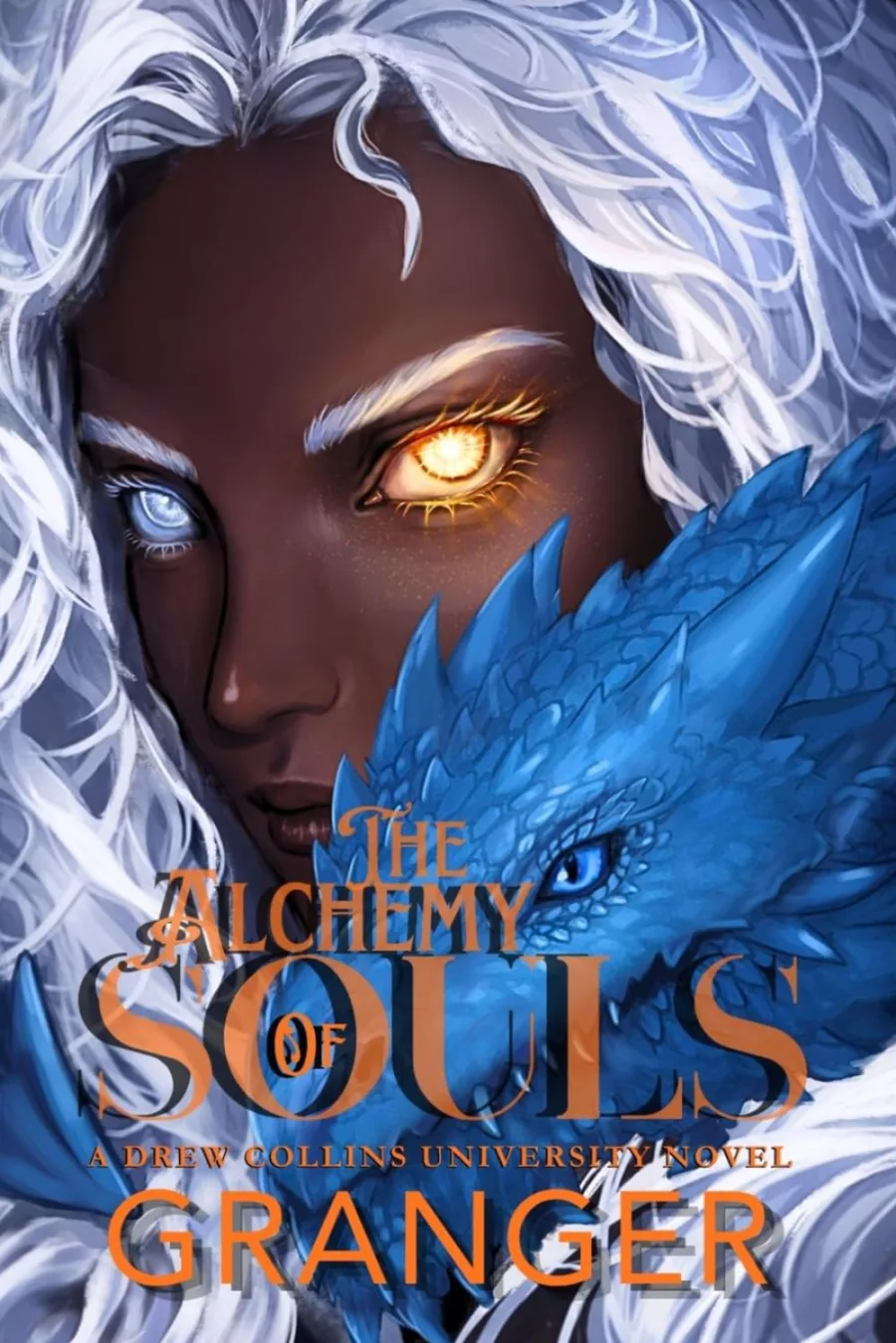
Download Cover Image
Do you want to download the full cover image for The Alchemy of Souls (The Secret World of Maggie Grey Book Series)?