
The Last to Drown: A Thriller
Paperback
• 329 Pages
• USD 15.99
• English
• 9798992716139
No ratings yet
| Publisher | Dynamite Books |
|---|---|
| ISBN13 | 9798992716139 |
| ASIN/SKU | B0GJ3NJHG4 |
| Book Format | Paperback |
| Language | English |
| Pages | 329 |
| List Price | USD 15.99 |
| Publishing Date | 13/07/2026 |
| Dimensions | 5.5 x 0.75 x 8.5 inches |
| Weight | 13.4 ounces |
| Book Code | BD00066924 |
Buy this Book
Amazon Stores
Ebook Stores
Other Stores
Discover The Last to Drown: A Thriller by Noelle W. Ihli. This book is published by Dynamite Books in Paperback format, ISBN 9798992716139, ASIN B0GJ3NJHG4, under Mystery, Thriller and Suspense, Serial Killer Thrillers, Kidnapping Thrillers.
Book Description
“Another five-star hit from one of today’s most addictive and talented thriller writers.” -S.T. Ashman, author of Her Silence
Five days. Twenty strangers. No way out.
The rafting trip was supposed to be the adventure of a lifetime. But Kaia’s starting to think she made a mistake.
Because ever since the whispers about Camas Creek began, all she feels is dread.
Seven years earlier, a guide murdered a group of rafters on this same isolated stretch of water. The killer’s body was recovered downstream—but the true-crime community has never stopped asking questions.
And for good reason.
The incidents start small—a flipped raft, missing supplies, and screams in the night—but the pattern is sickeningly familiar. And with eighty-four miles of whitewater until any sign of civilization, safety has never felt so far away.
Kaia suspects that one of the guides is lying. One of the guests knows more than she’s saying. And somewhere on this river, someone is planning to finish what started at Camas Creek.
Five days. Twenty strangers. No way out.
The rafting trip was supposed to be the adventure of a lifetime. But Kaia’s starting to think she made a mistake.
Because ever since the whispers about Camas Creek began, all she feels is dread.
Seven years earlier, a guide murdered a group of rafters on this same isolated stretch of water. The killer’s body was recovered downstream—but the true-crime community has never stopped asking questions.
And for good reason.
The incidents start small—a flipped raft, missing supplies, and screams in the night—but the pattern is sickeningly familiar. And with eighty-four miles of whitewater until any sign of civilization, safety has never felt so far away.
Kaia suspects that one of the guides is lying. One of the guests knows more than she’s saying. And somewhere on this river, someone is planning to finish what started at Camas Creek.
Author Biography
USA Today bestselling author Noelle W. Ihli lives in Idaho with her husband, two sons, and three cats. When she's not plotting her next thriller, she's scaring herself with true-crime documentaries or going for a trail ride in the foothills (with her trusty pepper spray).
Editorial Reviews
Editorial Reviews will be added soon…
Book Summary
The Last to Drown: A Thriller by Noelle W. Ihli is a tense, emotionally charged suspense novel that blends psychological thriller elements with family drama and survival. The story centers on a woman who returns to the place of a childhood tragedy and is forced to confront buried secrets, fractured family relationships, and the terrifying possibility that what happened long ago was not an accident. Ihli builds the narrative around themes of guilt, memory, and trust, using a remote, dangerous setting and rising tension to push the characters to their limits. As the title suggests, water and drowning are central images in the book, both literally and symbolically, representing the weight of the past and the threat that old secrets can still drag people under.
At the heart of the story is the protagonist, a woman marked by a devastating incident from her younger years involving a drowning. This event, which occurred at a lake or similarly isolated body of water, shattered her family and left deep scars that never fully healed. For years, she has tried to move on, but she carries survivor’s guilt, unanswered questions, and a sense that the full truth of that day was never uncovered. The novel begins when circumstances pull her back to that place—whether for a reunion, a memorial, or some urgent matter—and she finds herself once again surrounded by family members who remember the tragedy in their own ways. The familiar landscape, the water, and the echoes of the past create a heavy, unsettling atmosphere from the start.
As the protagonist reconnects with her family, old tensions quickly resurface. Each person has built a narrative around what happened: some insist it was a tragic accident, others hint that there were warning signs or suspicious behavior, and still others simply refuse to talk about it at all. Over the years, blame has shifted, relationships have fractured, and silence has become a way to cope. Ihli uses these dynamics to show how trauma can twist family bonds—making people defensive, secretive, or overly controlling. The main character is caught between wanting to keep the peace and needing answers. She begins to notice inconsistencies in what people remember, strange reactions to certain questions, and a nervousness in the air that suggests someone is hiding more than just pain.
The setting itself intensifies the suspense. The lake or water surroundings are isolated, with limited cell service, few outsiders, and a sense that once you’re there, you’re cut off from the rest of the world. Ihli uses nature as a quiet threat: deep water, slippery rocks, sudden changes in weather, and the vulnerability of being far from help. The environment becomes part of the tension, making ordinary events—like a swim, a boat ride, or a walk along the shore—feel dangerous and loaded with meaning. Being back in this place forces the protagonist to relive the original trauma, but it also becomes the only place where she can piece together what truly happened.
As the days pass, unsettling events begin to occur. The protagonist might find objects that seem out of place or connected to the past incident, hear noises at night, or sense that someone is watching her. Memories resurface in flashes: fragments of conversations, glimpses of faces, sensations from the day of the drowning that she hadn’t fully processed. Ihli uses these memories as clues, but they are not straightforward; trauma has blurred the edges, and the protagonist is never fully sure whether she is remembering correctly or being influenced by fear. This uncertainty adds a psychological layer to the thriller: the danger is not just external, but also inside her own mind, where doubt and self-blame make it hard to trust anyone—including herself.
The thriller aspect escalates when it becomes clear that the past may not be as settled as everyone claims. The protagonist starts to suspect that the drowning might have involved negligence, manipulation, or even deliberate harm. Small revelations and overheard conversations hint that someone in the group has been lying for years. At the same time, present-day threats emerge. Accidents begin to happen—someone almost slips into the water, a boat malfunctions, something important disappears—creating the sense that history might be repeating itself. Whether these events are truly accidental or staged becomes one of the central questions driving the suspense. Ihli carefully tightens the tension so that the reader is always wondering who can be trusted and who has something to lose if the truth comes out.
Family secrets play a major role in the unfolding mystery. As the protagonist pushes for answers, long-buried truths begin to surface: hidden conflicts, private deals, past abuses, or moral compromises that were never acknowledged. The drowning becomes the focal point, but it is tied to a larger web of choices the adults in her life made years ago. Some characters are revealed to be more vulnerable than they first seemed, while others are more manipulative or cold. The revelations force the protagonist to reevaluate her childhood, her relationships, and her own role in the family story. The thriller becomes not only a search for what happened at the water’s edge but also a reckoning with the entire architecture of lies built around it.
The danger eventually turns explicit. Someone’s actions in the present make it clear that the threat is real and immediate. The protagonist may find herself physically endangered—trapped, isolated, or in direct conflict with someone who wants to stop her from uncovering the truth. The water, which has always been a symbol of fear, becomes the setting for a climactic confrontation, echoing the original tragedy while offering a chance for a different outcome. In moments of crisis, she must use not only courage but also the knowledge she has pieced together to survive. Ihli uses this final stretch to deliver high-stakes suspense, where the emotional weight of the past and the physical danger of the present crash together.
Throughout the book, themes of guilt, forgiveness, and responsibility run underneath the plot. The protagonist struggles with the question of whether knowing the full truth will bring peace or only more pain. Some family members argue that digging up the past is cruel and unnecessary, while others quietly hope for clarity. The story explores how people cope with tragedy: some by denial, some by control, some by self-destruction, and some by relentless pursuit of answers. In the end, what matters is not just uncovering what happened but deciding what to do with that knowledge—whether to expose, forgive, protect, or walk away.
By the time the novel reaches its conclusion, the central mystery around the drowning is resolved, but not in a simple, clean way. The protagonist gains a clearer understanding of that day and of the people around her, yet the truth carries both relief and sorrow. She emerges changed—less haunted by unanswered questions, but more aware of the complexities and failures that shaped her life. The “last to drown” of the title can be read as more than a literal reference; it suggests the last person to be consumed by the weight of the past, the last to be dragged under by secrets and guilt. In facing the storm of truth, the protagonist finally begins to rise above the water that has kept her emotionally submerged for years.
Overall, The Last to Drown is a gripping, atmospheric thriller that uses a haunting past tragedy to explore trust, memory, and the dark side of family loyalty. Noelle W. Ihli balances psychological tension and physical danger, creating a story where every conversation and every ripple on the water feels charged with possibility and threat. It is both a mystery about what happened at a deadly lake and a portrait of a woman fighting her way out of the emotional depths—and refusing, at last, to be the one who goes under.
At the heart of the story is the protagonist, a woman marked by a devastating incident from her younger years involving a drowning. This event, which occurred at a lake or similarly isolated body of water, shattered her family and left deep scars that never fully healed. For years, she has tried to move on, but she carries survivor’s guilt, unanswered questions, and a sense that the full truth of that day was never uncovered. The novel begins when circumstances pull her back to that place—whether for a reunion, a memorial, or some urgent matter—and she finds herself once again surrounded by family members who remember the tragedy in their own ways. The familiar landscape, the water, and the echoes of the past create a heavy, unsettling atmosphere from the start.
As the protagonist reconnects with her family, old tensions quickly resurface. Each person has built a narrative around what happened: some insist it was a tragic accident, others hint that there were warning signs or suspicious behavior, and still others simply refuse to talk about it at all. Over the years, blame has shifted, relationships have fractured, and silence has become a way to cope. Ihli uses these dynamics to show how trauma can twist family bonds—making people defensive, secretive, or overly controlling. The main character is caught between wanting to keep the peace and needing answers. She begins to notice inconsistencies in what people remember, strange reactions to certain questions, and a nervousness in the air that suggests someone is hiding more than just pain.
The setting itself intensifies the suspense. The lake or water surroundings are isolated, with limited cell service, few outsiders, and a sense that once you’re there, you’re cut off from the rest of the world. Ihli uses nature as a quiet threat: deep water, slippery rocks, sudden changes in weather, and the vulnerability of being far from help. The environment becomes part of the tension, making ordinary events—like a swim, a boat ride, or a walk along the shore—feel dangerous and loaded with meaning. Being back in this place forces the protagonist to relive the original trauma, but it also becomes the only place where she can piece together what truly happened.
As the days pass, unsettling events begin to occur. The protagonist might find objects that seem out of place or connected to the past incident, hear noises at night, or sense that someone is watching her. Memories resurface in flashes: fragments of conversations, glimpses of faces, sensations from the day of the drowning that she hadn’t fully processed. Ihli uses these memories as clues, but they are not straightforward; trauma has blurred the edges, and the protagonist is never fully sure whether she is remembering correctly or being influenced by fear. This uncertainty adds a psychological layer to the thriller: the danger is not just external, but also inside her own mind, where doubt and self-blame make it hard to trust anyone—including herself.
The thriller aspect escalates when it becomes clear that the past may not be as settled as everyone claims. The protagonist starts to suspect that the drowning might have involved negligence, manipulation, or even deliberate harm. Small revelations and overheard conversations hint that someone in the group has been lying for years. At the same time, present-day threats emerge. Accidents begin to happen—someone almost slips into the water, a boat malfunctions, something important disappears—creating the sense that history might be repeating itself. Whether these events are truly accidental or staged becomes one of the central questions driving the suspense. Ihli carefully tightens the tension so that the reader is always wondering who can be trusted and who has something to lose if the truth comes out.
Family secrets play a major role in the unfolding mystery. As the protagonist pushes for answers, long-buried truths begin to surface: hidden conflicts, private deals, past abuses, or moral compromises that were never acknowledged. The drowning becomes the focal point, but it is tied to a larger web of choices the adults in her life made years ago. Some characters are revealed to be more vulnerable than they first seemed, while others are more manipulative or cold. The revelations force the protagonist to reevaluate her childhood, her relationships, and her own role in the family story. The thriller becomes not only a search for what happened at the water’s edge but also a reckoning with the entire architecture of lies built around it.
The danger eventually turns explicit. Someone’s actions in the present make it clear that the threat is real and immediate. The protagonist may find herself physically endangered—trapped, isolated, or in direct conflict with someone who wants to stop her from uncovering the truth. The water, which has always been a symbol of fear, becomes the setting for a climactic confrontation, echoing the original tragedy while offering a chance for a different outcome. In moments of crisis, she must use not only courage but also the knowledge she has pieced together to survive. Ihli uses this final stretch to deliver high-stakes suspense, where the emotional weight of the past and the physical danger of the present crash together.
Throughout the book, themes of guilt, forgiveness, and responsibility run underneath the plot. The protagonist struggles with the question of whether knowing the full truth will bring peace or only more pain. Some family members argue that digging up the past is cruel and unnecessary, while others quietly hope for clarity. The story explores how people cope with tragedy: some by denial, some by control, some by self-destruction, and some by relentless pursuit of answers. In the end, what matters is not just uncovering what happened but deciding what to do with that knowledge—whether to expose, forgive, protect, or walk away.
By the time the novel reaches its conclusion, the central mystery around the drowning is resolved, but not in a simple, clean way. The protagonist gains a clearer understanding of that day and of the people around her, yet the truth carries both relief and sorrow. She emerges changed—less haunted by unanswered questions, but more aware of the complexities and failures that shaped her life. The “last to drown” of the title can be read as more than a literal reference; it suggests the last person to be consumed by the weight of the past, the last to be dragged under by secrets and guilt. In facing the storm of truth, the protagonist finally begins to rise above the water that has kept her emotionally submerged for years.
Overall, The Last to Drown is a gripping, atmospheric thriller that uses a haunting past tragedy to explore trust, memory, and the dark side of family loyalty. Noelle W. Ihli balances psychological tension and physical danger, creating a story where every conversation and every ripple on the water feels charged with possibility and threat. It is both a mystery about what happened at a deadly lake and a portrait of a woman fighting her way out of the emotional depths—and refusing, at last, to be the one who goes under.
Sample Chapters
Sample Chapters will be added soon…
Reader Reviews
No reviews yet.
The Last to Drown: A Thriller
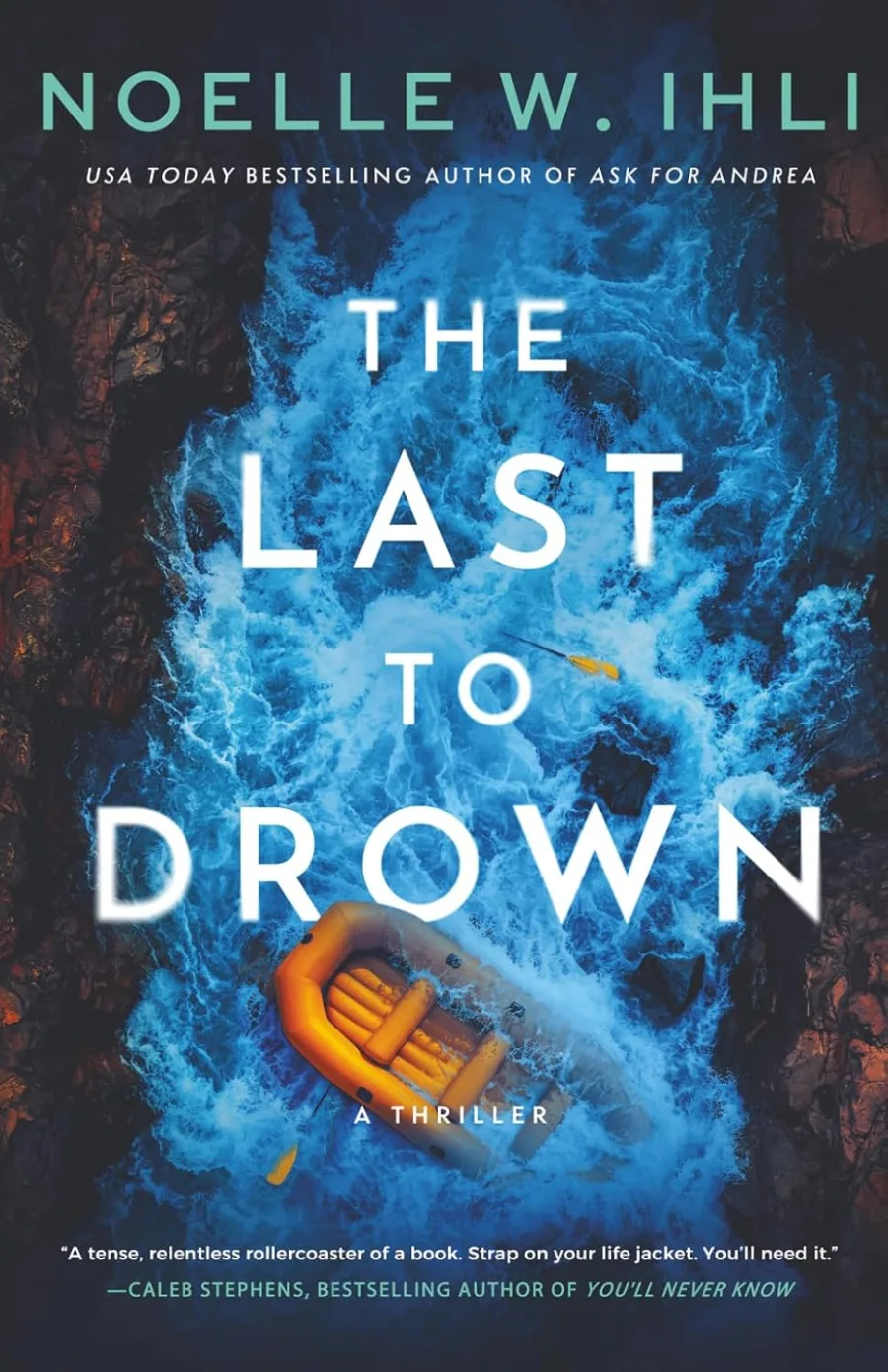
Download Cover Image
Do you want to download the full cover image for The Last to Drown: A Thriller?