
The True Meaning of Love: A Novel
Hardcover
• 256 Pages
• USD 29.00
• English
• 9780593973141
No ratings yet
| Publisher | Delacorte Press |
|---|---|
| ISBN13 | 9780593973141 |
| ASIN/SKU | 0593973143 |
| Book Format | Hardcover |
| Language | English |
| Pages | 256 |
| List Price | USD 29.00 |
| Publishing Date | 11/08/2026 |
| Dimensions | 6.31 x 1 x 9.54 inches |
| Weight | 1.25 pounds |
| Book Code | BD00066932 |
Buy this Book
Amazon Stores
Ebook Stores
Other Stores
Discover The True Meaning of Love: A Novel by Danielle Steel. This book is published by Delacorte Press in Hardcover format, ISBN 9780593973141, ASIN 0593973143, under Literature and Fiction, Contemporary Women Fiction, Women's Domestic Life Fiction.
Book Description
This powerful novel by #1 New York Times bestselling author Danielle Steel is a stirring story of the lives of ordinary people during wartime.
February 24 is the eighteenth birthday of a Ukrainian ballet school student named Vlad. It also happens to be the day that the first bombs of the 2022 Russian attack land on his homeland. As life for every person in the country is turned upside down in a moment, Vlad is immediately called up to serve in the military. But as much as he wants to defend his country, he is desperate to get his girlfriend, Tatyanna, an orphan whose only home has been the ballet school, out of the country.
With their home under siege, Tatyanna tries to make her way to safety in Poland. Also joining the refugees is Yulya, who is torn between getting her young children across the border and staying at the side of her husband, Symon, and her elderly parents, Petro and Oxana, who refuse to abandon their home. As millions flee, Vlad and Symon join a volunteer civilians’ unit to fight. Even elderly citizens like Petro and Oxana are given AK-47s, though soon starvation becomes as much of a threat as the encroaching troops.
Sasha, an obstetrician, and Anton, a surgeon, who are secretly lovers, stay behind to treat the never-ending waves of wounded. When the Russians bomb hospitals, the heroic couple finds themselves delivering babies in bomb shelters.
Through the stories of Vlad, Tatyanna, Yulya, Symon, Sasha, and Anton—each struggling to protect their loved ones and preserve their own humanity—Danielle Steel tells a gripping and deeply moving story of regular people surviving as a war rages around them.
February 24 is the eighteenth birthday of a Ukrainian ballet school student named Vlad. It also happens to be the day that the first bombs of the 2022 Russian attack land on his homeland. As life for every person in the country is turned upside down in a moment, Vlad is immediately called up to serve in the military. But as much as he wants to defend his country, he is desperate to get his girlfriend, Tatyanna, an orphan whose only home has been the ballet school, out of the country.
With their home under siege, Tatyanna tries to make her way to safety in Poland. Also joining the refugees is Yulya, who is torn between getting her young children across the border and staying at the side of her husband, Symon, and her elderly parents, Petro and Oxana, who refuse to abandon their home. As millions flee, Vlad and Symon join a volunteer civilians’ unit to fight. Even elderly citizens like Petro and Oxana are given AK-47s, though soon starvation becomes as much of a threat as the encroaching troops.
Sasha, an obstetrician, and Anton, a surgeon, who are secretly lovers, stay behind to treat the never-ending waves of wounded. When the Russians bomb hospitals, the heroic couple finds themselves delivering babies in bomb shelters.
Through the stories of Vlad, Tatyanna, Yulya, Symon, Sasha, and Anton—each struggling to protect their loved ones and preserve their own humanity—Danielle Steel tells a gripping and deeply moving story of regular people surviving as a war rages around them.
Author Biography
Danielle Steel has been hailed as one of the world's most popular authors, with nearly a billion copies of her novels sold. Her recent many international bestsellers include Against All Odds, The Duchess and The Right Time. She is also the author of His Bright Light, the story of her son Nick Traina's life and death; A Gift of Hope, a memoir of her work with the homeless; and the children's books Pretty Minnie in Paris and Pretty Minnie in Hollywood. Danielle divides her time between Paris and her home in northern California.
Editorial Reviews
Editorial Reviews will be added soon…
Book Summary
Danielle Steel’s The True Meaning of Love is a powerful contemporary novel about love, war, sacrifice, family, courage, and the extraordinary resilience of ordinary people. Published in August 2026, the novel takes readers into Ukraine at the beginning of Russia’s full-scale invasion in February 2022 and follows several interconnected lives as war destroys the familiar structures around them. Rather than focusing on soldiers or political leaders, Steel concentrates on civilians: a young ballet student, a mother, an elderly couple, and doctors who remain behind to care for the wounded. Through their experiences, the novel asks a deceptively simple question: What does love really mean when protecting someone you love may require separation, sacrifice, courage, or even risking your own life?
The story begins on February 24, a date that carries an especially painful significance for Vlad, a Ukrainian ballet student turning eighteen. What should have been an ordinary birthday becomes the beginning of a nightmare when Russian bombs begin falling on Ukraine. Vlad is suddenly faced with the responsibilities of adulthood in the most brutal possible way. He is called upon to serve his country, but his thoughts are not focused only on fighting. He is deeply concerned about Tatyanna, his girlfriend and closest friend, an orphan whose entire sense of home is tied to the ballet school. Vlad wants to defend Ukraine, but he also wants to make sure Tatyanna survives. Their relationship immediately establishes one of the novel’s central themes: love is not simply an emotion but a responsibility toward another person.
Tatyanna’s life has already been shaped by loss before the invasion begins. As an orphan, the ballet school has provided her with structure, discipline, community, and a place to belong. She has devoted herself to dance under the demanding instruction of Madame Natalya, a formidable ballet teacher who previously served as a ballet master at the Bolshoi Ballet Academy in Moscow. The opening chapters introduce a world in which ballet represents order and beauty, but that world is shattered almost instantly by war. The contrast is significant: the controlled movements of dance are replaced by air-raid sirens, bombs, refugees, weapons, and desperate journeys across borders.
As Kyiv comes under attack, Tatyanna is forced to make an agonizing choice. She can attempt to escape to safety or remain in Ukraine and face the growing danger. Her opportunity to join a ballet company in Paris offers the possibility of continuing the life she has dreamed of, but leaving also means leaving behind the people and country she loves. Her journey therefore becomes more than a refugee story. It is a story about what happens when circumstances force someone to choose between personal survival and loyalty to home. Steel uses Tatyanna to explore the emotional cost of escaping danger: surviving does not necessarily mean escaping grief, guilt, or responsibility.
The second major storyline centers on Yulya, a young wife and mother whose ordinary family life is destroyed by the invasion. Yulya faces a decision that many civilians in wartime confront: whether to flee with her children or remain beside the people she loves. Her husband, Symon, does not want to abandon Ukraine, while her elderly parents, Petro and Oxana, are equally determined to remain in their home. Yulya therefore finds herself caught between two forms of love. As a mother, she has an obligation to protect her children; as a wife and daughter, she feels an equally powerful obligation toward her husband and parents.
This conflict gives the novel much of its emotional weight. There is no easy or completely satisfying answer. If Yulya leaves, she may save her children but feel that she has abandoned her husband and parents. If she stays, she risks exposing her children to the dangers of war. Steel portrays this not as a simple question of bravery versus cowardice but as a painful collision between different kinds of love. In peaceful circumstances, people can often satisfy several responsibilities at once. War destroys that possibility and forces impossible choices.
Symon, meanwhile, chooses to remain and fight. Alongside Vlad, he becomes part of a volunteer civilian unit defending Ukraine. The transformation of ordinary civilians into combatants is one of the novel’s most striking elements. These are not professional soldiers who have spent their lives preparing for war. They are husbands, sons, fathers, students, and neighbors who suddenly find themselves carrying weapons because their homes and families are under threat. Their participation illustrates Steel’s recurring interest in ordinary people discovering unexpected courage when circumstances demand it.
The danger soon extends far beyond the battlefield. Food becomes scarce, buildings are destroyed, transportation becomes uncertain, and civilians struggle simply to remain alive. Petro and Oxana, too old and unwilling to leave their home, become symbols of another kind of courage. They refuse to abandon the place where they have built their life and where they have spent decades together. Their relationship demonstrates the quieter side of love: the devotion that develops over a lifetime and persists even when everything else disappears.
Sasha provides another perspective on the meaning of love. She is an obstetrician who chooses to remain in Ukraine and continue treating patients despite the danger. Her professional responsibility becomes inseparable from her personal courage. She is not fighting with a weapon but with medical knowledge, determination, and compassion. Alongside Anton, a surgeon with whom she is secretly in love, she treats an endless stream of wounded civilians. Their work becomes increasingly dangerous as hospitals themselves come under attack. Eventually, they find themselves treating patients and delivering babies in bomb shelters rather than functioning in the safe, controlled medical environments they once knew.
The relationship between Sasha and Anton adds an important romantic dimension to the novel, but their love is deliberately placed against the larger demands of wartime duty. They cannot simply retreat into a private romance. Their patients need them, and the crisis around them continues to intensify. Their story demonstrates that love can mean staying at someone's side when fear would make escape easier. It can also mean extending compassion beyond the people closest to you. By remaining to save strangers, Sasha and Anton embody one of the book's most important ideas: humanity itself becomes something worth defending.
Tatyanna's experience becomes increasingly painful as the war takes away the people she loves. Her relationship with Vlad is tested by separation, and the violence around her destroys the world she once understood. Her ballet career offers an escape route, including the possibility of performing in Paris, but the psychological impact of war follows her. The novel explores survivor’s guilt and the complicated emotions experienced by people who manage to escape while others remain in danger. Tatyanna cannot simply step onto a stage and forget what happened to the people she left behind.
Her eventual decision to return to Ukraine underscores the book’s central argument about love and sacrifice. Safety is valuable, but safety alone does not necessarily provide peace of mind. For Tatyanna, continuing her life abroad without confronting what happened at home becomes emotionally impossible. Her return is therefore not presented simply as an act of heroism. It is also an attempt to reconcile the person she was before the war with the person the war has forced her to become.
Yulya’s storyline takes an equally dramatic turn when Symon disappears. The uncertainty surrounding his fate becomes almost as painful as confirmed death. In wartime, people can vanish beneath rubble, disappear during evacuations, or become separated from their families with no reliable information available. Yulya refuses to accept that Symon is dead without knowing the truth. Her determination to search for him becomes an expression of love that is stronger than fear. Rather than passively waiting for information, she searches hospitals and tries to follow every possible lead.
Symon’s survival becomes one of the novel’s most emotionally intense developments. After being trapped beneath rubble and suffering severe injuries, he survives but spends a significant period unconscious. His recovery is complicated by temporary memory loss, emphasizing the extent to which war damages people both physically and psychologically. When Yulya eventually discovers that he is alive, their reunion is not simply a conventional romantic resolution. It represents the restoration of something she believed had been permanently destroyed. Their story gives the novel one of its clearest examples of hope emerging from devastation.
Petro and Oxana face their own fight for survival. As conditions worsen and food becomes scarce, starvation becomes almost as dangerous as the advancing troops. Oxana's devotion to her husband is particularly moving because she continues to think of Petro even when her own health is failing. Their story illustrates a form of love that has developed over decades and now survives under conditions that would destroy many relationships. Petro’s determination to protect Oxana in return makes their marriage one of the novel’s quiet emotional anchors.
The novel’s structure allows Steel to move between these different lives, showing how war creates a web of shared experiences. The characters are separated by age, profession, and circumstance, but they gradually become connected by the same fundamental needs: safety, belonging, hope, and love. A young ballerina, a mother, an elderly couple, a soldier, and doctors might seem to inhabit entirely different worlds, yet war reveals how little separates them when their ordinary lives disappear.
One of the book's strongest themes is that love does not always mean protecting someone by keeping them close. Sometimes love requires letting someone leave. Vlad wants Tatyanna to survive, even if that means she must escape without him. Yulya leaves her husband because her children need protection. Sasha stays because patients depend on her. Tatyanna eventually chooses to return because remaining away becomes unbearable. Each character expresses love differently, and Steel deliberately avoids defining one choice as universally correct.
The novel also explores the difference between romantic love and the broader forms of love that sustain human beings. There is Tatyanna and Vlad’s young romance, Sasha and Anton’s secret relationship, Yulya and Symon’s marriage, and Petro and Oxana’s lifelong partnership. But there is also parental love, love between generations, professional compassion, loyalty to country, and solidarity among strangers. This broader definition is essential to understanding the title. The True Meaning of Love suggests that love becomes most visible not when life is comfortable but when people have something enormous to lose.
For readers searching for a Danielle Steel novel about war, a contemporary romance about Ukraine, emotional women's fiction, a story about family and sacrifice, or a novel about love and resilience during wartime, The True Meaning of Love combines all of these elements. It is not a traditional romance centered on one couple. Instead, it is an ensemble story in which multiple relationships illuminate different meanings of devotion, courage, and survival. Penguin Random House categorizes the book under contemporary romance and women's fiction, while the publisher describes it as a story of ordinary people surviving war.
Ultimately, The True Meaning of Love is about what remains when almost everything else has been taken away. Homes can be destroyed. Careers can disappear. Families can be separated. People can be injured or killed. Futures can change overnight. Yet Steel's characters continue to find reasons to protect one another and to believe that life is worth preserving. Their choices suggest that love is not measured simply by words or romantic declarations. It is measured by what people are willing to endure for someone else.
The novel’s emotional message is therefore both heartbreaking and hopeful. Steel does not pretend that courage can erase the suffering caused by war. Loss remains loss, and survival carries its own burdens. But she shows that even amid destruction, people can create moments of tenderness, bravery, generosity, and connection. Doctors continue treating patients. Parents protect children. Couples search for one another. Elderly spouses refuse to abandon each other. Young people try to preserve their dreams even after those dreams have been shattered.
In the end, The True Meaning of Love presents love as an active force rather than a passive feeling. It is the decision to stay, the courage to leave, the willingness to sacrifice, the refusal to give up hope, and the determination to preserve another person’s humanity when the world around you has become cruel. Through Vlad, Tatyanna, Yulya, Symon, Sasha, Anton, Petro, and Oxana, Danielle Steel transforms the devastation of the 2022 invasion of Ukraine into a deeply human story about ordinary people confronted with extraordinary circumstances. The novel ultimately argues that love does not make suffering disappear, but it can give people the strength to survive it—and, when possible, to build a life again afterward.
The story begins on February 24, a date that carries an especially painful significance for Vlad, a Ukrainian ballet student turning eighteen. What should have been an ordinary birthday becomes the beginning of a nightmare when Russian bombs begin falling on Ukraine. Vlad is suddenly faced with the responsibilities of adulthood in the most brutal possible way. He is called upon to serve his country, but his thoughts are not focused only on fighting. He is deeply concerned about Tatyanna, his girlfriend and closest friend, an orphan whose entire sense of home is tied to the ballet school. Vlad wants to defend Ukraine, but he also wants to make sure Tatyanna survives. Their relationship immediately establishes one of the novel’s central themes: love is not simply an emotion but a responsibility toward another person.
Tatyanna’s life has already been shaped by loss before the invasion begins. As an orphan, the ballet school has provided her with structure, discipline, community, and a place to belong. She has devoted herself to dance under the demanding instruction of Madame Natalya, a formidable ballet teacher who previously served as a ballet master at the Bolshoi Ballet Academy in Moscow. The opening chapters introduce a world in which ballet represents order and beauty, but that world is shattered almost instantly by war. The contrast is significant: the controlled movements of dance are replaced by air-raid sirens, bombs, refugees, weapons, and desperate journeys across borders.
As Kyiv comes under attack, Tatyanna is forced to make an agonizing choice. She can attempt to escape to safety or remain in Ukraine and face the growing danger. Her opportunity to join a ballet company in Paris offers the possibility of continuing the life she has dreamed of, but leaving also means leaving behind the people and country she loves. Her journey therefore becomes more than a refugee story. It is a story about what happens when circumstances force someone to choose between personal survival and loyalty to home. Steel uses Tatyanna to explore the emotional cost of escaping danger: surviving does not necessarily mean escaping grief, guilt, or responsibility.
The second major storyline centers on Yulya, a young wife and mother whose ordinary family life is destroyed by the invasion. Yulya faces a decision that many civilians in wartime confront: whether to flee with her children or remain beside the people she loves. Her husband, Symon, does not want to abandon Ukraine, while her elderly parents, Petro and Oxana, are equally determined to remain in their home. Yulya therefore finds herself caught between two forms of love. As a mother, she has an obligation to protect her children; as a wife and daughter, she feels an equally powerful obligation toward her husband and parents.
This conflict gives the novel much of its emotional weight. There is no easy or completely satisfying answer. If Yulya leaves, she may save her children but feel that she has abandoned her husband and parents. If she stays, she risks exposing her children to the dangers of war. Steel portrays this not as a simple question of bravery versus cowardice but as a painful collision between different kinds of love. In peaceful circumstances, people can often satisfy several responsibilities at once. War destroys that possibility and forces impossible choices.
Symon, meanwhile, chooses to remain and fight. Alongside Vlad, he becomes part of a volunteer civilian unit defending Ukraine. The transformation of ordinary civilians into combatants is one of the novel’s most striking elements. These are not professional soldiers who have spent their lives preparing for war. They are husbands, sons, fathers, students, and neighbors who suddenly find themselves carrying weapons because their homes and families are under threat. Their participation illustrates Steel’s recurring interest in ordinary people discovering unexpected courage when circumstances demand it.
The danger soon extends far beyond the battlefield. Food becomes scarce, buildings are destroyed, transportation becomes uncertain, and civilians struggle simply to remain alive. Petro and Oxana, too old and unwilling to leave their home, become symbols of another kind of courage. They refuse to abandon the place where they have built their life and where they have spent decades together. Their relationship demonstrates the quieter side of love: the devotion that develops over a lifetime and persists even when everything else disappears.
Sasha provides another perspective on the meaning of love. She is an obstetrician who chooses to remain in Ukraine and continue treating patients despite the danger. Her professional responsibility becomes inseparable from her personal courage. She is not fighting with a weapon but with medical knowledge, determination, and compassion. Alongside Anton, a surgeon with whom she is secretly in love, she treats an endless stream of wounded civilians. Their work becomes increasingly dangerous as hospitals themselves come under attack. Eventually, they find themselves treating patients and delivering babies in bomb shelters rather than functioning in the safe, controlled medical environments they once knew.
The relationship between Sasha and Anton adds an important romantic dimension to the novel, but their love is deliberately placed against the larger demands of wartime duty. They cannot simply retreat into a private romance. Their patients need them, and the crisis around them continues to intensify. Their story demonstrates that love can mean staying at someone's side when fear would make escape easier. It can also mean extending compassion beyond the people closest to you. By remaining to save strangers, Sasha and Anton embody one of the book's most important ideas: humanity itself becomes something worth defending.
Tatyanna's experience becomes increasingly painful as the war takes away the people she loves. Her relationship with Vlad is tested by separation, and the violence around her destroys the world she once understood. Her ballet career offers an escape route, including the possibility of performing in Paris, but the psychological impact of war follows her. The novel explores survivor’s guilt and the complicated emotions experienced by people who manage to escape while others remain in danger. Tatyanna cannot simply step onto a stage and forget what happened to the people she left behind.
Her eventual decision to return to Ukraine underscores the book’s central argument about love and sacrifice. Safety is valuable, but safety alone does not necessarily provide peace of mind. For Tatyanna, continuing her life abroad without confronting what happened at home becomes emotionally impossible. Her return is therefore not presented simply as an act of heroism. It is also an attempt to reconcile the person she was before the war with the person the war has forced her to become.
Yulya’s storyline takes an equally dramatic turn when Symon disappears. The uncertainty surrounding his fate becomes almost as painful as confirmed death. In wartime, people can vanish beneath rubble, disappear during evacuations, or become separated from their families with no reliable information available. Yulya refuses to accept that Symon is dead without knowing the truth. Her determination to search for him becomes an expression of love that is stronger than fear. Rather than passively waiting for information, she searches hospitals and tries to follow every possible lead.
Symon’s survival becomes one of the novel’s most emotionally intense developments. After being trapped beneath rubble and suffering severe injuries, he survives but spends a significant period unconscious. His recovery is complicated by temporary memory loss, emphasizing the extent to which war damages people both physically and psychologically. When Yulya eventually discovers that he is alive, their reunion is not simply a conventional romantic resolution. It represents the restoration of something she believed had been permanently destroyed. Their story gives the novel one of its clearest examples of hope emerging from devastation.
Petro and Oxana face their own fight for survival. As conditions worsen and food becomes scarce, starvation becomes almost as dangerous as the advancing troops. Oxana's devotion to her husband is particularly moving because she continues to think of Petro even when her own health is failing. Their story illustrates a form of love that has developed over decades and now survives under conditions that would destroy many relationships. Petro’s determination to protect Oxana in return makes their marriage one of the novel’s quiet emotional anchors.
The novel’s structure allows Steel to move between these different lives, showing how war creates a web of shared experiences. The characters are separated by age, profession, and circumstance, but they gradually become connected by the same fundamental needs: safety, belonging, hope, and love. A young ballerina, a mother, an elderly couple, a soldier, and doctors might seem to inhabit entirely different worlds, yet war reveals how little separates them when their ordinary lives disappear.
One of the book's strongest themes is that love does not always mean protecting someone by keeping them close. Sometimes love requires letting someone leave. Vlad wants Tatyanna to survive, even if that means she must escape without him. Yulya leaves her husband because her children need protection. Sasha stays because patients depend on her. Tatyanna eventually chooses to return because remaining away becomes unbearable. Each character expresses love differently, and Steel deliberately avoids defining one choice as universally correct.
The novel also explores the difference between romantic love and the broader forms of love that sustain human beings. There is Tatyanna and Vlad’s young romance, Sasha and Anton’s secret relationship, Yulya and Symon’s marriage, and Petro and Oxana’s lifelong partnership. But there is also parental love, love between generations, professional compassion, loyalty to country, and solidarity among strangers. This broader definition is essential to understanding the title. The True Meaning of Love suggests that love becomes most visible not when life is comfortable but when people have something enormous to lose.
For readers searching for a Danielle Steel novel about war, a contemporary romance about Ukraine, emotional women's fiction, a story about family and sacrifice, or a novel about love and resilience during wartime, The True Meaning of Love combines all of these elements. It is not a traditional romance centered on one couple. Instead, it is an ensemble story in which multiple relationships illuminate different meanings of devotion, courage, and survival. Penguin Random House categorizes the book under contemporary romance and women's fiction, while the publisher describes it as a story of ordinary people surviving war.
Ultimately, The True Meaning of Love is about what remains when almost everything else has been taken away. Homes can be destroyed. Careers can disappear. Families can be separated. People can be injured or killed. Futures can change overnight. Yet Steel's characters continue to find reasons to protect one another and to believe that life is worth preserving. Their choices suggest that love is not measured simply by words or romantic declarations. It is measured by what people are willing to endure for someone else.
The novel’s emotional message is therefore both heartbreaking and hopeful. Steel does not pretend that courage can erase the suffering caused by war. Loss remains loss, and survival carries its own burdens. But she shows that even amid destruction, people can create moments of tenderness, bravery, generosity, and connection. Doctors continue treating patients. Parents protect children. Couples search for one another. Elderly spouses refuse to abandon each other. Young people try to preserve their dreams even after those dreams have been shattered.
In the end, The True Meaning of Love presents love as an active force rather than a passive feeling. It is the decision to stay, the courage to leave, the willingness to sacrifice, the refusal to give up hope, and the determination to preserve another person’s humanity when the world around you has become cruel. Through Vlad, Tatyanna, Yulya, Symon, Sasha, Anton, Petro, and Oxana, Danielle Steel transforms the devastation of the 2022 invasion of Ukraine into a deeply human story about ordinary people confronted with extraordinary circumstances. The novel ultimately argues that love does not make suffering disappear, but it can give people the strength to survive it—and, when possible, to build a life again afterward.
Sample Chapters
Sample Chapters will be added soon…
Reader Reviews
No reviews yet.
The True Meaning of Love: A Novel
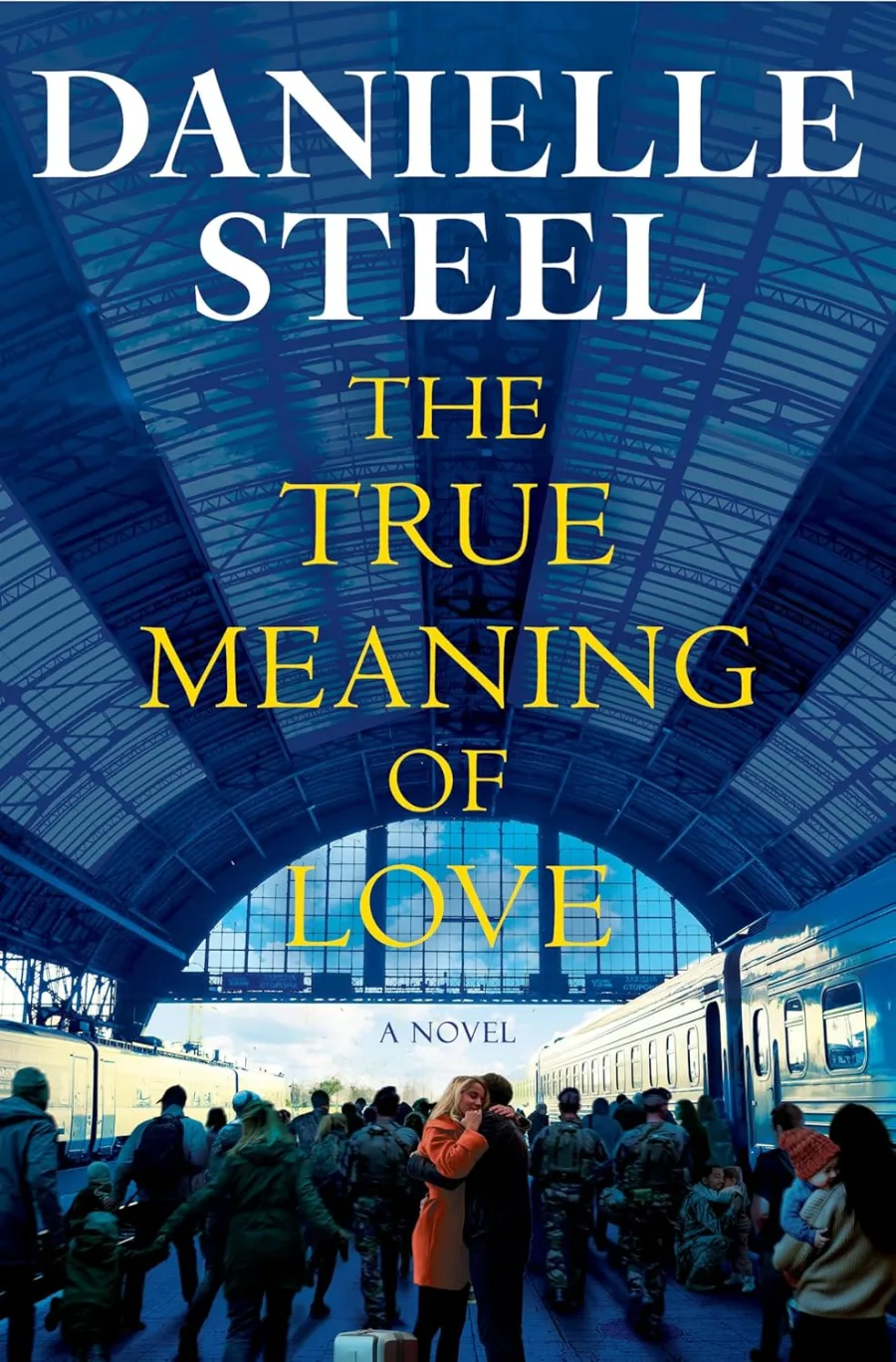
Download Cover Image
Do you want to download the full cover image for The True Meaning of Love: A Novel?