
They Stole a City: Wilmington's White Supremacist Coup and the Families Who Live with Its Legacy
Hardcover
• 528 Pages
• USD 32.00
• English
• 9781984878816
No ratings yet
| Publisher | Penguin Press |
|---|---|
| ISBN13 | 9781984878816 |
| ASIN/SKU | 1984878816 |
| Book Format | Hardcover |
| Language | English |
| Pages | 528 |
| List Price | USD 32.00 |
| Publishing Date | 14/07/2026 |
| Dimensions | 6.44 x 1.65 x 9.53 inches |
| Weight | 1.56 pounds |
| Book Code | BD00066944 |
Buy this Book
Amazon Stores
Ebook Stores
Other Stores
Discover They Stole a City: Wilmington's White Supremacist Coup and the Families Who Live with Its Legacy by Lauren Collins. This book is published by Penguin Press in Hardcover format, ISBN 9781984878816, ASIN 1984878816, under History, U.S. State and Local History, History of Southern U.S..
Book Description
“This is the kind of book that can change and shape public discourse about racism, history and white supremacy.” —Bookpage
In this ambitious and groundbreaking history, Lauren Collins weaves together stories of four Wilmington, North Carolina, families over 125 years to create a full accounting of the long-term effects of the 1898 white supremacist massacre and coup and its critical role in subverting American democracy
After the Civil War, Reconstruction ushered in an era of political equality and economic opportunity for Black people, and it lasted longer in Wilmington than almost anywhere else. In 1898, Wilmington was a bastion of Black success: Black cultural life flourished, while a thriving Black middle class brimmed with lawyers, educators, and elected officials. The city became a symbol of Black hope—only for all of it to come to a violent end on November 10, 1898.
In this epic, multigenerational narrative, Lauren Collins traces the fates of four Wilmington families: the Howes, the Halseys, the Moores, and the Bellamy/MacRaes, all of whom were present on the day when a mob of white supremacists launched a murderous coup to “take the city.” After issuing a “White Declaration of Independence,” white men gunned down scores of Black men, chasing their families into hiding. Then they marched to city hall, where they overthrew the democratically elected, multiracial local government at gunpoint in what is thought to be the only successful coup d’état on American soil. No one knows exactly how many Black citizens they murdered—surely dozens, likely hundreds—while driving thousands of survivors and their white allies out of town. Folklore among both Black and white Wilmingtonians holds that the Cape Fear River ran red. While the effects of this episode of racial terrorism would ricochet through the next century of our nation’s history, no one was ever prosecuted or punished, and many of the details have been largely—and deliberately—forgotten.
In collaboration with living descendants of Black and white families, Collins seeks to create a more complete understanding of 1898 than can be drawn solely from the archives. She follows these four families and their descendants through the eras of segregation and Jim Crow, the Great Migration, the Civil Rights movement, and school desegregation, all the way up to the Black Lives Matter and racial justice protests in 2020, emphasizing the lasting and consequential effects of 1898 on the city and people of Wilmington.
Weaving together each generation’s reckoning with their past and how it has imprinted on their present, They Stole a City is an ambitious and revelatory examination of American racial terror as it has played out in one Southern city, written in the conviction that the story of the 1898 Wilmington massacre and coup is, in fact, a story about America in 2025.
In this ambitious and groundbreaking history, Lauren Collins weaves together stories of four Wilmington, North Carolina, families over 125 years to create a full accounting of the long-term effects of the 1898 white supremacist massacre and coup and its critical role in subverting American democracy
After the Civil War, Reconstruction ushered in an era of political equality and economic opportunity for Black people, and it lasted longer in Wilmington than almost anywhere else. In 1898, Wilmington was a bastion of Black success: Black cultural life flourished, while a thriving Black middle class brimmed with lawyers, educators, and elected officials. The city became a symbol of Black hope—only for all of it to come to a violent end on November 10, 1898.
In this epic, multigenerational narrative, Lauren Collins traces the fates of four Wilmington families: the Howes, the Halseys, the Moores, and the Bellamy/MacRaes, all of whom were present on the day when a mob of white supremacists launched a murderous coup to “take the city.” After issuing a “White Declaration of Independence,” white men gunned down scores of Black men, chasing their families into hiding. Then they marched to city hall, where they overthrew the democratically elected, multiracial local government at gunpoint in what is thought to be the only successful coup d’état on American soil. No one knows exactly how many Black citizens they murdered—surely dozens, likely hundreds—while driving thousands of survivors and their white allies out of town. Folklore among both Black and white Wilmingtonians holds that the Cape Fear River ran red. While the effects of this episode of racial terrorism would ricochet through the next century of our nation’s history, no one was ever prosecuted or punished, and many of the details have been largely—and deliberately—forgotten.
In collaboration with living descendants of Black and white families, Collins seeks to create a more complete understanding of 1898 than can be drawn solely from the archives. She follows these four families and their descendants through the eras of segregation and Jim Crow, the Great Migration, the Civil Rights movement, and school desegregation, all the way up to the Black Lives Matter and racial justice protests in 2020, emphasizing the lasting and consequential effects of 1898 on the city and people of Wilmington.
Weaving together each generation’s reckoning with their past and how it has imprinted on their present, They Stole a City is an ambitious and revelatory examination of American racial terror as it has played out in one Southern city, written in the conviction that the story of the 1898 Wilmington massacre and coup is, in fact, a story about America in 2025.
Author Biography
Lauren Collins was born in Wilmington, North Carolina, in 1980. She is a staff writer at The New Yorker and the author of When in French: Love in a Second Language, which The New York Times named one of its 100 Notable Books of 2016. She lives in Paris with her family.
Editorial Reviews
“They Stole A City [is] a powerful new book... [Collins] shows how the massacre couldn't be contained to its particular time period... its effects continued to reverberate across generations.” —Jennifer Szalai, The New York Times
“The only coup d'etat to succeed on U.S. soil is, at most, a distant historical afterthought these days . . . Collins' new chronicle of the infamous event . . . fills in some serious gaps in the American collective memory and explains how its perpetrators cultivated the disorienting silence that persists in the historical record today.” —NPR.org
“An excellent new history out this summer that considers how the past lives in the present . . . Collins’s history is deeply researched and astonishing in its breadth . . . Her willingness to explore how a great injustice reverberates in both the perpetrators’ and the victims’ lives, as well as the lives of their descendants, pushes past what many people imagine a history might be. For Collins, revisiting shameful events in the past is important not for the meaningless exercise of self-flagellation but because one cannot understand one’s present day without this understanding.” —Kaitlyn Greenidge, Harper's Bazaar
“A scathing history of an infamous act of racial violence . . . Collins’ narrative takes [the 1898 coup and massacre], with ‘dozens and perhaps hundreds of Black citizens’ killed, and extends it to a larger legacy of racial oppression . . . An urgent work of reportage and historical research that lays bare structural racism past and present.” —Kirkus (starred review)
“With moral clarity and narrative precision, Lauren Collins has crafted a searing account of the 1898 Wilmington massacre that is as analytically rigorous as it is emotionally resonant. By centering the interwoven lives of four families, They Stole a City exposes the calculated architecture of white supremacist violence while illuminating the enduring strategies of Black resistance, survival, and community-making. Collins refuses the comfort of historical distance, instead insisting on the intimate and structural continuities between past and present. The result is a work that not only deepens our understanding of a singular American atrocity, but also sharpens our recognition of the forces that continue to threaten democratic life. This is essential reading for anyone committed to reckoning honestly with history—and to confronting its living legacies.” —LeRhonda S. Manigault-Bryant, author of Talking to the Dead: Religion, Music, and Lived Memory among Gullah/Geechee People.
“With startling directness and vivid prose based on original and deep research, journalist Lauren Collins retells the story of Wilmington, North Carolina’s darkest period. This sweeping saga featuring four families across generations lays bare a long, horrid history of racial oppression and political violence, revealing not only how anti-democratic, white supremacist forces organized and leveraged brutality, but also how targeted individuals defended their humanity and communities. They Stole a City is an immersive yet sensitive account that reminds Americans we need not look to twentieth-century Europe for examples of electoral corruption and autocratic consolidation reinforced by racist ideology, roving thugs, economic elites, and immoral politicians. This is an urgent, unsettling history that we need now.” —Tiya Miles, author of All That She Carried: The Journey of Ashley’s Sack, a Black Family Keepsake
“Collins eloquently renders spellbinding tales of the 1898 Wilmington racial massacre and the families whose lives it changed forever. Her meticulous research juxtaposes its bloody history with profound interpretations of the legacies that shaped such diverse figures as Michael Jordan and Lara Trump. They Stole a City proves that past is always present. An indispensable read for all of us in these times.” —Glenda Gilmore, Peter V. and C. Vann Woodward Professor of History Emerita at Yale University
“The only coup d'etat to succeed on U.S. soil is, at most, a distant historical afterthought these days . . . Collins' new chronicle of the infamous event . . . fills in some serious gaps in the American collective memory and explains how its perpetrators cultivated the disorienting silence that persists in the historical record today.” —NPR.org
“An excellent new history out this summer that considers how the past lives in the present . . . Collins’s history is deeply researched and astonishing in its breadth . . . Her willingness to explore how a great injustice reverberates in both the perpetrators’ and the victims’ lives, as well as the lives of their descendants, pushes past what many people imagine a history might be. For Collins, revisiting shameful events in the past is important not for the meaningless exercise of self-flagellation but because one cannot understand one’s present day without this understanding.” —Kaitlyn Greenidge, Harper's Bazaar
“A scathing history of an infamous act of racial violence . . . Collins’ narrative takes [the 1898 coup and massacre], with ‘dozens and perhaps hundreds of Black citizens’ killed, and extends it to a larger legacy of racial oppression . . . An urgent work of reportage and historical research that lays bare structural racism past and present.” —Kirkus (starred review)
“With moral clarity and narrative precision, Lauren Collins has crafted a searing account of the 1898 Wilmington massacre that is as analytically rigorous as it is emotionally resonant. By centering the interwoven lives of four families, They Stole a City exposes the calculated architecture of white supremacist violence while illuminating the enduring strategies of Black resistance, survival, and community-making. Collins refuses the comfort of historical distance, instead insisting on the intimate and structural continuities between past and present. The result is a work that not only deepens our understanding of a singular American atrocity, but also sharpens our recognition of the forces that continue to threaten democratic life. This is essential reading for anyone committed to reckoning honestly with history—and to confronting its living legacies.” —LeRhonda S. Manigault-Bryant, author of Talking to the Dead: Religion, Music, and Lived Memory among Gullah/Geechee People.
“With startling directness and vivid prose based on original and deep research, journalist Lauren Collins retells the story of Wilmington, North Carolina’s darkest period. This sweeping saga featuring four families across generations lays bare a long, horrid history of racial oppression and political violence, revealing not only how anti-democratic, white supremacist forces organized and leveraged brutality, but also how targeted individuals defended their humanity and communities. They Stole a City is an immersive yet sensitive account that reminds Americans we need not look to twentieth-century Europe for examples of electoral corruption and autocratic consolidation reinforced by racist ideology, roving thugs, economic elites, and immoral politicians. This is an urgent, unsettling history that we need now.” —Tiya Miles, author of All That She Carried: The Journey of Ashley’s Sack, a Black Family Keepsake
“Collins eloquently renders spellbinding tales of the 1898 Wilmington racial massacre and the families whose lives it changed forever. Her meticulous research juxtaposes its bloody history with profound interpretations of the legacies that shaped such diverse figures as Michael Jordan and Lara Trump. They Stole a City proves that past is always present. An indispensable read for all of us in these times.” —Glenda Gilmore, Peter V. and C. Vann Woodward Professor of History Emerita at Yale University
Book Summary
They Stole a City: Wilmington's White Supremacist Coup and the Families Who Live with Its Legacy by Lauren Collins is a deeply researched, emotionally powerful exploration of the 1898 white supremacist coup in Wilmington, North Carolina, and the way that violent event has shaped families, politics, and memory for more than a century. Collins begins by bringing readers into the thriving Black-majority port city that Wilmington once was in the late 19th century—a place where Black citizens voted, held office, owned businesses, edited newspapers, and participated actively in civic life. It was an imperfect society still marked by racism, but it was also a rare example of multiracial democracy in the post–Civil War South. Against this backdrop, she traces the systematic effort by white supremacist leaders—Democrats, business elites, and paramilitary groups—to destroy that experiment in democracy. Through speeches, newspaper propaganda, paramilitary organization, and explicit plans, they made clear that they wanted to “redeem” the city and state from Black political power. Collins reconstructs how, on November 10, 1898, these men carried out their plan: they marched on the offices of the Black-owned Daily Record newspaper, burned it to the ground, murdered Black residents in the streets, and forced duly elected local officials—many of them Black or allied with Black voters—to resign at gunpoint. In doing so, they literally stole a city, turning Wilmington overnight from a symbol of Black political possibility into a warning that any challenge to white rule could end in bloodshed.
Rather than treating this coup as a distant, static historical episode, Collins centers its human consequences. She follows several families whose ancestors were directly affected—some descended from the Black residents who fled or were killed, others descended from the white men who staged and benefited from the coup. Much of the book’s power comes from these intertwined narratives. On the Black side, Collins highlights stories of families who lost property, businesses, and homes; who were forced into exile in other states; and who carried the trauma of sudden terror and displacement across generations. She shows how the coup severed economic opportunity: land and houses were abandoned under duress, positions and careers vanished, and the wealth and political influence that might have been passed down were replaced by silence, fear, and often poverty. On the white side, she illustrates how many descendants grew up with a very different story—or no story at all. For some, the coup was long framed in family lore as a “riot” or a defense of order and civilization; for others, it was barely mentioned, an absence that itself speaks volumes about how injustice can be hidden in plain sight. Collins carefully captures the discomfort, denial, and gradual awakening of white descendants as they confront the reality that their ancestors participated in or profited from an organized campaign of racial terror.
The book devotes substantial attention to the machinery of propaganda and myth that followed the violence. Collins shows how white supremacist leaders, journalists, and politicians quickly rewrote the story of November 1898 to justify their actions and normalize the regime that followed. The event was mislabeled a “race riot,” as if chaos had erupted spontaneously, rather than a planned coup against a legally elected government. Textbooks, official histories, and local commemorations echoed this false narrative for decades, presenting white participants as heroes and erasing Black experiences. Collins underscores that this rewriting wasn’t just symbolic—it had concrete effects. By recording the coup as a justified response rather than a crime, officials avoided accountability, preserved the political power structure that arose from the violence, and created a civic memory that made it difficult for later generations to recognize the injustice. In this sense, the book argues, the coup succeeded twice: first in bodies and bullets, and later in words and silence.
Collins also places Wilmington within the broader context of American history, showing that the 1898 coup was not an isolated incident but part of a larger backlash against Reconstruction and Black political participation. She draws connections to efforts across the South to roll back voting rights through terror, legal suppression, and constitutional changes, including poll taxes, literacy tests, and Jim Crow segregation. In Wilmington, the coup served as both symbol and model: after white supremacists seized control locally, they used their newfound power to push statewide policies that disenfranchised Black citizens for generations. Collins argues that understanding Wilmington is crucial to understanding how American democracy itself was undermined, not just by individual acts of racism but by organized political movements that treated white supremacy as a legitimate governing principle. She shows how the legacy of those decisions can be traced into present-day fights over voting rights, policing, education, and monuments.
At the heart of the narrative are the emotional journeys of the families Collins profiles. She spends time with descendants who are only now piecing together their own histories thanks to archives, oral stories, and recent scholarship. Some Black descendants are engaged in efforts to reclaim or document stolen property, to honor ancestors whose names were omitted from official accounts, or to educate their children about both the pain and resilience in their family tree. The book describes the complexity of navigating a legacy that holds both pride—ancestors who built lives and institutions under difficult conditions—and profound loss, knowing that a city that once belonged to them politically and culturally was violently taken away. On the white side, Collins explores how descendants grapple emotionally with inherited privilege, inherited narratives, and the question of responsibility. Some feel deep shame and seek ways to support reparative work; others struggle with defensiveness or a desire to separate themselves from what their ancestors did. Collins doesn’t flatten these experiences into simple moral categories; instead, she portrays them as ongoing, often uncomfortable processes of learning and reckoning.
Throughout the book, Collins writes with a balance of journalistic clarity and literary sensitivity. She reconstructs scenes from 1898 using historical documents, eyewitness accounts, and contemporary reports, but she also slows down to capture the sensory and emotional dimensions of the people involved—what it meant to hear gunfire on a street where one’s children walked, to see smoke from a newspaper office that had symbolized Black voice and dignity, to leave home with only what could be carried, not knowing if it could ever be reclaimed. In the present day, she sits in living rooms, attends community events, and joins descendants as they visit historical sites and memorials. Through these moments, she shows how history lives not only in archives but in bodies, conversations, and family dynamics. The city of Wilmington itself becomes a character: its streets, parks, waterfront, and neighborhoods quietly carry the visible and invisible markers of where violence occurred and where power shifted.
Collins also addresses the question of what repair might look like. While the book does not offer easy solutions or claim that any set of policies could fully undo the harm, it highlights possibilities: public acknowledgment of the coup as a coup, not a riot; inclusive memorials that center Black experiences; research that maps and values stolen or abandoned property; educational efforts that replace propaganda with honest history; and community dialogues that give space to grief, anger, and hope. She emphasizes that reckoning is not a single event but a continuous practice, one that requires both Black and white residents—and, more broadly, Americans—to confront the ways that racial violence and political theft remain embedded in structures that still shape who has power, who has wealth, and whose stories are believed.
Rather than treating this coup as a distant, static historical episode, Collins centers its human consequences. She follows several families whose ancestors were directly affected—some descended from the Black residents who fled or were killed, others descended from the white men who staged and benefited from the coup. Much of the book’s power comes from these intertwined narratives. On the Black side, Collins highlights stories of families who lost property, businesses, and homes; who were forced into exile in other states; and who carried the trauma of sudden terror and displacement across generations. She shows how the coup severed economic opportunity: land and houses were abandoned under duress, positions and careers vanished, and the wealth and political influence that might have been passed down were replaced by silence, fear, and often poverty. On the white side, she illustrates how many descendants grew up with a very different story—or no story at all. For some, the coup was long framed in family lore as a “riot” or a defense of order and civilization; for others, it was barely mentioned, an absence that itself speaks volumes about how injustice can be hidden in plain sight. Collins carefully captures the discomfort, denial, and gradual awakening of white descendants as they confront the reality that their ancestors participated in or profited from an organized campaign of racial terror.
The book devotes substantial attention to the machinery of propaganda and myth that followed the violence. Collins shows how white supremacist leaders, journalists, and politicians quickly rewrote the story of November 1898 to justify their actions and normalize the regime that followed. The event was mislabeled a “race riot,” as if chaos had erupted spontaneously, rather than a planned coup against a legally elected government. Textbooks, official histories, and local commemorations echoed this false narrative for decades, presenting white participants as heroes and erasing Black experiences. Collins underscores that this rewriting wasn’t just symbolic—it had concrete effects. By recording the coup as a justified response rather than a crime, officials avoided accountability, preserved the political power structure that arose from the violence, and created a civic memory that made it difficult for later generations to recognize the injustice. In this sense, the book argues, the coup succeeded twice: first in bodies and bullets, and later in words and silence.
Collins also places Wilmington within the broader context of American history, showing that the 1898 coup was not an isolated incident but part of a larger backlash against Reconstruction and Black political participation. She draws connections to efforts across the South to roll back voting rights through terror, legal suppression, and constitutional changes, including poll taxes, literacy tests, and Jim Crow segregation. In Wilmington, the coup served as both symbol and model: after white supremacists seized control locally, they used their newfound power to push statewide policies that disenfranchised Black citizens for generations. Collins argues that understanding Wilmington is crucial to understanding how American democracy itself was undermined, not just by individual acts of racism but by organized political movements that treated white supremacy as a legitimate governing principle. She shows how the legacy of those decisions can be traced into present-day fights over voting rights, policing, education, and monuments.
At the heart of the narrative are the emotional journeys of the families Collins profiles. She spends time with descendants who are only now piecing together their own histories thanks to archives, oral stories, and recent scholarship. Some Black descendants are engaged in efforts to reclaim or document stolen property, to honor ancestors whose names were omitted from official accounts, or to educate their children about both the pain and resilience in their family tree. The book describes the complexity of navigating a legacy that holds both pride—ancestors who built lives and institutions under difficult conditions—and profound loss, knowing that a city that once belonged to them politically and culturally was violently taken away. On the white side, Collins explores how descendants grapple emotionally with inherited privilege, inherited narratives, and the question of responsibility. Some feel deep shame and seek ways to support reparative work; others struggle with defensiveness or a desire to separate themselves from what their ancestors did. Collins doesn’t flatten these experiences into simple moral categories; instead, she portrays them as ongoing, often uncomfortable processes of learning and reckoning.
Throughout the book, Collins writes with a balance of journalistic clarity and literary sensitivity. She reconstructs scenes from 1898 using historical documents, eyewitness accounts, and contemporary reports, but she also slows down to capture the sensory and emotional dimensions of the people involved—what it meant to hear gunfire on a street where one’s children walked, to see smoke from a newspaper office that had symbolized Black voice and dignity, to leave home with only what could be carried, not knowing if it could ever be reclaimed. In the present day, she sits in living rooms, attends community events, and joins descendants as they visit historical sites and memorials. Through these moments, she shows how history lives not only in archives but in bodies, conversations, and family dynamics. The city of Wilmington itself becomes a character: its streets, parks, waterfront, and neighborhoods quietly carry the visible and invisible markers of where violence occurred and where power shifted.
Collins also addresses the question of what repair might look like. While the book does not offer easy solutions or claim that any set of policies could fully undo the harm, it highlights possibilities: public acknowledgment of the coup as a coup, not a riot; inclusive memorials that center Black experiences; research that maps and values stolen or abandoned property; educational efforts that replace propaganda with honest history; and community dialogues that give space to grief, anger, and hope. She emphasizes that reckoning is not a single event but a continuous practice, one that requires both Black and white residents—and, more broadly, Americans—to confront the ways that racial violence and political theft remain embedded in structures that still shape who has power, who has wealth, and whose stories are believed.
Sample Chapters
Sample Chapters will be added soon…
Reader Reviews
No reviews yet.
They Stole a City: Wilmington's White Supremacist Coup and the Families Who Live with Its Legacy
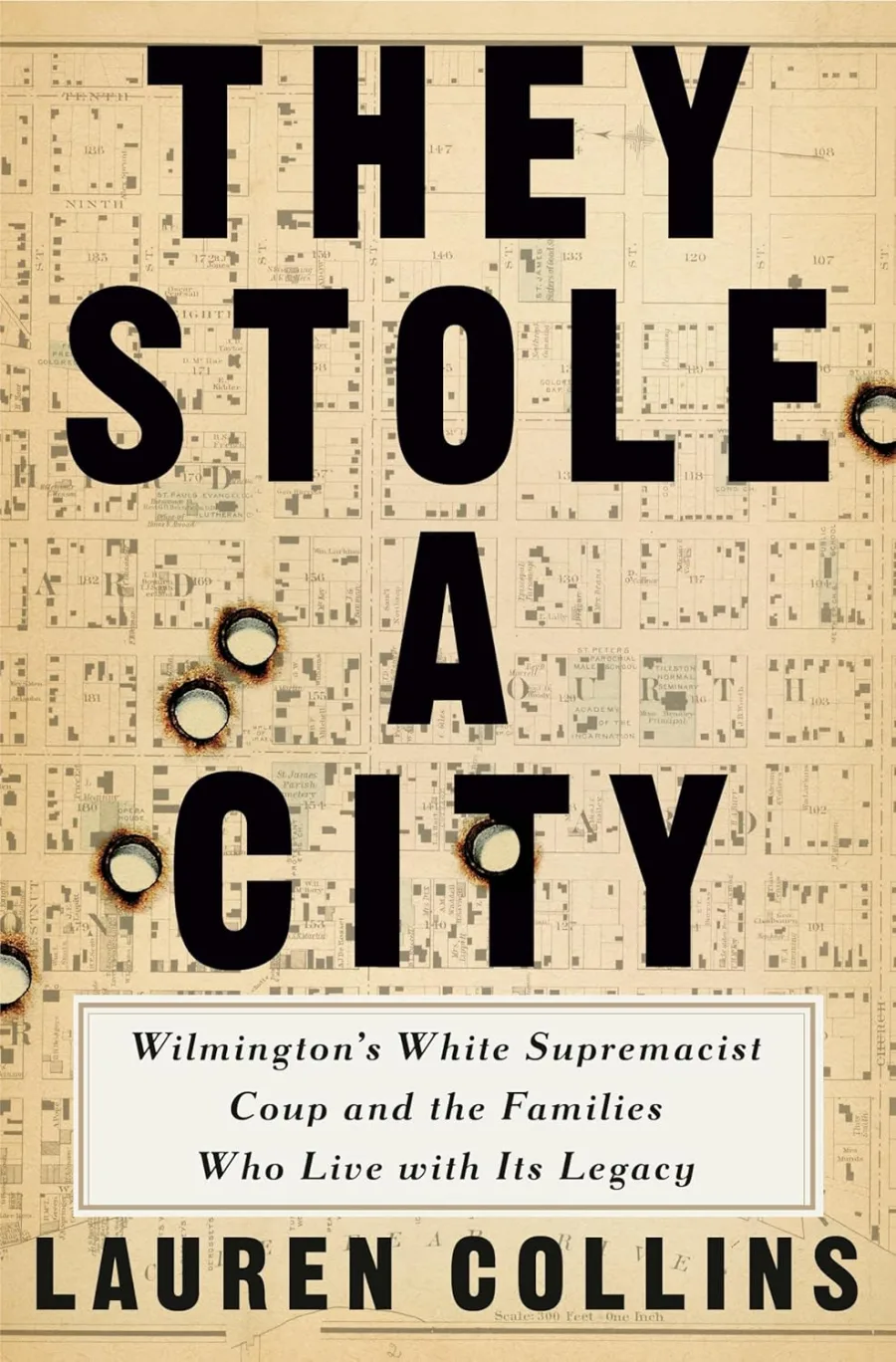
Download Cover Image
Do you want to download the full cover image for They Stole a City: Wilmington's White Supremacist Coup and the Families Who Live with Its Legacy?