
The Adventure Zone: Story and Song
Clint McElroy, Griffin McElroy
Paperback
• 416 Pages
• USD 21.99
• English
• 9781250861740
No ratings yet
| Publisher | 23rd Street Books |
|---|---|
| ISBN13 | 9781250861740 |
| ASIN/SKU | 1250861748 |
| Book Format | Paperback |
| Language | English |
| Pages | 416 |
| List Price | USD 21.99 |
| Publishing Date | 14/07/2026 |
| Dimensions | 6.1 x 1.05 x 8.95 inches |
| Weight | 1 pounds |
| Book Code | BD00066953 |
Buy this Book
Amazon Stores
Ebook Stores
Other Stores
Discover The Adventure Zone: Story and Song by Clint McElroy. This book is published by 23rd Street Books in Paperback format, ISBN 9781250861740, ASIN 1250861748, under Comics and Graphic Novels, Humorous Graphic Novels, Fantasy Graphic Novels.
Book Description
The triumphant final installment in the #1 New York Times-bestselling Adventure Zone graphic novel series, a meta-fictional D&D adventure story based on the smash hit podcast.
After six beloved and bestselling installments, The Adventure Zone series returns one final time for a grand finale: Story and Song. Our heroes―Taako, Magnus, and Merle―are about to discover the long-lost truths about themselves, their shared history, and the nature of the threat they’ve been facing since they first agreed to join the Bureau of Balance. But just as their eyes are opened to the truth―mere moments after being reunited with long-lost loved ones―the forces that have hunted them for all these years catch up in a spectacularly horrifying fashion.
After six beloved and bestselling installments, The Adventure Zone series returns one final time for a grand finale: Story and Song. Our heroes―Taako, Magnus, and Merle―are about to discover the long-lost truths about themselves, their shared history, and the nature of the threat they’ve been facing since they first agreed to join the Bureau of Balance. But just as their eyes are opened to the truth―mere moments after being reunited with long-lost loved ones―the forces that have hunted them for all these years catch up in a spectacularly horrifying fashion.
Author Biography
Clint McElroy is a 45-year veteran of broadcasting who now works on the popular podcast THE ADVENTURE ZONE, with his sons Justin, Travis and Griffin. He is one of the co-writers of THE ADVENTURE ZONE graphic novels, along with WAR OF THE REALMS: JOURNEY INTO MYSTERY, for Marvel Comics, and MARVEL TEAM-UP. He has three BEST DAD coffee mugs and six BEST GRANDPA...although the titles have been challenged.
Editorial Reviews
Editorial Reviews will be added soon…
Book Summary
The Adventure Zone by Clint McElroy, Griffin McElroy, Justin McElroy, and Travis McElroy is a fantasy adventure graphic novel that begins with humor, chaos, and absurdity, but gradually reveals a larger emotional story about friendship, purpose, and the strange ways ordinary people become heroes. Based on the popular actual-play podcast, the story follows three unlikely adventurers, Magnus Burnsides, Merle Highchurch, and Taako, who are brought together for a mission that at first seems simple and unimportant. They are hired by the director of the Bureau of Balance, a mysterious organization that works to recover dangerous magical artifacts before they can be misused. What starts as a comic quest quickly turns into a larger journey involving secret powers, ancient relics, dangerous enemies, and the slow discovery that this world is far more connected and fragile than they first realize.
The story begins with the group as deeply imperfect heroes. Magnus is a human fighter who solves many problems by rushing directly into them. He is brave, impulsive, and often guided by loyalty more than by strategy. Merle, a dwarf cleric, is awkward, stubborn, and surprisingly emotional, someone who does not fit the image of a wise spiritual guide in a neat or traditional way. Taako, an elf wizard, is clever, vain, dramatic, and often seems most concerned with his own interests, though his charm and intelligence make him impossible to ignore. Their personalities clash in funny and unpredictable ways, and much of the book’s appeal comes from their banter and their very human incompetence. They make mistakes, misunderstand situations, and create trouble almost as often as they solve it, which gives the story a playful and energetic tone.
At the center of the larger narrative is the Bureau of Balance, the organization that recruits them. Led by the calm and mysterious Lucretia, the Bureau sends adventurers to locate magical objects known as Grand Relics. These relics are powerful and dangerous, and the Bureau’s stated mission is to collect them and keep them out of the hands of people who would abuse them. At first, this setup gives the story the structure of a quest series, with each mission focusing on a new location, a new challenge, and a new relic. The heroes are drawn into bizarre environments filled with monsters, puzzles, strange communities, and magical threats. The world feels expansive and flexible, capable of being silly in one moment and deeply sincere in the next.
One of the story’s strengths is how naturally it blends parody with genuine fantasy adventure. The humor is constant, but it is not empty. The jokes help define the characters and build their relationships, and over time they make the emotional moments more effective rather than less. Much of the comedy comes from how the heroes respond to danger with panic, sarcasm, vanity, or bizarre confidence. Their conversations often feel more modern and casual than the setting around them, which creates a fun contrast with the epic fantasy world they inhabit. Yet beneath the comedy, the characters begin to change. Their foolishness does not disappear, but their trust in one another grows, and their choices start to carry more emotional and moral weight.
As the missions continue, the story expands beyond simple artifact retrieval. The relics are not just magical tools; they are connected to destructive forces and to a hidden history that slowly begins to emerge. The heroes start learning that the Bureau of Balance itself contains secrets, and that Lucretia may not be telling them everything. The world becomes more complicated as questions of memory, responsibility, and sacrifice come to the surface. What once felt like an episodic adventure starts to reveal a deeper design. The relics are tied to a larger cosmic danger, and the people trying to contain them are not untouched by that danger themselves. The plot gradually shifts from a collection of humorous quests into a more emotional and mythic story about a broken past and an uncertain future.
A major part of the book’s emotional power lies in its treatment of identity and chosen family. Magnus, Merle, and Taako do not begin as noble champions with a grand destiny. They are messy, insecure, and often selfish in believable ways. But through shared danger, absurd experiences, and hard-earned loyalty, they become a family of sorts. Their connection to one another becomes more meaningful than the missions alone. They learn to protect each other not just because they are assigned to work together, but because they genuinely care. This shift is gradual and effective, and it gives the story heart. The fantasy setting may be filled with magic and monsters, but the most important bonds are emotional ones built through companionship and trust.
The graphic novel format also plays a major role in how the story works. The visual storytelling allows the humor to land quickly through expressions, timing, and exaggerated action, while also giving the fantasy world vivid shape. Action scenes can be energetic and chaotic, with spells, creatures, and magical effects presented in a colorful and imaginative way. At the same time, quieter scenes gain emotional depth through body language and visual contrast. The art supports the tone of the story by allowing comedy and seriousness to exist side by side. Characters can look ridiculous in one panel and deeply vulnerable in the next, which reflects the spirit of the story itself.
Another important thread in the narrative is the gradual revelation that the heroes’ journey is not as accidental as it first appears. As pieces of the past return and hidden truths are uncovered, the story begins to ask larger questions about memory and pain. Some characters have forgotten things for a reason. Some truths have been buried because they were too painful or dangerous to face directly. The adventure becomes not only about fighting external enemies, but also about confronting what has been lost, erased, or hidden. This adds an unexpected emotional depth to the book. What first seems like a light fantasy comedy slowly becomes a meditation on grief, regret, and the effort to build meaning after devastation.
Lucretia, as leader of the Bureau, becomes one of the key figures in this moral complexity. She is not a simple guide or mentor. She is deeply tied to the secrets at the heart of the story, and her decisions raise difficult questions about whether it is right to hide the truth in order to protect others. She represents the burden of leadership and the pain of making choices in a damaged world. Her relationship with the three heroes and with the Bureau itself gains greater emotional significance as the story unfolds. She is trying to preserve safety, but the methods she uses come with emotional cost, and the book does not treat those choices as easy or clean.
The Adventure Zone also stands out for the way it handles heroism. It does not present heroism as perfection, nobility, or effortless courage. Instead, it suggests that heroism often comes from flawed people continuing to show up for each other even when they are confused, afraid, or unprepared. Magnus, Merle, and Taako do not suddenly become idealized fantasy champions. They remain odd, funny, and imperfect, but they become brave in a more meaningful way. They choose to care. They choose to act. They choose to face truths that would be easier to ignore. That makes their growth feel more authentic and more emotionally satisfying.
By the later parts of the story, the emotional stakes become much higher. The world is threatened by forces that are larger than any one mission, and the heroes must come to understand not only what they are fighting, but why it matters. Their personal histories and their relationships to others gain significance, and the tone becomes more reflective without losing the wit that made the journey appealing in the first place. The story never fully abandons its sense of fun, but it earns its serious moments through character development and accumulated trust. This combination of comedy and emotional sincerity is one of its defining strengths.
Overall, The Adventure Zone is a vibrant and engaging fantasy story that begins as a playful, joke-filled quest and gradually transforms into something far more emotionally resonant. It offers the pleasures of adventure, magic, monsters, and found family, while also exploring memory, loss, loyalty, and the complicated cost of protecting the people you love. Its charm comes from the chemistry among its heroes, the flexibility of its tone, and its willingness to let ridiculous characters grow into meaningful ones. What makes the book memorable is not just its creativity or humor, but the way it turns chaos and comedy into a heartfelt story about imperfect people trying to do something good in a world full of danger and uncertainty.
The story begins with the group as deeply imperfect heroes. Magnus is a human fighter who solves many problems by rushing directly into them. He is brave, impulsive, and often guided by loyalty more than by strategy. Merle, a dwarf cleric, is awkward, stubborn, and surprisingly emotional, someone who does not fit the image of a wise spiritual guide in a neat or traditional way. Taako, an elf wizard, is clever, vain, dramatic, and often seems most concerned with his own interests, though his charm and intelligence make him impossible to ignore. Their personalities clash in funny and unpredictable ways, and much of the book’s appeal comes from their banter and their very human incompetence. They make mistakes, misunderstand situations, and create trouble almost as often as they solve it, which gives the story a playful and energetic tone.
At the center of the larger narrative is the Bureau of Balance, the organization that recruits them. Led by the calm and mysterious Lucretia, the Bureau sends adventurers to locate magical objects known as Grand Relics. These relics are powerful and dangerous, and the Bureau’s stated mission is to collect them and keep them out of the hands of people who would abuse them. At first, this setup gives the story the structure of a quest series, with each mission focusing on a new location, a new challenge, and a new relic. The heroes are drawn into bizarre environments filled with monsters, puzzles, strange communities, and magical threats. The world feels expansive and flexible, capable of being silly in one moment and deeply sincere in the next.
One of the story’s strengths is how naturally it blends parody with genuine fantasy adventure. The humor is constant, but it is not empty. The jokes help define the characters and build their relationships, and over time they make the emotional moments more effective rather than less. Much of the comedy comes from how the heroes respond to danger with panic, sarcasm, vanity, or bizarre confidence. Their conversations often feel more modern and casual than the setting around them, which creates a fun contrast with the epic fantasy world they inhabit. Yet beneath the comedy, the characters begin to change. Their foolishness does not disappear, but their trust in one another grows, and their choices start to carry more emotional and moral weight.
As the missions continue, the story expands beyond simple artifact retrieval. The relics are not just magical tools; they are connected to destructive forces and to a hidden history that slowly begins to emerge. The heroes start learning that the Bureau of Balance itself contains secrets, and that Lucretia may not be telling them everything. The world becomes more complicated as questions of memory, responsibility, and sacrifice come to the surface. What once felt like an episodic adventure starts to reveal a deeper design. The relics are tied to a larger cosmic danger, and the people trying to contain them are not untouched by that danger themselves. The plot gradually shifts from a collection of humorous quests into a more emotional and mythic story about a broken past and an uncertain future.
A major part of the book’s emotional power lies in its treatment of identity and chosen family. Magnus, Merle, and Taako do not begin as noble champions with a grand destiny. They are messy, insecure, and often selfish in believable ways. But through shared danger, absurd experiences, and hard-earned loyalty, they become a family of sorts. Their connection to one another becomes more meaningful than the missions alone. They learn to protect each other not just because they are assigned to work together, but because they genuinely care. This shift is gradual and effective, and it gives the story heart. The fantasy setting may be filled with magic and monsters, but the most important bonds are emotional ones built through companionship and trust.
The graphic novel format also plays a major role in how the story works. The visual storytelling allows the humor to land quickly through expressions, timing, and exaggerated action, while also giving the fantasy world vivid shape. Action scenes can be energetic and chaotic, with spells, creatures, and magical effects presented in a colorful and imaginative way. At the same time, quieter scenes gain emotional depth through body language and visual contrast. The art supports the tone of the story by allowing comedy and seriousness to exist side by side. Characters can look ridiculous in one panel and deeply vulnerable in the next, which reflects the spirit of the story itself.
Another important thread in the narrative is the gradual revelation that the heroes’ journey is not as accidental as it first appears. As pieces of the past return and hidden truths are uncovered, the story begins to ask larger questions about memory and pain. Some characters have forgotten things for a reason. Some truths have been buried because they were too painful or dangerous to face directly. The adventure becomes not only about fighting external enemies, but also about confronting what has been lost, erased, or hidden. This adds an unexpected emotional depth to the book. What first seems like a light fantasy comedy slowly becomes a meditation on grief, regret, and the effort to build meaning after devastation.
Lucretia, as leader of the Bureau, becomes one of the key figures in this moral complexity. She is not a simple guide or mentor. She is deeply tied to the secrets at the heart of the story, and her decisions raise difficult questions about whether it is right to hide the truth in order to protect others. She represents the burden of leadership and the pain of making choices in a damaged world. Her relationship with the three heroes and with the Bureau itself gains greater emotional significance as the story unfolds. She is trying to preserve safety, but the methods she uses come with emotional cost, and the book does not treat those choices as easy or clean.
The Adventure Zone also stands out for the way it handles heroism. It does not present heroism as perfection, nobility, or effortless courage. Instead, it suggests that heroism often comes from flawed people continuing to show up for each other even when they are confused, afraid, or unprepared. Magnus, Merle, and Taako do not suddenly become idealized fantasy champions. They remain odd, funny, and imperfect, but they become brave in a more meaningful way. They choose to care. They choose to act. They choose to face truths that would be easier to ignore. That makes their growth feel more authentic and more emotionally satisfying.
By the later parts of the story, the emotional stakes become much higher. The world is threatened by forces that are larger than any one mission, and the heroes must come to understand not only what they are fighting, but why it matters. Their personal histories and their relationships to others gain significance, and the tone becomes more reflective without losing the wit that made the journey appealing in the first place. The story never fully abandons its sense of fun, but it earns its serious moments through character development and accumulated trust. This combination of comedy and emotional sincerity is one of its defining strengths.
Overall, The Adventure Zone is a vibrant and engaging fantasy story that begins as a playful, joke-filled quest and gradually transforms into something far more emotionally resonant. It offers the pleasures of adventure, magic, monsters, and found family, while also exploring memory, loss, loyalty, and the complicated cost of protecting the people you love. Its charm comes from the chemistry among its heroes, the flexibility of its tone, and its willingness to let ridiculous characters grow into meaningful ones. What makes the book memorable is not just its creativity or humor, but the way it turns chaos and comedy into a heartfelt story about imperfect people trying to do something good in a world full of danger and uncertainty.
Sample Chapters
Sample Chapters will be added soon…
Reader Reviews
No reviews yet.
The Adventure Zone: Story and Song
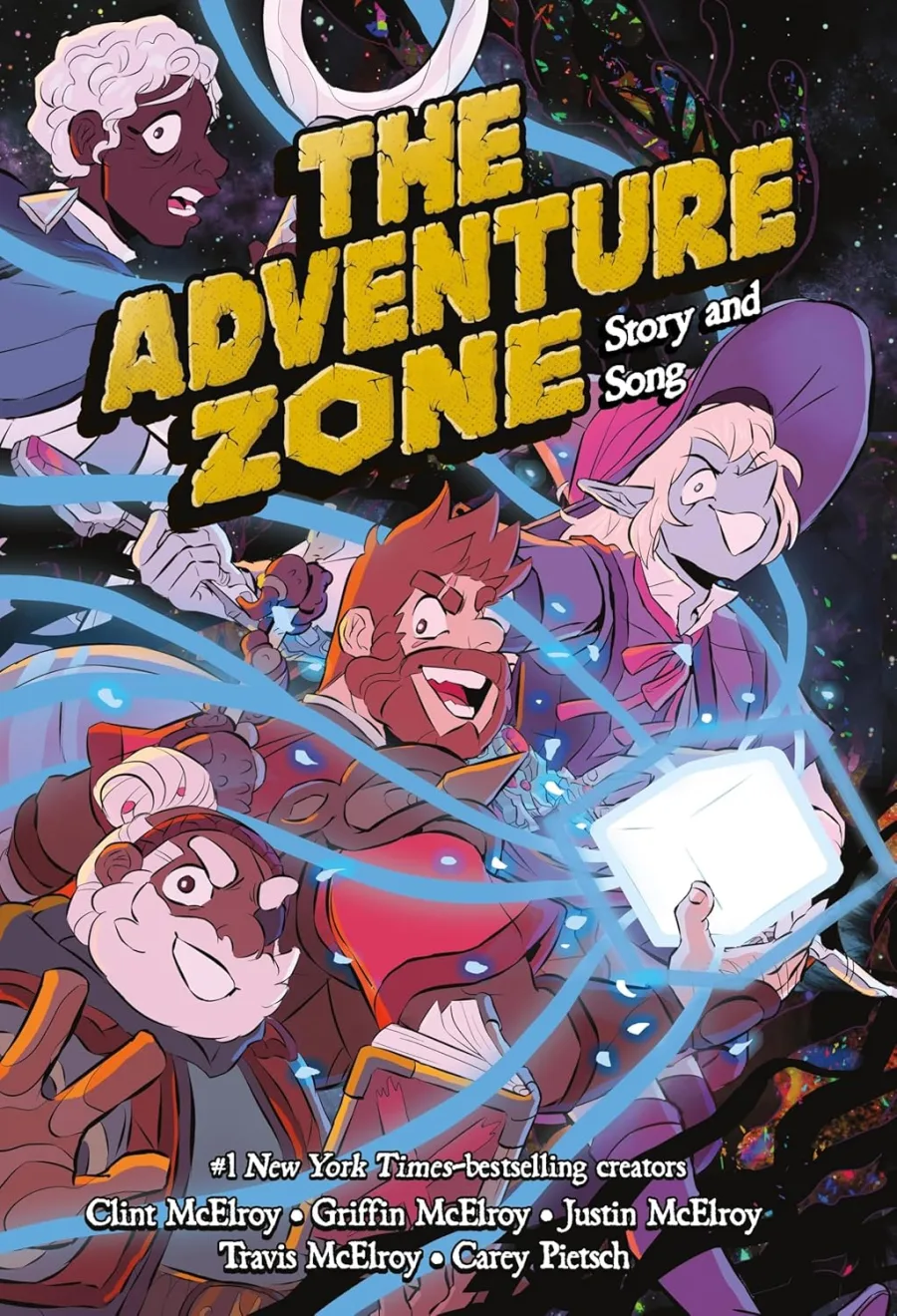
Download Cover Image
Do you want to download the full cover image for The Adventure Zone: Story and Song?