
Sorrow Built a Bridge: The Life of Mother Alphonsa Daughter of Nathaniel Hawthorne
Paperback
• 290 Pages
• USD 16.50
• English
• 9781951319298
No ratings yet
| Publisher | Wiseblood Books |
|---|---|
| ISBN13 | 9781951319298 |
| ASIN/SKU | 195131929X |
| Book Format | Paperback |
| Language | English |
| Pages | 290 |
| List Price | USD 16.50 |
| Publishing Date | 09/07/2026 |
| Dimensions | 6 x 0.66 x 9 inches |
| Weight | 13.9 ounces |
| Book Code | BD00066962 |
Buy this Book
Amazon Stores
Ebook Stores
Other Stores
Discover Sorrow Built a Bridge: The Life of Mother Alphonsa Daughter of Nathaniel Hawthorne by Katherine Burton. This book is published by Wiseblood Books in Paperback format, ISBN 9781951319298, ASIN 195131929X, under Religion and Spirituality.
Book Description
Katherine Burton brings us beyond mere biography and into the deeper meaning of Rose Hawthorne’s life, showing how a privileged daughter of America’s literati came to lead a life of heroic virtue and become Mother Mary Alphonsa. Born in 1851 to Nathaniel and Sophia Hawthorne, Rose spent her early years among some of the most famous American authors—Longfellow, Thoreau, the Alcotts, and others. Influenced by Puritan, Unitarian, and Transcendentalist ideals, the Hawthornes sought a faith defined by simplicity and plainness. Catholicism, with its splendor and ceremony, its sublimity and saints, unsettled them. And yet, the Hawthornes’ love of art and beauty, as well as their dedication to the poor and unfortunate, cultivated a curious admiration of the exotic Roman Church. An extended visit to the Continent exposed the family to Catholicism in its natural habitat; there they found a faith practiced by servants and kings, alive both in the grandeur of the Vatican and the squalor of the slum. These paradoxes intrigued Rose, even as conversion seemed unimaginable to her.
Then came suffering: a difficult marriage, the loss of her parents and beloved sister Una, the early death of her son. Through the mysterious workings of grace, this suffering stirred a soul-deep longing within Rose, a longing for transcendent meaning, for self-sacrifice, and for a life dedicated to God and the poor. Instead of destroying Rose, sorrow became the bridge that carried her to belief.
Once she discovered that the cancerous poor faced neglect and outright abandonment, she found the answer to her yearning. With no money and no experience, she set about caring for those left to die in agony, solitude, and privation. After training as a nurse, Hawthorne founded the Servants of Relief for Incurable Cancer, now known as the Dominican Sisters of Hawthorne, an order dedicated to Christ’s promise: “Whatever you did for one of these least brothers of mine, you did for me.” When her country cried, “Give me your tired, your poor,” Rose responded with her life, answering with a fullness that is only found in Christ.
After writing her last letters in solicitation of needed donations, Mother Alphonsa retired at one a.m. and died in her sleep on July 9, 1926, the 84th anniversary of her parents’ marriage. She continues to build that bridge born of sorrow that brings true seekers to their Promised Land.
Then came suffering: a difficult marriage, the loss of her parents and beloved sister Una, the early death of her son. Through the mysterious workings of grace, this suffering stirred a soul-deep longing within Rose, a longing for transcendent meaning, for self-sacrifice, and for a life dedicated to God and the poor. Instead of destroying Rose, sorrow became the bridge that carried her to belief.
Once she discovered that the cancerous poor faced neglect and outright abandonment, she found the answer to her yearning. With no money and no experience, she set about caring for those left to die in agony, solitude, and privation. After training as a nurse, Hawthorne founded the Servants of Relief for Incurable Cancer, now known as the Dominican Sisters of Hawthorne, an order dedicated to Christ’s promise: “Whatever you did for one of these least brothers of mine, you did for me.” When her country cried, “Give me your tired, your poor,” Rose responded with her life, answering with a fullness that is only found in Christ.
After writing her last letters in solicitation of needed donations, Mother Alphonsa retired at one a.m. and died in her sleep on July 9, 1926, the 84th anniversary of her parents’ marriage. She continues to build that bridge born of sorrow that brings true seekers to their Promised Land.
Author Biography
Author Biography will be added soon…
Editorial Reviews
Editorial Reviews will be added soon…
Book Summary
Sorrow Built a Bridge by Katherine Burton is a deeply emotional and reflective novel about grief, memory, healing, and the quiet ways people try to rebuild themselves after loss. At its heart, the book explores what happens when sorrow becomes something more than pain, when it becomes the force that connects people across time, silence, and emotional distance. The story is written with tenderness and patience, focusing less on dramatic action and more on the inner lives of its characters, the weight of what they carry, and the slow process of learning how to live again when life has been permanently changed.
The novel centers on characters who are marked by loss in ways that shape almost everything they do. Their grief is not presented as something simple or temporary. Instead, Burton treats sorrow as something layered, private, and often difficult to explain. Some wounds in the story come from death, some from broken relationships, and some from the failure to say what needed to be said when there was still time. Because of this, the emotional world of the novel feels very human. The characters are not just mourning people or moments they have lost; they are also mourning versions of themselves, old hopes, and the life they once believed they were moving toward.
One of the strongest qualities of the book is the way it understands grief as both isolating and connective. Sorrow often makes the characters withdraw into themselves. They become quiet, careful, and guarded, as if speaking too directly might break something fragile inside them. At the same time, the novel suggests that sorrow can also create a bridge between people who might not otherwise understand one another. Shared pain does not erase loneliness, but it can open a path toward compassion. That idea seems to sit at the center of the title itself. The bridge is not built in spite of sorrow, but through it. The suffering the characters endure becomes the very thing that allows them to reach one another with honesty.
Burton’s writing style is likely one of the reasons the book leaves such a strong impression. The language has an intimate and observant quality, paying close attention to small gestures, remembered conversations, silences, and moments that might appear ordinary on the surface but carry deep emotional meaning. The novel seems interested in how people hold onto memories, how they revisit them, reshape them, and sometimes become trapped inside them. There is often a sense that the past is never truly past in this story. It remains present in rooms, objects, habits, and in the spaces between what characters say and what they feel.
The emotional movement of the novel is gradual rather than dramatic. This is not a story built around sudden revelations alone, but around slow recognition. The characters begin to understand themselves and each other more clearly over time. They learn that grief does not move in a straight line and that healing does not mean forgetting. Instead, healing in this novel seems to mean finding a way to carry sorrow differently. It means learning how to let pain exist without allowing it to close every door to connection, tenderness, or hope. That message gives the book a quiet strength. It does not offer easy comfort, but it does offer the possibility of endurance and renewal.
Relationships are at the core of the story. Whether between family members, close friends, or people who enter each other’s lives at exactly the moment they are most needed, the novel is concerned with the fragile effort required to truly reach another person. Misunderstandings, silence, guilt, and regret all stand in the way, yet the book seems to believe that connection is still possible, even after long periods of emotional distance. In that sense, the bridge of the title is also relational. It represents not only movement from sorrow toward healing, but movement from separation toward understanding.
Another important aspect of the novel is its treatment of emotional resilience. The characters are not presented as heroic in a grand or obvious sense. Their courage often appears in small acts: getting through the day, returning to difficult places, speaking honestly after years of silence, or allowing themselves to be vulnerable when it would be easier to remain closed off. Burton appears to understand that survival itself can be a form of courage. This gives the novel a grounded emotional realism. Its power comes not from spectacle, but from the truthfulness of human struggle.
The title, Sorrow Built a Bridge, captures the paradox at the heart of the book. Sorrow is usually imagined as something destructive, something that breaks, separates, and empties. But here, sorrow also becomes constructive in an unexpected way. It builds a bridge, not because pain is good, but because pain can force people into honesty. It strips away illusion and pretense. It reveals what matters. Through suffering, the characters gain a deeper awareness of love, memory, regret, and the need for one another. That does not make their pain disappear, but it transforms its meaning. The novel suggests that even grief can become part of the architecture of connection.
There is also likely a strong sense of atmosphere throughout the book. Emotional novels like this often create meaning through setting as much as through plot, and Burton appears to use physical spaces to reflect inner states. Homes, roads, rooms, and natural surroundings may carry emotional echoes, making the world of the novel feel shaped by remembrance. Places become tied to absence, and returning to them can feel like reopening old wounds. Yet those same places may also become sites of reconciliation, where characters begin to see the past differently and imagine a future that once seemed impossible.
By the end, the novel does not seem to aim for a neat or unrealistic resolution. Instead, it offers something gentler and more believable. The characters are not freed entirely from sorrow, because real grief rarely disappears so completely. What changes is their relationship to it. They begin to understand that pain can be shared, that memory can be honored without becoming a prison, and that love can survive even in altered form. The bridge that sorrow builds is not a magical escape from suffering. It is a passage through it.
Overall, Sorrow Built a Bridge is a tender and thoughtful novel about what loss does to people and how they slowly find their way back to one another. It treats grief with seriousness and compassion, showing how pain can isolate but also deepen human connection. Through careful writing and emotional honesty, Katherine Burton creates a story that feels intimate, humane, and quietly powerful. It is a book about mourning, but also about endurance, understanding, and the possibility that even the heaviest sorrow can become the path toward healing.
The novel centers on characters who are marked by loss in ways that shape almost everything they do. Their grief is not presented as something simple or temporary. Instead, Burton treats sorrow as something layered, private, and often difficult to explain. Some wounds in the story come from death, some from broken relationships, and some from the failure to say what needed to be said when there was still time. Because of this, the emotional world of the novel feels very human. The characters are not just mourning people or moments they have lost; they are also mourning versions of themselves, old hopes, and the life they once believed they were moving toward.
One of the strongest qualities of the book is the way it understands grief as both isolating and connective. Sorrow often makes the characters withdraw into themselves. They become quiet, careful, and guarded, as if speaking too directly might break something fragile inside them. At the same time, the novel suggests that sorrow can also create a bridge between people who might not otherwise understand one another. Shared pain does not erase loneliness, but it can open a path toward compassion. That idea seems to sit at the center of the title itself. The bridge is not built in spite of sorrow, but through it. The suffering the characters endure becomes the very thing that allows them to reach one another with honesty.
Burton’s writing style is likely one of the reasons the book leaves such a strong impression. The language has an intimate and observant quality, paying close attention to small gestures, remembered conversations, silences, and moments that might appear ordinary on the surface but carry deep emotional meaning. The novel seems interested in how people hold onto memories, how they revisit them, reshape them, and sometimes become trapped inside them. There is often a sense that the past is never truly past in this story. It remains present in rooms, objects, habits, and in the spaces between what characters say and what they feel.
The emotional movement of the novel is gradual rather than dramatic. This is not a story built around sudden revelations alone, but around slow recognition. The characters begin to understand themselves and each other more clearly over time. They learn that grief does not move in a straight line and that healing does not mean forgetting. Instead, healing in this novel seems to mean finding a way to carry sorrow differently. It means learning how to let pain exist without allowing it to close every door to connection, tenderness, or hope. That message gives the book a quiet strength. It does not offer easy comfort, but it does offer the possibility of endurance and renewal.
Relationships are at the core of the story. Whether between family members, close friends, or people who enter each other’s lives at exactly the moment they are most needed, the novel is concerned with the fragile effort required to truly reach another person. Misunderstandings, silence, guilt, and regret all stand in the way, yet the book seems to believe that connection is still possible, even after long periods of emotional distance. In that sense, the bridge of the title is also relational. It represents not only movement from sorrow toward healing, but movement from separation toward understanding.
Another important aspect of the novel is its treatment of emotional resilience. The characters are not presented as heroic in a grand or obvious sense. Their courage often appears in small acts: getting through the day, returning to difficult places, speaking honestly after years of silence, or allowing themselves to be vulnerable when it would be easier to remain closed off. Burton appears to understand that survival itself can be a form of courage. This gives the novel a grounded emotional realism. Its power comes not from spectacle, but from the truthfulness of human struggle.
The title, Sorrow Built a Bridge, captures the paradox at the heart of the book. Sorrow is usually imagined as something destructive, something that breaks, separates, and empties. But here, sorrow also becomes constructive in an unexpected way. It builds a bridge, not because pain is good, but because pain can force people into honesty. It strips away illusion and pretense. It reveals what matters. Through suffering, the characters gain a deeper awareness of love, memory, regret, and the need for one another. That does not make their pain disappear, but it transforms its meaning. The novel suggests that even grief can become part of the architecture of connection.
There is also likely a strong sense of atmosphere throughout the book. Emotional novels like this often create meaning through setting as much as through plot, and Burton appears to use physical spaces to reflect inner states. Homes, roads, rooms, and natural surroundings may carry emotional echoes, making the world of the novel feel shaped by remembrance. Places become tied to absence, and returning to them can feel like reopening old wounds. Yet those same places may also become sites of reconciliation, where characters begin to see the past differently and imagine a future that once seemed impossible.
By the end, the novel does not seem to aim for a neat or unrealistic resolution. Instead, it offers something gentler and more believable. The characters are not freed entirely from sorrow, because real grief rarely disappears so completely. What changes is their relationship to it. They begin to understand that pain can be shared, that memory can be honored without becoming a prison, and that love can survive even in altered form. The bridge that sorrow builds is not a magical escape from suffering. It is a passage through it.
Overall, Sorrow Built a Bridge is a tender and thoughtful novel about what loss does to people and how they slowly find their way back to one another. It treats grief with seriousness and compassion, showing how pain can isolate but also deepen human connection. Through careful writing and emotional honesty, Katherine Burton creates a story that feels intimate, humane, and quietly powerful. It is a book about mourning, but also about endurance, understanding, and the possibility that even the heaviest sorrow can become the path toward healing.
Sample Chapters
Sample Chapters will be added soon…
Reader Reviews
No reviews yet.
Sorrow Built a Bridge: The Life of Mother Alphonsa Daughter of Nathaniel Hawthorne
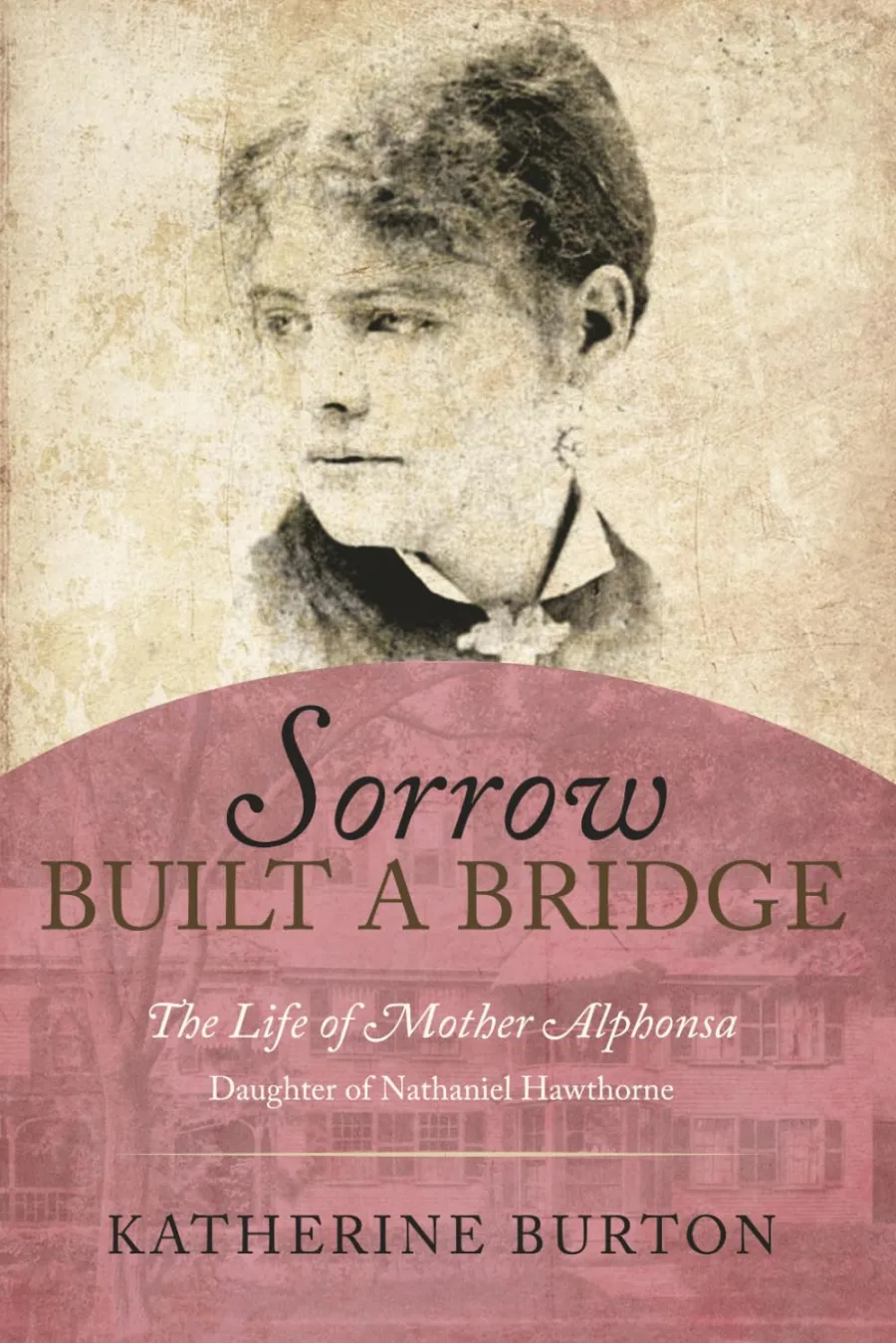
Download Cover Image
Do you want to download the full cover image for Sorrow Built a Bridge: The Life of Mother Alphonsa Daughter of Nathaniel Hawthorne?