
Stitched: A Novel
Paperback
• 280 Pages
• USD 18.95
• English
• 9798890920461
No ratings yet
| Publisher | Torrey House Press |
|---|---|
| ISBN13 | 9798890920461 |
| ASIN/SKU | B0GFKGXBK5 |
| Book Format | Paperback |
| Language | English |
| Pages | 280 |
| List Price | USD 18.95 |
| Publishing Date | 08/09/2026 |
| Dimensions | 5.25 x 2 x 8 inches |
| Weight | 3 pounds |
| Book Code | BD00066963 |
Buy this Book
Amazon Stores
Ebook Stores
Other Stores
Discover Stitched: A Novel by Eli McCann. This book is published by Torrey House Press in Paperback format, ISBN 9798890920461, ASIN B0GFKGXBK5, under Literature and Fiction, LGBTQ+ Humorous Fiction, LGBTQ+ Literary Fiction.
Book Description
A hilarious, heartwarming debut novel about competitive quilting, unlikely friendships, and found family.
"Bursting at the seams with humor and genuinely tender, touching moments."
—KIRKUS REVIEWS
Betty Lou Dearden has been a member of the Ogden Quilters Association for more than twenty years when it is announced that the biggest quilting competition in the country is coming to Utah. With the clock ticking and a chance to finally beat their long-time rival quilting circle, the women welcome two young gay men to their group as they bicker their way to an award-worthy entry. With disarming humor and extraordinary heart, Eli McCann takes readers deep into the cozy but cutthroat world of competitive quilting and the sometimes-messy friendships that shape our lives.
"Bursting at the seams with humor and genuinely tender, touching moments."
—KIRKUS REVIEWS
Betty Lou Dearden has been a member of the Ogden Quilters Association for more than twenty years when it is announced that the biggest quilting competition in the country is coming to Utah. With the clock ticking and a chance to finally beat their long-time rival quilting circle, the women welcome two young gay men to their group as they bicker their way to an award-worthy entry. With disarming humor and extraordinary heart, Eli McCann takes readers deep into the cozy but cutthroat world of competitive quilting and the sometimes-messy friendships that shape our lives.
Author Biography
Eli McCann is a writer, podcaster, and lawyer. In his monthly humor column for The Salt Lake Tribune, he writes about growing up with (and leaving behind) the Mormon faith, coming out in adulthood, and parenting a toddler. He co-hosts Strangerville, a storytelling podcast and live show, and his work has been featured in The Washington Post, Newsweek, HuffPost, and the BBC. He lives with his husband and son in Salt Lake City, Utah.
Editorial Reviews
"Simply charming. McCann’s prose is bursting at the seams with humor and genuinely tender, touching moments."
—KIRKUS REVIEWS
"Eli McCann writes with humor and tenderness about an unlikely collection of people who don't expect to need one another—and then do. This book will make you laugh and leave you quietly grateful for what remains after the thing that once held a group together no longer matters."
—ANN GARVIN, I Thought You Said This Would Work
"A quirky cast of characters, small-town drama, and plenty of heart, Stitched paints a funny and touching portrait of a Utah quilting club. I’m inspired to pick up a needle and thread."
—DARCIE LITTLE BADGER, Sheine Lende
"McCann is the single best gay, married, ex-Mormon dad writing a humor column in America today—scratch that, he’s the best humor columnist we’ve got, period. And this, his first novel, is a delight."
—DAN SAVAGE, Savage Love from A to Z
"Snuggle up on the couch with a cup of tea for this warm, funny book full of affection."
—CATHERINE WELLER, Weller Book Works
"Reading Stitched felt like spending time with the beloved Mormon women of my childhood set in a Christopher Guest film. A Utah Quilting Association that welcomes gay boys? Hello! I'm picking up my needles."
—DUSTIN LANCE BLACK, Mama’s Boy
"A laugh-out-loud celebration of unlikely friendships—the ones we’re stuck with, the ones we take for granted, and the ones that make us who we are."
—CAL CROSBY, The King’s English Bookshop
"Bursting at the seams with wit, humor, and heart, Stitched is a reminder of what truly binds us."
—CASS BIEHN, Vesuvius
"An authentic, heartfelt story of found family and friendship with relatable characters that pull you into a world of challenges and triumphs."
—ALISON RUSSELL, Folklore Bookshop
—KIRKUS REVIEWS
"Eli McCann writes with humor and tenderness about an unlikely collection of people who don't expect to need one another—and then do. This book will make you laugh and leave you quietly grateful for what remains after the thing that once held a group together no longer matters."
—ANN GARVIN, I Thought You Said This Would Work
"A quirky cast of characters, small-town drama, and plenty of heart, Stitched paints a funny and touching portrait of a Utah quilting club. I’m inspired to pick up a needle and thread."
—DARCIE LITTLE BADGER, Sheine Lende
"McCann is the single best gay, married, ex-Mormon dad writing a humor column in America today—scratch that, he’s the best humor columnist we’ve got, period. And this, his first novel, is a delight."
—DAN SAVAGE, Savage Love from A to Z
"Snuggle up on the couch with a cup of tea for this warm, funny book full of affection."
—CATHERINE WELLER, Weller Book Works
"Reading Stitched felt like spending time with the beloved Mormon women of my childhood set in a Christopher Guest film. A Utah Quilting Association that welcomes gay boys? Hello! I'm picking up my needles."
—DUSTIN LANCE BLACK, Mama’s Boy
"A laugh-out-loud celebration of unlikely friendships—the ones we’re stuck with, the ones we take for granted, and the ones that make us who we are."
—CAL CROSBY, The King’s English Bookshop
"Bursting at the seams with wit, humor, and heart, Stitched is a reminder of what truly binds us."
—CASS BIEHN, Vesuvius
"An authentic, heartfelt story of found family and friendship with relatable characters that pull you into a world of challenges and triumphs."
—ALISON RUSSELL, Folklore Bookshop
Book Summary
Stitched: A Novel by Eli McCann is a warm, funny, and deeply human story about friendship, belonging, aging, identity, rivalry, and the unexpected ways people can become family. Set in the world of competitive quilting in Utah, the novel takes what might initially seem like a gentle story about an ordinary hobby and turns it into an affectionate portrait of people carrying decades of memories, disappointments, insecurities, grief, and love. At the center is the Ogden Quilters Association, a long-established group whose members discover that creating a quilt together can be much more complicated than simply choosing fabric and sewing pieces together. When two young gay men join the mostly older women's group, the resulting mixture of personalities creates humor, conflict, vulnerability, and ultimately a powerful sense of community. The publisher describes the novel as a story of “competitive quilting, unlikely friendships, and found family,” and that combination captures much of its emotional character.
The story revolves particularly around Betty Lou Dearden, a longtime member and leader of the Ogden Quilters Association. Betty Lou has spent more than two decades with the group, and quilting has become far more than a pastime for her. It is part of her identity, her social world, and her understanding of where she belongs. The announcement that a major national quilting competition is coming to Utah therefore feels like a tremendous opportunity. The competition gives the women a chance to demonstrate their skill and, perhaps more importantly, to defeat their longtime rivals. But the timing is not ideal. The group has lost members, and the women need new people if they are going to produce a competitive entry.
This is where the novel's unusual partnership begins. Two young gay men, Byron Grant and Rob, are invited into the quilting circle. They are outsiders in almost every obvious sense. They are younger than most of the women, they have a different social background, and neither arrives with the same long history inside the quilting community. Byron is outgoing, sharp-tongued, talkative, and socially confident, while Rob is quieter and more artistic. Their arrival immediately changes the chemistry of the group. What begins as a practical decision connected to the competition slowly develops into something much more meaningful.
McCann uses this generational and cultural contrast as one of the novel's richest sources of comedy. The older women are not presented as stereotypes. They have strong opinions, old grudges, personal habits, private disappointments, and complicated relationships with one another. They can be generous one moment and maddening the next. Their conversations are filled with the kind of small observations, criticisms, misunderstandings, and gossip that arise naturally when people have known each other for years. The humor often comes not from elaborate jokes but from the personalities themselves.
Betty Lou is especially compelling because beneath her organizational competence is a woman who desperately wants to be appreciated. She has devoted years to the quilting association, but she does not always feel that her contributions are recognized. Her relationship with other members, particularly the formidable Leera Smeeth, is shaped by accumulated frustrations. Small disagreements become symbolic of much larger emotional wounds. A comment about a quilt, a disagreement over a design, or a seemingly insignificant decision can carry the weight of years of resentment.
Leera, meanwhile, represents another important dimension of the novel. She is older, outspoken, and often difficult. She can be critical and seemingly impossible to please. Yet McCann gradually reveals that people are rarely as simple as their outward behavior suggests. Leera's sharpness is connected to her own experiences of loss and loneliness. Her grief over people and animals she has lost gives greater meaning to some of her behavior. The novel therefore asks readers to look beyond irritating personalities and consider what might be happening underneath them.
This is one of the book's central ideas: people carry invisible histories. A group of women sitting around a quilting table may appear to be discussing thread, fabric, patterns, or competition rules, but each person has a lifetime behind her. Some have experienced marriage, bereavement, disappointment, illness in the family, changes in faith, loneliness, or the gradual realization that life did not turn out exactly as they once expected. The quilt becomes a physical object around which all those invisible histories gather.
The introduction of Byron and Rob makes this theme even stronger. Their presence forces the older women to encounter people whose lives have unfolded differently from their own. The novel does not treat this as a simplistic lesson in tolerance. Instead, relationships develop through ordinary interaction. The characters annoy one another, misunderstand one another, laugh together, argue, and gradually discover that their differences are less important than the affection that develops between them.
Byron is particularly important because he brings an energy that the group does not initially know how to handle. His personality contrasts sharply with the established culture of the association. His humor and openness can unsettle people, but they also allow him to form connections that might not otherwise have happened. Rob's quieter nature adds another dimension. He brings artistic sensitivity and demonstrates that belonging does not always require being the loudest person in the room.
The quilting competition provides the novel with its external structure. The group has a deadline, a rival, a theme, and an ambitious goal. Their quilt must be good enough to compete on a major stage. This gives the characters something concrete to fight about, work toward, and ultimately care about. But the competition is never really the deepest subject of the novel. Beneath the contest is a much more intimate question: what happens when people who have become accustomed to their own identities discover that their lives still have room for change?
The rivalry with another quilting circle adds another layer of comic tension. Competition turns ordinary disagreements into dramatic battles. A choice of fabric can become a matter of pride. A design decision can feel like a personal insult. The women take quilting seriously because the craft represents years of effort and accumulated expertise. McCann understands the humor in this intensity while also respecting the importance of the activity to his characters.
This affection is important. Stitched does not simply make fun of quilting. Instead, it shows why creative communities matter. Hobbies can provide people with friendships, purpose, routine, identity, and an opportunity to contribute. For some characters, quilting is one of the places where they feel most fully themselves. The book's comedy works because McCann understands that something can be both funny and profoundly meaningful.
The novel also explores the idea of found family. The people we depend upon are not always the people we expected to need. The Ogden Quilters Association has existed for years, but the arrival of Byron and Rob changes the group in ways none of them could have predicted. At first, they are recruits brought in because the association needs additional members. Eventually, they become part of the emotional fabric of the community.
The metaphor of stitching is therefore central to the book. A quilt is made from individual pieces that may differ in color, shape, texture, and pattern. Alone, each piece is limited. Together, they become something larger. McCann uses the quilting world to explore the same idea about human relationships. People do not have to be identical to belong together. In fact, their differences may be precisely what make a community richer.
Betty Lou's personal development reflects this larger theme. She begins with a strong attachment to the role she has built for herself within the organization. Her identity is closely connected to being responsible, useful, and recognized. As tensions increase, she is forced to reconsider what she wants from her friendships and from herself. Her journey becomes less about winning a competition and more about understanding that self-worth cannot depend entirely upon other people's approval.
The other women experience similar realizations in different forms. Some must confront old grudges. Others discover that they have misunderstood people for years. Still others must accept that friendships can change without necessarily disappearing. McCann gives these characters room to be flawed. They can be petty, jealous, funny, generous, stubborn, loving, and frightened. Their imperfections make them believable.
The emotional power of Stitched comes partly from the fact that its characters are not transformed overnight. There are no simple speeches that solve decades of resentment. Instead, relationships evolve through repeated encounters. People listen, fail to listen, apologize, make mistakes, and try again. That makes the eventual sense of belonging feel earned rather than manufactured.
The book's treatment of age is another notable feature. McCann deliberately centers older women rather than using them merely as supporting characters around younger protagonists. The women have complicated inner lives, desires, ambitions, humor, and frustrations. Their lives are not presented as having ended simply because they have grown older. They are still capable of discovering new friendships, making mistakes, changing their minds, and becoming different versions of themselves. The author has explained that he wanted to write older women as complex, entertaining characters without relying on a conventional romance plot to carry the story.
The novel's queer representation is similarly woven into the everyday fabric of the story. Byron and Rob are not included merely to make the book contemporary. Their identities matter, but they are also simply people trying to find friendship, creative fulfillment, and a place where they feel accepted. Their relationship with the older women allows the book to explore intergenerational connection without reducing anyone to a lesson or symbol.
Another strength of Stitched is its sense of place. The Utah setting provides more than scenery. The social environment, community relationships, and cultural background shape the characters. McCann himself grew up around quilting through his mother, whose longtime quilting group inspired the novel. The idea for the book reportedly emerged from a conversation in which his mother described the “drama” within the quilting community, eventually prompting McCann to imagine a fictional group around that idea.
This personal connection helps explain why the novel feels affectionate even when it is being satirical. McCann is not observing the quilting world from a completely detached distance. He knows the rituals, personalities, and social dynamics that make such communities both comforting and chaotic.
Ultimately, Stitched is not really a novel about winning a quilting competition. The competition merely provides the frame through which the characters learn what matters. The deeper victory is the discovery of connection. The people in the story begin as individuals with separate histories and expectations, but gradually become part of something larger.
The title itself captures this beautifully. To stitch is to join separate pieces together. The seams remain visible, but they do not weaken the finished object. They become part of its character. In the same way, the characters' differences, mistakes, losses, and histories are not erased when they become a community. Those differences become part of what makes their relationships meaningful.
By the end, the novel leaves readers with a gentle understanding of belonging. Family can be inherited, but it can also be created. Friendship can arrive in unexpected forms. People can change long after they believe they have settled into fixed versions of themselves. And sometimes the communities we enter for one reason become important to us for an entirely different reason.
Stitched ultimately celebrates the ordinary miracle of people choosing to remain connected despite their differences. Its quilting competitions, rivalries, arguments, jokes, and domestic dramas provide the entertainment, but its heart lies in the friendships that grow underneath them. Eli McCann turns fabric and thread into a metaphor for human connection and shows that a life, like a quilt, is assembled from countless pieces—some beautiful, some painful, some unexpected—and that what matters most is how those pieces are brought together. The result is a humane story about people who do not initially expect to need one another but eventually discover that they have become part of each other's lives.
The story revolves particularly around Betty Lou Dearden, a longtime member and leader of the Ogden Quilters Association. Betty Lou has spent more than two decades with the group, and quilting has become far more than a pastime for her. It is part of her identity, her social world, and her understanding of where she belongs. The announcement that a major national quilting competition is coming to Utah therefore feels like a tremendous opportunity. The competition gives the women a chance to demonstrate their skill and, perhaps more importantly, to defeat their longtime rivals. But the timing is not ideal. The group has lost members, and the women need new people if they are going to produce a competitive entry.
This is where the novel's unusual partnership begins. Two young gay men, Byron Grant and Rob, are invited into the quilting circle. They are outsiders in almost every obvious sense. They are younger than most of the women, they have a different social background, and neither arrives with the same long history inside the quilting community. Byron is outgoing, sharp-tongued, talkative, and socially confident, while Rob is quieter and more artistic. Their arrival immediately changes the chemistry of the group. What begins as a practical decision connected to the competition slowly develops into something much more meaningful.
McCann uses this generational and cultural contrast as one of the novel's richest sources of comedy. The older women are not presented as stereotypes. They have strong opinions, old grudges, personal habits, private disappointments, and complicated relationships with one another. They can be generous one moment and maddening the next. Their conversations are filled with the kind of small observations, criticisms, misunderstandings, and gossip that arise naturally when people have known each other for years. The humor often comes not from elaborate jokes but from the personalities themselves.
Betty Lou is especially compelling because beneath her organizational competence is a woman who desperately wants to be appreciated. She has devoted years to the quilting association, but she does not always feel that her contributions are recognized. Her relationship with other members, particularly the formidable Leera Smeeth, is shaped by accumulated frustrations. Small disagreements become symbolic of much larger emotional wounds. A comment about a quilt, a disagreement over a design, or a seemingly insignificant decision can carry the weight of years of resentment.
Leera, meanwhile, represents another important dimension of the novel. She is older, outspoken, and often difficult. She can be critical and seemingly impossible to please. Yet McCann gradually reveals that people are rarely as simple as their outward behavior suggests. Leera's sharpness is connected to her own experiences of loss and loneliness. Her grief over people and animals she has lost gives greater meaning to some of her behavior. The novel therefore asks readers to look beyond irritating personalities and consider what might be happening underneath them.
This is one of the book's central ideas: people carry invisible histories. A group of women sitting around a quilting table may appear to be discussing thread, fabric, patterns, or competition rules, but each person has a lifetime behind her. Some have experienced marriage, bereavement, disappointment, illness in the family, changes in faith, loneliness, or the gradual realization that life did not turn out exactly as they once expected. The quilt becomes a physical object around which all those invisible histories gather.
The introduction of Byron and Rob makes this theme even stronger. Their presence forces the older women to encounter people whose lives have unfolded differently from their own. The novel does not treat this as a simplistic lesson in tolerance. Instead, relationships develop through ordinary interaction. The characters annoy one another, misunderstand one another, laugh together, argue, and gradually discover that their differences are less important than the affection that develops between them.
Byron is particularly important because he brings an energy that the group does not initially know how to handle. His personality contrasts sharply with the established culture of the association. His humor and openness can unsettle people, but they also allow him to form connections that might not otherwise have happened. Rob's quieter nature adds another dimension. He brings artistic sensitivity and demonstrates that belonging does not always require being the loudest person in the room.
The quilting competition provides the novel with its external structure. The group has a deadline, a rival, a theme, and an ambitious goal. Their quilt must be good enough to compete on a major stage. This gives the characters something concrete to fight about, work toward, and ultimately care about. But the competition is never really the deepest subject of the novel. Beneath the contest is a much more intimate question: what happens when people who have become accustomed to their own identities discover that their lives still have room for change?
The rivalry with another quilting circle adds another layer of comic tension. Competition turns ordinary disagreements into dramatic battles. A choice of fabric can become a matter of pride. A design decision can feel like a personal insult. The women take quilting seriously because the craft represents years of effort and accumulated expertise. McCann understands the humor in this intensity while also respecting the importance of the activity to his characters.
This affection is important. Stitched does not simply make fun of quilting. Instead, it shows why creative communities matter. Hobbies can provide people with friendships, purpose, routine, identity, and an opportunity to contribute. For some characters, quilting is one of the places where they feel most fully themselves. The book's comedy works because McCann understands that something can be both funny and profoundly meaningful.
The novel also explores the idea of found family. The people we depend upon are not always the people we expected to need. The Ogden Quilters Association has existed for years, but the arrival of Byron and Rob changes the group in ways none of them could have predicted. At first, they are recruits brought in because the association needs additional members. Eventually, they become part of the emotional fabric of the community.
The metaphor of stitching is therefore central to the book. A quilt is made from individual pieces that may differ in color, shape, texture, and pattern. Alone, each piece is limited. Together, they become something larger. McCann uses the quilting world to explore the same idea about human relationships. People do not have to be identical to belong together. In fact, their differences may be precisely what make a community richer.
Betty Lou's personal development reflects this larger theme. She begins with a strong attachment to the role she has built for herself within the organization. Her identity is closely connected to being responsible, useful, and recognized. As tensions increase, she is forced to reconsider what she wants from her friendships and from herself. Her journey becomes less about winning a competition and more about understanding that self-worth cannot depend entirely upon other people's approval.
The other women experience similar realizations in different forms. Some must confront old grudges. Others discover that they have misunderstood people for years. Still others must accept that friendships can change without necessarily disappearing. McCann gives these characters room to be flawed. They can be petty, jealous, funny, generous, stubborn, loving, and frightened. Their imperfections make them believable.
The emotional power of Stitched comes partly from the fact that its characters are not transformed overnight. There are no simple speeches that solve decades of resentment. Instead, relationships evolve through repeated encounters. People listen, fail to listen, apologize, make mistakes, and try again. That makes the eventual sense of belonging feel earned rather than manufactured.
The book's treatment of age is another notable feature. McCann deliberately centers older women rather than using them merely as supporting characters around younger protagonists. The women have complicated inner lives, desires, ambitions, humor, and frustrations. Their lives are not presented as having ended simply because they have grown older. They are still capable of discovering new friendships, making mistakes, changing their minds, and becoming different versions of themselves. The author has explained that he wanted to write older women as complex, entertaining characters without relying on a conventional romance plot to carry the story.
The novel's queer representation is similarly woven into the everyday fabric of the story. Byron and Rob are not included merely to make the book contemporary. Their identities matter, but they are also simply people trying to find friendship, creative fulfillment, and a place where they feel accepted. Their relationship with the older women allows the book to explore intergenerational connection without reducing anyone to a lesson or symbol.
Another strength of Stitched is its sense of place. The Utah setting provides more than scenery. The social environment, community relationships, and cultural background shape the characters. McCann himself grew up around quilting through his mother, whose longtime quilting group inspired the novel. The idea for the book reportedly emerged from a conversation in which his mother described the “drama” within the quilting community, eventually prompting McCann to imagine a fictional group around that idea.
This personal connection helps explain why the novel feels affectionate even when it is being satirical. McCann is not observing the quilting world from a completely detached distance. He knows the rituals, personalities, and social dynamics that make such communities both comforting and chaotic.
Ultimately, Stitched is not really a novel about winning a quilting competition. The competition merely provides the frame through which the characters learn what matters. The deeper victory is the discovery of connection. The people in the story begin as individuals with separate histories and expectations, but gradually become part of something larger.
The title itself captures this beautifully. To stitch is to join separate pieces together. The seams remain visible, but they do not weaken the finished object. They become part of its character. In the same way, the characters' differences, mistakes, losses, and histories are not erased when they become a community. Those differences become part of what makes their relationships meaningful.
By the end, the novel leaves readers with a gentle understanding of belonging. Family can be inherited, but it can also be created. Friendship can arrive in unexpected forms. People can change long after they believe they have settled into fixed versions of themselves. And sometimes the communities we enter for one reason become important to us for an entirely different reason.
Stitched ultimately celebrates the ordinary miracle of people choosing to remain connected despite their differences. Its quilting competitions, rivalries, arguments, jokes, and domestic dramas provide the entertainment, but its heart lies in the friendships that grow underneath them. Eli McCann turns fabric and thread into a metaphor for human connection and shows that a life, like a quilt, is assembled from countless pieces—some beautiful, some painful, some unexpected—and that what matters most is how those pieces are brought together. The result is a humane story about people who do not initially expect to need one another but eventually discover that they have become part of each other's lives.
Sample Chapters
Sample Chapters will be added soon…
Reader Reviews
No reviews yet.
Stitched: A Novel
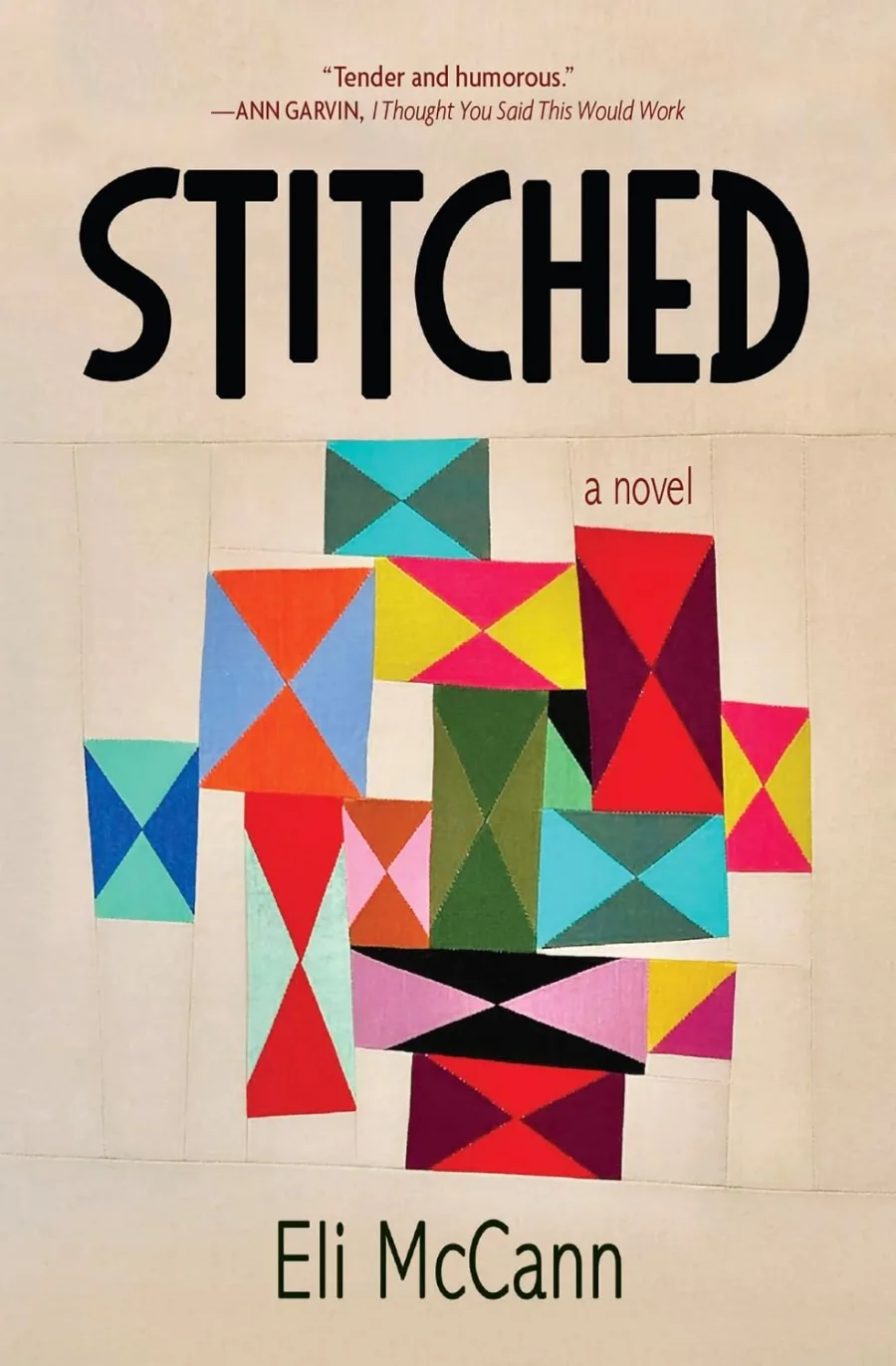
Download Cover Image
Do you want to download the full cover image for Stitched: A Novel?