
Burn of the Everflame: A Novel (The Kindred's Curse Saga)
Hardcover
• 880 Pages
• USD 32.00
• English
• 9781668200223
No ratings yet
| Publisher | Atria Books |
|---|---|
| ISBN13 | 9781668200223 |
| ASIN/SKU | 1668200228 |
| Book Format | Hardcover |
| Language | English |
| Pages | 880 |
| List Price | USD 32.00 |
| Series Title | The Kindred's Curse Saga |
| Publishing Date | 08/09/2026 |
| Dimensions | 6 x 2.15 x 9 inches |
| Weight | 2.4 pounds |
| Book Code | BD00066985 |
Buy this Book
Amazon Stores
Ebook Stores
Other Stores
Discover Burn of the Everflame: A Novel (The Kindred's Curse Saga) by Penn Cole. This book is published by Atria Books in Hardcover format, ISBN 9781668200223, ASIN 1668200228, under Science Fiction and Fantasy, Romantic Fantasy, Epic Fantasy.
Book Description
Now in a collectible hardcover edition featuring gorgeous full-color endpapers, a foiled and embossed jacket, and an exclusive designed hardcover case.
The highly anticipated never-before-published final book in the Kindred's Curse Saga, a slow-burn, epic romantasy series following one woman who must risk everything to save her family—and all of mortalkind.
War has overtaken Emarion. In the north, Ophiucae and his army of bloodthirsty mortals seek to eradicate all Descended from the continent. In the south, the Guardians of the Everflame lie in wait, plotting a rebellion generations overdue.
In Lumnos, Realm of Light and Shadow, the Crowns are gathering. Caught between two deadly foes, they must form an unlikely alliance to save their people.
But the Crowns have a secret—and a heart without its mate will burn the world down to fulfill its fate.
Hatred reigns. Hope seems lost. With the future in darkness, can a flame emerge to bring the light?
The highly anticipated never-before-published final book in the Kindred's Curse Saga, a slow-burn, epic romantasy series following one woman who must risk everything to save her family—and all of mortalkind.
War has overtaken Emarion. In the north, Ophiucae and his army of bloodthirsty mortals seek to eradicate all Descended from the continent. In the south, the Guardians of the Everflame lie in wait, plotting a rebellion generations overdue.
In Lumnos, Realm of Light and Shadow, the Crowns are gathering. Caught between two deadly foes, they must form an unlikely alliance to save their people.
But the Crowns have a secret—and a heart without its mate will burn the world down to fulfill its fate.
Hatred reigns. Hope seems lost. With the future in darkness, can a flame emerge to bring the light?
Author Biography
Hi! I'm Penn Cole, a NEW YORK TIMES and USA TODAY bestselling author of fantasy romance.
While my life has taken me through a lot of ups and downs, my love for reading and writing has forever been my true north. I’ve been writing stories since my childhood, filling mountains of notebooks with wild worlds and angsty romances. After a detour as an attorney and small business owner, I am thrilled to finally be pursuing my lifelong dream of being an author. While I’m a Texas girl born and bred, I currently live in France with my husband, where I can usually be found eating way too many pastries and trolling my readers on Discord.
While my life has taken me through a lot of ups and downs, my love for reading and writing has forever been my true north. I’ve been writing stories since my childhood, filling mountains of notebooks with wild worlds and angsty romances. After a detour as an attorney and small business owner, I am thrilled to finally be pursuing my lifelong dream of being an author. While I’m a Texas girl born and bred, I currently live in France with my husband, where I can usually be found eating way too many pastries and trolling my readers on Discord.
Editorial Reviews
Editorial Reviews will be added soon…
Book Summary
Penn Cole’s Burn of the Everflame is the fourth and final novel in The Kindred’s Curse Saga, bringing the sprawling romantic fantasy story of Diem Bellator and Luther Corbois to its ultimate confrontation. The novel combines epic fantasy, romance, political rebellion, ancient magic, family secrets, dragons, gods, and a struggle over the future of an entire continent. At its heart, however, it is a story about freedom: freedom from inherited power, from ancient curses, from prejudice, from the expectations of family, and from the belief that the past must determine the future. Cole’s official description frames the final installment around a world consumed by war, with Ophiucae seeking to eradicate the Descended while the Guardians of the Everflame prepare their own rebellion.
The story begins in an atmosphere of crisis. Emarion is no longer merely divided by the old conflict between mortals and the Descended; it is being torn apart by open war. Ophiucae, an ancient and terrifying power, commands an army of mortals who have been turned against the Descended. His goal is not simply political domination. He wants to reshape the world according to his own vision, and his campaign threatens to erase entire peoples from existence. At the same time, the Guardians of the Everflame have their own plans, having waited generations for an opportunity to rebel. The Crowns of the various realms are caught between these forces and must decide whether their old divisions can be set aside long enough to save Emarion.
Diem Bellator stands at the center of this conflict. Over the course of the series, she has transformed from an ordinary mortal healer into one of the most consequential figures in Emarion. Her rise has never been straightforward. She has had to discover her hidden heritage, navigate the dangerous politics of the Descended, confront ancient magic, and understand powers within herself that she never knew existed. By the beginning of Burn of the Everflame, she is no longer simply trying to survive. She is carrying the burden of deciding what kind of world should exist after the war.
Her relationship with Luther Corbois is equally important. Their connection began in distrust and hostility, but gradually developed into the central romance of the series. By the final novel, they are bound together not only by love but also by the supernatural mating bond that has repeatedly affected their choices. Their relationship is complicated by the responsibilities they carry as rulers, warriors, and symbols of opposing worlds. The closer they come to the final confrontation, the more they must ask whether love can survive the sacrifices demanded by destiny.
The opening crisis is made even more severe when Diem suffers a seemingly fatal wound from a godstone blade. She is stabbed through the heart, yet she does not die because her connection with Luther allows her heartbeat to continue through their bond. Luther experiences her pain from a distance, making her suffering something he cannot simply ignore. The wound becomes a reminder that their supernatural connection is both a source of strength and a source of vulnerability.
Teller Bellator becomes an important part of the immediate struggle to save Diem. In a desperate attempt to stop Ophiucae, Teller manages to injure him with flameroot paste, but the sacrifice costs Teller his own life. His death becomes one of the emotional turning points of the story. Teller has been shaped by a complicated history of guilt, loyalty, and family, and his final action demonstrates how far he has come. He dies not simply as a victim of the conflict but as someone who consciously chooses to protect others.
Diem and Luther are eventually drawn toward Coeurîle, the prison island where the deepest secrets of the Kindred and Ophiucae are concealed. The island is not merely a physical location; it represents the buried history of Emarion. For thousands of years, the Descended have lived under a magical and political system created by the ancient Kindred. The truth about that system has been fragmented, hidden, or deliberately erased. As Diem approaches the island, she is approaching the source of many of the mysteries that have shaped her life.
At the center of the mystery is Ophiucae, also known as Omnos. The revelation that he is Diem’s biological father gives their conflict an intensely personal dimension. Ophiucae is not simply an ancient enemy threatening the continent. He is part of Diem’s own bloodline. This forces her to confront one of the novel’s recurring ideas: inheritance does not necessarily determine identity. Diem may share blood with Ophiucae, but she does not have to share his values or his vision for the world.
Ophiucae’s power is connected to magic absorption, and this becomes particularly important during the final confrontation. Diem discovers that she possesses a similar ability. When Ophiucae attacks the people around her with powerful magic, she can absorb some of it rather than simply being destroyed by it. This creates an unusual confrontation between father and daughter. The very power that makes Ophiucae so dangerous becomes something Diem can use against him.
The final battle is therefore not simply a contest of physical strength. It is a confrontation between two philosophies of power. Ophiucae believes that enormous power gives him the right to determine the fate of others. Diem increasingly understands that power has meaning only when it is used to protect freedom rather than destroy it. Her journey throughout the series has prepared her for this distinction.
During the battle, Diem accesses a deeper form of magic associated with the Old Gods and the Everflame. Her Fire is unlike ordinary magical abilities in Emarion. It carries a sense of something ancient and primordial, suggesting that the magical history of the world extends further back than the Kindred themselves. The revelation expands the mythology of the series and makes Diem’s role in the final conflict much larger than she previously understood.
The Everflame becomes one of the novel’s most important symbols. Fire can destroy, but it can also illuminate, warm, purify, and create. Throughout the story, Diem’s relationship with Fire reflects her own development. She has the potential to become immensely destructive, yet her greatest challenge is learning how to use power without becoming consumed by it. The Everflame ultimately represents not merely magical strength but the possibility of renewal.
The confrontation with Ophiucae reaches its most devastating point when Diem uses Sorrow’s Edge against him. The weapon succeeds in killing him temporarily, but the victory is incomplete. Ophiucae begins to heal because the ancient magic contained within the weapon demands balance. The life of one person must be exchanged for the life of another. Diem realizes that Ophiucae cannot be permanently destroyed unless the required price is paid.
That realization leads to one of the most heartbreaking moments of the novel. Diem understands that her own life must become the payment. She asks Luther to kill her.
Luther initially refuses. He has spent the entire series fighting to keep Diem alive, and the idea of personally ending her life is unbearable. But Diem knows that Ophiucae will return if the exchange remains incomplete. She reminds Luther of his promise to obey her and ultimately invokes her authority as Queen. Luther is forced to make an impossible choice between the woman he loves and the survival of everyone they have fought to protect.
He kills Diem with Sorrow’s Edge.
For a moment, everything becomes still. The mating bond between them goes silent, confirming that Diem has truly died. The sacrifice is not symbolic or temporary. She has given her life to complete the exchange required to destroy Ophiucae.
The consequences are extraordinary. Magical tendrils erupt from the ground and consume the remnants of the heartstone, Sorrow’s Edge, Ophiucae’s body, and the temple itself. The destruction culminates in the emergence of a burning, tree-like pillar. The ancient system that has controlled Emarion for thousands of years is finally broken.
Luther is devastated. Having killed Diem himself, he struggles to imagine a future without her. His grief becomes an important part of the next stage of the story. The victory has been achieved, but it has come at a price that makes victory feel almost indistinguishable from loss.
Diem's story, however, is not finished.
She awakens in the After, where she encounters the Kindred and other souls connected to the ancient history of Emarion. Here, the novel moves beyond the physical world and explores the spiritual dimension that has been hinted at throughout the series. The Kindred, finally freed from the old magical structures, are able to reunite with their mates and move onward through the Everflame.
Diem, however, cannot simply leave.
Her connection to Luther remains too strong. She feels incomplete without him and refuses to sever the bond that connects them. A mysterious red-haired figure offers her a choice, creating the possibility of returning to the world of the living. The precise nature of this figure and the full mechanics of Diem’s return retain an element of mystery, but the emotional meaning is clear: Diem is given the opportunity to choose whether her story will end with death or whether she will return to the life and love she left behind.
She chooses to return.
Meanwhile, Luther must continue living without knowing whether Diem will ever come back. Three months pass. During this time, he begins to participate in the rebuilding of Emarion. The old political order cannot simply be restored because the old system was part of the problem. The destruction of the heartstone has broken the magical structures that once bound the Kindred and gryverns to their inherited roles.
Luther is eventually offered a crown. At first, he rejects it because the very idea of concentrated hereditary power has become deeply troubling to him. Yet he ultimately accepts the crown after Auralie crowns him. His acceptance is not presented as a return to the old order. Instead, it occurs within a changing political system in which councils and broader representation are becoming increasingly important.
This transformation is central to the book's political message. Emarion cannot be healed simply by replacing one ruler with another. Its deeper divisions must be confronted. Mortals, Descended, and previously marginalized groups need a voice in the future of the continent. Diem's vision has always been larger than personal power, and Luther's eventual role reflects that vision.
The liberation of the gryverns is another important consequence of the destruction of the old magical system. For generations, gryverns have been bound to the Crowns. Their relationships with rulers were not entirely matters of choice. Once the binding is broken, they become genuinely free. Their freedom becomes one of the clearest symbols of what Diem and the others have accomplished.
The epilogue shows how far Emarion has begun to change. One year later, Diem and Luther are married and living together in a home Luther has built. Their relationship is no longer defined primarily by war, political obligations, or supernatural danger. They finally have the ordinary domestic life that was almost impossible for them to imagine earlier in the series.
Yet the novel does not pretend that everything has become perfect. Emarion remains fragile. The wounds created by generations of oppression and war cannot disappear overnight. There are still losses that cannot be repaired. Teller remains dead, as do other characters who sacrificed themselves during the conflict. The difference is that the survivors now have the freedom to build something new.
Family becomes especially important in this final section. Lily is pregnant with Teller's child, meaning that although Teller is gone, his memory and legacy continue. The child becomes a symbol of the future—a reminder that death does not necessarily erase a person's influence.
The gryverns also offer a hopeful image of renewal. Sorae and Tybold return with their young daughter, demonstrating that their freedom has changed not only their relationship with their riders but also their ability to create a future of their own. The old magical restrictions that prevented them from living according to their nature have been broken.
Diem and Luther's reunion therefore represents more than the happy ending of a romance. It represents the possibility of choosing one's future after generations of people have had their futures chosen for them. Diem was born into secrets she did not understand. Luther was born into a system of inherited power. The gryverns were born into magical bondage. Mortals were born into a society that treated them as lesser beings. By the end, these inherited structures have begun to fall away.
One of the most moving aspects of the conclusion is that hope is presented not as the absence of suffering but as the decision to continue building after suffering. The characters do not forget the dead. They carry their memories with them. They simply refuse to let grief become the final word.
The title, Burn of the Everflame, captures this idea beautifully. Fire is destructive, but it is also persistent. A flame can disappear from sight and still exist as an ember. It can be passed from one person to another. It can illuminate darkness and provide warmth after destruction. Diem herself becomes a symbol of that enduring flame: she is willing to sacrifice herself, passes through death, and ultimately returns to help create a different future.
At its deepest level, Burn of the Everflame is about breaking cycles. The characters inherit hatred, political structures, magical curses, family secrets, and ancient wounds, but they gradually learn that inheritance is not destiny. Diem's biological connection to Ophiucae does not make her like him. Luther's birth into royalty does not require him to reproduce the same political system. The Descended's historical dominance does not have to continue forever. And the gryverns' ancient bondage does not have to define their future.
The final message is therefore one of hope grounded in sacrifice. Peace is not achieved because the characters discover an easy solution. It comes because people are willing to risk themselves for a future they may never fully see. Teller gives his life. Diem gives hers. Luther learns to live through unbearable grief. The survivors accept the responsibility of rebuilding.
In the end, Cole closes the saga not with the promise that Emarion will become perfect, but with the more believable and meaningful promise that it can become different. Old thrones have fallen, ancient bindings have been broken, and people who were once divided have begun to imagine a shared future. Diem and Luther finally get the life they fought for, but their personal happiness is inseparable from the larger transformation around them.
Burn of the Everflame ultimately argues that hope is not naïve optimism. It is an active choice. It is the willingness to believe that something better can be built even after terrible loss. Like the Everflame itself, hope may burn quietly for a long time, but it can survive darkness. And when it is protected, shared, and carried forward, it can become strong enough to illuminate an entire world.
The story begins in an atmosphere of crisis. Emarion is no longer merely divided by the old conflict between mortals and the Descended; it is being torn apart by open war. Ophiucae, an ancient and terrifying power, commands an army of mortals who have been turned against the Descended. His goal is not simply political domination. He wants to reshape the world according to his own vision, and his campaign threatens to erase entire peoples from existence. At the same time, the Guardians of the Everflame have their own plans, having waited generations for an opportunity to rebel. The Crowns of the various realms are caught between these forces and must decide whether their old divisions can be set aside long enough to save Emarion.
Diem Bellator stands at the center of this conflict. Over the course of the series, she has transformed from an ordinary mortal healer into one of the most consequential figures in Emarion. Her rise has never been straightforward. She has had to discover her hidden heritage, navigate the dangerous politics of the Descended, confront ancient magic, and understand powers within herself that she never knew existed. By the beginning of Burn of the Everflame, she is no longer simply trying to survive. She is carrying the burden of deciding what kind of world should exist after the war.
Her relationship with Luther Corbois is equally important. Their connection began in distrust and hostility, but gradually developed into the central romance of the series. By the final novel, they are bound together not only by love but also by the supernatural mating bond that has repeatedly affected their choices. Their relationship is complicated by the responsibilities they carry as rulers, warriors, and symbols of opposing worlds. The closer they come to the final confrontation, the more they must ask whether love can survive the sacrifices demanded by destiny.
The opening crisis is made even more severe when Diem suffers a seemingly fatal wound from a godstone blade. She is stabbed through the heart, yet she does not die because her connection with Luther allows her heartbeat to continue through their bond. Luther experiences her pain from a distance, making her suffering something he cannot simply ignore. The wound becomes a reminder that their supernatural connection is both a source of strength and a source of vulnerability.
Teller Bellator becomes an important part of the immediate struggle to save Diem. In a desperate attempt to stop Ophiucae, Teller manages to injure him with flameroot paste, but the sacrifice costs Teller his own life. His death becomes one of the emotional turning points of the story. Teller has been shaped by a complicated history of guilt, loyalty, and family, and his final action demonstrates how far he has come. He dies not simply as a victim of the conflict but as someone who consciously chooses to protect others.
Diem and Luther are eventually drawn toward Coeurîle, the prison island where the deepest secrets of the Kindred and Ophiucae are concealed. The island is not merely a physical location; it represents the buried history of Emarion. For thousands of years, the Descended have lived under a magical and political system created by the ancient Kindred. The truth about that system has been fragmented, hidden, or deliberately erased. As Diem approaches the island, she is approaching the source of many of the mysteries that have shaped her life.
At the center of the mystery is Ophiucae, also known as Omnos. The revelation that he is Diem’s biological father gives their conflict an intensely personal dimension. Ophiucae is not simply an ancient enemy threatening the continent. He is part of Diem’s own bloodline. This forces her to confront one of the novel’s recurring ideas: inheritance does not necessarily determine identity. Diem may share blood with Ophiucae, but she does not have to share his values or his vision for the world.
Ophiucae’s power is connected to magic absorption, and this becomes particularly important during the final confrontation. Diem discovers that she possesses a similar ability. When Ophiucae attacks the people around her with powerful magic, she can absorb some of it rather than simply being destroyed by it. This creates an unusual confrontation between father and daughter. The very power that makes Ophiucae so dangerous becomes something Diem can use against him.
The final battle is therefore not simply a contest of physical strength. It is a confrontation between two philosophies of power. Ophiucae believes that enormous power gives him the right to determine the fate of others. Diem increasingly understands that power has meaning only when it is used to protect freedom rather than destroy it. Her journey throughout the series has prepared her for this distinction.
During the battle, Diem accesses a deeper form of magic associated with the Old Gods and the Everflame. Her Fire is unlike ordinary magical abilities in Emarion. It carries a sense of something ancient and primordial, suggesting that the magical history of the world extends further back than the Kindred themselves. The revelation expands the mythology of the series and makes Diem’s role in the final conflict much larger than she previously understood.
The Everflame becomes one of the novel’s most important symbols. Fire can destroy, but it can also illuminate, warm, purify, and create. Throughout the story, Diem’s relationship with Fire reflects her own development. She has the potential to become immensely destructive, yet her greatest challenge is learning how to use power without becoming consumed by it. The Everflame ultimately represents not merely magical strength but the possibility of renewal.
The confrontation with Ophiucae reaches its most devastating point when Diem uses Sorrow’s Edge against him. The weapon succeeds in killing him temporarily, but the victory is incomplete. Ophiucae begins to heal because the ancient magic contained within the weapon demands balance. The life of one person must be exchanged for the life of another. Diem realizes that Ophiucae cannot be permanently destroyed unless the required price is paid.
That realization leads to one of the most heartbreaking moments of the novel. Diem understands that her own life must become the payment. She asks Luther to kill her.
Luther initially refuses. He has spent the entire series fighting to keep Diem alive, and the idea of personally ending her life is unbearable. But Diem knows that Ophiucae will return if the exchange remains incomplete. She reminds Luther of his promise to obey her and ultimately invokes her authority as Queen. Luther is forced to make an impossible choice between the woman he loves and the survival of everyone they have fought to protect.
He kills Diem with Sorrow’s Edge.
For a moment, everything becomes still. The mating bond between them goes silent, confirming that Diem has truly died. The sacrifice is not symbolic or temporary. She has given her life to complete the exchange required to destroy Ophiucae.
The consequences are extraordinary. Magical tendrils erupt from the ground and consume the remnants of the heartstone, Sorrow’s Edge, Ophiucae’s body, and the temple itself. The destruction culminates in the emergence of a burning, tree-like pillar. The ancient system that has controlled Emarion for thousands of years is finally broken.
Luther is devastated. Having killed Diem himself, he struggles to imagine a future without her. His grief becomes an important part of the next stage of the story. The victory has been achieved, but it has come at a price that makes victory feel almost indistinguishable from loss.
Diem's story, however, is not finished.
She awakens in the After, where she encounters the Kindred and other souls connected to the ancient history of Emarion. Here, the novel moves beyond the physical world and explores the spiritual dimension that has been hinted at throughout the series. The Kindred, finally freed from the old magical structures, are able to reunite with their mates and move onward through the Everflame.
Diem, however, cannot simply leave.
Her connection to Luther remains too strong. She feels incomplete without him and refuses to sever the bond that connects them. A mysterious red-haired figure offers her a choice, creating the possibility of returning to the world of the living. The precise nature of this figure and the full mechanics of Diem’s return retain an element of mystery, but the emotional meaning is clear: Diem is given the opportunity to choose whether her story will end with death or whether she will return to the life and love she left behind.
She chooses to return.
Meanwhile, Luther must continue living without knowing whether Diem will ever come back. Three months pass. During this time, he begins to participate in the rebuilding of Emarion. The old political order cannot simply be restored because the old system was part of the problem. The destruction of the heartstone has broken the magical structures that once bound the Kindred and gryverns to their inherited roles.
Luther is eventually offered a crown. At first, he rejects it because the very idea of concentrated hereditary power has become deeply troubling to him. Yet he ultimately accepts the crown after Auralie crowns him. His acceptance is not presented as a return to the old order. Instead, it occurs within a changing political system in which councils and broader representation are becoming increasingly important.
This transformation is central to the book's political message. Emarion cannot be healed simply by replacing one ruler with another. Its deeper divisions must be confronted. Mortals, Descended, and previously marginalized groups need a voice in the future of the continent. Diem's vision has always been larger than personal power, and Luther's eventual role reflects that vision.
The liberation of the gryverns is another important consequence of the destruction of the old magical system. For generations, gryverns have been bound to the Crowns. Their relationships with rulers were not entirely matters of choice. Once the binding is broken, they become genuinely free. Their freedom becomes one of the clearest symbols of what Diem and the others have accomplished.
The epilogue shows how far Emarion has begun to change. One year later, Diem and Luther are married and living together in a home Luther has built. Their relationship is no longer defined primarily by war, political obligations, or supernatural danger. They finally have the ordinary domestic life that was almost impossible for them to imagine earlier in the series.
Yet the novel does not pretend that everything has become perfect. Emarion remains fragile. The wounds created by generations of oppression and war cannot disappear overnight. There are still losses that cannot be repaired. Teller remains dead, as do other characters who sacrificed themselves during the conflict. The difference is that the survivors now have the freedom to build something new.
Family becomes especially important in this final section. Lily is pregnant with Teller's child, meaning that although Teller is gone, his memory and legacy continue. The child becomes a symbol of the future—a reminder that death does not necessarily erase a person's influence.
The gryverns also offer a hopeful image of renewal. Sorae and Tybold return with their young daughter, demonstrating that their freedom has changed not only their relationship with their riders but also their ability to create a future of their own. The old magical restrictions that prevented them from living according to their nature have been broken.
Diem and Luther's reunion therefore represents more than the happy ending of a romance. It represents the possibility of choosing one's future after generations of people have had their futures chosen for them. Diem was born into secrets she did not understand. Luther was born into a system of inherited power. The gryverns were born into magical bondage. Mortals were born into a society that treated them as lesser beings. By the end, these inherited structures have begun to fall away.
One of the most moving aspects of the conclusion is that hope is presented not as the absence of suffering but as the decision to continue building after suffering. The characters do not forget the dead. They carry their memories with them. They simply refuse to let grief become the final word.
The title, Burn of the Everflame, captures this idea beautifully. Fire is destructive, but it is also persistent. A flame can disappear from sight and still exist as an ember. It can be passed from one person to another. It can illuminate darkness and provide warmth after destruction. Diem herself becomes a symbol of that enduring flame: she is willing to sacrifice herself, passes through death, and ultimately returns to help create a different future.
At its deepest level, Burn of the Everflame is about breaking cycles. The characters inherit hatred, political structures, magical curses, family secrets, and ancient wounds, but they gradually learn that inheritance is not destiny. Diem's biological connection to Ophiucae does not make her like him. Luther's birth into royalty does not require him to reproduce the same political system. The Descended's historical dominance does not have to continue forever. And the gryverns' ancient bondage does not have to define their future.
The final message is therefore one of hope grounded in sacrifice. Peace is not achieved because the characters discover an easy solution. It comes because people are willing to risk themselves for a future they may never fully see. Teller gives his life. Diem gives hers. Luther learns to live through unbearable grief. The survivors accept the responsibility of rebuilding.
In the end, Cole closes the saga not with the promise that Emarion will become perfect, but with the more believable and meaningful promise that it can become different. Old thrones have fallen, ancient bindings have been broken, and people who were once divided have begun to imagine a shared future. Diem and Luther finally get the life they fought for, but their personal happiness is inseparable from the larger transformation around them.
Burn of the Everflame ultimately argues that hope is not naïve optimism. It is an active choice. It is the willingness to believe that something better can be built even after terrible loss. Like the Everflame itself, hope may burn quietly for a long time, but it can survive darkness. And when it is protected, shared, and carried forward, it can become strong enough to illuminate an entire world.
Sample Chapters
Sample Chapters will be added soon…
Reader Reviews
No reviews yet.
Burn of the Everflame: A Novel (The Kindred's Curse Saga)
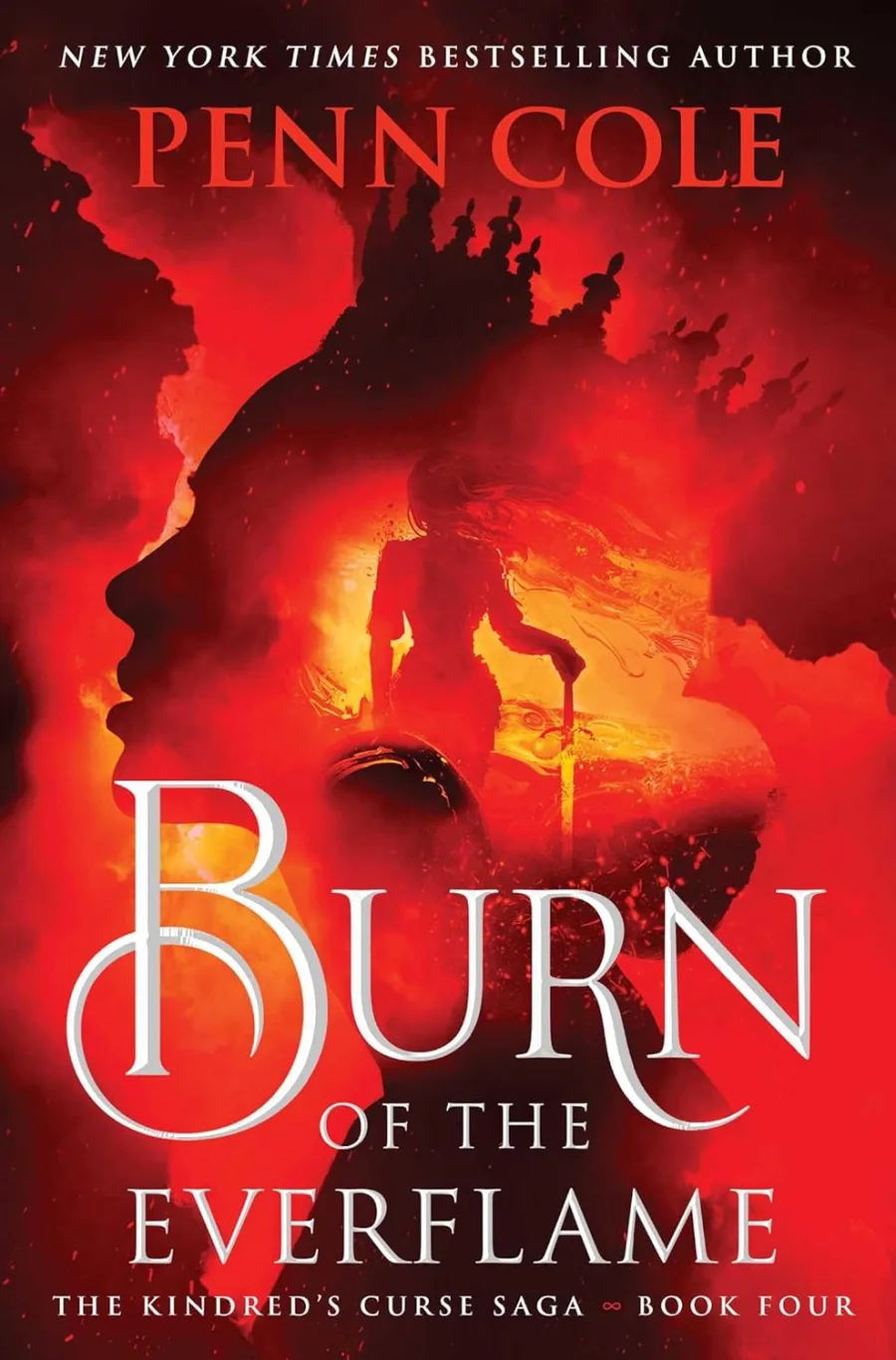
Download Cover Image
Do you want to download the full cover image for Burn of the Everflame: A Novel (The Kindred's Curse Saga)?