
Getting Away with Murder: A Novel
Hardcover
• 352 Pages
• USD 31.00
• English
• 9780593832479
No ratings yet
| Publisher | Pamela Dorman Books |
|---|---|
| ISBN13 | 9780593832479 |
| ASIN/SKU | 0593832477 |
| Book Format | Hardcover |
| Language | English |
| Pages | 352 |
| List Price | USD 31.00 |
| Publishing Date | 28/07/2026 |
| Dimensions | 6.33 x 1.16 x 9.32 inches |
| Weight | 1.14 pounds |
| Book Code | BD00066986 |
Buy this Book
Amazon Stores
Ebook Stores
Other Stores
Discover Getting Away with Murder: A Novel by Shari Lapena. This book is published by Pamela Dorman Books in Hardcover format, ISBN 9780593832479, ASIN 0593832477, under Mystery, Thriller and Suspense, Psychological Thrillers, Suspense Thrillers.
Book Description
The tenth thriller from the New York Times bestselling author of The Couple Next Door
“Getting Away with Murder is a deviously delicious thriller that kept me turning pages from the intense opening to the shocking conclusion.” —Freida McFadden
“Shari Lapena is far and away one of the best psychological thriller writers in the world. . . She is intensely bingeable.” —Lisa Jewell
Jill and Ted adore their New York brownstone the way others adore their children. They have carefully, expensively, made every inch of it their own. It reflects who they are, their status and tastes. With the grand mahogany staircase and state-of-the-art kitchen, it is the stuff of glossy magazines and real-estate dreams. It is their sanctuary.
So when Ted’s inheritance runs out and he makes a bad investment, they panic. How can they protect their beloved home and enviable lifestyle?
The answer is obvious. Or at least, it is obvious to Jill and Ted. The death of one wealthy family member—from whom they stand to inherit millions—could solve all their problems. Together, they will get away with murder.
As long as they trust each other.
As long as neither makes a mistake.
As long as there are no surprises…
“Getting Away with Murder is a deviously delicious thriller that kept me turning pages from the intense opening to the shocking conclusion.” —Freida McFadden
“Shari Lapena is far and away one of the best psychological thriller writers in the world. . . She is intensely bingeable.” —Lisa Jewell
Jill and Ted adore their New York brownstone the way others adore their children. They have carefully, expensively, made every inch of it their own. It reflects who they are, their status and tastes. With the grand mahogany staircase and state-of-the-art kitchen, it is the stuff of glossy magazines and real-estate dreams. It is their sanctuary.
So when Ted’s inheritance runs out and he makes a bad investment, they panic. How can they protect their beloved home and enviable lifestyle?
The answer is obvious. Or at least, it is obvious to Jill and Ted. The death of one wealthy family member—from whom they stand to inherit millions—could solve all their problems. Together, they will get away with murder.
As long as they trust each other.
As long as neither makes a mistake.
As long as there are no surprises…
Author Biography
Shari Lapena is the internationally bestselling author of the thrillers The Couple Next Door, A Stranger in the House, An Unwanted Guest, Someone We Know, The End of Her, Not a Happy Family and Everyone Here is Lying which have all been Sunday Times and New York Times bestsellers. Her books have been sold in forty territories around the world. She lives in Toronto.
Editorial Reviews
Advance praise for Getting Away with Murder
“Lapena’s books are addictive!”
—Freida McFadden, #1 New York Times bestselling author of The Housemaid
“Shari Lapena is far and away one of the best psychological thriller writers in the world. . . She is intensely bingeable.”
—Lisa Jewell, #1 New York Times bestselling author of None of this is True
“An utterly original and gripping morality play about greed and corruption in the modern age. Lapena contemporizes Macbeth and Lady Macbeth, and the results are as page-turning as they are revealing. Reader: you've just found your 'must-read' thriller of 2026.”
—Nita Prose, #1 New York Times bestselling author of The Maid series
“Getting Away with Murder is a bold, twisty read that flies by at breakneck speed. Buckle up for a wild ride because you won't get these characters—or their actions—out of your mind anytime soon. My favorite Lapena book yet!”
—Mary Kubica, New York Times bestselling author of It's Not Her
“Wickedly fun, glamorous and chilling. Shari Lapena flips the script masterfully yet retains her trademark twists and killer ending.”
—Chris Whitaker, New York Times bestselling author of All the Colors of the Dark
“A chilling and deadly whydunit. Nobody gets beneath the skin of their characters like Shari Lapena, and she does it unflinchingly and with impeccable flair in this sharp, gripping thriller. Getting Away with Murder deftly reveals our deepest, darkest impulses as it asks: when money is the motive, is anyone really who you think they are?”
—Gilly Macmillan, New York Times bestselling author of The Manor House
“Shari Lapena has pulled out all the stops for her tenth thriller. Getting Away With Murder is perfectly pitched entertainment with a timely message that sends chills down the spine. A cracking mystery told at breakneck pace and with such expert timing I was swept away on the wave of every twist. The perfect murder mystery, told by a grandmaster of the genre. Ten out of ten!”
—Janice Hallett, international bestselling author of The Appeal
“Utterly brilliant. Full of Lapena’s trademark twists and wonderful characterization, [Getting Away with Murder] is a masterclass of a thriller. Shari Lapena’s best yet.”
—Claire Douglas, international bestselling author of The Wrong Sister
“You'll struggle to put this one down. A thriller to really go overboard for!”
—Cara Hunter, New York Times bestselling author of Murder in the Family
“How does Shari Lapena get better and better with each book? I could not have loved [Getting Away with Murder] more. . . Splendidly entertaining.”
—Liz Nugent, international bestselling author of Strange Sally Diamond
“It’s no mean feat to get the reader rooting for a pair of heartless killers, but root you will—with every tense, uncomfortable, thrilling step of Jill and Ted’s criminal journey. Another cracking read from Shari Lapena.”
—Louise Candlish, international bestselling author of Our House
“I don’t know how she does it—every book is her best and here we go again: her best book yet! I devoured it in just a few hours, paging desperately through to see what would happen. Breakneck pace, masterful plotting, brilliantly observed, devilishly smart, and a truly satisfying ending. I adored it.”
—Andrea Mara, international bestselling author of It Should Have Been You
“Tense, claustrophobic and relentlessly paced, this is a wickedly fun read. I couldn’t put it down.”
—Mary Watson, international bestselling author of The Cleaner
“Getting Away with Murder is one of those brilliantly gripping thrillers you just cannot stop reading. Unfolding in layers it builds to form a compelling and claustrophobic moral dilemma. I was hooked.”
—Jennie Godfrey, international bestselling author of The List of Suspicious Things
“Lapena’s books are addictive!”
—Freida McFadden, #1 New York Times bestselling author of The Housemaid
“Shari Lapena is far and away one of the best psychological thriller writers in the world. . . She is intensely bingeable.”
—Lisa Jewell, #1 New York Times bestselling author of None of this is True
“An utterly original and gripping morality play about greed and corruption in the modern age. Lapena contemporizes Macbeth and Lady Macbeth, and the results are as page-turning as they are revealing. Reader: you've just found your 'must-read' thriller of 2026.”
—Nita Prose, #1 New York Times bestselling author of The Maid series
“Getting Away with Murder is a bold, twisty read that flies by at breakneck speed. Buckle up for a wild ride because you won't get these characters—or their actions—out of your mind anytime soon. My favorite Lapena book yet!”
—Mary Kubica, New York Times bestselling author of It's Not Her
“Wickedly fun, glamorous and chilling. Shari Lapena flips the script masterfully yet retains her trademark twists and killer ending.”
—Chris Whitaker, New York Times bestselling author of All the Colors of the Dark
“A chilling and deadly whydunit. Nobody gets beneath the skin of their characters like Shari Lapena, and she does it unflinchingly and with impeccable flair in this sharp, gripping thriller. Getting Away with Murder deftly reveals our deepest, darkest impulses as it asks: when money is the motive, is anyone really who you think they are?”
—Gilly Macmillan, New York Times bestselling author of The Manor House
“Shari Lapena has pulled out all the stops for her tenth thriller. Getting Away With Murder is perfectly pitched entertainment with a timely message that sends chills down the spine. A cracking mystery told at breakneck pace and with such expert timing I was swept away on the wave of every twist. The perfect murder mystery, told by a grandmaster of the genre. Ten out of ten!”
—Janice Hallett, international bestselling author of The Appeal
“Utterly brilliant. Full of Lapena’s trademark twists and wonderful characterization, [Getting Away with Murder] is a masterclass of a thriller. Shari Lapena’s best yet.”
—Claire Douglas, international bestselling author of The Wrong Sister
“You'll struggle to put this one down. A thriller to really go overboard for!”
—Cara Hunter, New York Times bestselling author of Murder in the Family
“How does Shari Lapena get better and better with each book? I could not have loved [Getting Away with Murder] more. . . Splendidly entertaining.”
—Liz Nugent, international bestselling author of Strange Sally Diamond
“It’s no mean feat to get the reader rooting for a pair of heartless killers, but root you will—with every tense, uncomfortable, thrilling step of Jill and Ted’s criminal journey. Another cracking read from Shari Lapena.”
—Louise Candlish, international bestselling author of Our House
“I don’t know how she does it—every book is her best and here we go again: her best book yet! I devoured it in just a few hours, paging desperately through to see what would happen. Breakneck pace, masterful plotting, brilliantly observed, devilishly smart, and a truly satisfying ending. I adored it.”
—Andrea Mara, international bestselling author of It Should Have Been You
“Tense, claustrophobic and relentlessly paced, this is a wickedly fun read. I couldn’t put it down.”
—Mary Watson, international bestselling author of The Cleaner
“Getting Away with Murder is one of those brilliantly gripping thrillers you just cannot stop reading. Unfolding in layers it builds to form a compelling and claustrophobic moral dilemma. I was hooked.”
—Jennie Godfrey, international bestselling author of The List of Suspicious Things
Book Summary
Shari Lapena’s Getting Away with Murder is a fast-paced psychological thriller about greed, marriage, social status, obsession, betrayal, and the dangerous lengths people may go to preserve a life they can no longer afford. Published in July 2026, the novel is Lapena’s tenth thriller and turns the conventional murder mystery upside down: instead of asking readers to discover who committed the crime, Lapena reveals the killers early and makes the real question whether they can actually get away with it. The story follows Jill and Ted Westcott, a wealthy-looking New York couple whose beloved brownstone has become the center of their lives. When financial trouble threatens their home and their carefully constructed lifestyle, they decide that murder is the simplest solution. What follows is a tense psychological unraveling in which every secret, lie, and unexpected message makes their supposedly perfect plan increasingly dangerous.
At the beginning of the novel, Jill and Ted appear to have achieved exactly the kind of life many people associate with success. They live in a beautiful New York brownstone that they have renovated with enormous care and expense. The house is more than property to them. It represents taste, achievement, security, social standing, and the life they believe they deserve. Every room reflects their choices, and they have invested heavily in making the house a personal sanctuary. Their attachment to it is so intense that the possibility of losing it feels almost like the loss of a family member. This obsession with the home becomes the psychological foundation of the entire story.
The trouble begins when Ted’s financial situation changes. His inheritance, which helped support the couple’s lifestyle, runs out, and he makes a bad investment that leaves them in serious financial difficulty. Suddenly, the lifestyle they have carefully built is no longer sustainable. The brownstone is at risk, and so is everything it symbolizes. Ted and Jill could theoretically downsize, sell the house, accept a less extravagant lifestyle, or simply admit that they have been living beyond their means. But neither is willing to contemplate such an outcome. Their attachment to wealth and appearance is stronger than their willingness to make sensible sacrifices.
That is where the novel's central moral question begins. Jill and Ted realize that a wealthy member of their family is standing between them and financial security. If that person dies, they could inherit millions. Instead of treating the possibility as a horrifying thought, they gradually begin considering it as a practical solution. The transition is one of the most disturbing aspects of the story because Lapena does not portray them as lifelong criminals. They are ordinary, socially respectable people who convince themselves that murder is reasonable because the alternative is losing the life they love. Their decision demonstrates how greed can transform an abstract temptation into a concrete plan.
Jill and Ted ultimately agree to commit the murder together. Their partnership is crucial because the crime is presented as something that strengthens their marriage initially. They are united by a shared secret and a shared objective. They know they must trust one another completely. They also understand that one mistake could destroy them both. The novel's title therefore carries a double meaning. They want to “get away with murder” literally, but they also want to preserve the illusion that they are a respectable couple who have done nothing wrong. Their greatest challenge is not simply avoiding the police. It is maintaining the appearance of normality while carrying an enormous secret.
The murder itself occurs relatively early, which immediately distinguishes the novel from a traditional whodunit. Lapena is less interested in concealing the identity of the killer than in examining the psychological consequences of becoming one. Readers know what Jill and Ted have done, understand why they did it, and watch as they attempt to continue living normally. The suspense comes from anticipation. Will someone notice something unusual? Will the police find evidence? Will a relative become suspicious? Will Jill and Ted begin to suspect each other? The result is a “whydunit” and “how-will-they-get-away-with-it” thriller rather than a conventional murder investigation.
Initially, their plan appears successful. They have been careful, and they believe they have left no meaningful evidence behind. For a short time, Jill and Ted can almost convince themselves that the danger is over. But Lapena quickly undermines that confidence. Anonymous messages begin arriving, accusing them of the murder and claiming that the sender possesses evidence. Suddenly, the couple is no longer simply worried about what the police might discover. They are being watched by someone who appears to know exactly what they have done.
The anonymous messages transform the novel from a story about committing a crime into a story about paranoia. Jill and Ted do not know who is threatening them or how much the person actually knows. They also cannot be certain whether the messages are genuine or designed to frighten them. This uncertainty becomes psychologically devastating. Every phone call, text, unexpected visitor, and conversation can now be interpreted as a possible threat. A harmless remark may sound like a clue. A friend asking an ordinary question may appear suspicious. The couple begins looking at the people around them differently because they can no longer trust their own assumptions.
The blackmail also begins to expose weaknesses in Jill and Ted's marriage. At first, the murder seems to bring them closer. They are partners in crime, united by a common goal. But once pressure begins mounting, that unity becomes fragile. Each person begins to wonder what the other is hiding. If one of them is caught, will the other confess? If one person has made a mistake, can the other survive the consequences? Their shared secret, which initially seemed to strengthen their relationship, slowly becomes something that poisons it.
Jill's relationship with the brownstone is particularly important to this psychological deterioration. Her obsession with preserving the house helped motivate the murder, but once the consequences begin, the reader can see the price of that obsession more clearly. She has effectively sacrificed moral security for material security. The house that was supposed to be her sanctuary becomes associated with fear. Instead of providing peace, it constantly reminds her of what she has done to keep it.
Ted faces a similar transformation. His financial mistake is the original trigger, but his inability to accept the consequences becomes a much larger problem. He does not simply want to save his marriage or avoid poverty. He wants to preserve his identity as a successful man. Admitting financial failure would mean confronting the possibility that his entire self-image is built on money and appearances. Murder becomes, in his mind, an escape from humiliation as much as an escape from financial difficulty.
As the anonymous blackmailer continues applying pressure, Jill and Ted begin investigating the people around them. Their friends, relatives, employees, and acquaintances suddenly become potential suspects. This creates one of Lapena's favorite psychological effects: ordinary domestic relationships become sources of danger. The people who know Jill and Ted best may also be the people most capable of exposing them. The couple therefore has to consider not only who might know the truth but also who might have a motive for exploiting it.
The novel gradually broadens its perspective beyond Jill and Ted. Lapena gives readers glimpses into the minds of other characters, including friends, a suspicious detective, the couple's cleaning lady and her son, and even another murderer. These additional viewpoints make the world of the novel feel morally unstable. Jill and Ted are not the only people capable of lying, manipulating, or hiding secrets. Their crime exists within a larger environment in which people constantly make decisions based on self-interest.
This broader cast also strengthens one of the book's most important themes: appearances are unreliable. Jill and Ted look like successful, respectable New Yorkers. Their brownstone suggests wealth and stability. Their marriage appears comfortable. Yet beneath the surface, they are desperate enough to contemplate killing someone for money. Other characters may also have hidden problems that are invisible from the outside. Lapena uses this contrast between appearance and reality to show how easily social respectability can conceal darker motivations.
The blackmail eventually pushes Jill and Ted into increasingly desperate decisions. Rather than simply waiting to see what happens, they try to identify the person behind the messages. Their investigation becomes dangerous because every attempt to uncover the truth creates another opportunity for something to go wrong. The couple is now trapped inside a cycle of fear: they must act because they are threatened, but acting creates new risks. Their original crime may have been carefully planned, but the aftermath is increasingly unpredictable.
One particularly important development is the death of another person during the couple's efforts to identify their blackmailer. The situation becomes even more complicated because what began as a single planned murder develops into a chain of consequences. The couple's fear and desperation begin producing new danger. The distinction between the original crime and the subsequent choices becomes increasingly blurred. This is where the title takes on a darker meaning: Jill and Ted may have believed they were committing one carefully controlled crime, but murder does not remain neatly contained.
The novel's treatment of morality is therefore more complicated than a simple story about “bad people getting caught.” Jill and Ted are unquestionably responsible for their actions, but Lapena makes readers understand how they arrived at them. Their fear of losing status, their attachment to their home, their unwillingness to accept financial failure, and their willingness to rationalize increasingly terrible decisions all form a recognizable psychological progression. The disturbing part is not that they suddenly become monsters. It is that they gradually convince themselves that each new step is necessary.
This makes Getting Away with Murder especially effective as a story about greed. Money is not simply a plot device. It is the force that changes how the characters perceive one another. Wealth creates envy, insecurity, competition, and entitlement. The book repeatedly asks what people are willing to sacrifice to maintain a certain standard of living. Would someone really kill for a house? Would someone betray a friend for money? Would someone destroy another person's life rather than admit that their own lifestyle is unsustainable? Lapena's answer is deliberately uncomfortable: under the right pressures, people can justify almost anything.
Marriage is another major theme. Jill and Ted begin as a couple who love one another, but their partnership is also built around shared aspirations and shared possessions. The murder tests whether their relationship is based on genuine emotional commitment or on a common desire for security and status. As the pressure increases, the couple begins to question each other. Love and suspicion become intertwined. The person who should be the safest person in the world becomes the person whose behavior must be watched most carefully.
The psychological tension is amplified by Lapena's concise, fast-moving prose. The novel is divided into 58 short chapters, many driven by dialogue and sudden shifts in information. This structure helps create a bingeable quality in which readers can move quickly from one revelation to another. Rather than spending long passages on elaborate description, Lapena keeps the focus on what characters know, what they suspect, what they are hiding, and what they might do next. The result is a thriller designed around momentum and uncertainty.
For readers searching for a psychological thriller about murder and greed, Getting Away with Murder is particularly distinctive because it reverses the standard mystery structure. If you enjoy books about morally gray characters, wealthy families with dark secrets, domestic suspense, unreliable relationships, blackmail, murder plots, and rapidly escalating tension, this novel fits squarely within that space. It should also appeal to readers who enjoy Shari Lapena's The Couple Next Door, Everyone Here Is Lying, Not a Happy Family, and She Didn’t See It Coming, although Getting Away with Murder places unusual emphasis on the killers' psychology rather than simply asking who the killer is. Lapena's publisher classifies it under suspense and thriller, with related categories in women's fiction, crime, domestic thriller, and psychological thriller.
What makes the novel especially compelling is that the reader knows more than most of the characters. This creates dramatic irony throughout the story. A police officer can ask a seemingly innocent question and the reader understands exactly why Jill or Ted is terrified. A friend can make an ordinary comment that sounds threatening because the reader knows the secret behind it. A family gathering can become more tense than a traditional action scene because everyone is pretending to be normal. The suspense comes from waiting to see when the truth will collide with the characters' carefully maintained public identities.
Ultimately, Getting Away with Murder is a cautionary story about the danger of wanting to preserve appearances at any cost. Jill and Ted believe their home represents everything they have achieved, and when that achievement is threatened, they choose to protect the symbol rather than reconsider the life it represents. The irony is that their attempt to preserve their perfect existence destroys the very security they hoped to protect. The house remains physically important, but psychologically it becomes inseparable from fear, guilt, suspicion, and death.
The deeper tragedy of the novel is that Jill and Ted had alternatives. They could have accepted financial loss. They could have sold their home. They could have changed their lifestyle. They could have admitted that Ted's investment had failed. None of those choices would have been pleasant, but they would have been survivable. Instead, they choose the one option that cannot be undone. Once they cross that line, every subsequent decision is made under pressure from the original crime.
In the end, Getting Away with Murder is not really about how to commit the perfect murder. It is about the impossibility of controlling the consequences of murder. Jill and Ted think they can plan every detail, control the evidence, protect their marriage, preserve their wealth, and return to ordinary life. But human beings are unpredictable, secrets create new secrets, and fear changes behavior. The carefully constructed plan begins collapsing because the characters themselves cannot remain unchanged after what they have done.
That is what makes Shari Lapena's novel such an effective psychological thriller. The murder may be the event that starts the story, but guilt, greed, paranoia, blackmail, and mistrust drive everything that follows. Jill and Ted's desperate attempt to protect their dream home becomes a nightmare in which they can no longer tell friend from enemy, safety from danger, or love from self-preservation. The novel's central question—whether they will actually get away with murder—therefore becomes much larger than a question of police detection. It becomes a question of whether anyone can truly escape the psychological and moral consequences of what they have chosen to do.
For readers looking for a twisty domestic thriller, psychological murder mystery, greed-driven crime novel, or fast-paced Shari Lapena thriller, Getting Away with Murder delivers a particularly sharp premise: the killers are known from the beginning, but almost everything else remains uncertain. The suspense lies in watching an ordinary-looking couple make one terrible decision and then discover that the consequences cannot be controlled. As the walls close in, the brownstone that once represented luxury and security becomes a symbol of obsession, and the marriage that once seemed like an alliance becomes increasingly fragile. The result is a dark, addictive morality tale about wealth, envy, marriage, and the terrifying price of trying to keep a perfect life at any cost.
At the beginning of the novel, Jill and Ted appear to have achieved exactly the kind of life many people associate with success. They live in a beautiful New York brownstone that they have renovated with enormous care and expense. The house is more than property to them. It represents taste, achievement, security, social standing, and the life they believe they deserve. Every room reflects their choices, and they have invested heavily in making the house a personal sanctuary. Their attachment to it is so intense that the possibility of losing it feels almost like the loss of a family member. This obsession with the home becomes the psychological foundation of the entire story.
The trouble begins when Ted’s financial situation changes. His inheritance, which helped support the couple’s lifestyle, runs out, and he makes a bad investment that leaves them in serious financial difficulty. Suddenly, the lifestyle they have carefully built is no longer sustainable. The brownstone is at risk, and so is everything it symbolizes. Ted and Jill could theoretically downsize, sell the house, accept a less extravagant lifestyle, or simply admit that they have been living beyond their means. But neither is willing to contemplate such an outcome. Their attachment to wealth and appearance is stronger than their willingness to make sensible sacrifices.
That is where the novel's central moral question begins. Jill and Ted realize that a wealthy member of their family is standing between them and financial security. If that person dies, they could inherit millions. Instead of treating the possibility as a horrifying thought, they gradually begin considering it as a practical solution. The transition is one of the most disturbing aspects of the story because Lapena does not portray them as lifelong criminals. They are ordinary, socially respectable people who convince themselves that murder is reasonable because the alternative is losing the life they love. Their decision demonstrates how greed can transform an abstract temptation into a concrete plan.
Jill and Ted ultimately agree to commit the murder together. Their partnership is crucial because the crime is presented as something that strengthens their marriage initially. They are united by a shared secret and a shared objective. They know they must trust one another completely. They also understand that one mistake could destroy them both. The novel's title therefore carries a double meaning. They want to “get away with murder” literally, but they also want to preserve the illusion that they are a respectable couple who have done nothing wrong. Their greatest challenge is not simply avoiding the police. It is maintaining the appearance of normality while carrying an enormous secret.
The murder itself occurs relatively early, which immediately distinguishes the novel from a traditional whodunit. Lapena is less interested in concealing the identity of the killer than in examining the psychological consequences of becoming one. Readers know what Jill and Ted have done, understand why they did it, and watch as they attempt to continue living normally. The suspense comes from anticipation. Will someone notice something unusual? Will the police find evidence? Will a relative become suspicious? Will Jill and Ted begin to suspect each other? The result is a “whydunit” and “how-will-they-get-away-with-it” thriller rather than a conventional murder investigation.
Initially, their plan appears successful. They have been careful, and they believe they have left no meaningful evidence behind. For a short time, Jill and Ted can almost convince themselves that the danger is over. But Lapena quickly undermines that confidence. Anonymous messages begin arriving, accusing them of the murder and claiming that the sender possesses evidence. Suddenly, the couple is no longer simply worried about what the police might discover. They are being watched by someone who appears to know exactly what they have done.
The anonymous messages transform the novel from a story about committing a crime into a story about paranoia. Jill and Ted do not know who is threatening them or how much the person actually knows. They also cannot be certain whether the messages are genuine or designed to frighten them. This uncertainty becomes psychologically devastating. Every phone call, text, unexpected visitor, and conversation can now be interpreted as a possible threat. A harmless remark may sound like a clue. A friend asking an ordinary question may appear suspicious. The couple begins looking at the people around them differently because they can no longer trust their own assumptions.
The blackmail also begins to expose weaknesses in Jill and Ted's marriage. At first, the murder seems to bring them closer. They are partners in crime, united by a common goal. But once pressure begins mounting, that unity becomes fragile. Each person begins to wonder what the other is hiding. If one of them is caught, will the other confess? If one person has made a mistake, can the other survive the consequences? Their shared secret, which initially seemed to strengthen their relationship, slowly becomes something that poisons it.
Jill's relationship with the brownstone is particularly important to this psychological deterioration. Her obsession with preserving the house helped motivate the murder, but once the consequences begin, the reader can see the price of that obsession more clearly. She has effectively sacrificed moral security for material security. The house that was supposed to be her sanctuary becomes associated with fear. Instead of providing peace, it constantly reminds her of what she has done to keep it.
Ted faces a similar transformation. His financial mistake is the original trigger, but his inability to accept the consequences becomes a much larger problem. He does not simply want to save his marriage or avoid poverty. He wants to preserve his identity as a successful man. Admitting financial failure would mean confronting the possibility that his entire self-image is built on money and appearances. Murder becomes, in his mind, an escape from humiliation as much as an escape from financial difficulty.
As the anonymous blackmailer continues applying pressure, Jill and Ted begin investigating the people around them. Their friends, relatives, employees, and acquaintances suddenly become potential suspects. This creates one of Lapena's favorite psychological effects: ordinary domestic relationships become sources of danger. The people who know Jill and Ted best may also be the people most capable of exposing them. The couple therefore has to consider not only who might know the truth but also who might have a motive for exploiting it.
The novel gradually broadens its perspective beyond Jill and Ted. Lapena gives readers glimpses into the minds of other characters, including friends, a suspicious detective, the couple's cleaning lady and her son, and even another murderer. These additional viewpoints make the world of the novel feel morally unstable. Jill and Ted are not the only people capable of lying, manipulating, or hiding secrets. Their crime exists within a larger environment in which people constantly make decisions based on self-interest.
This broader cast also strengthens one of the book's most important themes: appearances are unreliable. Jill and Ted look like successful, respectable New Yorkers. Their brownstone suggests wealth and stability. Their marriage appears comfortable. Yet beneath the surface, they are desperate enough to contemplate killing someone for money. Other characters may also have hidden problems that are invisible from the outside. Lapena uses this contrast between appearance and reality to show how easily social respectability can conceal darker motivations.
The blackmail eventually pushes Jill and Ted into increasingly desperate decisions. Rather than simply waiting to see what happens, they try to identify the person behind the messages. Their investigation becomes dangerous because every attempt to uncover the truth creates another opportunity for something to go wrong. The couple is now trapped inside a cycle of fear: they must act because they are threatened, but acting creates new risks. Their original crime may have been carefully planned, but the aftermath is increasingly unpredictable.
One particularly important development is the death of another person during the couple's efforts to identify their blackmailer. The situation becomes even more complicated because what began as a single planned murder develops into a chain of consequences. The couple's fear and desperation begin producing new danger. The distinction between the original crime and the subsequent choices becomes increasingly blurred. This is where the title takes on a darker meaning: Jill and Ted may have believed they were committing one carefully controlled crime, but murder does not remain neatly contained.
The novel's treatment of morality is therefore more complicated than a simple story about “bad people getting caught.” Jill and Ted are unquestionably responsible for their actions, but Lapena makes readers understand how they arrived at them. Their fear of losing status, their attachment to their home, their unwillingness to accept financial failure, and their willingness to rationalize increasingly terrible decisions all form a recognizable psychological progression. The disturbing part is not that they suddenly become monsters. It is that they gradually convince themselves that each new step is necessary.
This makes Getting Away with Murder especially effective as a story about greed. Money is not simply a plot device. It is the force that changes how the characters perceive one another. Wealth creates envy, insecurity, competition, and entitlement. The book repeatedly asks what people are willing to sacrifice to maintain a certain standard of living. Would someone really kill for a house? Would someone betray a friend for money? Would someone destroy another person's life rather than admit that their own lifestyle is unsustainable? Lapena's answer is deliberately uncomfortable: under the right pressures, people can justify almost anything.
Marriage is another major theme. Jill and Ted begin as a couple who love one another, but their partnership is also built around shared aspirations and shared possessions. The murder tests whether their relationship is based on genuine emotional commitment or on a common desire for security and status. As the pressure increases, the couple begins to question each other. Love and suspicion become intertwined. The person who should be the safest person in the world becomes the person whose behavior must be watched most carefully.
The psychological tension is amplified by Lapena's concise, fast-moving prose. The novel is divided into 58 short chapters, many driven by dialogue and sudden shifts in information. This structure helps create a bingeable quality in which readers can move quickly from one revelation to another. Rather than spending long passages on elaborate description, Lapena keeps the focus on what characters know, what they suspect, what they are hiding, and what they might do next. The result is a thriller designed around momentum and uncertainty.
For readers searching for a psychological thriller about murder and greed, Getting Away with Murder is particularly distinctive because it reverses the standard mystery structure. If you enjoy books about morally gray characters, wealthy families with dark secrets, domestic suspense, unreliable relationships, blackmail, murder plots, and rapidly escalating tension, this novel fits squarely within that space. It should also appeal to readers who enjoy Shari Lapena's The Couple Next Door, Everyone Here Is Lying, Not a Happy Family, and She Didn’t See It Coming, although Getting Away with Murder places unusual emphasis on the killers' psychology rather than simply asking who the killer is. Lapena's publisher classifies it under suspense and thriller, with related categories in women's fiction, crime, domestic thriller, and psychological thriller.
What makes the novel especially compelling is that the reader knows more than most of the characters. This creates dramatic irony throughout the story. A police officer can ask a seemingly innocent question and the reader understands exactly why Jill or Ted is terrified. A friend can make an ordinary comment that sounds threatening because the reader knows the secret behind it. A family gathering can become more tense than a traditional action scene because everyone is pretending to be normal. The suspense comes from waiting to see when the truth will collide with the characters' carefully maintained public identities.
Ultimately, Getting Away with Murder is a cautionary story about the danger of wanting to preserve appearances at any cost. Jill and Ted believe their home represents everything they have achieved, and when that achievement is threatened, they choose to protect the symbol rather than reconsider the life it represents. The irony is that their attempt to preserve their perfect existence destroys the very security they hoped to protect. The house remains physically important, but psychologically it becomes inseparable from fear, guilt, suspicion, and death.
The deeper tragedy of the novel is that Jill and Ted had alternatives. They could have accepted financial loss. They could have sold their home. They could have changed their lifestyle. They could have admitted that Ted's investment had failed. None of those choices would have been pleasant, but they would have been survivable. Instead, they choose the one option that cannot be undone. Once they cross that line, every subsequent decision is made under pressure from the original crime.
In the end, Getting Away with Murder is not really about how to commit the perfect murder. It is about the impossibility of controlling the consequences of murder. Jill and Ted think they can plan every detail, control the evidence, protect their marriage, preserve their wealth, and return to ordinary life. But human beings are unpredictable, secrets create new secrets, and fear changes behavior. The carefully constructed plan begins collapsing because the characters themselves cannot remain unchanged after what they have done.
That is what makes Shari Lapena's novel such an effective psychological thriller. The murder may be the event that starts the story, but guilt, greed, paranoia, blackmail, and mistrust drive everything that follows. Jill and Ted's desperate attempt to protect their dream home becomes a nightmare in which they can no longer tell friend from enemy, safety from danger, or love from self-preservation. The novel's central question—whether they will actually get away with murder—therefore becomes much larger than a question of police detection. It becomes a question of whether anyone can truly escape the psychological and moral consequences of what they have chosen to do.
For readers looking for a twisty domestic thriller, psychological murder mystery, greed-driven crime novel, or fast-paced Shari Lapena thriller, Getting Away with Murder delivers a particularly sharp premise: the killers are known from the beginning, but almost everything else remains uncertain. The suspense lies in watching an ordinary-looking couple make one terrible decision and then discover that the consequences cannot be controlled. As the walls close in, the brownstone that once represented luxury and security becomes a symbol of obsession, and the marriage that once seemed like an alliance becomes increasingly fragile. The result is a dark, addictive morality tale about wealth, envy, marriage, and the terrifying price of trying to keep a perfect life at any cost.
Sample Chapters
Sample Chapters will be added soon…
Reader Reviews
No reviews yet.
Getting Away with Murder: A Novel
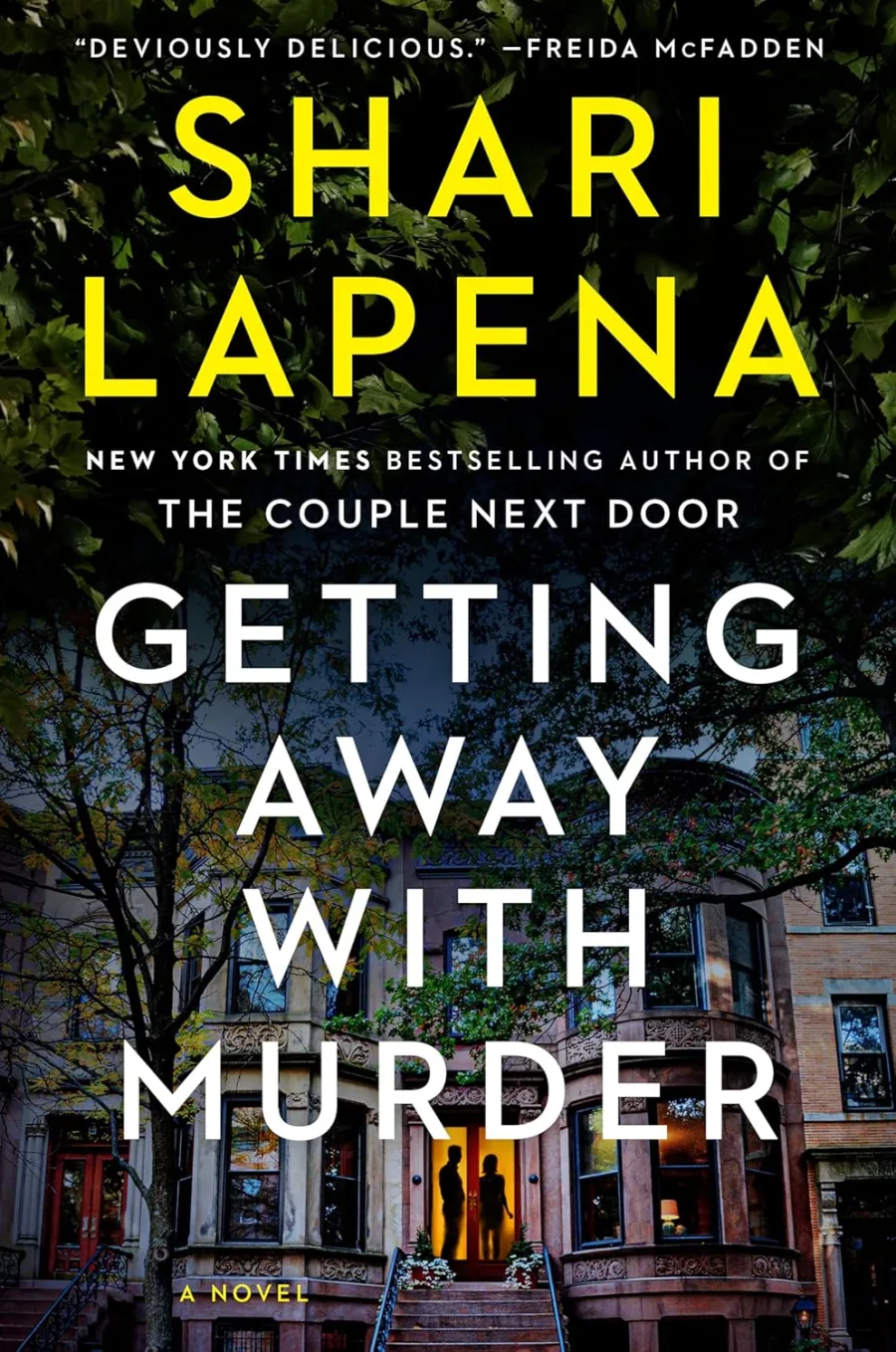
Download Cover Image
Do you want to download the full cover image for Getting Away with Murder: A Novel?