
The Unknown: A Novel
Hardcover
• 368 Pages
• USD 32.00
• English
• 9798217044092
No ratings yet
| Publisher | Dutton |
|---|---|
| ISBN13 | 9798217044092 |
| ASIN/SKU | B0FZSB66TM |
| Book Format | Hardcover |
| Language | English |
| Pages | 368 |
| List Price | USD 32.00 |
| Publishing Date | 04/08/2026 |
| Dimensions | 6.31 x 1.28 x 9.31 inches |
| Weight | 1.24 pounds |
| Book Code | BD00066989 |
Buy this Book
Amazon Stores
Ebook Stores
Other Stores
Discover The Unknown: A Novel by Riley Sager. This book is published by Dutton in Hardcover format, ISBN 9798217044092, ASIN B0FZSB66TM, under Mystery, Thriller and Suspense, Ghost Thrillers, Psychological Thrillers.
Book Description
The first edition of this stunning hardcover features designed endpapers, a foil-stamped case, hued edges, and a shimmery jacket!
In 1926, five women disappeared from a remote island in Vermont. Now, one hundred years later, it’s happening again.
Struggling actress Marin Keane is shocked when she lands a role in a major motion picture about the unsolved mystery of New Avalon, an island on sprawling Lake Faraday in Vermont. She’s even more surprised when she learns that the role requires a weeklong research trip to that very spot.
Because New Avalon isn’t your ordinary island. A century ago, it was a commune for spiritual mediums—until they all vanished in 1926. The only trace of them was five dresses hanging from the branches of an old oak tree in the middle of the island, one for each missing woman. Some locals say they simply left. Others think they were murdered. But the prevailing opinion, thanks to a diary left behind by one of the vanished, a young woman named Daisy Rue, is that a séance gone wrong conjured something supernatural that took them all one by one.
Not long after arriving, Marin and her castmates, including legendary actress Violet Wright and white-hot director Ronan Peters, begin to realize all is not right with New Avalon. They hear strange noises in the night and notice mysterious symbols left behind by the island's previous occupants. And after a sudden health emergency leaves Marin, Ronan, and the other actors stranded on the island, the disappearances begin again.
Is it the work of someone trying to derail the movie? Or is the island’s alleged supernatural past catching up with the present? As fear and suspicion mount, Marin turns to Daisy’s diary, hoping it holds the key to figuring out what really happened to the women of New Avalon—and how to keep the island’s terrible history from repeating itself.
In 1926, five women disappeared from a remote island in Vermont. Now, one hundred years later, it’s happening again.
Struggling actress Marin Keane is shocked when she lands a role in a major motion picture about the unsolved mystery of New Avalon, an island on sprawling Lake Faraday in Vermont. She’s even more surprised when she learns that the role requires a weeklong research trip to that very spot.
Because New Avalon isn’t your ordinary island. A century ago, it was a commune for spiritual mediums—until they all vanished in 1926. The only trace of them was five dresses hanging from the branches of an old oak tree in the middle of the island, one for each missing woman. Some locals say they simply left. Others think they were murdered. But the prevailing opinion, thanks to a diary left behind by one of the vanished, a young woman named Daisy Rue, is that a séance gone wrong conjured something supernatural that took them all one by one.
Not long after arriving, Marin and her castmates, including legendary actress Violet Wright and white-hot director Ronan Peters, begin to realize all is not right with New Avalon. They hear strange noises in the night and notice mysterious symbols left behind by the island's previous occupants. And after a sudden health emergency leaves Marin, Ronan, and the other actors stranded on the island, the disappearances begin again.
Is it the work of someone trying to derail the movie? Or is the island’s alleged supernatural past catching up with the present? As fear and suspicion mount, Marin turns to Daisy’s diary, hoping it holds the key to figuring out what really happened to the women of New Avalon—and how to keep the island’s terrible history from repeating itself.
Author Biography
Riley Sager is the New York Times bestselling author of nine novels, most recently Middle of the Night and The Only One Left. His books have been published in over 35 countries, with more than 3 million copies sold worldwide. His latest book, With a Vengeance, will be published in 2025 by Dutton Books.
A native of Pennsylvania, he now lives in Princeton, New Jersey.
A native of Pennsylvania, he now lives in Princeton, New Jersey.
Editorial Reviews
One of People's 15 Most Anticipated Books of Summer
AARP's 32 of the Season's Top New Books
Amazon Book Review's Most Anticipated Books of Summer 2026
Buzzfeed's 13 Pageturners Coming Out This Summer That Readers Cannot Wait To Get Their Hands On
Scary Mommy's 17 Beach Reads We Can't Wait to Get Our Hands On
The Everygirl's Most Anticipated New Books of Summer 2026
Praise for The Unknown:
“Sager spruces up well-worn genre tropes with aplomb…Sager’s many fans will walk away satisfied.”
—Publishers Weekly
Praise for Riley Sager and His Novels:
The latest dependable airport bookstore grab and name in summer suspense.”
—The Chicago Tribune
“Sager is a master of the twist and the turn.”
—Rolling Stone
“[Sager’s novels are] all creepily atmospheric, easy to read without being fluffy, and fun as hell.”
—Vulture
"Suspense master."
—USA Today
"With a Vengeance is a locked room thriller at its best! Nonstop suspense with twists and turns that will leave your head spinning!"
— #1 New York Times bestselling author Freida McFadden on With a Vengeance
“Sager is a master of twists, and he delivers plenty of them here. The novel is also full of ’90s nostalgia, but the things stalking the backyard and the mysterious institute hidden in the nearby woods are what make this a gripping read.”
—New York Times Book Review on Middle of the Night
At the top of his game. Sager delivers a thriller so tautly written, so tightly constructed, that readers will emerge from the book breathless and in a mild state of shock. With this book, Sager has committed an act of brilliance.”
—Booklist on With a Vengeance
“Sager’s Middle of the Night is a twisty mystery with a touch of the supernatural, but it’s also about the complexities of friendship, those fleeting but overwhelming feelings from growing up and coming to terms with profound grief.”
—USA Today on Middle of the Night
“A clever and fun mashup of Agatha Christie’s And Then There Were None and Murder on the Orient Express. Sager wields a deft hand in bringing all the elements together into a rip-roaring, tension-filled tale of greed, murder, and revenge. Enjoy the ride on the Phoenix.”
—David Baldacci, #1 New York Times bestselling author of Strangers in Time on With a Vengeance
“Pure escape . . . A voyeuristic page-turner. After I read it, I dove for more Sager: luckily he has five others, bestsellers all.”
—The Boston Globe on The House Across the Lake
AARP's 32 of the Season's Top New Books
Amazon Book Review's Most Anticipated Books of Summer 2026
Buzzfeed's 13 Pageturners Coming Out This Summer That Readers Cannot Wait To Get Their Hands On
Scary Mommy's 17 Beach Reads We Can't Wait to Get Our Hands On
The Everygirl's Most Anticipated New Books of Summer 2026
Praise for The Unknown:
“Sager spruces up well-worn genre tropes with aplomb…Sager’s many fans will walk away satisfied.”
—Publishers Weekly
Praise for Riley Sager and His Novels:
The latest dependable airport bookstore grab and name in summer suspense.”
—The Chicago Tribune
“Sager is a master of the twist and the turn.”
—Rolling Stone
“[Sager’s novels are] all creepily atmospheric, easy to read without being fluffy, and fun as hell.”
—Vulture
"Suspense master."
—USA Today
"With a Vengeance is a locked room thriller at its best! Nonstop suspense with twists and turns that will leave your head spinning!"
— #1 New York Times bestselling author Freida McFadden on With a Vengeance
“Sager is a master of twists, and he delivers plenty of them here. The novel is also full of ’90s nostalgia, but the things stalking the backyard and the mysterious institute hidden in the nearby woods are what make this a gripping read.”
—New York Times Book Review on Middle of the Night
At the top of his game. Sager delivers a thriller so tautly written, so tightly constructed, that readers will emerge from the book breathless and in a mild state of shock. With this book, Sager has committed an act of brilliance.”
—Booklist on With a Vengeance
“Sager’s Middle of the Night is a twisty mystery with a touch of the supernatural, but it’s also about the complexities of friendship, those fleeting but overwhelming feelings from growing up and coming to terms with profound grief.”
—USA Today on Middle of the Night
“A clever and fun mashup of Agatha Christie’s And Then There Were None and Murder on the Orient Express. Sager wields a deft hand in bringing all the elements together into a rip-roaring, tension-filled tale of greed, murder, and revenge. Enjoy the ride on the Phoenix.”
—David Baldacci, #1 New York Times bestselling author of Strangers in Time on With a Vengeance
“Pure escape . . . A voyeuristic page-turner. After I read it, I dove for more Sager: luckily he has five others, bestsellers all.”
—The Boston Globe on The House Across the Lake
Book Summary
Riley Sager’s The Unknown is a chilling psychological thriller that blends supernatural horror, historical mystery, Hollywood ambition, unreliable appearances, and an isolated-island survival story. Published by Dutton on August 4, 2026, the novel centers on a mysterious disappearance that occurred on a remote Vermont island in 1926—and the disturbing possibility that the same nightmare is happening again exactly one hundred years later. The story follows Marin Keane, a struggling actress who unexpectedly lands the role of Daisy Rue in a major motion picture about the infamous New Avalon disappearances. Her dream opportunity quickly becomes a nightmare when she and the rest of the film cast are stranded on the very island where five women vanished a century earlier.
The novel's central mystery begins with New Avalon, a remote island in Lake Faraday, Vermont. In 1926, the island was home to a commune of spiritual mediums. Five women lived there until they mysteriously disappeared. The only physical evidence left behind was five dresses hanging from the branches of an old oak tree, one dress for each missing woman. The strange image became legendary, but the circumstances surrounding the disappearance remained unresolved. Some people believed the women simply abandoned the island. Others believed they had been murdered. The most frightening explanation, however, came from the diary of Daisy Rue, one of the women who vanished. According to her account, a séance may have summoned a supernatural force known as the Darkness, which then began claiming the inhabitants of the island one by one.
A century later, Marin Keane has little reason to believe she will become involved with this old mystery. She is a struggling actress whose career has consisted mostly of minor roles and forgettable appearances. Her luck changes when she is cast in a major movie based on the New Avalon disappearances. For Marin, the role of Daisy Rue could be the breakthrough she has been waiting for. The opportunity is particularly exciting because the film is being directed by Ronan Peters, a talented and highly regarded filmmaker, and the cast includes Violet Wright, a legendary actress whose presence gives the project enormous prestige. Marin knows she has been given an extraordinary chance, and she is determined to prove that she deserves it.
The production, however, is far from an ordinary film shoot. Ronan wants the actors to immerse themselves completely in the story, so the cast travels to New Avalon for a period of research and rehearsal. They will live on the island, wear period clothing, study the history of the commune, and even participate in séances. The island has little modern infrastructure, which means the actors are cut off from the conveniences that normally make them feel safe. There is no easy access to the outside world, and the isolation becomes increasingly important as strange events begin occurring around them.
Marin initially treats the arrangement as an unusual but exciting opportunity. She is an actress, after all, and spending time in the actual location where the historical events occurred should help her understand Daisy Rue. Yet New Avalon immediately feels wrong. The island is beautiful but unsettling, with dense woods, cliffs, old structures, and an atmosphere that seems to resist the presence of outsiders. Strange noises occur at night. Mysterious symbols appear around the property. The cast begins encountering things that are difficult to explain rationally. The more Marin learns about the original inhabitants, the harder it becomes to separate the movie they are making from the history they are attempting to recreate.
The cast itself becomes an important part of the suspense. Alongside Marin are several actresses playing the women who disappeared in 1926. Violet Wright portrays Ruth Hume Semple, the charismatic woman associated with the original commune. Julianne Brown, Heather Benchley, and Susie Hutchinson complete much of the central cast. Their personalities are very different, and professional rivalries and insecurities exist beneath the surface of their supposedly cooperative working relationship. Ronan, meanwhile, is both director and screenwriter, giving him enormous control over the project. The production is therefore filled with people who have ambitions, secrets, egos, and reasons to be suspicious of one another.
Marin is particularly interesting because she is caught between admiration and suspicion. She is grateful to have received the opportunity of a lifetime, but she also understands that she is the least established member of the cast. Violet is a celebrated star, while Ronan is a powerful filmmaker. Marin therefore has much more to lose than the others if the project collapses. Her desire to succeed makes her vulnerable because she desperately wants to believe that the strange events surrounding the production are simply part of an elaborate artistic experiment. She does not want fear to cost her the role that could finally transform her career.
The historical story is revealed primarily through Daisy Rue's diary. The narrative alternates between the present-day events on New Avalon and entries written by Daisy in 1926. This dual timeline is one of the novel's most important structural devices because the diary gradually provides information about what happened to the original women while the modern cast begins experiencing eerily similar circumstances. The reader is therefore constantly comparing the two timelines. Every new detail from Daisy's diary raises the question of whether history is actually repeating itself.
Daisy's diary is frightening because it presents the supernatural events from inside the original commune. At first, the women are fascinated by spiritualism and the possibility of communicating with forces beyond the ordinary world. Their séances are part belief, part performance, and part experiment. But eventually something appears to go wrong. Daisy describes an evil presence she calls the Darkness. As the diary progresses, her fear becomes more intense. People begin disappearing, and the remaining inhabitants realize they may be trapped with something they cannot understand or control. The opening diary entry is particularly ominous because it establishes that only two people remain alive and that Daisy believes the Darkness will continue even after everyone on the island is gone.
This historical material gives the modern story its central question: is New Avalon genuinely haunted? The characters cannot easily answer that question because there are several possible explanations. Perhaps the supernatural story is real and the Darkness has survived for a century. Perhaps someone is deliberately recreating the original disappearances to frighten the cast and sabotage the movie. Or perhaps one of the people involved in the production has a personal motive for turning the island into a nightmare. Sager keeps these possibilities alive for much of the novel, allowing supernatural horror and psychological suspicion to coexist.
The situation becomes dramatically more dangerous when a sudden health emergency leaves Marin, Ronan, and the other actors stranded on the island. Their isolation is no longer an artistic exercise. They are genuinely cut off, and the disappearances begin again. One by one, members of the group become endangered or vanish. The original five women disappeared under mysterious circumstances in 1926; now the modern cast seems to be following the same pattern. The resemblance is so exact that Marin begins to wonder whether the actors have somehow stepped directly into Daisy's story.
Marin responds by turning more seriously to Daisy's diary. What began as research material becomes a potential survival guide. She studies the diary for clues about the original disappearances, trying to understand the sequence of events and determine whether Daisy left behind information that could help the modern group. Her role as an actress becomes strangely useful because she has spent so much time studying Daisy's personality and words. Yet the more closely Marin examines the diary, the more she discovers that the historical story may not be as straightforward as the movie script suggests.
The film itself becomes part of the mystery. The cast is not simply reproducing history; they are interpreting it through Ronan's screenplay. That means the audience—and Marin—must constantly distinguish between what actually happened in 1926 and what the modern filmmakers believe happened. This creates an important theme of The Unknown: stories about real events can become distorted as people turn them into entertainment. The missing women have become characters in a movie, their suffering transformed into a commercial story. Marin's increasing understanding of Daisy therefore forces her to consider whether the production is exploiting a tragedy it does not truly understand.
The novel also explores the darker side of Hollywood ambition. Marin's dream of becoming successful is genuine, but the movie industry around her is full of competition, manipulation, power differences, and carefully maintained public images. The cast members have different reasons for wanting the film to succeed. For Marin, it could establish her career. For Violet, it is another prestigious role. For Ronan, it is a major artistic project. These ambitions create tension because the possibility of failure affects everyone differently. Once people begin disappearing, however, career concerns become secondary to survival.
Violet Wright is especially important to this tension. She has an imposing presence and the authority of someone who has spent decades being treated as a major star. Her experience makes her appear more capable than the younger actors, but her confidence also makes her difficult to read. Marin cannot always determine whether Violet is helping her, manipulating her, or simply performing the role of the powerful actress who has seen everything before. This uncertainty becomes central as the story moves toward its revelations.
The séances are among the novel's most effective horror elements because they occupy an uncertain space between performance and genuine supernatural experience. The actors know they are participating in a production, but the rituals begin producing experiences that feel too real to dismiss. This creates the same psychological tension that defines much of Sager's work: the characters cannot agree on what is happening, and the reader is forced to question whether the frightening events have a rational explanation.
As the disappearances continue, fear transforms the cast's relationships. People who initially worked together begin suspecting one another. Every strange action becomes potentially meaningful. Every secret becomes dangerous. The isolation of New Avalon amplifies this effect because there is no easy escape and no outside authority immediately available to settle disputes. The island becomes a closed system in which suspicion feeds upon itself.
Eventually, the story takes a major turn away from the straightforward supernatural explanation. The revelations expose a human dimension beneath the apparent haunting, involving revenge, exploitation, abuse, and the manipulation of the truth. The novel ultimately suggests that the most terrifying “unknown” may not be a supernatural creature at all but the capacity of people to use fear and violence for their own purposes. The historical mystery and the modern film production become intertwined through secrets that have been deliberately preserved, altered, and weaponized.
The final revelations also complicate the identity of Daisy Rue and the story preserved in her diary. What readers initially accept as a simple account of a supernatural tragedy turns out to be much more complicated. The apparent supernatural events have been entangled with human motives, and the people involved have reasons for hiding what truly happened. The result is a mystery in which the difference between victim, perpetrator, witness, and performer becomes increasingly difficult to maintain.
One of the novel's most significant ideas is the danger of turning trauma into entertainment. The modern characters are making a movie about women whose lives ended in violence and mystery. They reconstruct their clothing, recreate their rituals, inhabit their living spaces, and perform their deaths. What begins as research gradually becomes an uncomfortable act of reenactment. Sager uses this setup to ask whether people can safely transform real suffering into entertainment without becoming part of the story themselves.
Marin's personal journey is also about the price of ambition. At the beginning, she is thrilled simply to have been chosen. She is willing to endure discomfort and uncertainty because she believes the role could change her life. By the end, however, she has been forced to confront what people may sacrifice for success. The island strips away the glamour of acting and exposes the fear, ego, manipulation, and moral compromises underneath it.
For readers searching for a Riley Sager psychological thriller, supernatural mystery novel, isolated-island horror story, or dual-timeline suspense novel, The Unknown combines several recognizable Sager elements in a distinctive setting. It has the enclosed-group tension of a classic locked-room mystery, the atmosphere of a Gothic ghost story, the historical mystery of a cold case, and the psychological uncertainty of a modern thriller. The publisher classifies it under psychological thrillers, suspense, and horror, while the central premise clearly draws on the traditions of both supernatural fiction and closed-circle mystery.
The novel's atmosphere is arguably its strongest feature. New Avalon is isolated, beautiful, old, and threatening. The lake surrounding it makes escape difficult, while the forest and abandoned structures create countless places for secrets to remain hidden. The image of five dresses hanging from the branches of an oak tree is particularly memorable because it turns an ordinary object into a symbol of disappearance. The dresses represent absent bodies, unfinished stories, and the possibility that the island has preserved a tragedy that nobody ever truly understood.
Ultimately, The Unknown is a story about the danger of believing that the past is finished. A hundred years separate Daisy Rue's world from Marin's, yet the same island seems capable of bringing old fears back to life. Whether the explanation is supernatural, human, or a complicated mixture of both, the past continues to exert power over the present. Marin discovers that understanding what happened to Daisy is not merely an academic exercise. It may be the only way to understand what is happening to her and the people around her.
The novel also argues that people are often more frightened by uncertainty than by known danger. The characters can prepare for a murderer if they know one exists. They can flee from a physical threat if they know where it is. But an unseen force—or an unknown person whose motives cannot be understood—is much harder to resist. That is why the title The Unknown is so appropriate. The greatest source of terror is not simply the possibility that something is hiding on New Avalon. It is the inability to know whether the danger comes from the island, from another person, from the past, or from the characters themselves.
In the end, Riley Sager's The Unknown turns a century-old disappearance into a modern nightmare about ambition, storytelling, revenge, and the persistence of hidden truths. Marin arrives on New Avalon believing she has been given the role of a lifetime. Instead, she finds herself living inside the mystery she was hired to portray. The movie set becomes a trap, the historical diary becomes a warning, and the line between acting and reality begins to disappear. What initially looks like a conventional ghost story gradually becomes a darker examination of the ways people manipulate fear, memory, and other people's suffering.
For fans of atmospheric psychological thrillers, locked-island mysteries, historical horror, Hollywood suspense, and books that deliberately blur the line between supernatural and human evil, The Unknown offers a tense and highly cinematic reading experience. Its central image—a group of modern actors recreating a century-old disappearance on the very island where it happened—gives Sager an ideal setting for exploring one of his recurring interests: the terrifying gap between what people believe happened and what actually happened.
At its deepest level, The Unknown is about the stories people create to explain things they cannot bear to understand. In 1926, the women of New Avalon became a mystery. A century later, their disappearance becomes a movie. But behind both versions is the same uncomfortable truth: when the past is buried rather than understood, it does not necessarily disappear. Sometimes it waits. And when people return to the place where the truth was hidden, the unknown may finally demand to be seen.
The novel's central mystery begins with New Avalon, a remote island in Lake Faraday, Vermont. In 1926, the island was home to a commune of spiritual mediums. Five women lived there until they mysteriously disappeared. The only physical evidence left behind was five dresses hanging from the branches of an old oak tree, one dress for each missing woman. The strange image became legendary, but the circumstances surrounding the disappearance remained unresolved. Some people believed the women simply abandoned the island. Others believed they had been murdered. The most frightening explanation, however, came from the diary of Daisy Rue, one of the women who vanished. According to her account, a séance may have summoned a supernatural force known as the Darkness, which then began claiming the inhabitants of the island one by one.
A century later, Marin Keane has little reason to believe she will become involved with this old mystery. She is a struggling actress whose career has consisted mostly of minor roles and forgettable appearances. Her luck changes when she is cast in a major movie based on the New Avalon disappearances. For Marin, the role of Daisy Rue could be the breakthrough she has been waiting for. The opportunity is particularly exciting because the film is being directed by Ronan Peters, a talented and highly regarded filmmaker, and the cast includes Violet Wright, a legendary actress whose presence gives the project enormous prestige. Marin knows she has been given an extraordinary chance, and she is determined to prove that she deserves it.
The production, however, is far from an ordinary film shoot. Ronan wants the actors to immerse themselves completely in the story, so the cast travels to New Avalon for a period of research and rehearsal. They will live on the island, wear period clothing, study the history of the commune, and even participate in séances. The island has little modern infrastructure, which means the actors are cut off from the conveniences that normally make them feel safe. There is no easy access to the outside world, and the isolation becomes increasingly important as strange events begin occurring around them.
Marin initially treats the arrangement as an unusual but exciting opportunity. She is an actress, after all, and spending time in the actual location where the historical events occurred should help her understand Daisy Rue. Yet New Avalon immediately feels wrong. The island is beautiful but unsettling, with dense woods, cliffs, old structures, and an atmosphere that seems to resist the presence of outsiders. Strange noises occur at night. Mysterious symbols appear around the property. The cast begins encountering things that are difficult to explain rationally. The more Marin learns about the original inhabitants, the harder it becomes to separate the movie they are making from the history they are attempting to recreate.
The cast itself becomes an important part of the suspense. Alongside Marin are several actresses playing the women who disappeared in 1926. Violet Wright portrays Ruth Hume Semple, the charismatic woman associated with the original commune. Julianne Brown, Heather Benchley, and Susie Hutchinson complete much of the central cast. Their personalities are very different, and professional rivalries and insecurities exist beneath the surface of their supposedly cooperative working relationship. Ronan, meanwhile, is both director and screenwriter, giving him enormous control over the project. The production is therefore filled with people who have ambitions, secrets, egos, and reasons to be suspicious of one another.
Marin is particularly interesting because she is caught between admiration and suspicion. She is grateful to have received the opportunity of a lifetime, but she also understands that she is the least established member of the cast. Violet is a celebrated star, while Ronan is a powerful filmmaker. Marin therefore has much more to lose than the others if the project collapses. Her desire to succeed makes her vulnerable because she desperately wants to believe that the strange events surrounding the production are simply part of an elaborate artistic experiment. She does not want fear to cost her the role that could finally transform her career.
The historical story is revealed primarily through Daisy Rue's diary. The narrative alternates between the present-day events on New Avalon and entries written by Daisy in 1926. This dual timeline is one of the novel's most important structural devices because the diary gradually provides information about what happened to the original women while the modern cast begins experiencing eerily similar circumstances. The reader is therefore constantly comparing the two timelines. Every new detail from Daisy's diary raises the question of whether history is actually repeating itself.
Daisy's diary is frightening because it presents the supernatural events from inside the original commune. At first, the women are fascinated by spiritualism and the possibility of communicating with forces beyond the ordinary world. Their séances are part belief, part performance, and part experiment. But eventually something appears to go wrong. Daisy describes an evil presence she calls the Darkness. As the diary progresses, her fear becomes more intense. People begin disappearing, and the remaining inhabitants realize they may be trapped with something they cannot understand or control. The opening diary entry is particularly ominous because it establishes that only two people remain alive and that Daisy believes the Darkness will continue even after everyone on the island is gone.
This historical material gives the modern story its central question: is New Avalon genuinely haunted? The characters cannot easily answer that question because there are several possible explanations. Perhaps the supernatural story is real and the Darkness has survived for a century. Perhaps someone is deliberately recreating the original disappearances to frighten the cast and sabotage the movie. Or perhaps one of the people involved in the production has a personal motive for turning the island into a nightmare. Sager keeps these possibilities alive for much of the novel, allowing supernatural horror and psychological suspicion to coexist.
The situation becomes dramatically more dangerous when a sudden health emergency leaves Marin, Ronan, and the other actors stranded on the island. Their isolation is no longer an artistic exercise. They are genuinely cut off, and the disappearances begin again. One by one, members of the group become endangered or vanish. The original five women disappeared under mysterious circumstances in 1926; now the modern cast seems to be following the same pattern. The resemblance is so exact that Marin begins to wonder whether the actors have somehow stepped directly into Daisy's story.
Marin responds by turning more seriously to Daisy's diary. What began as research material becomes a potential survival guide. She studies the diary for clues about the original disappearances, trying to understand the sequence of events and determine whether Daisy left behind information that could help the modern group. Her role as an actress becomes strangely useful because she has spent so much time studying Daisy's personality and words. Yet the more closely Marin examines the diary, the more she discovers that the historical story may not be as straightforward as the movie script suggests.
The film itself becomes part of the mystery. The cast is not simply reproducing history; they are interpreting it through Ronan's screenplay. That means the audience—and Marin—must constantly distinguish between what actually happened in 1926 and what the modern filmmakers believe happened. This creates an important theme of The Unknown: stories about real events can become distorted as people turn them into entertainment. The missing women have become characters in a movie, their suffering transformed into a commercial story. Marin's increasing understanding of Daisy therefore forces her to consider whether the production is exploiting a tragedy it does not truly understand.
The novel also explores the darker side of Hollywood ambition. Marin's dream of becoming successful is genuine, but the movie industry around her is full of competition, manipulation, power differences, and carefully maintained public images. The cast members have different reasons for wanting the film to succeed. For Marin, it could establish her career. For Violet, it is another prestigious role. For Ronan, it is a major artistic project. These ambitions create tension because the possibility of failure affects everyone differently. Once people begin disappearing, however, career concerns become secondary to survival.
Violet Wright is especially important to this tension. She has an imposing presence and the authority of someone who has spent decades being treated as a major star. Her experience makes her appear more capable than the younger actors, but her confidence also makes her difficult to read. Marin cannot always determine whether Violet is helping her, manipulating her, or simply performing the role of the powerful actress who has seen everything before. This uncertainty becomes central as the story moves toward its revelations.
The séances are among the novel's most effective horror elements because they occupy an uncertain space between performance and genuine supernatural experience. The actors know they are participating in a production, but the rituals begin producing experiences that feel too real to dismiss. This creates the same psychological tension that defines much of Sager's work: the characters cannot agree on what is happening, and the reader is forced to question whether the frightening events have a rational explanation.
As the disappearances continue, fear transforms the cast's relationships. People who initially worked together begin suspecting one another. Every strange action becomes potentially meaningful. Every secret becomes dangerous. The isolation of New Avalon amplifies this effect because there is no easy escape and no outside authority immediately available to settle disputes. The island becomes a closed system in which suspicion feeds upon itself.
Eventually, the story takes a major turn away from the straightforward supernatural explanation. The revelations expose a human dimension beneath the apparent haunting, involving revenge, exploitation, abuse, and the manipulation of the truth. The novel ultimately suggests that the most terrifying “unknown” may not be a supernatural creature at all but the capacity of people to use fear and violence for their own purposes. The historical mystery and the modern film production become intertwined through secrets that have been deliberately preserved, altered, and weaponized.
The final revelations also complicate the identity of Daisy Rue and the story preserved in her diary. What readers initially accept as a simple account of a supernatural tragedy turns out to be much more complicated. The apparent supernatural events have been entangled with human motives, and the people involved have reasons for hiding what truly happened. The result is a mystery in which the difference between victim, perpetrator, witness, and performer becomes increasingly difficult to maintain.
One of the novel's most significant ideas is the danger of turning trauma into entertainment. The modern characters are making a movie about women whose lives ended in violence and mystery. They reconstruct their clothing, recreate their rituals, inhabit their living spaces, and perform their deaths. What begins as research gradually becomes an uncomfortable act of reenactment. Sager uses this setup to ask whether people can safely transform real suffering into entertainment without becoming part of the story themselves.
Marin's personal journey is also about the price of ambition. At the beginning, she is thrilled simply to have been chosen. She is willing to endure discomfort and uncertainty because she believes the role could change her life. By the end, however, she has been forced to confront what people may sacrifice for success. The island strips away the glamour of acting and exposes the fear, ego, manipulation, and moral compromises underneath it.
For readers searching for a Riley Sager psychological thriller, supernatural mystery novel, isolated-island horror story, or dual-timeline suspense novel, The Unknown combines several recognizable Sager elements in a distinctive setting. It has the enclosed-group tension of a classic locked-room mystery, the atmosphere of a Gothic ghost story, the historical mystery of a cold case, and the psychological uncertainty of a modern thriller. The publisher classifies it under psychological thrillers, suspense, and horror, while the central premise clearly draws on the traditions of both supernatural fiction and closed-circle mystery.
The novel's atmosphere is arguably its strongest feature. New Avalon is isolated, beautiful, old, and threatening. The lake surrounding it makes escape difficult, while the forest and abandoned structures create countless places for secrets to remain hidden. The image of five dresses hanging from the branches of an oak tree is particularly memorable because it turns an ordinary object into a symbol of disappearance. The dresses represent absent bodies, unfinished stories, and the possibility that the island has preserved a tragedy that nobody ever truly understood.
Ultimately, The Unknown is a story about the danger of believing that the past is finished. A hundred years separate Daisy Rue's world from Marin's, yet the same island seems capable of bringing old fears back to life. Whether the explanation is supernatural, human, or a complicated mixture of both, the past continues to exert power over the present. Marin discovers that understanding what happened to Daisy is not merely an academic exercise. It may be the only way to understand what is happening to her and the people around her.
The novel also argues that people are often more frightened by uncertainty than by known danger. The characters can prepare for a murderer if they know one exists. They can flee from a physical threat if they know where it is. But an unseen force—or an unknown person whose motives cannot be understood—is much harder to resist. That is why the title The Unknown is so appropriate. The greatest source of terror is not simply the possibility that something is hiding on New Avalon. It is the inability to know whether the danger comes from the island, from another person, from the past, or from the characters themselves.
In the end, Riley Sager's The Unknown turns a century-old disappearance into a modern nightmare about ambition, storytelling, revenge, and the persistence of hidden truths. Marin arrives on New Avalon believing she has been given the role of a lifetime. Instead, she finds herself living inside the mystery she was hired to portray. The movie set becomes a trap, the historical diary becomes a warning, and the line between acting and reality begins to disappear. What initially looks like a conventional ghost story gradually becomes a darker examination of the ways people manipulate fear, memory, and other people's suffering.
For fans of atmospheric psychological thrillers, locked-island mysteries, historical horror, Hollywood suspense, and books that deliberately blur the line between supernatural and human evil, The Unknown offers a tense and highly cinematic reading experience. Its central image—a group of modern actors recreating a century-old disappearance on the very island where it happened—gives Sager an ideal setting for exploring one of his recurring interests: the terrifying gap between what people believe happened and what actually happened.
At its deepest level, The Unknown is about the stories people create to explain things they cannot bear to understand. In 1926, the women of New Avalon became a mystery. A century later, their disappearance becomes a movie. But behind both versions is the same uncomfortable truth: when the past is buried rather than understood, it does not necessarily disappear. Sometimes it waits. And when people return to the place where the truth was hidden, the unknown may finally demand to be seen.
Sample Chapters
Sample Chapters will be added soon…
Reader Reviews
No reviews yet.
The Unknown: A Novel
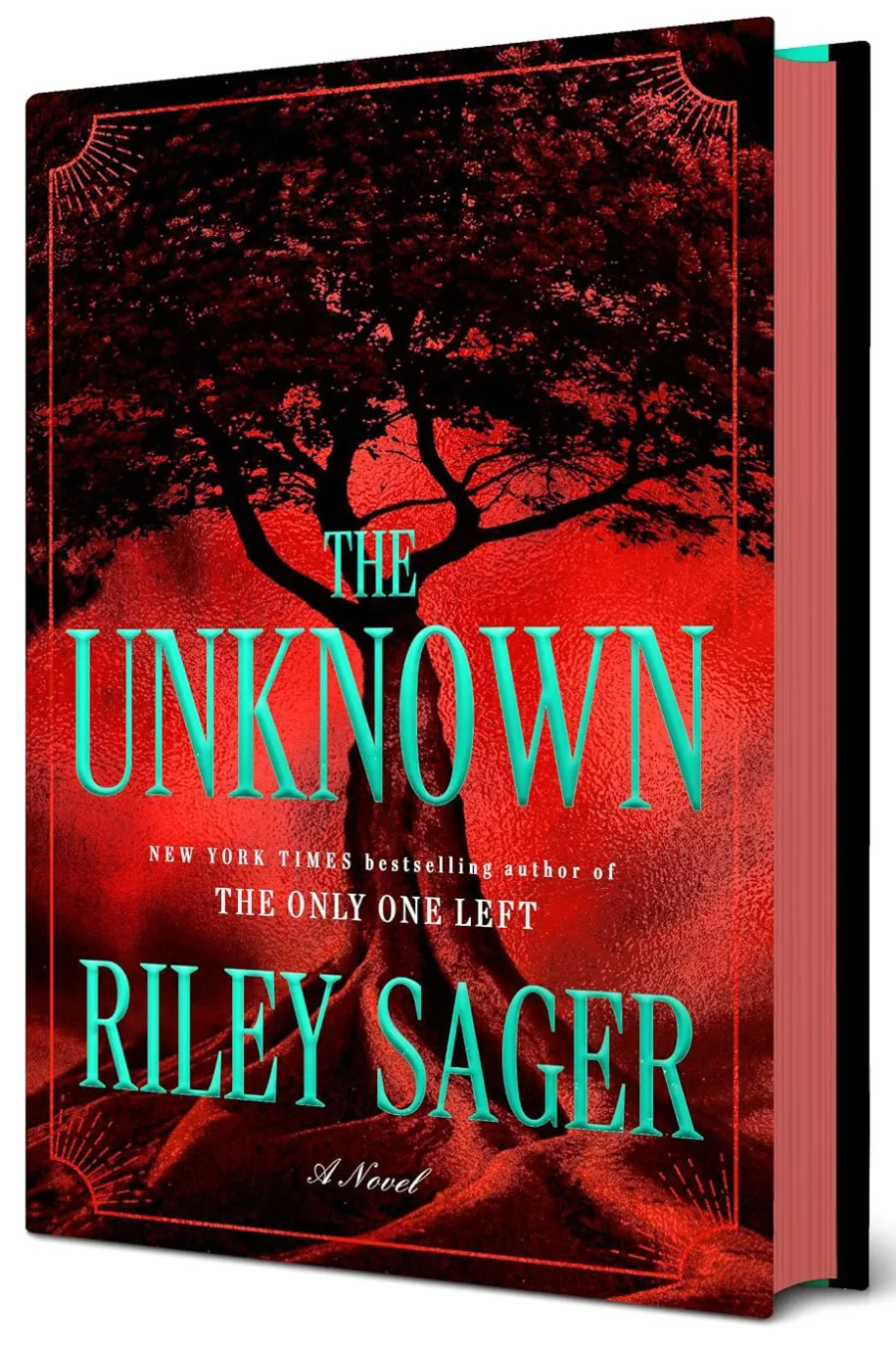
Download Cover Image
Do you want to download the full cover image for The Unknown: A Novel?