
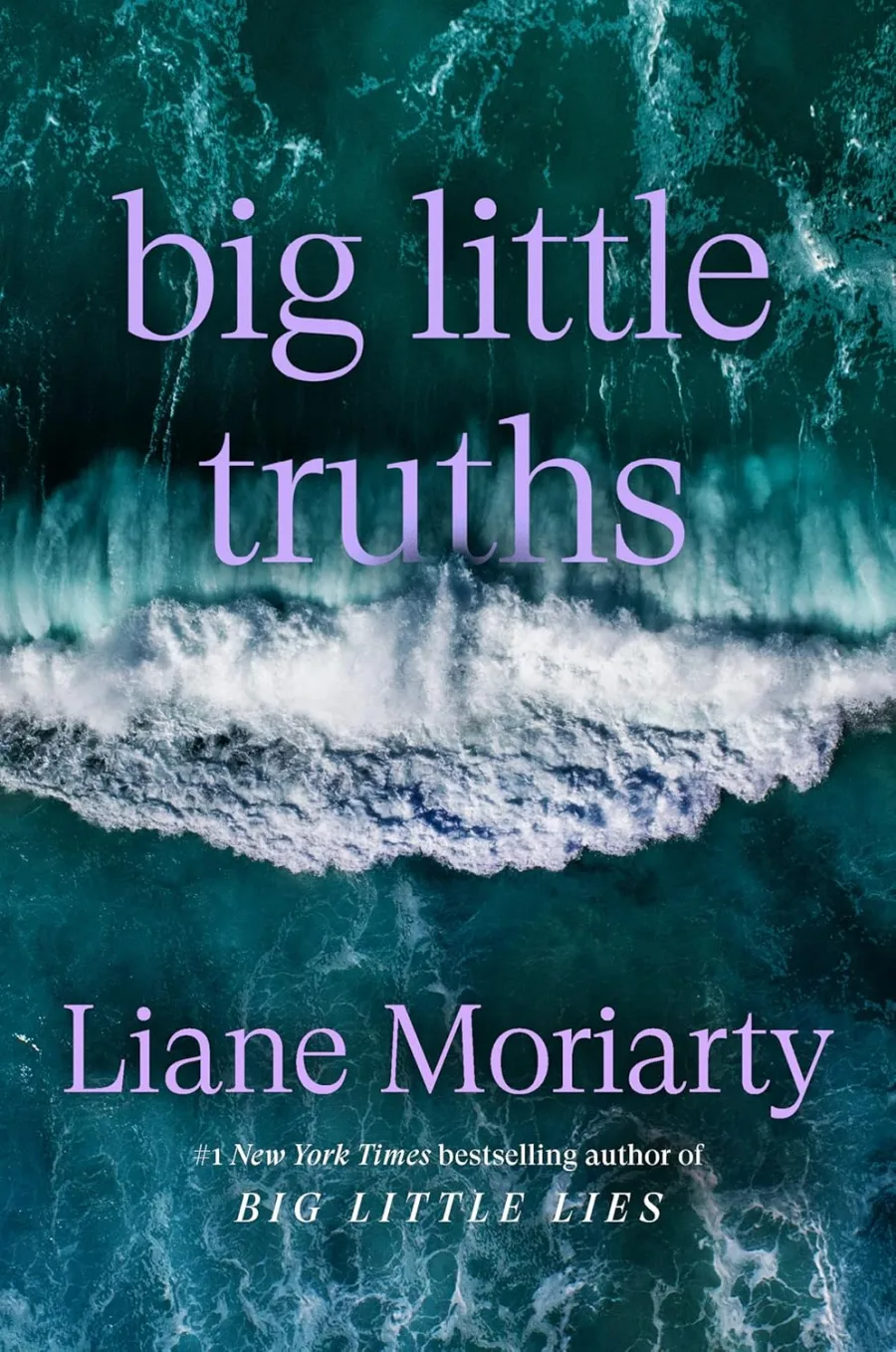
Big Little Truths: A Novel (Big Little series)
Hardcover
• 464 Pages
• USD 34.00
• English
• 9780593798638
No ratings yet
| Publisher | Crown |
|---|---|
| ISBN13 | 9780593798638 |
| ASIN/SKU | 0593798635 |
| Book Format | Hardcover |
| Language | English |
| Pages | 464 |
| List Price | USD 34.00 |
| Series Title | Big Little Lies |
| Publishing Date | 25/08/2026 |
| Dimensions | 6.13 x 1.16 x 9.25 inches |
| Weight | 1.64 pounds |
| Book Code | BD00067002 |
Buy this Book
Amazon Stores
Ebook Stores
Other Stores
Discover Big Little Truths: A Novel (Big Little series) by Liane Moriarty. This book is published by Crown in Hardcover format, ISBN 9780593798638, ASIN 0593798635, under Literature and Fiction, Women's Domestic Life Fiction, Family Life Fiction.
Book Description
FROM THE #1 NEW YORK TIMES BESTSELLING AUTHOR OF BIG LITTLE LIES, THE RUNAWAY PHENOMENON THAT INSPIRED THE MEGAHIT HBO SERIES
In this highly anticipated sequel, Liane Moriarty examines the complexities of modern women’s lives, shining light on family dynamics and long-hidden truths with wit and compassion. Whether you’ve read Big Little Lies or not, this is the perfect novel for longtime fans and new readers alike.
“Equal parts juicy, gripping, and impossible to put down . . . I loved diving back into the lives of these unforgettable characters.”—Freida McFadden, #1 New York Times bestselling author of The Housemaid
The last time we saw the women of Big Little Lies—Madeline, Celeste, Jane, Renata, and Bonnie—their children were five years old. If someone wasn’t invited to a birthday party, feelings were hurt. But ten years have passed and the kids are in high school, navigating all of the drama that accompanies teendom (goodbye playdates, hello drugs, sex, and alcohol).
When the high school principal receives a threatening package in the mail, word quickly spreads throughout the community and parents are in an uproar. But Madeline, Celeste, Jane, Renata, and Bonnie have other things to worry about. Celeste’s mother-in-law, Mary Louise, is behaving oddly—is it old-age forgetfulness and bluntness or something more sinister? Madeline is facing perhaps the biggest challenge of her life, Jane is at a dangerous fork in her marriage, Bonnie has realized there’s only so much solace in yoga. And Renata? Renata is living her best life—revenge is sweet.
When a stranger begins lurking around the school asking supposedly innocent questions, this tightly connected group of women must finally face the full repercussions of the big little truths they have and haven’t shared with their kids. Because the stakes are now much higher than not being invited to an ice-skating party—and the ice has never been thinner for any of them.
In this highly anticipated sequel, Liane Moriarty examines the complexities of modern women’s lives, shining light on family dynamics and long-hidden truths with wit and compassion. Whether you’ve read Big Little Lies or not, this is the perfect novel for longtime fans and new readers alike.
“Equal parts juicy, gripping, and impossible to put down . . . I loved diving back into the lives of these unforgettable characters.”—Freida McFadden, #1 New York Times bestselling author of The Housemaid
The last time we saw the women of Big Little Lies—Madeline, Celeste, Jane, Renata, and Bonnie—their children were five years old. If someone wasn’t invited to a birthday party, feelings were hurt. But ten years have passed and the kids are in high school, navigating all of the drama that accompanies teendom (goodbye playdates, hello drugs, sex, and alcohol).
When the high school principal receives a threatening package in the mail, word quickly spreads throughout the community and parents are in an uproar. But Madeline, Celeste, Jane, Renata, and Bonnie have other things to worry about. Celeste’s mother-in-law, Mary Louise, is behaving oddly—is it old-age forgetfulness and bluntness or something more sinister? Madeline is facing perhaps the biggest challenge of her life, Jane is at a dangerous fork in her marriage, Bonnie has realized there’s only so much solace in yoga. And Renata? Renata is living her best life—revenge is sweet.
When a stranger begins lurking around the school asking supposedly innocent questions, this tightly connected group of women must finally face the full repercussions of the big little truths they have and haven’t shared with their kids. Because the stakes are now much higher than not being invited to an ice-skating party—and the ice has never been thinner for any of them.
Author Biography
Liane Moriarty is the Australian author of nine internationally best-selling novels: Three Wishes, The Last Anniversary, What Alice Forgot, The Hypnotist’s Love Story, Nine Perfect Strangers and the number one New York Times bestsellers: The Husband's Secret, Big Little Lies, Truly Madly Guilty and Apples Never Fall. Her books have been translated into over forty languages and sold more than 20 million copies.
Big Little Lies, Nine Perfect Strangers and Apples Never Fall were adapted into popular television series with the star-studded casts including Nicole Kidman, Reese Witherspoon, Melissa McCarthy and Annette Bening.
Her new novel, Here One Moment will be released in 2024.
Liane lives in Sydney, Australia, together with her husband, son and daughter.
Big Little Lies, Nine Perfect Strangers and Apples Never Fall were adapted into popular television series with the star-studded casts including Nicole Kidman, Reese Witherspoon, Melissa McCarthy and Annette Bening.
Her new novel, Here One Moment will be released in 2024.
Liane lives in Sydney, Australia, together with her husband, son and daughter.
Editorial Reviews
“Big Little Truths is a deliciously addictive drama that is equal parts juicy, gripping, and impossible to put down. I loved diving back into the lives of these unforgettable characters and watching their stories unfold in ways that were both intriguing and deeply satisfying.”—Freida McFadden, #1 New York Times bestselling author
“What a gossipy, dazzling pleasure it is to be in Liane Moriarty’s mind! She captures perfectly the tender agony of trying to parent teenagers, of being suddenly locked out of the inner life of the child you love more than your own self, even as you are tossed like a sock in the dryer by the rest of your life. The rare sequel that is just as good (and juicy) as the original.”—Rufi Thorpe, author of Margo’s Got Money Troubles
“Warm, funny, shocking, and twisting. Written with such skill and heart, reading Big Little Truths felt like catching up with old friends. I adored it.”—Chris Whitaker, New York Times bestselling author of All the Colors of the Dark
“What a gossipy, dazzling pleasure it is to be in Liane Moriarty’s mind! She captures perfectly the tender agony of trying to parent teenagers, of being suddenly locked out of the inner life of the child you love more than your own self, even as you are tossed like a sock in the dryer by the rest of your life. The rare sequel that is just as good (and juicy) as the original.”—Rufi Thorpe, author of Margo’s Got Money Troubles
“Warm, funny, shocking, and twisting. Written with such skill and heart, reading Big Little Truths felt like catching up with old friends. I adored it.”—Chris Whitaker, New York Times bestselling author of All the Colors of the Dark
Book Summary
Liane Moriarty’s Big Little Truths is the highly anticipated sequel to Big Little Lies, returning readers to the affluent, beautiful, and deceptively complicated community of Pirriwee on the Australian coast. Published in August 2026, the novel takes place roughly ten years after the events of the original story, when Madeline, Celeste, Jane, Renata, and Bonnie have moved beyond the years of kindergarten politics and into the far more unpredictable world of parenting teenagers. The children who once worried about birthday invitations are now fifteen and sixteen, dealing with friendships, romance, alcohol, drugs, sexuality, school pressure, identity, and the growing need for independence. Moriarty uses this change in age to ask an important question: what happens when children become old enough to discover that their parents have not always told them the truth? The answer is a story that combines domestic drama, psychological suspense, family secrets, friendship, dark humor, and a central mystery involving a disturbing package delivered to the local high school.
The novel deliberately reconnects readers with the women who made Big Little Lies so memorable. Madeline, Celeste, Jane, Renata, and Bonnie are still linked by friendship and by the extraordinary events surrounding Perry’s death a decade earlier. Yet they are no longer exactly the same women. Time has passed, and Moriarty is interested in what middle age does to people who once believed they had finally survived the worst chapter of their lives. Their children have grown up, their marriages and relationships have changed, and the secrets they thought were safely buried have not necessarily stayed buried. The central premise of Big Little Truths therefore grows naturally out of its predecessor: the little lies adults tell to protect themselves, their families, or one another can eventually become much bigger problems when the next generation begins asking questions.
The story begins with a shocking incident that immediately disrupts the apparently peaceful community. A threatening package arrives at the local high school containing a severed human finger. The discovery causes panic among students, teachers, parents, and the wider community. Police become involved, rumors spread rapidly, and the school becomes the center of an investigation. The grisly package is not simply a conventional mystery device; it becomes a symbol of the novel itself. Something has been cut away, separated from its original context, and delivered where everyone can see it. In much the same way, Moriarty gradually takes pieces of old secrets, family histories, teenage experiences, and adult mistakes and brings them into the open.
Moriarty makes the mystery particularly effective by refusing to let it dominate the entire novel. Instead, the threatening package exists alongside the ordinary chaos of family life. This is one of the defining strengths of Big Little Truths. A murder mystery or psychological thriller normally encourages readers to concentrate on the crime, but Moriarty keeps returning to everyday concerns: birthdays, marriages, school projects, aging, parenting, friendship, embarrassment, and the strange emotional experience of realizing that one's children no longer need—or necessarily want—their parents involved in every part of their lives. The result is a domestic thriller in which the most frightening discoveries are sometimes hidden inside apparently ordinary family problems.
Madeline remains one of the emotional and comic centers of the story. Ten years older, she is approaching her fiftieth birthday and thinking about what this milestone means. Her personality still contains the sharp humor and emotional intensity that readers remember, but the passage of time has given her new insecurities. Her birthday plans are complicated by developments in her marriage to Ed and by a deeply worrying personal problem: she discovers a lump in her breast. This storyline gives the novel another dimension because Madeline's crisis is not merely about what might happen to her physically. It forces her to confront the fragility of the life she has constructed and the uncomfortable realization that she cannot control everything. Her tendency to use humor, irritation, and strong opinions as defenses becomes especially poignant when the stakes are genuinely frightening.
Jane’s story is quieter but equally important. She has built a life with Tom and has come to believe that her marriage is secure. Yet she gradually discovers that the relationship she thought was stable may be under serious strain. The official descriptions emphasize that Jane is at a dangerous crossroads in her marriage, while other accounts describe her as being so confident in her supposedly happy relationship that she has failed to notice its cracks. Jane's storyline reflects one of Moriarty's recurring interests: the difference between the story people tell themselves about their lives and the reality underneath it. A marriage can look happy from the outside while becoming increasingly uncertain on the inside.
Celeste carries perhaps the heaviest emotional history from the first novel. Perry is dead, but his influence has not disappeared. His violence, the trauma he inflicted, and the secrets surrounding his family continue to shape Celeste and her children. Her twins have grown old enough to understand uncomfortable truths about their father, which changes the meaning of their childhood and their relationship with their mother. Celeste must therefore navigate the difficult territory between protecting her children and telling them enough of the truth to help them understand their own history.
An especially significant part of Celeste's storyline involves Mary Louise, Perry's mother. Moriarty brings Mary Louise back into the narrative, partly influenced by Meryl Streep's memorable interpretation of the character in the television adaptation of Big Little Lies. Moriarty has explained that the television performance affected her conception of the sequel, while Laura Dern's portrayal of Renata similarly encouraged Moriarty to expand Renata's role. In the novel, Mary Louise's behavior becomes increasingly unsettling. Is she simply experiencing the effects of aging and memory problems, or is there something more complicated happening? Her bluntness and unpredictable behavior make her difficult to read, and her presence forces Celeste to confront the uncomfortable relationship between memory, truth, aging, and family history.
Renata, meanwhile, returns with a particularly entertaining energy. Once again, she is formidable, ambitious, intense, and completely unwilling to accept defeat. The book description cheekily suggests that she is enjoying her best life because “revenge is sweet,” and this captures the comic edge of her storyline. Renata's role also demonstrates how the sequel has benefited from the expanded importance of characters who became particularly vivid in the television adaptation. Her confidence and aggressive personality provide a welcome contrast to the vulnerabilities experienced by Madeline, Jane, and Celeste.
Bonnie also returns, although her journey is more introspective. Yoga, which once offered her a source of peace and emotional balance, is no longer enough to solve everything troubling her. The novel therefore presents another familiar Moriarty idea: healthy habits and outwardly sensible solutions cannot necessarily resolve deeper emotional conflicts. Bonnie's presence reminds readers that surviving a traumatic event does not mean simply putting it behind you. Sometimes the consequences appear years later, in unexpected forms.
The teenage children are arguably the most important new dimension of Big Little Truths. Chloe, Skye, Amabella, Ziggy, and Celeste's twins Max and Josh are no longer passive observers of their parents' world. They have their own friendships, rivalries, ambitions, secrets, and opinions. Moriarty cleverly reverses the relationship between parents and children: in the first novel, the adults controlled most of the important information, while the children were largely affected by adult decisions. In the sequel, the teenagers increasingly possess information their parents do not have. This makes the children central to the suspense.
A particularly intriguing structural element is the use of “D-Day,” a name associated with the catastrophic day at the school. The narrative moves between the events leading toward that day and material from its aftermath, including counseling transcripts involving the students. This structure allows Moriarty to reveal information gradually. Readers know that something terrible has happened, but they do not immediately understand how all the pieces connect. The teenage characters also tell their versions of events, interrupting, correcting, and contradicting one another. This creates both humor and suspense because teenagers, like adults, are not always reliable narrators.
The teenagers' school project adds another layer to the mystery. They become fascinated by historical figures who have been misunderstood or presented too simply, with Winston Churchill becoming part of their research. Their history project initially appears to be an ordinary school assignment, but it becomes increasingly connected to the larger events unfolding around them. The idea is perfectly suited to Moriarty's larger themes. History is never simply a collection of facts; it is shaped by who tells the story, what gets left out, and which uncomfortable details people prefer to forget. The same principle applies to families.
A new history teacher, Melody Montclair, becomes another important figure. She is intelligent, charismatic, and popular with both students and adults. She also becomes connected with the mothers through their Beach Boot Camp activities. Her presence adds another layer of uncertainty because the adults and teenagers do not necessarily see her in the same way. The novel repeatedly encourages readers to question appearances: who is trustworthy, who is hiding something, and who may be seeing a situation more clearly than everyone else?
The mysterious man lurking around the school intensifies this atmosphere. He appears to be asking innocent questions, but his presence creates the uncomfortable feeling that someone is investigating the community and its past. The mothers gradually realize that the consequences of their earlier choices may not belong exclusively to them. Their children have inherited the emotional consequences of those choices, even when the adults believed they were protecting them.
This is ultimately what makes Big Little Truths more than a simple sequel. Its central concern is the complicated boundary between protection and deception. Parents lie to children because they believe children are too young to understand. They hide painful truths because they want to preserve a sense of safety. Friends conceal things because they do not want to reopen old wounds. Spouses avoid difficult conversations because they fear what honesty might destroy. But Moriarty asks whether silence really protects anyone in the long term.
The novel also explores the experience of middle age with characteristic humor and compassion. The characters are dealing with aging bodies, changing marriages, teenage children, shifting friendships, and the realization that life is entering a different phase. Moriarty has specifically described the sequel as exploring aging and the “sandwich generation,” the stage in which adults can find themselves simultaneously dealing with their aging parents and their increasingly independent children. This gives the story a broader emotional relevance beyond its mystery plot.
What makes Moriarty's writing particularly effective is her ability to place serious emotional questions inside funny, recognizable situations. Her characters can be ridiculous and deeply sympathetic at the same time. They gossip, misunderstand each other, become jealous, make bad decisions, and worry about things that seem trivial until they suddenly become important. This mixture of humor and darkness is central to the Big Little Lies world, and reviews of the sequel repeatedly emphasize Moriarty's wit, warmth, character work, and addictive storytelling.
At its heart, Big Little Truths is about what happens when yesterday's secrets meet today's children. The women of Pirriwee once believed they had survived their greatest crisis. Ten years later, however, their children are old enough to investigate, question, misunderstand, discover, and eventually challenge the stories they have been told. The severed finger, the stranger near the school, the teenage secrets, Mary Louise's unsettling behavior, Madeline's personal crisis, Jane's troubled marriage, Celeste's unresolved trauma, and the shifting friendships all become parts of the same larger question: how well can a family survive when truth arrives at the wrong time?
For readers searching for a Big Little Truths book summary, Big Little Truths ending explained, Big Little Lies sequel, Liane Moriarty's new novel, domestic thriller recommendations, women's fiction with suspense, or books about family secrets and complicated friendships, this novel offers a natural continuation of Moriarty's most famous fictional world. It can apparently be approached even by readers who have not read Big Little Lies, but readers familiar with the original will have a deeper understanding of the emotional history behind the characters.
Ultimately, Big Little Truths is not simply about solving a mystery. It is about discovering that people do not remain frozen in the roles they occupied ten years earlier. Children become teenagers. Friendships change. Marriages evolve. Parents become older. Trauma resurfaces. And secrets that once seemed necessary can eventually become dangerous. Moriarty uses the suspense plot to bring all these changes together, but the emotional heart of the novel remains the same thing that made Big Little Lies so compelling: the messy, funny, painful, deeply human reality of people trying to protect the lives they love while struggling to tell themselves the truth.
The novel deliberately reconnects readers with the women who made Big Little Lies so memorable. Madeline, Celeste, Jane, Renata, and Bonnie are still linked by friendship and by the extraordinary events surrounding Perry’s death a decade earlier. Yet they are no longer exactly the same women. Time has passed, and Moriarty is interested in what middle age does to people who once believed they had finally survived the worst chapter of their lives. Their children have grown up, their marriages and relationships have changed, and the secrets they thought were safely buried have not necessarily stayed buried. The central premise of Big Little Truths therefore grows naturally out of its predecessor: the little lies adults tell to protect themselves, their families, or one another can eventually become much bigger problems when the next generation begins asking questions.
The story begins with a shocking incident that immediately disrupts the apparently peaceful community. A threatening package arrives at the local high school containing a severed human finger. The discovery causes panic among students, teachers, parents, and the wider community. Police become involved, rumors spread rapidly, and the school becomes the center of an investigation. The grisly package is not simply a conventional mystery device; it becomes a symbol of the novel itself. Something has been cut away, separated from its original context, and delivered where everyone can see it. In much the same way, Moriarty gradually takes pieces of old secrets, family histories, teenage experiences, and adult mistakes and brings them into the open.
Moriarty makes the mystery particularly effective by refusing to let it dominate the entire novel. Instead, the threatening package exists alongside the ordinary chaos of family life. This is one of the defining strengths of Big Little Truths. A murder mystery or psychological thriller normally encourages readers to concentrate on the crime, but Moriarty keeps returning to everyday concerns: birthdays, marriages, school projects, aging, parenting, friendship, embarrassment, and the strange emotional experience of realizing that one's children no longer need—or necessarily want—their parents involved in every part of their lives. The result is a domestic thriller in which the most frightening discoveries are sometimes hidden inside apparently ordinary family problems.
Madeline remains one of the emotional and comic centers of the story. Ten years older, she is approaching her fiftieth birthday and thinking about what this milestone means. Her personality still contains the sharp humor and emotional intensity that readers remember, but the passage of time has given her new insecurities. Her birthday plans are complicated by developments in her marriage to Ed and by a deeply worrying personal problem: she discovers a lump in her breast. This storyline gives the novel another dimension because Madeline's crisis is not merely about what might happen to her physically. It forces her to confront the fragility of the life she has constructed and the uncomfortable realization that she cannot control everything. Her tendency to use humor, irritation, and strong opinions as defenses becomes especially poignant when the stakes are genuinely frightening.
Jane’s story is quieter but equally important. She has built a life with Tom and has come to believe that her marriage is secure. Yet she gradually discovers that the relationship she thought was stable may be under serious strain. The official descriptions emphasize that Jane is at a dangerous crossroads in her marriage, while other accounts describe her as being so confident in her supposedly happy relationship that she has failed to notice its cracks. Jane's storyline reflects one of Moriarty's recurring interests: the difference between the story people tell themselves about their lives and the reality underneath it. A marriage can look happy from the outside while becoming increasingly uncertain on the inside.
Celeste carries perhaps the heaviest emotional history from the first novel. Perry is dead, but his influence has not disappeared. His violence, the trauma he inflicted, and the secrets surrounding his family continue to shape Celeste and her children. Her twins have grown old enough to understand uncomfortable truths about their father, which changes the meaning of their childhood and their relationship with their mother. Celeste must therefore navigate the difficult territory between protecting her children and telling them enough of the truth to help them understand their own history.
An especially significant part of Celeste's storyline involves Mary Louise, Perry's mother. Moriarty brings Mary Louise back into the narrative, partly influenced by Meryl Streep's memorable interpretation of the character in the television adaptation of Big Little Lies. Moriarty has explained that the television performance affected her conception of the sequel, while Laura Dern's portrayal of Renata similarly encouraged Moriarty to expand Renata's role. In the novel, Mary Louise's behavior becomes increasingly unsettling. Is she simply experiencing the effects of aging and memory problems, or is there something more complicated happening? Her bluntness and unpredictable behavior make her difficult to read, and her presence forces Celeste to confront the uncomfortable relationship between memory, truth, aging, and family history.
Renata, meanwhile, returns with a particularly entertaining energy. Once again, she is formidable, ambitious, intense, and completely unwilling to accept defeat. The book description cheekily suggests that she is enjoying her best life because “revenge is sweet,” and this captures the comic edge of her storyline. Renata's role also demonstrates how the sequel has benefited from the expanded importance of characters who became particularly vivid in the television adaptation. Her confidence and aggressive personality provide a welcome contrast to the vulnerabilities experienced by Madeline, Jane, and Celeste.
Bonnie also returns, although her journey is more introspective. Yoga, which once offered her a source of peace and emotional balance, is no longer enough to solve everything troubling her. The novel therefore presents another familiar Moriarty idea: healthy habits and outwardly sensible solutions cannot necessarily resolve deeper emotional conflicts. Bonnie's presence reminds readers that surviving a traumatic event does not mean simply putting it behind you. Sometimes the consequences appear years later, in unexpected forms.
The teenage children are arguably the most important new dimension of Big Little Truths. Chloe, Skye, Amabella, Ziggy, and Celeste's twins Max and Josh are no longer passive observers of their parents' world. They have their own friendships, rivalries, ambitions, secrets, and opinions. Moriarty cleverly reverses the relationship between parents and children: in the first novel, the adults controlled most of the important information, while the children were largely affected by adult decisions. In the sequel, the teenagers increasingly possess information their parents do not have. This makes the children central to the suspense.
A particularly intriguing structural element is the use of “D-Day,” a name associated with the catastrophic day at the school. The narrative moves between the events leading toward that day and material from its aftermath, including counseling transcripts involving the students. This structure allows Moriarty to reveal information gradually. Readers know that something terrible has happened, but they do not immediately understand how all the pieces connect. The teenage characters also tell their versions of events, interrupting, correcting, and contradicting one another. This creates both humor and suspense because teenagers, like adults, are not always reliable narrators.
The teenagers' school project adds another layer to the mystery. They become fascinated by historical figures who have been misunderstood or presented too simply, with Winston Churchill becoming part of their research. Their history project initially appears to be an ordinary school assignment, but it becomes increasingly connected to the larger events unfolding around them. The idea is perfectly suited to Moriarty's larger themes. History is never simply a collection of facts; it is shaped by who tells the story, what gets left out, and which uncomfortable details people prefer to forget. The same principle applies to families.
A new history teacher, Melody Montclair, becomes another important figure. She is intelligent, charismatic, and popular with both students and adults. She also becomes connected with the mothers through their Beach Boot Camp activities. Her presence adds another layer of uncertainty because the adults and teenagers do not necessarily see her in the same way. The novel repeatedly encourages readers to question appearances: who is trustworthy, who is hiding something, and who may be seeing a situation more clearly than everyone else?
The mysterious man lurking around the school intensifies this atmosphere. He appears to be asking innocent questions, but his presence creates the uncomfortable feeling that someone is investigating the community and its past. The mothers gradually realize that the consequences of their earlier choices may not belong exclusively to them. Their children have inherited the emotional consequences of those choices, even when the adults believed they were protecting them.
This is ultimately what makes Big Little Truths more than a simple sequel. Its central concern is the complicated boundary between protection and deception. Parents lie to children because they believe children are too young to understand. They hide painful truths because they want to preserve a sense of safety. Friends conceal things because they do not want to reopen old wounds. Spouses avoid difficult conversations because they fear what honesty might destroy. But Moriarty asks whether silence really protects anyone in the long term.
The novel also explores the experience of middle age with characteristic humor and compassion. The characters are dealing with aging bodies, changing marriages, teenage children, shifting friendships, and the realization that life is entering a different phase. Moriarty has specifically described the sequel as exploring aging and the “sandwich generation,” the stage in which adults can find themselves simultaneously dealing with their aging parents and their increasingly independent children. This gives the story a broader emotional relevance beyond its mystery plot.
What makes Moriarty's writing particularly effective is her ability to place serious emotional questions inside funny, recognizable situations. Her characters can be ridiculous and deeply sympathetic at the same time. They gossip, misunderstand each other, become jealous, make bad decisions, and worry about things that seem trivial until they suddenly become important. This mixture of humor and darkness is central to the Big Little Lies world, and reviews of the sequel repeatedly emphasize Moriarty's wit, warmth, character work, and addictive storytelling.
At its heart, Big Little Truths is about what happens when yesterday's secrets meet today's children. The women of Pirriwee once believed they had survived their greatest crisis. Ten years later, however, their children are old enough to investigate, question, misunderstand, discover, and eventually challenge the stories they have been told. The severed finger, the stranger near the school, the teenage secrets, Mary Louise's unsettling behavior, Madeline's personal crisis, Jane's troubled marriage, Celeste's unresolved trauma, and the shifting friendships all become parts of the same larger question: how well can a family survive when truth arrives at the wrong time?
For readers searching for a Big Little Truths book summary, Big Little Truths ending explained, Big Little Lies sequel, Liane Moriarty's new novel, domestic thriller recommendations, women's fiction with suspense, or books about family secrets and complicated friendships, this novel offers a natural continuation of Moriarty's most famous fictional world. It can apparently be approached even by readers who have not read Big Little Lies, but readers familiar with the original will have a deeper understanding of the emotional history behind the characters.
Ultimately, Big Little Truths is not simply about solving a mystery. It is about discovering that people do not remain frozen in the roles they occupied ten years earlier. Children become teenagers. Friendships change. Marriages evolve. Parents become older. Trauma resurfaces. And secrets that once seemed necessary can eventually become dangerous. Moriarty uses the suspense plot to bring all these changes together, but the emotional heart of the novel remains the same thing that made Big Little Lies so compelling: the messy, funny, painful, deeply human reality of people trying to protect the lives they love while struggling to tell themselves the truth.
Sample Chapters
Sample Chapters will be added soon…
Reader Reviews
No reviews yet.
Big Little Truths: A Novel (Big Little series)
Download Cover Image
Do you want to download the full cover image for Big Little Truths: A Novel (Big Little series)?