
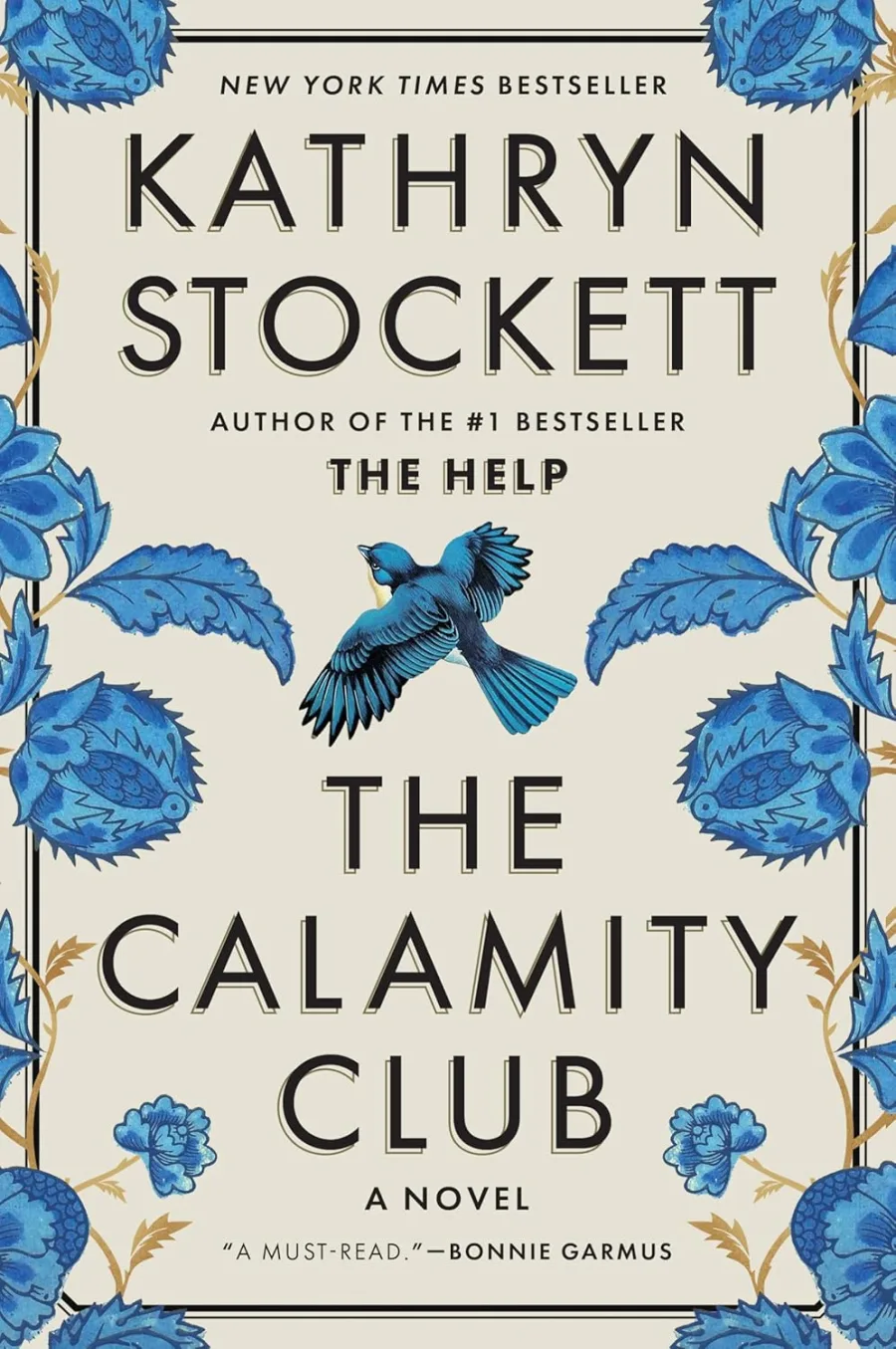
The Calamity Club: A Novel
eBook
• 640 Pages
• USD 35.00
• English
• 9781954118829
No ratings yet
| Publisher | Spiegel & Grau |
|---|---|
| ISBN13 | 9781954118829 |
| ASIN/SKU | B0DZJ53SVW |
| Book Format | eBook |
| Language | English |
| Pages | 640 |
| List Price | USD 35.00 |
| Publishing Date | 05/05/2026 |
| Book Code | BD00067130 |
Buy this Book
Amazon Stores
Ebook Stores
Other Stores
Discover The Calamity Club: A Novel by Kathryn Stockett. This book is published by Spiegel and Grau in eBook format, ISBN 9781954118829, ASIN B0DZJ53SVW, under Literature and Fiction, 20th Century Historical Fiction, Southern United States Fiction.
Book Description
“So immersive, exciting, and downright fabulous, you never want it to end.”—Oprah Daily
INSTANT NEW YORK TIMES BESTSELLER * The multimillion-copy-selling author of The Help returns with a bold, big-hearted novel about a group of unbreakable women, fighting for what’s rightfully theirs—and the power of friendship to change everything.
“Pure, hell-raising entertainment.”—The New York Times Book Review
Oxford, Mississippi, 1933.
Abandoned by her mother one Christmas Eve, eleven-year-old Meg Lefleur has learned the hard way to rely on no one. Now one of the unadoptable "big girls" at the Lafayette County Orphan Asylum, she fights each day to keep her spirit unbowed.
Birdie Calhoun, unmarried and outspoken, has come to Oxford to ask her socialite sister to help the struggling family she’s left behind. But as the Depression tightens its grip, Birdie discovers her sister’s seemingly charmed life is a tapestry of lies.
Then, Birdie encounters Charlie, a woman running low on luck with little left to lose. When their fates—and Meg’s—converge, Charlie comes up with an audacious plan for them to take control of their lives. But in a place and time where hypocrisy is rife and women’s freedom is fragile, even the smallest act of defiance can have dangerous consequences.
The Calamity Club will make you laugh, cry, and cheer—an epic testament to underestimated women who know that calamity can be the spark of new beginnings. This is Kathryn Stockett at her most confident, heartfelt, and hilarious—the triumphant return of one of the most beloved storytellers of our time.
INSTANT NEW YORK TIMES BESTSELLER * The multimillion-copy-selling author of The Help returns with a bold, big-hearted novel about a group of unbreakable women, fighting for what’s rightfully theirs—and the power of friendship to change everything.
“Pure, hell-raising entertainment.”—The New York Times Book Review
Oxford, Mississippi, 1933.
Abandoned by her mother one Christmas Eve, eleven-year-old Meg Lefleur has learned the hard way to rely on no one. Now one of the unadoptable "big girls" at the Lafayette County Orphan Asylum, she fights each day to keep her spirit unbowed.
Birdie Calhoun, unmarried and outspoken, has come to Oxford to ask her socialite sister to help the struggling family she’s left behind. But as the Depression tightens its grip, Birdie discovers her sister’s seemingly charmed life is a tapestry of lies.
Then, Birdie encounters Charlie, a woman running low on luck with little left to lose. When their fates—and Meg’s—converge, Charlie comes up with an audacious plan for them to take control of their lives. But in a place and time where hypocrisy is rife and women’s freedom is fragile, even the smallest act of defiance can have dangerous consequences.
The Calamity Club will make you laugh, cry, and cheer—an epic testament to underestimated women who know that calamity can be the spark of new beginnings. This is Kathryn Stockett at her most confident, heartfelt, and hilarious—the triumphant return of one of the most beloved storytellers of our time.
Author Biography
Kathryn Stockett was born and raised in Jackson, Mississippi. After graduating from the University of Alabama, she moved to New York City, where she worked in magazine publishing and marketing for nine years. Her first novel, The Help, has sold over 15 million copies worldwide. She lives in Mississippi and New York City.
Editorial Reviews
NEW YORK TIMES EDITOR’S CHOICE * NAMED ONE OF THE MOST ANTICIPATED BOOKS OF 2026 BY THE NEW YORK TIMES * OPRAH DAILY * GOODREADS * GARDEN & GUN * SOUTHERN LIVING * WOMAN’S WORLD * TOWN & COUNTRY * AARP * MINNESOTA STAR-TRIBUNE * COUNTRY LIVING * NEW YORK POST
“So immersive, exciting, and downright fabulous, you never want it to end.”—Oprah Daily
“A heart-wrenching, often hilarious story of economic hardship, moral posturing, and the particular yearnings of childless women and motherless girls.”—The New York Times
“Come for the sisterhood, stay for allusions to William Faulkner and Donna Tartt.”—Time, “The Best New Books to Read This Summer”
“Terrific.”—Adriana Trigiani, Good Housekeeping
“Action is carried relentlessly forward on the surf of Stockett’s full-hearted, down-to-earth prose, her dialogue and inner monologues so well crafted that each sentence gives the impression of being not crafted at all, but inevitable.”—The New York Times Book Review
“A labyrinthine story of savvy and gall with an irresistible pull.”—Christian Science Monitor
“All three protagonists are compelling, but Meg is the star of The Calamity Club. She owes a debt to other smart, lonely girls of Southern literature—especially Frankie, from Carson McCullers’ “The Member of the Wedding”—but her voice is singular and laugh-out-loud funny. . . . Stockett deftly unites her three main characters for an ending that’s as cozy and satisfying as the chicken pot pies her characters keep making and eating.”—Minnesota Star Tribune
“Filled with lots of humor and hope.”—Atlanta Journal-Constitution
“A rip-roaring adventure of found family, complex sisterhood, tested moral compasses and capable women making the best (hey, even a fast buck) out of truly awful circumstances . . . Meg, I trust, will become multiple readers’ favourite down-but-not-out child narrator since Demon Copperhead. . . . Stockett is a born storyteller.”—The Sunday Times (UK)
“The power of The Calamity Club lies in the beauty of the narration, the touching story, the display of the historic mistreatment of women, and the fact that these women hold the power—even if it’s just for a while. It should make you angry at what was done to women who didn’t conform and perhaps what is being done to women now.”—Book Reporter
“An engrossing, page-turning read that flies by. I predict that you will not want to put it down once you enter the world of The Calamity Club.”—Jackson Clarion Ledger
“As witty, bold, and transportive as it is heartbreaking and compassionate, The Calamity Club is storytelling at its finest. Stockett’s masterfully drawn characters are simply unforgettable. Bravo to Meg, Birdie, and Charlie for reminding us to never underestimate the bottomless resilience of smart, spirited women in revolt against circumstance and injustice.”—Shelley Read, internationally bestselling author of Go as a River
“A big-hearted tale packed with plenty of details about life in the South during the lead-up to the Great Depression.”—Country Living
“A triumph of a novel, a quick-witted story about hard times and suffering. . . . It is tightly, cleverly plotted, and Stockett’s characters are effortlessly sketched.”—The Oxford Eagle
“Smart, funny, and driven by unforgettable characters whose opinions and actions leap off the page, this is a must-read.”—Bonnie Garmus, author of Lessons in Chemistry
“Compulsively readable . . . A satisfyingly twisty tale . . . Fans of Stockett’s bestselling debut will love this engaging follow-up.”—Kirkus
“Stockett balances humor and heartbreak with an ease that makes the pages fly. One moment you're laughing at a perfectly observed social disaster, the next you re sitting with a character in a moment of raw vulnerability. If you're looking for a character-driven novel with southern charm, biting social observation, and a cast of women you'll fall in love with, The Calamity Club absolutely delivers.”—Tim Ehrenberg, “Tim Talks Books”
“So immersive, exciting, and downright fabulous, you never want it to end.”—Oprah Daily
“A heart-wrenching, often hilarious story of economic hardship, moral posturing, and the particular yearnings of childless women and motherless girls.”—The New York Times
“Come for the sisterhood, stay for allusions to William Faulkner and Donna Tartt.”—Time, “The Best New Books to Read This Summer”
“Terrific.”—Adriana Trigiani, Good Housekeeping
“Action is carried relentlessly forward on the surf of Stockett’s full-hearted, down-to-earth prose, her dialogue and inner monologues so well crafted that each sentence gives the impression of being not crafted at all, but inevitable.”—The New York Times Book Review
“A labyrinthine story of savvy and gall with an irresistible pull.”—Christian Science Monitor
“All three protagonists are compelling, but Meg is the star of The Calamity Club. She owes a debt to other smart, lonely girls of Southern literature—especially Frankie, from Carson McCullers’ “The Member of the Wedding”—but her voice is singular and laugh-out-loud funny. . . . Stockett deftly unites her three main characters for an ending that’s as cozy and satisfying as the chicken pot pies her characters keep making and eating.”—Minnesota Star Tribune
“Filled with lots of humor and hope.”—Atlanta Journal-Constitution
“A rip-roaring adventure of found family, complex sisterhood, tested moral compasses and capable women making the best (hey, even a fast buck) out of truly awful circumstances . . . Meg, I trust, will become multiple readers’ favourite down-but-not-out child narrator since Demon Copperhead. . . . Stockett is a born storyteller.”—The Sunday Times (UK)
“The power of The Calamity Club lies in the beauty of the narration, the touching story, the display of the historic mistreatment of women, and the fact that these women hold the power—even if it’s just for a while. It should make you angry at what was done to women who didn’t conform and perhaps what is being done to women now.”—Book Reporter
“An engrossing, page-turning read that flies by. I predict that you will not want to put it down once you enter the world of The Calamity Club.”—Jackson Clarion Ledger
“As witty, bold, and transportive as it is heartbreaking and compassionate, The Calamity Club is storytelling at its finest. Stockett’s masterfully drawn characters are simply unforgettable. Bravo to Meg, Birdie, and Charlie for reminding us to never underestimate the bottomless resilience of smart, spirited women in revolt against circumstance and injustice.”—Shelley Read, internationally bestselling author of Go as a River
“A big-hearted tale packed with plenty of details about life in the South during the lead-up to the Great Depression.”—Country Living
“A triumph of a novel, a quick-witted story about hard times and suffering. . . . It is tightly, cleverly plotted, and Stockett’s characters are effortlessly sketched.”—The Oxford Eagle
“Smart, funny, and driven by unforgettable characters whose opinions and actions leap off the page, this is a must-read.”—Bonnie Garmus, author of Lessons in Chemistry
“Compulsively readable . . . A satisfyingly twisty tale . . . Fans of Stockett’s bestselling debut will love this engaging follow-up.”—Kirkus
“Stockett balances humor and heartbreak with an ease that makes the pages fly. One moment you're laughing at a perfectly observed social disaster, the next you re sitting with a character in a moment of raw vulnerability. If you're looking for a character-driven novel with southern charm, biting social observation, and a cast of women you'll fall in love with, The Calamity Club absolutely delivers.”—Tim Ehrenberg, “Tim Talks Books”
Book Summary
Set in the deeply divided society of 1933 Oxford, Mississippi, Kathryn Stockett’s novel, The Calamity Club, masterfully intertwines the lives of three resilient women navigating the harsh realities of the Great Depression and systemic misogyny. As Prohibition begins to fade and economic despair tightens its grip on both the rich and the poor, the established social order of the South remains rigidly unyielding. The story centers on an unlikely sisterhood formed by women who have been marginalized, betrayed, and failed by the patriarchal and social systems meant to protect them. Through a tapestry of intertwined narratives, Stockett explores profound themes of eugenics, classism, institutional hypocrisy, and the extraordinary lengths to which women will go to reclaim their autonomy.
At the emotional core of the novel is eleven-year-old Meg Lefleur, a bright, resourceful, and fiercely independent child living at the Lafayette County Orphan Asylum. Dubbed one of the "unadoptable big girls," Meg has spent two miserable years navigating the cruelties of an institution designed to break her spirit. She was abandoned by her mother on Christmas Eve, yet she stubbornly clings to the belief that her mother’s disappearance was not a deliberate act of abandonment. Meg's daily existence is made torturous by the asylum's villainous director, Chairlady Garnett Pittman. Garnett uses her position of power to ostracize and stigmatize the older girls, labeling them as the offspring of "feebleminded" and unfit mothers. Meg, who refuses to bend to Garnett’s oppressive rule, becomes a primary target of the chairlady's malice. Despite facing the heartbreak of a brief, failed adoption where she is returned to the orphanage, Meg remains a beacon of hope and resilience, serving as the emotional anchor for the entire narrative.
Meanwhile, a second narrative thread introduces Birdie Calhoun, a sharp-witted, outspoken, and unmarried woman who travels from her impoverished hometown of Footely to Oxford. Birdie is on a desperate mission to secure financial help from her socially ambitious sister, Frances. However, upon arriving in Oxford, Birdie quickly discovers that her sister’s seemingly charmed, affluent lifestyle is nothing more than a carefully constructed illusion. Frances’s husband, secretly a closeted gay man, has fled town and taken all their money, leaving Frances and her mother-in-law in financial ruin. Desperate to maintain her facade in Oxford society, Frances volunteers at the orphanage and ropes Birdie—a skilled bookkeeper—into fixing the asylum’s tangled financial records before an impending state inspection. This practical arrangement seamlessly pulls Birdie into the orbit of the orphanage, where she begins to uncover a deeper, more sinister web of deceit.
The third crucial figure in this trio is Charlie, Meg’s long-lost mother. Charlie is a woman haunted by a painful past, running dangerously low on options but driven by an undeniable fire and grit. As the novel progresses, the tragic truth of Charlie's disappearance is revealed, exposing the dark, historical reality of forced sterilization laws in the United States. It comes to light that Garnett Pittman’s cruelty is not just arbitrary malice; it is deeply personal. Garnett had Charlie institutionalized and sterilized to bury a scandalous secret: Garnett’s own husband had fathered Meg during a one-night stand with Charlie when she was only seventeen years old. The thematic engine of eugenics and the weaponization of propriety against powerless women drives the narrative forward, showcasing how women like Charlie were systematically silenced to protect the reputations of powerful men and high-society families.
As Birdie meticulously combs through the orphanage's ledgers, she begins connecting the dots between the financial irregularities, the systemic abuse of the girls, and the public campaigns against women deemed unfit by society. Recognizing the gross injustices at play, Birdie befriends Meg and eventually crosses paths with Charlie. Brought together by a shared sense of betrayal and the desperate need for survival, these three women form the eponymous Calamity Club. Realizing that the men in their lives and the legal systems are either entirely absent or actively working against them, they decide to take matters into their own hands. They devise an audacious, high-stakes plan to expose the hypocrisies of Oxford's elite, reclaim what was stolen from them, and secure their own freedom.
The climax of the novel is a brilliant execution of this plan, filled with tension, wit, and dramatic twists. While the risks are incredibly high and the consequences of failure could be dire, the women navigate the treacherous waters of societal expectations and institutional power with remarkable courage. The story ultimately wraps up with a profound message about the true meaning of family. It suggests that family is not necessarily defined by blood or conventional structures, but by the bonds forged between people who stand together when the rest of the world has turned its back. In the end, The Calamity Club is not just a story about surviving hardship; it is a riotously funny, big-hearted, and poignant celebration of found family, female solidarity, and the unbreakable spirit of women who realize that calamity can indeed be the spark of a triumphant new beginning.
At the emotional core of the novel is eleven-year-old Meg Lefleur, a bright, resourceful, and fiercely independent child living at the Lafayette County Orphan Asylum. Dubbed one of the "unadoptable big girls," Meg has spent two miserable years navigating the cruelties of an institution designed to break her spirit. She was abandoned by her mother on Christmas Eve, yet she stubbornly clings to the belief that her mother’s disappearance was not a deliberate act of abandonment. Meg's daily existence is made torturous by the asylum's villainous director, Chairlady Garnett Pittman. Garnett uses her position of power to ostracize and stigmatize the older girls, labeling them as the offspring of "feebleminded" and unfit mothers. Meg, who refuses to bend to Garnett’s oppressive rule, becomes a primary target of the chairlady's malice. Despite facing the heartbreak of a brief, failed adoption where she is returned to the orphanage, Meg remains a beacon of hope and resilience, serving as the emotional anchor for the entire narrative.
Meanwhile, a second narrative thread introduces Birdie Calhoun, a sharp-witted, outspoken, and unmarried woman who travels from her impoverished hometown of Footely to Oxford. Birdie is on a desperate mission to secure financial help from her socially ambitious sister, Frances. However, upon arriving in Oxford, Birdie quickly discovers that her sister’s seemingly charmed, affluent lifestyle is nothing more than a carefully constructed illusion. Frances’s husband, secretly a closeted gay man, has fled town and taken all their money, leaving Frances and her mother-in-law in financial ruin. Desperate to maintain her facade in Oxford society, Frances volunteers at the orphanage and ropes Birdie—a skilled bookkeeper—into fixing the asylum’s tangled financial records before an impending state inspection. This practical arrangement seamlessly pulls Birdie into the orbit of the orphanage, where she begins to uncover a deeper, more sinister web of deceit.
The third crucial figure in this trio is Charlie, Meg’s long-lost mother. Charlie is a woman haunted by a painful past, running dangerously low on options but driven by an undeniable fire and grit. As the novel progresses, the tragic truth of Charlie's disappearance is revealed, exposing the dark, historical reality of forced sterilization laws in the United States. It comes to light that Garnett Pittman’s cruelty is not just arbitrary malice; it is deeply personal. Garnett had Charlie institutionalized and sterilized to bury a scandalous secret: Garnett’s own husband had fathered Meg during a one-night stand with Charlie when she was only seventeen years old. The thematic engine of eugenics and the weaponization of propriety against powerless women drives the narrative forward, showcasing how women like Charlie were systematically silenced to protect the reputations of powerful men and high-society families.
As Birdie meticulously combs through the orphanage's ledgers, she begins connecting the dots between the financial irregularities, the systemic abuse of the girls, and the public campaigns against women deemed unfit by society. Recognizing the gross injustices at play, Birdie befriends Meg and eventually crosses paths with Charlie. Brought together by a shared sense of betrayal and the desperate need for survival, these three women form the eponymous Calamity Club. Realizing that the men in their lives and the legal systems are either entirely absent or actively working against them, they decide to take matters into their own hands. They devise an audacious, high-stakes plan to expose the hypocrisies of Oxford's elite, reclaim what was stolen from them, and secure their own freedom.
The climax of the novel is a brilliant execution of this plan, filled with tension, wit, and dramatic twists. While the risks are incredibly high and the consequences of failure could be dire, the women navigate the treacherous waters of societal expectations and institutional power with remarkable courage. The story ultimately wraps up with a profound message about the true meaning of family. It suggests that family is not necessarily defined by blood or conventional structures, but by the bonds forged between people who stand together when the rest of the world has turned its back. In the end, The Calamity Club is not just a story about surviving hardship; it is a riotously funny, big-hearted, and poignant celebration of found family, female solidarity, and the unbreakable spirit of women who realize that calamity can indeed be the spark of a triumphant new beginning.
Sample Chapters
Sample Chapters will be added soon…
Reader Reviews
No reviews yet.
The Calamity Club: A Novel
Download Cover Image
Do you want to download the full cover image for The Calamity Club: A Novel?