
Whistler: A Novel
eBook
• 300 Pages
• USD 14.99
• English
• 9780063511651
No ratings yet
| Publisher | Harper |
|---|---|
| ISBN13 | 9780063511651 |
| ASIN/SKU | B0FVSXG3Z6 |
| Book Format | eBook |
| Language | English |
| Pages | 300 |
| List Price | USD 14.99 |
| Publishing Date | 02/06/2025 |
| Book Code | BD00067132 |
Buy this Book
Amazon Stores
Ebook Stores
Other Stores
Discover Whistler: A Novel by Ann Patchett. This book is published by Harper in eBook format, ISBN 9780063511651, ASIN B0FVSXG3Z6, under Literature and Fiction, Literary Fiction.
Book Description
A Katie Couric Book Club Pick / A Good Housekeeping Book Club Pick / A GoodReads Most Anticipated Book of Summer
“Ann Patchett’s new novel is a rare phenomenon in contemporary fiction: a novel both majestic and intimate, original and masterful in its structure, crystalline in its prose, revelatory in its insights, utterly devastating yet ultimately uplifting in its emotional impact. . . . I think it is her best novel yet.” —The Boston Globe
The acclaimed, prize-winning #1 New York Times bestselling writer returns with a moving, luminous novel that reminds us of the sweetness and impermanence of life and the power of connection to defy time.
When Daphne Fuller and her husband Jonathan visit the Metropolitan Museum of Art, they notice an older, white-haired gentleman following them. The man turns out to be Eddie Triplett, her former stepfather, who had been married to her mother for a little more than year when Daphne was nine. Now fifty-three, Daphne hasn’t seen Eddie for many years, not since the fateful event that changed the direction of both their lives. Meeting again, time falls away; while their relationship was brief, it had a profound impact on them both, and now that they are reunited, they have no intention of ever being separated again.
Whistler is a story about two adults looking back over the choices they made, and the choices that were made for them. It’s a story about bravery, memory, the often small yet consequential moments that define our lives, and the endless stream of loss that in time comes for us all. Beautiful in its simplicity, it is ultimately about how love endures, and how the feeling of being known by one other person, even for a short period of time, can change everything.
“Ann Patchett’s new novel is a rare phenomenon in contemporary fiction: a novel both majestic and intimate, original and masterful in its structure, crystalline in its prose, revelatory in its insights, utterly devastating yet ultimately uplifting in its emotional impact. . . . I think it is her best novel yet.” —The Boston Globe
The acclaimed, prize-winning #1 New York Times bestselling writer returns with a moving, luminous novel that reminds us of the sweetness and impermanence of life and the power of connection to defy time.
When Daphne Fuller and her husband Jonathan visit the Metropolitan Museum of Art, they notice an older, white-haired gentleman following them. The man turns out to be Eddie Triplett, her former stepfather, who had been married to her mother for a little more than year when Daphne was nine. Now fifty-three, Daphne hasn’t seen Eddie for many years, not since the fateful event that changed the direction of both their lives. Meeting again, time falls away; while their relationship was brief, it had a profound impact on them both, and now that they are reunited, they have no intention of ever being separated again.
Whistler is a story about two adults looking back over the choices they made, and the choices that were made for them. It’s a story about bravery, memory, the often small yet consequential moments that define our lives, and the endless stream of loss that in time comes for us all. Beautiful in its simplicity, it is ultimately about how love endures, and how the feeling of being known by one other person, even for a short period of time, can change everything.
Author Biography
Ann Patchett is the author of novels, most recently the #1 New York Times bestselling Tom Lake, works of nonfiction, and children's books. She has been the recipient of numerous awards, including the PEN/Faulkner, the Women's Prize for Fiction in the UK, and the Book Sense Book of the Year. Her novel The Dutch House was a finalist for the Pulitzer Prize. Her work has been translated into more than thirty languages, and Time magazine named her one of the 100 Most Influential People in the World. President Biden awarded her the National Humanities Medal in recognition of her contributions to American culture. She lives in Nashville, Tennessee, where she is the owner of Parnassus Books.
Editorial Reviews
Patchett is even more entrancing, radiant, and heart-seizing than she is in Tom Lake in this tale of complicated marriages, secret love, fear, fury, courage, and reconciliation. - Booklist (starred review)
Like many of Patchett’s works, this beautiful and generous novel feels effortless, never straining for effect. It’s one of her best. - Publishers Weekly (starred review)
An evocative and moving tribute to the death-defying, heart-opening, infinitely redemptive power of storytelling. - Kirkus (starred review)
Patchett is a clarion voice who can persuade any reader to devour her books without pause. Her latest is no exception, with strong characters, compelling circumstances, and the one detail on which lives can pivot to ruin or to happiness. Patchett devises for her characters an incident with edge-of-one’s-seat suspense in this novel overflowing with rewards for all. - Library Journal
"A modern family's platonic, later-in-life love story. . . . intimate and entertaining [with a] generous worldview." - Helen Schulman, The New York Times
"This exquisite writer has once again delivered an incandescent work of fiction — sweet, but never sentimental, infinitely wise and suffused with love. It’s also an ode to New York City itself…. While Patchett has clearly drawn on actual events and individuals to produce this luminous work, she exhibits the expert novelist’s knack for following a plot where the imagination takes it.... I didn't want it to end." - Leigh Haber, The Los Angeles Times
“Ann Patchett’s new novel is a rare phenomenon in contemporary fiction: a novel both majestic and intimate, original and masterful in its structure, crystalline in its prose, revelatory in its insights, utterly devastating yet ultimately uplifting in its emotional impact. . . . I think it is her best novel yet.” - Priscilla Gilman, The Boston Globe
"Ann Patchett’s new novel, Whistler, is that loveliest of summer gifts, a story of reconciliation, of old affections renewed, of a family’s circumference enlarged. Fans of the author’s previous work will open these pages like an old shoebox of family photos. Newcomers — how I envy them those first moments — will discover a writer of gentle wit and quiet grace." - Ron Charles
"Patchett. . . has a penchant for capturing the bittersweet nuances of family and friendship with wit and candor. . . . It's a simple yet soaring tale of love, memory and one extraordinary horse." - Elle
"NPR's reviewer Heller McAlpin [once] observed that [Patchett] 'may well be the most beloved book person in America.' The author...only burnishes that sterling reputation with Whistler, her finely crafted account of a reunion between daughter and stepfather." - NPR
Like many of Patchett’s works, this beautiful and generous novel feels effortless, never straining for effect. It’s one of her best. - Publishers Weekly (starred review)
An evocative and moving tribute to the death-defying, heart-opening, infinitely redemptive power of storytelling. - Kirkus (starred review)
Patchett is a clarion voice who can persuade any reader to devour her books without pause. Her latest is no exception, with strong characters, compelling circumstances, and the one detail on which lives can pivot to ruin or to happiness. Patchett devises for her characters an incident with edge-of-one’s-seat suspense in this novel overflowing with rewards for all. - Library Journal
"A modern family's platonic, later-in-life love story. . . . intimate and entertaining [with a] generous worldview." - Helen Schulman, The New York Times
"This exquisite writer has once again delivered an incandescent work of fiction — sweet, but never sentimental, infinitely wise and suffused with love. It’s also an ode to New York City itself…. While Patchett has clearly drawn on actual events and individuals to produce this luminous work, she exhibits the expert novelist’s knack for following a plot where the imagination takes it.... I didn't want it to end." - Leigh Haber, The Los Angeles Times
“Ann Patchett’s new novel is a rare phenomenon in contemporary fiction: a novel both majestic and intimate, original and masterful in its structure, crystalline in its prose, revelatory in its insights, utterly devastating yet ultimately uplifting in its emotional impact. . . . I think it is her best novel yet.” - Priscilla Gilman, The Boston Globe
"Ann Patchett’s new novel, Whistler, is that loveliest of summer gifts, a story of reconciliation, of old affections renewed, of a family’s circumference enlarged. Fans of the author’s previous work will open these pages like an old shoebox of family photos. Newcomers — how I envy them those first moments — will discover a writer of gentle wit and quiet grace." - Ron Charles
"Patchett. . . has a penchant for capturing the bittersweet nuances of family and friendship with wit and candor. . . . It's a simple yet soaring tale of love, memory and one extraordinary horse." - Elle
"NPR's reviewer Heller McAlpin [once] observed that [Patchett] 'may well be the most beloved book person in America.' The author...only burnishes that sterling reputation with Whistler, her finely crafted account of a reunion between daughter and stepfather." - NPR
Book Summary
Ann Patchett’s 2026 novel, Whistler, is a luminous and deeply moving exploration of memory, childhood, and the enduring power of human connection. The narrative centers on Daphne Fuller, a fifty-three-year-old English teacher who works at a private girls’ school on Manhattan’s Upper East Side. While visiting the Metropolitan Museum of Art with her husband, Jonathan, a retired hospital administrator who is several years her senior, the couple notices an older, white-haired gentleman quietly following them through the galleries. This man turns out to be Eddie Triplett, Daphne’s former stepfather, whom she has not laid eyes on in forty-four years. Eddie had been married to Daphne’s mother, Abigail, for just over a year when Daphne was only nine years old. This serendipitous encounter acts as the catalyst for the novel, bridging a massive gap in time and immediately pulling the two back into each other's lives.
The novel is masterfully structured around two alternating timelines that weave together the present day and a pivotal moment from Daphne's childhood. In the present, the reunion between Daphne and Eddie is surprisingly seamless. Despite the brevity of their legal relationship decades ago, time quickly falls away, revealing that Eddie had left a profound and lasting imprint on Daphne's heart. As they resume their bond and decide they have no intention of ever being separated again, Daphne begins to unpack the complicated legacy of her family history. She is a woman navigating the complexities of middle age, yet the reappearance of her former stepfather forces her to confront the lingering mysteries of her youth, specifically the sudden, unexplained rupture that caused Eddie to vanish from her world so completely.
The second timeline transports the reader back to Winchester, Massachusetts, recounting a defining, terrifying night during Eddie and Abigail’s brief marriage. Eddie and nine-year-old Daphne were driving home together during a severe, blinding snowstorm when their car suddenly veered off the road and crashed. The accident leaves Eddie severely injured, with his ankle crushed in the wreckage. Trapped and unable to walk, he realizes that their survival depends entirely on young Daphne. In an extraordinary display of trust and fatherly guidance, he instructs the little girl to climb out of the wrecked vehicle and walk alone through the freezing snow to find help. To give her courage, he assures her that "everyone's nice" and that the people she encounters will inherently want to help her.
While they are trapped in the freezing car waiting for rescue, Eddie distracts and soothes a frightened Daphne by telling her a captivating story, which ultimately provides the novel with its title. He recounts the tale of Whistler, a beautiful chestnut mare owned by a woman named Mary Carter. In Eddie's story, Mary suffers a terrible fall from the horse, leading to a profound near-death experience. During this liminal state between life and death, Mary is visited by her deceased loved ones before the horse eventually returns to her. This story within a story serves not only as a comforting lifeline for a terrified child in a snowbank but also as a powerful thematic anchor for the entire book. It echoes Patchett's broader meditations on the impermanence of life, the inevitability of loss, and the spiritual tethers that keep us connected to those we love, even after they are gone.
Back in the present day, as the fog of childhood memory begins to lift, the adult Daphne finally learns the truth behind her mother and Eddie's divorce. Eddie opens up about his life and reveals that he is gay, which was the actual, closely guarded reason for the dissolution of the marriage. He further shares that for his entire adult life, he has maintained a secret, ongoing affair with his married best friend, Skip. These revelations profoundly shift Daphne's understanding of her own history. They recontextualize the silent tensions of her youth and allow her to see her mother, and Eddie, not just as parental figures, but as flawed, complex adults who were navigating impossible societal constraints and deeply buried personal truths.
Through this rekindled relationship, Patchett weaves a majestic and intimate tale about the choices we actively make and the choices that are forced upon us by circumstance. Whistler explores the concept of family not as a rigid, blood-bound institution, but as a flexible, ever-enlarging circumference of affection. It is a story about the quiet bravery required to face life's endless stream of losses, and the incredibly redemptive power of storytelling. By revisiting the small yet highly consequential moments that define our trajectories, the novel suggests that love endures in unexpected ways. Ultimately, Patchett delivers a devastating yet uplifting narrative, reminding her readers that the simple, profound feeling of being truly known by another person—even if only for a short, fleeting chapter of life—has the power to change absolutely everything.
The novel is masterfully structured around two alternating timelines that weave together the present day and a pivotal moment from Daphne's childhood. In the present, the reunion between Daphne and Eddie is surprisingly seamless. Despite the brevity of their legal relationship decades ago, time quickly falls away, revealing that Eddie had left a profound and lasting imprint on Daphne's heart. As they resume their bond and decide they have no intention of ever being separated again, Daphne begins to unpack the complicated legacy of her family history. She is a woman navigating the complexities of middle age, yet the reappearance of her former stepfather forces her to confront the lingering mysteries of her youth, specifically the sudden, unexplained rupture that caused Eddie to vanish from her world so completely.
The second timeline transports the reader back to Winchester, Massachusetts, recounting a defining, terrifying night during Eddie and Abigail’s brief marriage. Eddie and nine-year-old Daphne were driving home together during a severe, blinding snowstorm when their car suddenly veered off the road and crashed. The accident leaves Eddie severely injured, with his ankle crushed in the wreckage. Trapped and unable to walk, he realizes that their survival depends entirely on young Daphne. In an extraordinary display of trust and fatherly guidance, he instructs the little girl to climb out of the wrecked vehicle and walk alone through the freezing snow to find help. To give her courage, he assures her that "everyone's nice" and that the people she encounters will inherently want to help her.
While they are trapped in the freezing car waiting for rescue, Eddie distracts and soothes a frightened Daphne by telling her a captivating story, which ultimately provides the novel with its title. He recounts the tale of Whistler, a beautiful chestnut mare owned by a woman named Mary Carter. In Eddie's story, Mary suffers a terrible fall from the horse, leading to a profound near-death experience. During this liminal state between life and death, Mary is visited by her deceased loved ones before the horse eventually returns to her. This story within a story serves not only as a comforting lifeline for a terrified child in a snowbank but also as a powerful thematic anchor for the entire book. It echoes Patchett's broader meditations on the impermanence of life, the inevitability of loss, and the spiritual tethers that keep us connected to those we love, even after they are gone.
Back in the present day, as the fog of childhood memory begins to lift, the adult Daphne finally learns the truth behind her mother and Eddie's divorce. Eddie opens up about his life and reveals that he is gay, which was the actual, closely guarded reason for the dissolution of the marriage. He further shares that for his entire adult life, he has maintained a secret, ongoing affair with his married best friend, Skip. These revelations profoundly shift Daphne's understanding of her own history. They recontextualize the silent tensions of her youth and allow her to see her mother, and Eddie, not just as parental figures, but as flawed, complex adults who were navigating impossible societal constraints and deeply buried personal truths.
Through this rekindled relationship, Patchett weaves a majestic and intimate tale about the choices we actively make and the choices that are forced upon us by circumstance. Whistler explores the concept of family not as a rigid, blood-bound institution, but as a flexible, ever-enlarging circumference of affection. It is a story about the quiet bravery required to face life's endless stream of losses, and the incredibly redemptive power of storytelling. By revisiting the small yet highly consequential moments that define our trajectories, the novel suggests that love endures in unexpected ways. Ultimately, Patchett delivers a devastating yet uplifting narrative, reminding her readers that the simple, profound feeling of being truly known by another person—even if only for a short, fleeting chapter of life—has the power to change absolutely everything.
Sample Chapters
Sample Chapters will be added soon…
Reader Reviews
No reviews yet.
Whistler: A Novel
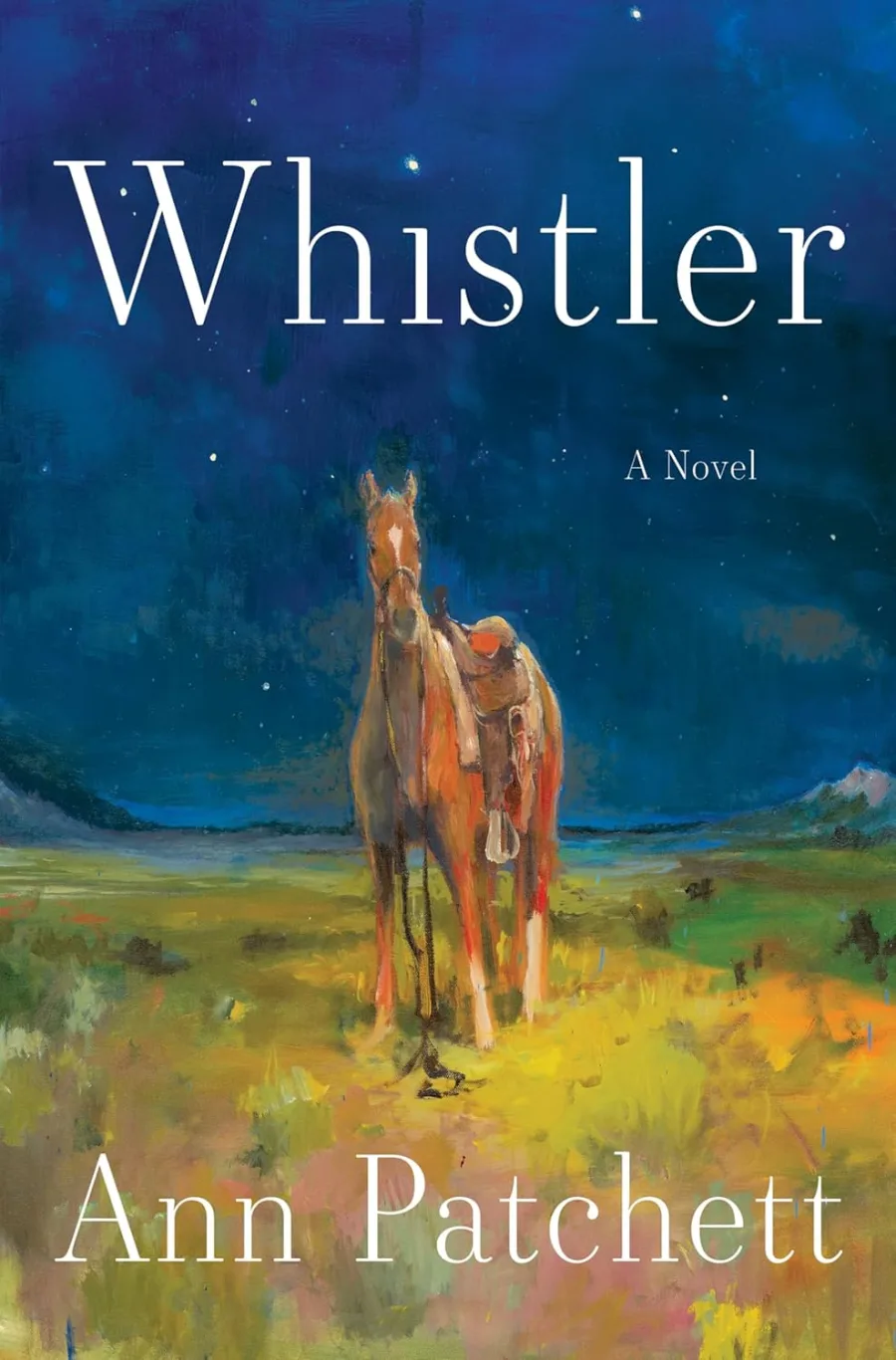
Download Cover Image
Do you want to download the full cover image for Whistler: A Novel?