
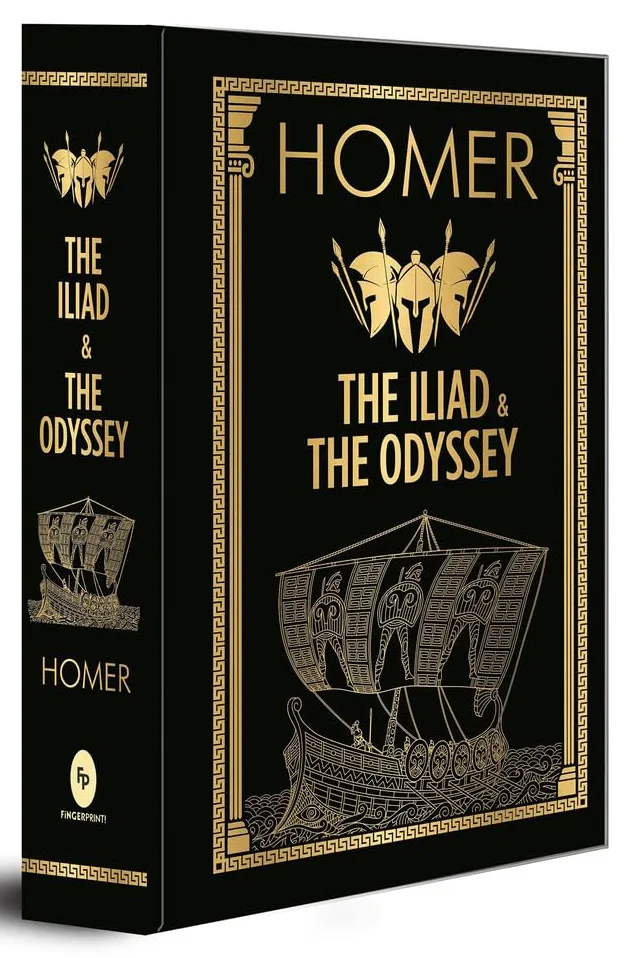
The Iliad & the Odyssey
Hardcover
• 768 Pages
• USD 24.99
• English
• 9789388144292
No ratings yet
| Publisher | Fingerprint |
|---|---|
| ISBN13 | 9789388144292 |
| ASIN/SKU | 9388144295 |
| Book Format | Hardcover |
| Language | English |
| Pages | 768 |
| List Price | USD 24.99 |
| Publishing Date | 01/08/2018 |
| Dimensions | 6 x 2.1 x 9 inches |
| Weight | 1.54 pounds |
| Book Code | BD00067192 |
Buy this Book
Amazon Stores
Ebook Stores
Other Stores
Discover The Iliad and the Odyssey by Homer. This book is published by Fingerprint in Hardcover format, ISBN 9789388144292, ASIN 9388144295, under Literature and Fiction, Classic Greek Literature, Men's Adventure Fiction.
Book Description
Embark on a literary odyssey through ancient Greece with Homer's timeless epics, The Iliad and The Odyssey. In The Iliad, witness the ravages of the Trojan War as gods and mortals clash in a tale of honor, heroism, and the consequences of unchecked pride. Then, journey alongside Odysseus in The Odyssey as he battles mythical creatures, evades vengeful gods, ad strives to return home, navigating treacherous seas and testing the limits of human resilience. These masterpieces of ancient literature capture the essence of the human experience, exploring themes of love, loss, destiny, and the indomitable spirit of adventure.
Delve into the Iliad’s Wrath and the Odyssey’s Wonder.
Epic tales of ancient heroes and legendary battles.
Unforgettable characters shaped by gods and destiny.
Timeless exploration of human emotions and triumphs.
Gripping narratives of honor, courage, and sacrifice.
Immersive journey through ancient Greece's mythical landscapes.
Delve into the Iliad’s Wrath and the Odyssey’s Wonder.
Epic tales of ancient heroes and legendary battles.
Unforgettable characters shaped by gods and destiny.
Timeless exploration of human emotions and triumphs.
Gripping narratives of honor, courage, and sacrifice.
Immersive journey through ancient Greece's mythical landscapes.
Author Biography
Homer was probably born around 725BC on the Coast of Asia Minor, now the coast of Turkey, but then really a part of Greece. Homer was the first Greek writer whose work survives.
He was one of a long line of bards, or poets, who worked in the oral tradition. Homer and other bards of the time could recite, or chant, long epic poems. Both works attributed to Homer - The Iliad and The Odyssey - are over ten thousand lines long in the original. Homer must have had an amazing memory but was helped by the formulaic poetry style of the time.
In The Iliad Homer sang of death and glory, of a few days in the struggle between the Greeks and the Trojans. Mortal men played out their fate under the gaze of the gods. The Odyssey is the original collection of tall traveller's tales. Odysseus, on his way home from the Trojan War, encounters all kinds of marvels from one-eyed giants to witches and beautiful temptresses. His adventures are many and memorable before he gets back to Ithaca and his faithful wife Penelope.
We can never be certain that both these stories belonged to Homer. In fact 'Homer' may not be a real name but a kind of nickname meaning perhaps 'the hostage' or 'the blind one'. Whatever the truth of their origin, the two stories, developed around three thousand years ago, may well still be read in three thousand years' time.
He was one of a long line of bards, or poets, who worked in the oral tradition. Homer and other bards of the time could recite, or chant, long epic poems. Both works attributed to Homer - The Iliad and The Odyssey - are over ten thousand lines long in the original. Homer must have had an amazing memory but was helped by the formulaic poetry style of the time.
In The Iliad Homer sang of death and glory, of a few days in the struggle between the Greeks and the Trojans. Mortal men played out their fate under the gaze of the gods. The Odyssey is the original collection of tall traveller's tales. Odysseus, on his way home from the Trojan War, encounters all kinds of marvels from one-eyed giants to witches and beautiful temptresses. His adventures are many and memorable before he gets back to Ithaca and his faithful wife Penelope.
We can never be certain that both these stories belonged to Homer. In fact 'Homer' may not be a real name but a kind of nickname meaning perhaps 'the hostage' or 'the blind one'. Whatever the truth of their origin, the two stories, developed around three thousand years ago, may well still be read in three thousand years' time.
Editorial Reviews
Editorial Reviews will be added soon…
Book Summary
Homer’s twin epics, The Iliad and The Odyssey, together form the grand narrative arc of the Trojan War—a legendary conflict sparked when the Trojan prince Paris abducted Helen, the beautiful wife of King Menelaus of Sparta. To reclaim her and restore their collective honor, a vast coalition of Greek kingdoms sailed across the Aegean Sea to lay siege to the walled city of Troy. While the two epics exist as distinct masterpieces, they read as a continuous human saga spanning two decades. The first epic captures the intense, tragic brutality of war, while the second chronicles the exhausting, treacherous quest to return home once the dust settles. Together, they explore timeless themes of pride, mortality, fate, divine intervention, and the enduring strength of the human spirit.
The Iliad does not cover the entire ten-year siege of Troy, focusing instead on a crucial few weeks during the war's final year. The narrative opens not with grand heroics, but with a bitter feud among the Greeks. Agamemnon, the arrogant commander-in-chief, dishonors Achilles, the Greeks' greatest warrior, by taking his captive woman as a prize. Consumed by rage and wounded pride, Achilles withdraws from the fighting and prays for the Greeks to suffer so they realize his true worth. Without Achilles, the Greek army falters. Led by the noble Trojan prince Hector, the Trojan forces push the Greeks back to the shore, threatening to burn their ships. Desperate to save his comrades, Achilles’ beloved companion, Patroclus, dons Achilles’ armor and leads the Greeks in a desperate counterattack. Though Patroclus turns the tide, he is killed in combat by Hector, who strips him of his armor.
Shattered by grief and burning for revenge, Achilles casts aside his feud with Agamemnon and returns to the battlefield like a force of nature. Clad in new armor forged by the god Hephaestus, Achilles slaughters scores of Trojans and corners Hector outside the city gates. In a fierce duel, Achilles slays Hector and, in a terrifying display of disrespect, ties the Trojan hero's corpse to his chariot, dragging it through the dust for days. The epic reaches its emotional climax not in violence, but in shared grief. King Priam of Troy secretly sneaks into the Greek camp at night to beg Achilles for his son’s body. Moved by the elderly king's tears, Achilles remembers his own aging father, relents, and returns Hector’s body, allowing both sides a brief truce to mourn their fallen dead. The Iliad closes on this quiet note of shared human sorrow, leaving Troy’s eventual fall offstage.
Following Troy's eventual destruction—engineered by the clever Greek warrior Odysseus and his famous trick of the wooden horse—The Odyssey picks up the story ten years later. While other Greek leaders have returned home or met tragic fates, Odysseus, the King of Ithaca, has been missing for a decade, trapped far across the sea. Back in Ithaca, his kingdom is falling apart. Dozens of arrogant suitors have invaded his palace, consuming his wealth, harassing his faithful wife Penelope, and plotting to murder his young son Telemachus. Guided by the goddess Athena, Telemachus sets out on a journey to find news of his lost father, while Penelope uses her wits to stall the suitors, promising to choose a husband only after she finishes weaving a burial shroud that she secretly unravels every night.
Meanwhile, Odysseus' struggle for survival is recounted through a series of fantastical adventures. He faces monster after monster on his long voyage home: blinding the one-eyed Cyclops Polyphemus, escaping the enchantress Circe who transforms his crew into swine, resisting the irresistible song of the Sirens, and navigating between the deadly sea monsters Scylla and Charybdis. However, his pride in taunting Polyphemus earns him the wrath of the sea god Poseidon, who ensures his voyage is plagued by shipwreck and loss until all his companions perish. Odysseus ends up stranded for seven years on the remote island of Ogygia, held captive by the nymph Calypso, until the gods finally intervene and order her to let him go.
Washed ashore on the island of the Phaeacians, Odysseus tells his harrowing story to the hospitable islanders, who provide him with a ship to return home. Arriving in Ithaca disguised as a ragged beggar to test the loyalty of his people, Odysseus reunites with Telemachus and plans his revenge. Penelope announces a contest: she will marry whoever can string Odysseus’ massive hunting bow and shoot an arrow through twelve axe heads. The suitors fail miserably, but the disguised beggar steps up, effortlessly strings his old bow, and completes the shot. Shedding his disguise, Odysseus, alongside Telemachus and a couple of loyal servants, slaughters the suitors in a fierce battle. Penelope tests his identity one final time with a secret about their immovable marriage bed, confirming her husband's true return. The Odyssey concludes with peace restored to Ithaca, bringing Homer’s grand saga to a close with a celebrated victory of home, family, and endurance over chaos.
The Iliad does not cover the entire ten-year siege of Troy, focusing instead on a crucial few weeks during the war's final year. The narrative opens not with grand heroics, but with a bitter feud among the Greeks. Agamemnon, the arrogant commander-in-chief, dishonors Achilles, the Greeks' greatest warrior, by taking his captive woman as a prize. Consumed by rage and wounded pride, Achilles withdraws from the fighting and prays for the Greeks to suffer so they realize his true worth. Without Achilles, the Greek army falters. Led by the noble Trojan prince Hector, the Trojan forces push the Greeks back to the shore, threatening to burn their ships. Desperate to save his comrades, Achilles’ beloved companion, Patroclus, dons Achilles’ armor and leads the Greeks in a desperate counterattack. Though Patroclus turns the tide, he is killed in combat by Hector, who strips him of his armor.
Shattered by grief and burning for revenge, Achilles casts aside his feud with Agamemnon and returns to the battlefield like a force of nature. Clad in new armor forged by the god Hephaestus, Achilles slaughters scores of Trojans and corners Hector outside the city gates. In a fierce duel, Achilles slays Hector and, in a terrifying display of disrespect, ties the Trojan hero's corpse to his chariot, dragging it through the dust for days. The epic reaches its emotional climax not in violence, but in shared grief. King Priam of Troy secretly sneaks into the Greek camp at night to beg Achilles for his son’s body. Moved by the elderly king's tears, Achilles remembers his own aging father, relents, and returns Hector’s body, allowing both sides a brief truce to mourn their fallen dead. The Iliad closes on this quiet note of shared human sorrow, leaving Troy’s eventual fall offstage.
Following Troy's eventual destruction—engineered by the clever Greek warrior Odysseus and his famous trick of the wooden horse—The Odyssey picks up the story ten years later. While other Greek leaders have returned home or met tragic fates, Odysseus, the King of Ithaca, has been missing for a decade, trapped far across the sea. Back in Ithaca, his kingdom is falling apart. Dozens of arrogant suitors have invaded his palace, consuming his wealth, harassing his faithful wife Penelope, and plotting to murder his young son Telemachus. Guided by the goddess Athena, Telemachus sets out on a journey to find news of his lost father, while Penelope uses her wits to stall the suitors, promising to choose a husband only after she finishes weaving a burial shroud that she secretly unravels every night.
Meanwhile, Odysseus' struggle for survival is recounted through a series of fantastical adventures. He faces monster after monster on his long voyage home: blinding the one-eyed Cyclops Polyphemus, escaping the enchantress Circe who transforms his crew into swine, resisting the irresistible song of the Sirens, and navigating between the deadly sea monsters Scylla and Charybdis. However, his pride in taunting Polyphemus earns him the wrath of the sea god Poseidon, who ensures his voyage is plagued by shipwreck and loss until all his companions perish. Odysseus ends up stranded for seven years on the remote island of Ogygia, held captive by the nymph Calypso, until the gods finally intervene and order her to let him go.
Washed ashore on the island of the Phaeacians, Odysseus tells his harrowing story to the hospitable islanders, who provide him with a ship to return home. Arriving in Ithaca disguised as a ragged beggar to test the loyalty of his people, Odysseus reunites with Telemachus and plans his revenge. Penelope announces a contest: she will marry whoever can string Odysseus’ massive hunting bow and shoot an arrow through twelve axe heads. The suitors fail miserably, but the disguised beggar steps up, effortlessly strings his old bow, and completes the shot. Shedding his disguise, Odysseus, alongside Telemachus and a couple of loyal servants, slaughters the suitors in a fierce battle. Penelope tests his identity one final time with a secret about their immovable marriage bed, confirming her husband's true return. The Odyssey concludes with peace restored to Ithaca, bringing Homer’s grand saga to a close with a celebrated victory of home, family, and endurance over chaos.
Sample Chapters
Sample Chapters will be added soon…
Reader Reviews
No reviews yet.
The Iliad & the Odyssey
Download Cover Image
Do you want to download the full cover image for The Iliad & the Odyssey?