
The Catcher in the Rye
Paperback
• 288 Pages
• USD 17.99
• English
• 9780316769174
No ratings yet
| Publisher | Little, Brown Paperbacks |
|---|---|
| ISBN13 | 9780316769174 |
| ASIN/SKU | 0316769177 |
| Book Format | Paperback |
| Language | English |
| Pages | 288 |
| List Price | USD 17.99 |
| Publishing Date | 30/01/2001 |
| Dimensions | 5.25 x 0.95 x 8 inches |
| Weight | 2.31 pounds |
| Book Code | BD00067194 |
Buy this Book
Amazon Stores
Ebook Stores
Other Stores
Discover The Catcher in the Rye by J. D. Salinger. This book is published by Little, Brown Paperbacks in Paperback format, ISBN 9780316769174, ASIN 0316769177, under Literature and Fiction, Teen and Young Adult Classic Literature, Classic Literature and Fiction.
Book Description
CELEBRATING 75 YEARS OF THE CATCHER IN THE RYE, 1951 - 2026
The "brilliant, funny, meaningful novel" (The New Yorker) that established J. D. Salinger as a leading voice in American literature―and that has instilled in millions of readers around the world a lifelong love of books.
"If you really want to hear about it, the first thing you'll probably want to know is where I was born, and what my lousy childhood was like, and how my parents were occupied and all before they had me, and all that David Copperfield kind of crap, but I don't feel like going into it, if you want to know the truth."
The hero-narrator of The Catcher in the Rye is an ancient child of sixteen, a native New Yorker named Holden Caulfield. Through circumstances that tend to preclude adult, secondhand description, he leaves his prep school in Pennsylvania and goes underground in New York City for three days, grappling with feelings of loneliness, grief, and alienation. His search for something genuine in a world that feels insincere and superficial remains urgent and unmistakably modern.
In Holden's comic, cutting, and painfully sincere voice, readers discover a comradeship and understanding as they recognize the ache of being lost, and the impulse toward rebellion that comes with the passage into adulthood. The Catcher in the Rye resonates deeply and personally for every new reader.
The "brilliant, funny, meaningful novel" (The New Yorker) that established J. D. Salinger as a leading voice in American literature―and that has instilled in millions of readers around the world a lifelong love of books.
"If you really want to hear about it, the first thing you'll probably want to know is where I was born, and what my lousy childhood was like, and how my parents were occupied and all before they had me, and all that David Copperfield kind of crap, but I don't feel like going into it, if you want to know the truth."
The hero-narrator of The Catcher in the Rye is an ancient child of sixteen, a native New Yorker named Holden Caulfield. Through circumstances that tend to preclude adult, secondhand description, he leaves his prep school in Pennsylvania and goes underground in New York City for three days, grappling with feelings of loneliness, grief, and alienation. His search for something genuine in a world that feels insincere and superficial remains urgent and unmistakably modern.
In Holden's comic, cutting, and painfully sincere voice, readers discover a comradeship and understanding as they recognize the ache of being lost, and the impulse toward rebellion that comes with the passage into adulthood. The Catcher in the Rye resonates deeply and personally for every new reader.
Author Biography
Born in New York in 1919, Jerome David Salinger dropped out of several schools before enrolling in a writing class at Columbia University, publishing his first piece ("The Young Folks") in Story magazine. Soon after, the New Yorker picked up the heralded "A Perfect Day for Bananafish," and more pieces followed, including "Slight Rebellion off Madison" in 1941, an early Holden Caulfield story. Following a stint in Europe for World War II, Salinger returned to New York and began work on his signature novel, 1951's "The Catcher in the Rye," an immediate bestseller for its iconoclastic hero and forthright use of profanity. Following this success, Salinger retreated to his Cornish, New Hampshire, home where he grew increasingly private, eventually erecting a wall around his property and publishing just three more books: "Nine Stories," "Franny and Zooey," "Raise High the Roof Beam, and Carpenters and Seymour: An Introduction." Salinger was married twice and had two children. He died of natural causes on January 27, 2010, in New Hampshire at the age of 91.
Editorial Reviews
"In Mr. Salinger we have a fresh voice. One can actually hear it speaking, and what is has to say is uncannily true, perceptive, and compassionate."
―Book-of-the-Month Club
"We read The Catcher in the Rye and feel like the book understands us in deep and improbable ways."
―John Green
"A contemporary master—a genius... Here was a man who used language as if it were pure energy beautifully controlled, and who knew exactly what he was doing in every silence as well as in every word."―New York Times Book Review
"Salinger's work meant a lot to me when I was a young person and his writing still sings now."
―Dave Eggers
"Brilliant, funny, meaningful.”―The New Yorker
"I don't think there's ever been anything like these characters in American literature.”―Jennifer Lawrence
I grew up in New York City and understood the backdrop and how Holden’s mind worked. . . [The Catcher in the Rye] showed me what great storytelling was like.”―Lenny Kravitz
"Salinger wrote one pitch-perfect masterpiece that will speakingly endure until the contorting condition known as adolescence disappears from our civilization.”―Julian Barnes, author of THE SENSE OF AN ENDING
"...there are passages and phrases in Salinger that will stay with me forever; he is one of those rare writers whose work can actually be called "life-changing”. ―Jarvis Cocker, singer and musician
"He has an enormous cultural importance - you basically can't write about anyone between the ages of five and 35 without accidentally referencing Salinger.”―Jonathan Safran Foer
"I would recommend The Catcher in the Rye to anyone trying to make sense of their life’s crossroads.”―Uzo Aduba, award-winning actress
“The Catcher in the Rye is seminal. I must have read it eight times and every time there's something else.”―Polly Stenham, playwright
"Probably my favorite book of all time because of the truthful, raw language ― it sounds so modern.”―Liz Phair, musician
"Catcher is a hugely influential novel for myself and surely any writer. I have never read anything else with the perfect flow and timing of that book.”―Ross Raisin, novelist and short story writer
"Holden Caulfield is the best character in literature. Period. . . Anyone who hasn't walked the streets of New York with OG rebel Holden Caulfield is missing out on some major teen angst.”―Josh Hutcherson, actor
“...to reread the novel today is to be struck by shades of a loneliness we talk about as a problem unique to the 2020s...reading it with adult eyes reveals Salinger’s intervention for Holden: one of connection, love and carousels. It is a message worth teaching after all these years."―Los Angeles Times
―Book-of-the-Month Club
"We read The Catcher in the Rye and feel like the book understands us in deep and improbable ways."
―John Green
"A contemporary master—a genius... Here was a man who used language as if it were pure energy beautifully controlled, and who knew exactly what he was doing in every silence as well as in every word."―New York Times Book Review
"Salinger's work meant a lot to me when I was a young person and his writing still sings now."
―Dave Eggers
"Brilliant, funny, meaningful.”―The New Yorker
"I don't think there's ever been anything like these characters in American literature.”―Jennifer Lawrence
I grew up in New York City and understood the backdrop and how Holden’s mind worked. . . [The Catcher in the Rye] showed me what great storytelling was like.”―Lenny Kravitz
"Salinger wrote one pitch-perfect masterpiece that will speakingly endure until the contorting condition known as adolescence disappears from our civilization.”―Julian Barnes, author of THE SENSE OF AN ENDING
"...there are passages and phrases in Salinger that will stay with me forever; he is one of those rare writers whose work can actually be called "life-changing”. ―Jarvis Cocker, singer and musician
"He has an enormous cultural importance - you basically can't write about anyone between the ages of five and 35 without accidentally referencing Salinger.”―Jonathan Safran Foer
"I would recommend The Catcher in the Rye to anyone trying to make sense of their life’s crossroads.”―Uzo Aduba, award-winning actress
“The Catcher in the Rye is seminal. I must have read it eight times and every time there's something else.”―Polly Stenham, playwright
"Probably my favorite book of all time because of the truthful, raw language ― it sounds so modern.”―Liz Phair, musician
"Catcher is a hugely influential novel for myself and surely any writer. I have never read anything else with the perfect flow and timing of that book.”―Ross Raisin, novelist and short story writer
"Holden Caulfield is the best character in literature. Period. . . Anyone who hasn't walked the streets of New York with OG rebel Holden Caulfield is missing out on some major teen angst.”―Josh Hutcherson, actor
“...to reread the novel today is to be struck by shades of a loneliness we talk about as a problem unique to the 2020s...reading it with adult eyes reveals Salinger’s intervention for Holden: one of connection, love and carousels. It is a message worth teaching after all these years."―Los Angeles Times
Book Summary
J.D. Salinger’s The Catcher in the Rye is a poignant, deeply intimate exploration of teenage alienation, grief, and the painful transition from childhood to adulthood. The novel is narrated by Holden Caulfield, a cynical, highly observant, and profoundly troubled sixteen-year-old boy who is recounting the story from a psychiatric rest home in California. He looks back on a tumultuous three-day period the previous December, beginning with his expulsion from Pencey Prep, an exclusive boarding school in Pennsylvania. Holden is failing academically, but his true failure is his inability to connect with the world around him. He views almost everyone as a "phony," a term he uses to describe the hypocrisy, superficiality, and pretentiousness of the adult world. Feeling utterly alienated from his peers and disgusted by the school's atmosphere, Holden decides to pack his bags, leave Pencey a few days before the Christmas break officially begins, and take a train to New York City.
Upon arriving in New York, Holden does not go home, knowing his parents will be furious about his fourth school expulsion. Instead, he checks into the seedy Edmont Hotel, setting the stage for a solitary, meandering journey through the city. Driven by a desperate, conflicting need for human connection and an intense fear of it, Holden reaches out to various people. He talks to eccentric cab drivers about where the ducks in Central Park go when the lagoon freezes over—a metaphor for his own fear of change and abandonment. He dances with older female tourists in a hotel lounge, buys a record for his younger sister, and even agrees to hire a young prostitute named Sunny. However, when Sunny arrives in his room, Holden is overwhelmed by anxiety and pity. He refuses to sleep with her, simply wanting someone to talk to, which ultimately leads to a humiliating physical confrontation with her pimp, Maurice.
As Holden wanders the city, his erratic behavior and deep depression become increasingly apparent. He goes on a disastrous date with an old girlfriend, Sally Hayes. Despite asking her to run away with him to live in a cabin in New England, he quickly alienates her by insulting her and acting irrationally. Beneath Holden’s cynical exterior and continuous complaints about "phonies" lies a profound, unaddressed grief. Years earlier, his younger brother, Allie, died of leukemia, a tragedy that shattered Holden’s world. Allie represents pure, untainted innocence to Holden, and his death is the emotional catalyst for Holden's refusal to grow up. Holden carries Allie’s baseball mitt, covered in poems written in green ink, as a tragic relic of a childhood he desperately wishes he could preserve.
The emotional core of the novel takes shape when a broke, exhausted, and intoxicated Holden sneaks into his family’s apartment in the middle of the night to see his ten-year-old sister, Phoebe. Phoebe is intelligent, deeply empathetic, and serves as Holden’s only true anchor to the world. When she realizes he has been kicked out of another school, she challenges him, demanding to know if there is anything in the world he actually likes or cares about. In a moment of vulnerability, Holden explains his ultimate fantasy, derived from a misheard line of a Robert Burns poem. He envisions a field of rye perched on the edge of a dangerous cliff, filled with playing children. Holden imagines himself as the "catcher in the rye," the sole protector whose job is to catch the children before they fall off the cliff. It is a heartbreakingly beautiful metaphor for Holden's desire to protect the innocence of childhood and prevent kids from falling into the corrupt, phony, and painful world of adulthood.
Despite the brief comfort of his visit, Holden leaves the apartment before his parents wake up, deciding that he will hitchhike out West, pretend to be a deaf-mute to avoid talking to people, and live as a recluse. He arranges to meet Phoebe at the Metropolitan Museum of Art to say a final goodbye and return some money he borrowed from her. However, when Phoebe arrives, she is dragging a heavy suitcase, pleading to go with him. Seeing his sister willing to abandon her own life for his sake shatters his escapist fantasy. Realizing he cannot abandon her or force her to run away from reality, Holden abandons his plan. He takes her to the Central Park zoo, where he watches her ride the carousel in the pouring rain. As he sits on a bench, getting soaked, he is suddenly overwhelmed by a profound, inexplicable sense of happiness just watching her reach for the gold ring, realizing that children must be allowed to take risks and grow up, even if they might fall.
The narrative then returns to the present moment in the psychiatric facility. Holden refuses to explain what happened after he went home, noting only that he got sick and was sent away to recover. In his final thoughts, he reflects on the story he has just told. In a bittersweet realization, he admits that he actually misses everyone he has talked about, even the ones who brought him pain. The novel ends on this lingering note of melancholy and fragile hope, beautifully capturing the inescapable ache of growing up and the messy, vital necessity of human connection.
Upon arriving in New York, Holden does not go home, knowing his parents will be furious about his fourth school expulsion. Instead, he checks into the seedy Edmont Hotel, setting the stage for a solitary, meandering journey through the city. Driven by a desperate, conflicting need for human connection and an intense fear of it, Holden reaches out to various people. He talks to eccentric cab drivers about where the ducks in Central Park go when the lagoon freezes over—a metaphor for his own fear of change and abandonment. He dances with older female tourists in a hotel lounge, buys a record for his younger sister, and even agrees to hire a young prostitute named Sunny. However, when Sunny arrives in his room, Holden is overwhelmed by anxiety and pity. He refuses to sleep with her, simply wanting someone to talk to, which ultimately leads to a humiliating physical confrontation with her pimp, Maurice.
As Holden wanders the city, his erratic behavior and deep depression become increasingly apparent. He goes on a disastrous date with an old girlfriend, Sally Hayes. Despite asking her to run away with him to live in a cabin in New England, he quickly alienates her by insulting her and acting irrationally. Beneath Holden’s cynical exterior and continuous complaints about "phonies" lies a profound, unaddressed grief. Years earlier, his younger brother, Allie, died of leukemia, a tragedy that shattered Holden’s world. Allie represents pure, untainted innocence to Holden, and his death is the emotional catalyst for Holden's refusal to grow up. Holden carries Allie’s baseball mitt, covered in poems written in green ink, as a tragic relic of a childhood he desperately wishes he could preserve.
The emotional core of the novel takes shape when a broke, exhausted, and intoxicated Holden sneaks into his family’s apartment in the middle of the night to see his ten-year-old sister, Phoebe. Phoebe is intelligent, deeply empathetic, and serves as Holden’s only true anchor to the world. When she realizes he has been kicked out of another school, she challenges him, demanding to know if there is anything in the world he actually likes or cares about. In a moment of vulnerability, Holden explains his ultimate fantasy, derived from a misheard line of a Robert Burns poem. He envisions a field of rye perched on the edge of a dangerous cliff, filled with playing children. Holden imagines himself as the "catcher in the rye," the sole protector whose job is to catch the children before they fall off the cliff. It is a heartbreakingly beautiful metaphor for Holden's desire to protect the innocence of childhood and prevent kids from falling into the corrupt, phony, and painful world of adulthood.
Despite the brief comfort of his visit, Holden leaves the apartment before his parents wake up, deciding that he will hitchhike out West, pretend to be a deaf-mute to avoid talking to people, and live as a recluse. He arranges to meet Phoebe at the Metropolitan Museum of Art to say a final goodbye and return some money he borrowed from her. However, when Phoebe arrives, she is dragging a heavy suitcase, pleading to go with him. Seeing his sister willing to abandon her own life for his sake shatters his escapist fantasy. Realizing he cannot abandon her or force her to run away from reality, Holden abandons his plan. He takes her to the Central Park zoo, where he watches her ride the carousel in the pouring rain. As he sits on a bench, getting soaked, he is suddenly overwhelmed by a profound, inexplicable sense of happiness just watching her reach for the gold ring, realizing that children must be allowed to take risks and grow up, even if they might fall.
The narrative then returns to the present moment in the psychiatric facility. Holden refuses to explain what happened after he went home, noting only that he got sick and was sent away to recover. In his final thoughts, he reflects on the story he has just told. In a bittersweet realization, he admits that he actually misses everyone he has talked about, even the ones who brought him pain. The novel ends on this lingering note of melancholy and fragile hope, beautifully capturing the inescapable ache of growing up and the messy, vital necessity of human connection.
Sample Chapters
Sample Chapters will be added soon…
Reader Reviews
No reviews yet.
The Catcher in the Rye
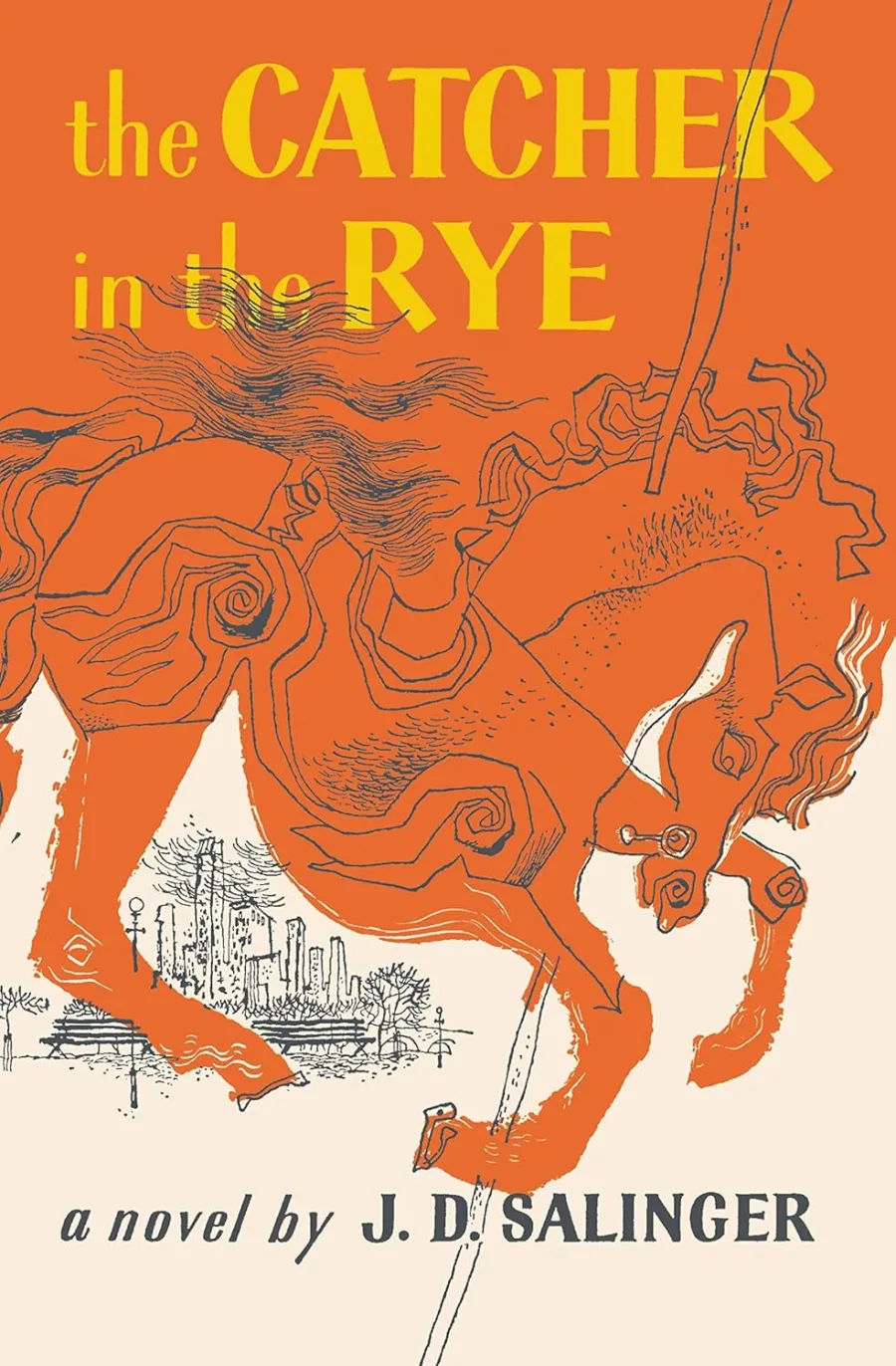
Download Cover Image
Do you want to download the full cover image for The Catcher in the Rye?