
The Four Agreements: A Practical Guide to Personal Freedom
Paperback
• 160 Pages
• USD 18.00
• English
• 9781878424310
No ratings yet
| Publisher | Tarcher |
|---|---|
| ISBN13 | 9781878424310 |
| ASIN/SKU | 1878424319 |
| Book Format | Paperback |
| Language | English |
| Pages | 160 |
| List Price | USD 18.00 |
| Series Title | A Toltec Wisdom Book |
| Publishing Date | 07/11/1997 |
| Dimensions | 5.08 x 0.47 x 7.24 inches |
| Weight | 6 ounces |
| Book Code | BD00067216 |
Buy this Book
Amazon Stores
Ebook Stores
Other Stores
Discover The Four Agreements: A Practical Guide to Personal Freedom by Don Miguel Ruiz. This book is published by Tarcher in Paperback format, ISBN 9781878424310, ASIN 1878424319, under Self-Help, Success Self-Help, Personal Transformation Self-Help.
Book Description
The incredible New York Times and international bestselling guide to true happiness.
“This book by don Miguel Ruiz, simple yet so powerful, has made a tremendous difference in how I think and act in every encounter.”—Oprah Winfrey
In The Four Agreements, a perennial bestseller published in dozens of languages worldwide, don Miguel Ruiz reveals the source of self-limiting beliefs that rob us of joy and create needless suffering. Based on ancient Toltec wisdom, The Four Agreements offer a powerful code of conduct that can rapidly transform our lives to a new experience of freedom, true happiness, and love.
“Don Miguel Ruiz’s book is a roadmap to enlightenment and freedom.”—Deepak Chopra, Author, The Seven Spiritual Laws of Success
“An inspiring book with many great lessons.”—Wayne Dyer, Author, Real Magic
“In the tradition of Castaneda, Ruiz distills essential Toltec wisdom, expressing with clarity and impeccability what it means for men and women to live as peaceful warriors in the modern world.”—Dan Millman, Author, Way of the Peaceful Warrior
“This book by don Miguel Ruiz, simple yet so powerful, has made a tremendous difference in how I think and act in every encounter.”—Oprah Winfrey
In The Four Agreements, a perennial bestseller published in dozens of languages worldwide, don Miguel Ruiz reveals the source of self-limiting beliefs that rob us of joy and create needless suffering. Based on ancient Toltec wisdom, The Four Agreements offer a powerful code of conduct that can rapidly transform our lives to a new experience of freedom, true happiness, and love.
“Don Miguel Ruiz’s book is a roadmap to enlightenment and freedom.”—Deepak Chopra, Author, The Seven Spiritual Laws of Success
“An inspiring book with many great lessons.”—Wayne Dyer, Author, Real Magic
“In the tradition of Castaneda, Ruiz distills essential Toltec wisdom, expressing with clarity and impeccability what it means for men and women to live as peaceful warriors in the modern world.”—Dan Millman, Author, Way of the Peaceful Warrior
Author Biography
www.miguelruiz.com
Don Miguel Ruiz is a renowned spiritual teacher and internationally bestselling author of the “Toltec Wisdom Series,” including “The Four Agreements,” “The Mastery of Love,” “The Voice of Knowledge,” “The Four Agreements Companion Book,” “The Circle of Fire,” and “The Fifth Agreement.” The Toltec Wisdom books have sold over 12 million copies in the United States, and have been published in 46 languages worldwide.
don Miguel has spent the past three decades guiding students to personal freedom through his profound insights regarding the nature of human reality. His newest book, THE ACTOR (Ediciones Urano) written with Barbara Emrys was published November 3rd, 2020.
The youngest of thirteen children, don Miguel Ruiz was born in rural Mexico to parents who were healers and practitioners of ancient Toltec traditions. As a young adult, he graduated from medical school in Mexico City and practiced neurosurgery with his older brother in Tijuana. A near-fatal car crash forever changed the direction of his life, however, causing him to leave medicine and to examine the essential truth about life and humanity. With his mother’s help, and through her ancestral teachings, he discovered his own path to awareness, which evolved into a deep understanding of the physical universe and the virtual world of the mind.
Combining Toltec mythology and scientific perspectives, don Miguel has been able to merge ancient wisdom with modern physics and practical common-sense, forging a new philosophy for seekers of truth and personal authenticity. His landmark bestselling book, The Four Agreements, contains practical steps for long-term, personal transformation and has been read by millions around the world.
First published in 1997, The Four Agreements has since sold over nine million copies in the United States and seven million worldwide. It has been translated into 46 languages, appeared on the New York Times bestseller for nearly ten years, and was the 36th bestselling book of the decade. Don Miguel is also the author of The Mastery of Love, The Voice of Knowledge, Prayers, and the New York Times bestseller, The Fifth Agreement, a collaboration with his son, don José Ruiz. Each of his books are international bestsellers.
The wisdom don Miguel has brought to the world has earned him respect around the globe. He has dedicated his life to sharing his message through practical concepts in order to promote transformation and ultimately change lives for the better. Don Miguel is the recipient of numerous recognitions, including a U.S. Air Force ‘challenge coin’ engraved with “The Four Agreements.” He is the recipient of an Honorary Degree in Cultural and Social Education from the American Cultural Institute of Mexico, and referenced as a “national treasure” in his native country.
Don Miguel Ruiz is a renowned spiritual teacher and internationally bestselling author of the “Toltec Wisdom Series,” including “The Four Agreements,” “The Mastery of Love,” “The Voice of Knowledge,” “The Four Agreements Companion Book,” “The Circle of Fire,” and “The Fifth Agreement.” The Toltec Wisdom books have sold over 12 million copies in the United States, and have been published in 46 languages worldwide.
don Miguel has spent the past three decades guiding students to personal freedom through his profound insights regarding the nature of human reality. His newest book, THE ACTOR (Ediciones Urano) written with Barbara Emrys was published November 3rd, 2020.
The youngest of thirteen children, don Miguel Ruiz was born in rural Mexico to parents who were healers and practitioners of ancient Toltec traditions. As a young adult, he graduated from medical school in Mexico City and practiced neurosurgery with his older brother in Tijuana. A near-fatal car crash forever changed the direction of his life, however, causing him to leave medicine and to examine the essential truth about life and humanity. With his mother’s help, and through her ancestral teachings, he discovered his own path to awareness, which evolved into a deep understanding of the physical universe and the virtual world of the mind.
Combining Toltec mythology and scientific perspectives, don Miguel has been able to merge ancient wisdom with modern physics and practical common-sense, forging a new philosophy for seekers of truth and personal authenticity. His landmark bestselling book, The Four Agreements, contains practical steps for long-term, personal transformation and has been read by millions around the world.
First published in 1997, The Four Agreements has since sold over nine million copies in the United States and seven million worldwide. It has been translated into 46 languages, appeared on the New York Times bestseller for nearly ten years, and was the 36th bestselling book of the decade. Don Miguel is also the author of The Mastery of Love, The Voice of Knowledge, Prayers, and the New York Times bestseller, The Fifth Agreement, a collaboration with his son, don José Ruiz. Each of his books are international bestsellers.
The wisdom don Miguel has brought to the world has earned him respect around the globe. He has dedicated his life to sharing his message through practical concepts in order to promote transformation and ultimately change lives for the better. Don Miguel is the recipient of numerous recognitions, including a U.S. Air Force ‘challenge coin’ engraved with “The Four Agreements.” He is the recipient of an Honorary Degree in Cultural and Social Education from the American Cultural Institute of Mexico, and referenced as a “national treasure” in his native country.
Editorial Reviews
“This book by don Miguel Ruiz, simple yet so powerful, has made a tremendous difference in how I think and act in every encounter.” — Oprah Winfrey
“Don Miguel Ruiz’s book is a roadmap to enlightenment and freedom.” — Deepak Chopra, Author, The Seven Spiritual Laws of Success
“An inspiring book with many great lessons.” — Wayne Dyer, Author, Real Magic
“In the tradition of Castaneda, Ruiz distills essential Toltec wisdom, expressing with clarity and impeccability what it means for men and women to live as peaceful warriors in the modern world.” — Dan Millman, Author, Way of the Peaceful Warrior
“Don Miguel Ruiz’s book is a roadmap to enlightenment and freedom.” — Deepak Chopra, Author, The Seven Spiritual Laws of Success
“An inspiring book with many great lessons.” — Wayne Dyer, Author, Real Magic
“In the tradition of Castaneda, Ruiz distills essential Toltec wisdom, expressing with clarity and impeccability what it means for men and women to live as peaceful warriors in the modern world.” — Dan Millman, Author, Way of the Peaceful Warrior
Book Summary
The Four Agreements: A Practical Guide to Personal Freedom by Don Miguel Ruiz is a short but powerful self-help book that offers a simple code for living with more peace, freedom, and self-respect. At its heart, the book argues that much of human suffering comes from the beliefs, habits, and emotional patterns we absorb from other people and from society. Ruiz says that many of these patterns are learned early in life, long before we are able to question them, and they shape how we see ourselves, how we treat others, and how much happiness we allow into our lives. The book’s purpose is to help readers notice those unhealthy patterns and replace them with healthier agreements that create less fear and more clarity.
Ruiz explains that people are often “domesticated” by family, culture, and social expectations. In other words, we learn rules about who we should be, what we should believe, and how we should behave, and we begin living according to those rules without ever fully choosing them. Over time, this can make people judge themselves harshly, feel guilty for being imperfect, and depend too much on outside approval. The book suggests that this inner suffering is not necessary, because it comes from agreements we have accepted rather than from our true nature. Ruiz believes that if we change those agreements, we can change the quality of our lives.
The first agreement is to be impeccable with your word. This means speaking with honesty, integrity, and care. Ruiz treats words as powerful forces that can build or destroy. When people lie, gossip, insult themselves, or use language to hurt others, they create harm in their own minds and in their relationships. But when they speak clearly and truthfully, they begin to create trust and self-respect. The idea is not just to avoid saying bad things, but to use language in a way that supports life instead of damaging it. In practical terms, this means being careful about how we talk to ourselves as well. Self-criticism can become a habit, and the book warns that the words we repeat to ourselves often become the beliefs we live by.
The second agreement is to not take anything personally. Ruiz says that most of what other people do has more to do with their own beliefs, fears, and experiences than with us. When someone insults us, ignores us, or acts cruelly, it is usually a reflection of their own inner world rather than an honest statement about our worth. The book argues that taking things personally gives other people too much control over our emotions. If we stop assuming that every comment or action is about us, we become less reactive and less easily wounded. This is one of the book’s most freeing ideas, because it encourages emotional independence. It does not mean becoming cold or indifferent. It means understanding that other people’s behavior is often about their own pain, not our value.
The third agreement is to not make assumptions. Ruiz points out that people often create unnecessary suffering by guessing what others mean, believe, or intend. Instead of asking questions, we fill in the blanks with our own fears and expectations. These assumptions can lead to misunderstandings, resentment, and conflict. The book encourages readers to seek clarity instead of relying on mental stories. If something is unclear, ask. If something matters, speak up. This agreement helps people communicate more honestly and prevents small misunderstandings from growing into larger emotional problems. It also reduces the habit of living inside our own interpretations rather than in reality.
The fourth agreement is to always do your best. Ruiz explains that this does not mean being perfect. Your best will change depending on your energy, health, age, and emotional state. Some days your best will be strong and productive, and other days it will be smaller and quieter. What matters is that you give what you can in the moment without harsh self-judgment. When people do their best, they are less likely to carry guilt, regret, or frustration. This agreement ties the other three together because it gives readers a practical way to live them. You may not always succeed, but if you are doing your best, you can move forward without punishing yourself.
What makes the book so enduring is its directness. Ruiz does not bury his ideas in complexity. He returns again and again to the idea that freedom begins when we stop accepting painful beliefs as truth. He presents the four agreements as a way to break old mental patterns and replace them with a more peaceful way of living. The book has a spiritual tone, but its advice is also very practical. It can be read as a guide to better communication, better self-talk, and healthier relationships. It also invites deeper reflection on how fear, habit, and social conditioning shape our lives.
Overall, The Four Agreements is a compact but meaningful guide to personal growth. Its message is simple enough to remember, but broad enough to apply to almost every part of life. It asks readers to be careful with words, emotionally independent, clear in communication, and gentle with themselves. The book’s strength lies in that simplicity. It offers not a complicated system, but four clear practices that can help reduce suffering and make room for more peace, honesty, and self-respect.
Ruiz explains that people are often “domesticated” by family, culture, and social expectations. In other words, we learn rules about who we should be, what we should believe, and how we should behave, and we begin living according to those rules without ever fully choosing them. Over time, this can make people judge themselves harshly, feel guilty for being imperfect, and depend too much on outside approval. The book suggests that this inner suffering is not necessary, because it comes from agreements we have accepted rather than from our true nature. Ruiz believes that if we change those agreements, we can change the quality of our lives.
The first agreement is to be impeccable with your word. This means speaking with honesty, integrity, and care. Ruiz treats words as powerful forces that can build or destroy. When people lie, gossip, insult themselves, or use language to hurt others, they create harm in their own minds and in their relationships. But when they speak clearly and truthfully, they begin to create trust and self-respect. The idea is not just to avoid saying bad things, but to use language in a way that supports life instead of damaging it. In practical terms, this means being careful about how we talk to ourselves as well. Self-criticism can become a habit, and the book warns that the words we repeat to ourselves often become the beliefs we live by.
The second agreement is to not take anything personally. Ruiz says that most of what other people do has more to do with their own beliefs, fears, and experiences than with us. When someone insults us, ignores us, or acts cruelly, it is usually a reflection of their own inner world rather than an honest statement about our worth. The book argues that taking things personally gives other people too much control over our emotions. If we stop assuming that every comment or action is about us, we become less reactive and less easily wounded. This is one of the book’s most freeing ideas, because it encourages emotional independence. It does not mean becoming cold or indifferent. It means understanding that other people’s behavior is often about their own pain, not our value.
The third agreement is to not make assumptions. Ruiz points out that people often create unnecessary suffering by guessing what others mean, believe, or intend. Instead of asking questions, we fill in the blanks with our own fears and expectations. These assumptions can lead to misunderstandings, resentment, and conflict. The book encourages readers to seek clarity instead of relying on mental stories. If something is unclear, ask. If something matters, speak up. This agreement helps people communicate more honestly and prevents small misunderstandings from growing into larger emotional problems. It also reduces the habit of living inside our own interpretations rather than in reality.
The fourth agreement is to always do your best. Ruiz explains that this does not mean being perfect. Your best will change depending on your energy, health, age, and emotional state. Some days your best will be strong and productive, and other days it will be smaller and quieter. What matters is that you give what you can in the moment without harsh self-judgment. When people do their best, they are less likely to carry guilt, regret, or frustration. This agreement ties the other three together because it gives readers a practical way to live them. You may not always succeed, but if you are doing your best, you can move forward without punishing yourself.
What makes the book so enduring is its directness. Ruiz does not bury his ideas in complexity. He returns again and again to the idea that freedom begins when we stop accepting painful beliefs as truth. He presents the four agreements as a way to break old mental patterns and replace them with a more peaceful way of living. The book has a spiritual tone, but its advice is also very practical. It can be read as a guide to better communication, better self-talk, and healthier relationships. It also invites deeper reflection on how fear, habit, and social conditioning shape our lives.
Overall, The Four Agreements is a compact but meaningful guide to personal growth. Its message is simple enough to remember, but broad enough to apply to almost every part of life. It asks readers to be careful with words, emotionally independent, clear in communication, and gentle with themselves. The book’s strength lies in that simplicity. It offers not a complicated system, but four clear practices that can help reduce suffering and make room for more peace, honesty, and self-respect.
Sample Chapters
Sample Chapters will be added soon…
Reader Reviews
No reviews yet.
The Four Agreements: A Practical Guide to Personal Freedom
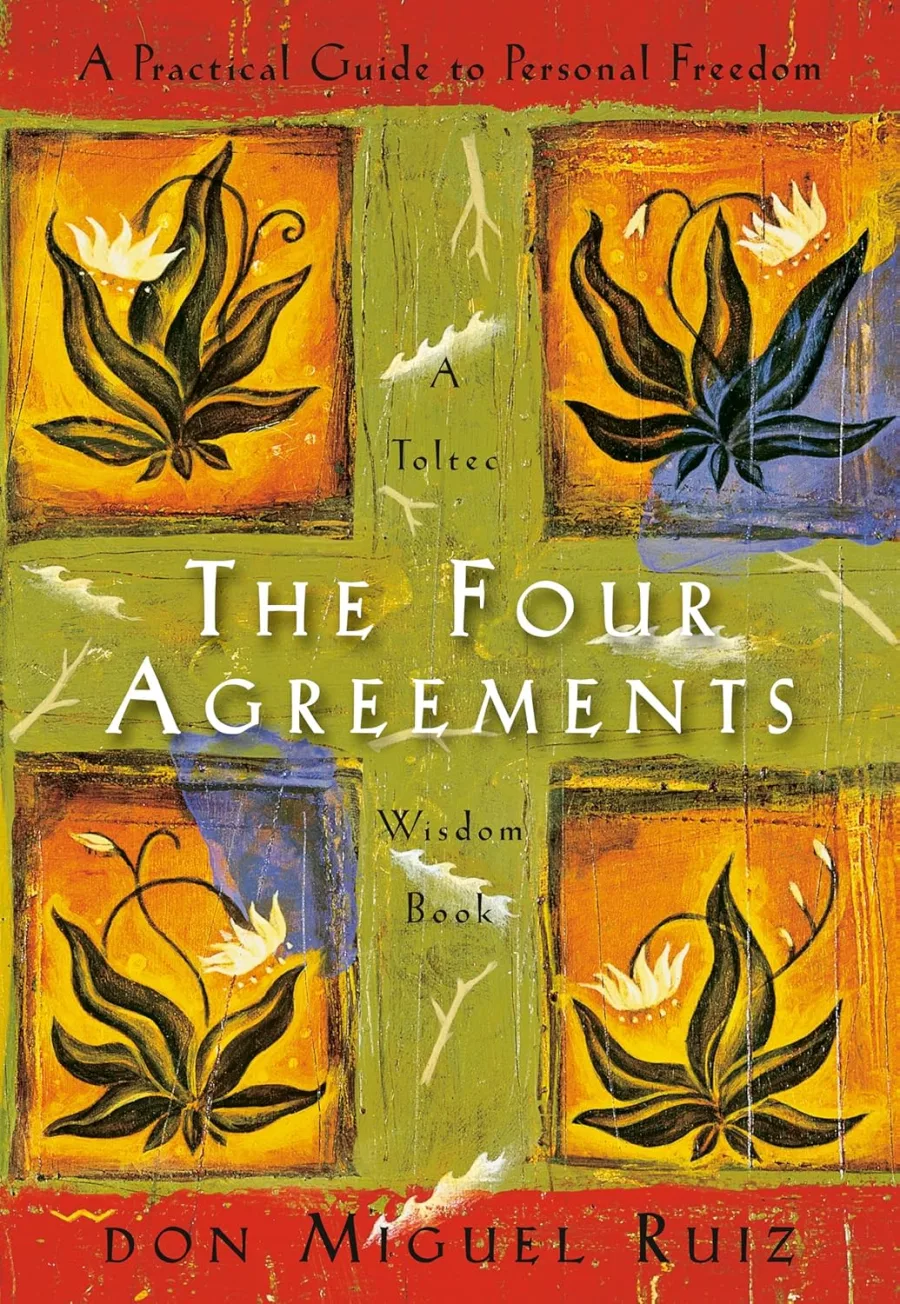
Download Cover Image
Do you want to download the full cover image for The Four Agreements: A Practical Guide to Personal Freedom?