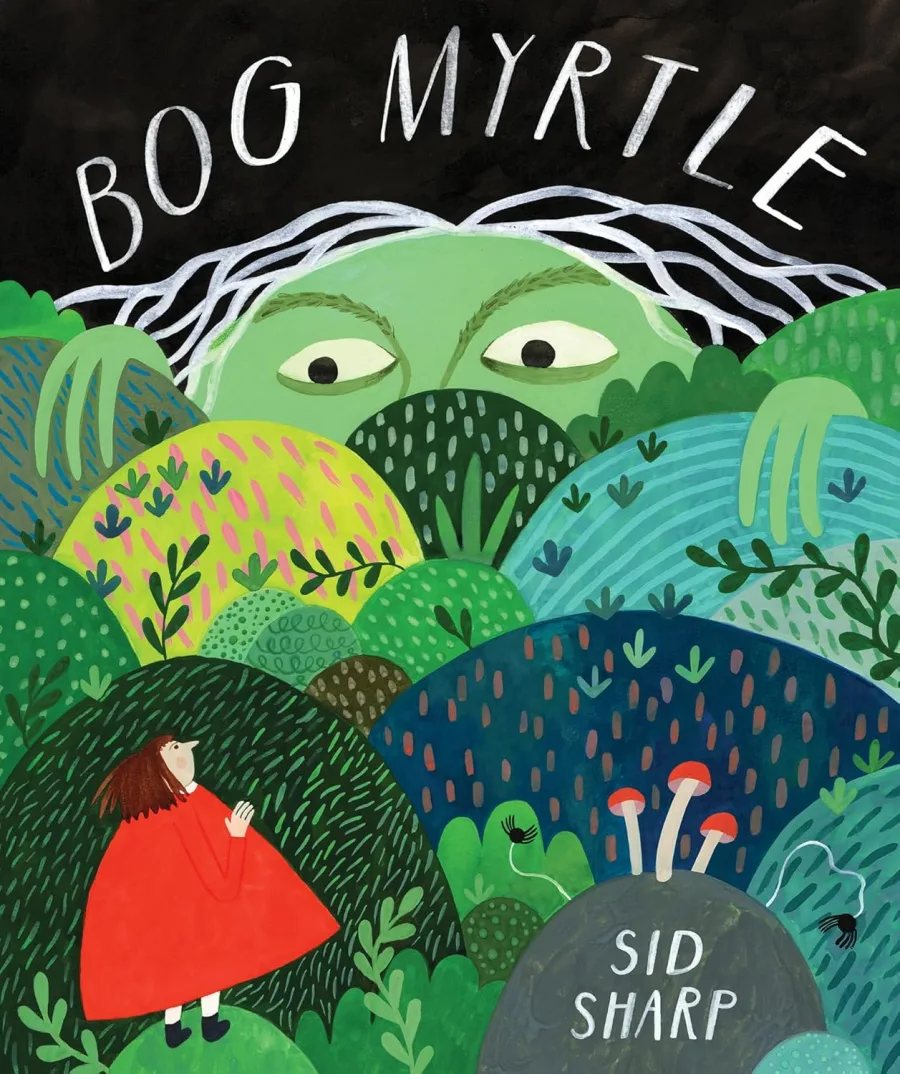
Bog Myrtle
Hardcover
• 156 Pages
• USD 19.99
• English
• 9781773218922
No ratings yet
Children's Books
Children's Fairy Tales, Folklore, Legends & Mythology Comics & Graphic Novels
Children's Humorous Comics & Graphic Novels
| Publisher | Annick Press |
|---|---|
| ISBN13 | 9781773218922 |
| ASIN/SKU | 1773218921 |
| Book Format | Hardcover |
| Language | English |
| Pages | 156 |
| List Price | USD 19.99 |
| Publishing Date | 08/10/2024 |
| Dimensions | 7.75 x 0.75 x 9.25 inches |
| Weight | 1.35 pounds |
| Book Code | BD00067222 |
Buy this Book
Amazon Stores
Ebook Stores
Other Stores
Discover Bog Myrtle by Sid Sharp. This book is published by Annick Press in Hardcover format, ISBN 9781773218922, ASIN 1773218921, under Children's Books, Children's Fairy Tales, Folklore, Legends and Mythology Comics and Graphic Novels, Children's Humorous Comics and Graphic Novels.
Book Description
Best Books of 2024 lists: NYPL, New York Magazine, Quill & Quire • JLG Gold Standard Selection • Moonbeam Children's Book Award Winner • Kids Indie Next Pick
From the acclaimed author of The Wolf Suit comes another weirdly hilarious, masterfully thought-provoking, and lushly painted early reader graphic novel.
Two sisters, one stubbornly cheerful (Beatrice) and one relentlessly grumpy (Magnolia), live in a drafty old house with a family of helpful spiders. When Beatrice is gifted magic yarn from a giant forest spider obsessed with sustainability named Bog Myrtle, she and the spiders set to work knitting up a perfectly warm sweater.
But greedy Magnolia sees only the opportunity for profit, and quickly converts the old house into a magic sweater factory. The exhausted spiders are driven to strike, and Bog Myrtle is not pleased . . .
Bog Myrtle is a witty modern folktale that touches on themes of capitalism, environmentalism, labor rights, and being a nice person.
“I adore this book as much as I adore empowered spiders, poker-faced narrators, and cooperative bookstores. It’s wry, whip-smart, and freaking gorgeous. Sid Sharp is a maestro of comic timing and subversion.” —Kyo Maclear, author of It Began With a Page
From the acclaimed author of The Wolf Suit comes another weirdly hilarious, masterfully thought-provoking, and lushly painted early reader graphic novel.
Two sisters, one stubbornly cheerful (Beatrice) and one relentlessly grumpy (Magnolia), live in a drafty old house with a family of helpful spiders. When Beatrice is gifted magic yarn from a giant forest spider obsessed with sustainability named Bog Myrtle, she and the spiders set to work knitting up a perfectly warm sweater.
But greedy Magnolia sees only the opportunity for profit, and quickly converts the old house into a magic sweater factory. The exhausted spiders are driven to strike, and Bog Myrtle is not pleased . . .
Bog Myrtle is a witty modern folktale that touches on themes of capitalism, environmentalism, labor rights, and being a nice person.
“I adore this book as much as I adore empowered spiders, poker-faced narrators, and cooperative bookstores. It’s wry, whip-smart, and freaking gorgeous. Sid Sharp is a maestro of comic timing and subversion.” —Kyo Maclear, author of It Began With a Page
Author Biography
SID SHARP is an artist from Toronto who makes drawings, paintings, and comics. Their debut comic The Wolf Suit was a Junior Library Guild Gold Standard Selection and was featured in Best of the Year lists by the New York Public Library, School Library Journal, and The Globe and Mail. Sid’s interests include folklore, scary stories, mysterious and unknowable things, and finding good sticks for their stick collection.
Editorial Reviews
“The oddity of the story carries over well to the quirky, exaggerated illustrations, with Beatrice a lively, vaguely triangle-like figure bouncing through the pages, with the beanpole, sour-faced Magnolia as a perfect foil. A timely bit of humor is added as the spiders go on strike and march through the pages with signs demanding fair pay and justice.” —Bulletin of the Center for Children’s Books, 09/24
“The sisters epitomize the classic fairytale binary of good and evil, and it’s wonderfully satisfying when they both get what they deserve at the end, all infused with a slightly twisted sense of humor. Kindness is key in this droll and charming tale.” —Kirkus Reviews, 08/24
“[A] lighthearted and surreal take on evergreen themes surrounding the benefits of kindness that’s more Brothers Grimm than classic Disney.” —Publishers Weekly, 07/27/24
“A perfect choice for fans of macabre takes on fairy tales.” —Booklist, 11/01/24
“The artwork is an interesting mix of eerie, suspenseful, and quirky . . . fun reading, with an amusing twist at the end.” School Library Journal, 10/24
“An unconventional graphic novel for the budding young activist with a sense of humor.” —The Horn Book, 01/25
“One of the loveliest twisted tales of the year.” —Betsy Bird, School Library Journal, 11/14/24
“The sisters epitomize the classic fairytale binary of good and evil, and it’s wonderfully satisfying when they both get what they deserve at the end, all infused with a slightly twisted sense of humor. Kindness is key in this droll and charming tale.” —Kirkus Reviews, 08/24
“[A] lighthearted and surreal take on evergreen themes surrounding the benefits of kindness that’s more Brothers Grimm than classic Disney.” —Publishers Weekly, 07/27/24
“A perfect choice for fans of macabre takes on fairy tales.” —Booklist, 11/01/24
“The artwork is an interesting mix of eerie, suspenseful, and quirky . . . fun reading, with an amusing twist at the end.” School Library Journal, 10/24
“An unconventional graphic novel for the budding young activist with a sense of humor.” —The Horn Book, 01/25
“One of the loveliest twisted tales of the year.” —Betsy Bird, School Library Journal, 11/14/24
Book Summary
Bog Myrtle by Sid Sharp is a witty, strange, and thoughtful modern folktale about two sisters, a magical forest spider, and the trouble that begins when greed gets involved in something meant to be shared. The story centers on Beatrice and Magnolia, two sisters who live together in a drafty old house with a family of helpful spiders. Beatrice is cheerful, kind, and open to wonder, while Magnolia is practical, grumpy, and always looking for the fastest way to turn anything into profit. From the beginning, the book sets up a contrast between generosity and greed, cooperation and exploitation, imagination and self-interest. That contrast drives the story forward and gives it both humor and meaning.
The turning point comes when Beatrice meets Bog Myrtle, a giant forest spider who is not only magical but also deeply committed to sustainability. Bog Myrtle gives Beatrice special yarn, and together Beatrice and the spiders begin knitting a wonderfully warm sweater. This part of the story feels playful and magical, almost like a traditional fairy tale where a hidden world opens up to someone with a good heart. The yarn is more than just yarn; it represents care, creativity, and the idea that something beautiful can be made through cooperation. Beatrice’s approach is humble and appreciative, and the spiders work alongside her in a way that feels communal and satisfying. The sweater is the result of shared effort, and the process itself is just as important as the finished object.
But the story does not stay peaceful for long. Magnolia sees the sweater and immediately thinks about money and opportunity. Instead of valuing the magic for what it is, she decides to expand the idea into a business. The old house is transformed into a sweater factory, and what began as a cozy, collaborative project becomes an exhausting production line. This shift is where the book’s deeper message begins to emerge. The work of the spiders, which once felt joyful and balanced, is now turned into labor that serves someone else’s greed. The magical yarn becomes a resource to be used up, and the spiders, who were once partners in the project, are pushed too hard and driven toward striking.
That conflict gives the book its strongest edge. It is not just a fantasy about spiders and knitting; it is also a story about labor rights, environmental responsibility, and the dangers of turning every good thing into a business. Magnolia’s choices show how easily exploitation can hide behind the language of success and productivity. The book makes that idea clear in a way children can understand without ever becoming preachy. Readers can see that when something is created with care, it should not be stripped of its spirit for the sake of greed. The spiders’ strike becomes a natural response to unfair treatment, and Bog Myrtle’s displeasure makes it clear that the magical world itself is not meant to be abused.
One of the most appealing things about Bog Myrtle is the way it blends humor with serious ideas. The characters are exaggerated in ways that make them memorable, but they still feel emotionally true. Beatrice’s cheerfulness is not silly in a shallow way; it represents openness, kindness, and a willingness to work with others. Magnolia’s grumpiness is funny, but it also reflects the cold logic of profit. Bog Myrtle himself is an unforgettable figure because he is both whimsical and principled. A giant forest spider obsessed with sustainability is a delightfully odd idea, but it works because it makes a real point: the natural world has limits, and good stewardship matters.
The book also has the feel of a folktale, even though its themes are modern. It uses magical creatures, a moral conflict, and a satisfying sense of justice to tell a story that feels timeless. At the same time, it speaks directly to contemporary concerns. The tension between sustainability and overproduction, between labor and ownership, and between community and greed is very recognizable. That combination of old-story feeling and modern relevance is part of what makes the book stand out. It feels imaginative and original, but it also carries a lesson that is easy to recognize in real life.
Visually, the book is likely to be as rich and unusual as the story itself. Sid Sharp is known for lush, thoughtful artwork, and the tone described by the publishers suggests a style that is both quirky and finely detailed. That visual texture helps the book feel like a real fairy tale world, where every page invites closer attention. The spiders, the old house, the yarn, and the sweaters all contribute to a cozy but slightly surreal atmosphere. That atmosphere is important because it softens the book’s sharper themes, allowing children to enjoy the story while still absorbing its deeper ideas.
Overall, Bog Myrtle is a clever and memorable story about what happens when kindness meets greed, and when magic is treated as a resource instead of a gift. It celebrates cooperation, creativity, and respect for the natural world, while also showing the consequences of exploiting labor and ignoring balance. At the center of it all is Beatrice, whose good nature helps keep the story rooted in warmth, even as the conflict grows. The book is funny, strange, and smart, but it is also sincere in its belief that people—and spiders—do better when they work together fairly. It is the kind of story that entertains first and then stays in the mind because of what it says about how to live gently and justly.
The turning point comes when Beatrice meets Bog Myrtle, a giant forest spider who is not only magical but also deeply committed to sustainability. Bog Myrtle gives Beatrice special yarn, and together Beatrice and the spiders begin knitting a wonderfully warm sweater. This part of the story feels playful and magical, almost like a traditional fairy tale where a hidden world opens up to someone with a good heart. The yarn is more than just yarn; it represents care, creativity, and the idea that something beautiful can be made through cooperation. Beatrice’s approach is humble and appreciative, and the spiders work alongside her in a way that feels communal and satisfying. The sweater is the result of shared effort, and the process itself is just as important as the finished object.
But the story does not stay peaceful for long. Magnolia sees the sweater and immediately thinks about money and opportunity. Instead of valuing the magic for what it is, she decides to expand the idea into a business. The old house is transformed into a sweater factory, and what began as a cozy, collaborative project becomes an exhausting production line. This shift is where the book’s deeper message begins to emerge. The work of the spiders, which once felt joyful and balanced, is now turned into labor that serves someone else’s greed. The magical yarn becomes a resource to be used up, and the spiders, who were once partners in the project, are pushed too hard and driven toward striking.
That conflict gives the book its strongest edge. It is not just a fantasy about spiders and knitting; it is also a story about labor rights, environmental responsibility, and the dangers of turning every good thing into a business. Magnolia’s choices show how easily exploitation can hide behind the language of success and productivity. The book makes that idea clear in a way children can understand without ever becoming preachy. Readers can see that when something is created with care, it should not be stripped of its spirit for the sake of greed. The spiders’ strike becomes a natural response to unfair treatment, and Bog Myrtle’s displeasure makes it clear that the magical world itself is not meant to be abused.
One of the most appealing things about Bog Myrtle is the way it blends humor with serious ideas. The characters are exaggerated in ways that make them memorable, but they still feel emotionally true. Beatrice’s cheerfulness is not silly in a shallow way; it represents openness, kindness, and a willingness to work with others. Magnolia’s grumpiness is funny, but it also reflects the cold logic of profit. Bog Myrtle himself is an unforgettable figure because he is both whimsical and principled. A giant forest spider obsessed with sustainability is a delightfully odd idea, but it works because it makes a real point: the natural world has limits, and good stewardship matters.
The book also has the feel of a folktale, even though its themes are modern. It uses magical creatures, a moral conflict, and a satisfying sense of justice to tell a story that feels timeless. At the same time, it speaks directly to contemporary concerns. The tension between sustainability and overproduction, between labor and ownership, and between community and greed is very recognizable. That combination of old-story feeling and modern relevance is part of what makes the book stand out. It feels imaginative and original, but it also carries a lesson that is easy to recognize in real life.
Visually, the book is likely to be as rich and unusual as the story itself. Sid Sharp is known for lush, thoughtful artwork, and the tone described by the publishers suggests a style that is both quirky and finely detailed. That visual texture helps the book feel like a real fairy tale world, where every page invites closer attention. The spiders, the old house, the yarn, and the sweaters all contribute to a cozy but slightly surreal atmosphere. That atmosphere is important because it softens the book’s sharper themes, allowing children to enjoy the story while still absorbing its deeper ideas.
Overall, Bog Myrtle is a clever and memorable story about what happens when kindness meets greed, and when magic is treated as a resource instead of a gift. It celebrates cooperation, creativity, and respect for the natural world, while also showing the consequences of exploiting labor and ignoring balance. At the center of it all is Beatrice, whose good nature helps keep the story rooted in warmth, even as the conflict grows. The book is funny, strange, and smart, but it is also sincere in its belief that people—and spiders—do better when they work together fairly. It is the kind of story that entertains first and then stays in the mind because of what it says about how to live gently and justly.
Sample Chapters
Sample Chapters will be added soon…
Reader Reviews
No reviews yet.
Bog Myrtle