
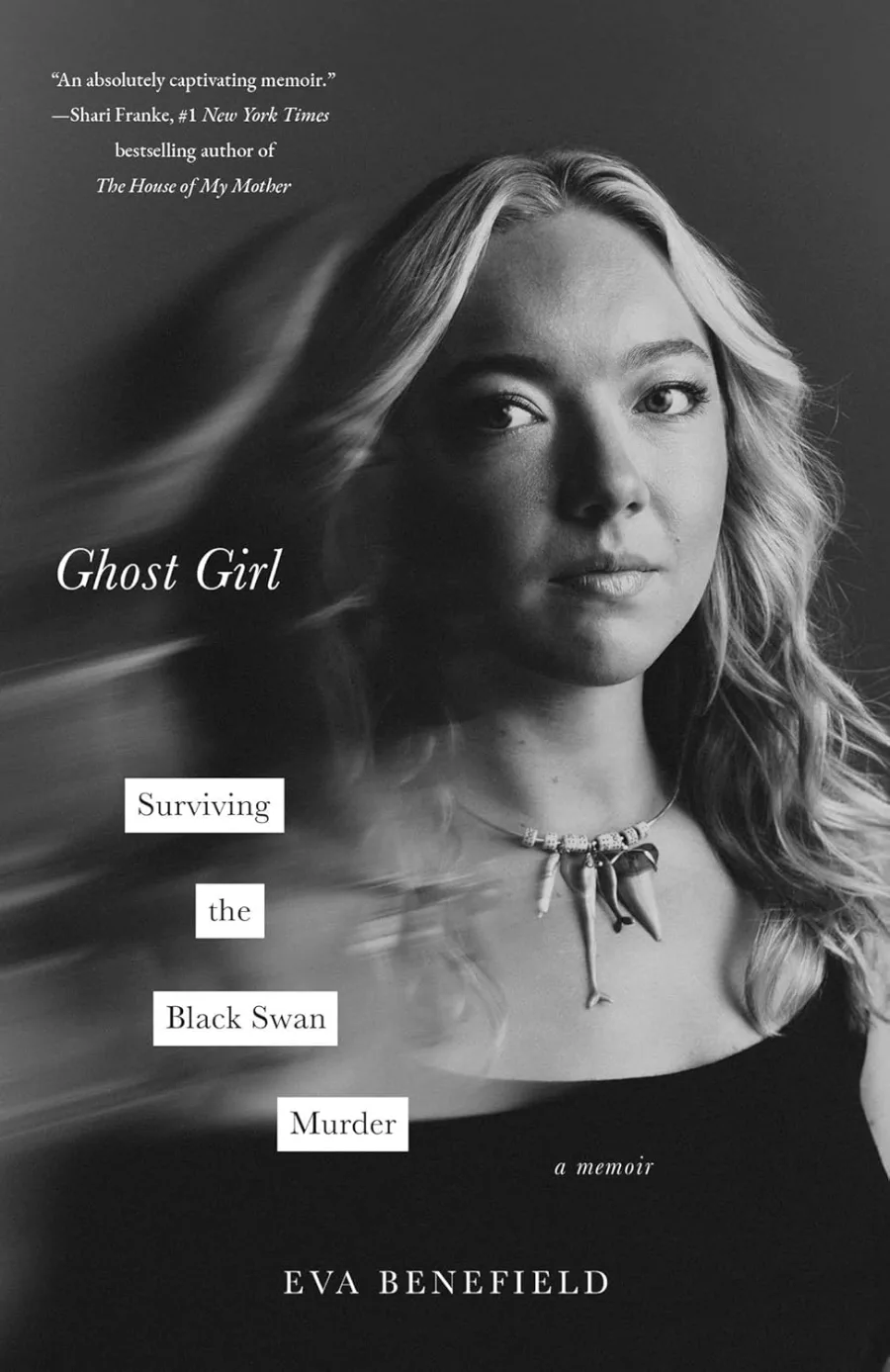
Ghost Girl: Surviving the Black Swan Murder—A Memoir
eBook
• 272 Pages
• USD 29.00
• English
• 9781668043370
No ratings yet
| Publisher | Gallery Books |
|---|---|
| ISBN13 | 9781668043370 |
| ASIN/SKU | B0FX5P4YZS |
| Book Format | eBook |
| Language | English |
| Pages | 272 |
| List Price | USD 29.00 |
| Publishing Date | 21/07/2026 |
| Book Code | BD00067312 |
Buy this Book
Amazon Stores
Ebook Stores
Other Stores
Discover Ghost Girl: Surviving the Black Swan Murder—A Memoir by Eva Benefield. This book is published by Gallery Books in eBook format, ISBN 9781668043370, ASIN B0FX5P4YZS, under Biographies and Memoirs, Murder and Mayhem True Accounts.
Book Description
Eva Benefield, the daughter of the victim of the viral “Black Swan Murder,” describes coming of age amid grief, violence, and a true-crime spectacle, in a poignant memoir "relatable to anyone who’s experienced grief or witnessed evil up close. Eva tells her story with grace and even humor in these pages” (Shari Franke, #1 New York Times bestselling author of The House of My Mother).
Eva was still in high school when her mother died suddenly of a heart attack. Within a year, her father marries Ashley Byers, a twenty-four-year-old former bikini model he has only known for a few weeks.
“She looked sharp,” Eva says of her strange new stepmother, “like if you touched her you might bleed.” After a few months, Ashley convinces her new husband to open an international ballet company in Charleston, South Carolina. But soon the money runs out and Ashley shoots and kills Eva’s father. The crime was dubbed in the news media as “The Black Swan Murder.” Eva, now orphaned and in college, is suddenly “awash in tabloid gore” and must figure out how to make rent and survive.
Reeling from the sudden loss of both her parents and the looming criminal trial of her stepmother, Eva begins to navigate the confusing world of adulthood all alone. “You don’t have a choice about a lot of stuff, especially when you’re a girl,” Eva says. “The things that changed my life were not my choices. They were other people’s decisions, people who really should have known better.”
From losing friends who can’t understand the nature of her new reality, to processing her grief and anger as she slowly pulls herself together and begins to chart a new path forward, Eva confronts the triumphs and challenges of a truly incredible situation head on in this unforgettable memoir.
Eva was still in high school when her mother died suddenly of a heart attack. Within a year, her father marries Ashley Byers, a twenty-four-year-old former bikini model he has only known for a few weeks.
“She looked sharp,” Eva says of her strange new stepmother, “like if you touched her you might bleed.” After a few months, Ashley convinces her new husband to open an international ballet company in Charleston, South Carolina. But soon the money runs out and Ashley shoots and kills Eva’s father. The crime was dubbed in the news media as “The Black Swan Murder.” Eva, now orphaned and in college, is suddenly “awash in tabloid gore” and must figure out how to make rent and survive.
Reeling from the sudden loss of both her parents and the looming criminal trial of her stepmother, Eva begins to navigate the confusing world of adulthood all alone. “You don’t have a choice about a lot of stuff, especially when you’re a girl,” Eva says. “The things that changed my life were not my choices. They were other people’s decisions, people who really should have known better.”
From losing friends who can’t understand the nature of her new reality, to processing her grief and anger as she slowly pulls herself together and begins to chart a new path forward, Eva confronts the triumphs and challenges of a truly incredible situation head on in this unforgettable memoir.
Author Biography
Eva Benefield is a TikTok content creator, an artist, and the owner of her own apparel company, Ghost Cowboy. She is based in Charleston, South Carolina.
Editorial Reviews
"Eva writes directly to 'girls like me'—the ones pulled under by waves they never saw coming. Her voice is intimate, darkly funny, and startlingly wise. She doesn’t just survive the unthinkable—she drags it into the light and looks it dead in the eye. Ghost Girl is a lighthouse for every woman who ever felt erased, overlooked, or overshadowed. This book is brave in all the ways that matter." —Jen Hatmaker, New York Times bestselling author of Awake
"Ghost Girl is raw and vulnerable, and Eva Benefield’s hard-won independence, bravery, and optimism are inspiring. An absolutely captivating memoir, relatable to anyone who’s experienced grief or witnessed evil up close. Eva tells her story with grace and even humor in these pages." —Shari Franke, #1 New York Times bestselling author of The House of My Mother
"Ghost Girl is raw and vulnerable, and Eva Benefield’s hard-won independence, bravery, and optimism are inspiring. An absolutely captivating memoir, relatable to anyone who’s experienced grief or witnessed evil up close. Eva tells her story with grace and even humor in these pages." —Shari Franke, #1 New York Times bestselling author of The House of My Mother
Book Summary
Ghost Girl: Surviving the Black Swan Murder—A Memoir by Eva Benefield is a deeply personal coming-of-age story about grief, family, violence, and the difficult process of rebuilding a life after unimaginable loss. Benefield recounts how, while she was still a teenager, she lost her mother suddenly, only to lose her father several years later when he was shot and killed by his second wife, Ashley Byers. The murder became a widely publicized case known as the “Black Swan Murder,” turning Benefield’s private tragedy into a public spectacle. Her memoir is ultimately less about the crime itself than about what happens to the person left behind.
Benefield grows up in the Charleston, South Carolina, area in a family life that initially feels ordinary and secure. Her father, Doug, is a former Navy pilot, while her mother, Renee, is remembered as warm, energetic, healthy, and deeply involved in her daughter’s life. Eva describes herself as something of a tomboy who enjoyed surfing, fishing, the beach, and the outdoors. Her childhood is closely connected to the Lowcountry landscape, which later becomes an important emotional backdrop to her story.
That sense of security is shattered when Eva is fourteen and her mother dies suddenly from a heart attack. The loss is devastating enough on its own, but Eva soon discovers that grief will not give her much time to settle. Only nine months later, her father marries Ashley Byers, a much younger former bikini model and ballerina whom he had known for only a short time. The speed of the marriage and the dramatic difference between Ashley and Eva’s late mother make the transition extremely difficult for the teenager.
Eva's relationship with her new stepmother becomes increasingly troubled. Ashley changes the atmosphere of the family home, including removing photographs of Eva's mother and creating an environment in which Eva feels that her place in the family is being threatened. The memoir portrays this period from Eva's perspective, capturing the confusion of a teenager trying to understand an adult relationship that has suddenly transformed her family.
At the same time, Ashley persuades Doug to support an ambitious ballet venture in Charleston. The project eventually runs into serious financial difficulties. As the family's circumstances deteriorate, Eva finds herself increasingly separated from the stable childhood she once knew. Her father spends more time away, and she eventually lives with her stepbrother and later on her own while still in high school. Instead of moving naturally from adolescence into adulthood, she is forced into independence much earlier than she should have been.
This premature independence becomes one of the memoir's most important themes. Eva repeatedly confronts the reality that many of the events that determine her life are not her choices. Adults make decisions, relationships change, money disappears, and circumstances become dangerous, while she has little power to control any of it. The book therefore becomes a meditation on what it means to grow up when the ordinary protections of childhood disappear.
The central tragedy occurs in 2020, when Doug is shot and killed by Ashley. Eva is nineteen and attending college at the time. Suddenly, the young woman who had already lost her mother becomes effectively orphaned. But the loss is made even more difficult because her father's death immediately becomes a media story. Instead of being allowed to grieve privately, Eva finds herself surrounded by headlines, speculation, true-crime coverage, and public curiosity. The case becomes known as the “Black Swan Murder,” and her family tragedy becomes entertainment for strangers.
This transformation from ordinary college student to a recognizable figure in a true-crime story is central to the memoir. Benefield describes being suddenly “awash in tabloid gore” and having to learn how to survive financially and emotionally while the criminal case unfolds around her. The experience forces her to confront not only grief but also the strange reality of becoming publicly associated with the worst thing that has ever happened to her.
The ensuing legal proceedings add another layer of uncertainty. Ashley maintained that she had acted in self-defense, while prosecutors argued that the evidence did not support that explanation. In 2024, Ashley was convicted of manslaughter and sentenced to twenty years in prison. The trial meant that Eva had to revisit the circumstances surrounding her father's death while simultaneously attempting to build a life beyond it.
One of the most compelling aspects of Ghost Girl is Benefield's use of dark humor. Her humor is not an attempt to make light of tragedy. Instead, it becomes a survival mechanism. She recognizes that some parts of her story are so bizarre and painful that humor gives her a way to reclaim control over them. Rather than allowing other people to define her as a tragic figure, she tells the story in her own voice—sometimes bluntly, sometimes sarcastically, and sometimes with startling emotional honesty. The publisher describes the memoir as combining grief, violence, and a true-crime spectacle with dark humor and wisdom beyond her years.
Social media becomes another unexpected part of Eva's recovery. After her father's murder, she begins sharing aspects of her experience on TikTok and finds an audience of people who have experienced similar losses. She becomes associated with an online community sometimes called “OrphanTok,” where young people talk openly about losing parents. What begins as a way of processing her own experience develops into a source of connection. Benefield explains that many viewers tell her that her humor and openness make them feel less alone.
This digital community helps transform her relationship with her own story. Instead of seeing herself only as the daughter of a murdered man, Eva gradually begins to see herself as someone who can create something from what happened to her. She works in social media and design, eventually developing her own apparel company, Ghost Cowboy. Her creative work becomes another form of independence and self-definition.
The memoir therefore moves beyond tragedy toward reclamation. Eva cannot change what happened to her parents. She cannot undo the decisions made by the adults around her. She cannot erase the public attention surrounding the murder. But she can decide what those events will mean for the rest of her life.
Ultimately, Ghost Girl is a story about surviving circumstances that should never have been placed on the shoulders of such a young person. It explores grief without pretending that grief follows a neat path, and it portrays adulthood not as something that arrives naturally but as something Eva is forced to construct for herself.
Its deepest message is about agency. Benefield's childhood and adolescence are shaped by decisions made by other people, but her later life becomes an opportunity to make decisions of her own. Through art, humor, entrepreneurship, friendship, and storytelling, she begins to reclaim an identity separate from the crime.
In the end, Ghost Girl is not simply a murder memoir. It is a story about what happens after the headlines fade. It asks what remains when a young woman loses both parents, becomes part of a notorious true-crime story, and must learn to navigate adulthood without the family structure she once depended on. Benefield's answer is neither simple forgiveness nor easy optimism. It is the gradual construction of a life that belongs to her.
The book ultimately suggests that surviving tragedy does not mean forgetting it. It means refusing to let tragedy become the only story you have. Benefield takes an experience that made her feel like a “ghost” in someone else's story and turns it into her own narrative—one defined not only by loss, but by humor, creativity, independence, connection, and the determination to keep moving forward.
Benefield grows up in the Charleston, South Carolina, area in a family life that initially feels ordinary and secure. Her father, Doug, is a former Navy pilot, while her mother, Renee, is remembered as warm, energetic, healthy, and deeply involved in her daughter’s life. Eva describes herself as something of a tomboy who enjoyed surfing, fishing, the beach, and the outdoors. Her childhood is closely connected to the Lowcountry landscape, which later becomes an important emotional backdrop to her story.
That sense of security is shattered when Eva is fourteen and her mother dies suddenly from a heart attack. The loss is devastating enough on its own, but Eva soon discovers that grief will not give her much time to settle. Only nine months later, her father marries Ashley Byers, a much younger former bikini model and ballerina whom he had known for only a short time. The speed of the marriage and the dramatic difference between Ashley and Eva’s late mother make the transition extremely difficult for the teenager.
Eva's relationship with her new stepmother becomes increasingly troubled. Ashley changes the atmosphere of the family home, including removing photographs of Eva's mother and creating an environment in which Eva feels that her place in the family is being threatened. The memoir portrays this period from Eva's perspective, capturing the confusion of a teenager trying to understand an adult relationship that has suddenly transformed her family.
At the same time, Ashley persuades Doug to support an ambitious ballet venture in Charleston. The project eventually runs into serious financial difficulties. As the family's circumstances deteriorate, Eva finds herself increasingly separated from the stable childhood she once knew. Her father spends more time away, and she eventually lives with her stepbrother and later on her own while still in high school. Instead of moving naturally from adolescence into adulthood, she is forced into independence much earlier than she should have been.
This premature independence becomes one of the memoir's most important themes. Eva repeatedly confronts the reality that many of the events that determine her life are not her choices. Adults make decisions, relationships change, money disappears, and circumstances become dangerous, while she has little power to control any of it. The book therefore becomes a meditation on what it means to grow up when the ordinary protections of childhood disappear.
The central tragedy occurs in 2020, when Doug is shot and killed by Ashley. Eva is nineteen and attending college at the time. Suddenly, the young woman who had already lost her mother becomes effectively orphaned. But the loss is made even more difficult because her father's death immediately becomes a media story. Instead of being allowed to grieve privately, Eva finds herself surrounded by headlines, speculation, true-crime coverage, and public curiosity. The case becomes known as the “Black Swan Murder,” and her family tragedy becomes entertainment for strangers.
This transformation from ordinary college student to a recognizable figure in a true-crime story is central to the memoir. Benefield describes being suddenly “awash in tabloid gore” and having to learn how to survive financially and emotionally while the criminal case unfolds around her. The experience forces her to confront not only grief but also the strange reality of becoming publicly associated with the worst thing that has ever happened to her.
The ensuing legal proceedings add another layer of uncertainty. Ashley maintained that she had acted in self-defense, while prosecutors argued that the evidence did not support that explanation. In 2024, Ashley was convicted of manslaughter and sentenced to twenty years in prison. The trial meant that Eva had to revisit the circumstances surrounding her father's death while simultaneously attempting to build a life beyond it.
One of the most compelling aspects of Ghost Girl is Benefield's use of dark humor. Her humor is not an attempt to make light of tragedy. Instead, it becomes a survival mechanism. She recognizes that some parts of her story are so bizarre and painful that humor gives her a way to reclaim control over them. Rather than allowing other people to define her as a tragic figure, she tells the story in her own voice—sometimes bluntly, sometimes sarcastically, and sometimes with startling emotional honesty. The publisher describes the memoir as combining grief, violence, and a true-crime spectacle with dark humor and wisdom beyond her years.
Social media becomes another unexpected part of Eva's recovery. After her father's murder, she begins sharing aspects of her experience on TikTok and finds an audience of people who have experienced similar losses. She becomes associated with an online community sometimes called “OrphanTok,” where young people talk openly about losing parents. What begins as a way of processing her own experience develops into a source of connection. Benefield explains that many viewers tell her that her humor and openness make them feel less alone.
This digital community helps transform her relationship with her own story. Instead of seeing herself only as the daughter of a murdered man, Eva gradually begins to see herself as someone who can create something from what happened to her. She works in social media and design, eventually developing her own apparel company, Ghost Cowboy. Her creative work becomes another form of independence and self-definition.
The memoir therefore moves beyond tragedy toward reclamation. Eva cannot change what happened to her parents. She cannot undo the decisions made by the adults around her. She cannot erase the public attention surrounding the murder. But she can decide what those events will mean for the rest of her life.
Ultimately, Ghost Girl is a story about surviving circumstances that should never have been placed on the shoulders of such a young person. It explores grief without pretending that grief follows a neat path, and it portrays adulthood not as something that arrives naturally but as something Eva is forced to construct for herself.
Its deepest message is about agency. Benefield's childhood and adolescence are shaped by decisions made by other people, but her later life becomes an opportunity to make decisions of her own. Through art, humor, entrepreneurship, friendship, and storytelling, she begins to reclaim an identity separate from the crime.
In the end, Ghost Girl is not simply a murder memoir. It is a story about what happens after the headlines fade. It asks what remains when a young woman loses both parents, becomes part of a notorious true-crime story, and must learn to navigate adulthood without the family structure she once depended on. Benefield's answer is neither simple forgiveness nor easy optimism. It is the gradual construction of a life that belongs to her.
The book ultimately suggests that surviving tragedy does not mean forgetting it. It means refusing to let tragedy become the only story you have. Benefield takes an experience that made her feel like a “ghost” in someone else's story and turns it into her own narrative—one defined not only by loss, but by humor, creativity, independence, connection, and the determination to keep moving forward.
Sample Chapters
Sample Chapters will be added soon…
Reader Reviews
No reviews yet.
Ghost Girl: Surviving the Black Swan Murder—A Memoir
Download Cover Image
Do you want to download the full cover image for Ghost Girl: Surviving the Black Swan Murder—A Memoir?