
Ego Is the Enemy
eBook
• 247 Pages
• USD 23.22
• English
• 9780698192157
No ratings yet
| Publisher | Portfolio |
|---|---|
| ISBN13 | 9780698192157 |
| ASIN/SKU | B015NTIXWE |
| Book Format | eBook |
| Language | English |
| Pages | 247 |
| List Price | USD 23.22 |
| Publishing Date | 14/06/2026 |
| Book Code | BD00067319 |
Buy this Book
Amazon Stores
Ebook Stores
Other Stores
Discover Ego Is the Enemy by Ryan Holiday. This book is published by Portfolio in eBook format, ISBN 9780698192157, ASIN B015NTIXWE, under Business and Money, Motivational Business Management, Business Motivation and Self-Improvement.
Book Description
The instant Wall Street Journal, USA Today, and international bestseller
“While the history books are filled with tales of obsessive visionary geniuses who remade the world in their image with sheer, almost irrational force, I’ve found that history is also made by individuals who fought their egos at every turn, who eschewed the spotlight, and who put their higher goals above their desire for recognition.” —from the prologue
Many of us insist the main impediment to a full, successful life is the outside world. In fact, the most common enemy lies within: our ego. Early in our careers, it impedes learning and the cultivation of talent. With success, it can blind us to our faults and sow future problems. In failure, it magnifies each blow and makes recovery more difficult. At every stage, ego holds us back.
Ego Is the Enemy draws on a vast array of stories and examples, from literature to philosophy to history. We meet fascinating figures such as George Marshall, Jackie Robinson, Katharine Graham, Bill Belichick, and Eleanor Roosevelt, who all reached the highest levels of power and success by conquering their own egos. Their strategies and tactics can be ours as well.
In an era that glorifies social media, reality TV, and other forms of shameless self-promotion, the battle against ego must be fought on many fronts. Armed with the lessons in this book, as Holiday writes, “you will be less invested in the story you tell about your own specialness, and as a result, you will be liberated to accomplish the world-changing work you’ve set out to achieve.”
“While the history books are filled with tales of obsessive visionary geniuses who remade the world in their image with sheer, almost irrational force, I’ve found that history is also made by individuals who fought their egos at every turn, who eschewed the spotlight, and who put their higher goals above their desire for recognition.” —from the prologue
Many of us insist the main impediment to a full, successful life is the outside world. In fact, the most common enemy lies within: our ego. Early in our careers, it impedes learning and the cultivation of talent. With success, it can blind us to our faults and sow future problems. In failure, it magnifies each blow and makes recovery more difficult. At every stage, ego holds us back.
Ego Is the Enemy draws on a vast array of stories and examples, from literature to philosophy to history. We meet fascinating figures such as George Marshall, Jackie Robinson, Katharine Graham, Bill Belichick, and Eleanor Roosevelt, who all reached the highest levels of power and success by conquering their own egos. Their strategies and tactics can be ours as well.
In an era that glorifies social media, reality TV, and other forms of shameless self-promotion, the battle against ego must be fought on many fronts. Armed with the lessons in this book, as Holiday writes, “you will be less invested in the story you tell about your own specialness, and as a result, you will be liberated to accomplish the world-changing work you’ve set out to achieve.”
Author Biography
Ryan Holiday is one of the world's bestselling living philosophers. His books like The Obstacle Is the Way,Ego Is the Enemy,The Daily Stoic, and the #1 New York Times bestseller Stillness Is the Key appear in more than 40 languages and have sold more than 5 million copies. Together, they've spent over 300 weeks on the bestseller lists. He lives outside Austin with his wife and two boys...and a small herd of cows and donkeys and goats. His bookstore, The Painted Porch, sits on historic Main St in Bastrop, Texas.
Editorial Reviews
“Ryan Holiday is one of his generation’s finest thinkers, and this book is his best yet.”
—Steven Pressfield, author of the New York Times bestseller The War of Art
“Whether you’re starting out or starting over, you’ll find something to steal here.”
—Austin Kleon, author of the New York Times bestseller Steal Like An Artist
"This is a book I want every athlete, aspiring leader, entrepreneur, thinker and doer to read. Ryan Holiday is one of the most promising young writers of his generation."
—George Raveling, Hall of Fame Basketball coach, Nike’s Director of International Basketball
"I see the toxic vanity of ego at play every day and it never ceases to amaze me how often it wrecks promising creative endeavors. Read this book before it wrecks you or the projects and people you love. Consider it as urgently as you do a proper workout regimen and eating right. Ryan’s insights are priceless."
—Marc Ecko, founder of Ecko Unltd and Complex
"I don't have many rules in life, but one I never break is: If Ryan Holiday writes a book, I read it as soon as I can get my hands on it."
—Brian Koppelman, screenwriter and director, Rounders, Ocean’s Thirteen and Billions
“In his new book Ryan Holiday attacks the greatest obstacle to mastery and true success in life—our insatiable ego. In an inspiring yet practical way, he teaches us how to manage and tame this beast within us so that we can focus on what really matters—producing the best work possible.”
—Robert Greene, author of the #1 New York Times bestseller Mastery
“We’re often told that to achieve success, we need confidence. With refreshing candor, Ryan Holiday challenges that assumption, highlighting how we can earn confidence by pursuing something bigger than our own success.”
—Adam Grant, author of the New York Times bestsellers Originals and Give and Take
“Once again Ryan Holiday has laid down the gauntlet for readers willing to challenge themselves with the tough questions of our time. Every reader will find truths that are pertinent to each of our lives. Ego can be the enemy if we are unarmed with the cautionary insights of history, scripture, and philosophy. As was said to St. Augustine more than a thousand years ago, 'pick it up and read'; for to not do so is to allow the enemy to bring despair.”
—Dr. Drew Pinsky, host of HLN’s “Dr. Drew On Call” and “Love Line”
"Ryan Holiday reminds us that the real success is in the journey and learning process.”
—Lori Lindsey, former U.S. Women’s National Team soccer player
“I would like to rip out every page and use them as wallpaper so I could be reminded constantly of the humility and work it takes to truly succeed. In the margins of my copy, I have scrawled the same message over and over—'pre-Gold.' Reading this inspiring book brought back me back to the humility and work ethic it took to win the Olympics.”
—Chandra Crawford, Olympic Gold Medalist
"What a valuable book for those in positions of authority! It has made me a better judge."
—The Honorable Frederic Block, United States District Judge and author of Disrobed
“It's rare that I finish a book then immediately reread it, this time with a yellow marker in hand…I can't recommend this book highly enough.”
—Kevin Rose, entrepreneur and technology investor
"In an age when self-promotion and celebrity are glorified to the hilt and 'hero' gets overused, Ryan Holiday's book is a reminder that the biggest impediment to achievement is often ourselves. Holiday retells stories of the famous and not so famous that will both inspire you and stop you in your tracks. This is a book to savor by reading it in increments so the power of the examples sinks in, leaving time for healthy reflection. If the rat race of modern life has you feeling burned out, Ego is the Enemy just might help you view philosophy as anything but a relic of the ancient Greeks."
—Edith Chapin, executive editor at NPR News
—Steven Pressfield, author of the New York Times bestseller The War of Art
“Whether you’re starting out or starting over, you’ll find something to steal here.”
—Austin Kleon, author of the New York Times bestseller Steal Like An Artist
"This is a book I want every athlete, aspiring leader, entrepreneur, thinker and doer to read. Ryan Holiday is one of the most promising young writers of his generation."
—George Raveling, Hall of Fame Basketball coach, Nike’s Director of International Basketball
"I see the toxic vanity of ego at play every day and it never ceases to amaze me how often it wrecks promising creative endeavors. Read this book before it wrecks you or the projects and people you love. Consider it as urgently as you do a proper workout regimen and eating right. Ryan’s insights are priceless."
—Marc Ecko, founder of Ecko Unltd and Complex
"I don't have many rules in life, but one I never break is: If Ryan Holiday writes a book, I read it as soon as I can get my hands on it."
—Brian Koppelman, screenwriter and director, Rounders, Ocean’s Thirteen and Billions
“In his new book Ryan Holiday attacks the greatest obstacle to mastery and true success in life—our insatiable ego. In an inspiring yet practical way, he teaches us how to manage and tame this beast within us so that we can focus on what really matters—producing the best work possible.”
—Robert Greene, author of the #1 New York Times bestseller Mastery
“We’re often told that to achieve success, we need confidence. With refreshing candor, Ryan Holiday challenges that assumption, highlighting how we can earn confidence by pursuing something bigger than our own success.”
—Adam Grant, author of the New York Times bestsellers Originals and Give and Take
“Once again Ryan Holiday has laid down the gauntlet for readers willing to challenge themselves with the tough questions of our time. Every reader will find truths that are pertinent to each of our lives. Ego can be the enemy if we are unarmed with the cautionary insights of history, scripture, and philosophy. As was said to St. Augustine more than a thousand years ago, 'pick it up and read'; for to not do so is to allow the enemy to bring despair.”
—Dr. Drew Pinsky, host of HLN’s “Dr. Drew On Call” and “Love Line”
"Ryan Holiday reminds us that the real success is in the journey and learning process.”
—Lori Lindsey, former U.S. Women’s National Team soccer player
“I would like to rip out every page and use them as wallpaper so I could be reminded constantly of the humility and work it takes to truly succeed. In the margins of my copy, I have scrawled the same message over and over—'pre-Gold.' Reading this inspiring book brought back me back to the humility and work ethic it took to win the Olympics.”
—Chandra Crawford, Olympic Gold Medalist
"What a valuable book for those in positions of authority! It has made me a better judge."
—The Honorable Frederic Block, United States District Judge and author of Disrobed
“It's rare that I finish a book then immediately reread it, this time with a yellow marker in hand…I can't recommend this book highly enough.”
—Kevin Rose, entrepreneur and technology investor
"In an age when self-promotion and celebrity are glorified to the hilt and 'hero' gets overused, Ryan Holiday's book is a reminder that the biggest impediment to achievement is often ourselves. Holiday retells stories of the famous and not so famous that will both inspire you and stop you in your tracks. This is a book to savor by reading it in increments so the power of the examples sinks in, leaving time for healthy reflection. If the rat race of modern life has you feeling burned out, Ego is the Enemy just might help you view philosophy as anything but a relic of the ancient Greeks."
—Edith Chapin, executive editor at NPR News
Book Summary
Ego Is the Enemy by Ryan Holiday is a thought-provoking book about the hidden dangers of ego and how it can quietly undermine success, relationships, personal growth, and happiness. Drawing inspiration from Stoic philosophy, history, psychology, literature, and the lives of influential leaders, artists, athletes, and entrepreneurs, Holiday argues that ego is one of the greatest obstacles people face at every stage of life. Whether someone is striving to achieve success, trying to maintain it, or recovering from failure, unchecked ego can cloud judgment, encourage overconfidence, and prevent meaningful growth. Through a series of engaging stories and practical lessons, the book encourages readers to replace arrogance with humility, discipline, and self-awareness.
The book begins by explaining that ego is more than confidence or healthy self-esteem. Instead, it is an unhealthy belief in one's own importance that distorts reality. Ego convinces people they already know enough, deserve more than they have earned, or are somehow exempt from the rules that apply to everyone else. Holiday believes this mindset often causes individuals to focus on appearing successful instead of actually doing the difficult work required to achieve lasting success. He encourages readers to recognize the difference between confidence built on competence and ego built on illusion.
One of the central themes of the book is that ambition should be supported by action rather than self-promotion. Many people spend too much time talking about their goals, seeking recognition, or imagining future success while neglecting the consistent effort necessary to achieve meaningful results. Holiday emphasizes that true progress comes from disciplined work carried out quietly and persistently. Instead of chasing attention or praise, individuals should concentrate on improving their skills and allowing their achievements to speak for themselves.
Throughout the book, Holiday presents numerous historical examples of individuals whose accomplishments were strengthened by humility. Successful military leaders, scientists, artists, writers, and business figures often demonstrated a willingness to continue learning even after reaching positions of influence. Their openness to criticism, curiosity, and commitment to improvement allowed them to grow continuously rather than becoming trapped by their own reputations. These examples illustrate that genuine greatness is often accompanied by modesty rather than arrogance.
The author divides personal development into three broad stages: aspiring, succeeding, and failing. During the stage of aspiration, ego encourages impatience, overconfidence, and the desire for recognition before meaningful accomplishments have been earned. Holiday argues that beginners benefit most from remaining students—listening carefully, asking questions, accepting feedback, and focusing on mastering their craft. Humility creates opportunities to learn, while ego often closes the door to valuable experience.
As people begin achieving success, the nature of ego changes. Recognition, praise, and influence can create the illusion that continued growth is no longer necessary. Holiday warns that success often becomes dangerous when individuals start believing their own publicity. Instead of continuing to work diligently, they may become complacent, dismiss criticism, or assume past achievements guarantee future success. History provides many examples of talented people whose careers declined because overconfidence replaced discipline. The book encourages readers to remain grounded regardless of how much success they experience.
Failure represents the third stage where ego creates unique challenges. Setbacks, criticism, and disappointment are inevitable parts of life, yet ego often prevents people from responding constructively. Instead of accepting responsibility and learning from mistakes, individuals may blame others, deny reality, or become consumed by resentment. Holiday argues that humility makes recovery possible because it allows people to acknowledge weaknesses honestly and adapt accordingly. Failure becomes an opportunity for growth only when ego no longer controls the response.
A recurring message throughout the book is the importance of lifelong learning. Holiday encourages readers to remain curious regardless of their level of expertise. The willingness to admit ignorance is presented as a strength rather than a weakness. By maintaining the mindset of a student, people continue expanding their knowledge and developing new skills throughout their lives. Ego, on the other hand, convinces people they already know enough, preventing further improvement.
The book also explores the value of discipline and self-control. Holiday explains that meaningful success rarely results from talent alone. Consistent effort, careful preparation, patience, and emotional control are far more reliable predictors of long-term achievement. People who master themselves are often better equipped to handle both success and adversity because they are less influenced by pride, fear, or external validation.
Another important lesson concerns the relationship between purpose and recognition. Holiday argues that individuals should focus on creating value rather than seeking admiration. Those driven primarily by external praise often become distracted by popularity, status, or public image. In contrast, people guided by purpose remain committed to meaningful work regardless of whether others immediately recognize their efforts. This internal motivation creates greater resilience and satisfaction over time.
Throughout the book, Stoic philosophy serves as a guiding framework. Principles such as humility, acceptance of reality, emotional resilience, and personal responsibility appear repeatedly in the stories and lessons. Holiday encourages readers to focus on what they can control—their own actions, attitudes, and decisions—rather than becoming consumed by reputation, comparison, or circumstances beyond their influence. This perspective helps reduce unnecessary emotional turmoil while strengthening character.
The writing style is straightforward, engaging, and highly accessible. Rather than presenting abstract philosophical theories, Holiday illustrates his ideas through real-life examples from history, business, sports, politics, and the arts. These stories demonstrate how ego has repeatedly contributed to both spectacular achievements and devastating failures, making the lessons feel practical rather than theoretical.
By the conclusion of the book, readers are reminded that ego is not a challenge to overcome once but an ongoing force that requires constant awareness. Humility is presented not as weakness but as a source of strength that encourages learning, resilience, and sound judgment. Whether pursuing ambitious goals, enjoying success, or rebuilding after disappointment, maintaining perspective allows individuals to continue growing while avoiding the destructive influence of excessive pride.
Overall, Ego Is the Enemy is a powerful guide to personal development that challenges readers to examine their motivations, attitudes, and behaviors with honesty. Ryan Holiday combines timeless Stoic wisdom with compelling historical examples to demonstrate that humility, discipline, and self-awareness are essential qualities for lasting success. Rather than encouraging readers to think less of themselves, the book encourages them to think less about themselves, shifting attention toward meaningful work, continuous learning, and purposeful action. Its central message is that by recognizing and managing the influence of ego, people can unlock greater resilience, stronger relationships, wiser decisions, and a more fulfilling life.
The book begins by explaining that ego is more than confidence or healthy self-esteem. Instead, it is an unhealthy belief in one's own importance that distorts reality. Ego convinces people they already know enough, deserve more than they have earned, or are somehow exempt from the rules that apply to everyone else. Holiday believes this mindset often causes individuals to focus on appearing successful instead of actually doing the difficult work required to achieve lasting success. He encourages readers to recognize the difference between confidence built on competence and ego built on illusion.
One of the central themes of the book is that ambition should be supported by action rather than self-promotion. Many people spend too much time talking about their goals, seeking recognition, or imagining future success while neglecting the consistent effort necessary to achieve meaningful results. Holiday emphasizes that true progress comes from disciplined work carried out quietly and persistently. Instead of chasing attention or praise, individuals should concentrate on improving their skills and allowing their achievements to speak for themselves.
Throughout the book, Holiday presents numerous historical examples of individuals whose accomplishments were strengthened by humility. Successful military leaders, scientists, artists, writers, and business figures often demonstrated a willingness to continue learning even after reaching positions of influence. Their openness to criticism, curiosity, and commitment to improvement allowed them to grow continuously rather than becoming trapped by their own reputations. These examples illustrate that genuine greatness is often accompanied by modesty rather than arrogance.
The author divides personal development into three broad stages: aspiring, succeeding, and failing. During the stage of aspiration, ego encourages impatience, overconfidence, and the desire for recognition before meaningful accomplishments have been earned. Holiday argues that beginners benefit most from remaining students—listening carefully, asking questions, accepting feedback, and focusing on mastering their craft. Humility creates opportunities to learn, while ego often closes the door to valuable experience.
As people begin achieving success, the nature of ego changes. Recognition, praise, and influence can create the illusion that continued growth is no longer necessary. Holiday warns that success often becomes dangerous when individuals start believing their own publicity. Instead of continuing to work diligently, they may become complacent, dismiss criticism, or assume past achievements guarantee future success. History provides many examples of talented people whose careers declined because overconfidence replaced discipline. The book encourages readers to remain grounded regardless of how much success they experience.
Failure represents the third stage where ego creates unique challenges. Setbacks, criticism, and disappointment are inevitable parts of life, yet ego often prevents people from responding constructively. Instead of accepting responsibility and learning from mistakes, individuals may blame others, deny reality, or become consumed by resentment. Holiday argues that humility makes recovery possible because it allows people to acknowledge weaknesses honestly and adapt accordingly. Failure becomes an opportunity for growth only when ego no longer controls the response.
A recurring message throughout the book is the importance of lifelong learning. Holiday encourages readers to remain curious regardless of their level of expertise. The willingness to admit ignorance is presented as a strength rather than a weakness. By maintaining the mindset of a student, people continue expanding their knowledge and developing new skills throughout their lives. Ego, on the other hand, convinces people they already know enough, preventing further improvement.
The book also explores the value of discipline and self-control. Holiday explains that meaningful success rarely results from talent alone. Consistent effort, careful preparation, patience, and emotional control are far more reliable predictors of long-term achievement. People who master themselves are often better equipped to handle both success and adversity because they are less influenced by pride, fear, or external validation.
Another important lesson concerns the relationship between purpose and recognition. Holiday argues that individuals should focus on creating value rather than seeking admiration. Those driven primarily by external praise often become distracted by popularity, status, or public image. In contrast, people guided by purpose remain committed to meaningful work regardless of whether others immediately recognize their efforts. This internal motivation creates greater resilience and satisfaction over time.
Throughout the book, Stoic philosophy serves as a guiding framework. Principles such as humility, acceptance of reality, emotional resilience, and personal responsibility appear repeatedly in the stories and lessons. Holiday encourages readers to focus on what they can control—their own actions, attitudes, and decisions—rather than becoming consumed by reputation, comparison, or circumstances beyond their influence. This perspective helps reduce unnecessary emotional turmoil while strengthening character.
The writing style is straightforward, engaging, and highly accessible. Rather than presenting abstract philosophical theories, Holiday illustrates his ideas through real-life examples from history, business, sports, politics, and the arts. These stories demonstrate how ego has repeatedly contributed to both spectacular achievements and devastating failures, making the lessons feel practical rather than theoretical.
By the conclusion of the book, readers are reminded that ego is not a challenge to overcome once but an ongoing force that requires constant awareness. Humility is presented not as weakness but as a source of strength that encourages learning, resilience, and sound judgment. Whether pursuing ambitious goals, enjoying success, or rebuilding after disappointment, maintaining perspective allows individuals to continue growing while avoiding the destructive influence of excessive pride.
Overall, Ego Is the Enemy is a powerful guide to personal development that challenges readers to examine their motivations, attitudes, and behaviors with honesty. Ryan Holiday combines timeless Stoic wisdom with compelling historical examples to demonstrate that humility, discipline, and self-awareness are essential qualities for lasting success. Rather than encouraging readers to think less of themselves, the book encourages them to think less about themselves, shifting attention toward meaningful work, continuous learning, and purposeful action. Its central message is that by recognizing and managing the influence of ego, people can unlock greater resilience, stronger relationships, wiser decisions, and a more fulfilling life.
Sample Chapters
Sample Chapters will be added soon…
Reader Reviews
No reviews yet.
Ego Is the Enemy
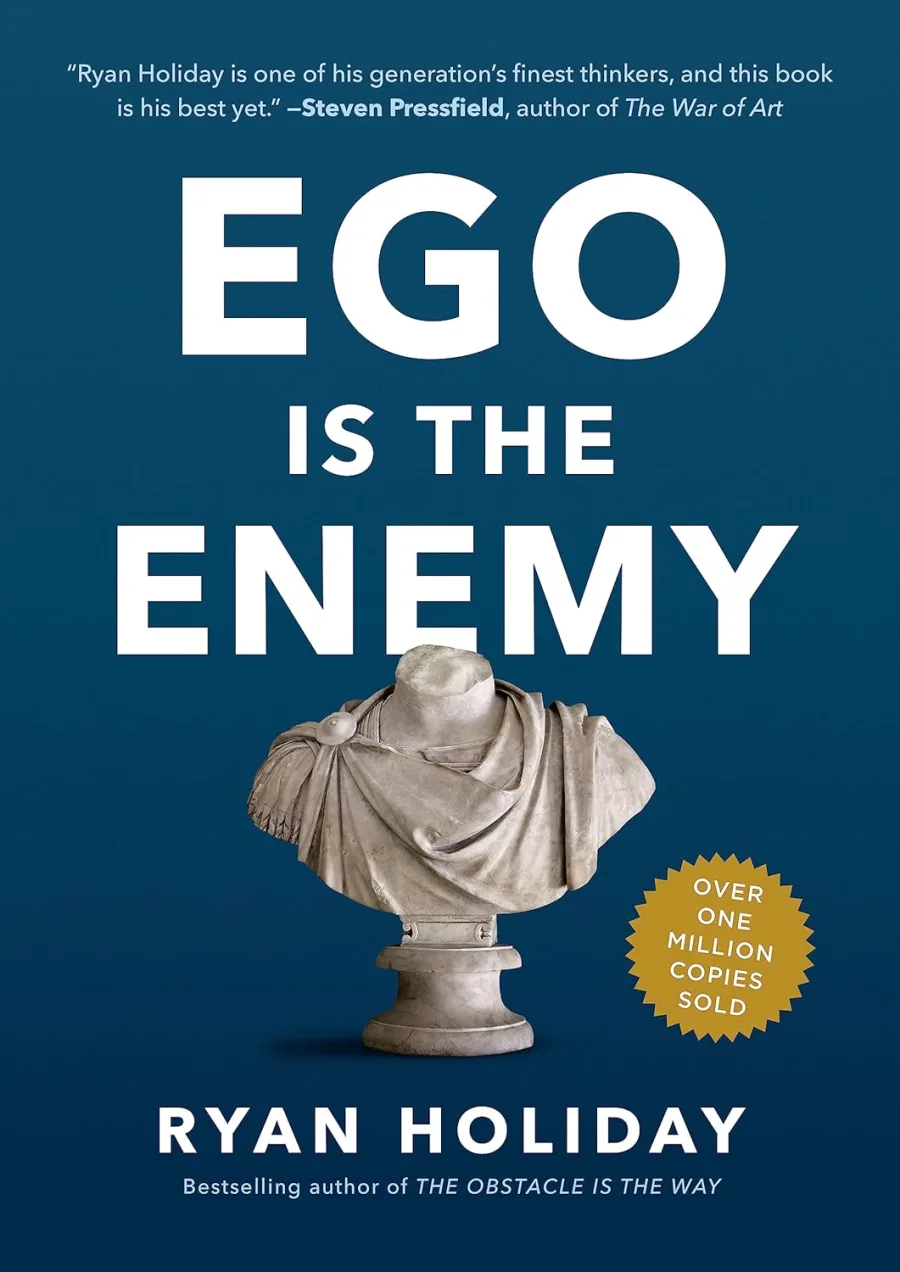
Download Cover Image
Do you want to download the full cover image for Ego Is the Enemy?