
Autoimmunity and the Good Girls: How Permission to Put Ourselves First Has the Power to Keep Us Well
eBook
• 304 Pages
• USD 28.99
• English
• 9780063450677
No ratings yet
| Publisher | HarperOne |
|---|---|
| ISBN13 | 9780063450677 |
| ASIN/SKU | B0FPG2CTWP |
| Book Format | eBook |
| Language | English |
| Pages | 304 |
| List Price | USD 28.99 |
| Publishing Date | 02/06/2026 |
| Book Code | BD00067417 |
Buy this Book
Amazon Stores
Ebook Stores
Other Stores
Discover Autoimmunity and the Good Girls: How Permission to Put Ourselves First Has the Power to Keep Us Well by Sara Hirsh Bordo. This book is published by HarperOne in eBook format, ISBN 9780063450677, ASIN B0FPG2CTWP, under Self-Help, Midlife Self-Help.
Book Description
"This illuminating volume will liberate many women from self-suppression and its frequent consequence, physical illness."— Gabor Maté M.D. New York Times bestselling author of The Myth of Normal
Foreword by Dr. Richard Carmona MD, MPH, FACS, 17th Surgeon General of the United States
The inspirational, deeply researched wellness journey by the award-winning filmmaker, activist, and founder of Women Rising, shining a light on how too many girls are trained to self-silence and serve others—and how we can heal.
For generations, women have been told to be “good”—to put others first, to silence their own voices, to neglect their own needs. But a new groundswell of evidence reveals the cost: when our lives are compromised, so are our immune systems.
Raised in a big Texas-Lebanese family as the eldest and only daughter, Sara Hirsh Bordo grew up caring for everyone else’s needs at the expense of her own. Later, as an acclaimed director lifting up other women’s stories, she watched her own body collapse under the weight of autoimmune disease and cancer. Only when she finally reclaimed sovereignty over her own voice, did she heal.
Determined to understand this link, Sara funded the first quantitative research at the intersection of female empowerment and autoimmunity. The results were groundbreaking: women raised in caretaker roles—especially eldest daughters—are disproportionately likely to develop autoimmune diseases such as Hashimoto’s, lupus, multiple sclerosis, fibromyalgia, chronic fatigue syndrome, and more. This study, endorsed by former U.S. Surgeon General Dr. Richard Carmona, garnered national media attention and has been shared across 20 countries.
In these pages, you will find:
How compromised girlhood identities create compromised immune systems in womanhood—and how to rewrite your story.
Impacts of adverse childhood experiences (ACEs) on autoimmunity and poor health.
Stunning findings from her research, such as more than 6 in 10 women with autoimmune diseases were raised as the oldest or only daughter in their families
What radically changes in health when authenticity, environment, and self-permission finally align.
Inner girlhood work, including re-mothering through modern and mystical feminine archetypes.
How to unlearn your primary role as a caregiver and practical guides for evolving from “good” to “real” at any age.
Weaving together memoir, exclusive expert interviews, evidence-based findings, and women’s personal stories, Autoimmunity and the Good Girls is a rousing testament to the missing modality in women’s health— sovereign self-permission to speak up, to transform, and heal.
Foreword by Dr. Richard Carmona MD, MPH, FACS, 17th Surgeon General of the United States
The inspirational, deeply researched wellness journey by the award-winning filmmaker, activist, and founder of Women Rising, shining a light on how too many girls are trained to self-silence and serve others—and how we can heal.
For generations, women have been told to be “good”—to put others first, to silence their own voices, to neglect their own needs. But a new groundswell of evidence reveals the cost: when our lives are compromised, so are our immune systems.
Raised in a big Texas-Lebanese family as the eldest and only daughter, Sara Hirsh Bordo grew up caring for everyone else’s needs at the expense of her own. Later, as an acclaimed director lifting up other women’s stories, she watched her own body collapse under the weight of autoimmune disease and cancer. Only when she finally reclaimed sovereignty over her own voice, did she heal.
Determined to understand this link, Sara funded the first quantitative research at the intersection of female empowerment and autoimmunity. The results were groundbreaking: women raised in caretaker roles—especially eldest daughters—are disproportionately likely to develop autoimmune diseases such as Hashimoto’s, lupus, multiple sclerosis, fibromyalgia, chronic fatigue syndrome, and more. This study, endorsed by former U.S. Surgeon General Dr. Richard Carmona, garnered national media attention and has been shared across 20 countries.
In these pages, you will find:
How compromised girlhood identities create compromised immune systems in womanhood—and how to rewrite your story.
Impacts of adverse childhood experiences (ACEs) on autoimmunity and poor health.
Stunning findings from her research, such as more than 6 in 10 women with autoimmune diseases were raised as the oldest or only daughter in their families
What radically changes in health when authenticity, environment, and self-permission finally align.
Inner girlhood work, including re-mothering through modern and mystical feminine archetypes.
How to unlearn your primary role as a caregiver and practical guides for evolving from “good” to “real” at any age.
Weaving together memoir, exclusive expert interviews, evidence-based findings, and women’s personal stories, Autoimmunity and the Good Girls is a rousing testament to the missing modality in women’s health— sovereign self-permission to speak up, to transform, and heal.
Author Biography
Sara Hirsh Bordo is a 15x award-winning filmmaker and founder of the impact production company Women Rising®. Her directorial debut, “A Brave Heart: The Lizzie Velasquez Story,” premiered at SXSW, where it won the Audience Award and secured global distribution. Beyond the screen, Sara has directed live events from Prevention Magazine’s Health & Wellness Summit to the United State of Women Summit led by Former First Lady Michelle Obama. Sara has also been a storyteller for inspirational partners from ConnectHER Film Festival to Toyota, espnW, and Warner Bros.’ Wonder Woman franchise.
For 12+ years, Sara was living with Hashimoto’s disease and other diagnoses that catalyzed her commitment to understanding her own health story. In 2023, she funded the first research at the intersection of female empowerment and autoimmunity in American women. The key findings of “Autoimmunity and the ‘Good Girls™’” which Sara made public for free, has been downloaded across 22 countries.
Now, healthy and with a passport that won’t quit, Sara is Aunt Sissy to nine, and Godmother Sara to three. A portion of Sara’s author proceeds will be donated to the Society for Women’s Health Research. This is her first book.
For 12+ years, Sara was living with Hashimoto’s disease and other diagnoses that catalyzed her commitment to understanding her own health story. In 2023, she funded the first research at the intersection of female empowerment and autoimmunity in American women. The key findings of “Autoimmunity and the ‘Good Girls™’” which Sara made public for free, has been downloaded across 22 countries.
Now, healthy and with a passport that won’t quit, Sara is Aunt Sissy to nine, and Godmother Sara to three. A portion of Sara’s author proceeds will be donated to the Society for Women’s Health Research. This is her first book.
Editorial Reviews
"Sara Hirsh Bordo combines deeply suffered but ultimately triumphant personal history with the irrefutable science of mind-body unity to show that disease can arise from being too good for one’s own good and be overcome by reclaiming power and agency. This illuminating volume will liberate many women from self-suppression and its frequent consequence, physical illness."
- Gabor Maté M.D., New York Times bestselling author of The Myth of Normal and When The Body Says No: Exploring the Stress-Disease Connection
"Autoimmunity and the Good Girls is a deeply validating exploration of how being raised to be “good” can quietly shape a woman’s wellbeing. With data-driven research and gripping stories from her own life, Sara Hirsh Bordo shows how self-silencing and chronic caregiving take a tremendous toll on women’s bodies. She guides us toward reclaiming ourselves as part of healing both body and soul—powerfully taking back what we need to thrive. As a woman, and a daughter with my own story of autoimmune challenges, I recognized myself in these pages. I can’t think of anything more powerful than being seen and validated in the struggles of womanhood and family life." - Dr. Allison M. Alford, communication scholar and author of Good Daughtering
"Sara Hirsh Bordo’s Autoimmunity and the Good Girls is the kind of support every woman deserves, the kind that doesn’t talk down to you or try to fix you, it reminds you that you’re not broken. It’s deeply human, and full of real tools you can use right away. If you’ve been searching for clarity, or a way forward, you’re going to feel so grateful you found it." - Tamsen Fadal, New York Times bestselling author of How to Menopause & host of The Tamsen Show
"Sara's an Architect of Change."
- Maria Shriver, New York Times bestselling author and award-winning journalist
"Sara Hirsh Bordo’s Autoimmunity and the Good Girls is a brave and necessary work. It is a book about illness, yes—but more importantly, it’s a book about voice. About the cost of silence. . . Sara weaves together science, soul, and social commentary with clarity that is both urgent and compassionate. Her voice is one that demands to be heard—not just for her own healing, but for the millions of others who stories remain untold." - Dr. Richard Carmona MD,MPH, FACS, 17th Surgeon General of the United States, excerpted from the foreword
"The insights Sara brings from her personal experience enrich a unique voice that beautifully combines wellness and empowerment. Her personal storytelling in Autoimmunity and the Good Girls will broadcast a message certain to resonate and inspire women everywhere." - Julie F. Kay, author of Controlling Women: What We Must Do Now to Save Reproductive Freedom
"Not only is Sara a beloved leader in our shared women and girls space, but her quality of writing is so accessible and beyond inspiring. I can’t wait for the I Am That Girl community to awaken to new heights within themselves because of what Sara is presenting in Autoimmunity and the Good Girls." - Alexis Jones, Founder of global I AM THAT GIRL movement, author of I Am That Girl and Joy Hunter
"As Sara Hirsh Bordo makes clear in this riveting personal account, 'empowerment' and 'making a difference' can become their own kind of traps when not fueled by a holistic awareness, aligned with our authentic intuitions and deepest self— those inner GPS signals that our accomplishment-driven society is so expert at scrambling, especially in women. An inspiring yet sobering read, this book is full of wisdom that is both clear-eyed and hard-earned." - Daniel Maté, New York Times bestselling co-author of The Myth of Normal
- Gabor Maté M.D., New York Times bestselling author of The Myth of Normal and When The Body Says No: Exploring the Stress-Disease Connection
"Autoimmunity and the Good Girls is a deeply validating exploration of how being raised to be “good” can quietly shape a woman’s wellbeing. With data-driven research and gripping stories from her own life, Sara Hirsh Bordo shows how self-silencing and chronic caregiving take a tremendous toll on women’s bodies. She guides us toward reclaiming ourselves as part of healing both body and soul—powerfully taking back what we need to thrive. As a woman, and a daughter with my own story of autoimmune challenges, I recognized myself in these pages. I can’t think of anything more powerful than being seen and validated in the struggles of womanhood and family life." - Dr. Allison M. Alford, communication scholar and author of Good Daughtering
"Sara Hirsh Bordo’s Autoimmunity and the Good Girls is the kind of support every woman deserves, the kind that doesn’t talk down to you or try to fix you, it reminds you that you’re not broken. It’s deeply human, and full of real tools you can use right away. If you’ve been searching for clarity, or a way forward, you’re going to feel so grateful you found it." - Tamsen Fadal, New York Times bestselling author of How to Menopause & host of The Tamsen Show
"Sara's an Architect of Change."
- Maria Shriver, New York Times bestselling author and award-winning journalist
"Sara Hirsh Bordo’s Autoimmunity and the Good Girls is a brave and necessary work. It is a book about illness, yes—but more importantly, it’s a book about voice. About the cost of silence. . . Sara weaves together science, soul, and social commentary with clarity that is both urgent and compassionate. Her voice is one that demands to be heard—not just for her own healing, but for the millions of others who stories remain untold." - Dr. Richard Carmona MD,MPH, FACS, 17th Surgeon General of the United States, excerpted from the foreword
"The insights Sara brings from her personal experience enrich a unique voice that beautifully combines wellness and empowerment. Her personal storytelling in Autoimmunity and the Good Girls will broadcast a message certain to resonate and inspire women everywhere." - Julie F. Kay, author of Controlling Women: What We Must Do Now to Save Reproductive Freedom
"Not only is Sara a beloved leader in our shared women and girls space, but her quality of writing is so accessible and beyond inspiring. I can’t wait for the I Am That Girl community to awaken to new heights within themselves because of what Sara is presenting in Autoimmunity and the Good Girls." - Alexis Jones, Founder of global I AM THAT GIRL movement, author of I Am That Girl and Joy Hunter
"As Sara Hirsh Bordo makes clear in this riveting personal account, 'empowerment' and 'making a difference' can become their own kind of traps when not fueled by a holistic awareness, aligned with our authentic intuitions and deepest self— those inner GPS signals that our accomplishment-driven society is so expert at scrambling, especially in women. An inspiring yet sobering read, this book is full of wisdom that is both clear-eyed and hard-earned." - Daniel Maté, New York Times bestselling co-author of The Myth of Normal
Book Summary
Autoimmunity and the Good Girls by Sara Hirsh Bordo is a deeply personal and research-driven book about the hidden cost of being the “good girl,” especially for women who are taught from childhood to put everyone else first. The book argues that this habit of self-silencing, over-caretaking, and ignoring one’s own needs is not just emotionally draining, but may also have serious effects on physical health, including autoimmune disease. At its core, the book asks a simple but powerful question: what happens when women spend their lives being easy, agreeable, responsible, and self-sacrificing for everyone around them, while quietly abandoning their own bodies, voices, and needs?
Bordo tells this story partly through her own life. She grew up as the eldest and only daughter in a large family, and from an early age she took on the role of helper, fixer, and caretaker. Like many women shaped by similar expectations, she learned to attend to everyone else’s comfort before her own. That pattern stayed with her into adulthood, even as she became an acclaimed filmmaker and activist. But eventually her body began to break down. After facing autoimmune disease and cancer, she was forced to look more closely at the connection between the way she lived and the way she was suffering. The book grows out of that moment of reckoning, when she began to understand that healing was not only about medicine or treatment, but also about identity, boundaries, and self-permission.
One of the book’s central ideas is that many girls are taught to become “good” in a very specific way. They are encouraged to be polite, helpful, quiet, compliant, and emotionally available to others. They are rewarded for making life easier for parents, siblings, partners, and coworkers. Over time, this can create a habit of chronic self-neglect. Bordo argues that these early lessons are not harmless. They can shape how women respond to stress, how they interpret bodily signals, and how willing they are to advocate for themselves. The book suggests that when girls are raised to ignore their own discomfort in order to keep others comfortable, that pattern can follow them into adulthood in damaging ways.
The book connects this emotional conditioning to autoimmune illness through memoir, interviews, and evidence-based research. Bordo funded original research exploring the link between female empowerment and autoimmunity, and she shares some striking findings. According to the material around the book, women who were raised as eldest or only daughters are overrepresented among those with autoimmune conditions. The book also explores the impact of adverse childhood experiences and the toll of long-term caretaking roles. While it does not claim that there is one single cause for autoimmune disease, it presents a compelling case that emotional suppression, chronic stress, and identity-based self-abandonment may be important pieces of the picture. The overall message is that health is not just about biology in isolation; it is also shaped by the way people are trained to live.
What makes the book especially meaningful is that it does not stop at diagnosis or explanation. It moves toward healing, and it defines healing broadly. Bordo suggests that becoming well may require women to stop performing goodness in ways that erase themselves. It may require them to speak more honestly, ask for what they need, create healthier environments, and stop measuring their worth only by how much they give others. This is where the book becomes more than a medical or psychological study. It becomes an invitation to transformation. It asks women to unlearn the idea that self-sacrifice is always noble, and to see self-respect as a necessary part of health.
The book also includes what could be described as inner work. Bordo talks about “re-mothering” and reclaiming a more authentic version of the self, including through feminine archetypes and personal reflection. This gives the book a spiritual and emotional dimension in addition to its research foundation. The aim is not just to reduce symptoms, but to recover a fuller identity. That means reconnecting with parts of oneself that were pushed aside in the effort to be pleasing, useful, or manageable. In this sense, the book is about more than autoimmune illness. It is about the cost of living from a false self, and the freedom that can come from returning to one’s own voice.
The tone of the book appears to be both urgent and hopeful. Bordo writes as someone who has lived through pain, but also as someone who believes change is possible. She does not treat women as broken; she treats them as conditioned, overburdened, and capable of reclaiming themselves. That perspective makes the book feel empowering rather than blaming. It acknowledges that many of these patterns are deeply rooted in family, culture, and social expectation. At the same time, it insists that those patterns can be interrupted. Women can learn to put themselves first without guilt, and doing so may be essential to staying well.
Overall, Autoimmunity and the Good Girls is a provocative and compassionate book about women’s health, identity, and the cost of constant self-neglect. It blends memoir, science, and personal storytelling to argue that the pressure to be “good” can have real consequences for the body. Its message is both challenging and liberating: women do not have to keep disappearing for the sake of others. Giving themselves permission to speak, rest, choose, and take up space may not only change their lives emotionally, but help protect their health too.
Bordo tells this story partly through her own life. She grew up as the eldest and only daughter in a large family, and from an early age she took on the role of helper, fixer, and caretaker. Like many women shaped by similar expectations, she learned to attend to everyone else’s comfort before her own. That pattern stayed with her into adulthood, even as she became an acclaimed filmmaker and activist. But eventually her body began to break down. After facing autoimmune disease and cancer, she was forced to look more closely at the connection between the way she lived and the way she was suffering. The book grows out of that moment of reckoning, when she began to understand that healing was not only about medicine or treatment, but also about identity, boundaries, and self-permission.
One of the book’s central ideas is that many girls are taught to become “good” in a very specific way. They are encouraged to be polite, helpful, quiet, compliant, and emotionally available to others. They are rewarded for making life easier for parents, siblings, partners, and coworkers. Over time, this can create a habit of chronic self-neglect. Bordo argues that these early lessons are not harmless. They can shape how women respond to stress, how they interpret bodily signals, and how willing they are to advocate for themselves. The book suggests that when girls are raised to ignore their own discomfort in order to keep others comfortable, that pattern can follow them into adulthood in damaging ways.
The book connects this emotional conditioning to autoimmune illness through memoir, interviews, and evidence-based research. Bordo funded original research exploring the link between female empowerment and autoimmunity, and she shares some striking findings. According to the material around the book, women who were raised as eldest or only daughters are overrepresented among those with autoimmune conditions. The book also explores the impact of adverse childhood experiences and the toll of long-term caretaking roles. While it does not claim that there is one single cause for autoimmune disease, it presents a compelling case that emotional suppression, chronic stress, and identity-based self-abandonment may be important pieces of the picture. The overall message is that health is not just about biology in isolation; it is also shaped by the way people are trained to live.
What makes the book especially meaningful is that it does not stop at diagnosis or explanation. It moves toward healing, and it defines healing broadly. Bordo suggests that becoming well may require women to stop performing goodness in ways that erase themselves. It may require them to speak more honestly, ask for what they need, create healthier environments, and stop measuring their worth only by how much they give others. This is where the book becomes more than a medical or psychological study. It becomes an invitation to transformation. It asks women to unlearn the idea that self-sacrifice is always noble, and to see self-respect as a necessary part of health.
The book also includes what could be described as inner work. Bordo talks about “re-mothering” and reclaiming a more authentic version of the self, including through feminine archetypes and personal reflection. This gives the book a spiritual and emotional dimension in addition to its research foundation. The aim is not just to reduce symptoms, but to recover a fuller identity. That means reconnecting with parts of oneself that were pushed aside in the effort to be pleasing, useful, or manageable. In this sense, the book is about more than autoimmune illness. It is about the cost of living from a false self, and the freedom that can come from returning to one’s own voice.
The tone of the book appears to be both urgent and hopeful. Bordo writes as someone who has lived through pain, but also as someone who believes change is possible. She does not treat women as broken; she treats them as conditioned, overburdened, and capable of reclaiming themselves. That perspective makes the book feel empowering rather than blaming. It acknowledges that many of these patterns are deeply rooted in family, culture, and social expectation. At the same time, it insists that those patterns can be interrupted. Women can learn to put themselves first without guilt, and doing so may be essential to staying well.
Overall, Autoimmunity and the Good Girls is a provocative and compassionate book about women’s health, identity, and the cost of constant self-neglect. It blends memoir, science, and personal storytelling to argue that the pressure to be “good” can have real consequences for the body. Its message is both challenging and liberating: women do not have to keep disappearing for the sake of others. Giving themselves permission to speak, rest, choose, and take up space may not only change their lives emotionally, but help protect their health too.
Sample Chapters
Sample Chapters will be added soon…
Reader Reviews
No reviews yet.
Autoimmunity and the Good Girls: How Permission to Put Ourselves First Has the Power to Keep Us Well
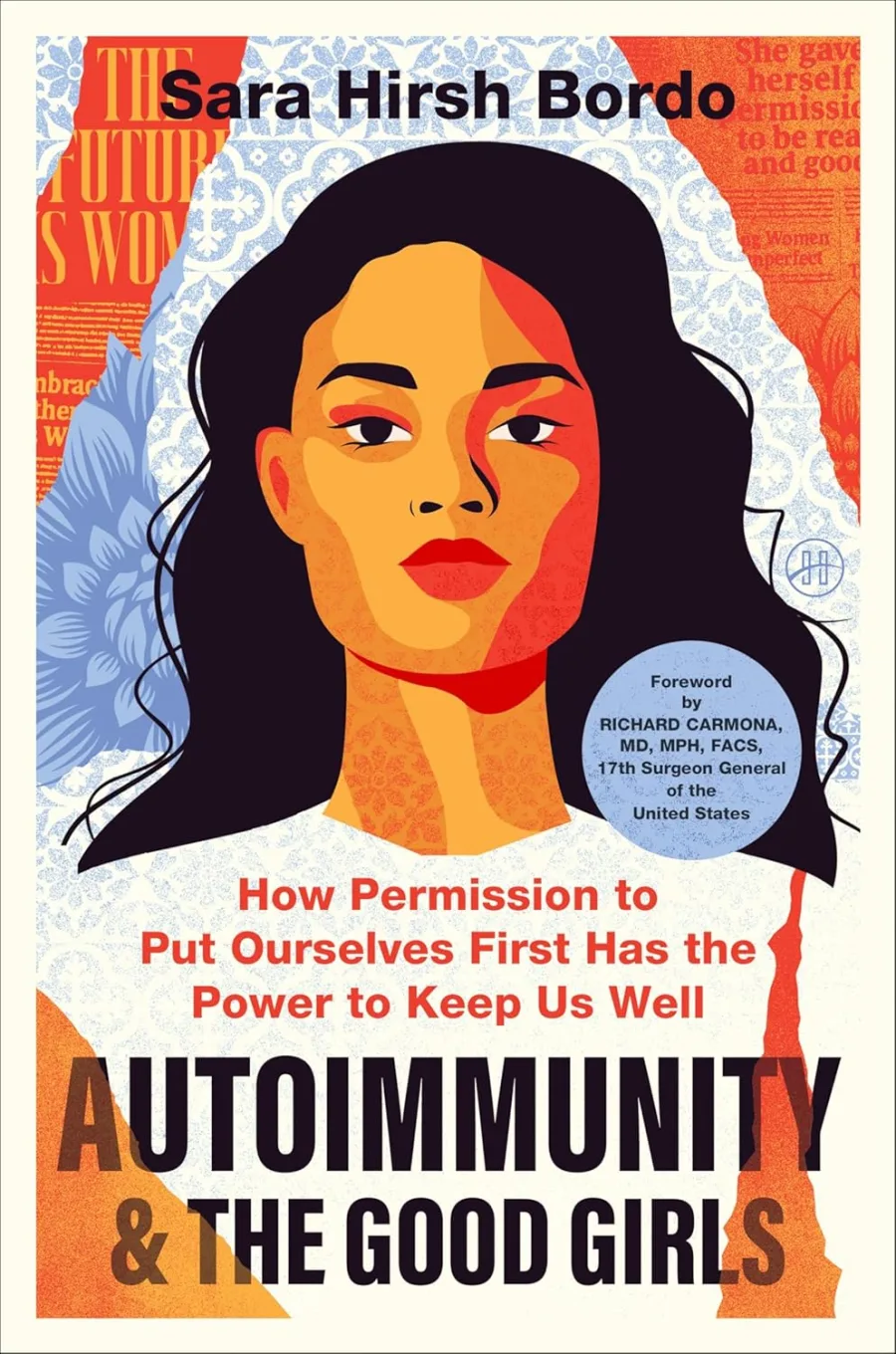
Download Cover Image
Do you want to download the full cover image for Autoimmunity and the Good Girls: How Permission to Put Ourselves First Has the Power to Keep Us Well?