
The Map to New Earth: Claim Your Freedom. Embrace the Shift. Create a New World
Paperback
• 199 Pages
• USD 14.97
• English
• 9798996984701
No ratings yet
| Publisher | Anne Tucker Healing and Training |
|---|---|
| ISBN13 | 9798996984701 |
| ASIN/SKU | B0H9ZKG9ZR |
| Book Format | Paperback |
| Language | English |
| Pages | 199 |
| List Price | USD 14.97 |
| Publishing Date | 22/07/2026 |
| Dimensions | 6 x 0.45 x 9 inches |
| Weight | 12.8 ounces |
| Book Code | BD00069361 |
Buy this Book
Amazon Stores
Ebook Stores
Other Stores
Discover The Map to New Earth: Claim Your Freedom. Embrace the Shift. Create a New World by Anne Tucker. This book is published by Anne Tucker Healing and Training in Paperback format, ISBN 9798996984701, ASIN B0H9ZKG9ZR, under Religion and Spirituality, New Age Channeling, New Thought.
Book Description
There is a hidden pattern that explains not only how we grow as individuals, but how consciousness itself evolves throughout the universe. In The Map to New Earth, Anne Tucker presents a profound yet practical seven-stage model of growth that reveals where humanity stands in its evolutionary journey and why this moment in history feels so pivotal. Drawing on years of channeled insight, she explores the origins of consciousness, the birth of the soul, the larger spiral of evolution guiding our development, and the essential shift required to move beyond karmic reality and into our next stage of existence: becoming masterful creators. This book offers both a map of where we've come from and a guide to where we're going next.
Author Biography
Anne is a channel for information and healing from the Angelic Realm, helping awakening souls take advantage of this time of rapid growth and ascension.
As a trance channel, Anne enters a meditative state where she connects to the Angelic realm and allows Angels to speak directly through her. The practical, poetic and inspiring messages she brings through offer Angelic guidance and healing frequencies that will help to prepare us and usher us through the planetary shift in consciousness. She shares her work with the Angels on her popular YouTube channel as well as through her transformational healing programs and retreats.
As a trance channel, Anne enters a meditative state where she connects to the Angelic realm and allows Angels to speak directly through her. The practical, poetic and inspiring messages she brings through offer Angelic guidance and healing frequencies that will help to prepare us and usher us through the planetary shift in consciousness. She shares her work with the Angels on her popular YouTube channel as well as through her transformational healing programs and retreats.
Editorial Reviews
Editorial Reviews will be added soon…
Book Summary
The Map to New Earth by Anne Tucker is a spiritual guide that explores personal awakening, inner transformation, and humanity's evolving consciousness. Blending intuitive insights, reflective exercises, and practical spiritual guidance, Tucker presents the idea that humanity is living through an extraordinary period of change—a transition from fear, limitation, and separation toward greater freedom, love, and unity. Rather than treating this transformation as a distant possibility, she argues that it is already unfolding and that every individual has an important role in shaping the emerging world. The book serves as both a philosophical framework and a practical roadmap for readers who wish to navigate uncertainty with greater clarity, purpose, and confidence.
The central premise of the book is that profound global change always begins with personal transformation. According to Tucker, many of the political, environmental, economic, and social challenges facing humanity reflect deeper shifts occurring within human consciousness itself. While these external disruptions may appear chaotic or frightening, she encourages readers to see them as signs of an old way of living gradually giving way to something new. Instead of resisting change, individuals are invited to embrace it as an opportunity to reconnect with their authentic selves and participate consciously in creating a more compassionate future.
One of the book's primary themes is freedom. Tucker argues that true freedom is not simply the absence of external restrictions but the ability to live without being controlled by fear, outdated beliefs, emotional wounds, or limiting stories about oneself. Throughout life, people unconsciously adopt beliefs from family, society, education, and past experiences that gradually shape how they see themselves and the world. While these beliefs may once have provided security, they often become barriers to growth. The book encourages readers to recognize these inherited patterns and gently release those that no longer serve their highest potential.
Fear occupies a central place in Tucker's discussion. She suggests that fear often disguises itself as certainty, control, perfectionism, or the need for constant approval. These emotional habits create resistance whenever life begins to change. Rather than treating fear as an enemy, however, Tucker encourages readers to view it as a signal pointing toward areas that require healing and greater self-awareness. By observing fear without allowing it to dictate decisions, individuals gradually cultivate greater inner stability regardless of external circumstances.
Another significant concept explored throughout the book is the idea of a collective shift in consciousness. Tucker proposes that humanity is moving beyond an era dominated by competition, separation, and scarcity toward one rooted in cooperation, creativity, and interconnectedness. This transition is not presented as automatic or guaranteed. Instead, it depends upon millions of individual choices made each day. Every act of compassion, forgiveness, honesty, and courage contributes to the larger evolution of human consciousness. In this sense, personal growth becomes an act of service that benefits both the individual and society as a whole.
The author also explores the importance of intuition as an inner compass during times of uncertainty. Modern life often encourages people to rely exclusively on logic, external opinions, and constant information. Tucker argues that intuition represents another valuable source of wisdom that becomes clearer through mindfulness, stillness, and self-reflection. Learning to trust this inner guidance allows readers to make decisions that align more closely with their authentic values rather than reacting from fear or social pressure. Practices such as meditation, quiet contemplation, journaling, and spending time in nature are presented as ways to strengthen this connection with inner knowing.
Relationships also play an important role in the journey toward a "New Earth." Tucker explains that periods of spiritual growth frequently transform existing relationships. Some connections deepen through greater honesty and mutual understanding, while others naturally fade as individuals evolve in different directions. Instead of viewing these changes as failures, she encourages readers to see them as evidence of personal growth. Healthy relationships, she suggests, are built upon authenticity rather than obligation, allowing both people to continue developing without fear of judgment or control.
The book also emphasizes emotional healing. Tucker believes that unresolved grief, shame, anger, and disappointment often remain stored within individuals long after difficult experiences have ended. Unless acknowledged and processed, these emotions continue influencing decisions and relationships unconsciously. Healing does not require denying painful experiences but rather meeting them with compassion and understanding. Through forgiveness, acceptance, and honest self-examination, readers gradually free themselves from emotional burdens that prevent them from embracing new possibilities.
Throughout the book, Tucker repeatedly reminds readers that uncertainty is not necessarily something to fear. During periods of transition, old structures often dissolve before new ones become visible. Although this in-between stage may feel uncomfortable, she describes it as an essential part of growth. Just as seasons naturally change, both individuals and societies undergo cycles of endings and new beginnings. Trusting the process allows people to remain grounded even when the future cannot yet be fully understood.
A recurring message throughout The Map to New Earth is the power of conscious choice. Tucker argues that while individuals cannot control every external event, they always retain the ability to choose their response. Daily choices—how people think, speak, treat others, and care for themselves—gradually shape not only personal experience but also the collective future. Small acts of kindness, integrity, gratitude, and courage become meaningful contributions to the larger transformation she envisions.
The book also explores the relationship between purpose and service. Rather than presenting purpose as a single career or achievement, Tucker describes it as expressing one's unique gifts in ways that benefit others. Every individual possesses talents, experiences, and perspectives capable of contributing to the world. Discovering purpose therefore involves listening deeply to one's inner calling while remaining open to opportunities for growth and meaningful connection.
Practical exercises appear throughout the book to help readers integrate these concepts into everyday life. Reflection questions, visualization practices, mindfulness techniques, and journaling prompts encourage readers to examine their beliefs, identify emotional patterns, clarify intentions, and strengthen their relationship with intuition. These exercises reinforce the book's central message that transformation occurs through consistent daily practice rather than dramatic overnight change.
Ultimately, The Map to New Earth presents an optimistic vision of both personal and collective evolution. Anne Tucker argues that today's uncertainty should not be viewed solely as a crisis but as an invitation to participate consciously in creating a more compassionate, awakened, and interconnected world. By releasing fear, trusting inner wisdom, healing emotional wounds, and embracing authentic purpose, individuals become active participants in humanity's ongoing transformation. Rather than offering rigid rules or fixed predictions, the book provides readers with a flexible spiritual framework for navigating change with resilience, hope, and a renewed sense of possibility. Its enduring message is that the path to a better world begins within each person, and every conscious step taken toward greater love, freedom, and authenticity helps shape the "New Earth" that is gradually emerging.
The central premise of the book is that profound global change always begins with personal transformation. According to Tucker, many of the political, environmental, economic, and social challenges facing humanity reflect deeper shifts occurring within human consciousness itself. While these external disruptions may appear chaotic or frightening, she encourages readers to see them as signs of an old way of living gradually giving way to something new. Instead of resisting change, individuals are invited to embrace it as an opportunity to reconnect with their authentic selves and participate consciously in creating a more compassionate future.
One of the book's primary themes is freedom. Tucker argues that true freedom is not simply the absence of external restrictions but the ability to live without being controlled by fear, outdated beliefs, emotional wounds, or limiting stories about oneself. Throughout life, people unconsciously adopt beliefs from family, society, education, and past experiences that gradually shape how they see themselves and the world. While these beliefs may once have provided security, they often become barriers to growth. The book encourages readers to recognize these inherited patterns and gently release those that no longer serve their highest potential.
Fear occupies a central place in Tucker's discussion. She suggests that fear often disguises itself as certainty, control, perfectionism, or the need for constant approval. These emotional habits create resistance whenever life begins to change. Rather than treating fear as an enemy, however, Tucker encourages readers to view it as a signal pointing toward areas that require healing and greater self-awareness. By observing fear without allowing it to dictate decisions, individuals gradually cultivate greater inner stability regardless of external circumstances.
Another significant concept explored throughout the book is the idea of a collective shift in consciousness. Tucker proposes that humanity is moving beyond an era dominated by competition, separation, and scarcity toward one rooted in cooperation, creativity, and interconnectedness. This transition is not presented as automatic or guaranteed. Instead, it depends upon millions of individual choices made each day. Every act of compassion, forgiveness, honesty, and courage contributes to the larger evolution of human consciousness. In this sense, personal growth becomes an act of service that benefits both the individual and society as a whole.
The author also explores the importance of intuition as an inner compass during times of uncertainty. Modern life often encourages people to rely exclusively on logic, external opinions, and constant information. Tucker argues that intuition represents another valuable source of wisdom that becomes clearer through mindfulness, stillness, and self-reflection. Learning to trust this inner guidance allows readers to make decisions that align more closely with their authentic values rather than reacting from fear or social pressure. Practices such as meditation, quiet contemplation, journaling, and spending time in nature are presented as ways to strengthen this connection with inner knowing.
Relationships also play an important role in the journey toward a "New Earth." Tucker explains that periods of spiritual growth frequently transform existing relationships. Some connections deepen through greater honesty and mutual understanding, while others naturally fade as individuals evolve in different directions. Instead of viewing these changes as failures, she encourages readers to see them as evidence of personal growth. Healthy relationships, she suggests, are built upon authenticity rather than obligation, allowing both people to continue developing without fear of judgment or control.
The book also emphasizes emotional healing. Tucker believes that unresolved grief, shame, anger, and disappointment often remain stored within individuals long after difficult experiences have ended. Unless acknowledged and processed, these emotions continue influencing decisions and relationships unconsciously. Healing does not require denying painful experiences but rather meeting them with compassion and understanding. Through forgiveness, acceptance, and honest self-examination, readers gradually free themselves from emotional burdens that prevent them from embracing new possibilities.
Throughout the book, Tucker repeatedly reminds readers that uncertainty is not necessarily something to fear. During periods of transition, old structures often dissolve before new ones become visible. Although this in-between stage may feel uncomfortable, she describes it as an essential part of growth. Just as seasons naturally change, both individuals and societies undergo cycles of endings and new beginnings. Trusting the process allows people to remain grounded even when the future cannot yet be fully understood.
A recurring message throughout The Map to New Earth is the power of conscious choice. Tucker argues that while individuals cannot control every external event, they always retain the ability to choose their response. Daily choices—how people think, speak, treat others, and care for themselves—gradually shape not only personal experience but also the collective future. Small acts of kindness, integrity, gratitude, and courage become meaningful contributions to the larger transformation she envisions.
The book also explores the relationship between purpose and service. Rather than presenting purpose as a single career or achievement, Tucker describes it as expressing one's unique gifts in ways that benefit others. Every individual possesses talents, experiences, and perspectives capable of contributing to the world. Discovering purpose therefore involves listening deeply to one's inner calling while remaining open to opportunities for growth and meaningful connection.
Practical exercises appear throughout the book to help readers integrate these concepts into everyday life. Reflection questions, visualization practices, mindfulness techniques, and journaling prompts encourage readers to examine their beliefs, identify emotional patterns, clarify intentions, and strengthen their relationship with intuition. These exercises reinforce the book's central message that transformation occurs through consistent daily practice rather than dramatic overnight change.
Ultimately, The Map to New Earth presents an optimistic vision of both personal and collective evolution. Anne Tucker argues that today's uncertainty should not be viewed solely as a crisis but as an invitation to participate consciously in creating a more compassionate, awakened, and interconnected world. By releasing fear, trusting inner wisdom, healing emotional wounds, and embracing authentic purpose, individuals become active participants in humanity's ongoing transformation. Rather than offering rigid rules or fixed predictions, the book provides readers with a flexible spiritual framework for navigating change with resilience, hope, and a renewed sense of possibility. Its enduring message is that the path to a better world begins within each person, and every conscious step taken toward greater love, freedom, and authenticity helps shape the "New Earth" that is gradually emerging.
Sample Chapters
Sample Chapters will be added soon…
Reader Reviews
No reviews yet.
The Map to New Earth: Claim Your Freedom. Embrace the Shift. Create a New World
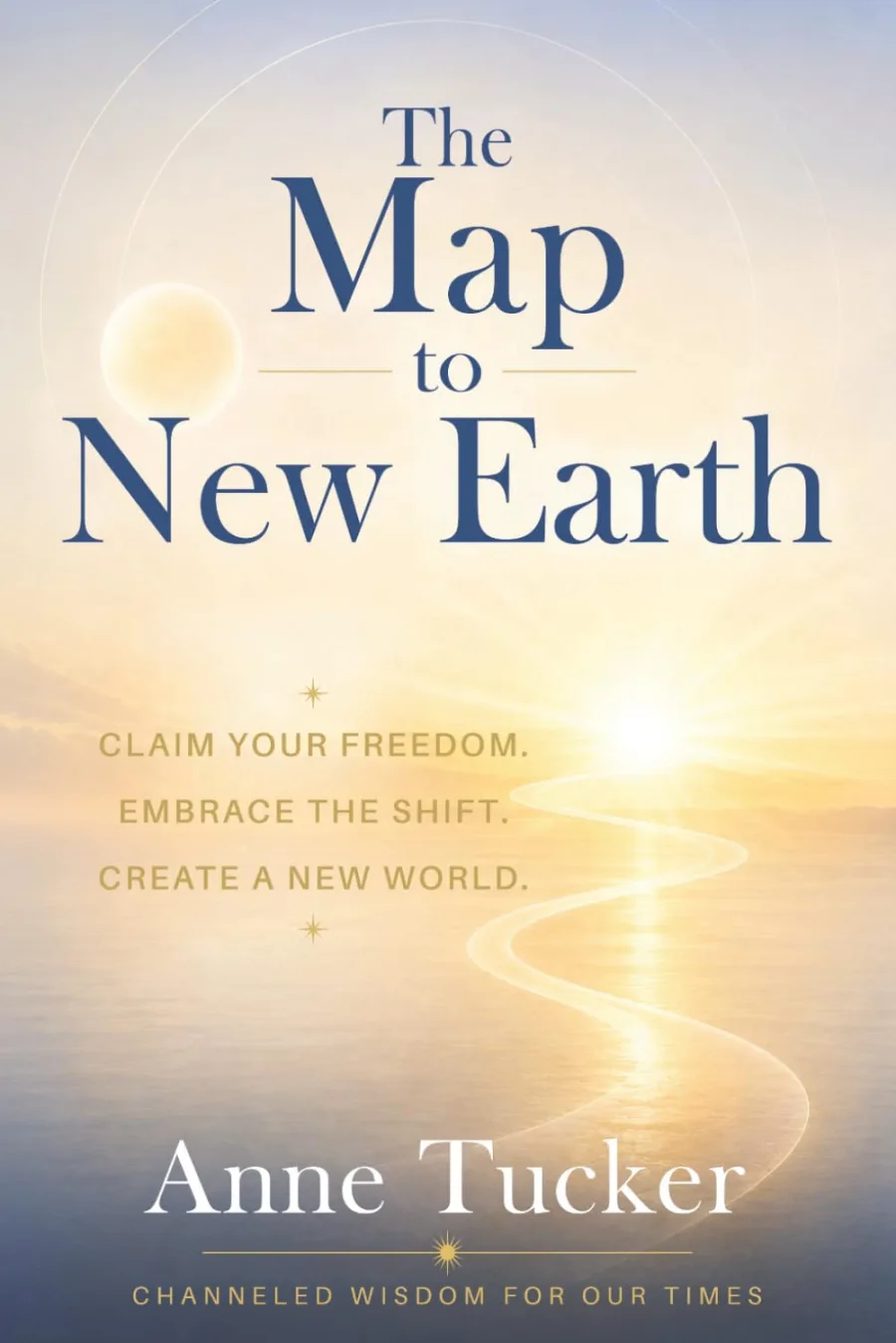
Download Cover Image
Do you want to download the full cover image for The Map to New Earth: Claim Your Freedom. Embrace the Shift. Create a New World?