Feeding Tiny Bellies: School Lunches: Over 100 Lunch Boxes and Snacks for Kids
Unknown Format
• 256 Pages
• USD 28.00
• English
• 9798217140282
No ratings yet
| Publisher | DK |
|---|---|
| ISBN13 | 9798217140282 |
| ASIN/SKU | B0FY5WM585 |
| Book Format | Unknown Format |
| Language | English |
| Pages | 256 |
| List Price | USD 28.00 |
| Publishing Date | 28/07/2026 |
| Dimensions | 7.81 x 0.97 x 10.25 inches |
| Weight | 2.35 pounds |
| Book Code | BD00069673 |
Buy this Book
Amazon Stores
Ebook Stores
Other Stores
Discover Feeding Tiny Bellies: School Lunches: Over 100 Lunch Boxes and Snacks for Kids by Lily Payen. This book is published by DK in Unknown Format format, ISBN 9798217140282, ASIN B0FY5WM585, under Cookbooks, Food and Wine, Children and Adolescent's Health, Quick and Easy Cooking.
Book Description
100+ simple and creative lunch box recipes for kids, from Lily Payen, author of Feeding Tiny Bellies
One day you’re getting ready to feed your little one solids for the first time, and in the blink of an eye, it’s time to send them off to school. It’s an exciting milestone, but transitioning from planning meals and snacks at home to packing and sending daily lunch boxes can be daunting.
In Feeding Tiny Bellies: School Lunches, Lily Payen, mom of four and creator of Feeding Tiny Bellies, is here to take the guesswork out of packing lunches. She shares her recipes for nourishing meals that use everyday pantry staples, are easy to prepare, and are realistic for a parent’s busy schedule.
With filling “brunch box” recipes (Everything Bagel Bites), comforting warm lunches (Broccoli and Cheese Soup), creative sandwiches (Tuna Salad Sandwich Bites), and satisfying after-school snacks (Copycat Cosmic Brownies), you’ll never be in a peanut butter and jelly rut again.
One day you’re getting ready to feed your little one solids for the first time, and in the blink of an eye, it’s time to send them off to school. It’s an exciting milestone, but transitioning from planning meals and snacks at home to packing and sending daily lunch boxes can be daunting.
In Feeding Tiny Bellies: School Lunches, Lily Payen, mom of four and creator of Feeding Tiny Bellies, is here to take the guesswork out of packing lunches. She shares her recipes for nourishing meals that use everyday pantry staples, are easy to prepare, and are realistic for a parent’s busy schedule.
With filling “brunch box” recipes (Everything Bagel Bites), comforting warm lunches (Broccoli and Cheese Soup), creative sandwiches (Tuna Salad Sandwich Bites), and satisfying after-school snacks (Copycat Cosmic Brownies), you’ll never be in a peanut butter and jelly rut again.
Author Biography
Lily Payen, the mama behind the popular baby-led weaning website Feeding Tiny Bellies, knows how challenging it can be to start feeding solids to your baby. When Lily was a new parent faced with offering solids to her baby for the first time, she was lost on where to start, what to feed him, and how to balance making meals for the entire family.
Through trial and error—and two more babies—Lily figured out what worked and what didn't. She created her website, and now, this cookbook, to help other parents and caregivers make meals they can feel confident about serving to their little ones.
Through trial and error—and two more babies—Lily figured out what worked and what didn't. She created her website, and now, this cookbook, to help other parents and caregivers make meals they can feel confident about serving to their little ones.
Editorial Reviews
Editorial Reviews will be added soon…
Book Summary
Feeding Tiny Bellies: School Lunches by Lily Payen is a practical and family-friendly cookbook designed to help parents make school lunches healthier, easier, and far more enjoyable. Building on the success of her Feeding Tiny Bellies platform, Payen focuses on one of the biggest challenges parents face once children begin school: preparing lunches that are nutritious, appealing, and simple enough to fit into a busy weekday routine. Rather than promoting picture-perfect lunchboxes or complicated recipes, the book emphasizes realistic meal planning using everyday ingredients and techniques that save both time and stress. With more than 100 recipes for lunchboxes, snacks, and make-ahead meals, the cookbook serves as both a recipe collection and a practical guide for feeding growing children with confidence.
At the heart of the book is the belief that preparing school lunches should not become an overwhelming daily chore. Many parents struggle with packing meals that children will actually eat while also balancing nutrition, food variety, school food policies, and limited morning time. Lily Payen approaches these challenges with empathy, drawing from her own experience as a mother of four. She reassures readers that successful lunchboxes do not require expensive ingredients or elaborate food art. Instead, consistency, balance, and flexibility are the keys to creating meals that children enjoy and parents can prepare without frustration.
The cookbook begins by introducing the principles of building balanced lunchboxes. Rather than prescribing rigid meal plans, Payen explains how parents can combine protein, healthy carbohydrates, fruits, vegetables, dairy, and healthy fats into satisfying meals that provide lasting energy throughout the school day. She encourages variety without overwhelming children with unfamiliar foods, recommending gradual introductions of new ingredients alongside trusted favorites. This balanced approach helps children develop healthier eating habits while reducing lunchtime food waste.
One of the book's most creative sections centers on "Brunch Boxes." These recipes transform breakfast favorites into portable lunches that children can enjoy at school. Items such as Everything Bagel Bites and other breakfast-inspired dishes provide alternatives to traditional sandwiches while remaining easy to prepare. The concept recognizes that many children love breakfast foods regardless of the time of day, allowing parents to expand their lunchbox options without introducing overly complicated recipes. These meals also work well for rushed mornings when leftovers can double as breakfast.
Another standout feature is Payen's collection of homemade versions of popular convenience foods. Instead of relying on heavily processed packaged lunch kits, she teaches parents how to recreate familiar favorites using fresher ingredients. Homemade pizza-inspired lunch kits, protein-packed snack boxes, and customizable lunch combinations allow children to assemble parts of their own meals while giving parents greater control over nutrition. These recipes demonstrate that convenience and healthy eating can coexist with thoughtful preparation.
The cookbook also moves beyond the classic peanut butter and jelly sandwich by presenting numerous creative sandwich alternatives. Readers discover bite-sized sandwiches, wraps, sliders, pinwheel rolls, and other handheld meals that introduce variety while remaining practical for school lunchboxes. Recipes such as Tuna Salad Sandwich Bites offer familiar flavors in child-friendly formats. Many ideas can be easily adapted for different dietary needs, allergies, or school restrictions regarding nuts and other common allergens.
Warm lunches receive equal attention throughout the book. Payen demonstrates how insulated food containers can dramatically expand lunch possibilities beyond cold meals. Comforting recipes like Broccoli and Cheese Soup, pasta dishes, casseroles, and hearty leftovers become practical options that children can enjoy even during colder months. She explains how preparing extra portions during family dinners allows parents to pack nourishing lunches the following day with minimal additional effort. This strategy reduces food waste while simplifying weekday meal preparation.
Snacks play an essential role in the cookbook as well. Rather than treating them as an afterthought, Payen presents snacks as opportunities to provide additional nutrition while satisfying children's cravings. Homemade versions of popular store-bought treats—including recipes inspired by favorites like Copycat Cosmic Brownies—allow families to enjoy familiar flavors made with simpler ingredients. Other snack recipes include muffins, bars, fruit-based treats, savory bites, and portable options suitable for lunchboxes, after-school hunger, or weekend outings.
Beyond recipes, the book offers practical strategies that simplify everyday life for busy families. Payen encourages meal preparation ahead of time, batch cooking, freezer-friendly recipes, and organizing weekly lunch plans before the school week begins. These methods reduce the pressure of making daily decisions during hectic mornings. Instead of requiring parents to cook every meal from scratch each day, she demonstrates how thoughtful planning transforms leftovers and pantry staples into appealing lunches with very little additional work.
Another strength of the cookbook is its accessibility. The recipes rely primarily on affordable supermarket ingredients rather than specialty products, making them achievable for families with different budgets. Preparation techniques remain straightforward, allowing both experienced home cooks and beginners to follow the instructions successfully. Many meals can also be customized according to children's preferences, encouraging flexibility rather than perfection.
Visual presentation enhances the cookbook's usefulness. Every recipe includes full-color photography that helps parents visualize finished lunchboxes while inspiring children to become excited about trying new foods. The colorful images demonstrate attractive yet realistic presentations that can be recreated without advanced cooking skills. Instead of promoting unrealistic social media aesthetics, the photographs reflect lunches that are practical enough for everyday family life.
Perhaps the cookbook's greatest contribution lies in its reassuring message to parents. Payen acknowledges that children frequently change their food preferences, refuse once-loved meals, or return home with unfinished lunches. Rather than creating guilt or unrealistic expectations, she encourages patience and adaptability. Feeding children successfully, she argues, is a long-term process built upon repeated exposure to healthy foods, positive mealtime experiences, and realistic expectations rather than daily perfection.
Throughout the book, Lily Payen combines nutritional guidance with genuine understanding of modern parenting. Her background as both a mother and creator of the Feeding Tiny Bellies community allows her to anticipate common questions and frustrations while offering practical solutions rooted in real family life. Every recipe and piece of advice is designed to reduce stress while helping children develop lifelong healthy eating habits.
Ultimately, Feeding Tiny Bellies: School Lunches is far more than a cookbook filled with lunchbox recipes. It is a thoughtful guide that empowers parents to approach school lunches with greater confidence, creativity, and efficiency. By emphasizing simple ingredients, balanced nutrition, make-ahead strategies, and meals children genuinely enjoy, Lily Payen transforms one of parenting's most repetitive daily responsibilities into a manageable and rewarding routine. The result is a valuable resource that helps families save time, reduce food waste, encourage healthier eating, and create lunchboxes that nourish both growing bodies and positive relationships with food.
At the heart of the book is the belief that preparing school lunches should not become an overwhelming daily chore. Many parents struggle with packing meals that children will actually eat while also balancing nutrition, food variety, school food policies, and limited morning time. Lily Payen approaches these challenges with empathy, drawing from her own experience as a mother of four. She reassures readers that successful lunchboxes do not require expensive ingredients or elaborate food art. Instead, consistency, balance, and flexibility are the keys to creating meals that children enjoy and parents can prepare without frustration.
The cookbook begins by introducing the principles of building balanced lunchboxes. Rather than prescribing rigid meal plans, Payen explains how parents can combine protein, healthy carbohydrates, fruits, vegetables, dairy, and healthy fats into satisfying meals that provide lasting energy throughout the school day. She encourages variety without overwhelming children with unfamiliar foods, recommending gradual introductions of new ingredients alongside trusted favorites. This balanced approach helps children develop healthier eating habits while reducing lunchtime food waste.
One of the book's most creative sections centers on "Brunch Boxes." These recipes transform breakfast favorites into portable lunches that children can enjoy at school. Items such as Everything Bagel Bites and other breakfast-inspired dishes provide alternatives to traditional sandwiches while remaining easy to prepare. The concept recognizes that many children love breakfast foods regardless of the time of day, allowing parents to expand their lunchbox options without introducing overly complicated recipes. These meals also work well for rushed mornings when leftovers can double as breakfast.
Another standout feature is Payen's collection of homemade versions of popular convenience foods. Instead of relying on heavily processed packaged lunch kits, she teaches parents how to recreate familiar favorites using fresher ingredients. Homemade pizza-inspired lunch kits, protein-packed snack boxes, and customizable lunch combinations allow children to assemble parts of their own meals while giving parents greater control over nutrition. These recipes demonstrate that convenience and healthy eating can coexist with thoughtful preparation.
The cookbook also moves beyond the classic peanut butter and jelly sandwich by presenting numerous creative sandwich alternatives. Readers discover bite-sized sandwiches, wraps, sliders, pinwheel rolls, and other handheld meals that introduce variety while remaining practical for school lunchboxes. Recipes such as Tuna Salad Sandwich Bites offer familiar flavors in child-friendly formats. Many ideas can be easily adapted for different dietary needs, allergies, or school restrictions regarding nuts and other common allergens.
Warm lunches receive equal attention throughout the book. Payen demonstrates how insulated food containers can dramatically expand lunch possibilities beyond cold meals. Comforting recipes like Broccoli and Cheese Soup, pasta dishes, casseroles, and hearty leftovers become practical options that children can enjoy even during colder months. She explains how preparing extra portions during family dinners allows parents to pack nourishing lunches the following day with minimal additional effort. This strategy reduces food waste while simplifying weekday meal preparation.
Snacks play an essential role in the cookbook as well. Rather than treating them as an afterthought, Payen presents snacks as opportunities to provide additional nutrition while satisfying children's cravings. Homemade versions of popular store-bought treats—including recipes inspired by favorites like Copycat Cosmic Brownies—allow families to enjoy familiar flavors made with simpler ingredients. Other snack recipes include muffins, bars, fruit-based treats, savory bites, and portable options suitable for lunchboxes, after-school hunger, or weekend outings.
Beyond recipes, the book offers practical strategies that simplify everyday life for busy families. Payen encourages meal preparation ahead of time, batch cooking, freezer-friendly recipes, and organizing weekly lunch plans before the school week begins. These methods reduce the pressure of making daily decisions during hectic mornings. Instead of requiring parents to cook every meal from scratch each day, she demonstrates how thoughtful planning transforms leftovers and pantry staples into appealing lunches with very little additional work.
Another strength of the cookbook is its accessibility. The recipes rely primarily on affordable supermarket ingredients rather than specialty products, making them achievable for families with different budgets. Preparation techniques remain straightforward, allowing both experienced home cooks and beginners to follow the instructions successfully. Many meals can also be customized according to children's preferences, encouraging flexibility rather than perfection.
Visual presentation enhances the cookbook's usefulness. Every recipe includes full-color photography that helps parents visualize finished lunchboxes while inspiring children to become excited about trying new foods. The colorful images demonstrate attractive yet realistic presentations that can be recreated without advanced cooking skills. Instead of promoting unrealistic social media aesthetics, the photographs reflect lunches that are practical enough for everyday family life.
Perhaps the cookbook's greatest contribution lies in its reassuring message to parents. Payen acknowledges that children frequently change their food preferences, refuse once-loved meals, or return home with unfinished lunches. Rather than creating guilt or unrealistic expectations, she encourages patience and adaptability. Feeding children successfully, she argues, is a long-term process built upon repeated exposure to healthy foods, positive mealtime experiences, and realistic expectations rather than daily perfection.
Throughout the book, Lily Payen combines nutritional guidance with genuine understanding of modern parenting. Her background as both a mother and creator of the Feeding Tiny Bellies community allows her to anticipate common questions and frustrations while offering practical solutions rooted in real family life. Every recipe and piece of advice is designed to reduce stress while helping children develop lifelong healthy eating habits.
Ultimately, Feeding Tiny Bellies: School Lunches is far more than a cookbook filled with lunchbox recipes. It is a thoughtful guide that empowers parents to approach school lunches with greater confidence, creativity, and efficiency. By emphasizing simple ingredients, balanced nutrition, make-ahead strategies, and meals children genuinely enjoy, Lily Payen transforms one of parenting's most repetitive daily responsibilities into a manageable and rewarding routine. The result is a valuable resource that helps families save time, reduce food waste, encourage healthier eating, and create lunchboxes that nourish both growing bodies and positive relationships with food.
Sample Chapters
Sample Chapters will be added soon…
Reader Reviews
No reviews yet.
Feeding Tiny Bellies: School Lunches: Over 100 Lunch Boxes and Snacks for Kids
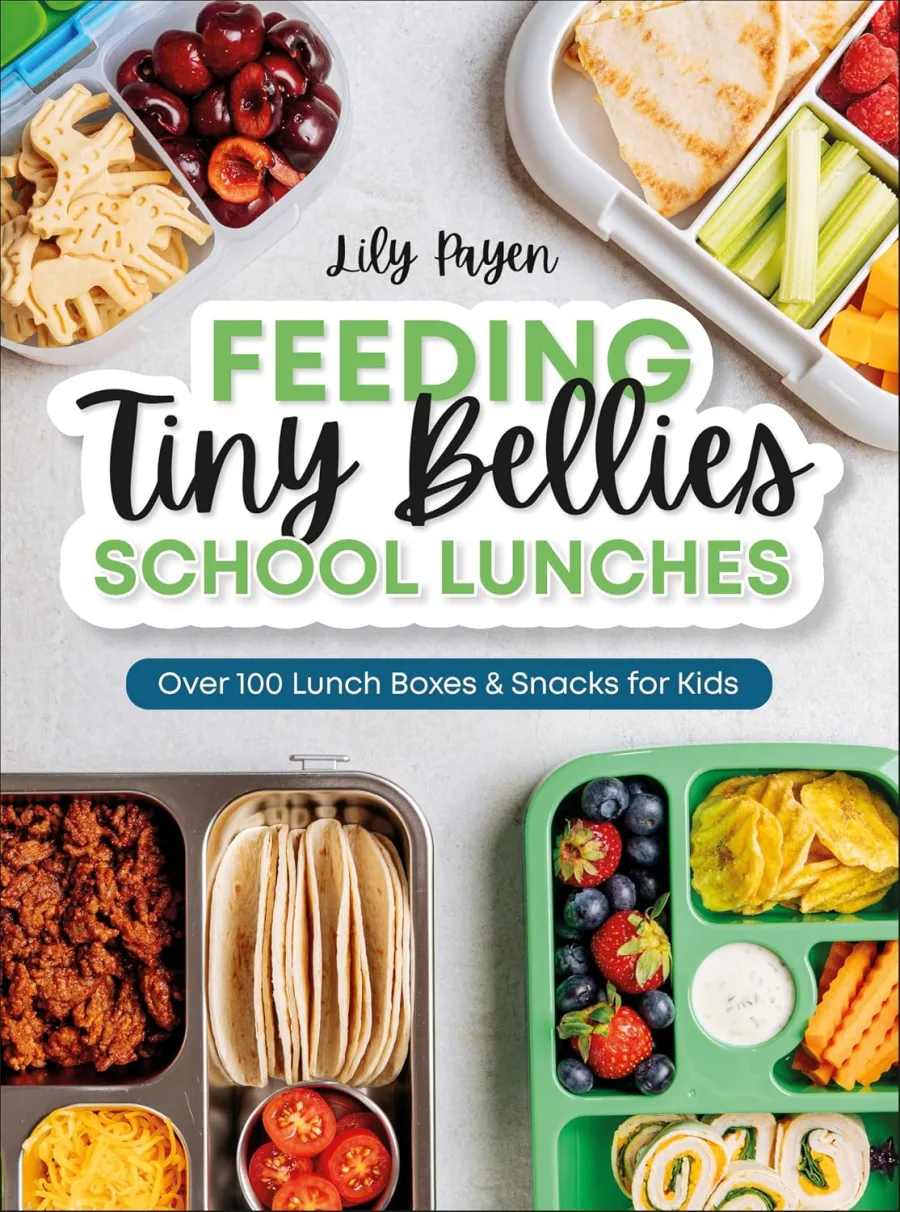
Download Cover Image
Do you want to download the full cover image for Feeding Tiny Bellies: School Lunches: Over 100 Lunch Boxes and Snacks for Kids?