
How to Grow Up Without Becoming a Grown-Up: Big Lessons from Little Kids
Hardcover
• 288 Pages
• USD 29.00
• English
• 9780593832974
No ratings yet
| Publisher | Penguin Life |
|---|---|
| ISBN13 | 9780593832974 |
| ASIN/SKU | 0593832973 |
| Book Format | Hardcover |
| Language | English |
| Pages | 288 |
| List Price | USD 29.00 |
| Publishing Date | 04/08/2026 |
| Dimensions | 5.74 x 0.97 x 8.53 inches |
| Weight | 13 ounces |
| Book Code | BD00069872 |
Buy this Book
Amazon Stores
Ebook Stores
Other Stores
Discover How to Grow Up Without Becoming a Grown-Up: Big Lessons from Little Kids by Julian Shapiro-Barnum. This book is published by Penguin Life in Hardcover format, ISBN 9780593832974, ASIN 0593832973, under Humor and Entertainment, Internet and Social Media Humor, Self-Help and Psychology Humor.
Book Description
Being a grown-up isn’t all it’s cracked up to be. What if we got back in touch with the joy, freedom, silliness, and creativity of being a kid?
When we were children, we were passionate, imaginative, and curious, and we loved without judgment. Now we are adults . . . neurotic, anxious, socially inept, and oh so very lonely. Why did we rush to become grown-ups? Why must we trade dream jobs for high-paying ones, tree climbing for social climbing, and juice boxes for juice cleanses? Is it possible to get back what we lost?
Julian Shapiro-Barnum, comedian, former child, and creator/host of the viral, beloved show Recess Therapy, has spent the past five years interviewing thousands of children. He’s talked to them about everything from love, anger, and death to Spider-Man and farts. And he’s gathered a wealth of information leading him to believe that there’s a lot we can learn from kids on how to live a better life.
With tender humor and real wisdom, Julian gets to the heart of life’s biggest issues, seen through the eyes of the littlest among us:
• How to fully feel your feelings (and then let them go)
• Why reclaiming your imagination can make your life richer
• How to bring a sense of wonder back to your work
• Why breaking the rules is sometimes the right thing to do
How to Grow Up Without Becoming a Grown-Up is a guide for adults on how to get back in touch with the silliness and pure joy you may have been missing lately.
When we were children, we were passionate, imaginative, and curious, and we loved without judgment. Now we are adults . . . neurotic, anxious, socially inept, and oh so very lonely. Why did we rush to become grown-ups? Why must we trade dream jobs for high-paying ones, tree climbing for social climbing, and juice boxes for juice cleanses? Is it possible to get back what we lost?
Julian Shapiro-Barnum, comedian, former child, and creator/host of the viral, beloved show Recess Therapy, has spent the past five years interviewing thousands of children. He’s talked to them about everything from love, anger, and death to Spider-Man and farts. And he’s gathered a wealth of information leading him to believe that there’s a lot we can learn from kids on how to live a better life.
With tender humor and real wisdom, Julian gets to the heart of life’s biggest issues, seen through the eyes of the littlest among us:
• How to fully feel your feelings (and then let them go)
• Why reclaiming your imagination can make your life richer
• How to bring a sense of wonder back to your work
• Why breaking the rules is sometimes the right thing to do
How to Grow Up Without Becoming a Grown-Up is a guide for adults on how to get back in touch with the silliness and pure joy you may have been missing lately.
Author Biography
Julian Shapiro-Barnum is a comedian, writer, and interviewer known for his online shows Recess Therapy, Celebrity Substitute, and Outside Tonight. Julian has won seven Webby Awards, was a Forbes 30 Under 30 honoree, and received a Family Entertainment Award from Variety. He’s been profiled many times, including by The New York Times, Vanity Fair, the Today show, and ABC’s Nightline. He resides in Brooklyn, New York.
Editorial Reviews
“A robust manual for taking onboard the wisdom of children and the wages of curiosity. Julian gives me great hope for the future of our free thinkers.”
—Nick Offerman, New York Times bestselling author of Little Woodchucks
“How to Grow Up Without Becoming a Grown-Up is sweet, tender, and authentic, and a lovely reminder about staying true to your inner child.”
—Jenny Lawson, author of How to Be Okay When Nothing Is Ok
“The advice is good, bears repeating, and is packaged more than palatably by a funny, self-deprecating, vulnerable young narrator . . . Shapiro-Barnum's conversational, sometimes zingy writing entertains . . . but [is] motivated by heartfelt sincerity. The writer’s enthusiasm and whimsical imagination shine through this endorsement of childhood’s gifts.”
—Kirkus Reviews
—Nick Offerman, New York Times bestselling author of Little Woodchucks
“How to Grow Up Without Becoming a Grown-Up is sweet, tender, and authentic, and a lovely reminder about staying true to your inner child.”
—Jenny Lawson, author of How to Be Okay When Nothing Is Ok
“The advice is good, bears repeating, and is packaged more than palatably by a funny, self-deprecating, vulnerable young narrator . . . Shapiro-Barnum's conversational, sometimes zingy writing entertains . . . but [is] motivated by heartfelt sincerity. The writer’s enthusiasm and whimsical imagination shine through this endorsement of childhood’s gifts.”
—Kirkus Reviews
Book Summary
How to Grow Up Without Becoming a Grown-Up: Big Lessons from Little Kids by Julian Shapiro-Barnum is a warm, funny, and thoughtful exploration of what adults can learn from children. Built largely from Shapiro-Barnum’s years of interviewing thousands of children through his popular series Recess Therapy, the book challenges the common idea that growing older should automatically mean becoming more serious, restrained, practical, and emotionally guarded. Instead, it asks a surprisingly simple question: What if growing up did not require us to give up the best parts of being a child?
The book begins with an observation that many adults quietly recognize: adulthood does not always deliver the wisdom and happiness we expected. As children, people tend to be curious, imaginative, expressive, enthusiastic, and willing to become completely absorbed in whatever interests them. Adults, by contrast, often become anxious about money, careers, relationships, appearances, social expectations, and the opinions of others. Somewhere between childhood and adulthood, many people exchange spontaneity for caution and wonder for routine. Shapiro-Barnum's central argument is not that adults should literally behave like children. Rather, he believes we should recover the qualities of childhood that make life richer while keeping the responsibility and perspective that come with age.
The author's unusual authority comes from his experience listening to children. For years, he has asked them questions about subjects ranging from love and anger to death, the environment, friendship, superheroes, and the wonderfully ordinary things that fascinate them. What began as humorous conversations gradually became something more meaningful. Shapiro-Barnum noticed that the most valuable lessons were not necessarily the clever answers children gave. They were often found in how children approached life itself. In a recent discussion about the book, he explained that the way children act and move through the world ultimately interested him more than the individual things they said.
One of the book's most important lessons concerns emotions. Children can experience feelings intensely and openly. They may become furious, frightened, excited, disappointed, or heartbroken, but they often allow the emotion to happen without immediately turning it into a complicated story about what it means. Adults frequently do the opposite. They suppress emotions, overanalyse them, hide them from other people, or carry them long after the original situation has passed. Shapiro-Barnum encourages readers to become more emotionally honest. Feeling something deeply does not necessarily mean being controlled by it. Sometimes the healthiest response is simply to acknowledge a feeling, experience it fully, and then allow it to move on.
Another major theme is imagination. Childhood imagination allows ordinary objects and situations to become extraordinary. A cardboard box can become a spaceship. A living room can become a battlefield. A stick can become a sword. Adults often lose this ability because they become preoccupied with usefulness and practicality. The book suggests that imagination is not merely a childhood entertainment; it is an important human capacity. It can help adults solve problems, approach relationships differently, create new possibilities, and find pleasure in everyday experiences. Reclaiming imagination therefore means giving ourselves permission to wonder, experiment, and entertain ideas that do not have an immediate practical purpose.
The book also explores curiosity. Children ask questions because they genuinely want to know things. They are not usually embarrassed by admitting that they do not understand something. Adults, however, can become afraid of looking uninformed. As a result, they sometimes stop asking questions and begin pretending that they already know the answers. Shapiro-Barnum presents curiosity as a form of intellectual freedom. Remaining willing to ask "Why?" or "What if?" can keep people open to new experiences and prevent life from becoming a predictable repetition of old assumptions.
This curiosity naturally connects to the author's discussion of work and purpose. Adults frequently approach work through productivity, status, salary, and achievement. Children, on the other hand, can become fascinated by an activity simply because it is interesting. The book encourages readers to bring some of that sense of wonder back into their professional lives. This does not mean abandoning financial responsibility or pretending that every job must be a passion. Instead, it means looking for opportunities to become interested again—to notice what is satisfying, creative, surprising, or meaningful about what we do.
Another important lesson involves rules. Children are often curious about rules because they have not yet accepted them as permanent truths. They ask who created a rule, why it exists, and whether it can be changed. Adults tend to become more obedient to social expectations, even when those expectations no longer serve them. Shapiro-Barnum argues that sometimes breaking a rule—or at least questioning it—is necessary. The point is not irresponsible rebellion. It is the willingness to examine conventions rather than automatically accepting them. Some of the rules that limit adult happiness are not actual laws but invisible expectations about careers, relationships, success, appearance, and behaviour.
Underlying all these lessons is the idea of play. Play is often treated as something that belongs to childhood and disappears once responsibilities arrive. Yet the book suggests that play has genuine value for adults. It can create connection, relieve pressure, encourage creativity, and make ordinary life feel less mechanical. Adults may believe they are too busy or too old to play, but that seriousness can itself become a burden. A playful approach does not make a person immature. It can make life more flexible and enjoyable.
The book's humour is important because Shapiro-Barnum does not present these ideas as a stern self-help programme. His style is conversational, self-aware, and deliberately light. The publisher describes the work as combining "tender humor and real wisdom," while Kirkus Reviews praised its conversational and vulnerable voice. This tone makes the message approachable: readers are not being told that they have failed at adulthood. They are simply being invited to reconsider what they may have left behind.
Ultimately, How to Grow Up Without Becoming a Grown-Up is about preserving wonder while gaining wisdom. Shapiro-Barnum does not suggest returning to childhood or rejecting adult responsibilities. Instead, he proposes a more balanced version of adulthood—one in which people can pay their bills and still be silly, build careers and still play, experience difficult emotions without becoming trapped by them, and take life seriously without taking themselves too seriously.
The deepest message of the book is that maturity should not mean becoming less alive. Growing older can bring experience, independence, and wisdom, but those gains do not require sacrificing curiosity, imagination, openness, enthusiasm, or joy. By looking closely at the natural qualities of children, Shapiro-Barnum offers adults a gentle reminder that some of the things they thought they had outgrown may actually be things they need most.
In the end, the book encourages readers to grow up without growing dull. It asks us to become responsible without becoming rigid, knowledgeable without becoming closed-minded, and mature without losing our capacity for wonder. Its lesson is simple but powerful: adulthood should not be the process of becoming less like ourselves. It can instead be the process of becoming more fully ourselves—while carrying the best, brightest, and most curious parts of our childhood along for the journey.
The book begins with an observation that many adults quietly recognize: adulthood does not always deliver the wisdom and happiness we expected. As children, people tend to be curious, imaginative, expressive, enthusiastic, and willing to become completely absorbed in whatever interests them. Adults, by contrast, often become anxious about money, careers, relationships, appearances, social expectations, and the opinions of others. Somewhere between childhood and adulthood, many people exchange spontaneity for caution and wonder for routine. Shapiro-Barnum's central argument is not that adults should literally behave like children. Rather, he believes we should recover the qualities of childhood that make life richer while keeping the responsibility and perspective that come with age.
The author's unusual authority comes from his experience listening to children. For years, he has asked them questions about subjects ranging from love and anger to death, the environment, friendship, superheroes, and the wonderfully ordinary things that fascinate them. What began as humorous conversations gradually became something more meaningful. Shapiro-Barnum noticed that the most valuable lessons were not necessarily the clever answers children gave. They were often found in how children approached life itself. In a recent discussion about the book, he explained that the way children act and move through the world ultimately interested him more than the individual things they said.
One of the book's most important lessons concerns emotions. Children can experience feelings intensely and openly. They may become furious, frightened, excited, disappointed, or heartbroken, but they often allow the emotion to happen without immediately turning it into a complicated story about what it means. Adults frequently do the opposite. They suppress emotions, overanalyse them, hide them from other people, or carry them long after the original situation has passed. Shapiro-Barnum encourages readers to become more emotionally honest. Feeling something deeply does not necessarily mean being controlled by it. Sometimes the healthiest response is simply to acknowledge a feeling, experience it fully, and then allow it to move on.
Another major theme is imagination. Childhood imagination allows ordinary objects and situations to become extraordinary. A cardboard box can become a spaceship. A living room can become a battlefield. A stick can become a sword. Adults often lose this ability because they become preoccupied with usefulness and practicality. The book suggests that imagination is not merely a childhood entertainment; it is an important human capacity. It can help adults solve problems, approach relationships differently, create new possibilities, and find pleasure in everyday experiences. Reclaiming imagination therefore means giving ourselves permission to wonder, experiment, and entertain ideas that do not have an immediate practical purpose.
The book also explores curiosity. Children ask questions because they genuinely want to know things. They are not usually embarrassed by admitting that they do not understand something. Adults, however, can become afraid of looking uninformed. As a result, they sometimes stop asking questions and begin pretending that they already know the answers. Shapiro-Barnum presents curiosity as a form of intellectual freedom. Remaining willing to ask "Why?" or "What if?" can keep people open to new experiences and prevent life from becoming a predictable repetition of old assumptions.
This curiosity naturally connects to the author's discussion of work and purpose. Adults frequently approach work through productivity, status, salary, and achievement. Children, on the other hand, can become fascinated by an activity simply because it is interesting. The book encourages readers to bring some of that sense of wonder back into their professional lives. This does not mean abandoning financial responsibility or pretending that every job must be a passion. Instead, it means looking for opportunities to become interested again—to notice what is satisfying, creative, surprising, or meaningful about what we do.
Another important lesson involves rules. Children are often curious about rules because they have not yet accepted them as permanent truths. They ask who created a rule, why it exists, and whether it can be changed. Adults tend to become more obedient to social expectations, even when those expectations no longer serve them. Shapiro-Barnum argues that sometimes breaking a rule—or at least questioning it—is necessary. The point is not irresponsible rebellion. It is the willingness to examine conventions rather than automatically accepting them. Some of the rules that limit adult happiness are not actual laws but invisible expectations about careers, relationships, success, appearance, and behaviour.
Underlying all these lessons is the idea of play. Play is often treated as something that belongs to childhood and disappears once responsibilities arrive. Yet the book suggests that play has genuine value for adults. It can create connection, relieve pressure, encourage creativity, and make ordinary life feel less mechanical. Adults may believe they are too busy or too old to play, but that seriousness can itself become a burden. A playful approach does not make a person immature. It can make life more flexible and enjoyable.
The book's humour is important because Shapiro-Barnum does not present these ideas as a stern self-help programme. His style is conversational, self-aware, and deliberately light. The publisher describes the work as combining "tender humor and real wisdom," while Kirkus Reviews praised its conversational and vulnerable voice. This tone makes the message approachable: readers are not being told that they have failed at adulthood. They are simply being invited to reconsider what they may have left behind.
Ultimately, How to Grow Up Without Becoming a Grown-Up is about preserving wonder while gaining wisdom. Shapiro-Barnum does not suggest returning to childhood or rejecting adult responsibilities. Instead, he proposes a more balanced version of adulthood—one in which people can pay their bills and still be silly, build careers and still play, experience difficult emotions without becoming trapped by them, and take life seriously without taking themselves too seriously.
The deepest message of the book is that maturity should not mean becoming less alive. Growing older can bring experience, independence, and wisdom, but those gains do not require sacrificing curiosity, imagination, openness, enthusiasm, or joy. By looking closely at the natural qualities of children, Shapiro-Barnum offers adults a gentle reminder that some of the things they thought they had outgrown may actually be things they need most.
In the end, the book encourages readers to grow up without growing dull. It asks us to become responsible without becoming rigid, knowledgeable without becoming closed-minded, and mature without losing our capacity for wonder. Its lesson is simple but powerful: adulthood should not be the process of becoming less like ourselves. It can instead be the process of becoming more fully ourselves—while carrying the best, brightest, and most curious parts of our childhood along for the journey.
Sample Chapters
Sample Chapters will be added soon…
Reader Reviews
No reviews yet.
How to Grow Up Without Becoming a Grown-Up: Big Lessons from Little Kids
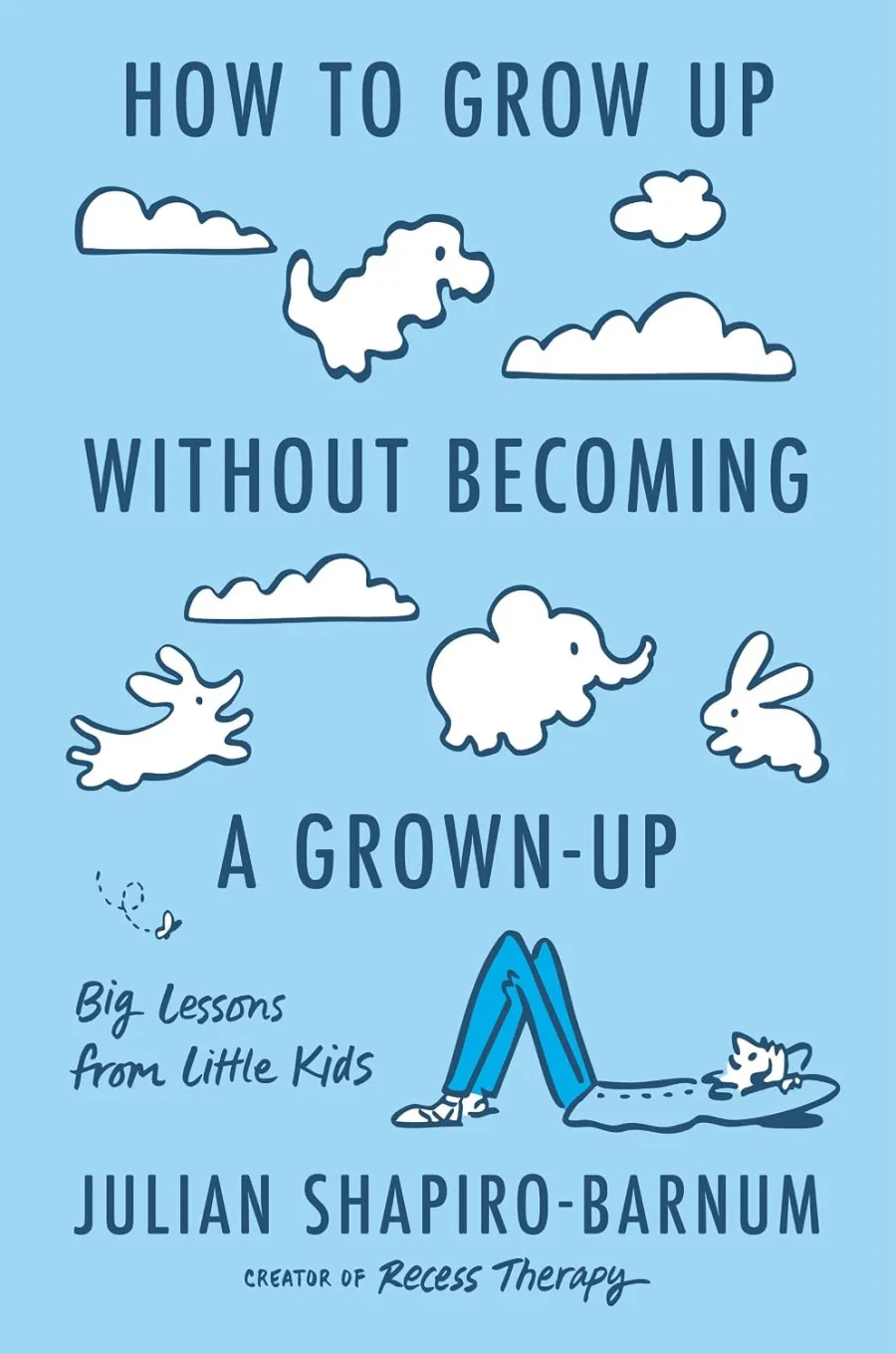
Download Cover Image
Do you want to download the full cover image for How to Grow Up Without Becoming a Grown-Up: Big Lessons from Little Kids?