
Great Leaders of the Bible: Lessons from Scripture’s Visionaries, Change Makers, and Trailblazers
Hardcover
• 256 Pages
• USD 29.00
• English
• 9781546009559
No ratings yet
| Publisher | FaithWords |
|---|---|
| ISBN13 | 9781546009559 |
| ASIN/SKU | 1546009558 |
| Book Format | Hardcover |
| Language | English |
| Pages | 256 |
| List Price | USD 29.00 |
| Publishing Date | 04/08/2026 |
| Dimensions | 5.6 x 0.88 x 8.35 inches |
| Weight | 11.5 ounces |
| Book Code | BD00069878 |
Buy this Book
Amazon Stores
Ebook Stores
Other Stores
Discover Great Leaders of the Bible: Lessons from Scripture’s Visionaries, Change Makers, and Trailblazers by John C. Maxwell. This book is published by FaithWords in Hardcover format, ISBN 9781546009559, ASIN 1546009558, under Christian Books and Bibles, Christian Personal Growth, Christian Spiritual Growth.
Book Description
Discover timeless leadership principles through the lives of Scripture’s greatest figures. In Great Leaders of the Bible, John C. Maxwell, a New York Times bestselling author and one of the world’s most trusted voices on leadership, explores 28 biblical examples of men and women who demonstrated extraordinary courage, faith, and wisdom in the face of life’s greatest challenges.
From Moses leading God’s people through the wilderness to Esther risking everything for her people, each story reveals what true leadership looks like when tested by adversity.
Every chapter includes:
A biblical story highlighting a defining leadership moment
A life lesson for everyday application
A leadership principle from the Bible
A heartfelt prayer for personal growth and guidance
Whether you lead in business, ministry, or your home, Great Leaders of the Bible will inspire you to lead with humility, courage, and conviction―following the example of those who trusted God in the hardest moments.
Perfect for personal study, leadership development, or small groups, this book reminds readers that the greatest leaders are not defined by power or position, but by faithful obedience to God’s calling.
From Moses leading God’s people through the wilderness to Esther risking everything for her people, each story reveals what true leadership looks like when tested by adversity.
Every chapter includes:
A biblical story highlighting a defining leadership moment
A life lesson for everyday application
A leadership principle from the Bible
A heartfelt prayer for personal growth and guidance
Whether you lead in business, ministry, or your home, Great Leaders of the Bible will inspire you to lead with humility, courage, and conviction―following the example of those who trusted God in the hardest moments.
Perfect for personal study, leadership development, or small groups, this book reminds readers that the greatest leaders are not defined by power or position, but by faithful obedience to God’s calling.
Author Biography
John C. Maxwell, the #1 New York Times bestselling author, coach, and speaker who has sold more than 40 million books, has been identified as the #1 leader in business by the American Management Association® and the world’s most influential leadership expert by Business Insider and Inc. magazine. Dr. Maxwell has also received the Horatio Alger Award, as well as the Mother Teresa Prize for Global Peace and Leadership from the Luminary Leadership Network. His organizations—Maxwell Leadership, EQUIP, and the Maxwell Leadership Foundation—have trained millions of leaders from every nation in the world.
Editorial Reviews
Editorial Reviews will be added soon…
Book Summary
Great Leaders of the Bible by John C. Maxwell is a practical and inspirational exploration of leadership through the lives of 28 men and women found in Scripture. Rather than treating biblical figures only as religious heroes, Maxwell examines them as examples of courage, wisdom, perseverance, influence, and service. His central message is that genuine leadership is not primarily about having authority, wealth, or an impressive position. It is about responding faithfully to responsibility, influencing others for good, and having the courage to act when circumstances are difficult. The book was published by FaithWords in August 2026 and is designed for personal study, leadership development, and small-group discussion.
Maxwell approaches leadership through stories rather than abstract theories. Each chapter focuses on a biblical figure and a defining moment in that person's life. The stories are then connected to a practical lesson that readers can apply to their own lives. Maxwell also draws out a leadership principle from Scripture and concludes with a prayer for personal growth and guidance. This structure allows the book to move naturally between biblical narrative, leadership teaching, personal reflection, and spiritual practice.
One of the book's central examples is Moses, whose story demonstrates that leadership often begins with accepting a responsibility that feels far larger than one's own abilities. Moses is called to lead the Israelites out of slavery and through the wilderness, a task that requires patience, courage, communication, and extraordinary endurance. His story reminds readers that leaders do not have to feel completely prepared before they begin. Sometimes leadership means trusting a calling and learning how to carry the responsibility step by step.
Moses also illustrates the difficult side of leadership. Guiding people is rarely simple because individuals have different expectations, fears, weaknesses, and ideas. The Israelites frequently complain and resist, forcing Moses to deal with frustration as well as external threats. Through this example, Maxwell emphasizes that leadership is not merely about reaching a destination. It is about helping people continue moving toward that destination even when morale is low and circumstances become discouraging.
Another important figure is Esther, whose story highlights courage and the willingness to use one's position for the benefit of others. Esther is placed in a situation where remaining silent might protect her personally, while speaking could put her life at risk. Her decision to act demonstrates that leadership sometimes requires accepting personal danger for a greater purpose. Maxwell uses such examples to challenge the idea that leadership is always comfortable. Sometimes the clearest evidence of leadership is the willingness to do what is right when doing so carries a real cost.
The book repeatedly returns to the theme of courage. Biblical leaders often find themselves facing circumstances they cannot control. They encounter opposition, uncertainty, rejection, danger, or failure. Yet their leadership emerges through the way they respond. Maxwell's approach suggests that courage is not the absence of fear. A courageous leader may feel afraid but chooses not to allow fear to determine the final decision.
Closely connected to courage is faith. Because this is a leadership book rooted in Scripture, Maxwell views faith as more than a private religious belief. Faith influences how leaders respond to uncertainty. When outcomes cannot be guaranteed, leaders must still make decisions based on conviction and trust. The biblical stories show people moving forward without having complete knowledge of what will happen next. For Maxwell, this is an important lesson for modern leaders as well: leadership frequently requires acting responsibly before all the answers are available.
Another major theme is wisdom. Maxwell's biblical leaders are not presented as successful simply because they are powerful. Their effectiveness often depends on their ability to recognize what matters, understand people, listen carefully, and make thoughtful decisions. Leadership therefore involves judgment as much as action. A person may have authority and still make poor decisions; genuine leadership requires the ability to use influence responsibly.
The book also places strong emphasis on humility. This is especially significant because Maxwell's understanding of leadership differs from the popular image of the powerful individual who controls everyone around them. The biblical model he presents is closer to servant leadership. Leaders are called to serve, guide, encourage, and protect others rather than simply use them to accomplish personal ambitions. The publisher specifically describes the book as an invitation to lead with humility, courage, and conviction.
This idea of service expands the book's usefulness beyond corporate leadership. Maxwell deliberately applies biblical leadership principles to business, ministry, family, and everyday life. A person does not need to manage a large organization to be a leader. Parents lead their children. Teachers influence students. Community members can influence their neighborhoods. Friends can encourage one another. Employees can improve a workplace even without holding a formal management position. Leadership, in this sense, is fundamentally about influence and responsibility.
The book also acknowledges that biblical leaders were imperfect people. Scripture does not present its major figures as flawless. They experience doubt, make mistakes, become impatient, misunderstand situations, and sometimes fail seriously. This is important because it makes the leadership lessons more relatable. Readers do not have to be perfect before they can lead effectively. Instead, they can learn from their mistakes, accept correction, grow in character, and continue serving others.
The structure of the book encourages this kind of personal reflection. After presenting a biblical story and its leadership lesson, Maxwell identifies a principle that readers can carry into daily life. The accompanying prayers add another dimension, encouraging readers not merely to understand leadership intellectually but to ask how they themselves might become more courageous, wise, humble, faithful, and useful to others.
Ultimately, Great Leaders of the Bible argues that leadership is a matter of character before it is a matter of position. Titles may give people authority, but character determines how that authority is used. The greatest biblical leaders are remembered not simply because they occupied important roles, but because they responded to difficult circumstances with faith, courage, wisdom, and obedience.
The book's broader message is especially relevant in a world where leadership is often associated with visibility, influence, and personal success. Maxwell offers a different standard. A great leader is not necessarily the loudest person in the room or the person with the largest following. A great leader is someone who can be trusted with responsibility, who places the well-being of others above personal ego, and who remains committed to what is right when doing so becomes difficult.
In the end, Great Leaders of the Bible presents Scripture as a rich source of practical leadership lessons. Through figures such as Moses and Esther and many other biblical men and women, Maxwell encourages readers to see leadership as an opportunity to serve rather than dominate. The book reminds us that influence begins with character, courage must be joined with humility, and faith can provide strength when circumstances are uncertain.
Its deepest lesson is simple: you do not need a powerful position to become a powerful influence. Leadership begins wherever responsibility, relationships, and opportunity meet. By learning from the successes and failures of biblical figures, readers are encouraged to become more intentional leaders in their workplaces, families, communities, ministries, and everyday relationships. In Maxwell's vision, the best leaders are ultimately those who use their influence not to elevate themselves, but to help others become stronger, wiser, and better equipped to fulfill their own calling.
Maxwell approaches leadership through stories rather than abstract theories. Each chapter focuses on a biblical figure and a defining moment in that person's life. The stories are then connected to a practical lesson that readers can apply to their own lives. Maxwell also draws out a leadership principle from Scripture and concludes with a prayer for personal growth and guidance. This structure allows the book to move naturally between biblical narrative, leadership teaching, personal reflection, and spiritual practice.
One of the book's central examples is Moses, whose story demonstrates that leadership often begins with accepting a responsibility that feels far larger than one's own abilities. Moses is called to lead the Israelites out of slavery and through the wilderness, a task that requires patience, courage, communication, and extraordinary endurance. His story reminds readers that leaders do not have to feel completely prepared before they begin. Sometimes leadership means trusting a calling and learning how to carry the responsibility step by step.
Moses also illustrates the difficult side of leadership. Guiding people is rarely simple because individuals have different expectations, fears, weaknesses, and ideas. The Israelites frequently complain and resist, forcing Moses to deal with frustration as well as external threats. Through this example, Maxwell emphasizes that leadership is not merely about reaching a destination. It is about helping people continue moving toward that destination even when morale is low and circumstances become discouraging.
Another important figure is Esther, whose story highlights courage and the willingness to use one's position for the benefit of others. Esther is placed in a situation where remaining silent might protect her personally, while speaking could put her life at risk. Her decision to act demonstrates that leadership sometimes requires accepting personal danger for a greater purpose. Maxwell uses such examples to challenge the idea that leadership is always comfortable. Sometimes the clearest evidence of leadership is the willingness to do what is right when doing so carries a real cost.
The book repeatedly returns to the theme of courage. Biblical leaders often find themselves facing circumstances they cannot control. They encounter opposition, uncertainty, rejection, danger, or failure. Yet their leadership emerges through the way they respond. Maxwell's approach suggests that courage is not the absence of fear. A courageous leader may feel afraid but chooses not to allow fear to determine the final decision.
Closely connected to courage is faith. Because this is a leadership book rooted in Scripture, Maxwell views faith as more than a private religious belief. Faith influences how leaders respond to uncertainty. When outcomes cannot be guaranteed, leaders must still make decisions based on conviction and trust. The biblical stories show people moving forward without having complete knowledge of what will happen next. For Maxwell, this is an important lesson for modern leaders as well: leadership frequently requires acting responsibly before all the answers are available.
Another major theme is wisdom. Maxwell's biblical leaders are not presented as successful simply because they are powerful. Their effectiveness often depends on their ability to recognize what matters, understand people, listen carefully, and make thoughtful decisions. Leadership therefore involves judgment as much as action. A person may have authority and still make poor decisions; genuine leadership requires the ability to use influence responsibly.
The book also places strong emphasis on humility. This is especially significant because Maxwell's understanding of leadership differs from the popular image of the powerful individual who controls everyone around them. The biblical model he presents is closer to servant leadership. Leaders are called to serve, guide, encourage, and protect others rather than simply use them to accomplish personal ambitions. The publisher specifically describes the book as an invitation to lead with humility, courage, and conviction.
This idea of service expands the book's usefulness beyond corporate leadership. Maxwell deliberately applies biblical leadership principles to business, ministry, family, and everyday life. A person does not need to manage a large organization to be a leader. Parents lead their children. Teachers influence students. Community members can influence their neighborhoods. Friends can encourage one another. Employees can improve a workplace even without holding a formal management position. Leadership, in this sense, is fundamentally about influence and responsibility.
The book also acknowledges that biblical leaders were imperfect people. Scripture does not present its major figures as flawless. They experience doubt, make mistakes, become impatient, misunderstand situations, and sometimes fail seriously. This is important because it makes the leadership lessons more relatable. Readers do not have to be perfect before they can lead effectively. Instead, they can learn from their mistakes, accept correction, grow in character, and continue serving others.
The structure of the book encourages this kind of personal reflection. After presenting a biblical story and its leadership lesson, Maxwell identifies a principle that readers can carry into daily life. The accompanying prayers add another dimension, encouraging readers not merely to understand leadership intellectually but to ask how they themselves might become more courageous, wise, humble, faithful, and useful to others.
Ultimately, Great Leaders of the Bible argues that leadership is a matter of character before it is a matter of position. Titles may give people authority, but character determines how that authority is used. The greatest biblical leaders are remembered not simply because they occupied important roles, but because they responded to difficult circumstances with faith, courage, wisdom, and obedience.
The book's broader message is especially relevant in a world where leadership is often associated with visibility, influence, and personal success. Maxwell offers a different standard. A great leader is not necessarily the loudest person in the room or the person with the largest following. A great leader is someone who can be trusted with responsibility, who places the well-being of others above personal ego, and who remains committed to what is right when doing so becomes difficult.
In the end, Great Leaders of the Bible presents Scripture as a rich source of practical leadership lessons. Through figures such as Moses and Esther and many other biblical men and women, Maxwell encourages readers to see leadership as an opportunity to serve rather than dominate. The book reminds us that influence begins with character, courage must be joined with humility, and faith can provide strength when circumstances are uncertain.
Its deepest lesson is simple: you do not need a powerful position to become a powerful influence. Leadership begins wherever responsibility, relationships, and opportunity meet. By learning from the successes and failures of biblical figures, readers are encouraged to become more intentional leaders in their workplaces, families, communities, ministries, and everyday relationships. In Maxwell's vision, the best leaders are ultimately those who use their influence not to elevate themselves, but to help others become stronger, wiser, and better equipped to fulfill their own calling.
Sample Chapters
Sample Chapters will be added soon…
Reader Reviews
No reviews yet.
Great Leaders of the Bible: Lessons from Scripture’s Visionaries, Change Makers, and Trailblazers
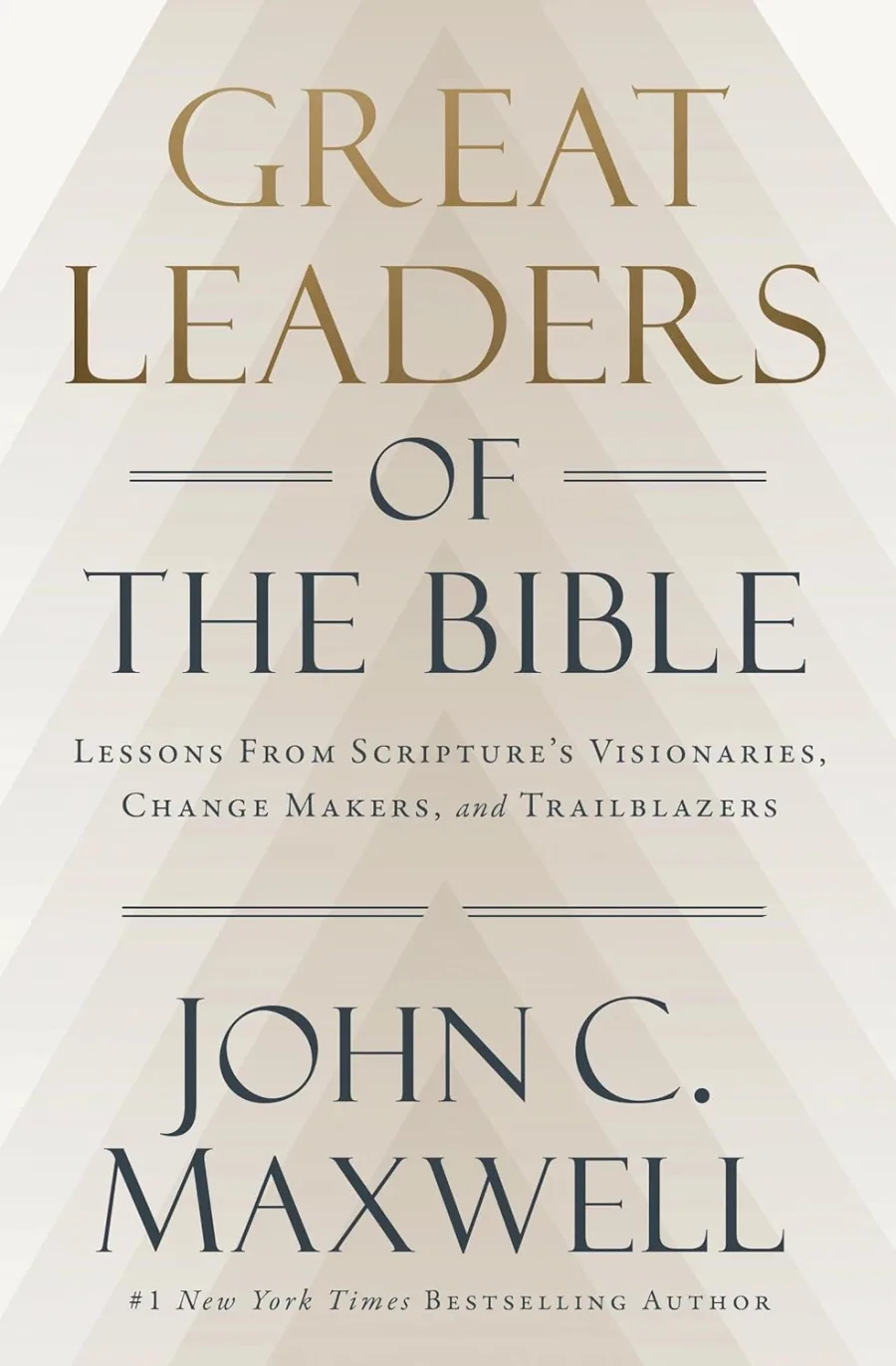
Download Cover Image
Do you want to download the full cover image for Great Leaders of the Bible: Lessons from Scripture’s Visionaries, Change Makers, and Trailblazers?